
California pavement guide
California Paving Contractor License Requirements, Permits, and Verification
California licenses construction contractors through the Contractors State License Board. The classification that fits a pavement job depends on the work actually being performed. Grading, excavation, and placing paving materials generally fall within C-12 Earthwork and Paving. Striping, pavement markings, protective coatings, signs, wheel stops, and similar parking and highway improvements generally fall within C-32. Broader infrastructure scopes can fall within an A General Engineering classification, and concrete scopes may involve C-8.
- State-level licensing
- Reviewed August 2026
Jump to section
Verification
Contractor Licensing and Verification in California
- Statewide licensing
- State-level licensing applies
- Administering body
- Contractors State License Board (CSLB)
- Classifications that can apply to pavement work
- C-12 — Earthwork and Paving · C-32 — Parking and Highway Improvement · A — General Engineering · C-8 — Concrete
- Check a license
- Contractors State License Board (CSLB) license lookup
Verify the license number the contractor gives you on the CSLB lookup rather than trusting a number printed on a proposal. The lookup shows the classifications held, the license status, the bond, and whether workers' compensation coverage is on file. A license held in a classification that does not cover the proposed scope is a real problem, not a technicality.
Separately from CSLB licensing, contractors bidding public works in California generally must be registered with the Department of Industrial Relations, and prevailing wage and reporting obligations attach to that work. A private parking lot is not public works, but a school district, city, or transit property is — and the requirements differ substantially.
Business entity status is worth a second check: confirm the entity name on the contract matches the entity on the license and is in good standing with the Secretary of State.
What a contractor license does not prove
A CSLB license establishes that the contractor met entry requirements, carries a bond, and has not been disciplined out of the trade. It says nothing about whether the scope in front of you is the right one.
- That the proposed scope is the right fix for what is actually failing
- That the price is fair for the local market
- That drainage has been designed or corrected
- That the pavement section and thickness suit the traffic the property carries
- That the specified materials are appropriate for the site
- That the crew will show up when promised
- That workmanship will hold up past the first winter or summer
- That the company is financially stable enough to honor a warranty
Ask for a certificate of insurance sent directly from the carrier or agent rather than a copy forwarded by the contractor, confirm the general liability and workers’ compensation coverage is active on the dates of your work, and ask to be named as certificate holder so you are notified if the policy lapses.
Licensing requirements can turn on project value, scope of work, property location, and whether the job is public or private. City and county rules may add registration, permitting, or bonding requirements beyond anything required at the state level. Verify current requirements with the agency directly before contracting.
Last reviewed:
Permitting
Stormwater and Environmental Considerations
State Water Resources Control Board and the nine Regional Water Quality Control Boards
California administers construction stormwater through the State Water Resources Control Board and its nine regional boards rather than directly through the EPA. Construction projects that disturb enough ground generally need coverage under the statewide Construction General Permit, which brings with it a stormwater pollution prevention plan and erosion and sediment control obligations during the work.
The requirement that surprises property owners more often is the post-construction side. Many California municipalities, particularly in the Bay Area and Southern California, run municipal stormwater programs that impose treatment or retention obligations based on how much impervious surface a project creates or replaces. A lot reconstruction can cross that line even though a mill-and-overlay of the same lot would not. Because the applicable threshold and the qualifying calculation are set locally, the only reliable answer comes from the municipality with jurisdiction.
Sealcoating and paving operations also raise practical runoff questions: material staging, wash-out control, and keeping product and sediment out of inlets during the work. Ask how a contractor handles that on your site rather than assuming it.
What tends to drive requirements here
- Disturbed area during construction, which drives Construction General Permit coverage
- New and replaced impervious surface, which drives local post-construction requirements
- Whether the site drains toward a sensitive receiving water or an area with additional local rules
- Whether the project is in a coastal zone with additional review
- Whether permeable pavement, bioretention, or another treatment measure is being used to satisfy a local requirement
- Inlet protection, material staging, and wash-out control during the work itself
Thresholds, calculations, and treatment requirements are set at the regional board and municipal level and vary widely across California. Confirm what applies to your parcel with the city or county before design, not after bids come in.
Last reviewed:
California project resources
Notable California Pavement Regulations and Requirements
California regulates contractors through the Contractors State License Board. The C-12 Earthwork and Paving classification generally covers grading, excavation, and placement of paving materials. Certain broader infrastructure scopes may fall within an A General Engineering classification. Parking lot striping, protective coatings, signs, pavement markings, wheel stops, and related improvements may fall within the C-32 Parking and Highway Improvement classification. The proper classification depends on the actual work being performed.
Pavement work can also involve accessibility, municipal and construction stormwater, grading, encroachment, fire-lane, planning, and environmental review. Requirements depend on the property, jurisdiction, disturbed area, new or replaced impervious surface, and complete project scope.
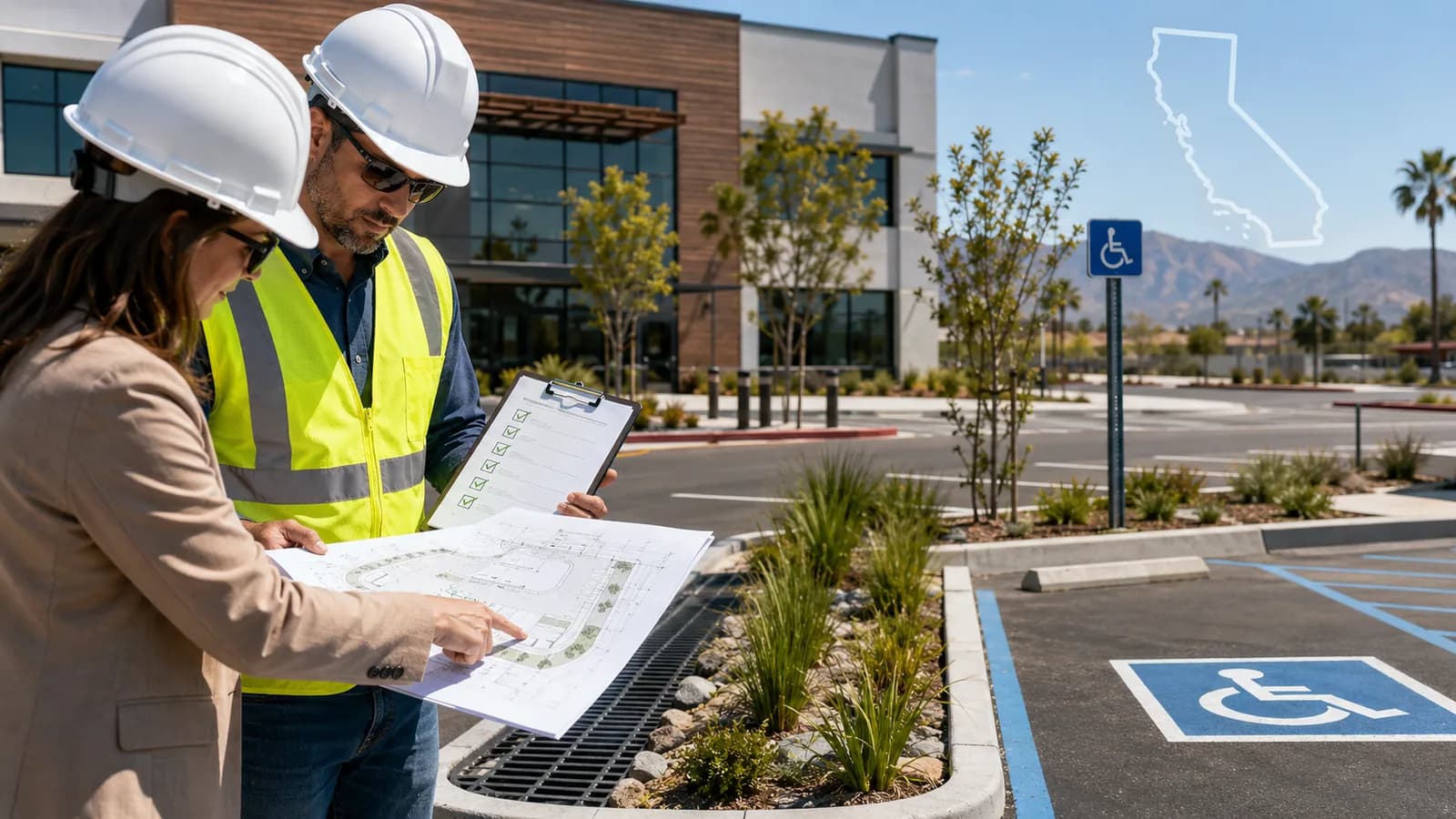
Property-owner guide
Updated August 2, 2026
Notable California Pavement Regulations and Requirements
Understand California pavement regulations for licensing, accessibility, stormwater, permits, fire lanes, grading, and practical site and project review.

Property-owner guide
Updated August 2, 2026
California Paving Contractor License Requirements
Learn California paving contractor license requirements, compare C-12, C-32, and A classifications, and verify a contractor through CSLB before hiring.
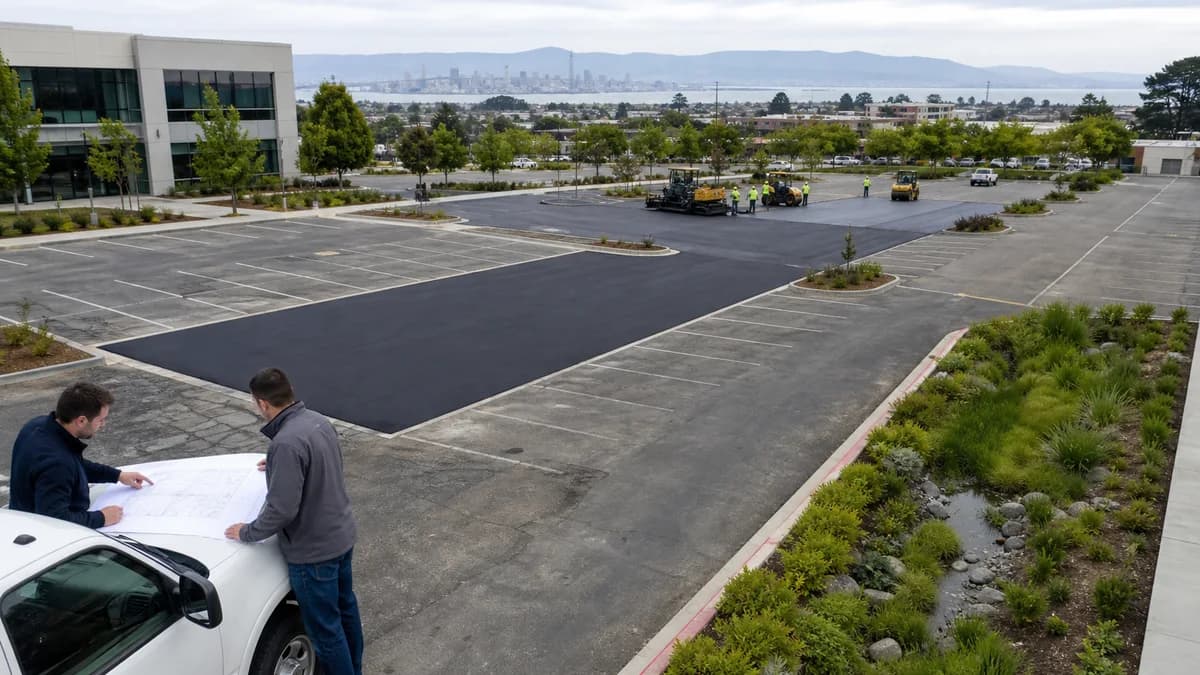
Property-owner guide
Updated August 2, 2026
Bay Area 5,000-Square-Foot Stormwater Rule for Pavement Projects
Learn how the Bay Area 5,000-square-foot stormwater threshold can affect paving, redevelopment, impervious surface, and local project review steps.
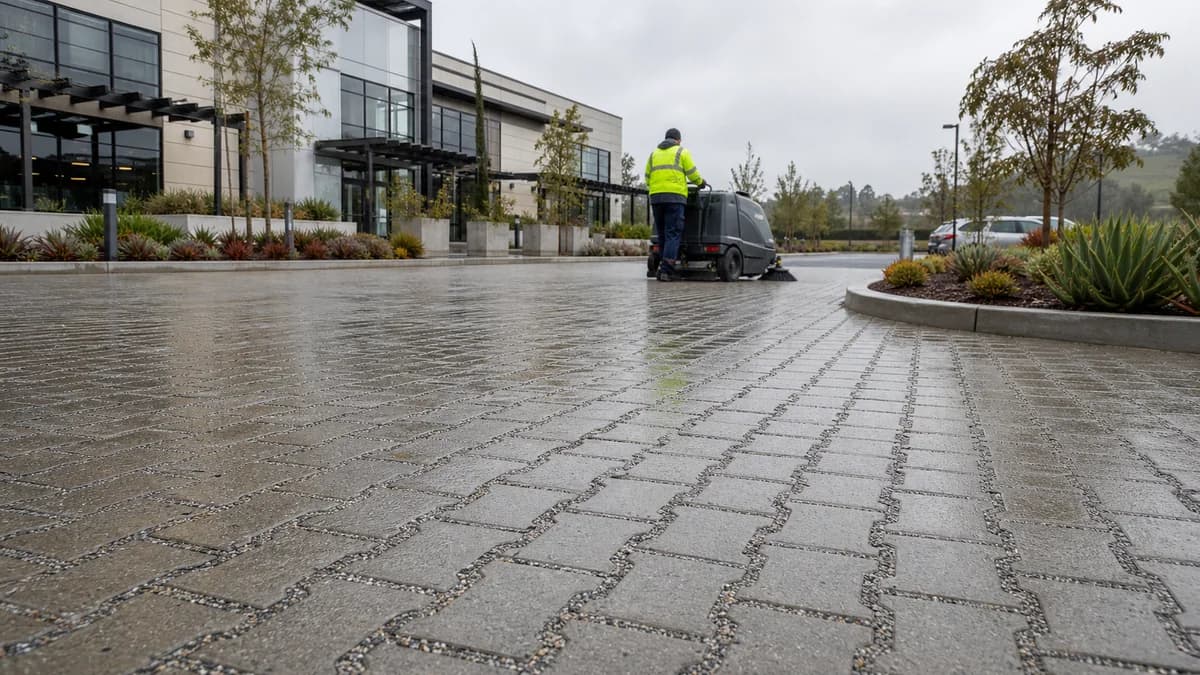
Property-owner guide
Updated August 2, 2026
Permeable Pavement for California Property Owners
Evaluate permeable pavement for a California property, including system types, site feasibility, stormwater design, cost drivers, and maintenance needs.
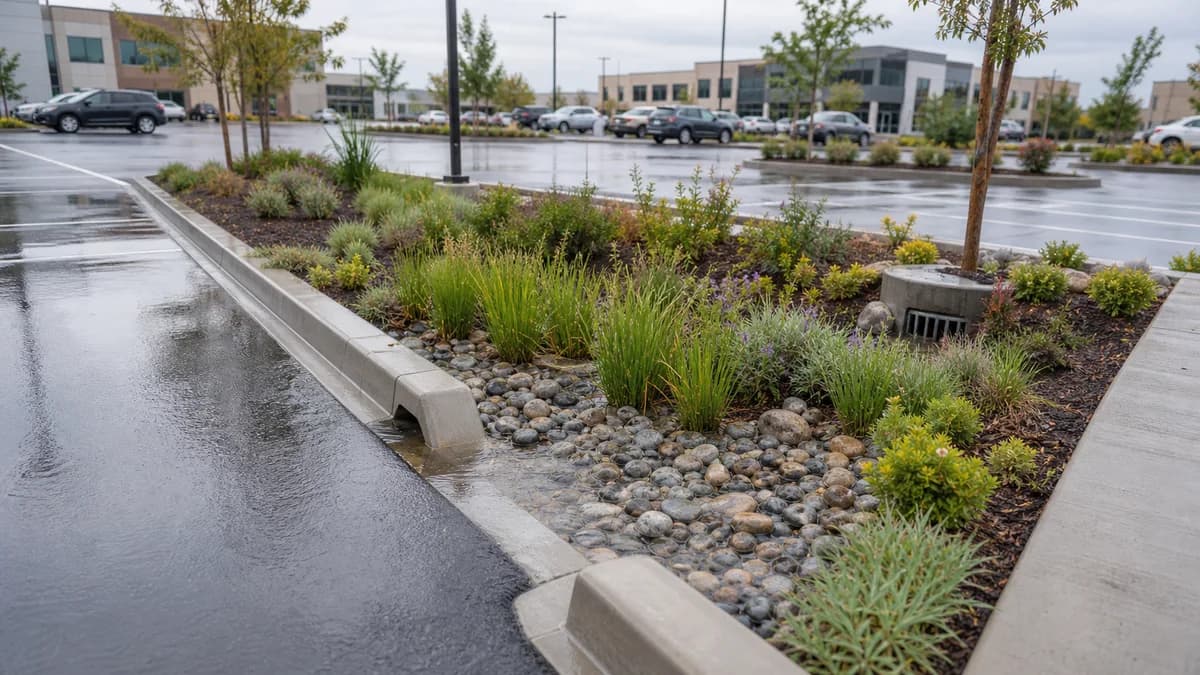
Property-owner guide
Updated August 2, 2026
Bioretention for California Pavement Projects
Learn how bioretention works beside California parking lots and pavement, including design, drainage, construction protection, and maintenance questions.
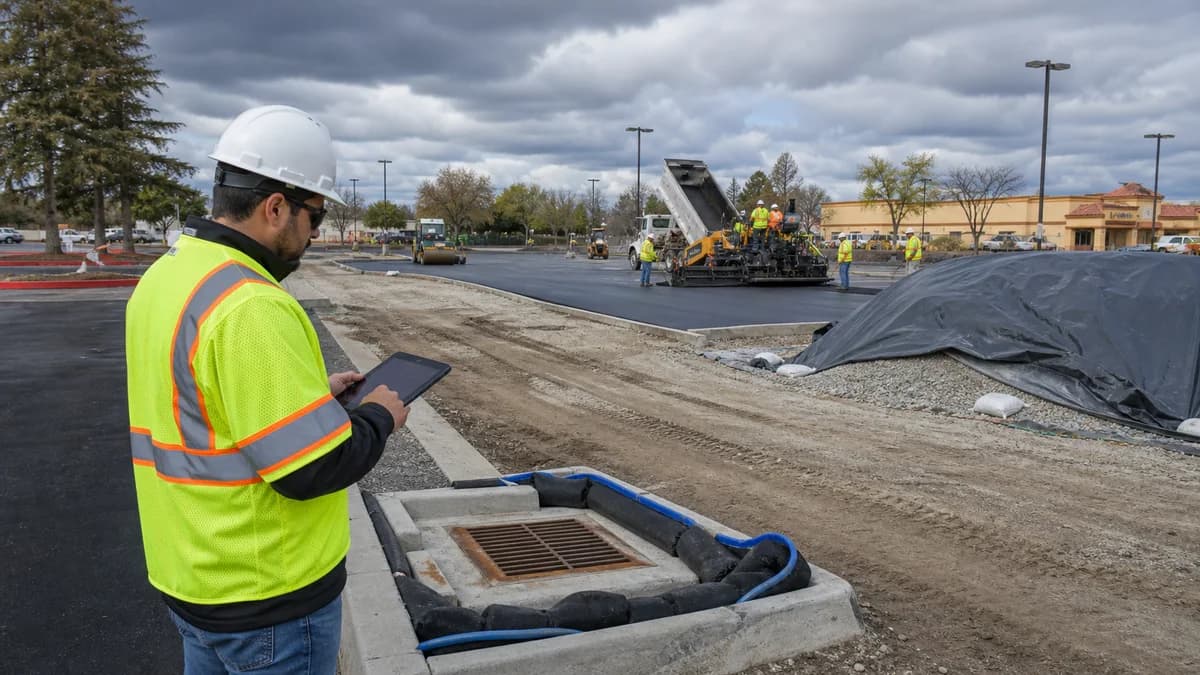
Property-owner guide
Updated August 2, 2026
California SWPPP Planning for Paving Projects
Learn when California paving work may need Construction General Permit coverage, a SWPPP, QSD and QSP support, SMARTS filings, and closeout steps.
For contractors entering this market
State and local licensing rules vary, and California appears in the national comparison of commercial and residential paving-contractor requirements. Review the national paving-contractor licensing comparison, then verify current requirements with the applicable licensing authority.
Official sources
California Agencies and Reference Links
Contractor licensing
Contractors State License Board license lookupCheck a California contractor's license status, classifications, bond, and workers' compensation filing.
Business registration
California Secretary of State business searchConfirm the contracting entity is registered and in good standing.
Environmental
State Water Resources Control Board construction stormwater programStatewide Construction General Permit information, including when coverage is required.
Transportation
CaltransState transportation specifications and materials references that shape regional paving vocabulary.
Accessibility
Division of the State ArchitectCalifornia accessibility standards guidance, including access compliance reference materials.
Public works
Department of Industrial Relations public worksContractor registration and prevailing wage requirements for public works projects in California.
Consumer protection
CSLB complaint processHow to file a complaint against a licensed or unlicensed contractor.
This page summarizes publicly available information for general education. It is not legal, engineering, or code-compliance advice, and requirements change. Confirm anything that affects your project with the agency with jurisdiction over the property.
Regulatory content last reviewed:
California licensing and permit FAQs
Does California require a specific license for parking lot paving?
Paving contractors in California are licensed through the Contractors State License Board. Grading, excavation, and placing paving materials generally fall under the C-12 Earthwork and Paving classification, while striping, markings, wheel stops, and similar improvements generally fall under C-32 Parking and Highway Improvement. Broader scopes can fall under an A General Engineering license. The correct classification depends on the work being performed, so verify the license and its classifications on the CSLB lookup before signing.
Can restriping my lot trigger accessibility requirements in California?
Restriping is frequently the moment accessible parking gets reviewed, because stall counts, van-accessible spaces, access aisle dimensions, signage, and the slope of the route to the entrance all become visible when a lot is re-marked. Whether a given project triggers a specific obligation depends on the scope, the jurisdiction, and the applicable code edition. Confirm with the local building department or a design professional before the striping crew mobilizes — it is far cheaper than re-marking twice.
Do California stormwater rules apply to repaving an existing parking lot?
It depends on what is being done. Construction stormwater permitting is generally driven by how much ground is disturbed. Local post-construction requirements in many California municipalities are driven by how much impervious surface a project creates or replaces, which means a full reconstruction can be treated differently from a mill-and-overlay of the same lot. Because thresholds and calculations are set locally, ask the city or county with jurisdiction before design.
Before you sign: hiring guides
Property-owner guide
Updated July 6, 2026
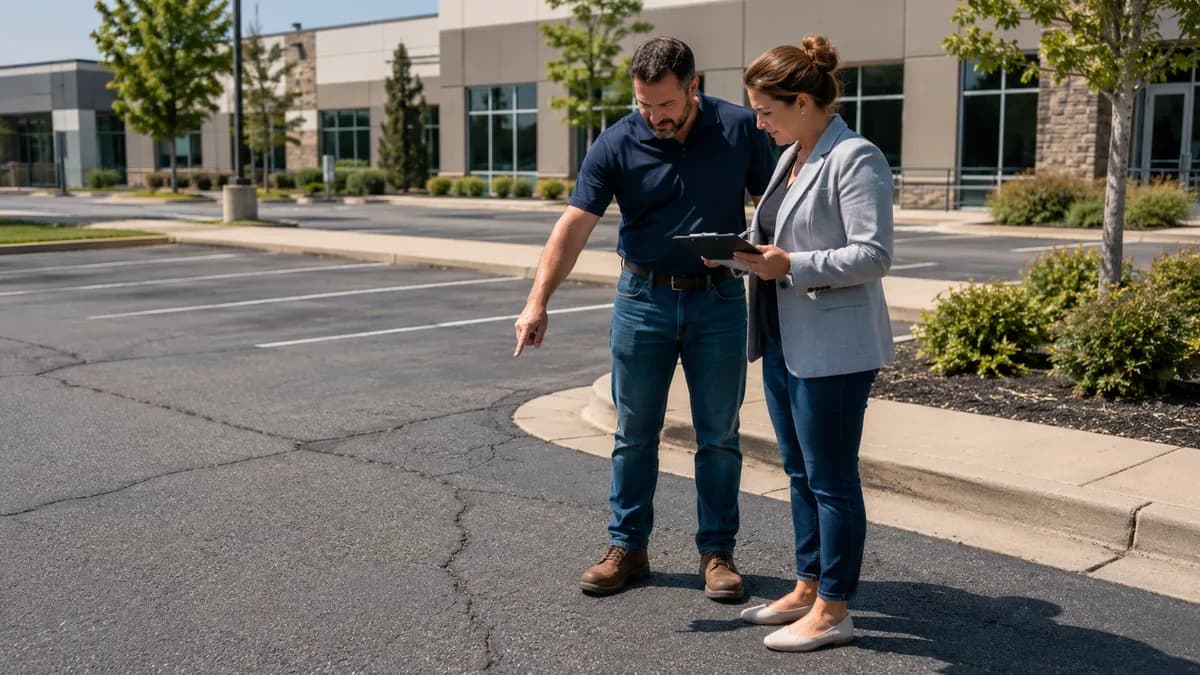
How to Choose an Asphalt Paving Contractor
How to choose an asphalt paving contractor: project fit, relevant experience, written scope, references, insurance, and pavement qualifications.
Property-owner guide
Updated July 6, 2026
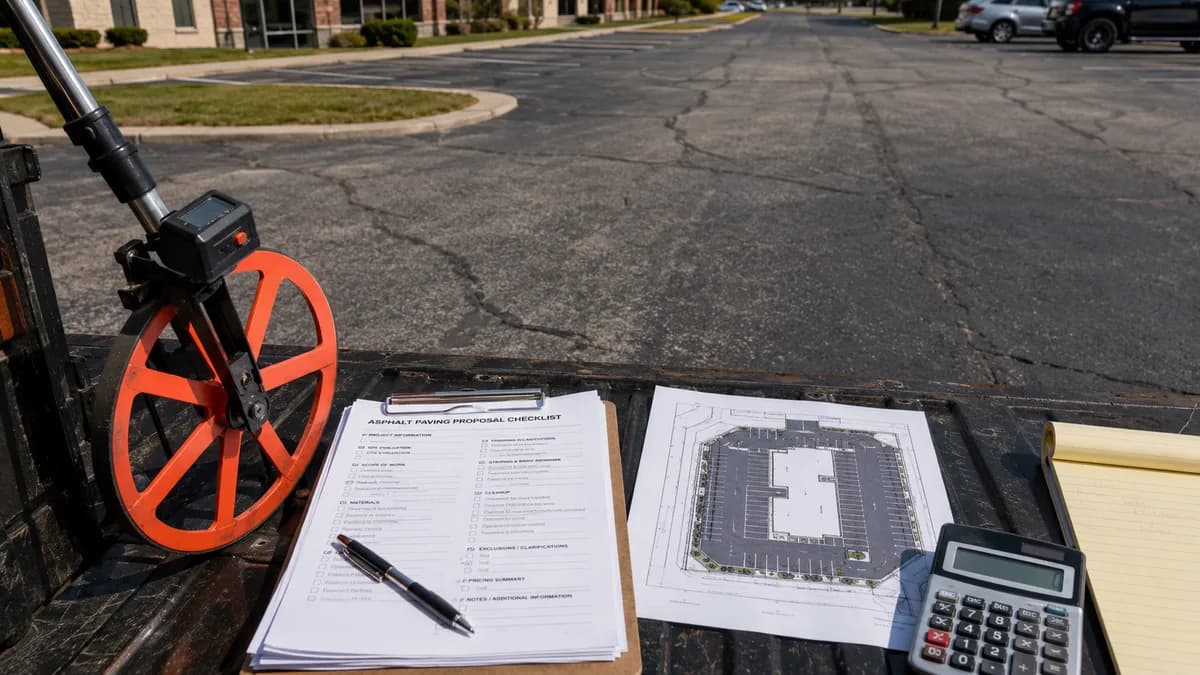
Asphalt Paving Proposal Checklist
What belongs in an asphalt paving proposal: work limits, quantities, thickness, base preparation, drainage, striping, exclusions, and warranty terms.
Property-owner guide
Updated July 6, 2026
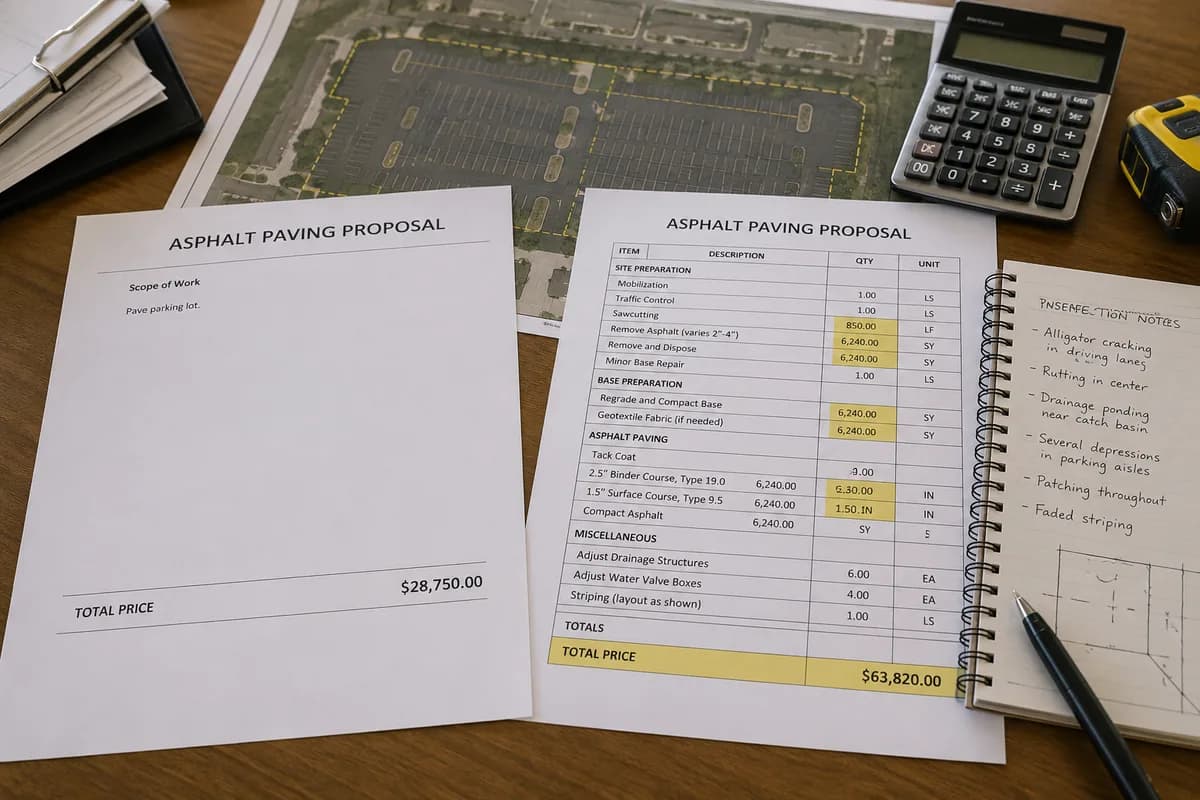
Cheap Asphalt Paving Bids: Red Flags to Watch For
A cheap asphalt paving bid may omit thickness, base preparation, drainage, striping, or warranty terms. Learn the red flags to check before hiring.
Before you hire: The Pavement Directory does not guarantee contractor performance, pricing, licensing, insurance, or availability. Business information may be submitted by contractors or gathered from public sources and should be independently verified before hiring. Always confirm licensing, insurance, references, scope of work, and written contract terms.
For contractors
Ready to compare California contractors?
Browse listings by city and service, then use what you have read here to check the scope, the credentials, and the timing before you sign.