
California pavement guide
Pavement Conditions in California: Regions, Soils, and Common Problems
California's pavement work is shaped less by one climate than by the collision of six of them with an unusually specific regulatory framework.
- 6 regions
- 6 common problems
- 7 local terms
Jump to section
Regional differences
Pavement Conditions by Region in California
California does not have one climate or one soil profile, and pavement that performs well in one part of the state can fail early a few hours away. These are the divisions that matter most when scoping paving, repair, or maintenance work.
Central Valley
Fresno · Bakersfield · Sacramento · Modesto · Stockton
Environmental stress
- Long stretches of triple-digit air temperature with far hotter pavement surface temperatures
- Intense summer UV with very little cloud cover
- Concentrated winter rain and dense tule fog that slows surface drying
Subgrade conditions
- Alluvial silts and clays with variable moisture
- Irrigated agricultural ground where subgrade moisture changes seasonally
- Locally expansive clay in parts of the valley floor
Common distress
- Rapid oxidation, graying, and raveling of the surface course
- Rutting and shoving at truck aprons, dock approaches, and drive lanes
- Block cracking on lots that went too long without a surface treatment
What it means for the work
- Shorter practical sealcoat cycles than coastal lots of the same age
- Heavy agricultural and distribution loading argues for thicker sections at truck routes
- Summer night work is common on retail sites to avoid heat and business disruption
Bay Area
Oakland · San Jose · Fremont · Concord · Hayward
Environmental stress
- Mild coastal temperatures with sharp inland heat gradients over short distances
- Wet winters that saturate base layers on poorly drained sites
- Dense commercial traffic and constrained construction windows
Subgrade conditions
- Expansive Bay Mud and clay soils in bayfront and low-lying areas
- Fill of varying quality on older industrial and redeveloped parcels
- High groundwater near the shoreline margins
Common distress
- Differential settlement and birdbaths over soft or filled ground
- Alligator cracking in loading areas where the base has stayed wet
- Edge failures where pavement meets landscaping without confinement
What it means for the work
- Municipal stormwater programs here are among the most developed in the state
- Phased night and weekend work is common on occupied retail and office campuses
- Subgrade improvement often matters more than added asphalt thickness
Southern California coastal and inland basins
Los Angeles · Long Beach · San Diego · Anaheim · Riverside
Environmental stress
- Year-round working weather with high UV exposure
- Extreme heat inland in the Inland Empire compared to the immediate coast
- Short, intense rain events on largely impervious urban watersheds
Subgrade conditions
- Alluvial sands and gravels in the basins
- Expansive clays in parts of the coastal hills and canyons
- Compacted urban fill with buried utilities on redeveloped sites
Common distress
- Rutting and shoving on warehouse aprons and port-adjacent drayage routes
- Surface oxidation and raveling on unsealed inland lots
- Localized flooding and base softening at undersized inlets
What it means for the work
- Distribution and logistics traffic is a design load, not an afterthought
- Accessibility enforcement is active; restriping is a common compliance trigger
- Year-round paving is possible but night temperatures still limit winter placement
Sierra Nevada and mountain counties
Truckee · South Lake Tahoe · Grass Valley · Mammoth Lakes
Environmental stress
- Heavy snowfall, plowing, and repeated freeze-thaw cycling
- Deicing sand and chemical use on commercial lots
- A construction season compressed into the snow-free months
Subgrade conditions
- Decomposed granite and coarse granular soils
- Shallow rock and steep grades on many parcels
- Frost-susceptible fines where drainage is poor
Common distress
- Potholes and edge break-up after spring thaw
- Plow gouging on raised features, curbs, and transitions
- Striping and thin surface treatments worn off in a single winter
What it means for the work
- Book paving and sealcoating early — the workable window is short
- Snow storage areas need drainage planning, not just a place to push
- Durable marking materials pay for themselves where plows run
North Coast and far north
Eureka · Santa Rosa · Redding · Ukiah
Environmental stress
- Very high annual rainfall on the coast
- Extended wet periods that limit paving windows
- Sharp contrast with the hot, dry interior around Redding
Subgrade conditions
- Saturated fine-grained and organic soils in coastal terraces
- Steep hillside sites with concentrated runoff
- Timber and gravel road subgrades on rural properties
Common distress
- Base failure and potholing where water has no outlet
- Moss and organic staining on shaded, damp pavement
- Erosion and undermining at unprotected pavement edges
What it means for the work
- Drainage correction usually precedes any surface work
- Plant availability is thinner than in the metro markets — schedule ahead
- Dry-weather windows are genuinely scarce on the coast
Desert and high desert
Palm Springs · Victorville · Barstow · El Centro
Environmental stress
- Extreme summer surface temperatures and severe UV
- Wide day-to-night temperature swings, especially at higher desert elevations
- Monsoon-driven flash runoff on ground that absorbs very little
Subgrade conditions
- Sandy and gravelly desert soils, often well draining
- Blowing sand accumulation at edges and inlets
- Locally caliche-cemented layers
Common distress
- Severe binder oxidation, brittleness, and surface raveling
- Thermal and block cracking from large temperature swings
- Washouts and sediment deposition after flash storms
What it means for the work
- Surface protection and crack sealing carry outsized value here
- Summer placement often shifts to night for temperature control
- Inlet and swale maintenance matters more than the rainfall total suggests
Field conditions
Common Pavement Problems in California
Oxidation and raveling in the hot interior
Pavement fades from black to light gray, the surface feels rough and loose underfoot, and fine aggregate collects along curb lines after sweeping. It shows up years earlier in Fresno, Bakersfield, or Redding than on a comparable coastal lot.
Likely causes
- Sustained high surface temperatures and heavy UV exposure drying the binder
- Extended intervals between surface treatments
- Thin or aggregate-lean surface courses on lots built to a low first cost
When to get it looked at: If loose stone is coming up under a hand or broom across large areas rather than in isolated patches, get the surface evaluated before sealcoating — sealer over a raveling surface is a short-lived fix.
Expansive clay movement in Bay Area and coastal-hill sites
Pavement rises and falls seasonally, cracks open in summer and partly close in winter, and slabs or asphalt panels tilt near landscaping that gets irrigated.
Likely causes
- Clay soils that swell when wet and shrink when dry
- Irrigation and downspouts putting water into subgrade at the pavement edge
- Insufficient subgrade preparation or moisture conditioning at construction
When to get it looked at: Movement that recurs in the same place every year usually points to a moisture or subgrade problem that surface repairs will not resolve; that is a case for an assessment rather than another patch.
Winter storm drainage failure
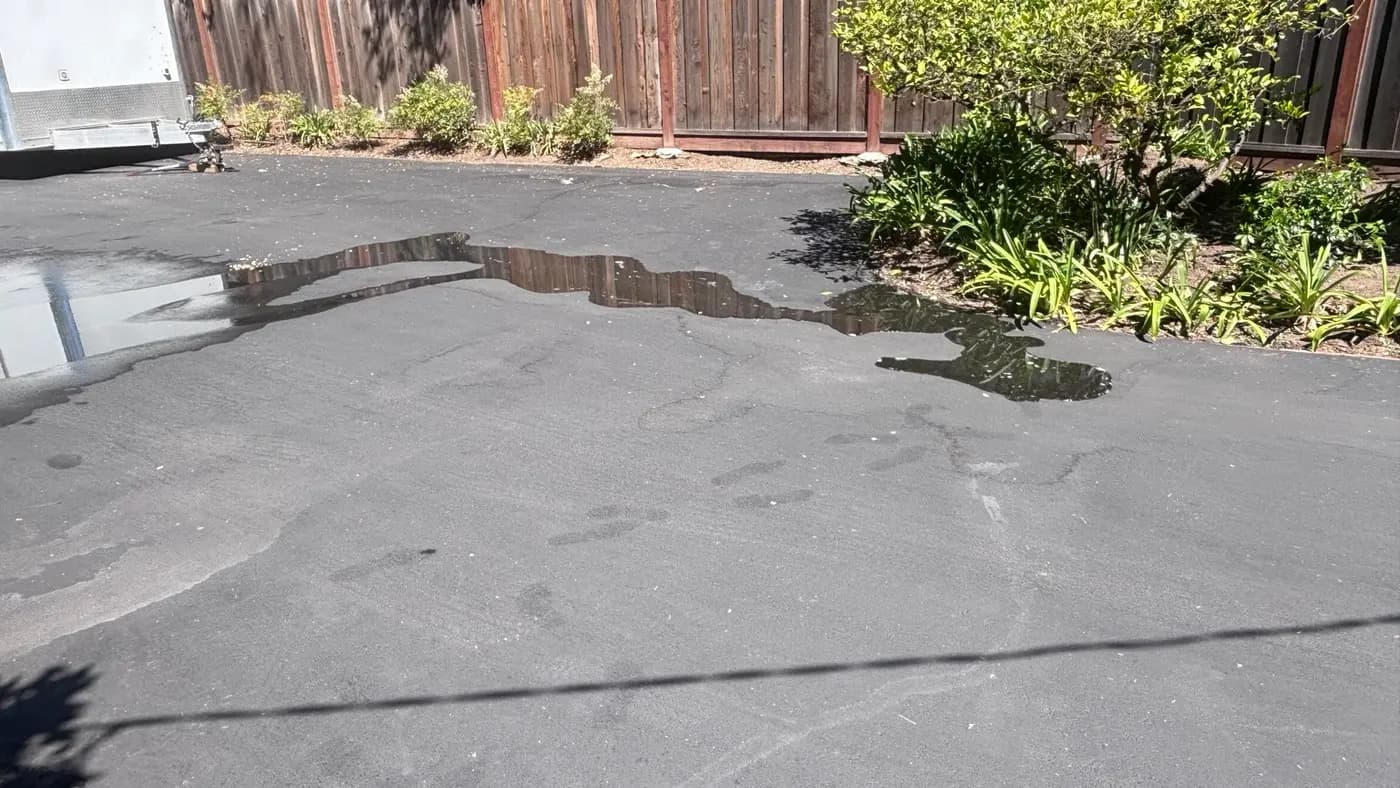
A lot that drains fine for eight months ponds badly during a single atmospheric river, and within a season or two alligator cracking appears exactly where water stood.
Likely causes
- Inlets and lines sized or maintained for average rainfall, not for concentrated storms
- Flat spots and birdbaths that hold water long enough to soak the base
- Sediment and landscape debris blocking inlets before the first big storm
When to get it looked at: Photograph ponding while it is happening — it is the single most useful thing you can hand a contractor, and it is impossible to reconstruct from a dry-day site walk.
Rutting and shoving in logistics corridors
Wheel paths deepen and asphalt pushes up into ridges at stop bars, dock approaches, and turning areas around Inland Empire, Central Valley, and port-adjacent warehouses.
Likely causes
- Concentrated slow, heavy truck loading on sections designed for lighter traffic
- High summer pavement temperatures reducing mix stiffness
- Base or subgrade that was never built for the loads the site now carries
When to get it looked at: Rutting deeper than roughly a half inch across a drive aisle is a structural question — ask what the section actually is before agreeing to a mill-and-fill that may just repeat.
Accessibility deficiencies surfacing during routine work
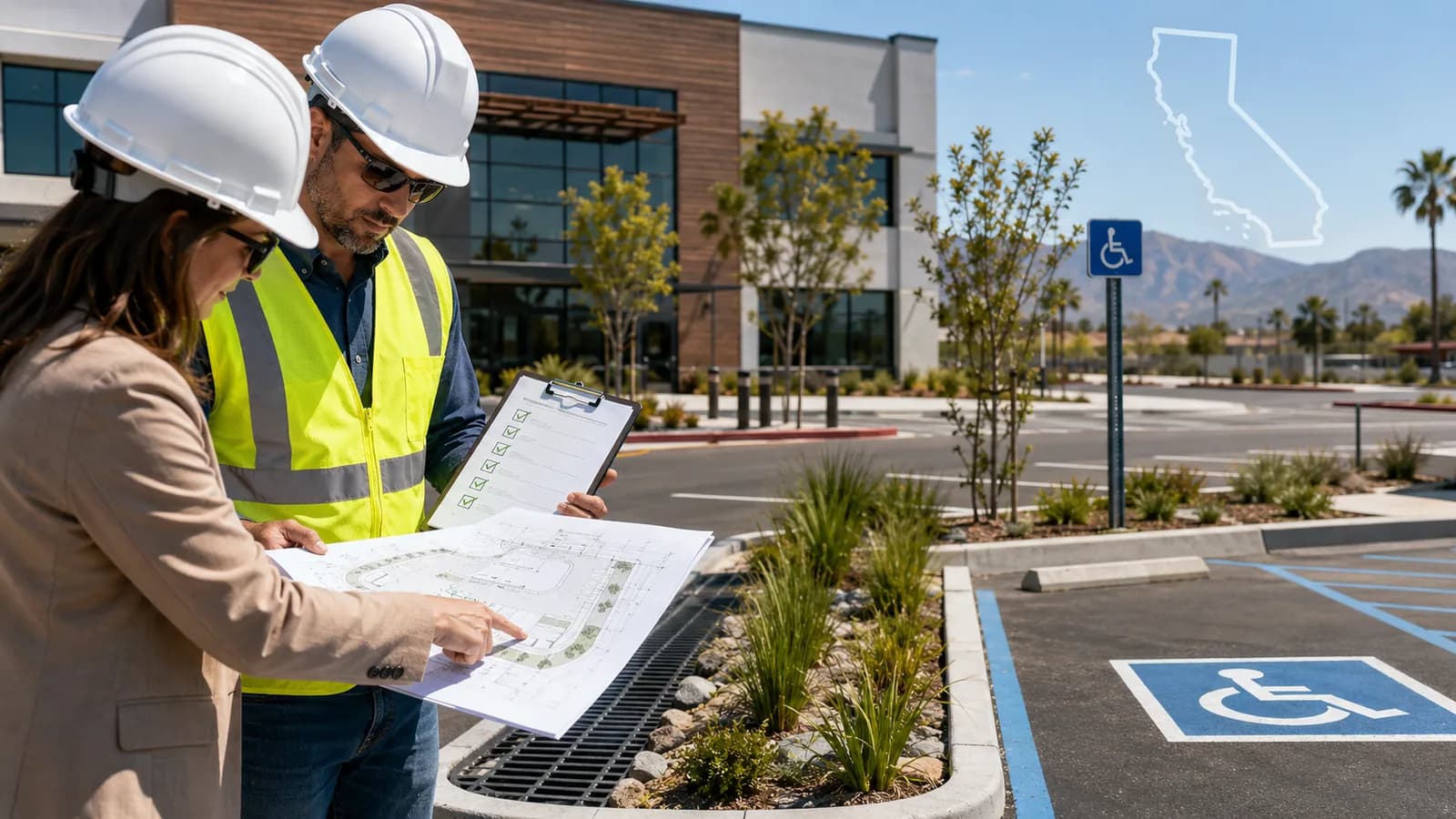
A straightforward restriping turns into a larger project once stall dimensions, van-accessible spaces, access aisles, signage, and path-of-travel slopes get measured against current standards.
Likely causes
- Lots striped to standards that have since changed
- Overlays that raised surface elevations and altered slopes at accessible stalls and routes
- Settlement creating cross-slopes steeper than the accessible route allows
When to get it looked at: Before restriping, have accessible stalls and the route to the building entrance measured. Requirements are jurisdiction- and project-specific, and a design professional or the local building department is the right authority — not a striping crew's habit.
Post-fire and hillside runoff damage
In hillside and recently burned watersheds, storm runoff carries far more water and sediment than it used to, undermining pavement edges and filling inlets with debris.
Likely causes
- Reduced infiltration and increased runoff volume from burned upslope areas
- Debris loading that overwhelms inlets and swales
- Unprotected pavement edges with no shoulder or confinement
Property types
Common Pavement Projects in California
Distribution and logistics centers
Inland Empire and Central Valley warehouse sites concentrate slow, heavy truck movements at docks and turning areas, where rutting and base failure appear long before the rest of the lot wears out.
HOA and multifamily communities
Private drives and guest parking age unevenly, and reserve-study timing often drives the decision between another surface treatment and a real rehabilitation.
Agricultural and food processing facilities
Seasonal harvest traffic, wash-down water, and heavy equipment put loads and moisture on pavement that a standard commercial section will not handle.
Retail centers and grocery-anchored properties
Work has to be phased around continuous operation, and restriping typically brings accessible parking and path of travel into scope.
School and community college campuses
Bus loops and service drives carry heavier loads than the parking fields, and the practical construction window is compressed into breaks.
Mountain resort and recreation properties
Snow operations, plow damage, and a short construction season mean durable markings and drainage-aware snow storage matter more than surface appearance.
Plain English
Pavement Terms You May Encounter in California
| Term | What it means on a California project |
|---|---|
| Hot mix asphalt (HMA) | The standard plant-produced asphalt mixture used for most California paving. Caltrans specifications use HMA terminology, and local suppliers generally describe their mixes in the same language. |
| Rubberized hot mix asphalt (RHMA) | Asphalt mixture modified with crumb rubber from recycled tires. California has used it extensively on highways; on private lots its availability and suitability depend on the supplier and the application. |
| Slurry seal and microsurfacing | Thin applied surface treatments used to restore surface texture and seal a pavement that is still structurally sound. Common on California parking lots and residential streets as a step beyond conventional sealcoat. |
| Chip seal | An asphalt binder application covered with aggregate, used widely on rural county roads and some large private roads. It is a surface treatment, not a structural repair. |
| Cold in-place recycling (CIR) | Milling and reusing the existing asphalt on site with added binder rather than hauling it away. More common on roadway-scale work than on parking lots, but it appears on larger private road projects. |
| Aggregate base (Class 2 AB) | The compacted crushed rock layer beneath the asphalt. The California designation shows up on plans and proposals; the thickness and compaction of this layer usually matter more to pavement life than the asphalt above it. |
| Reclaimed asphalt pavement (RAP) | Milled asphalt reintroduced into new mix. Its use is routine and specification-controlled; the question worth asking is what the mix design allows, not whether any RAP is present. |
State transportation specifications can provide useful regional terminology and material references, but they do not automatically govern private parking-lot or driveway projects unless incorporated into the contract or required by the applicable jurisdiction.
More definitions are in the pavement glossary.
Before you sign
Questions to Ask a Paving Contractor in California
- Which CSLB classification are you performing this work under, and what is the license number I can verify?
- Is any part of this scope going to trigger local post-construction stormwater requirements based on impervious surface created or replaced?
- How will you address the accessible parking stalls, access aisles, and path of travel if we restripe this lot?
- What is the existing pavement section here, and how did you determine it — cores, borings, or assumption?
- For our inland site, what sealcoat or surface treatment interval do you actually recommend, and how does that differ from what you would tell a coastal property?
- How will summer surface temperatures affect placement, and are you proposing night work?
- What are you doing about the areas that pond during winter storms, and is that within this scope or a separate drainage project?
- If this is expansive clay, what subgrade treatment or moisture control is included?
- Are you registered with the Department of Industrial Relations if any portion of this is public works?
- Who is the certificate of insurance coming from, and will you name us as certificate holder?
California pavement condition FAQs
What does rutting at a warehouse dock apron mean?
Deep wheel-path depressions and pushed-up ridges near docks and turning areas usually indicate the pavement section is being loaded beyond what it was built for, often made worse by high summer pavement temperatures. Resurfacing alone tends to reproduce the problem. The useful question is what the existing section actually is and whether the base and subgrade can carry current traffic — which is a structural evaluation, not a surface one.
Should I worry about pavement in a post-fire watershed?
Burned upslope areas shed more water and far more sediment, so inlets that were adequate before can be overwhelmed and pavement edges can be undermined by concentrated flow. If your property sits below a recently burned watershed, treat inlet capacity, sediment removal, and edge protection as maintenance priorities heading into the wet season.
Related reading for California property owners
Property-owner guide
Updated August 2, 2026
Notable California Pavement Regulations and Requirements
Understand California pavement regulations for licensing, accessibility, stormwater, permits, fire lanes, grading, and practical site and project review.
Property-owner guide
Updated August 2, 2026
California Paving Contractor License Requirements
Learn California paving contractor license requirements, compare C-12, C-32, and A classifications, and verify a contractor through CSLB before hiring.
Property-owner guide
Updated August 2, 2026
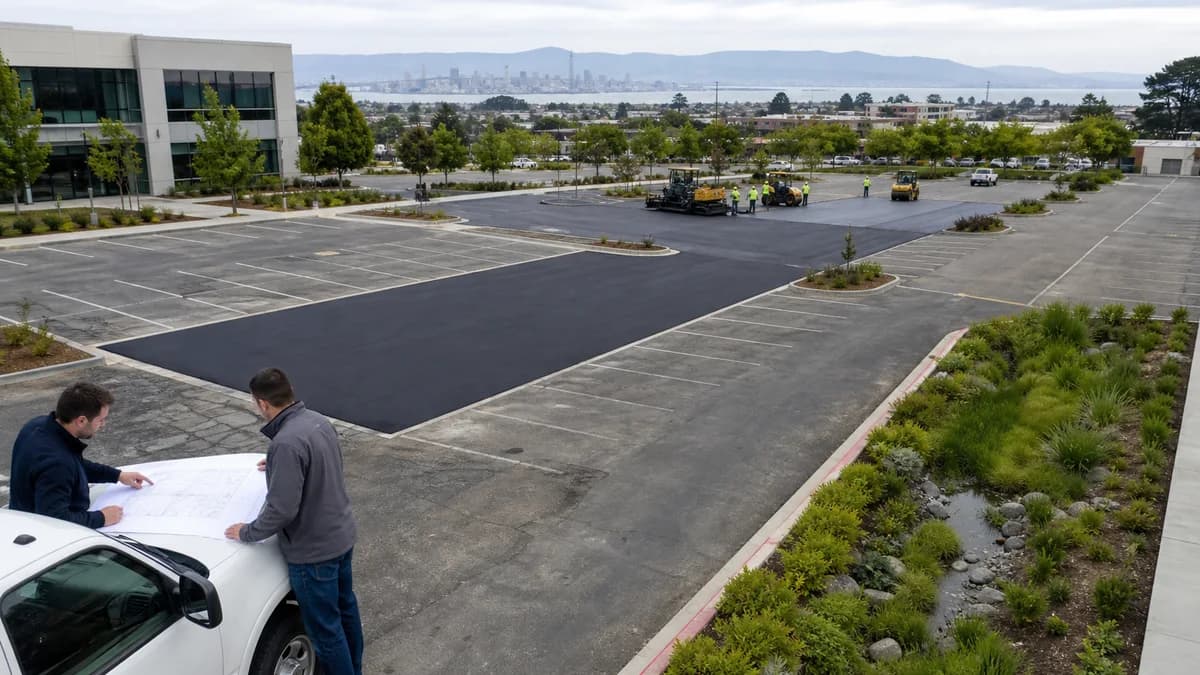
Bay Area 5,000-Square-Foot Stormwater Rule for Pavement Projects
Learn how the Bay Area 5,000-square-foot stormwater threshold can affect paving, redevelopment, impervious surface, and local project review steps.
Property-owner guide
Updated August 2, 2026
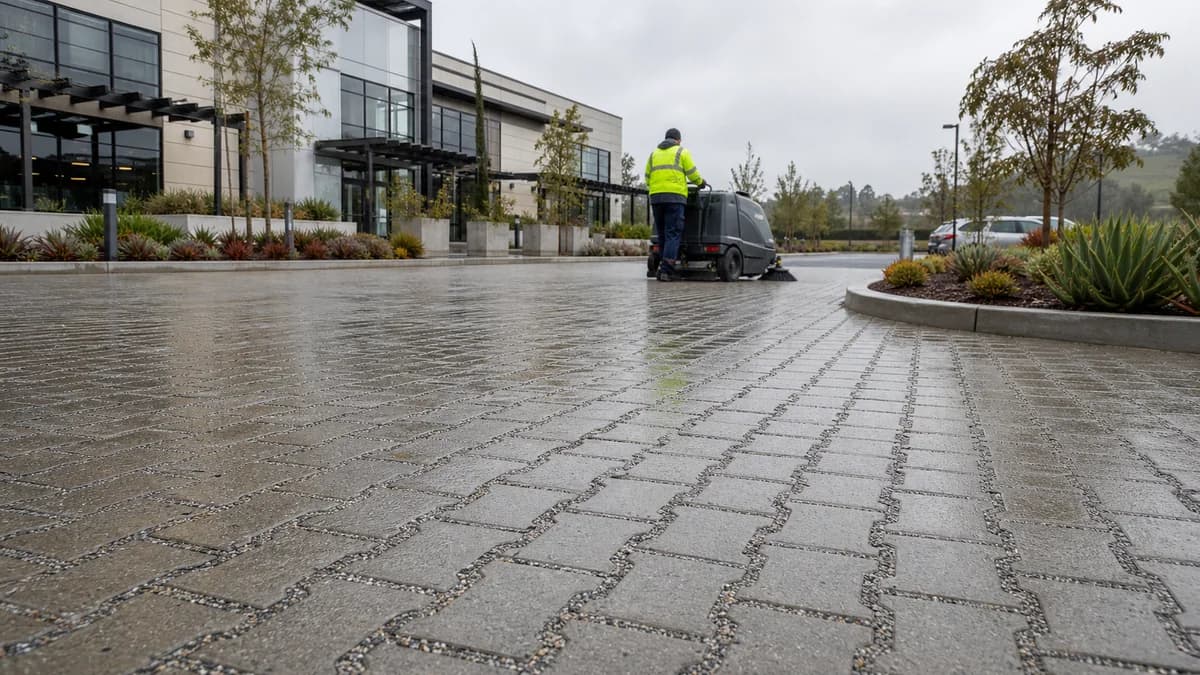
Permeable Pavement for California Property Owners
Evaluate permeable pavement for a California property, including system types, site feasibility, stormwater design, cost drivers, and maintenance needs.
Property-owner guide
Updated August 2, 2026
California SWPPP Planning for Paving Projects
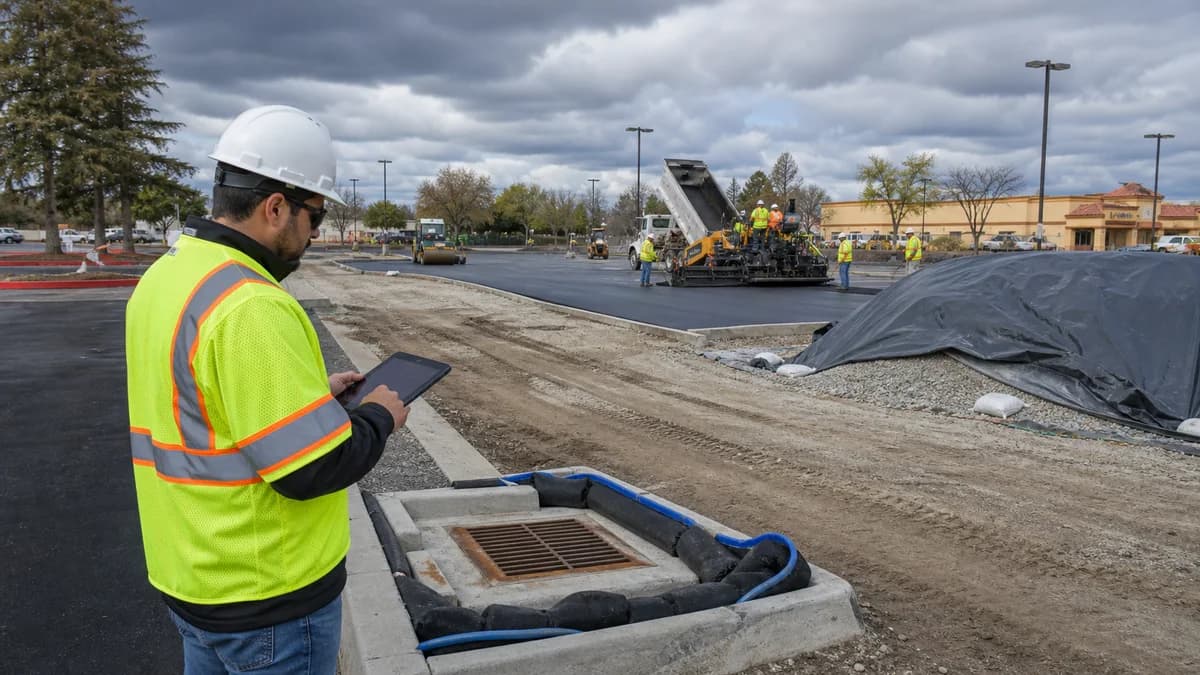
Learn when California paving work may need Construction General Permit coverage, a SWPPP, QSD and QSP support, SMARTS filings, and closeout steps.
Property-owner guide
Updated July 6, 2026
Parking Lot Drainage Problems: What Property Owners Should Know
Common causes of parking lot drainage problems, why they accelerate pavement damage, and what property owners should ask contractors before a fix.
Before you hire: The Pavement Directory does not guarantee contractor performance, pricing, licensing, insurance, or availability. Business information may be submitted by contractors or gathered from public sources and should be independently verified before hiring. Always confirm licensing, insurance, references, scope of work, and written contract terms.
For contractors
Ready to compare California contractors?
Browse listings by city and service, then use what you have read here to check the scope, the credentials, and the timing before you sign.