
Wyoming pavement guide
Pavement Conditions in Wyoming: Regions, Soils, and Common Problems
In Wyoming the wind decides where the water ends up, and bentonite decides what the water does when it gets under the pavement.
- 5 regions
- 5 common problems
- 7 local terms
Jump to section
Regional differences
Pavement Conditions by Region in Wyoming
Wyoming does not have one climate or one soil profile, and pavement that performs well in one part of the state can fail early a few hours away. These are the divisions that matter most when scoping paving, repair, or maintenance work.
Southeast Wyoming and the Laramie Range front
Cheyenne · Laramie · Wheatland · Torrington
Environmental stress
- Sustained high winds with severe drifting snow
- Frequent freeze-thaw crossings driven by strong daytime solar warming
- Interstate freight traffic on commercial properties along the corridor
Subgrade conditions
- Expansive clays derived from shale across much of the area
- Wind-deposited silt and sandy soils in places
- Granitic rock at shallow depth near the Laramie Range
Common distress
- Irregular cracking that opens in dry periods and partly closes when wet
- Damage concentrated where drifts form and where their meltwater runs
- Freeze-thaw potholing along crack lines opened over winter
What it means for the work
- This is the deepest contractor and supplier market in the state
- Drift patterns around buildings and fences are predictable and should inform the layout
- Expansive clay here means subgrade treatment is a meaningful bid difference rather than an upsell
The Wind River Basin and central Wyoming
Casper · Riverton · Lander · Douglas · Thermopolis
Environmental stress
- Very large daily and annual temperature ranges
- Energy sector truck traffic on sites built for lighter use
- Strong wind with abrasive blowing sand and dust
Subgrade conditions
- Bentonite-rich shale-derived soils with very high swelling potential
- Sodium sulfate and alkali soils in parts of the basin
- River terrace gravels along the North Platte and Wind rivers with better bearing
Common distress
- Severe seasonal movement over bentonite subgrade
- Rutting and edge break-up on energy sector truck routes
- Concrete deterioration where soil sulfate levels are elevated
What it means for the work
- Keeping water away from bentonite matters more than anything placed above it
- Sulfate exposure is worth testing before specifying concrete rather than assuming
- Contractor availability tracks energy sector activity and can tighten sharply
The Powder River Basin and northeastern Wyoming
Gillette · Sheridan · Buffalo · Newcastle · Moorcroft
Environmental stress
- Very heavy coal, oil, and gas haul traffic
- Severe wind with heavy drifting on open ground
- Cold winters with deep frost penetration
Subgrade conditions
- Bentonite and shale-derived clays across much of the basin
- Clinker and scoria used locally as base and surfacing material
- Sandy soils with low cohesion in some areas
Common distress
- Rapid rutting and break-up at facility entrances and turning radii
- Irregular cracking from swelling clay beneath the section
- Edge failure where pavement is unconfined against a loose shoulder
What it means for the work
- Haul traffic is a heavy design load and should drive the section at entrances specifically
- Clinker is a legitimate local material whose performance depends on how it is graded and compacted
- Energy sector construction competes for the same crews and materials as commercial work
The Green River and Bridger basins
Rock Springs · Green River · Evanston · Kemmerer · Rawlins
Environmental stress
- Some of the strongest sustained wind in the state
- High elevation with intense ultraviolet exposure and low humidity
- Long distances between commercial centers and material sources
Subgrade conditions
- Shale-derived clays with high swelling potential
- Alkali and sulfate-bearing soils in the basin floors
- Sandy and gravelly deposits in places with better drainage
Common distress
- Binder oxidation, graying, and block cracking under sustained ultraviolet exposure
- Seasonal movement over swelling clay
- Wind-driven abrasion on exposed surfaces and markings
What it means for the work
- Distance to a plant is often what determines whether a project can be scheduled at all
- Surface protection has real value here because binder aging outpaces traffic wear
- Sulfate exposure in the basin floors is worth testing before concrete work
Northwestern Wyoming and the mountain valleys
Jackson · Cody · Pinedale · Dubois · Afton
Environmental stress
- The state's heaviest snowfall and deepest frost at elevation
- A construction season compressed at both ends
- Steep grades concentrating snowmelt across pavement
Subgrade conditions
- Alluvial gravels in valley floors with generally good bearing
- Frost-susceptible fines in low areas and near wetlands
- Rocky colluvium on slopes with saturated ground at the toe
Common distress
- Severe frost heave and spring break-up
- Plow damage at edges, joints, and raised structures
- Washout where uncontrolled runoff crosses pavement on a grade
What it means for the work
- The working window here is the shortest in the state and books out very early
- Valley gravels are genuinely good material where they occur, which changes the section design
- Snow storage location and meltwater routing belong in the layout rather than in a later conversation
Field conditions
Common Pavement Problems in Wyoming
Bentonite swelling and strength loss
Irregular cracking with no relationship to traffic patterns, pavement that heaves and flexes after wet periods, and repairs that move again within a season or two.
Likely causes
- Bentonite and other swelling clays expanding dramatically when they take on water
- Water reaching the subgrade through open cracks, drainage, downspouts, or leaks
- Subgrade placed without treatment, moisture conditioning, or separation
- A section built with too little clean granular material above the clay
When to get it looked at: If a repair over bentonite has moved twice, the clay is the issue and the surface is not. Keeping water away from it accomplishes more than any additional asphalt.
Drift-driven meltwater damage
The same areas of a windswept lot deteriorating year after year, corresponding to where snow piles up against buildings, fences, or landscaping and where its meltwater runs when it goes.
Likely causes
- Predictable drift patterns created by buildings, fences, and site features
- Plowed snow stockpiled where its meltwater crosses the pavement rather than leaving the site
- Meltwater refreezing in place during daily freeze-thaw cycling
- Site layout designed without accounting for how wind moves snow across the property
When to get it looked at: Damage that recurs in the same footprint every year on an exposed site is usually a drift and meltwater problem rather than a materials one, and moving where snow ends up costs less than repaving.
Ultraviolet oxidation and block cracking at altitude
Pavement graying and hardening, then developing cracking in a roughly rectangular grid across the surface along with raveling, most visible on unshaded lots at high elevation.
Likely causes
- Intense high-altitude ultraviolet exposure hardening and embrittling the binder
- Very large daily temperature swings cycling the pavement continually
- Aged, oxidized binder that can no longer relax stress
- Low humidity and minimal shade on most commercial lots
When to get it looked at: Block cracking in a grid pattern is an aging signal rather than a loading one. Once the surface is raveling under traffic, the window for a protective treatment has largely closed.
Energy corridor truck loading damage
Entrances, turning radii, and yard areas at Wyoming facilities breaking up rapidly while the adjacent parking areas stay intact, often within a year or two of a change in traffic.
Likely causes
- Loaded haul trucks, tankers, and equipment imposing axle loads far beyond the design assumption
- Traffic type changing after the lot was built with no corresponding section change
- Unpaved shoulders giving way under wide turns
- Swelling clay beneath a section already marginal for the loading
When to get it looked at: Damage concentrated where trucks turn, queue, or stop is a section and loading question rather than a maintenance one, and those areas usually need a heavier design than the parking field.
Frost heave and spring break-up in the mountain valleys
Ridges lifting the pavement through late winter and mostly settling back by summer, followed by potholes in the same places every spring.
Likely causes
- Frost-susceptible fines forming ice lenses as freezing penetrates deeply
- Too little clean granular material between the pavement and the frost-susceptible layer
- The surface thawing before the ground below, trapping meltwater in the base
- Snowmelt from stored piles delivering water to the same locations each year
Property types
Common Pavement Projects in Wyoming
Coal, oil, and gas facilities
Powder River Basin and central Wyoming sites carry haul loads far beyond typical commercial traffic over swelling clay, and entrances and turning radii fail well before the parking fields do.
Interstate corridor travel plazas and freight facilities
Sites along the I-80 and I-25 corridors combine constant heavy truck movements, extreme wind exposure, and expansive subgrade, with drainage and edge confinement driving performance.
Jackson Hole and mountain resort properties
Peak occupancy and worst plow damage occur when nothing can be repaired, and the summer window is the shortest in the state with the longest material hauls.
Ranch, agricultural, and rural commercial properties
Long distances to plants, bentonite subgrade, and heavy vehicles working in wet conditions make drainage and subgrade treatment far more valuable than additional surface thickness.
Municipal, school district, and university properties
Institutional sites in Cheyenne, Laramie, and Casper combine drift-driven meltwater problems, expansive soils, and a construction window compressed into the summer break.
Plain English
Pavement Terms You May Encounter in Wyoming
| Term | What it means on a Wyoming project |
|---|---|
| Bentonite | A highly expansive clay formed from weathered volcanic ash, abundant in Wyoming. It swells dramatically when wetted and turns slick and unworkable when saturated, and pavement over untreated bentonite moves regardless of surface quality. |
| Plasticity index | A laboratory measure of how much a soil's behavior changes with moisture. On bentonite-rich subgrade it is the number that tells you whether subgrade treatment belongs in the scope rather than being optional. |
| Clinker or scoria | Naturally baked red rock produced where coal seams burned underground, used locally as base and surfacing material in northeastern Wyoming. It performs well when properly graded and compacted and poorly when it is not. |
| PG binder grade | The performance grade describing the temperature range a binder is designed for. Across Wyoming's elevation range and temperature swing, the appropriate grade differs meaningfully between the basins and the mountain valleys. |
| Non-frost-susceptible material | Granular material with few fines, placed so freezing water cannot form ice lenses that heave the pavement. With frost depths measured in feet at elevation, its thickness is often the most consequential number in the section. |
| Living snow fence and drift control | Vegetation or structures placed upwind to control where blowing snow deposits. Used on highways for decades, the same principle applies to a commercial site, where drift location determines where meltwater damage occurs. |
| Sulfate soils | Soils containing sulfate compounds, present in parts of the Wyoming basins. Where levels are elevated they can attack ordinary concrete over time, which makes testing before pouring worthwhile. |
State transportation specifications can provide useful regional terminology and material references, but they do not automatically govern private parking-lot or driveway projects unless incorporated into the contract or required by the applicable jurisdiction.
More definitions are in the pavement glossary.
Before you sign
Questions to Ask a Paving Contractor in Wyoming
- What does the city or county here require of contractors, and are you registered or licensed with them?
- Is the subgrade at this site bentonite or another highly expansive clay, and how did you determine that?
- Does this proposal include subgrade treatment, and if not, why is it not needed here?
- How deep is clean granular material going below the pavement, and how was that depth decided?
- Where do drifts form on this property, and does the layout or this scope do anything about where their meltwater goes?
- What binder grade are you specifying, and does it reflect this elevation rather than a statewide default?
- How far is the nearest asphalt plant, and what does that haul do to the schedule and to mix temperature?
- Has anyone tested the soil for sulfate before specifying the concrete here?
- Does the proposed section reflect the truck traffic this site actually receives?
- Can you show me comparable projects at this elevation and on this kind of subgrade?
Wyoming pavement condition FAQs
What is bentonite and why does it damage Wyoming pavement?
Bentonite is a highly expansive clay formed from weathered volcanic ash, and Wyoming has a great deal of it. It swells substantially when it takes on water, shrinks as it dries, and becomes extremely slick and weak when saturated. Pavement built over untreated bentonite cracks and heaves from below in patterns that follow no traffic path, and repairs move again with the next moisture cycle. Because the mechanism is in the soil, drainage and subgrade treatment matter far more than adding asphalt thickness.
How does wind affect a Wyoming parking lot?
More than most owners expect, and mostly through snow. Wind determines where drifts form on a property, and drift locations are remarkably consistent year to year because they are set by buildings, fences, and site features. Where the drifts are is where the meltwater comes from, and where the meltwater goes is where the pavement fails. Wind also abrades surfaces and markings, drives wind chill that closes working windows early, and moves disturbed soil during construction.
Why does the same area of my lot fail every single year?
On an exposed Wyoming site, that usually means drifting and meltwater rather than a materials problem. Snow accumulates in the same places each winter, melts into the same low areas, and either saturates the base or refreezes there through repeated freeze-thaw cycling. Over swelling clay the effect compounds. Photographing where drifts actually form over a winter gives you a map of where next year's damage will be, and changing where snow is stockpiled or how water leaves those areas costs far less than repaving them again.
Does elevation affect how fast Wyoming asphalt ages?
Yes, and noticeably. Intense high-altitude ultraviolet exposure hardens the binder, and very large daily temperature swings cycle the pavement continually, so on most Wyoming commercial lots the surface ages faster than traffic wears it out. The visible signals are graying, then block cracking in a rough grid pattern, then raveling as aggregate works loose. Surface protection while the pavement is still sound has genuine value here; once raveling has started, the conversation has usually moved to resurfacing.
Why do energy facility entrances in Wyoming fail so quickly?
Because they carry a completely different load than the lot they are attached to. Loaded haul trucks, tankers, and equipment impose axle loads far beyond what a section designed for employee parking can take, and the damage concentrates at entrances, turning radii, and shoulder transitions where the pavement is least confined. When bentonite subgrade sits underneath, the section was already marginal. Those areas generally need a heavier design, better edge confinement, and sometimes a different material entirely.
Should I be concerned about sulfate in the soil at my Wyoming site?
In parts of the basins, it is worth checking rather than assuming. Some Wyoming soils contain sulfate compounds that can attack ordinary concrete over time, producing deterioration that looks like a durability failure but originates in the ground chemistry. A soil test before specifying concrete for pads, aprons, or curb is inexpensive relative to replacing concrete that fails early, and where sulfate is present the mix can be specified to resist it.
Related reading for Wyoming property owners
Property-owner guide
Updated July 11, 2026
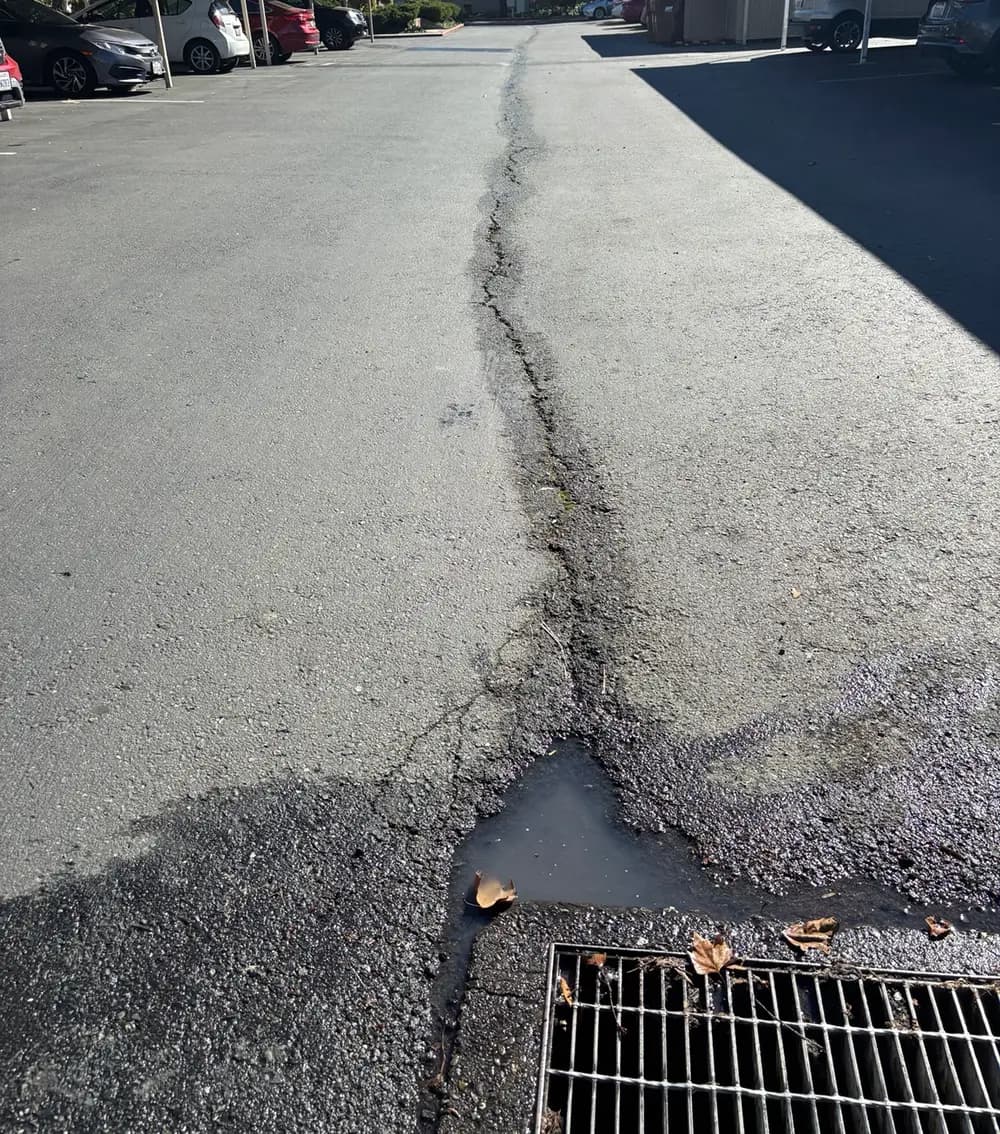
When Should You Seal Asphalt Cracks?
When to seal cracks in asphalt — which cracks to seal, the best time of year, why sealing early matters, and how crack sealing fits a maintenance schedule.
Property-owner guide
Updated July 12, 2026
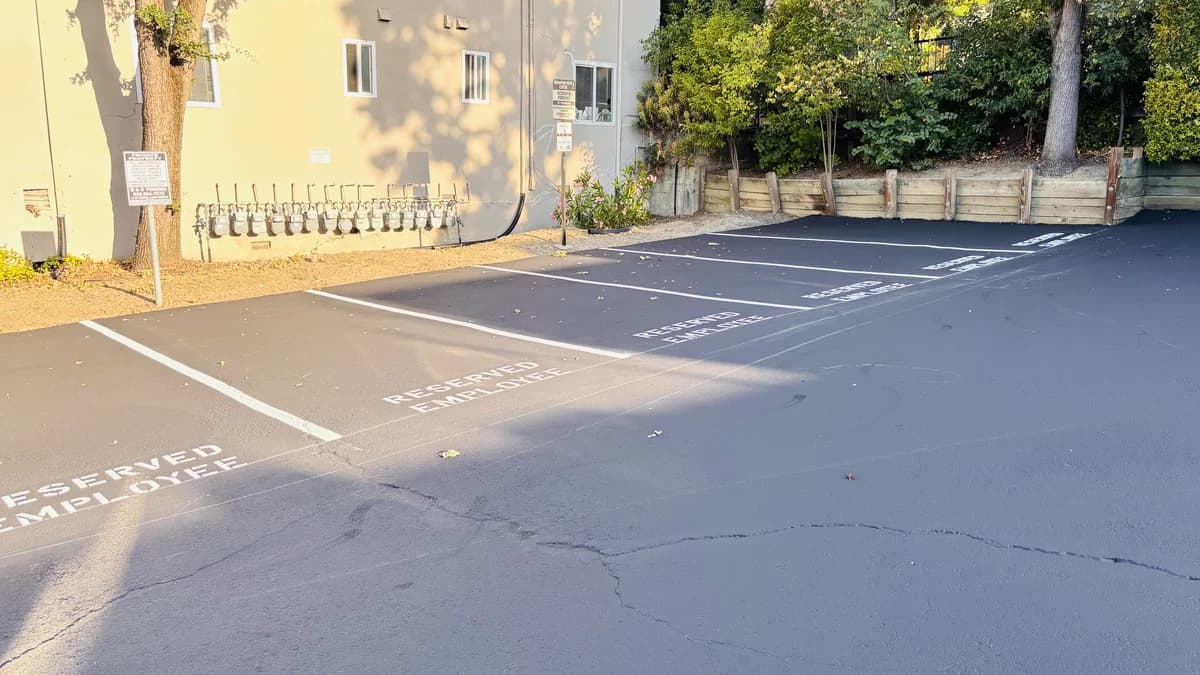
How Drainage Affects Pavement Life
Why drainage is the biggest factor in how long pavement lasts, how water damages asphalt from the base up, and why fixing it protects every repair.
Property-owner guide
Updated July 6, 2026
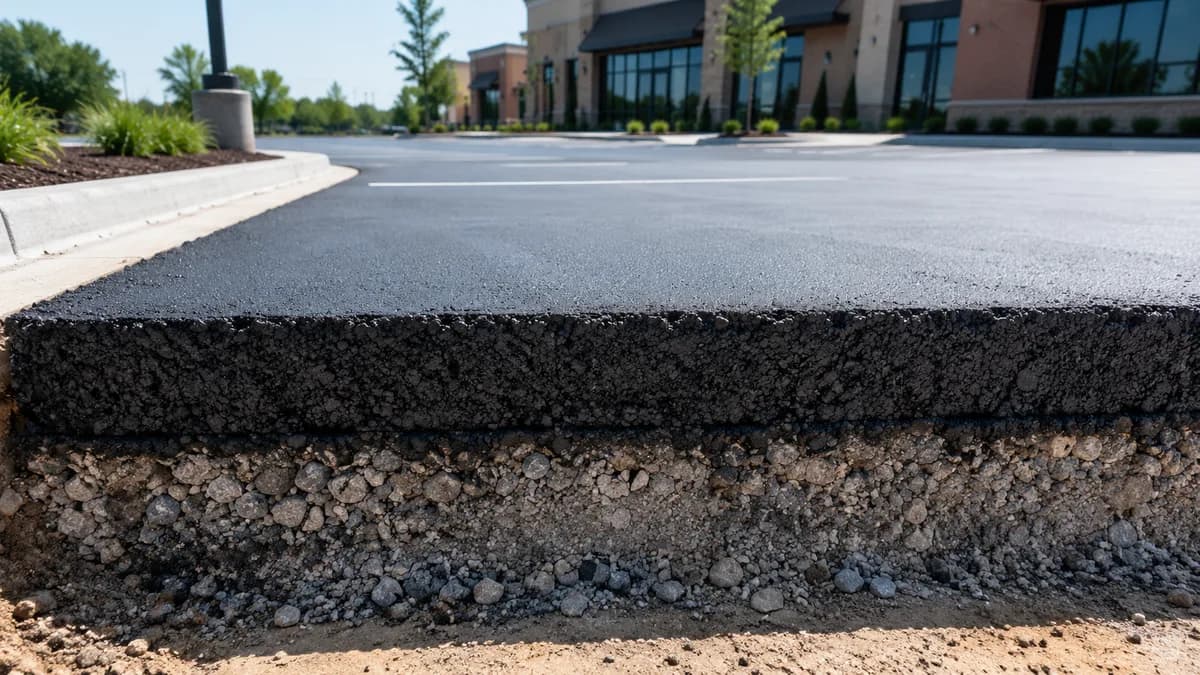
When Is Sealcoating Worth It?
When sealcoating provides real value as preventive asphalt maintenance, and the pavement conditions where it makes the most sense.
Property-owner guide
Updated July 6, 2026
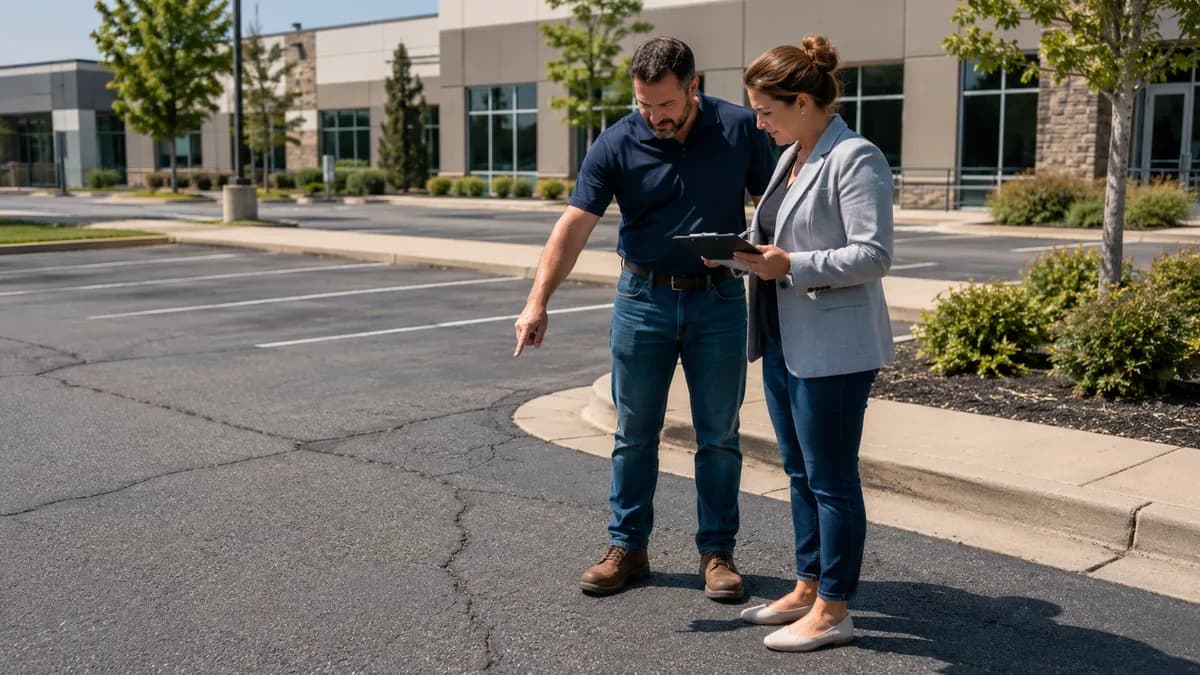
Asphalt Paving Thickness for Parking Lots
Typical asphalt paving thickness for parking lots: benchmarks for stalls, drive lanes, and truck areas, plus how base and soil change the answer.
Property-owner guide
Updated July 6, 2026
How to Choose an Asphalt Paving Contractor
How to choose an asphalt paving contractor: project fit, relevant experience, written scope, references, insurance, and pavement qualifications.

Property-owner guide
Updated July 11, 2026
How to Create a Parking Lot Maintenance Plan
How to build a parking lot maintenance plan: inspecting condition, setting service cycles, prioritizing repairs, and budgeting over multiple years.
Before you hire: The Pavement Directory does not guarantee contractor performance, pricing, licensing, insurance, or availability. Business information may be submitted by contractors or gathered from public sources and should be independently verified before hiring. Always confirm licensing, insurance, references, scope of work, and written contract terms.
For contractors
Ready to compare Wyoming contractors?
Browse listings by city and service, then use what you have read here to check the scope, the credentials, and the timing before you sign.