The Pavement Directory

State pavement directory

Pavement Contractors in Wyoming

Wind is a design input in Wyoming, not weather. It determines where snow lands on a property, which determines where meltwater goes, which determines where the pavement fails. A lot laid out without thinking about drift patterns will develop damage in the same predictable places every year, and no amount of asphalt quality changes that. Wind also abrades surfaces, complicates placement, and drives wind chill that closes working windows earlier than the thermometer suggests.

Underneath a great deal of Wyoming pavement is bentonite — the swelling clay this state produces more of than anywhere else in the country. It expands dramatically when it takes on water, turns slick and unworkable when saturated, and cracks pavement from below regardless of what was placed on top. Add the highest average elevation of any state but Colorado, an energy economy that runs heavy trucks through commercial sites, and very long distances between asphalt plants, and Wyoming becomes a state where a standard specification is rarely the right one.

Listings
4
Cities
0
Services
13
Search Wyoming

Before you hire: The Pavement Directory does not guarantee contractor performance, pricing, licensing, insurance, or availability. Business information may be submitted by contractors or gathered from public sources and should be independently verified before hiring. Always confirm licensing, insurance, references, scope of work, and written contract terms.

4 contractors in Wyoming

Filter by service

Cheyenne, Wyoming

Asphalt PavingCommercial & Residential

Paving contractor in Cheyenne, WY offering Asphalt Paving, Asphalt Repair.

(307) 630-8397
Asphalt PavingCommercial & Residential

The company operates 2 asphalt plants, 2 paving divisions, a concrete batch plant, and a trucking division with over 25 trucks. McGarvin-Moberly Construction works with the Wyoming Department of Transportation (WYDOT) and the Federal Highway Administration (FHWA), and is an active member of the Associated General Contractors of Wyoming. The company has completed projects of varying sizes and complexity across Wyoming.

(307) 347-4268Website on file
Asphalt PavingSealcoatingAsphalt MaintenanceCommercial & Residential

The company offers street sweeping, parking lot sweeping, crack sealing, road sealing, seal coating, asphalt patching, paving, residential driveways, lot striping, thermo plastic striping, street and parking lot sign installation, ice melt application, and snow plowing. R&D Sweeping & Asphalt Maintenance LC is locally owned and operated in Rock Springs, Wyoming, and serves nine counties in Wyoming. The company has been in operation since 1993.

(307) 362-5606Website on file
Straight Shot Striping logo

Casper, Wyoming

SealcoatingCrack SealingConcrete SiteworkCommercial

Straight Shot Striping is a Casper, Wyoming-based contractor specializing in parking lot maintenance for commercial properties, including striping, seal coating, and crack filling. The company also offers ADA-compliant handicap parking layout and signage, bollard and parking block installation, and new parking lot layout design. It is fully insured and certified in sign and pavement marking by the International Municipal Signal Association (IMSA), serving businesses throughout the greater Wyoming area.

(307) 438-9408Website on file

What makes pavement work different in Wyoming?

In Wyoming the wind decides where the water ends up, and bentonite decides what the water does when it gets under the pavement.

  • Wind and drifting snow determine where meltwater concentrates on a Wyoming property, which makes drift behavior a genuine site layout consideration rather than an operations detail.
  • Bentonite and other swelling clays underlie much of the state; they expand when wetted, lose strength dramatically, and crack pavement from below irrespective of surface quality.
  • Wyoming does not license paving contractors at the state level — licensing and registration are handled by cities and counties, so verification falls to the property owner.
  • High elevation brings intense ultraviolet exposure and very large daily temperature swings, which age binder faster than traffic wears the surface on most commercial lots.
  • Distances between asphalt plants are long enough that haul logistics constrain feasibility and shoulder-season scheduling on a large share of projects.

Pavement Conditions by Region in Wyoming

Wyoming does not have one climate or one soil profile, and pavement that performs well in one part of the state can fail early a few hours away. These are the divisions that matter most when scoping paving, repair, or maintenance work.

Southeast Wyoming and the Laramie Range front

Cheyenne · Laramie · Wheatland · Torrington

Environmental stress

  • Sustained high winds with severe drifting snow
  • Frequent freeze-thaw crossings driven by strong daytime solar warming
  • Interstate freight traffic on commercial properties along the corridor

Subgrade conditions

  • Expansive clays derived from shale across much of the area
  • Wind-deposited silt and sandy soils in places
  • Granitic rock at shallow depth near the Laramie Range

Common distress

  • Irregular cracking that opens in dry periods and partly closes when wet
  • Damage concentrated where drifts form and where their meltwater runs
  • Freeze-thaw potholing along crack lines opened over winter

What it means for the work

  • This is the deepest contractor and supplier market in the state
  • Drift patterns around buildings and fences are predictable and should inform the layout
  • Expansive clay here means subgrade treatment is a meaningful bid difference rather than an upsell

The Wind River Basin and central Wyoming

Casper · Riverton · Lander · Douglas · Thermopolis

Environmental stress

  • Very large daily and annual temperature ranges
  • Energy sector truck traffic on sites built for lighter use
  • Strong wind with abrasive blowing sand and dust

Subgrade conditions

  • Bentonite-rich shale-derived soils with very high swelling potential
  • Sodium sulfate and alkali soils in parts of the basin
  • River terrace gravels along the North Platte and Wind rivers with better bearing

Common distress

  • Severe seasonal movement over bentonite subgrade
  • Rutting and edge break-up on energy sector truck routes
  • Concrete deterioration where soil sulfate levels are elevated

What it means for the work

  • Keeping water away from bentonite matters more than anything placed above it
  • Sulfate exposure is worth testing before specifying concrete rather than assuming
  • Contractor availability tracks energy sector activity and can tighten sharply

The Powder River Basin and northeastern Wyoming

Gillette · Sheridan · Buffalo · Newcastle · Moorcroft

Environmental stress

  • Very heavy coal, oil, and gas haul traffic
  • Severe wind with heavy drifting on open ground
  • Cold winters with deep frost penetration

Subgrade conditions

  • Bentonite and shale-derived clays across much of the basin
  • Clinker and scoria used locally as base and surfacing material
  • Sandy soils with low cohesion in some areas

Common distress

  • Rapid rutting and break-up at facility entrances and turning radii
  • Irregular cracking from swelling clay beneath the section
  • Edge failure where pavement is unconfined against a loose shoulder

What it means for the work

  • Haul traffic is a heavy design load and should drive the section at entrances specifically
  • Clinker is a legitimate local material whose performance depends on how it is graded and compacted
  • Energy sector construction competes for the same crews and materials as commercial work

The Green River and Bridger basins

Rock Springs · Green River · Evanston · Kemmerer · Rawlins

Environmental stress

  • Some of the strongest sustained wind in the state
  • High elevation with intense ultraviolet exposure and low humidity
  • Long distances between commercial centers and material sources

Subgrade conditions

  • Shale-derived clays with high swelling potential
  • Alkali and sulfate-bearing soils in the basin floors
  • Sandy and gravelly deposits in places with better drainage

Common distress

  • Binder oxidation, graying, and block cracking under sustained ultraviolet exposure
  • Seasonal movement over swelling clay
  • Wind-driven abrasion on exposed surfaces and markings

What it means for the work

  • Distance to a plant is often what determines whether a project can be scheduled at all
  • Surface protection has real value here because binder aging outpaces traffic wear
  • Sulfate exposure in the basin floors is worth testing before concrete work

Northwestern Wyoming and the mountain valleys

Jackson · Cody · Pinedale · Dubois · Afton

Environmental stress

  • The state's heaviest snowfall and deepest frost at elevation
  • A construction season compressed at both ends
  • Steep grades concentrating snowmelt across pavement

Subgrade conditions

  • Alluvial gravels in valley floors with generally good bearing
  • Frost-susceptible fines in low areas and near wetlands
  • Rocky colluvium on slopes with saturated ground at the toe

Common distress

  • Severe frost heave and spring break-up
  • Plow damage at edges, joints, and raised structures
  • Washout where uncontrolled runoff crosses pavement on a grade

What it means for the work

  • The working window here is the shortest in the state and books out very early
  • Valley gravels are genuinely good material where they occur, which changes the section design
  • Snow storage location and meltwater routing belong in the layout rather than in a later conversation

Common Pavement Problems in Wyoming

Bentonite swelling and strength loss

Irregular cracking with no relationship to traffic patterns, pavement that heaves and flexes after wet periods, and repairs that move again within a season or two.

Likely causes

  • Bentonite and other swelling clays expanding dramatically when they take on water
  • Water reaching the subgrade through open cracks, drainage, downspouts, or leaks
  • Subgrade placed without treatment, moisture conditioning, or separation
  • A section built with too little clean granular material above the clay

When to get it looked at: If a repair over bentonite has moved twice, the clay is the issue and the surface is not. Keeping water away from it accomplishes more than any additional asphalt.

Drift-driven meltwater damage

The same areas of a windswept lot deteriorating year after year, corresponding to where snow piles up against buildings, fences, or landscaping and where its meltwater runs when it goes.

Likely causes

  • Predictable drift patterns created by buildings, fences, and site features
  • Plowed snow stockpiled where its meltwater crosses the pavement rather than leaving the site
  • Meltwater refreezing in place during daily freeze-thaw cycling
  • Site layout designed without accounting for how wind moves snow across the property

When to get it looked at: Damage that recurs in the same footprint every year on an exposed site is usually a drift and meltwater problem rather than a materials one, and moving where snow ends up costs less than repaving.

Ultraviolet oxidation and block cracking at altitude

Pavement graying and hardening, then developing cracking in a roughly rectangular grid across the surface along with raveling, most visible on unshaded lots at high elevation.

Likely causes

  • Intense high-altitude ultraviolet exposure hardening and embrittling the binder
  • Very large daily temperature swings cycling the pavement continually
  • Aged, oxidized binder that can no longer relax stress
  • Low humidity and minimal shade on most commercial lots

When to get it looked at: Block cracking in a grid pattern is an aging signal rather than a loading one. Once the surface is raveling under traffic, the window for a protective treatment has largely closed.

Energy corridor truck loading damage

Entrances, turning radii, and yard areas at Wyoming facilities breaking up rapidly while the adjacent parking areas stay intact, often within a year or two of a change in traffic.

Likely causes

  • Loaded haul trucks, tankers, and equipment imposing axle loads far beyond the design assumption
  • Traffic type changing after the lot was built with no corresponding section change
  • Unpaved shoulders giving way under wide turns
  • Swelling clay beneath a section already marginal for the loading

When to get it looked at: Damage concentrated where trucks turn, queue, or stop is a section and loading question rather than a maintenance one, and those areas usually need a heavier design than the parking field.

Frost heave and spring break-up in the mountain valleys

Ridges lifting the pavement through late winter and mostly settling back by summer, followed by potholes in the same places every spring.

Likely causes

  • Frost-susceptible fines forming ice lenses as freezing penetrates deeply
  • Too little clean granular material between the pavement and the frost-susceptible layer
  • The surface thawing before the ground below, trapping meltwater in the base
  • Snowmelt from stored piles delivering water to the same locations each year

Paving and Maintenance Calendar for Wyoming

Treat this as a planning aid, not a rule. Whether a given treatment can actually be placed on a given day depends on product requirements, surface and nighttime temperatures, the rain forecast, humidity, plant availability, the project specification, and the contractor’s means and methods.

Winter

Work often suited to this window

  • Snow and ice operations, including managing drift and stockpile locations
  • Emergency pothole repair and trip hazard mitigation
  • Assessment, budgeting, and securing next season's crew and plant commitments

Scheduling risks

  • Paving and surface treatments are generally out of season across the state
  • Wind chill closes working windows earlier than the air temperature alone would
  • Contractor schedules for the coming season fill during these months

Inspect for: Photograph where drifts actually form on the property this winter — it is the same every year, and that map tells you where next season's damage and meltwater will concentrate.

Regional exception: Jackson, Pinedale, and the mountain valleys are effectively out of season through this entire period, while Cheyenne and the southeast see occasional workable stretches.

Spring thaw

Work often suited to this window

  • Damage assessment as the surface becomes visible
  • Pothole and safety repairs
  • Confirming scope, pricing, and material orders for the construction season

Scheduling risks

  • Subgrade strength is at its annual low, and bentonite is at its least workable
  • Seasonal load restrictions affect hauling and material delivery
  • Working bentonite subgrade now can do damage that lasts for years

Inspect for: Compare where the pavement failed with the drift map from winter; the overlap between the two is usually where the productive work is.

Construction season

Work often suited to this window

  • Paving, reclamation, and full-depth structural repair
  • Subgrade treatment, drainage corrections, and grading
  • Sealcoating, striping, and accessible route upgrades

Scheduling risks

  • Haul distance to the nearest plant limits which sites can be served on any given day
  • The mountain valley window is very short and books out early
  • Energy sector construction competes for the same crews and materials

Inspect for: Walk truck entrances, turning areas, and yard approaches in the heat of the day, when rutting and shoving are visible rather than inferred.

Regional exception: Jackson and the northwestern valleys lose weeks at each end of this window relative to Casper or Cheyenne, which changes what can realistically be scheduled.

Fall

Work often suited to this window

  • Crack sealing before freeze-up
  • Finishing paving while conditions still allow it
  • Clearing culverts, ditches, and inlets before winter

Scheduling risks

  • Overnight temperatures fall quickly and can close the window abruptly
  • Whether a given day works depends on the product's stated requirements, surface and overnight temperatures, humidity, wind, and the rain forecast rather than the calendar date
  • An early hard freeze or heavy snow can end the season with work unfinished

Inspect for: Get every crack sealed before winter — over bentonite, an open crack is a direct route for exactly the water that causes the most expensive movement.

Contractor Licensing and Verification in Wyoming

Statewide licensing
No statewide paving contractor license
Administering body
No statewide paving contractor license; contractor licensing and registration in Wyoming are handled by cities and counties

Wyoming does not issue a statewide license for asphalt paving, sealcoating, concrete, or parking lot contractors. Licensing and registration are handled locally, and requirements differ from one municipality to the next — Cheyenne, Casper, Gillette, and other communities each set their own. The first practical step is asking the city or county where the property sits what they require, because the answer varies and a contractor's answer for one town is not the answer for another.

With no state credential to check, the entity verification does more work here. Confirm through the Secretary of State that the exact name on the proposal is registered and in good standing in Wyoming, and that it matches the name on the insurance certificate and the contract. Out-of-state contractors working in Wyoming should be registered to do business here, which is worth confirming rather than assuming.

Verify general liability and workers' compensation directly with the carrier or agent for the dates of your work, with your property named as certificate holder. Ask whether striping, concrete, or drainage subcontractors carry their own coverage, since those portions of a Wyoming pavement project are frequently subcontracted and may be performed by firms based some distance away.

Because there is no licensing board, references carry the weight a credential would carry elsewhere. Ask specifically for projects at comparable elevation, on comparable subgrade, and with comparable loading — a Cheyenne track record does not demonstrate an understanding of what a Jackson winter or a Gillette haul route does to pavement.

What a contractor license does not prove

With licensing left to municipalities, there is no statewide record to check. What actually reduces risk is verified insurance, a registered entity, and references on Wyoming projects with similar soil, elevation, and traffic.

  • That the proposed scope is the right fix for what is actually failing
  • That the price is fair for the local market
  • That drainage has been designed or corrected
  • That the pavement section and thickness suit the traffic the property carries
  • That the specified materials are appropriate for the site
  • That the crew will show up when promised
  • That workmanship will hold up past the first winter or summer
  • That the company is financially stable enough to honor a warranty

Ask for a certificate of insurance sent directly from the carrier or agent rather than a copy forwarded by the contractor, confirm the general liability and workers’ compensation coverage is active on the dates of your work, and ask to be named as certificate holder so you are notified if the policy lapses.

Licensing requirements can turn on project value, scope of work, property location, and whether the job is public or private. City and county rules may add registration, permitting, or bonding requirements beyond anything required at the state level. Verify current requirements with the agency directly before contracting.

Last reviewed:

Stormwater and Environmental Considerations

WDEQ administers construction stormwater permitting through the state's WYPDES program, so coverage for a qualifying project comes from the state rather than from EPA. Projects disturbing enough ground generally require permit coverage along with a stormwater pollution prevention plan and erosion and sediment controls sized to the site. Thresholds are set in the permit; confirm the current figure with WDEQ rather than assuming a commercial lot is too small to be reached.

Erosion control in Wyoming has to contend with wind as well as water. Disturbed ground on an exposed site loses material to wind in dry conditions and to concentrated runoff during the infrequent but intense storms this climate produces, and standard controls sized for a milder setting can be overwhelmed by either. Stabilization timing matters especially at the end of the season, since ground left bare into freeze-up is exposed through a spring melt with no vegetation to hold it.

Local requirements vary considerably and are frequently what determines a project's scope. Municipalities and counties apply their own drainage, grading, and detention standards, and where a project affects water rights infrastructure — a ditch, a canal, a reservoir outlet — the State Engineer's Office and the relevant water users may have a say. In a prior appropriation state, assuming a nearby channel is an available outlet is a mistake worth avoiding.

What tends to drive requirements here

  • Disturbed area thresholds triggering WYPDES construction stormwater coverage
  • Wind erosion of disturbed soil on exposed sites, alongside water erosion
  • Whether the project affects a ditch, canal, or other water rights infrastructure
  • Municipal and county drainage, grading, and detention standards, which vary widely
  • Stabilizing disturbed ground before freeze-up, ahead of spring melt runoff
  • Floodplain status on river valley and mountain-front parcels

Wyoming projects can involve WDEQ, a municipality or county, and in some cases the State Engineer's Office and water users, with different triggers for each. Confirm what applies to your parcel before design.

Last reviewed:

Pavement Terms You May Encounter in Wyoming

TermWhat it means on a Wyoming project
BentoniteA highly expansive clay formed from weathered volcanic ash, abundant in Wyoming. It swells dramatically when wetted and turns slick and unworkable when saturated, and pavement over untreated bentonite moves regardless of surface quality.
Plasticity indexA laboratory measure of how much a soil's behavior changes with moisture. On bentonite-rich subgrade it is the number that tells you whether subgrade treatment belongs in the scope rather than being optional.
Clinker or scoriaNaturally baked red rock produced where coal seams burned underground, used locally as base and surfacing material in northeastern Wyoming. It performs well when properly graded and compacted and poorly when it is not.
PG binder gradeThe performance grade describing the temperature range a binder is designed for. Across Wyoming's elevation range and temperature swing, the appropriate grade differs meaningfully between the basins and the mountain valleys.
Non-frost-susceptible materialGranular material with few fines, placed so freezing water cannot form ice lenses that heave the pavement. With frost depths measured in feet at elevation, its thickness is often the most consequential number in the section.
Living snow fence and drift controlVegetation or structures placed upwind to control where blowing snow deposits. Used on highways for decades, the same principle applies to a commercial site, where drift location determines where meltwater damage occurs.
Sulfate soilsSoils containing sulfate compounds, present in parts of the Wyoming basins. Where levels are elevated they can attack ordinary concrete over time, which makes testing before pouring worthwhile.

State transportation specifications can provide useful regional terminology and material references, but they do not automatically govern private parking-lot or driveway projects unless incorporated into the contract or required by the applicable jurisdiction.

More definitions are in the pavement glossary.

Common Pavement Projects in Wyoming

Coal, oil, and gas facilities

Powder River Basin and central Wyoming sites carry haul loads far beyond typical commercial traffic over swelling clay, and entrances and turning radii fail well before the parking fields do.

Interstate corridor travel plazas and freight facilities

Sites along the I-80 and I-25 corridors combine constant heavy truck movements, extreme wind exposure, and expansive subgrade, with drainage and edge confinement driving performance.

Jackson Hole and mountain resort properties

Peak occupancy and worst plow damage occur when nothing can be repaired, and the summer window is the shortest in the state with the longest material hauls.

Ranch, agricultural, and rural commercial properties

Long distances to plants, bentonite subgrade, and heavy vehicles working in wet conditions make drainage and subgrade treatment far more valuable than additional surface thickness.

Municipal, school district, and university properties

Institutional sites in Cheyenne, Laramie, and Casper combine drift-driven meltwater problems, expansive soils, and a construction window compressed into the summer break.

Questions to Ask a Paving Contractor in Wyoming

Wyoming pavement FAQs

What is bentonite and why does it damage Wyoming pavement?

Bentonite is a highly expansive clay formed from weathered volcanic ash, and Wyoming has a great deal of it. It swells substantially when it takes on water, shrinks as it dries, and becomes extremely slick and weak when saturated. Pavement built over untreated bentonite cracks and heaves from below in patterns that follow no traffic path, and repairs move again with the next moisture cycle. Because the mechanism is in the soil, drainage and subgrade treatment matter far more than adding asphalt thickness.

Does Wyoming license paving contractors?

Not at the state level. Wyoming has no statewide license for paving, sealcoating, concrete, or parking lot work — licensing and registration are handled by cities and counties, and requirements differ between them. The practical first step is asking the local jurisdiction what they require. Beyond that, verification means confirming the entity is registered with the Secretary of State, checking insurance directly with the carrier, and getting references on Wyoming projects with comparable soil, elevation, and traffic.

How does wind affect a Wyoming parking lot?

More than most owners expect, and mostly through snow. Wind determines where drifts form on a property, and drift locations are remarkably consistent year to year because they are set by buildings, fences, and site features. Where the drifts are is where the meltwater comes from, and where the meltwater goes is where the pavement fails. Wind also abrades surfaces and markings, drives wind chill that closes working windows early, and moves disturbed soil during construction.

Why does the same area of my lot fail every single year?

On an exposed Wyoming site, that usually means drifting and meltwater rather than a materials problem. Snow accumulates in the same places each winter, melts into the same low areas, and either saturates the base or refreezes there through repeated freeze-thaw cycling. Over swelling clay the effect compounds. Photographing where drifts actually form over a winter gives you a map of where next year's damage will be, and changing where snow is stockpiled or how water leaves those areas costs far less than repaving them again.

Does elevation affect how fast Wyoming asphalt ages?

Yes, and noticeably. Intense high-altitude ultraviolet exposure hardens the binder, and very large daily temperature swings cycle the pavement continually, so on most Wyoming commercial lots the surface ages faster than traffic wears it out. The visible signals are graying, then block cracking in a rough grid pattern, then raveling as aggregate works loose. Surface protection while the pavement is still sound has genuine value here; once raveling has started, the conversation has usually moved to resurfacing.

Why do energy facility entrances in Wyoming fail so quickly?

Because they carry a completely different load than the lot they are attached to. Loaded haul trucks, tankers, and equipment impose axle loads far beyond what a section designed for employee parking can take, and the damage concentrates at entrances, turning radii, and shoulder transitions where the pavement is least confined. When bentonite subgrade sits underneath, the section was already marginal. Those areas generally need a heavier design, better edge confinement, and sometimes a different material entirely.

Should I be concerned about sulfate in the soil at my Wyoming site?

In parts of the basins, it is worth checking rather than assuming. Some Wyoming soils contain sulfate compounds that can attack ordinary concrete over time, producing deterioration that looks like a durability failure but originates in the ground chemistry. A soil test before specifying concrete for pads, aprons, or curb is inexpensive relative to replacing concrete that fails early, and where sulfate is present the mix can be specified to resist it.

When can paving be done in Wyoming?

Broadly late spring through early fall, with the basins offering the longest window and the northwestern mountain valleys the shortest by a considerable margin. No calendar date makes paving impossible on its own. What decides a given day is the specific product's stated requirements, surface and overnight temperatures, humidity, wind, the rain forecast, plant availability, and the specification. In much of Wyoming the practical constraint is whether a crew and plant slot exist at all — haul distances and energy sector demand both tighten availability.

Browse services in Wyoming

Related reading for Wyoming property owners

Crack Sealing

Property-owner guide

Updated July 11, 2026

When Should You Seal Asphalt Cracks?

When to seal cracks in asphalt — which cracks to seal, the best time of year, why sealing early matters, and how crack sealing fits a maintenance schedule.
Read guide
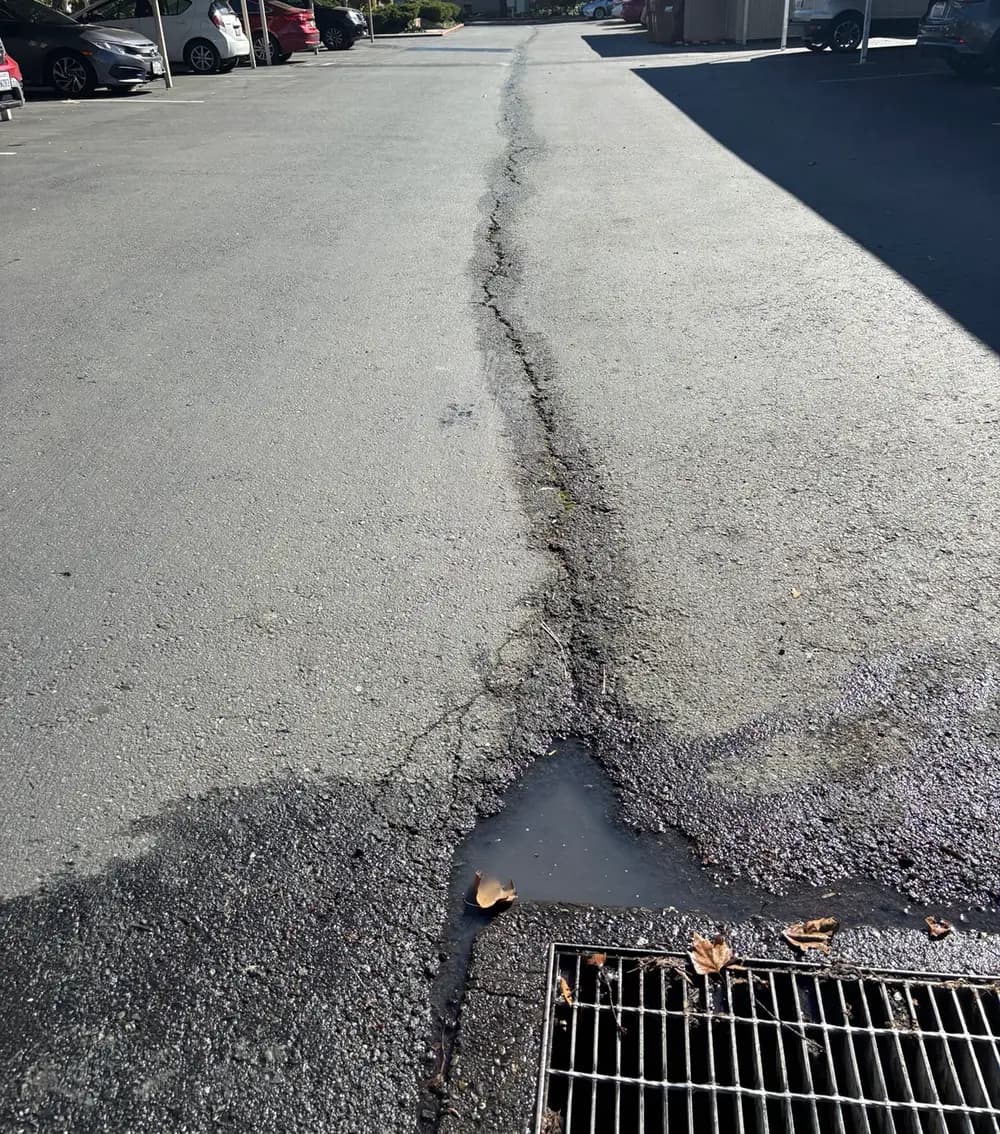
Water pooling in a low spot of a parking lot due to poor drainage.
Drainage & Sitework

Property-owner guide

Updated July 12, 2026

How Drainage Affects Pavement Life

Why drainage is the biggest factor in how long pavement lasts, how water damages asphalt from the base up, and why fixing it protects every repair.
Read guide
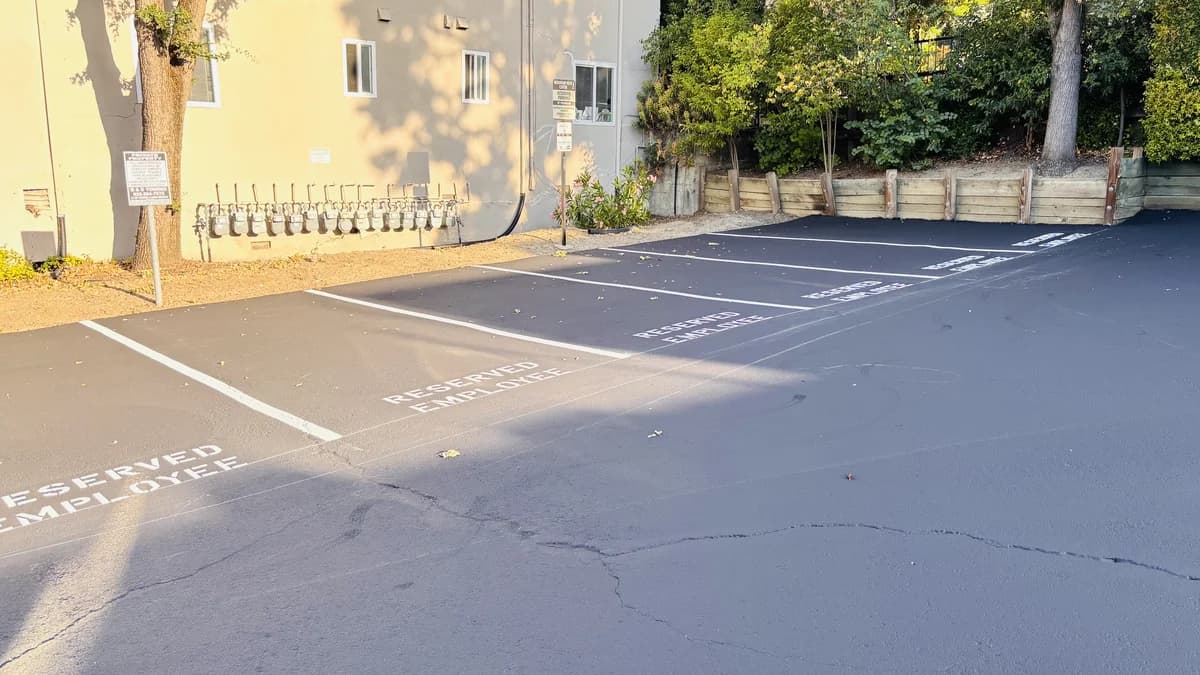
Deep black, evenly sealcoated apartment complex parking lot in sound condition.
Sealcoating

Property-owner guide

Updated July 6, 2026

When Is Sealcoating Worth It?

When sealcoating provides real value as preventive asphalt maintenance, and the pavement conditions where it makes the most sense.

Read guide
Cross-section edge of freshly paved asphalt showing compacted thickness over an aggregate base.
Asphalt Paving

Property-owner guide

Updated July 6, 2026

Asphalt Paving Thickness for Parking Lots

Typical asphalt paving thickness for parking lots: benchmarks for stalls, drive lanes, and truck areas, plus how base and soil change the answer.

Read guide
Property manager and asphalt paving contractor reviewing a cracked commercial parking lot together.
Contractor Hiring Guides

Property-owner guide

Updated July 6, 2026

How to Choose an Asphalt Paving Contractor

How to choose an asphalt paving contractor: project fit, relevant experience, written scope, references, insurance, and pavement qualifications.

Read guide
Parking Lot Maintenance

Property-owner guide

Updated July 11, 2026

How to Create a Parking Lot Maintenance Plan

How to build a parking lot maintenance plan: inspecting condition, setting service cycles, prioritizing repairs, and budgeting over multiple years.

Read guide

Wyoming Agencies and Reference Links

This page summarizes publicly available information for general education. It is not legal, engineering, or code-compliance advice, and requirements change. Confirm anything that affects your project with the agency with jurisdiction over the property.

Regulatory content last reviewed:

For contractors

Are you a pavement contractor in Wyoming?

Get listed where property managers, owners, and facility teams search by state, city, and service.