

What this guide covers
If you only understand one thing about pavement, make it this: water is what destroys it, so drainage quietly determines how long everything else lasts.
This guide explains how water damages pavement and why drainage is the foundation of a maintenance strategy. To fix problems, see parking lot drainage solutions and browse drainage and grading contractors.
For the symptoms to watch for, see parking lot drainage problems.
Related contractor categories
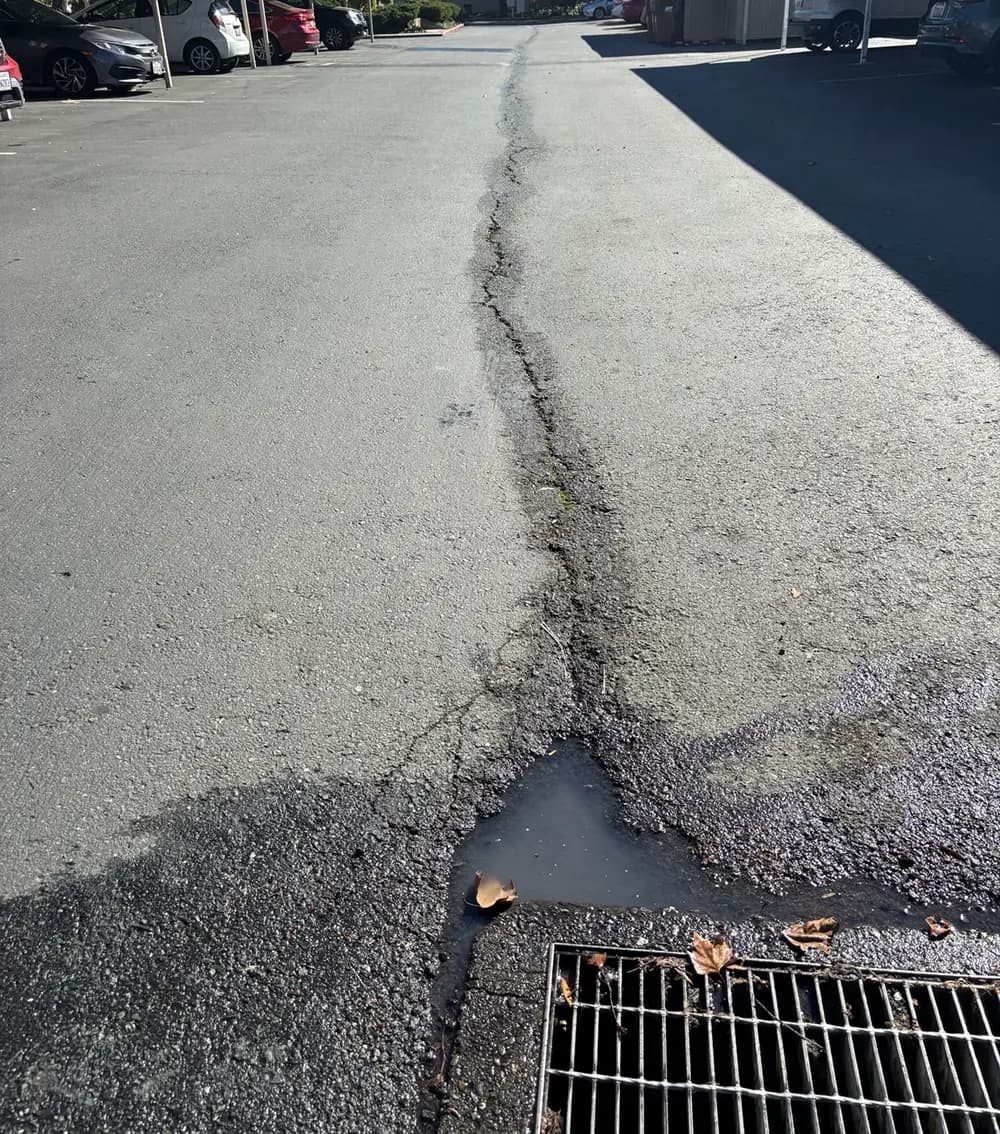
Why water is pavement's biggest enemy
Pavement is designed to shed water, not to sit in it. When water lingers — on the surface as ponding, or inside the pavement through cracks — it starts a chain of damage. On the surface, standing water accelerates wear and, with traffic, breaks down the binder. Below the surface, water is even more destructive because it undermines the structure that holds the pavement up.
How water damages the base and subgrade
The strength of any pavement comes from the layers beneath it — the base and the subgrade soil. When water reaches those layers, it softens and erodes them, so the pavement loses its support. Traffic then flexes the unsupported pavement until it cracks, and once it cracks, more water gets in. This is the cycle behind alligator cracking and potholes — see what causes alligator cracking.
Freeze-thaw makes it worse
In cold climates, trapped water freezes and expands roughly nine percent, prying cracks wider and heaving the pavement, then melts and leaves voids. Repeated freeze-thaw cycles do enormous damage over a winter, which is why keeping water out before the cold season — through crack sealing and good drainage — matters so much in those regions.
Why drainage protects every other repair
This is the practical takeaway: if water keeps reaching the pavement, repairs keep failing in the same places. Patch a pothole over a wet, eroded base and it comes back. Sealcoat a lot that ponds and the low areas fail anyway. Fixing drainage first — so water drains off and away — is what makes crack sealing, patching, sealcoating, and resurfacing actually last. Drainage isn't a separate line item; it's the foundation the rest of the maintenance plan sits on.
Frequently asked questions
Why is drainage so important for pavement?
Because water is the number one cause of pavement failure. Water erodes the base and subgrade that support the pavement and, in cold climates, freezes and breaks it apart. Good drainage keeps water moving off and away.
How does water damage asphalt?
On the surface it accelerates wear; below the surface it softens and erodes the base and subgrade, so the pavement loses support, flexes under traffic, and cracks — which lets in more water.
Why do my pavement repairs keep failing in the same spot?
Often because water keeps reaching that area. A patch or sealcoat over a wet, eroded base fails again until the underlying drainage problem is fixed.
Does drainage matter more in cold climates?
It's critical everywhere, but freeze-thaw makes it worse in cold regions — trapped water freezes, expands, and pries pavement apart, so keeping water out before winter is especially important.
Before you hire: The Pavement Directory does not guarantee contractor performance, pricing, licensing, insurance, or availability. Business information may be submitted by contractors or gathered from public sources and should be independently verified before hiring. Always confirm licensing, insurance, references, scope of work, and written contract terms.
For property owners
Looking for a pavement contractor?
Use The Pavement Directory to search asphalt, concrete, sealcoating, striping, ADA access, and pavement maintenance contractors by service and location. Always verify license, insurance, references, and written scope before hiring.
Search contractorsFor contractors
Are you a pavement contractor?
Contractors can add or claim a company profile to help property owners find pavement professionals by service, location, and specialty.