

What this guide covers
Sealcoating is preventive maintenance, not a repair. Its value depends heavily on timing — applied too early or too late, it delivers far less benefit than when applied to structurally sound pavement showing early wear.
Because it is inexpensive next to repair or replacement, sealcoat is often the first thing owners reach for on a tired-looking lot, even when the real problem is structural. The second half of this guide covers the conditions where the money is better spent elsewhere.
Related contractor categories
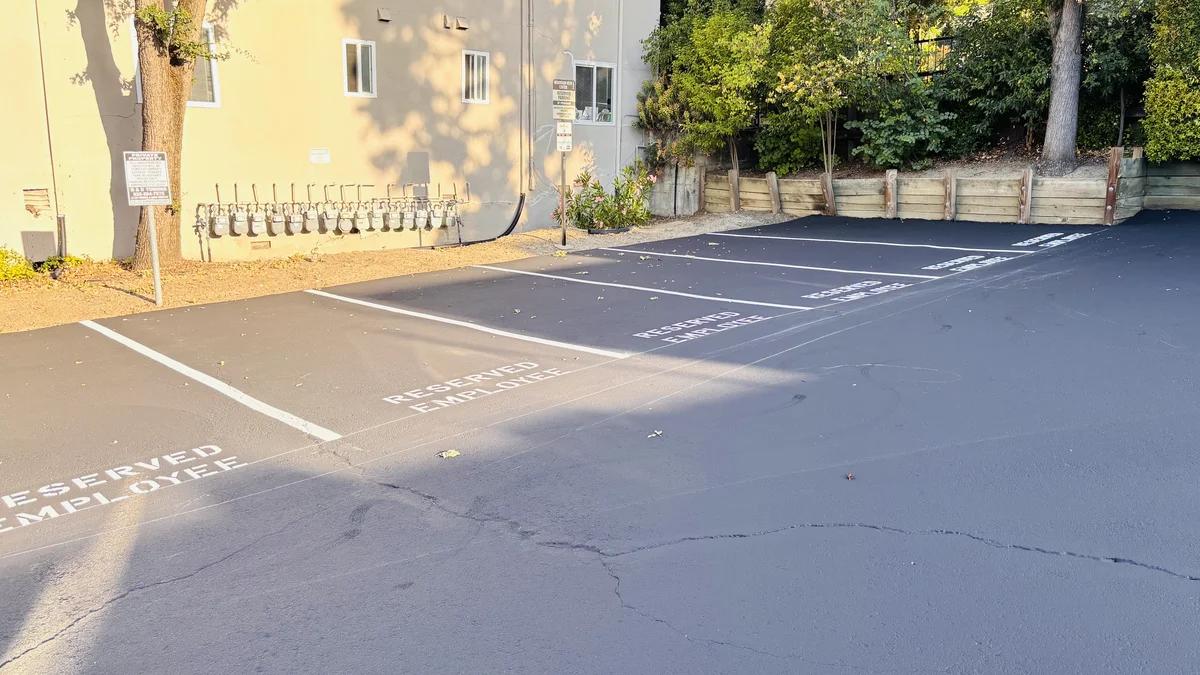
The best-case scenario for sealcoating
Sealcoating delivers the most value on asphalt that is structurally sound — no base failure, no widespread cracking — but starting to show surface oxidation, a grayish faded appearance, or minor raveling. At this stage, sealcoat helps protect the surface from further sun, water, and chemical exposure before those factors accelerate more serious damage.
Why timing matters more than most owners expect
New asphalt is sometimes better left unsealed for a period (commonly six months to a year) to allow the surface to cure and off-gas properly. Sealcoating brand-new pavement too soon can trap volatiles and cause adhesion problems. On the other end, pavement that has already developed significant cracking or base issues gets little benefit from sealcoat, since the underlying problem isn't addressed by a surface coating.
How sealcoating fits into a maintenance cycle
Many maintenance plans sequence crack sealing, then sealcoating, then striping, on a recurring multi-year cycle. Sealcoating works best as part of that ongoing plan rather than a one-time reaction to a lot that already looks worn.
What sealcoating does and doesn't do
Sealcoat protects the surface and can improve appearance and traction (especially with sand additives), but it is not a structural repair. It won't fix base failure, won't stop alligator cracking from progressing, and won't correct drainage problems.
One variation worth knowing about in hot markets: a reflective, light-colored cool seal is applied the same way and by the same crew, and measurably lowers midday surface temperature. It is the same timing decision as a conventional seal, priced differently — the pavement still has to be sound first.
When sealcoating is a waste of money
Over base failure. If a lot has widespread alligator cracking or visible base failure, sealcoating won't stop the deterioration — it only masks it for a while. The cracking typically reappears within a season, and the sealcoat spend adds cost without changing the eventual repair or replacement timeline.
Over unresolved drainage problems. Water that regularly pools in the same spot points to a grading or drainage issue. Sealcoat doesn't correct the grade, and the trapped water keeps weakening the base under and around the low spot. See parking lot drainage problems for what to fix first.
Over cracks that were never sealed. Applying sealcoat directly over open cracks is a common mistake. Water still enters through the cracks, and the thin coating over an active crack tends to re-crack quickly, wasting the material and labor.
On pavement near the end of its service life. For a lot that is a year or two from full replacement regardless, the sealcoat budget is usually better saved toward the larger project.
There is a middle case worth separating out. Pavement whose surface has worn open or lost its fines, but whose structure is still sound, is often past what sealer can meaningfully do while still being too good to replace. That is the pavement a thin aggregate treatment is designed for. See the slurry seal guide for how that treatment differs from sealcoating and which pavement qualifies.
Frequently asked questions
When is sealcoating useful?
Sealcoating is most useful as preventive maintenance on asphalt that is still structurally sound, helping protect the surface from sun, water, and chemical exposure before cracking or base failure sets in.
How soon after paving can asphalt be sealcoated?
Many contractors recommend waiting roughly six months to a year after installation so the new asphalt can cure and off-gas properly before sealcoat is applied.
Does sealcoating extend the life of asphalt?
Applied at the right time on structurally sound pavement, sealcoating can help slow surface deterioration from sun and water exposure, which can extend the time before larger repair work is needed.
Is sealcoating worth it on an older parking lot?
It depends on the lot's condition, not just its age. If the pavement is still structurally sound with only surface-level wear, sealcoating can still add value. If there's significant cracking or base failure, sealcoating provides much less benefit.
When is sealcoating a waste of money?
Sealcoating over pavement with significant base failure, widespread alligator cracking, or unaddressed drainage problems is unlikely to help and can mask issues that need repair or replacement instead.
Should I sealcoat a lot I'm planning to replace soon?
If replacement is only a year or two away, that budget is usually better put toward the replacement project than toward a maintenance treatment with limited benefit on pavement nearing the end of its life.
Why does sealcoat sometimes peel or flake soon after application?
This is often related to poor surface preparation (oil contamination, dirt, or moisture at the time of application) or applying sealcoat outside recommended temperature and weather conditions.
Before you hire: The Pavement Directory does not guarantee contractor performance, pricing, licensing, insurance, or availability. Business information may be submitted by contractors or gathered from public sources and should be independently verified before hiring. Always confirm licensing, insurance, references, scope of work, and written contract terms.
For property owners
Looking for a pavement contractor?
Use The Pavement Directory to search asphalt, concrete, sealcoating, striping, ADA access, and pavement maintenance contractors by service and location. Always verify license, insurance, references, and written scope before hiring.
Search contractorsFor contractors
Are you a pavement contractor?
Contractors can add or claim a company profile to help property owners find pavement professionals by service, location, and specialty.