
South Dakota pavement guide
Pavement Conditions in South Dakota: Regions, Soils, and Common Problems
South Dakota splits at the Missouri River into predictable glaciated prairie and swelling Pierre Shale, and prices construction through an excise tax built into the contract.
- 5 regions
- 5 common problems
- 6 local terms
Jump to section
Regional differences
Pavement Conditions by Region in South Dakota
South Dakota does not have one climate or one soil profile, and pavement that performs well in one part of the state can fail early a few hours away. These are the divisions that matter most when scoping paving, repair, or maintenance work.
The Big Sioux valley and eastern prairie
Sioux Falls · Brookings · Watertown · Yankton · Vermillion
Environmental stress
- The state's heaviest commercial traffic and largest lots
- Deep seasonal frost with a pronounced spring thaw
- Substantial winter deicing on commercial and institutional properties
Subgrade conditions
- Glacial till with a mix of fines, sand, and stones
- Loess over till in parts of the southeast
- Quartzite bedrock at shallow depth in the Sioux Falls area
Common distress
- Frost heave producing seasonal ridges that partly recover by summer
- Spring break-up potholing along crack lines opened over winter
- Concrete joint deterioration and scaling on heavily salted surfaces
What it means for the work
- This is by far the deepest contractor and supplier market in the state
- Shallow quartzite makes excavation cost unpredictable in parts of the Sioux Falls area
- Concrete pavement is common for heavy-duty areas here and its joints need maintenance
The James River lowland and central prairie
Aberdeen · Huron · Mitchell · Redfield
Environmental stress
- Deep frost penetration and a short construction season
- Very flat terrain with limited natural drainage fall
- Wind with significant blowing and drifting snow
Subgrade conditions
- Glacial till and lake sediments across the lowland
- Frost-susceptible silts in low areas and around wetlands
- A high water table with limited outlets in poorly drained areas
Common distress
- Ponding on flat sites where no positive fall was established
- Frost heave in frost-susceptible fine-grained soils
- Base saturation where a site has no working outlet for water
What it means for the work
- Where water is supposed to go is a design question here rather than a grading detail
- Agricultural and elevator loading arrives in concentrated harvest bursts
- Local plant capacity is limited and schedules fill early
The Missouri River trench and the Coteau du Missouri
Pierre · Fort Pierre · Chamberlain · Mobridge · Gettysburg
Environmental stress
- A wide annual temperature range from severe cold to high summer heat
- Steep bluffs and river breaks concentrating runoff
- Wind exposure across open ground
Subgrade conditions
- Pierre Shale at or near the surface across much of the area
- Shale-derived clays with very high shrink-swell potential
- Terrace deposits along the river with better bearing in places
Common distress
- Irregular cracking that opens in dry periods and partly closes when wet
- Slope movement on bluff and river-break sites
- Pavement flexing where shale-derived clay has taken on water
What it means for the work
- Pierre Shale is a genuine geotechnical problem rather than an ordinary clay, and it deserves investigation before design
- Keeping water away from shale subgrade does more for pavement life than any surface treatment
- Slope stability on bluff sites is a design question rather than a grading detail
The West River plains
Winner · Philip · Kadoka · Faith · Martin
Environmental stress
- A semi-arid climate with intense but infrequent rainfall
- Very large annual and daily temperature ranges
- Long distances between commercial centers and material sources
Subgrade conditions
- Pierre Shale and shale-derived clays with high plasticity
- Gumbo soils that become extremely soft and slick when wet
- Sodium sulfate and alkali soils in some locations
Common distress
- Severe seasonal movement and irregular cracking over shale
- Rutting where ranch and agricultural trucks work wet ground
- Concrete deterioration where sulfate levels in the soil are elevated
What it means for the work
- Subgrade treatment is often the meaningful difference between two otherwise similar bids here
- Sulfate exposure is worth testing before specifying concrete rather than assuming
- Plant availability, not crew capacity, often determines whether a project happens in a given season
The Black Hills
Rapid City · Spearfish · Sturgis · Custer · Deadwood
Environmental stress
- Elevation-driven freeze-thaw cycling with more crossings than the plains
- Heavy snowfall at higher elevations with sustained plowing
- Steep grades concentrating snowmelt and runoff across pavement
Subgrade conditions
- Limestone with karst features on the Hills' outer margins
- Granitic and metamorphic rock at shallow depth in the central Hills
- Pierre Shale on the plains side of the Rapid City area
Common distress
- Rounded depressions that reappear after filling in karst areas
- Frost heave and spring break-up at elevation
- Washout where runoff crosses a pavement edge on a grade
What it means for the work
- Directing concentrated stormwater into the ground over karst warrants engineering input
- Rapid City sites can transition from shale to rock within a short distance
- Tourism traffic peaks in the same months the working window is open, which constrains phasing
Field conditions
Common Pavement Problems in South Dakota
Pierre Shale swelling and strength loss
Irregular cracking with no relationship to traffic, pavement that flexes noticeably after wet periods, and repairs that move again within a season or two.
Likely causes
- Shale-derived clay with very high shrink-swell potential taking on and giving up moisture
- Water reaching the subgrade through open cracks, drainage patterns, or leaks
- Subgrade placed without treatment, moisture conditioning, or separation
- A section built with too little clean granular material above the shale
When to get it looked at: If a repair over shale has moved twice, the shale is the issue and the surface is not. That warrants a geotechnical look before any more money goes into pavement.
Slope movement on shale bluffs and river breaks
Cracks opening progressively toward the downhill side of a lot, the outboard edge dropping, and retaining features tilting, with the pattern advancing rather than settling.
Likely causes
- Pierre Shale losing strength when wetted and moving on slopes it was already marginal on
- Water infiltrating and raising pore pressure within the slope
- Fill placed on a slope without benching or subdrainage
- Toe support removed by an adjacent cut, road work, or erosion
When to get it looked at: Progressive movement is a slope stability problem and cannot be resolved by paving. Anything still moving needs geotechnical assessment before surface work is considered.
Frost heave and spring break-up
Ridges lifting the pavement through late winter and mostly settling back by summer, followed by potholes appearing over a few weeks in spring in the same places every year.
Likely causes
- Frost-susceptible fine-grained soils forming ice lenses as freezing penetrates
- Too little clean granular material between the pavement and the frost-susceptible layer
- The surface thawing before the ground below, trapping meltwater in the base
- Water available in the subgrade with no route out
When to get it looked at: When damage repeats in the same footprint each spring, the cause is drainage or granular depth rather than the winter, and annual patching treats it indefinitely.
Karst settlement in the Black Hills margins
A rounded depression that gets deeper and wider over years despite being filled, sometimes with cracking radiating outward, on limestone ground around the Hills.
Likely causes
- Soil migrating downward into solution voids in the limestone below
- Concentrated stormwater discharge accelerating soil loss into the subsurface
- A leaking line or unlined basin providing a steady source of water
- Rapid change in rock depth beneath the site with soft material between pinnacles
When to get it looked at: A depression that returns after filling should not be filled again. Recurrence means soil is still moving into the ground, which calls for investigation rather than more material.
Working gumbo subgrade wet
Rutting, pumping, and a subgrade that never regains stability after equipment or trucks operated on it during a wet period, leaving pavement that flexes long afterward.
Likely causes
- Shale-derived gumbo soils becoming extremely soft and slick when wet
- Construction or delivery traffic operating on saturated subgrade
- Schedule pressure pushing work into conditions the soil could not support
- No separation between soft subgrade and the granular layer above it
When to get it looked at: Damage done to gumbo subgrade during construction does not recover on its own. If a site was worked wet, that history is relevant to why the pavement is behaving the way it is.
Property types
Common Pavement Projects in South Dakota
Black Hills tourism and hospitality properties
Rapid City, Custer, and Deadwood properties take their heaviest traffic during exactly the months the working window is open, and sites can transition from limestone karst to shale within a short distance.
Sioux Falls commercial, healthcare, and financial campuses
Large lots on glacial till with deep frost, where clean granular depth and deicing damage to concrete are the recurring issues, and shallow quartzite can complicate any excavation.
Grain elevators and agricultural processing facilities
Harvest concentrates enormous truck volume into a few weeks on ground with deep seasonal frost, and scale approaches take a year's damage in a short window.
Ranch, livestock, and rural commercial properties West River
Pierre Shale subgrade combined with heavy vehicles working in wet conditions produces damage that outlasts the season, which makes drainage and subgrade treatment more valuable than surface thickness.
Tribal government and community facilities
Reservation properties involve separate jurisdiction and approval processes, and many sit on shale subgrade at considerable distance from the nearest asphalt plant.
Plain English
Pavement Terms You May Encounter in South Dakota
| Term | What it means on a South Dakota project |
|---|---|
| Contractors' excise tax | A South Dakota tax on gross receipts from construction work. Because it applies to the contract rather than being added as sales tax on materials, it is generally built into the quoted price — which is a common source of confusion when comparing bids across state lines. |
| Pierre Shale | The marine shale underlying much of the state west of the Missouri River. It swells when wetted, loses strength dramatically, and moves on slopes, and it is a genuine geotechnical condition rather than an ordinary clay subgrade. |
| Gumbo | The local term for shale-derived clay soils that become extremely soft and slick when wet. Working it in that condition does damage that does not recover, which is why timing matters as much as method on West River sites. |
| Plasticity index | A laboratory measure of how much a soil's behavior changes with moisture. On Pierre Shale-derived clays it is the number that tells you whether subgrade treatment belongs in the scope. |
| Non-frost-susceptible material | Granular material with few fines, placed so freezing water cannot build ice lenses that heave the pavement. With frost depths measured in feet statewide, its thickness is frequently the most consequential number in the section. |
| Geotextile separation fabric | Fabric placed between soft subgrade and granular base to stop the two from mixing. Over shale and soft clay it can substantially extend how long the granular layer keeps performing its function. |
State transportation specifications can provide useful regional terminology and material references, but they do not automatically govern private parking-lot or driveway projects unless incorporated into the contract or required by the applicable jurisdiction.
More definitions are in the pavement glossary.
Before you sign
Questions to Ask a Paving Contractor in South Dakota
- How is the contractors' excise tax reflected in this bid, and is it included in the number I am looking at?
- Is this site on Pierre Shale, and if so, what does the proposal do about it?
- What is the plasticity of the subgrade here, and does this scope include subgrade treatment?
- How deep is clean granular material going below the pavement, and is separation fabric included?
- What happens to the schedule if the subgrade is too wet to work — will the crew stop, and who carries that risk?
- Is any part of this lot showing progressive movement rather than static cracking?
- Is this parcel in karst terrain, and if so, where is stormwater being directed?
- Does this flat site have a working drainage outlet, and if not, what does the design do instead?
- Does the proposed section reflect the actual truck traffic here rather than the parking traffic?
- Can you show me comparable projects on the same side of the Missouri River?
South Dakota pavement condition FAQs
What is the contractors' excise tax and how does it affect my bid?
South Dakota imposes an excise tax on gross receipts from construction work, and contractors are required to be licensed with the Department of Revenue for it. Because it applies to the contract rather than being added as sales tax on materials at the counter, it is generally built into the price a contractor quotes rather than appearing as a separate line. That can make South Dakota bids look different from neighboring-state bids or from a materials-based estimate. Ask a contractor directly how the excise tax is reflected in their number.
What is Pierre Shale and why does it damage pavement?
Pierre Shale is the marine shale underlying much of South Dakota west of the Missouri River, and it is one of the more difficult foundation materials in the country. It swells when it takes on water, loses a great deal of strength when saturated, and is prone to movement on slopes. Pavement over it cracks in irregular patterns unrelated to traffic and flexes after wet periods. Because the cause is in the ground, drainage and subgrade treatment do far more than any amount of additional asphalt.
Is East River really different from West River for pavement work?
Substantially, and it is not a matter of degree. East of the Missouri, glacial till and loess make for reasonably predictable subgrade, and the dominant concerns are frost depth, drainage on flat ground, and deicing damage to concrete. West of the river, Pierre Shale brings high shrink-swell, dramatic strength loss when wet, and slope instability. A contractor experienced only in Sioux Falls may not have designed for the conditions a Pierre or Rapid City site presents.
What happens if a South Dakota site gets worked while it is wet?
On gumbo and shale-derived subgrade, real and lasting damage. These soils become extremely soft when saturated, and equipment or trucks operating on them in that state remold the material and destroy whatever structure it had. The subgrade does not recover on its own, and pavement built on top of it can flex for years afterward. That makes it worth agreeing up front what happens if conditions turn — whether the crew will stop, and who carries the schedule risk if they do.
Are sinkholes a concern in the Black Hills?
In the limestone areas around the Hills, yes. Groundwater has been dissolving that rock for a very long time, producing voids and irregular rock surfaces with soft material between them. Soil migrates downward into those openings and the surface follows, producing rounded depressions that reappear after being filled. Concentrated stormwater accelerates the process considerably, which is why directing runoff into the ground over karst warrants engineering input rather than being treated as a routine infiltration decision.
Why does the same bump come back in my South Dakota lot every spring?
That is frost heave, and it repeats because the cause is below the pavement. Frost-susceptible fine-grained soil holds water, freezing draws more moisture toward the freezing front, ice lenses form, and the pavement above is lifted. In spring it thaws and mostly settles back, leaving cracks behind. With frost depths measured in feet across this state, the depth of clean granular material below the pavement is usually what determines whether this happens — and resurfacing does nothing about it.
Related reading for South Dakota property owners

Property-owner guide
Updated July 6, 2026
How to Compare Asphalt Paving Bids
How to compare asphalt paving bids by normalizing scope, square footage, thickness, base preparation, drainage, exclusions, and warranty terms.
Property-owner guide
Updated July 12, 2026
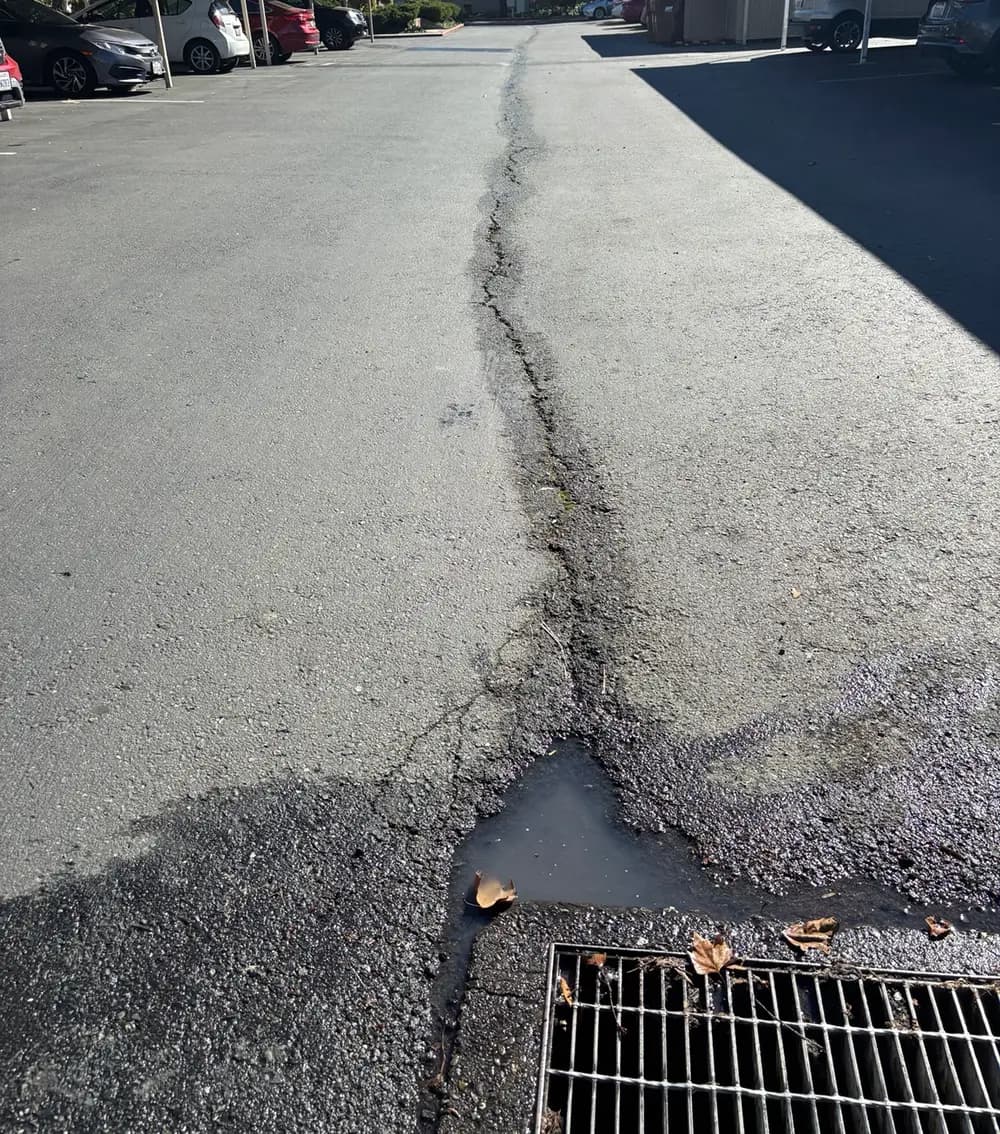
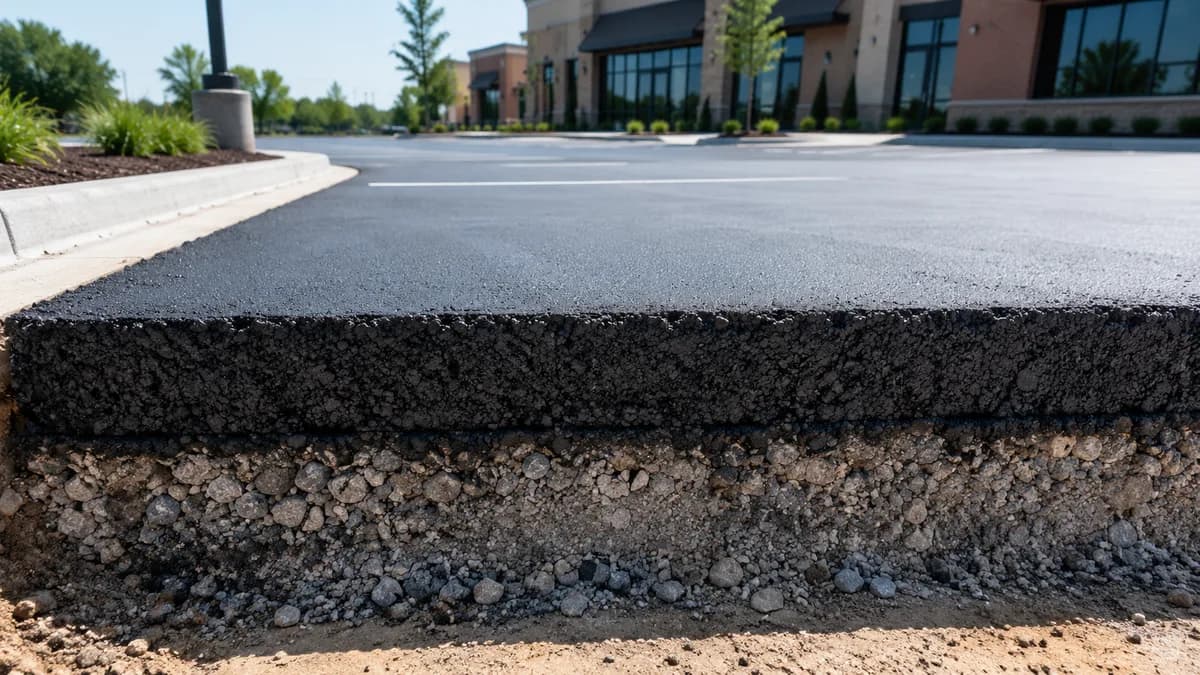
How Drainage Affects Pavement Life
Why drainage is the biggest factor in how long pavement lasts, how water damages asphalt from the base up, and why fixing it protects every repair.
Property-owner guide
Updated July 6, 2026
Asphalt Paving Thickness for Parking Lots
Typical asphalt paving thickness for parking lots: benchmarks for stalls, drive lanes, and truck areas, plus how base and soil change the answer.
Property-owner guide
Updated July 11, 2026
When Should You Seal Asphalt Cracks?
When to seal cracks in asphalt — which cracks to seal, the best time of year, why sealing early matters, and how crack sealing fits a maintenance schedule.
Property-owner guide
Updated July 6, 2026
How to Choose an Asphalt Paving Contractor
How to choose an asphalt paving contractor: project fit, relevant experience, written scope, references, insurance, and pavement qualifications.
Property-owner guide
Updated July 12, 2026
Grading and Slope Basics for Pavement
Grading and slope basics for pavement: what positive drainage means, why slope matters, common grading problems, and where engineering comes in.
Before you hire: The Pavement Directory does not guarantee contractor performance, pricing, licensing, insurance, or availability. Business information may be submitted by contractors or gathered from public sources and should be independently verified before hiring. Always confirm licensing, insurance, references, scope of work, and written contract terms.
For contractors
Ready to compare South Dakota contractors?
Browse listings by city and service, then use what you have read here to check the scope, the credentials, and the timing before you sign.