

What this guide covers
Grading is what makes water leave the pavement — get the slope right and the lot drains itself; get it wrong and you fight ponding for years.
This guide explains positive drainage and slope in plain terms, and where professional design comes in. For fixes, see parking lot drainage solutions; to hire, browse drainage and sitework contractors.
Slope also intersects accessibility — see can striping alone fix ADA parking compliance? for where ADA slope limits come in.
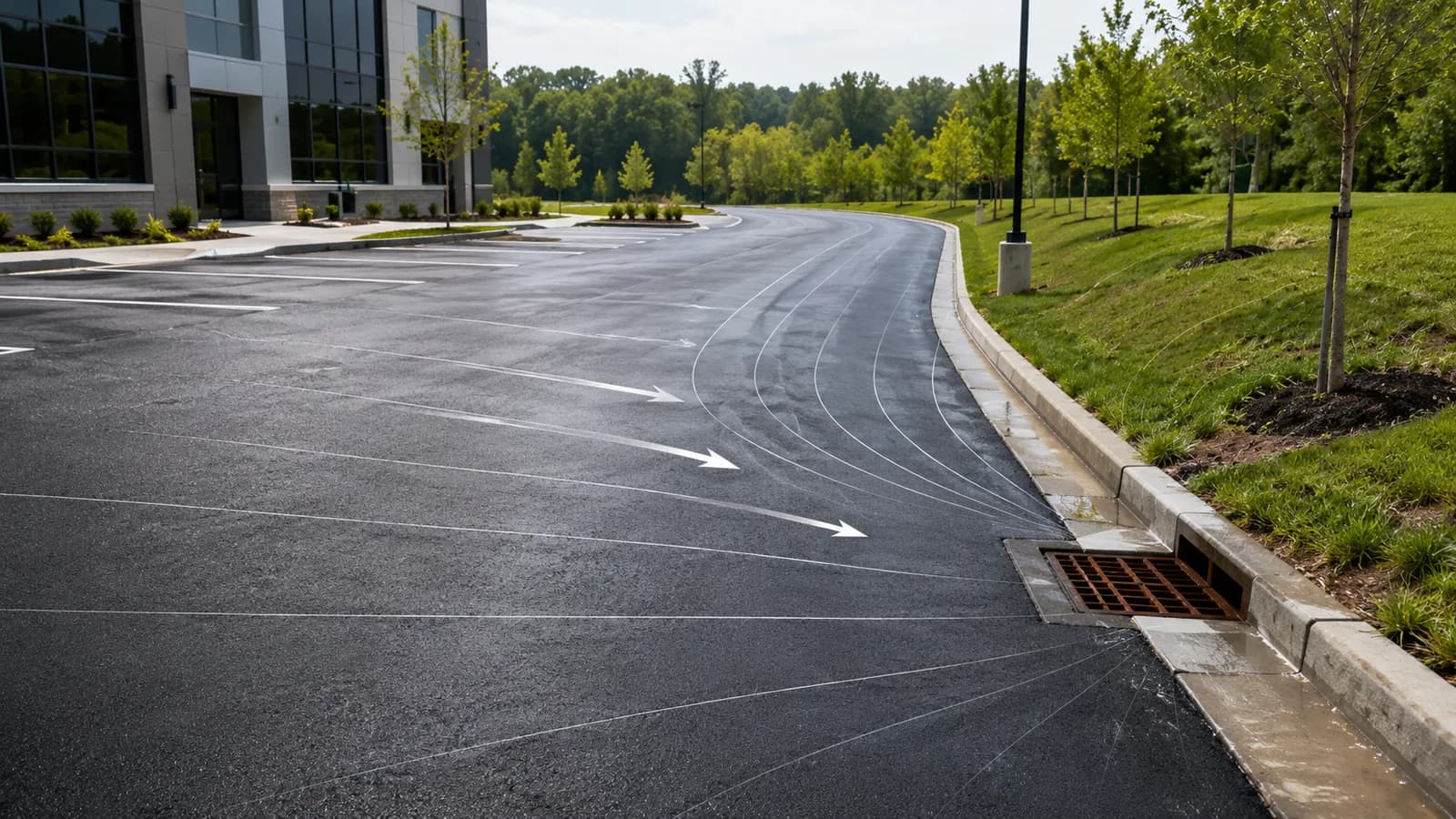
What positive drainage means
Positive drainage means the surface is shaped so water flows continuously toward somewhere it can leave — an inlet, a swale, or the edge of the pavement — without pooling along the way. It's the single most important outcome of good grading. A lot with positive drainage largely takes care of its own water; a lot without it collects puddles that slowly damage the pavement.
Why slope matters both ways
Pavement needs enough slope for water to move, but not so much that it creates other problems. Too little slope (or a reverse slope toward a building) leaves water sitting, which is the leading cause of drainage failure. Too much slope can be uncomfortable, harder to use, and a problem for accessibility. The right amount is a balance, and it's set by local code and the specific site — not a single universal number.
Common grading problems
Most grading issues show up as water that won't leave:
- Low spots or 'birdbaths' where water ponds after rain
- Reverse slope that sends water toward a building instead of away
- Settlement that has changed the original grade over time
- Flat areas with too little slope to actually drain
- Inlets set too high, so water never reaches them
Where accessibility and engineered design come in
Slope isn't only about drainage. Accessible parking, access aisles, and routes have slope limits that are regulated and vary by jurisdiction, so grading in those areas is a compliance matter as well as a drainage one. And on new construction or major regrades, the grading plan may be engineered and permitted. This guide is educational — accessible-route slopes and engineered grading are decisions for qualified design professionals, not something to eyeball. See the ADA resources before assuming an area's slope is compliant.
Frequently asked questions
What is positive drainage?
A surface graded so water flows continuously toward an inlet, swale, or edge without pooling. It's the main goal of good grading and the key to a lot that drains itself.
How much slope does a parking lot need?
Enough to move water to inlets or off the edge without ponding, but not so much that it's uncomfortable or unsafe. Exact minimums, maximums, and accessible-route limits are set by local code and the site, so specific slope design belongs to a professional.
What causes water to pond in a parking lot?
Usually a grading problem — a low spot, a reverse slope toward a building, settlement, or too little slope to drain. Inlets set too high can also leave water with nowhere to go.
Is parking lot slope an accessibility issue?
It can be. Accessible parking, access aisles, and routes have regulated slope limits that vary by jurisdiction, so grading in those areas is a compliance matter as well as a drainage one. Treat it as a question for qualified professionals.
Before you hire: The Pavement Directory does not guarantee contractor performance, pricing, licensing, insurance, or availability. Business information may be submitted by contractors or gathered from public sources and should be independently verified before hiring. Always confirm licensing, insurance, references, scope of work, and written contract terms.
For property owners
Looking for a pavement contractor?
Use The Pavement Directory to search asphalt, concrete, sealcoating, striping, ADA access, and pavement maintenance contractors by service and location. Always verify license, insurance, references, and written scope before hiring.
Search contractorsFor contractors
Are you a pavement contractor?
Contractors can add or claim a company profile to help property owners find pavement professionals by service, location, and specialty.