

What this guide covers
This guide explains what slurry seal is made of, how it compares with sealcoating, micro surfacing, chip seal, and an overlay, and how to tell whether a specific parking lot or roadway is a candidate for it.
The single most useful idea here: slurry seal renews a surface. It does not repair a structure. Pavement that is cracking because the base is weak, holding water, or failing under load will keep failing under a fresh slurry mat, and the money spent covering it will be lost.
Ready to price the work? Browse slurry seal contractors to compare firms by market, or start with the broader pavement preservation category if you are still deciding between treatments.
What slurry seal actually is
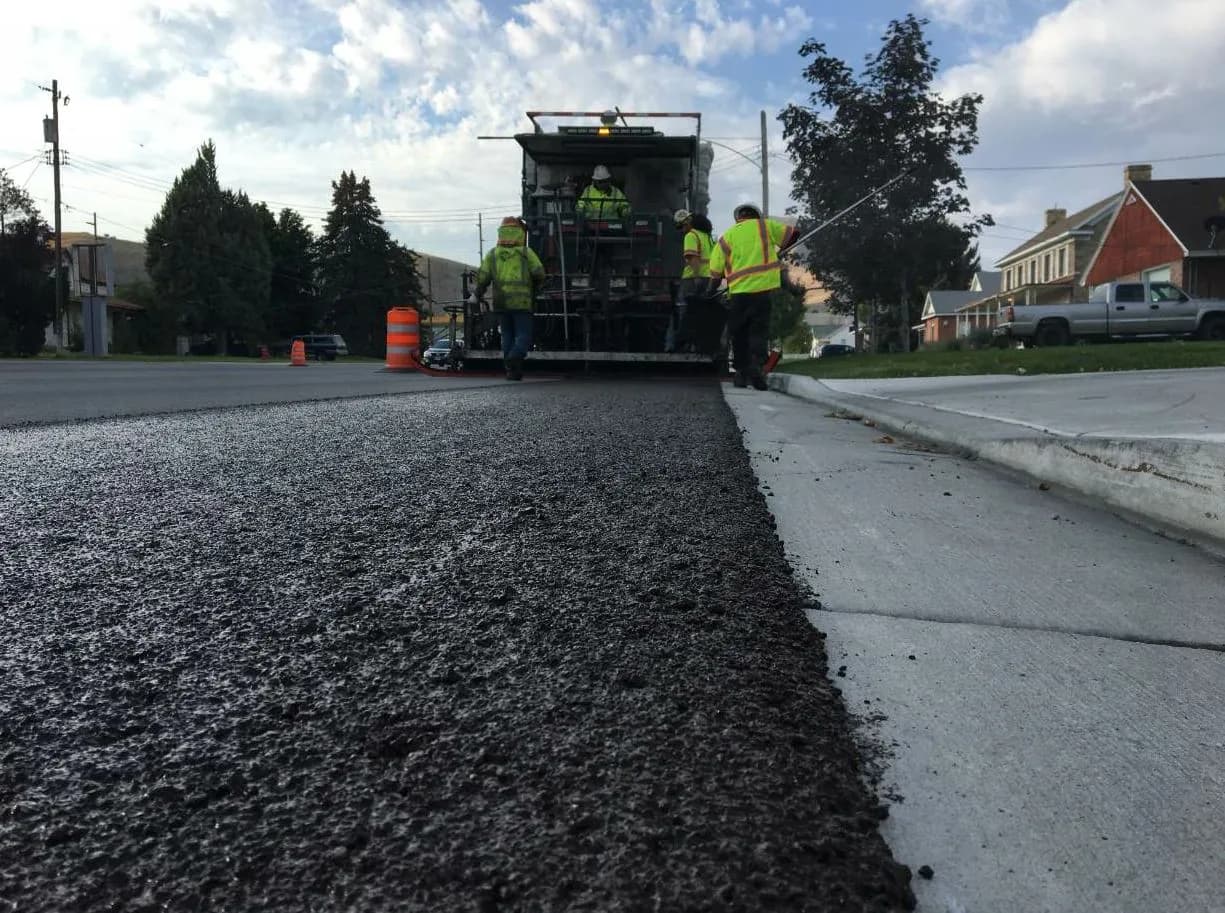
Slurry seal is a cold-applied mixture of four ingredients, combined in a machine at the point of placement and spread immediately before it sets:
- Asphalt emulsion. Asphalt binder suspended in water so it can be handled cold. The water breaks away as the mixture cures, leaving the binder behind.
- Fine aggregate. Crushed stone or sand, sized to a specified gradation. This is the ingredient that separates slurry seal from sealcoating, and it is what forms the new wearing surface.
- Water. Controls the consistency so the mixture spreads evenly rather than tearing or running.
- Additives. Control how quickly the emulsion breaks and sets, which in turn governs how soon the surface can take traffic.
Those ingredients are proportioned to a mix design and combined continuously inside a purpose-built machine as it moves. The mixture is delivered to a spreader box towed behind the machine, which lays it across the pavement at a controlled thickness. There is no hot plant, no roller train, and no paver.
The aggregate is the key point. Sealcoat is a coating applied over the existing surface, and the surface you drive on afterward is still the original asphalt with a protective film on it. Slurry seal places a genuinely new thin layer of aggregate and binder. That is why it can restore texture and skid resistance on pavement that has worn smooth or lost its surface fines, and why sealer on the same pavement would only darken it.
Where slurry seal fits in the pavement maintenance cycle
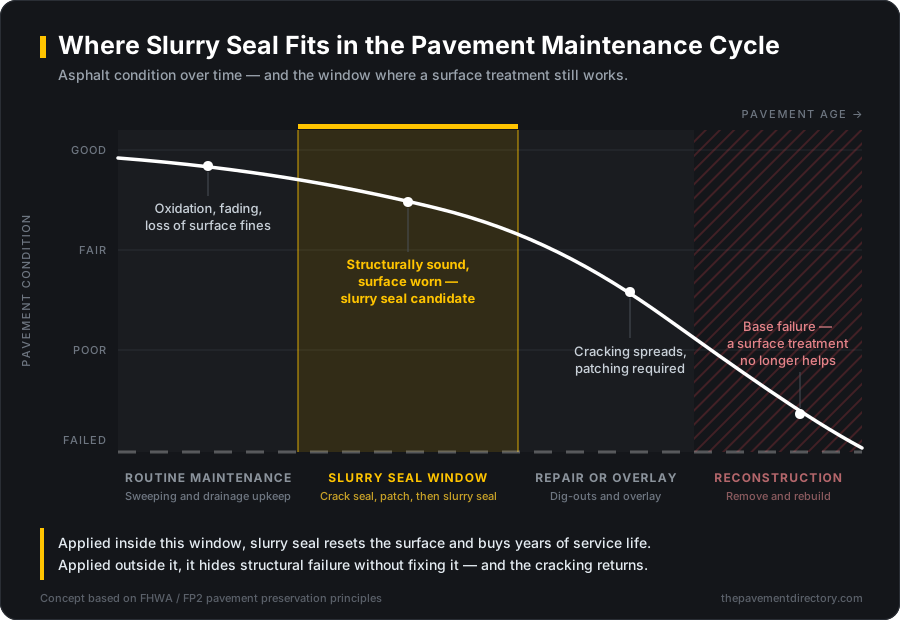
Every surface treatment has a window. Applied too early, you are spending money on pavement that did not need it yet. Applied too late, you are covering failure rather than preventing it, and the treatment fails with the pavement underneath it.
Slurry seal sits later in the cycle than sealcoating and earlier than an overlay. The pavement it suits is visibly worn on the surface (dry looking, open textured, losing fines, maybe faded to gray) while the structure below is still carrying traffic without deforming, pumping, or cracking in interconnected patterns.
The practical test is not the pavement's age. It is whether the distress you can see is confined to the surface. That question is worth answering before any treatment is priced, because the answer changes which treatment is even on the table.
Slurry seal compared with the alternatives
Slurry seal is one of several treatments that get proposed for a tired looking parking lot. They are not interchangeable, and the differences matter more than the price gaps between them.
| Treatment | What it puts down | Adds structure? | Best suited to |
|---|---|---|---|
| Sealcoating | A coating with no structural aggregate layer | No | Sound pavement with an intact surface, protected before it wears |
| Slurry seal | A thin new wearing surface of fine aggregate and emulsion | No | Structurally sound pavement whose surface has worn or lost fines |
| Micro surfacing | A polymer-modified slurry that sets chemically | No | The same pavement, where traffic cannot be closed long or ruts need filling |
| Chip seal | Sprayed binder with aggregate rolled into it | No | Roads and large areas where a coarser, noisier finish is acceptable |
| Asphalt overlay | A new layer of hot mix asphalt | Yes, some | Pavement needing added strength or a corrected surface profile |
Read the third column carefully. Four of these five treatments add no structural capacity at all. If a contractor is proposing one of them as the answer to cracking that runs in interconnected patterns, to areas that flex under a truck, or to a lot that ponds water after every rain, the proposal is addressing the symptom rather than the cause.
Micro surfacing is the closest relative and the most common alternative. It is a polymer-modified material with a chemically controlled set, which lets traffic return in hours rather than the better part of a day, and it can be placed thick enough to fill wheel ruts. It costs more per square foot. If a long closure is impossible on your property, ask about micro surfacing specifically rather than assuming slurry seal is the only option.
In hot-climate markets a sixth option gets raised: a reflective cool seal, which is a sealcoat in a light color. It belongs in the first row of this table, not a category of its own — it adds no structure either, and the same prerequisite applies.
Which pavement qualifies, and which does not
Slurry seal is a reasonable candidate when the pavement shows surface wear without structural distress. Signs that point toward it:
- The surface looks dry, gray, and open textured, with fines worn away between the aggregate.
- Texture has worn smooth in drive lanes, but the pavement is not deforming under load.
- Cracking is limited and isolated, and can be sealed or patched before treatment.
- The lot drains. Water leaves the surface rather than sitting on it.
- Patches from earlier repairs are stable and flush rather than sinking or breaking apart.
The disqualifiers matter more, because this is where money gets wasted. Interconnected cracking in a pattern resembling alligator hide indicates fatigue failure in the pavement structure, not a surface problem. Areas that flex, pump water, or feel soft under a loaded vehicle indicate a base or subgrade problem. Ponding water indicates a grade problem that no surface treatment corrects. Potholes indicate that material loss has already gone below the surface.
Any of those means the honest answer is repair, resurfacing, or reconstruction, and a slurry seal over the top would be a cosmetic delay. See what causes alligator cracking in asphalt if you are trying to identify the cracking pattern, and parking lot drainage problems if water is standing on the lot.
When both surface wear and isolated structural failure are present, the usual sequence is to repair the failed areas first, let the repairs settle, and treat the surface afterward. Treating first and repairing later wastes the treatment.
What the work looks like on site
Knowing the sequence helps you read a proposal and recognize when a step has been left out.
- Preparation. The surface is swept and cleaned. Vegetation in cracks and joints is removed. Oil-saturated areas are treated or cut out, because slurry does not bond to them.
- Repairs first. Crack sealing and patching happen before the treatment, not after. Ask how long repairs are allowed to cure before the slurry goes down.
- Masking and protection. Drain inlets, valve covers, and adjacent concrete are protected. Slurry that reaches a gutter or a sidewalk is difficult to remove cleanly.
- Application. The machine mixes and spreads continuously. Long, uninterrupted passes produce the most uniform result, which is one reason large open lots finish better than tight, obstructed ones.
- Curing and closure. The surface must be kept free of traffic until the emulsion has broken and set. This is the constraint that most affects an occupied property.
- Reopening and striping. Striping is reapplied after cure. A slurry seal erases existing markings completely, so restriping is not optional and should be a priced line item.
The closure requirement is the part property managers underestimate. Cure time depends on the mix design, temperature, humidity, and the treatment thickness, so no honest contractor can quote it from a phone call. Get a specific commitment in writing for your property and your season, and plan tenant or resident notice around that number rather than around a general rule of thumb.
Why slurry seal contractors can be hard to find
A continuous-mix slurry machine is a substantial, dedicated piece of equipment that does one job. Many contractors who list slurry seal among their services do not own one and subcontract the application to a firm that does.
That is not automatically a problem. Subcontracted work can be perfectly good, and in many markets it is the only way the work gets done at all. But it changes who is accountable for the result, who controls the mix design, and who you are actually talking to when something goes wrong.
Ask directly whether the contractor owns the machine or subcontracts the application. It is the fastest question for learning who will really be on your property, and the answer should be given without hesitation.
What a slurry seal proposal should include
A proposal reading "apply slurry seal to parking lot" gives you nothing to compare against a competing bid. A useful one identifies:
- The exact areas treated, with square footage, and the areas excluded.
- The aggregate gradation or mix type proposed, and why it suits this property.
- Surface preparation included, including sweeping, vegetation removal, and oil spot treatment.
- Crack sealing and patching handled as separate, priced line items with their own quantities.
- The number of applications, if more than one is proposed.
- Required closure duration and how the work will be phased across the property.
- Whether the contractor self-performs or subcontracts the application.
- Striping restoration, with stall counts and any ADA markings included.
- Protection and cleanup for drains, curbs, concrete, and adjacent surfaces.
- Weather and temperature limits under which work will be postponed.
- Exclusions and the process for handling conditions discovered after work starts.
- Warranty terms, and specifically what a warranty does and does not cover.
Two bids can only be compared when both describe the same scope. If one includes crack sealing and restriping and the other does not, the cheaper number is not the cheaper project. See how to compare sealcoating bids for the general method, which applies equally here.
Common ways slurry seal projects disappoint
Most complaints about slurry seal trace back to a small number of avoidable decisions:
- Treating pavement that needed repair. The most expensive mistake. Cracking returns through the new surface within a season or two, and the treatment is blamed for a structural problem it was never able to fix.
- Skipping or rushing the repairs. Patches placed immediately before treatment can continue to settle underneath it.
- Underestimating the closure. Traffic on a surface that has not set marks it permanently and can tear the new mat.
- Expecting a smooth, sealcoat-black finish. Slurry seal contains aggregate, so the finished texture is coarser and the color is a matte dark gray rather than a glossy black. This surprises owners who were shown a sealcoated lot as the reference.
- Forgetting the striping cost. Every marking on the lot disappears. If restriping was not in the bid, it becomes an unbudgeted change order.
- Treating a lot with unresolved drainage. Water that sat on the old surface will sit on the new one and shorten its life.
Frequently asked questions
What is slurry seal?
Slurry seal is a mixture of asphalt emulsion, fine aggregate, water, and additives, mixed on site and spread over existing asphalt as a thin new wearing surface. It restores surface texture and seals the pavement, but adds no structural strength.
How is slurry seal different from sealcoating?
Sealcoating is a coating applied over the existing surface. Slurry seal contains aggregate and lays down a new thin wearing surface. Slurry seal can restore texture on pavement too worn for sealer to help, and typically lasts longer, but it costs more and requires specialized equipment.
Is slurry seal a substitute for an overlay?
No. Slurry seal is a surface treatment with no structural value. If pavement is failing because of a weak base, poor drainage, or extensive interconnected cracking, slurry seal will look better briefly and then fail along with the pavement beneath it. An overlay or reconstruction addresses those conditions.
How long does a parking lot stay closed after slurry seal?
Long enough for the emulsion to break and set, which depends on the mix design, temperature, humidity, and thickness. It is usually measured in hours rather than days, but the figure varies enough that you should get a commitment specific to your property and season rather than relying on a general rule.
Can slurry seal be used on a residential driveway?
It can, but it is uncommon. The equipment is sized for streets and large lots, so mobilizing it for a single driveway is often uneconomical. Most residential surfaces are better served by sealcoating, or by repair if the surface has deteriorated past what a coating can address.
Why is it hard to find a slurry seal contractor?
The work requires a continuous-mix slurry machine, a substantial piece of dedicated equipment. Many contractors who list slurry seal among their services subcontract the application. Asking whether a contractor owns the machine is the fastest way to learn who performs the work.
What does slurry seal look like when it is finished?
A matte, dark gray, slightly coarse surface. Because the material contains aggregate, the texture is more open than sealcoat and the color is not glossy black. It also erases all existing pavement markings, so restriping is always required.
How long does slurry seal last?
Service life depends on the pavement it was placed over, traffic, drainage, climate, and the mix design, so a single figure would be misleading. The strongest predictor is the condition of the pavement underneath: a treatment placed on sound, well-drained pavement lasts considerably longer than the same treatment placed over unresolved problems.
Before you hire: The Pavement Directory does not guarantee contractor performance, pricing, licensing, insurance, or availability. Business information may be submitted by contractors or gathered from public sources and should be independently verified before hiring. Always confirm licensing, insurance, references, scope of work, and written contract terms.
For property owners
Looking for a pavement contractor?
Use The Pavement Directory to search asphalt, concrete, sealcoating, striping, ADA access, and pavement maintenance contractors by service and location. Always verify license, insurance, references, and written scope before hiring.
Find slurry seal contractorsFor contractors
Are you a pavement contractor?
Contractors can add or claim a company profile to help property owners find pavement professionals by service, location, and specialty.