

What this guide covers
Paving is the broader category; overlay means new asphalt over old asphalt. Overlay can reduce disruption, but it does not fix a weak base, existing cracks may reflect through, and drainage or grade conflicts matter.
This guide is part of the asphalt paving hiring hub — start with How to Choose an Asphalt Paving Contractor for the full picture. This article explains the overlay decision; for repair vs. larger paving scope, see Asphalt Paving vs Asphalt Repair, and for the driveway-specific version of this decision, see Residential Asphalt Paving Contractors.
For what each approach costs, the asphalt paving cost guide compares overlay and full replacement planning ranges side by side.
Related contractor categories
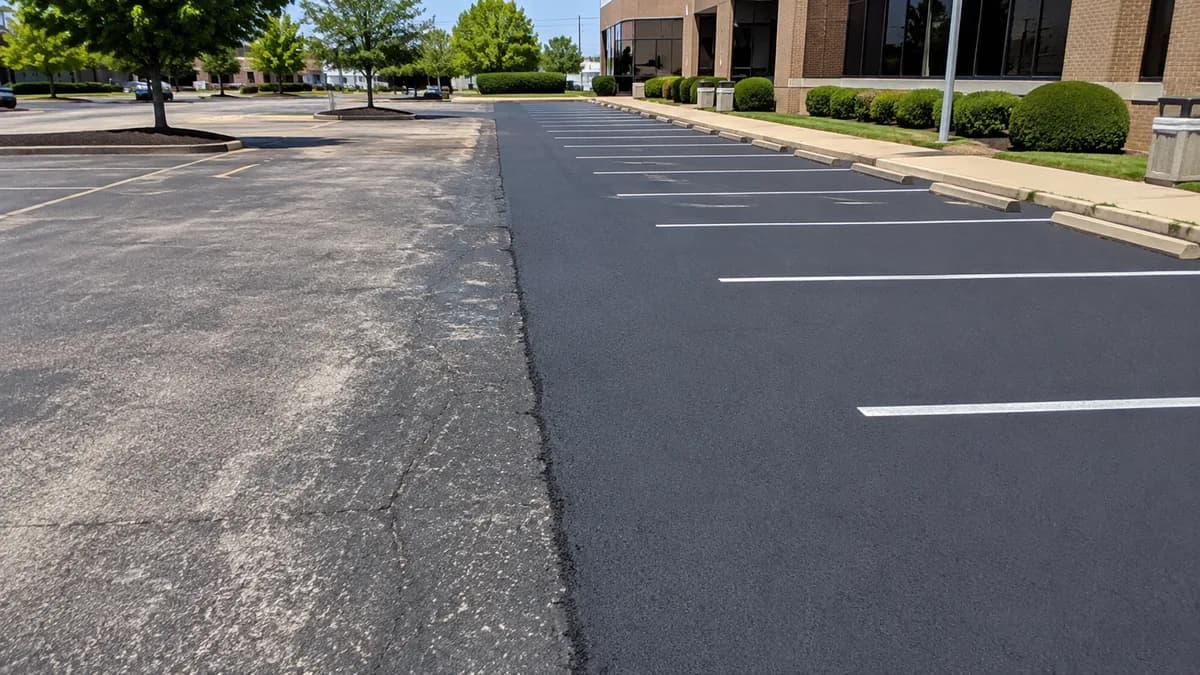
What asphalt paving means
Asphalt paving can mean new asphalt pavement, full replacement, parking lot paving, driveway paving, private road paving, mill and overlay, or asphalt overlay. The word "paving" is broad — that's why proposals should say exactly which method is being used.
What asphalt overlay means
Overlay means placing a new asphalt layer over existing asphalt, most commonly 1.5 to 2 inches compacted — thinner lifts are hard to compact properly and wear out faster. Typical overlay work includes cleaning the surface, repairing failed areas first, grinding edges, applying tack coat, placing new asphalt, compacting it, and restriping the lot. Overlay is usually less disruptive than full replacement, but it depends entirely on the existing pavement.
When overlay can work
Overlay may be reasonable when existing pavement is mostly stable, cracking is limited, base failure is not widespread, drainage is acceptable, grades allow the added height, transitions can be handled, failed areas are patched first, and utility covers can be adjusted if needed.
As a rough field rule, if more than 20 to 25 percent of the surface needs full-depth repair first, the patch cost starts pushing the overall project toward mill and overlay or replacement.
When overlay fails
Overlay is risky when there's widespread alligator cracking, the pavement is sinking, the base is unstable, water is trapped, prior overlays have failed, existing pavement is badly broken, grade cannot be raised, drains/curbs/doors/sidewalks create height conflicts, or heavy vehicle areas are already failing. Overlay can hide failure temporarily — it does not rebuild the pavement structure.
Overlay decision guide
How site condition maps to overlay risk:
| Site condition | Overlay likely? | Why |
|---|---|---|
| Stable pavement with surface wear | Possibly | Surface renewal may be enough |
| Isolated failed areas | Possibly after patching | Failed areas should be repaired first |
| Widespread alligator cracking | Usually risky | Structural failure may reflect through |
| Standing water | Risky | Overlay may not correct drainage |
| Low curb or drain elevations | Risky | Added height may create conflicts |
| Prior failed overlay | Risky | Underlying issue may still exist |
Grade and height conflicts
Overlay raises the pavement surface 1.5 to 2 inches, which can create problems at garage doors, building entrances, sidewalks, curbs, drains, utility covers, ADA access aisles, driveway aprons, and street tie-ins. Milling (grinding down the existing surface before overlay) is the standard fix at transitions — before approving overlay, ask which edges and transitions will be milled.
Reflective cracking
Existing cracks can reflect through a new overlay, often within 1 to 3 years for active cracks. This does not always mean the overlay was installed poorly — it can mean the existing pavement continued moving below the new surface. Crack sealing, patching, fabric interlayers, milling, or replacement may be discussed depending on site conditions, but no single method fits every project.
Overlay and drainage
Overlay raises the surface and can change how water flows. If the site already ponds, an overlay can move the problem instead of fixing it, and raising grades near drains and ADA aisles requires specific attention. If standing water is part of why the lot is failing, involve Drainage and Sitework Contractors in the design before committing to overlay.
Frequently asked questions
Is asphalt overlay the same as paving?
Overlay is one type of paving. Paving can also mean new construction, replacement, or resurfacing.
Is overlay cheaper than replacement?
Usually 40 to 60 percent of replacement cost up front, but not always cheaper over the life of the pavement. Overlay can fail early if the existing pavement is unstable.
How thick is a typical asphalt overlay?
Most overlays are 1.5 to 2 inches compacted. Thinner lifts are difficult to compact and wear faster.
Can overlay fix alligator cracking?
Not usually. Widespread alligator cracking often indicates structural failure that may need repair or replacement, and unrepaired cracks commonly reflect through within 1 to 3 years.
Does overlay fix drainage?
Not automatically. Overlay may improve minor surface issues, but it can also create drainage conflicts.
Do you need striping after overlay?
For parking lots, usually yes. Overlay normally covers existing markings.
Before you hire: The Pavement Directory does not guarantee contractor performance, pricing, licensing, insurance, or availability. Business information may be submitted by contractors or gathered from public sources and should be independently verified before hiring. Always confirm licensing, insurance, references, scope of work, and written contract terms.
For property owners
Looking for a pavement contractor?
Use The Pavement Directory to search asphalt, concrete, sealcoating, striping, ADA access, and pavement maintenance contractors by service and location. Always verify license, insurance, references, and written scope before hiring.
Search contractorsFor contractors
Are you a pavement contractor?
Contractors can add or claim a company profile to help property owners find pavement professionals by service, location, and specialty.