
Nevada pavement guide
Pavement Conditions in Nevada: Regions, Soils, and Common Problems
Nevada's pavement problems are heat and water arriving in extremes — too much sun in the south, too little runoff capacity everywhere.
- 4 regions
- 5 common problems
- 6 local terms
Jump to section
Regional differences
Pavement Conditions by Region in Nevada
Nevada does not have one climate or one soil profile, and pavement that performs well in one part of the state can fail early a few hours away. These are the divisions that matter most when scoping paving, repair, or maintenance work.
Southern Nevada and the Mojave
Las Vegas · Henderson · North Las Vegas · Boulder City · Pahrump
Environmental stress
- Extreme summer surface temperatures and intense ultraviolet exposure
- Monsoon storms delivering very high rainfall intensity in short bursts
- Nearly continuous heavy visitor and delivery traffic on resort properties
Subgrade conditions
- Caliche layers cemented hard enough to require mechanical breaking
- Gravelly alluvial fan deposits with variable density
- Locally collapsible soils that settle when first wetted
Common distress
- Rutting and shoving at stop bars, turning areas, and porte-cocheres
- Rapid binder oxidation, brittleness, and raveling
- Washout and base loss where flash runoff crosses pavement
What it means for the work
- Night placement is common and often the right call in peak summer
- Caliche excavation should be priced as a distinct item, not assumed
- Flash flow paths matter more than annual rainfall in the drainage design
Truckee Meadows and western Nevada
Reno · Sparks · Carson City · Minden · Fernley
Environmental stress
- Genuine winter freeze-thaw cycling at elevation
- Large day-to-night temperature swings year round
- Growing warehouse and distribution traffic east of Reno
Subgrade conditions
- Alluvial and lake-bed sediments across the valley floor
- Silty soils that soften when wet and are frost-susceptible
- Shallow rock on the surrounding benches and foothills
Common distress
- Winter potholing along crack lines opened over the season
- Frost heave in fine-grained valley sediments
- Rutting at industrial and distribution entrances
What it means for the work
- Crack sealing before winter has genuine value here, unlike in Las Vegas
- Snow storage and meltwater routing belong in the site layout
- The working season is meaningfully shorter than in the south
Lake Tahoe basin
Incline Village · Stateline · Zephyr Cove
Environmental stress
- Heavy snowfall, deep frost, and sustained plowing and abrasive use
- Steep terrain with concentrated snowmelt runoff
- A very short construction season at elevation
Subgrade conditions
- Granitic soils and decomposed granite
- Steep sites with shallow rock and limited flat area
- Saturated ground during snowmelt
Common distress
- Severe frost heave and spring break-up
- Plow and abrasive damage to surfaces and raised features
- Erosion where snowmelt concentrates on slopes
What it means for the work
- Regional water quality and erosion requirements apply in addition to state rules
- Fine sediment control is a specific concern in this basin
- The construction window is measured in weeks, and it books out early
Great Basin interior and northeastern Nevada
Elko · Winnemucca · Ely · Battle Mountain
Environmental stress
- Cold winters with deep frost penetration
- Very large annual and daily temperature ranges
- Heavy mining and haul-related truck traffic
Subgrade conditions
- Silty and clayey basin fill with frost susceptibility
- Playa deposits with poor drainage and high fines content
- Locally saline and alkaline soils
Common distress
- Thermal cracking from extreme temperature swings
- Frost heave and spring thaw weakening
- Severe rutting and edge break-up on mine-related truck routes
What it means for the work
- Mine and haul traffic is a design load far beyond typical commercial use
- Plant access is limited outside the main population centers
- Water for compaction is a genuine logistical item on remote sites
Field conditions
Common Pavement Problems in Nevada
Heat-driven rutting and shoving
Wheel-path depressions and pushed-up ridges at stop bars, drive-through lanes, hotel entrances, and delivery zones — most visible in July and August when the surface is at its hottest.
Likely causes
- Extremely high pavement surface temperatures reducing mix stiffness
- Slow, stopped, or channelized traffic concentrating load in one line
- A mix or binder grade not selected for the site's actual temperature and loading
- Delivery and shuttle vehicles standing in the same place daily
When to get it looked at: Rutting concentrated where vehicles slow or stop, rather than spread across the lot, points to a mix and section question rather than a maintenance one. Concrete is often the right answer in those specific zones.
Flash flood damage from monsoon runoff
Base washout, undermined edges, and displaced material appearing within hours of a single intense storm, often on a lot that has handled ordinary rain for years without incident.
Likely causes
- Rainfall intensity far exceeding inlet and conveyance capacity
- Flow arriving from off-site along a wash or historic drainage path
- No armored outfall or energy dissipation at discharge points
- Desert soils shedding water rather than absorbing it
When to get it looked at: Design for the storm that damages the property, not the average year. If runoff crosses the site from upstream, that is a site question that no amount of surface repair addresses.
Binder oxidation and raveling under intense UV
A surface that has gone grey and rough, loses aggregate when swept or brushed, and develops fine interconnected cracking without any traffic-related deformation.
Likely causes
- Prolonged solar exposure hardening the asphalt binder
- Very low humidity and high surface temperatures accelerating aging
- Low traffic volume, which lets the binder stiffen undisturbed
- A surface never protected through its service life
When to get it looked at: Raveling with a sound base is a surface problem. Once the ravel has progressed deep enough that the section is losing thickness, it becomes a resurfacing question instead.
Caliche excavation and compaction surprises
Excavation that stalls on a cemented layer, or a subgrade that will not reach density with ordinary effort, on southern Nevada sites where the material below looks like ordinary desert soil at the surface.
Likely causes
- Naturally cemented calcium carbonate layers at variable depth
- Highly variable cementation across a single parcel
- Assumptions about excavation carried over from a different site
When to get it looked at: Ask how excavation and any rock or caliche will be priced before work starts. It is a well-known southern Nevada condition and it should not arrive as a surprise change order.
Freeze-thaw damage in northern Nevada
Potholes forming along crack lines through late winter and spring in Reno, Carson City, Elko, and the Tahoe basin — a failure mode that southern Nevada property owners rarely encounter.
Likely causes
- Water entering unsealed cracks and freezing repeatedly at elevation
- Frost-susceptible silty valley sediments holding moisture
- Snow and ice operations working the surface mechanically
- Traffic applied while the base is thaw-weakened
Property types
Common Pavement Projects in Nevada
Resort, casino, and hospitality properties
Porte-cocheres, shuttle lanes, and taxi and rideshare queues concentrate slow, heavy, repetitive loading on pavement that is at its hottest, and closures for repair are extremely constrained.
Distribution and fulfillment centers
The Las Vegas and Reno-Sparks logistics corridors put trailer loading on sections that often match the car parking field, so aprons and drop lots fail long before the rest of the site.
Mining and industrial facilities
Northeastern Nevada sites carry haul and service traffic far beyond ordinary commercial loading, on remote parcels where plant access and water for compaction shape what is feasible.
Master-planned community and HOA streets
Private streets across the Las Vegas valley age under intense UV rather than under traffic, which makes surface protection and crack sealing the main levers in a reserve plan.
Mountain resort and lakefront properties
Tahoe basin properties combine a very short construction window, plow and abrasive exposure, steep drainage, and regional coverage and sediment requirements that reshape the whole project.
Plain English
Pavement Terms You May Encounter in Nevada
| Term | What it means on a Nevada project |
|---|---|
| Caliche | Naturally cemented calcium carbonate soil common in southern Nevada. It can be hard enough to require mechanical breaking, and its cementation varies across a single site, which makes excavation quantity difficult to predict from one test hole. |
| Type 2 aggregate base | A crushed aggregate base gradation used widely on Nevada projects. Proposals typically name the base type and compacted thickness; that layer usually governs pavement life more than the surface course does. |
| Performance-graded binder | Asphalt binder specified by the high and low temperatures it is designed to perform at. In southern Nevada the high-temperature end genuinely matters, and asking which grade is being supplied is a fair question on a heavily loaded site. |
| Collapsible soil | Soil that holds an open structure while dry and settles when it is first wetted. It occurs in parts of the Nevada desert and is a reason to ask how water will be kept away from beneath the pavement. |
| Alluvial fan flow path | The spreading, shifting route stormwater takes as it leaves a mountain front. A site sitting on one can receive flow from well upstream, which is a drainage question no on-site inlet capacity resolves by itself. |
| Dust control permit | Authorization required in Nevada's major urban counties for construction activity that disturbs soil. It is a routine part of doing site work there and belongs in the contractor's scope. |
State transportation specifications can provide useful regional terminology and material references, but they do not automatically govern private parking-lot or driveway projects unless incorporated into the contract or required by the applicable jurisdiction.
More definitions are in the pavement glossary.
Before you sign
Questions to Ask a Paving Contractor in Nevada
- What is your Nevada State Contractors Board license number, and what classification and monetary limit does it carry?
- Does the monetary limit on your license cover the value of this project?
- What binder grade and mix are you proposing, and how does that account for summer surface temperatures here?
- Is caliche or rock excavation anticipated, and how will additional quantity be measured and priced?
- Where does stormwater arrive from and leave to during a monsoon event, and does anything upstream reach this site?
- Is a dust control permit required for this work, and is it in your scope?
- For our porte-cochere and delivery lane, would concrete be the better long-term answer than asphalt?
- At an elevation property, is crack sealing before winter part of the plan or a separate item?
- What surface and overnight temperatures do you need for this product, and would night placement be better here?
Nevada pavement condition FAQs
Why does asphalt rut so badly at Las Vegas hotel entrances?
It is a combination of temperature and loading pattern. Pavement surface temperatures in the low Mojave summer reduce the mix's stiffness substantially, and porte-cocheres, shuttle lanes, and rideshare queues concentrate slow, stopped, repetitive traffic in exactly the same wheel path all day. The asphalt deforms and pushes into ridges rather than wearing evenly. Repaving in the same section usually reproduces it. Many owners in that situation move those specific zones to concrete and keep asphalt for the parking field.
How much does monsoon rain matter for Nevada parking lot drainage?
Far more than the annual rainfall total implies. Southern Nevada receives very little rain in a year but can receive a substantial share of it in an hour, and desert soils shed water rather than absorbing it. A lot that has handled ordinary rain for a decade can lose base material and edge support in a single storm. The design question is not the annual number — it is whether the site can pass the intense event, including any flow arriving from upstream along a wash or alluvial fan.
What is caliche and why does it affect my Nevada project cost?
Caliche is naturally cemented calcium carbonate soil, common in southern Nevada, and it can be hard enough that ordinary excavation equipment cannot get through it. What makes it a cost issue rather than just a technical one is that its depth and hardness vary across a single parcel, so a test hole in one corner does not predict what a trench will find in another. It is a known regional condition, so ask how excavation is priced and what happens if more is encountered — before work starts, not after.
Does pavement in Reno need different maintenance than pavement in Las Vegas?
Yes, and the difference is larger than most owners assume. Reno and Carson City sit high enough to cycle through freezing repeatedly each winter, so unsealed cracks take on water, freeze, and turn into potholes — the same mechanism that operates in the Midwest. In Las Vegas the dominant aging process is ultraviolet exposure hardening the binder until the surface ravels. Crack sealing before winter is a priority in the north; surface protection matters more in the south. One statewide maintenance plan does not fit Nevada.
Are there extra requirements for paving in the Lake Tahoe basin?
Yes. Development in the Tahoe basin is subject to a regional regulatory framework aimed at protecting lake clarity, with particular attention to land coverage limits and fine sediment control. Requirements for water quality treatment and construction-season erosion control there go beyond what applies elsewhere in Nevada, and the construction season itself is short. Establish what review applies well before design, because the requirements can change the project's feasibility rather than just its paperwork.
Should Nevada paving be done at night?
In southern Nevada during peak summer it often should be, and it is common practice. Placing and compacting asphalt when the surface is extremely hot makes compaction and traffic release harder to manage, and night work also avoids disrupting properties that cannot close during the day. It is not automatically better — it costs more, needs lighting, and has its own quality considerations. The right answer depends on the product, the site, and the season, so ask the contractor to explain their recommendation rather than defaulting either way.
Is sealcoating worthwhile in the Nevada desert?
On sound asphalt in southern Nevada it addresses the dominant aging mechanism directly, which is ultraviolet exposure hardening the binder until the surface loses aggregate. That is a stronger case than it has in many wetter climates. What it does not do is fix a base that has failed or a section that is too thin for its loading, and applying it over pavement that is already breaking up mostly conceals the condition. Ask a contractor to explain the pavement's condition first and the product second.
Related reading for Nevada property owners
Property-owner guide
Updated July 6, 2026
When Is Sealcoating Worth It?
When sealcoating provides real value as preventive asphalt maintenance, and the pavement conditions where it makes the most sense.
Property-owner guide
Updated July 6, 2026
How to Choose a Sealcoating Contractor
Learn how to choose a sealcoating contractor by reviewing surface prep, crack treatment, sealer mix, coats, dilution, timing, traffic control, and red flags.
Property-owner guide
Updated July 12, 2026
Parking Lot Drainage Solutions
Parking lot drainage solutions explained: regrading, catch basins, trench drains, French drains, and permeable options, and how to match fix to problem.
Property-owner guide
Updated July 6, 2026
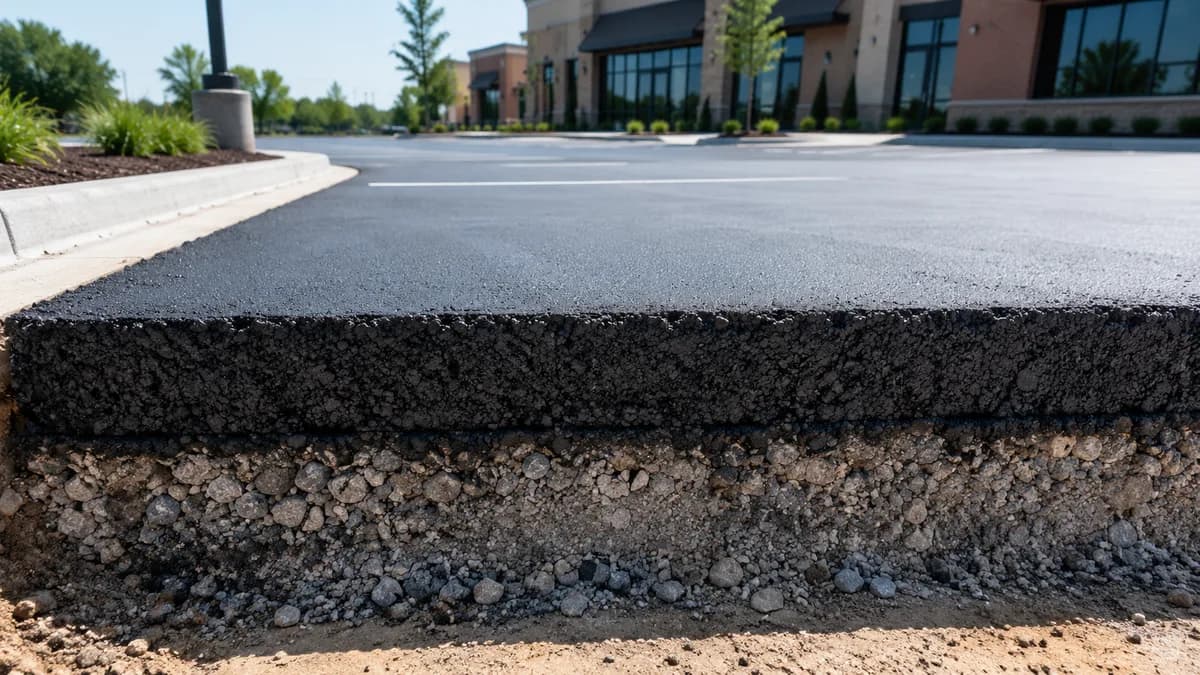
Asphalt Paving Thickness for Parking Lots
Typical asphalt paving thickness for parking lots: benchmarks for stalls, drive lanes, and truck areas, plus how base and soil change the answer.
Property-owner guide
Updated July 6, 2026
How to Choose an Asphalt Paving Contractor
How to choose an asphalt paving contractor: project fit, relevant experience, written scope, references, insurance, and pavement qualifications.
Property-owner guide
Updated July 11, 2026
When Should You Seal Asphalt Cracks?
When to seal cracks in asphalt — which cracks to seal, the best time of year, why sealing early matters, and how crack sealing fits a maintenance schedule.
Before you hire: The Pavement Directory does not guarantee contractor performance, pricing, licensing, insurance, or availability. Business information may be submitted by contractors or gathered from public sources and should be independently verified before hiring. Always confirm licensing, insurance, references, scope of work, and written contract terms.
For contractors
Ready to compare Nevada contractors?
Browse listings by city and service, then use what you have read here to check the scope, the credentials, and the timing before you sign.