

What this guide covers
Drainage fixes range from simple regrading to installed drainage structures — the trick is matching the solution to whether you have a surface, grade, or subsurface problem.
This guide walks through the common solutions in plain terms. Diagnosing which you need is a contractor's job — browse drainage and grading contractors or start with how to choose a drainage and sitework contractor.
For the symptoms these solutions address, see parking lot drainage problems.
Related contractor categories
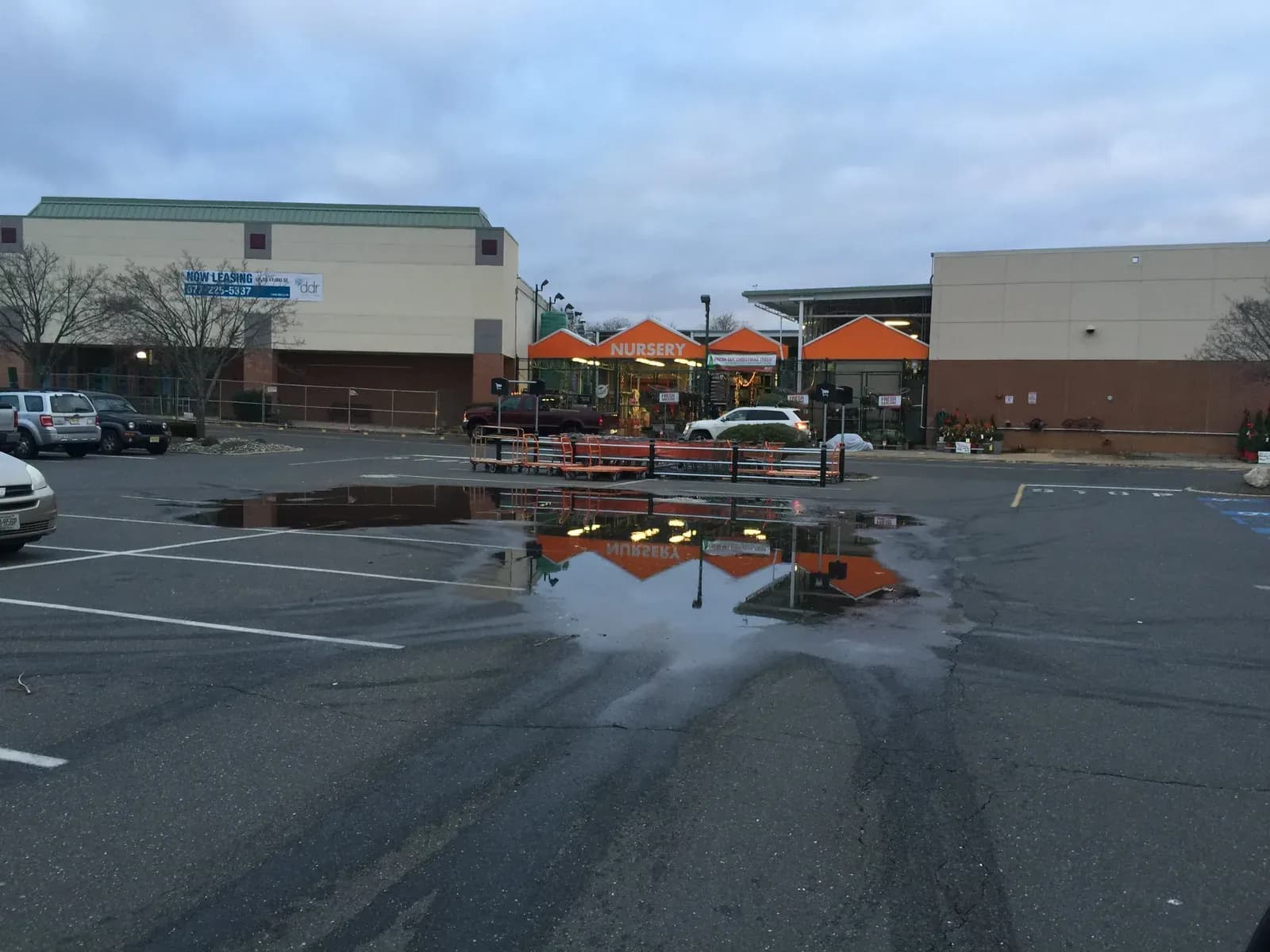
Match the solution to the problem
Drainage solutions aren't interchangeable — each targets a different kind of water problem. The table below is a plain-language overview, not a design specification; site-specific selection and sizing are decisions for a qualified contractor or engineer.
| Solution | Best for | What it does |
|---|---|---|
| Regrading | Low spots, reverse slope | Reshapes the surface so water flows to inlets |
| Catch basin | Collecting surface water | An inlet that captures water into the storm system |
| Trench / channel drain | Water crossing a large area | A long linear grate that intercepts sheet flow |
| French drain | Subsurface water | A gravel-and-pipe system that moves underground water |
| Permeable pavement | New construction, some retrofits | Lets water pass through the surface into a reservoir |
Surface fixes: grading and inlets
Most parking lot drainage problems are surface problems — water isn't reaching a drain because the grade is wrong or a low spot has formed. Regrading reshapes the surface to restore positive drainage (a continuous slope toward inlets), and adding or repairing catch basins gives the water somewhere to go. These are the most common fixes and often the first ones a contractor considers.
Intercepting and moving water: drains
When water crosses a large area or collects along a line — at a building edge, a low seam, or an entrance — a trench or channel drain (a long grated inlet) intercepts it before it pools. For water that's below the surface, softening the base, a French drain (perforated pipe in gravel) collects and carries it away. Which one fits depends on where the water is and where it can be routed.
Where the water goes matters most
Every solution has to send water somewhere with capacity to take it — the storm system, a retention area, or a suitable outfall. Moving water from one problem spot to another that also floods just relocates the problem. This is why larger drainage work can involve stormwater design, permits, and sometimes a civil engineer. Treat this guide as educational; site-specific drainage design is a job for qualified professionals.
Frequently asked questions
What are the most common parking lot drainage solutions?
Regrading low or reverse-sloped areas, adding or repairing catch basins, installing trench or channel drains, using French drains for subsurface water, and permeable pavement in some new construction.
What's the difference between a catch basin and a trench drain?
A catch basin is a point inlet that collects water at a low spot; a trench (or channel) drain is a long, linear grated inlet that intercepts water crossing a large area or along a line.
What is a French drain used for?
Moving subsurface water — water below the surface that's softening the base. It's a perforated pipe in gravel that collects and carries that water away, different from surface inlets.
Do drainage solutions need engineering?
Simple regrading or a catch basin often doesn't, but larger work involving stormwater capacity, permits, or municipal tie-ins can require a designer or civil engineer. Site-specific design should be left to qualified professionals.
Before you hire: The Pavement Directory does not guarantee contractor performance, pricing, licensing, insurance, or availability. Business information may be submitted by contractors or gathered from public sources and should be independently verified before hiring. Always confirm licensing, insurance, references, scope of work, and written contract terms.
For property owners
Looking for a pavement contractor?
Use The Pavement Directory to search asphalt, concrete, sealcoating, striping, ADA access, and pavement maintenance contractors by service and location. Always verify license, insurance, references, and written scope before hiring.
Search contractorsFor contractors
Are you a pavement contractor?
Contractors can add or claim a company profile to help property owners find pavement professionals by service, location, and specialty.