

What this guide covers
Sealcoating is a surface maintenance treatment, not a structural asphalt repair — preparation affects the finished result as much as the sealer itself, and thin, over-diluted, or poorly applied sealer can wear off quickly.
This is the starting point for the sealcoating hiring hub. See the full hub map at the end of this article for the guide on questions to ask, comparing bids, reviewing proposals, and property-type-specific hiring guidance.
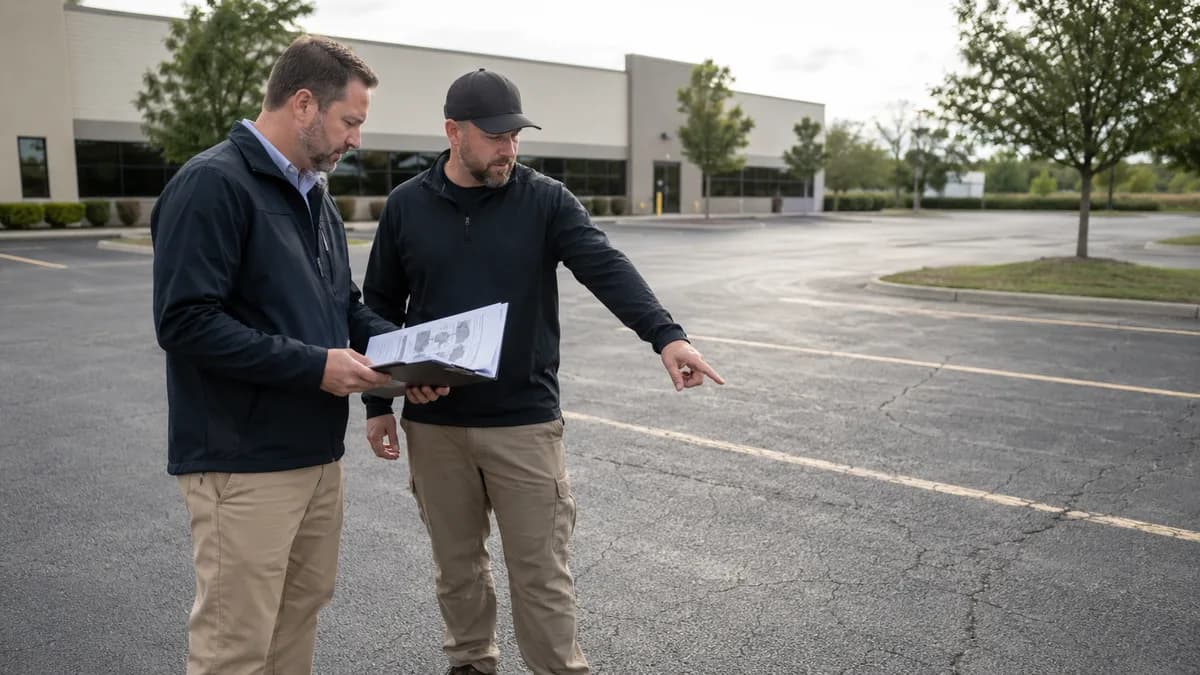
What a sealcoating contractor actually does
A sealcoating contractor applies a protective coating over asphalt pavement to slow oxidation, reduce surface wear, improve appearance, and help shed water from the pavement surface.
Sealcoating does not rebuild failed asphalt. It does not fix base failure, deep alligator cracking, potholes, severe rutting, or major drainage problems. If the pavement is structurally failing, the right first step may be asphalt repair, crack sealing, patching, drainage correction, or replacement. For contractor profiles, start with Sealcoating Contractors.
Match the contractor to the property
The contractor should fit the job type:
| Project type | What to look for |
|---|---|
| Residential driveway | Clean edging, oil spot treatment, crack filling, driveway protection, curing guidance |
| HOA parking area | Phasing, resident notices, access control, striping coordination |
| Apartment lot | Tenant access, trash pickup routes, fire lanes, ADA stalls |
| Retail center | Customer access, weekend work, cones, barricades, clear reopening plan |
| Office or facility lot | Employee parking plan, logistics, striping, access timing |
Surface preparation matters
Most poor sealcoating jobs start before the sealer is applied. Ask how the contractor will handle dirt and debris, loose gravel, vegetation at edges, oil spots, grease contamination, existing flaking sealer, cracks, potholes, failed patches, and drainage problem areas.
A clean surface helps the sealer bond. If the pavement is dusty, oily, wet, or loose, the coating may not perform as expected.
Crack treatment should be clear
Cracks should not be treated as an afterthought. A proposal should say whether cracks are excluded, filled with cold pour material, treated with hot rubber crack seal, cleaned before filling, priced by lineal foot, or included up to a stated amount.
Large cracks, alligator cracking, and failed pavement may need Crack Sealing Contractors or Asphalt Paving Contractors before sealcoating.
Material, mix, and coat count
Ask about sealer type, water dilution, sand loading, additives, number of coats, spray/squeegee/brush application, cure time, weather limits, and manufacturer guidance. A contractor doesn't need to bury you in chemistry, but they should be able to explain what material they're using and why it fits the job.
A single coat may be used for some driveways or maintenance touch-ups. Two coats are common for many commercial lots and higher-wear areas. The proposal should state the number of coats, application method, whether coats are applied in separate passes, whether sand is included, and whether high-traffic areas receive extra attention — don't assume two coats are included unless the proposal says so.
Timing and cure windows
Sealcoating depends on weather and access control. Ask about surface temperature, air temperature, rain forecast, humidity, shade, overnight curing, vehicle traffic, pedestrian access, and irrigation shutoff. Opening the pavement too soon can track sealer, mark the surface, or shorten the useful life of the application.
Common mistakes and red flags
Watch for:
- No written proposal
- No surface prep details
- No crack treatment explanation
- No cure time guidance
- Cash-only or same-day pressure
- A "leftover material" pitch
- No business address or insurance information
- A vague promise that sealcoating will fix failed asphalt
- A very low bid with no material or prep details
- No plan for parking restrictions on occupied properties
The complete sealcoating hiring hub
This article is step one. Before you request bids, use the master question bank in Questions to Ask a Sealcoating Contractor Before Hiring.
When bids arrive, use How to Compare Sealcoating Bids, the Sealcoating Proposal Checklist, and Cheap Sealcoating Bids: Red Flags to Watch For.
For your property type specifically, see Commercial Sealcoating: What Property Managers Should Know or the Residential Driveway Sealcoating Guide.
Frequently asked questions
What should I look for in a sealcoating contractor?
Look for a clear written scope, surface preparation details, crack treatment, sealer type, number of coats, cure time, traffic control, exclusions, and insurance information.
Is sealcoating worth it on cracked asphalt?
It depends on the cracking. Small linear cracks may be filled before sealcoating. Severe alligator cracking, potholes, and base failure usually need asphalt repair first.
Should a contractor clean the pavement before sealcoating?
Yes. Dirt, dust, loose gravel, vegetation, and oil contamination can reduce adhesion.
How many coats of sealcoating should I ask for?
Many commercial lots use two coats. Some residential driveways or light maintenance projects may use one coat. The correct scope depends on pavement condition, use, and budget.
Should striping be included?
For parking lots, striping should either be included or clearly excluded. Don't assume it's included unless the proposal says so.
Before you hire: The Pavement Directory does not guarantee contractor performance, pricing, licensing, insurance, or availability. Business information may be submitted by contractors or gathered from public sources and should be independently verified before hiring. Always confirm licensing, insurance, references, scope of work, and written contract terms.
For property owners
Looking for a pavement contractor?
Use The Pavement Directory to search asphalt, concrete, sealcoating, striping, ADA access, and pavement maintenance contractors by service and location. Always verify license, insurance, references, and written scope before hiring.
Search contractorsFor contractors
Are you a pavement contractor?
Contractors can add or claim a company profile to help property owners find pavement professionals by service, location, and specialty.