
Minnesota pavement guide
Pavement Conditions in Minnesota: Regions, Soils, and Common Problems
Minnesota pavement fails from cold contraction in winter and lost subgrade strength in spring — two separate problems with two different fixes.
- 4 regions
- 5 common problems
- 6 local terms
Jump to section
Regional differences
Pavement Conditions by Region in Minnesota
Minnesota does not have one climate or one soil profile, and pavement that performs well in one part of the state can fail early a few hours away. These are the divisions that matter most when scoping paving, repair, or maintenance work.
Twin Cities metro
Minneapolis · St. Paul · Bloomington · Plymouth · Eagan
Environmental stress
- Repeated freeze-thaw cycling through late winter and early spring
- Heavy plowing and chemical deicing on commercial properties
- Dense commercial and distribution traffic
Subgrade conditions
- Glacial tills and mixed soils varying block to block
- Frost-susceptible silts in some areas
- Older urban fill and utility corridors under existing lots
Common distress
- Spring potholing where meltwater sat in cracks
- Concrete surface scaling and joint deterioration from chlorides
- Rutting on delivery routes and dock approaches
What it means for the work
- The metro has the deepest contractor market and the tightest scheduling competition
- Snow storage location determines where spring meltwater damage concentrates
- Phasing around occupied retail and office properties is standard practice
Southern Minnesota
Rochester · Mankato · Owatonna · Worthington
Environmental stress
- Somewhat milder winters than the north, with more freeze-thaw cycles
- Heavy agricultural equipment and grain truck traffic
- Intense summer thunderstorms
Subgrade conditions
- Deep, fertile loams and silty soils
- Karst features in the southeastern bluff country
- Agricultural drainage patterns affecting adjacent sites
Common distress
- Edge break-up from heavy equipment turning off pavement
- Localized settlement in karst areas of the southeast
- Freeze-thaw cracking and potholing
What it means for the work
- Harvest-season loading is a design consideration on farm-adjacent sites
- Sinkhole-prone southeastern areas warrant investigation of recurring depressions
- Shoulder and edge support prevents a common failure mode here
Northern Minnesota and the Iron Range
Duluth · Hibbing · Bemidji · International Falls
Environmental stress
- The state's most extreme cold and deepest frost penetration
- Very heavy snowfall, including lake-effect snow near Lake Superior
- Sustained plowing and sanding operations
Subgrade conditions
- Shallow bedrock in parts of the Iron Range and North Shore
- Frost-susceptible soils with deep seasonal frost
- Peat and organic soils in low-lying and bog areas
Common distress
- Severe low-temperature thermal cracking
- Frost heave and spring break-up damage
- Plow gouging on transitions, curbs, and raised features
What it means for the work
- The construction season is shortest here — book early
- Mining and timber loading are real design loads on industrial sites
- Durable marking materials matter where plows run all winter
Western Minnesota and the Red River Valley
Moorhead · Willmar · Alexandria · Fergus Falls
Environmental stress
- Open, windswept terrain with drifting snow
- Spring flooding in the Red River Valley
- Wide temperature swings between seasons
Subgrade conditions
- Heavy lacustrine clays in the Red River Valley with high shrink-swell potential
- Flat terrain with poor natural drainage
- Agricultural ground with variable moisture
Common distress
- Cracking driven by clay movement in addition to freeze-thaw
- Prolonged saturation and base weakening after spring flooding
- Drifted snow concentrating meltwater in specific areas
What it means for the work
- Flat sites need designed positive drainage, not minimal slope
- Valley clays add a moisture-movement problem on top of the frost problem
- Snow fencing and drift management affect where meltwater ends up
Field conditions
Common Pavement Problems in Minnesota
Low-temperature thermal cracking
Straight cracks running across the pavement at fairly regular intervals, with no connection to wheel paths. They appear or widen during the coldest stretches and are widest in midwinter.
Likely causes
- Asphalt contracting in extreme cold until it cracks in tension
- Binder grade not selected for the site's low-temperature extreme
- Aged, oxidized binder that can no longer relax stress
When to get it looked at: Regularly spaced transverse cracking is normally a sealing priority rather than a structural alarm — but once those cracks start branching and the edges break down, water has been getting in and the question changes.
Spring thaw weakening
Potholes and edge failures appearing over a few weeks in March and April, in areas that carried the same traffic all winter without trouble.
Likely causes
- Meltwater trapped in the base above still-frozen subgrade
- Frost-susceptible soils losing strength when saturated
- Heavy deliveries during the weakest weeks of the year
When to get it looked at: If the same areas fail every spring, drainage or base material is the cause. Repaving without correcting that repeats the cycle on a schedule.
Deicing chemical damage to concrete
Concrete sidewalks, aprons, and dumpster pads develop surface scaling, flaking, and spalling at joints, often long before the adjacent asphalt shows serious wear.
Likely causes
- Chloride deicers driving repeated freeze-thaw within the concrete surface
- Chloride reaching reinforcement and causing corrosion and spalling
- Concrete placed without adequate air entrainment or cure for this climate
When to get it looked at: Scaling that exposes coarse aggregate over large areas, or spalling that reveals reinforcement, is past the point where a surface treatment helps — get the extent evaluated before another winter.
Snowplow damage
Gouges, chipped edges, and scraped markings concentrated at curbs, transitions, drainage structures, and anything that stands proud of the surface.
Likely causes
- Plow blades catching raised features and uneven transitions
- Repeated passes along the same lines through a long winter
- Markings and thin surface treatments with limited abrasion resistance
Meltwater concentration at snow storage areas
Localized pavement failure, staining, and sediment accumulation in and downhill of the areas where plowed snow is piled every winter.
Likely causes
- Large volumes of meltwater and accumulated sand and chloride released in one place
- Snow piles placed over pavement that drains poorly
- Sediment from plowed snow blocking nearby inlets
When to get it looked at: If snow storage location has never been discussed with your snow contractor, that conversation is cheaper than the pavement repair it prevents.
Property types
Common Pavement Projects in Minnesota
Distribution and cold-storage facilities
Truck aprons and dock approaches carry concentrated loads and see the most plowing, so they combine structural stress with the worst of the winter abrasion.
Healthcare and clinic campuses
Rochester and metro medical campuses need continuous access and safe walking surfaces, which makes concrete deterioration and trip hazards a higher priority than surface appearance.
Agricultural and grain facilities
Southern and western Minnesota facilities take extremely heavy loading concentrated into harvest weeks, usually on pavement edges that lack support.
Apartment and townhome communities
Private drives with narrow geometry get plowed hard all winter, and snow storage location determines where the pavement fails first.
Mining and timber industrial sites
Iron Range and northern industrial properties carry loads far beyond commercial design assumptions in the state's harshest frost environment.
Plain English
Pavement Terms You May Encounter in Minnesota
| Term | What it means on a Minnesota project |
|---|---|
| PG binder grade (e.g. PG 58-34) | The performance grade of the asphalt binder. The second number is the low-temperature limit, and in Minnesota that number is what governs resistance to thermal cracking. It is a fair question to ask which grade a proposal includes. |
| Spring load restrictions | Seasonal axle load limits imposed while subgrade is thaw-weakened. They apply to public roads, but the same weakness affects private lots receiving heavy deliveries in April. |
| Frost-free / non-frost-susceptible base | Granular base with few fines, chosen so freezing water cannot build ice lenses that heave the surface. In a deep-frost state this often does more for pavement life than adding asphalt thickness. |
| Air-entrained concrete | Concrete with microscopic air voids that give freezing water somewhere to expand. It is a standard requirement for exterior concrete in Minnesota and a real factor in whether a sidewalk or apron scales. |
| Full-depth reclamation (FDR) | Pulverizing the existing asphalt and base together and repaving over the treated blend. Used on Minnesota lots and roads where the base has failed and full removal is impractical. |
| Fog seal and seal coat | Thin surface treatments used to slow oxidation. In Minnesota roadway usage a seal coat often means a chip-and-binder application, which is not the same as sealcoating a parking lot — confirm which one a proposal means. |
State transportation specifications can provide useful regional terminology and material references, but they do not automatically govern private parking-lot or driveway projects unless incorporated into the contract or required by the applicable jurisdiction.
More definitions are in the pavement glossary.
Before you sign
Questions to Ask a Paving Contractor in Minnesota
- What binder grade are you proposing, and what is its low-temperature rating for this location?
- What is the strategy for the transverse cracking we already have — sealing, or is it past that?
- Could spring-thaw conditions affect the base here, and does that change when this work should be done?
- Is the concrete deterioration we are seeing caused by deicing chemicals, and what does that mean for repair versus replacement?
- Where should snow be stored on this property so meltwater does not concentrate on the pavement?
- Is non-frost-susceptible base material included, and to what depth?
- How will pavement transitions and curb edges be detailed so plow blades do not catch them?
- Does this project need watershed district review in addition to any city permit?
- How late in the fall can this realistically be placed, and what is the contingency if we run out of season?
Minnesota pavement condition FAQs
When does spring thaw affect paving in Minnesota?
Roughly from the time the surface starts thawing until the frost is fully out of the ground — typically several weeks in spring, later in northern Minnesota than in the Twin Cities. During that period meltwater is trapped in the base above still-frozen soil, the subgrade loses much of its strength, and both pavement damage and unreliable repair work are more likely. It is the reason for seasonal load restrictions on public roads, and it is why structural repairs are usually scheduled after the frost is out rather than during break-up.
Why does my Minnesota parking lot have evenly spaced cracks across it?
That pattern is characteristic of low-temperature thermal cracking. In extreme cold, asphalt contracts until it cracks in tension, and because the stress relieves at each crack, the cracks tend to appear at fairly regular spacing across the pavement rather than following traffic. It is not a workmanship failure or a base failure. The important thing is keeping those cracks sealed, because once water gets in and freezes, an orderly crack pattern turns into potholes.
How do deicing chemicals affect concrete in Minnesota?
Chloride deicers increase the number of freeze-thaw cycles the concrete surface experiences and drive water deeper into it, which produces scaling and flaking. Where chloride reaches embedded reinforcement, it causes corrosion that expands and spalls the concrete from within. That is why sidewalks, aprons, and dumpster pads often deteriorate faster than the asphalt beside them. Air-entrained concrete, proper cure, and moderating salt application all matter.
Where should plowed snow be stored on a commercial property?
Somewhere that meltwater — carrying the winter's accumulated sand and chloride — can drain away without sitting on pavement or overwhelming an inlet. Snow piles concentrate a large volume of water, sediment, and salt in one place, and the pavement under and downhill of a habitual pile often fails first. It is worth agreeing on storage locations with your snow contractor before the season rather than discovering the effect in April.
Related reading for Minnesota property owners
Property-owner guide
Updated July 11, 2026
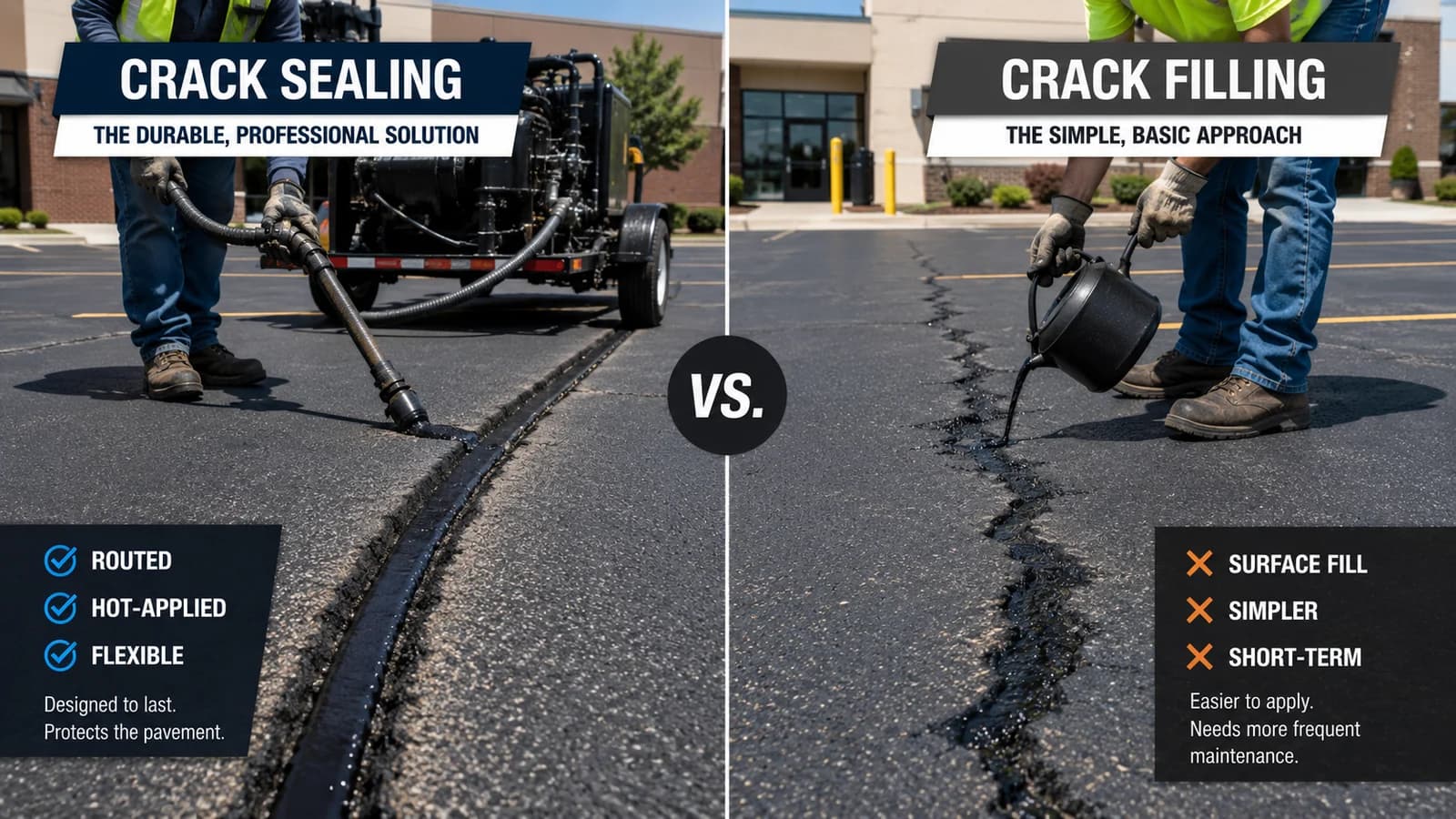
When Should You Seal Asphalt Cracks?
When to seal cracks in asphalt — which cracks to seal, the best time of year, why sealing early matters, and how crack sealing fits a maintenance schedule.
Property-owner guide
Updated July 6, 2026
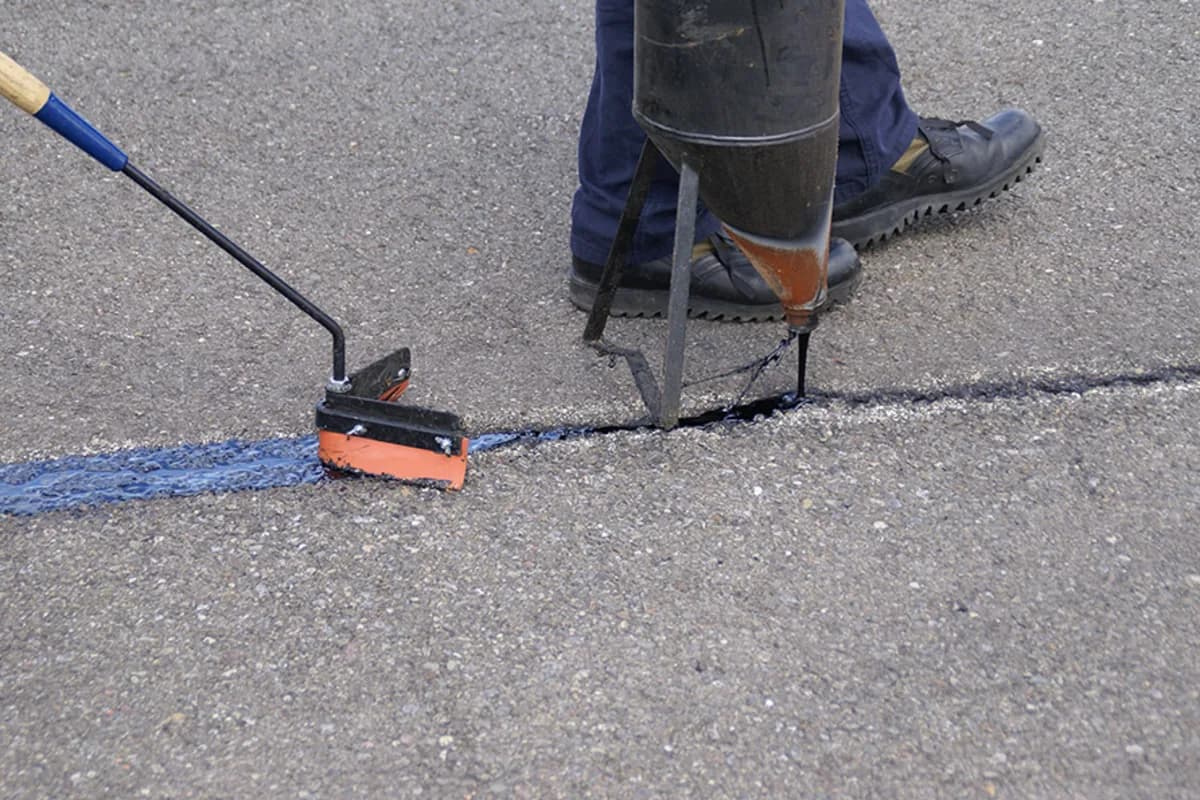
Crack Sealing vs. Crack Filling: What Is the Difference?
The difference between crack sealing and crack filling, which method fits which type of crack, and how each fits into pavement maintenance.
Property-owner guide
Updated July 11, 2026
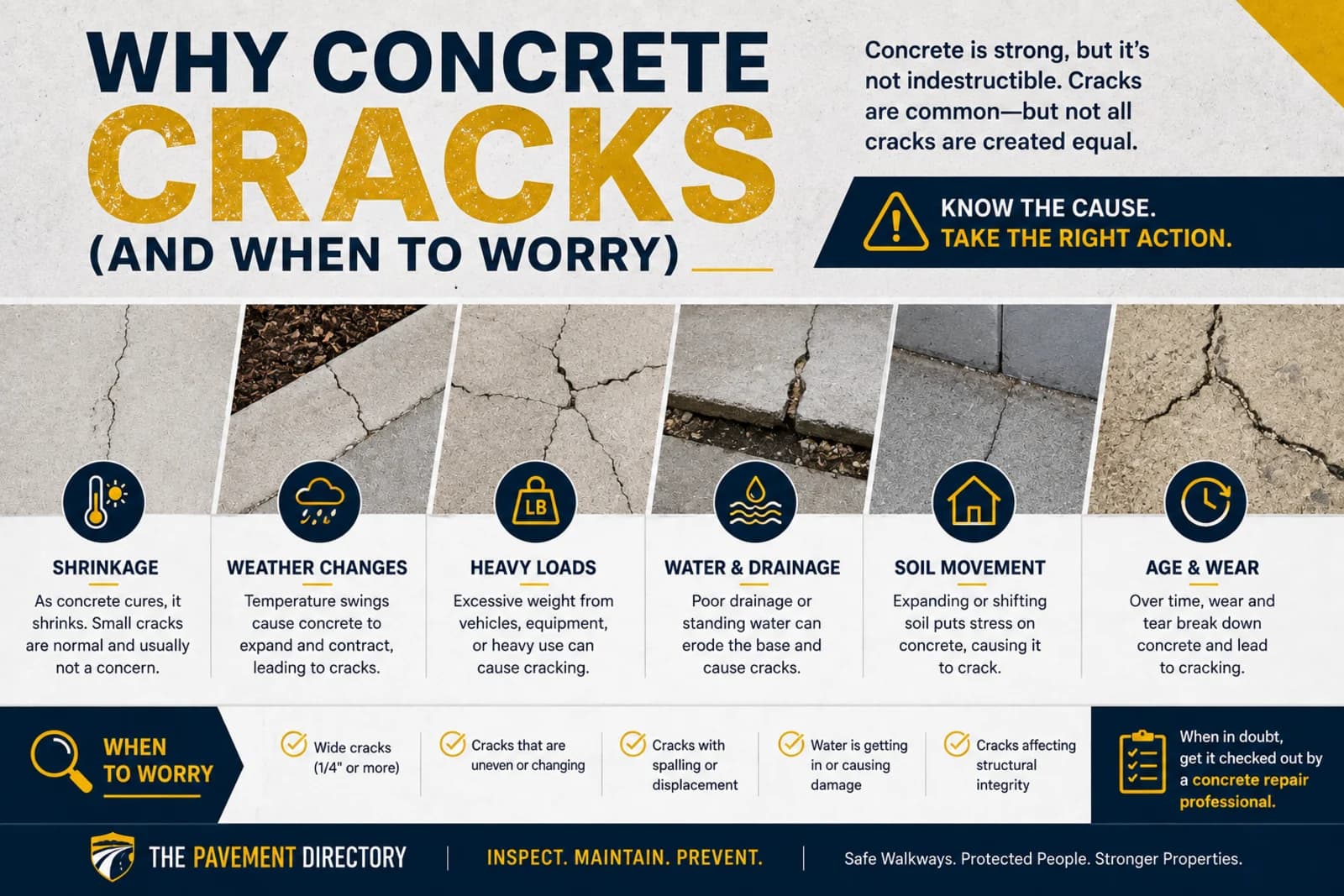
How to Choose a Crack Sealing Contractor
How to choose a crack sealing contractor: the right material and prep, honest measurement, which cracks to skip, and how it fits a maintenance plan.
Property-owner guide
Updated July 11, 2026
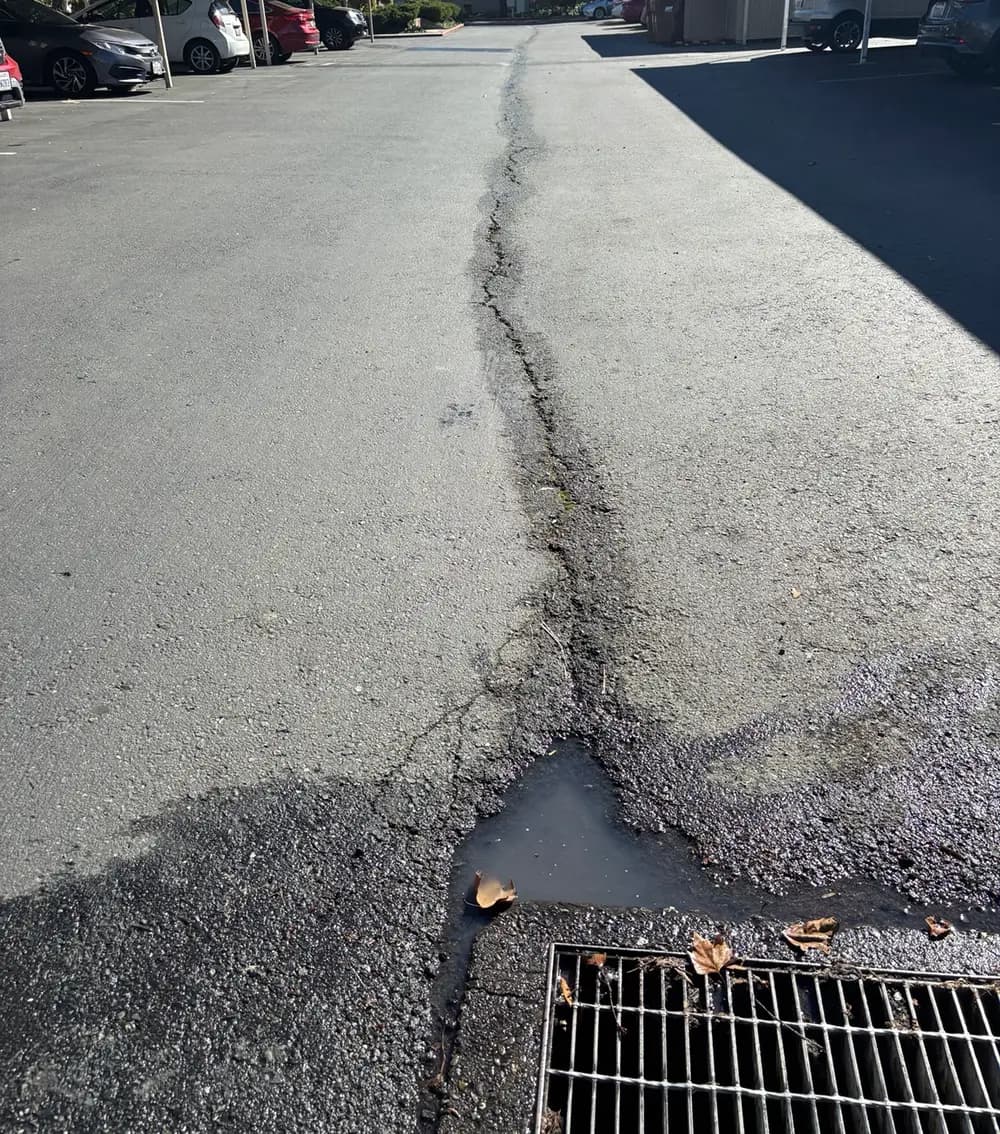
Why Concrete Cracks (and When to Worry)
Why concrete cracks — shrinkage, settlement, freeze-thaw, roots, and loads — the difference between cosmetic and structural, and when to repair.
Property-owner guide
Updated July 12, 2026
How Drainage Affects Pavement Life
Why drainage is the biggest factor in how long pavement lasts, how water damages asphalt from the base up, and why fixing it protects every repair.

Property-owner guide
Updated July 11, 2026
How to Create a Parking Lot Maintenance Plan
How to build a parking lot maintenance plan: inspecting condition, setting service cycles, prioritizing repairs, and budgeting over multiple years.
Before you hire: The Pavement Directory does not guarantee contractor performance, pricing, licensing, insurance, or availability. Business information may be submitted by contractors or gathered from public sources and should be independently verified before hiring. Always confirm licensing, insurance, references, scope of work, and written contract terms.
For contractors
Ready to compare Minnesota contractors?
Browse listings by city and service, then use what you have read here to check the scope, the credentials, and the timing before you sign.