

What this guide covers
Some concrete cracking is normal and expected — the useful skill is telling routine shrinkage cracks apart from the ones that signal a real problem.
This guide explains why concrete cracks and which cracks actually matter, so you can decide whether to seal, monitor, or repair. For repair options and pricing, see concrete repair vs. replacement and the concrete repair cost guide.
Need it looked at? Find concrete repair contractors who can assess the crack in person.
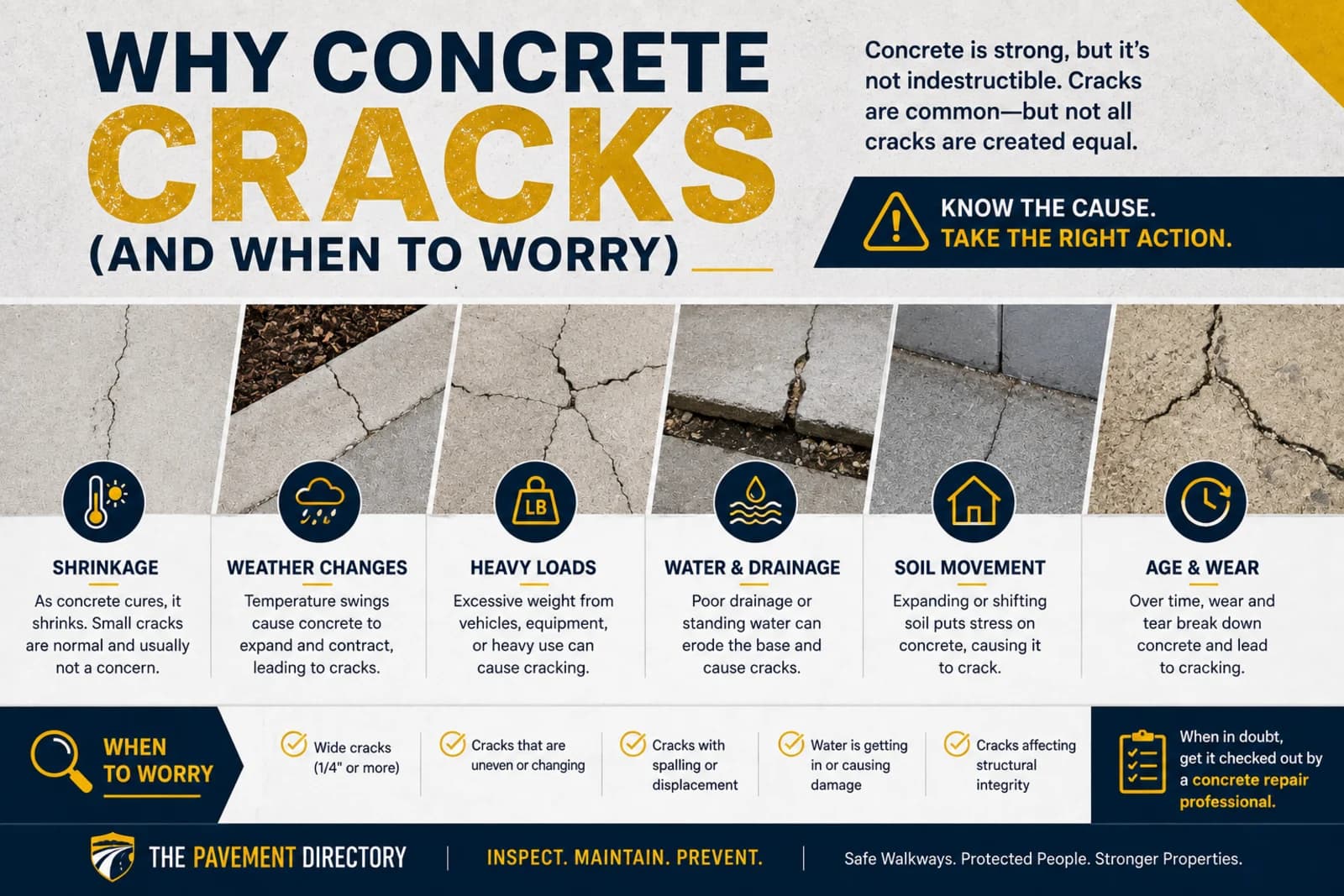
Why concrete cracks in the first place
Cracking has several common causes, and not all of them are problems:
- Shrinkage as fresh concrete cures and loses moisture (very common)
- Control joints doing their job — guiding cracks to planned lines
- Settlement of the soil or base beneath the slab
- Freeze-thaw cycles expanding and contracting the concrete
- Tree roots or heavy loads exceeding what the slab was built for
Cosmetic vs. structural cracks
The difference between a crack you can ignore and one that matters usually comes down to width, displacement, and movement.
| Sign | Usually cosmetic | Worth a closer look |
|---|---|---|
| Width | Hairline, stable | Wide or widening |
| Displacement | Both sides level | One side higher (a trip hazard) |
| Movement | Not changing over time | Growing or opening seasonally |
| Pattern | Straight, along a joint | Map/alligator pattern or radiating |
When a crack needs action
Seal or monitor stable hairline cracks — sealing keeps water out and slows freeze-thaw damage. Address cracks that show displacement (a trip hazard), that are wide enough to admit water and debris, or that keep growing, since those point to settlement or base issues rather than simple shrinkage. Cracks paired with a slab that's sinking or heaving usually mean the base or drainage needs attention, not just the surface.
Keeping cracks from getting worse
Water is what turns a minor crack into a major one — it seeps in, erodes the base, and expands when it freezes. Sealing cracks and keeping water draining away from concrete (good grading and drainage) are the simplest ways to slow deterioration. For slabs that keep cracking in the same place, the durable fix addresses the cause — often a base or drainage problem — rather than repeatedly patching the surface.
Frequently asked questions
Is it normal for concrete to crack?
Yes. Most concrete cracks to some degree, much of it from normal shrinkage as it cures. Control joints are cut specifically to guide where that cracking happens.
When should I worry about a concrete crack?
When it's wide or widening, when one side is higher than the other (a trip hazard), or when it keeps growing. Those can signal settlement or base failure rather than simple shrinkage.
Should I seal hairline cracks in concrete?
Sealing stable hairline cracks is a good idea — it keeps water out, which slows freeze-thaw damage and base erosion that would otherwise make the crack worse.
Why does concrete keep cracking in the same spot?
Usually because of an underlying cause — a settling base, poor drainage, tree roots, or loads beyond what the slab was built for. The durable fix addresses the cause, not just the surface.
Before you hire: The Pavement Directory does not guarantee contractor performance, pricing, licensing, insurance, or availability. Business information may be submitted by contractors or gathered from public sources and should be independently verified before hiring. Always confirm licensing, insurance, references, scope of work, and written contract terms.
For property owners
Looking for a pavement contractor?
Use The Pavement Directory to search asphalt, concrete, sealcoating, striping, ADA access, and pavement maintenance contractors by service and location. Always verify license, insurance, references, and written scope before hiring.
Search contractorsFor contractors
Are you a pavement contractor?
Contractors can add or claim a company profile to help property owners find pavement professionals by service, location, and specialty.