

What this guide covers
This guide covers what rutting is, how to read what the rut shape is telling you, what causes deformation in each pavement layer, which repair matches which depth, and how to tell localized rutting from a structural problem across the property.
The idea worth carrying through: a rut is the top of something. What you see is a depression in the surface, but the deformation may be happening two layers down, and a repair that stops short of the moving layer will produce the same rut again. Almost every rut repair that fails was shallower than the problem.
Ruts that hold water after rain deserve attention sooner than their depth suggests. Water in a wheel path feeds the failure that made it. Browse asphalt repair contractors when you are ready to have the pavement looked at.
What rutting is
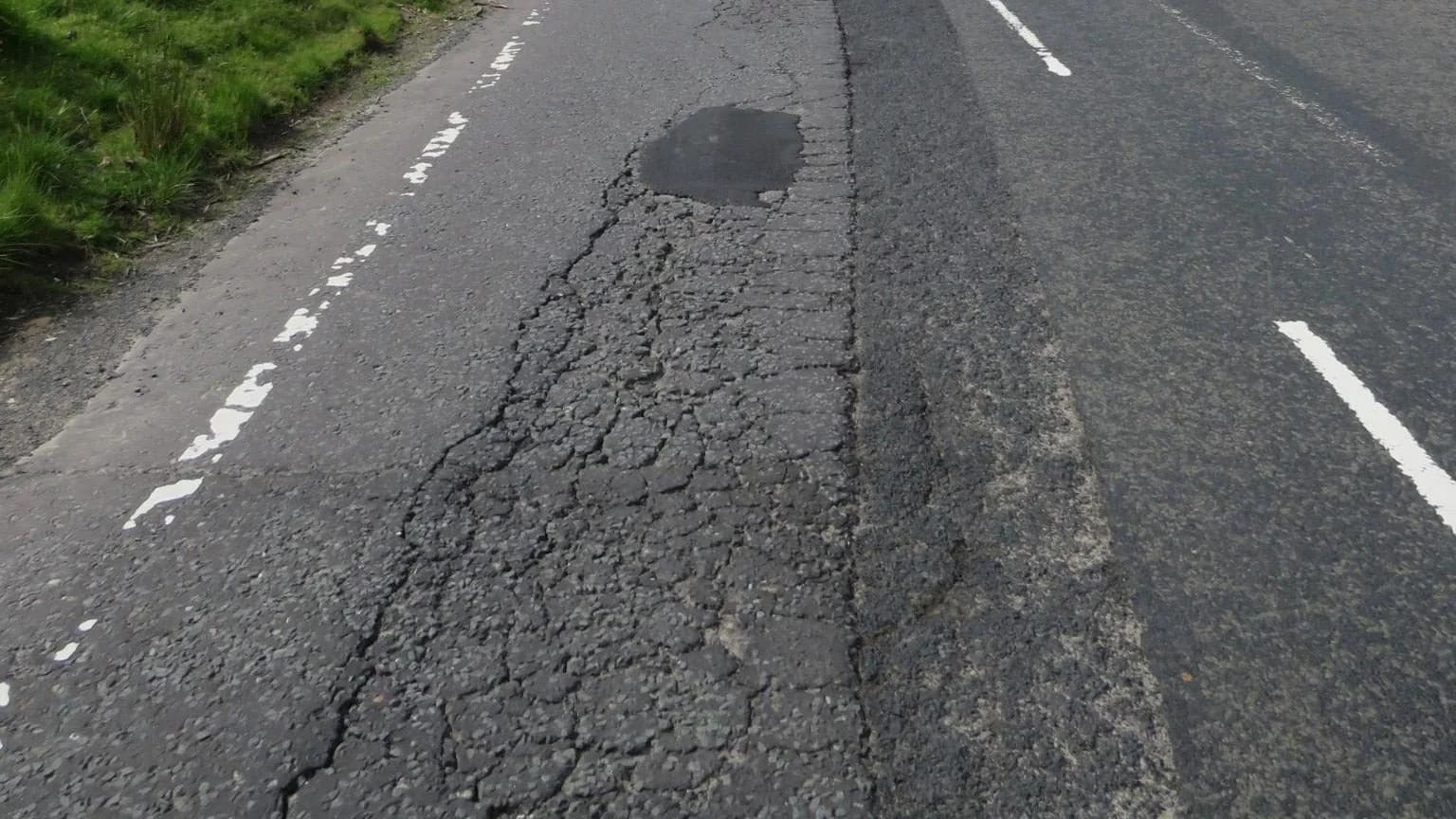
Rutting is permanent deformation along the paths tires repeatedly travel. The pavement moves down, sideways, or both, under loads it cannot fully recover from, and each pass leaves a little of that movement behind.
It is distinct from most asphalt distresses in an important way. Cracking, raveling, and potholes are the pavement coming apart. Rutting is the pavement staying intact and changing shape. Nothing is missing; it is in the wrong place.
That is why the usual maintenance treatments have nothing to offer here, and why a rut can be serious while the surface around it still looks fine.
- Two depressed tracks following wheel paths, most visible in drive lanes rather than parking stalls.
- Ridges of raised pavement alongside the depression, in some cases.
- Water standing in the wheel paths after rain while the surrounding pavement drains.
- A noticeable pull on the steering, or a rough ride, through the affected area.
- Deformation concentrated at entrances, intersections, turning areas, and loading zones.
- Cracking along the edges of the rut where the pavement has been stretched.
Shallow rutting hides well on dry pavement. The easiest time to find and photograph it is during or just after rain, when the ruts hold water and map themselves.
Reading the shape of the rut
Before diagnosing a cause, look at the rut in cross section. Stand at one end of it and sight along it, or lay a straightedge across it. The profile is the single most informative thing available without cutting into the pavement.
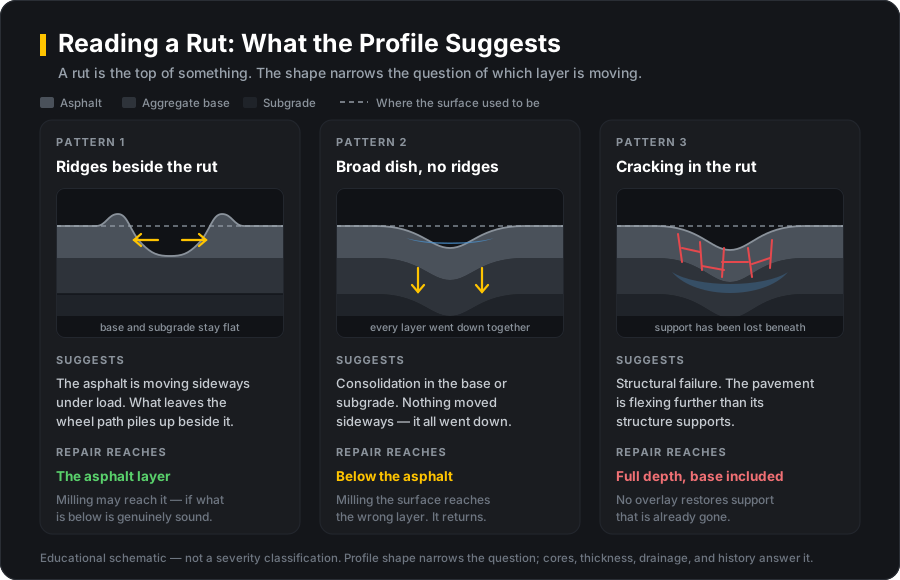
Three broad patterns come up, and they point in different directions:
| What the profile looks like | What it suggests | Where the repair has to reach |
|---|---|---|
| Narrow rut with material shoved up into ridges beside it | Asphalt moving sideways under load — mix instability or heat-related deformation | The asphalt layer, if what is below it is sound |
| Broad, shallow dish with little or no raised material | Consolidation in the base or subgrade under repeated loading | Below the asphalt — base, and possibly subgrade |
| Rut with cracking along its edges or alligator cracking within it | Structural failure; the pavement is flexing beyond what the structure supports | Full depth, including base evaluation |
| Localized depression that does not follow wheel paths | Settlement rather than rutting — often a trench or a soft spot | The settled feature, which is a different repair |
Treat these as a starting hypothesis rather than a diagnosis. Shape narrows the question; cores, test pits, thickness measurements, and construction history answer it. Deformation frequently involves more than one layer at once, and the same lot can have different mechanisms in the truck lane and the drive aisle.
What the profile reliably does tell you is when to be suspicious of a shallow repair. Ridges beside the rut mean asphalt is moving and milling may reach the problem. No ridges, or cracking in the rut, means the movement is probably deeper than any mill depth will get to.
Which layer is deforming
A pavement is a system: asphalt over aggregate base over subgrade, each spreading the load across a wider area before passing it down. Rutting is that system failing to spread a load somewhere. Where it fails determines everything about the repair.
- In the asphalt. The mix itself deforms under repeated loading, moving down and sideways. This is the pattern that produces ridges beside the rut. Contributing conditions include a mix that cannot resist the loading it is receiving, too much binder for the application, insufficient aggregate structure, inadequate compaction during construction, and high pavement temperatures under heavy or slow-moving traffic.
- In the aggregate base. The base consolidates or displaces under load. A base that is too thin for the traffic, poorly compacted, saturated, contaminated with fines, or simply never designed for the vehicles now using the lot will deform even when the asphalt above it is entirely sound.
- In the subgrade. The native soil beneath the pavement moves. Weak, wet, expansive, or poorly prepared subgrade deforms under repeated loading, and the pavement above follows it down. Adding asphalt on top of this changes nothing about the cause.
The practical consequence is a rule worth stating plainly: the repair has to reach at least as deep as the deformation. Milling and replacing two inches of asphalt over a base that is consolidating produces a smooth surface for a while and the same rut afterward, and the money is gone.
This is also why "how deep is your repair" is the most useful question to ask a contractor about a rutting proposal, and why the answer should connect to a stated view of what is moving.
What drives it
Rutting is a mismatch between the loading a pavement receives and the structure it has. Both sides of that equation move.
- Heavy vehicles. Refuse trucks, delivery vehicles, buses, tractor trailers, fire apparatus, and industrial equipment load pavement far harder than passenger cars — the gap is measured in orders of magnitude, not percentages. A lot built for cars and shopping carts is a different lot once a garbage truck runs through it twice a week.
- Channelized traffic. Damage concentrates where vehicles follow nearly identical paths every time: entrances, drive-through lanes, narrow drive aisles, bus routes, loading lanes, and dumpster approaches. The same total traffic spread across a wide aisle does far less.
- Braking, turning, and standing. Stopping and turning apply horizontal force to the surface, not just vertical, and a stationary heavy vehicle loads one spot continuously. Intersections, approaches, and loading positions rut before the straight runs do.
- Heat. Asphalt softens as it warms, so a mix carrying heavy slow traffic in high pavement temperatures is more susceptible to deformation than the same mix in cool conditions.
- Water. Saturated base and subgrade lose strength. Water arrives through cracks, failed edges, ponding, leaking irrigation, failed drains, and utility trenches — and once a rut holds water, it delivers more of it to exactly the place that is already failing.
- Construction and design history. Insufficient compaction, a thin section, or a pavement designed for lighter traffic than the property ended up carrying will show up as rutting eventually, regardless of maintenance.
Most real cases combine several of these. A dumpster route with a thin base, water entering through a cracked edge, and a refuse truck stopping in the same spot twice a week is not one problem — and a repair addressing only the asphalt will address none of them.
Where it shows up on a commercial property
Rutting is not distributed evenly, and knowing where to look shortens the site walk considerably.
- Dumpster routes and pads. The most common location on commercial property, and the most predictable: maximum axle load, repeated identical path, and a vehicle that stops, lifts, and turns in the same square yards every week.
- Drive aisles. Every vehicle on the property passes through them; individual stalls see a fraction of that traffic.
- Entrances and exits. Channelized traffic plus braking and turning, often on the pavement closest to the street tie-in.
- Loading docks and truck staging. Concentrated loading, stopping, and maneuvering, often with trailers parked in one position for hours.
- Drive-through lanes. Slow, stopped, and perfectly channelized traffic — close to the worst combination for a surface.
- Bus routes and fire lanes. Heavy vehicles on a fixed path.
- Industrial yards. Where the loading may genuinely exceed what any conventional parking lot section was built for.
- Residential driveways. Less common, but real where the base was poorly prepared, a heavy vehicle uses the drive, or water is undermining it.
If the ruts on a property are confined to these locations and the rest of the pavement is sound, that points toward targeted repair and possibly a redesigned section in the failing areas — not toward resurfacing the whole lot.
Why standing water makes it urgent
A rut that holds water is a different problem from a rut that drains, and the difference is a feedback loop rather than a matter of degree.
The rut interrupts the surface drainage the lot was graded for. Water collects in the wheel path and sits there. Some of it works down through cracks, the surface, or the pavement edge into the base and subgrade. Those layers lose strength when saturated. Weaker support means more deformation under the next truck, which deepens the rut, which holds more water.
Left alone, that loop tends to end in cracking and then potholes in the wheel path, at which point the repair is larger and the surrounding pavement has usually been affected too. In freeze-thaw climates it moves faster, because trapped water expands.
There are also immediate practical concerns: ponded water in a drive lane is a hydroplaning and pedestrian issue, it freezes, it makes plowing harder, and where deformation reaches pedestrian routes or accessible parking, slope and surface conditions become a compliance question as well as a maintenance one. Parking lot drainage problems covers the water side in detail.
What does not repair rutting
This section exists because these get proposed, and they should not be.
- Sealcoating. A coating over the existing surface. It restores no elevation, adds no thickness, and supports nothing. Sealcoat over a rut produces a black rut, and water ponds in exactly the same place.
- Crack filling. Addresses cracks, which may accompany rutting but are not causing it. Useful alongside a real repair; not a repair.
- Slurry seal. A thin new wearing surface that follows the profile it is placed on. It does not rebuild base and is not a profile correction. See the slurry seal guide for what it does do.
- Chip seal. Same reasoning — a surface treatment over a shape that is already wrong.
- An overlay placed straight over the rut. This one is more nuanced, and it gets its own treatment below.
There is one partial exception worth knowing. Micro surfacing can be placed in a rut-filling application to restore profile in shallow ruts, under the right conditions. It is a legitimate technique with real limits: it corrects the shape, not the cause. If the layer below is still consolidating, the rut comes back through it. Ask what depth is being filled and what the contractor believes is moving underneath.
Repairs that match the depth
Once you know — or have a defensible hypothesis about — which layer is deforming, the repair options line up against it.
| Repair | What it does | Appropriate when | Fails when |
|---|---|---|---|
| Mill and replace the asphalt | Grinds off the deformed asphalt and replaces it with new hot mix | Deformation is within the asphalt and what is below is sound | The base or subgrade is what is moving |
| Leveling course and overlay | Fills the profile with asphalt, then overlays the area | Ruts are shallow, the structure is sound, and elevations allow it | Used to hide deformation that is still active below |
| Localized full-depth repair | Removes asphalt and failed base, rebuilds and compacts, repaves | Rutting is confined to identifiable failed areas | The same section is rebuilt where the loading exceeded it before |
| Mill and overlay across the area | Removes distorted asphalt, restores grade, places a new surface | Surface deformation is widespread but the structure is still adequate | Structural failure is widespread beneath the milled depth |
| Reconstruction | Removes asphalt and base, addresses subgrade, rebuilds the section | Deformation reflects structural failure across a meaningful area | Rarely — but it is the most expensive way to be wrong about the cause |
A full-depth repair on a rutted truck lane usually runs: define and saw the limits, remove the asphalt, excavate failed base and unsuitable material, replace and compact aggregate base, place and compact new asphalt in lifts, and tie the edges in. Each step exists because the previous one exposed something, and the excavation depth is set on site rather than in the proposal — which is exactly why the change-order clause matters here.
On the overlay question: an overlay can be part of a legitimate rutting fix when the failed areas are repaired first, the structure is adequate, elevations allow the added thickness, and drainage still works afterward. Paving over an active rut without those conditions is the single most common way rutting money gets wasted. Asphalt resurfacing cost covers the economics of that decision.
Dumpster routes and truck lanes deserve a different section
When the same dumpster approach has been repaired twice, rebuilding it a third time to the same specification is a plan to repair it a fourth.
A parking lot designed around passenger vehicles is receiving a fundamentally different load when a refuse truck runs through it, and the honest question is not how to repair the pavement but what pavement belongs there. Worth evaluating:
- The truck's actual approach, turning path, and stopping position — not the striped route, the real one.
- Existing asphalt thickness and base depth in that path, measured rather than assumed.
- Whether a heavier pavement section, a stabilized base, or a thicker base is warranted.
- Whether a concrete pad at the stopping and lifting position is the better answer, since concrete distributes concentrated static load differently than asphalt.
- Whether drainage is delivering water into the failing area.
- Whether the dumpster can be relocated, or the approach rerouted onto pavement built for it.
Concrete is not automatically the answer for every heavy-load location, and it costs more up front. But at a dumpster pad, a loading position, or a truck staging area — anywhere a heavy vehicle stops rather than passes — it is a serious option, and a pavement consultant or a paving contractor experienced with industrial loading can evaluate the section against the actual traffic.
Does rutting mean the lot needs replacing?
Usually not, and the answer turns on extent rather than on depth.
One failed truck lane does not justify replacing the parking stalls, and treating it as though it does is how paving budgets get spent in the wrong place. What should shape the decision:
- How much of the total area is actually affected.
- Rut depth, and whether it is progressing measurably between inspections.
- Whether cracking accompanies the rutting.
- Whether previous repairs in the same locations have failed.
- Pavement age, thickness, and construction history.
- Drainage across the property, not just at the ruts.
- Whether the traffic causing it will continue or can be rerouted.
- Condition of the pavement that is not rutted.
The opposite error is just as expensive. Rutting spread across the drive aisles of a whole property is not a collection of unrelated depressions to patch one at a time; it is one condition with one cause, and patching around it indefinitely costs more than addressing it once.
Where the picture is genuinely unclear, or where contractors are recommending very different scopes, a pavement assessment divides the property into repair, resurfacing, and reconstruction areas before anyone bids.
Rutting compared with other asphalt distresses
Distresses get confused with each other, and the confusion sends proposals in the wrong direction. Rutting against its usual neighbors:
| Distress | What you see | What is happening |
|---|---|---|
| Rutting | Depressions along wheel paths | Permanent deformation under repeated load |
| Shoving | Bulges and ripples, often at stops and turns | Horizontal movement of the asphalt |
| Raveling | Loose stone, gritty surface, aggregate loss | The surface is disintegrating |
| Alligator cracking | Interconnected cracking in a scaled pattern | Load-related fatigue; support has been lost |
| Potholes | A hole where material has broken away | Material loss, usually over failed base |
| Settlement | A localized low area not following wheel paths | Something below has moved or consolidated |
These co-occur constantly. Rutting with alligator cracking inside it is a structural finding, not two problems. Rutting that has progressed to potholes in the wheel path is one failure at a later stage. Asphalt raveling and what causes alligator cracking cover the two most commonly confused with it.
What to document before calling anyone
Twenty minutes with a phone and a tape produces a better set of proposals, because contractors are pricing the same described condition instead of each forming their own impression.
Walk the property — ideally during or just after rain — and record, for each rutted area:
- Location, marked on a site plan or an aerial print.
- Approximate length and width of the affected area.
- Rut depth, measured with a straightedge laid across the wheel path.
- Whether water is standing in it, photographed while it is.
- Whether material is raised into ridges alongside the rut.
- Any cracking within or along the edges of the rut.
- What traffic uses that path, and how often.
- Whether it is on a dumpster route, truck lane, or loading approach.
- Any previous repairs in that location, and roughly when.
- Nearby drains, and whether they appear to work.
- Date every photograph, so progression is provable later.
The dated photographs matter more than they seem to. The most useful thing you can tell a contractor is not how deep a rut is today but how much deeper it is than last year — that single fact separates a stable defect from an active failure, and no site visit can supply it.
What a rutting repair proposal has to state
"Repair asphalt rutting — $X" cannot be compared against anything. A usable proposal identifies:
- Exact limits of work, marked on a plan, with square footage.
- The contractor's view of what is causing the deformation.
- The repair method for each area.
- Milling depth, or removal depth for full-depth work.
- Whether base repair is included, and how much base is assumed.
- Imported aggregate base quantity, if any.
- New asphalt compacted thickness and the number of lifts.
- Compaction requirements.
- Drainage assumptions and any grade correction.
- Utility and drain adjustments, by count.
- Transitions to adjacent pavement, concrete, and curbs.
- Traffic control, phasing, and reopening times.
- Striping restoration, with counts.
- The change-order procedure if unsuitable material is found below.
- Warranty terms, and specifically the exclusions.
Read the warranty exclusions on a rutting repair especially carefully. Settlement, base failure, water, and heavy traffic are the four things most likely to be excluded, and on a rutting repair they are frequently the four things that caused the problem. A warranty that excludes all of them is warranting the workmanship and nothing else — which may be fine, as long as you know that is what you bought.
Frequently asked questions
What is rutting in asphalt?
Rutting is permanent deformation that forms depressions along the paths tires repeatedly travel. The pavement moves down, sideways, or both under loading it cannot fully recover from. The deformation may occur within the asphalt, within the aggregate base, within the subgrade, or across more than one layer.
What causes asphalt to rut?
A mismatch between the loading a pavement receives and the structure it has. Contributing conditions include heavy or channelized traffic, an asphalt mix that cannot resist the loading, inadequate compaction, a thin or weak base, poor subgrade, high pavement temperatures, and water weakening the layers that provide support.
Does rutting mean the base has failed?
Not always. Some rutting is confined to the asphalt layer, and that pattern often shows ridges of material shoved up beside the rut. A broad depression with no raised material, or a rut with cracking in it, points toward base or subgrade movement instead. Determining which usually requires more than a visual look.
Can sealcoating fix asphalt rutting?
No. Sealcoating is a coating over the existing surface. It restores no elevation, adds no thickness, and provides no structural support, so the depression and the ponding remain exactly where they were, in a darker color.
Can an asphalt overlay fix rutting?
Sometimes, and only with conditions: the failed areas repaired first, an adequate structure below, elevations that can accept the added thickness, and drainage that still works afterward. Paving over an active rut without addressing what is moving underneath allows the deformation to return through the new surface.
Can micro surfacing fill ruts?
Micro surfacing can be applied in a rut-filling application to restore profile in shallow ruts under suitable conditions. It corrects the shape rather than the cause, so it is appropriate where deformation has stopped and inappropriate where a layer below is still consolidating.
Why does water collect in asphalt wheel paths?
The rut interrupts the surface grade the lot was built with, so water that would have run off collects in the depression instead. That standing water then works into the base and subgrade, weakens them, and accelerates the deformation that created the rut — which is why a rut holding water deserves attention sooner than its depth suggests.
Is rutting common around dumpsters?
It is the most common location on commercial property. Refuse trucks combine very heavy axle loads with a repeated identical path and a vehicle that stops, lifts, and turns in the same few square yards every week — the worst combination of conditions for a pavement built around passenger cars.
Should rutted pavement be milled?
Milling is appropriate when the deformation is within the asphalt and the pavement below is sound, since it removes distorted material and restores grade rather than burying the shape. Where the base or subgrade is moving, milling reaches the wrong layer and the rut returns.
Does rutting mean the whole parking lot needs replacing?
Usually not. Rutting confined to drive aisles, dumpster routes, and loading areas points toward targeted full-depth repair and possibly a heavier section in those locations. Rutting spread across the drive lanes of the entire property is a different finding and warrants evaluating the pavement structure as a whole.
How deep does a rut have to be before it matters?
Depth alone is a poor trigger. A shallow rut that holds water, is cracking at the edges, or has measurably deepened since last year is more urgent than a deeper one that is stable and drains. Whether it is progressing matters more than what it measures today.
Is rutting the same as shoving?
They are related but distinct. Rutting is deformation down the wheel path. Shoving is horizontal movement of the asphalt that produces bulges and ripples, typically where vehicles brake or turn. Both indicate asphalt or base that is not resisting the forces applied to it, and they often appear together at intersections and approaches.
Before you hire: The Pavement Directory does not guarantee contractor performance, pricing, licensing, insurance, or availability. Business information may be submitted by contractors or gathered from public sources and should be independently verified before hiring. Always confirm licensing, insurance, references, scope of work, and written contract terms.
For property owners
Looking for a pavement contractor?
Use The Pavement Directory to search asphalt, concrete, sealcoating, striping, ADA access, and pavement maintenance contractors by service and location. Always verify license, insurance, references, and written scope before hiring.
Find asphalt repair contractorsFor contractors
Are you a pavement contractor?
Contractors can add or claim a company profile to help property owners find pavement professionals by service, location, and specialty.