

What this guide covers
Patching is one of the most common asphalt repairs, but its durability depends entirely on whether the underlying cause of the damage was addressed, not just the visible hole.
Related contractor categories
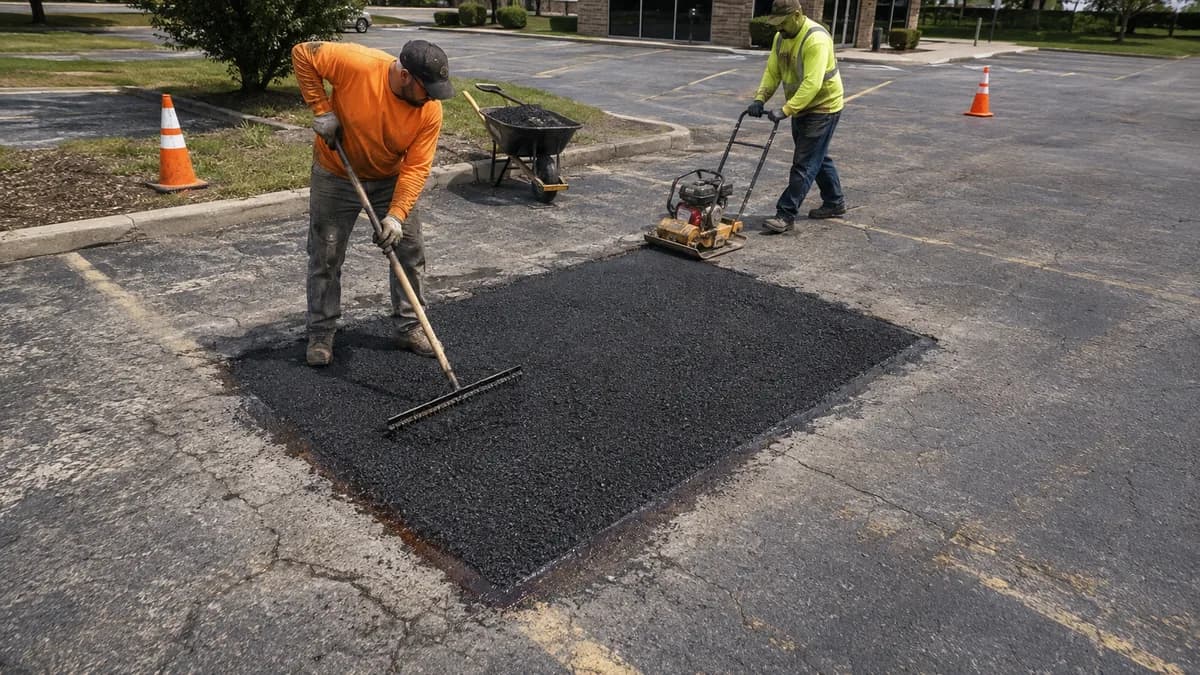
Full-depth patch vs. surface patch
A full-depth patch involves sawcutting a clean rectangular boundary around the damaged area, removing the failed asphalt and base material down to stable subgrade, and rebuilding with compacted aggregate base and new asphalt. A surface patch (sometimes called a skin patch) only replaces the top layer and is appropriate only when the base underneath is still sound.
A third method you may be offered is infrared repair, which reheats and reworks the existing asphalt in place rather than cutting it out. Like a surface patch, it only reaches the top of the pavement, so it belongs to the same conversation: what depth has actually failed.
Surface patches placed over a failed base tend to fail again within a season or two, since the underlying problem was never addressed.
How a proper patch is installed
The process typically includes sawcutting straight edges (rather than a rough irregular boundary), removing all failed material, compacting the base in lifts, and installing asphalt in compacted lifts flush with the surrounding grade. Tack coat is applied to the vertical edges so the new patch bonds to the existing pavement rather than sitting as a separate piece.
Common causes of patch failure
Patches most often fail because water intrudes at the seam between old and new asphalt, the base wasn't adequately compacted, or the patch was placed over unresolved drainage issues. Ask the contractor how the patch edges will be sealed against water intrusion.
When patching isn't the right fix
If a lot has many patches accumulating over a short period, or patches keep failing in the same location, that's usually a sign the pavement needs a larger-scope repair, overlay, or replacement rather than another round of spot patching.
Frequently asked questions
How do I know if a pothole needs a full-depth patch?
If the failure extends into the base material rather than just the surface, a full-depth patch is usually needed. A surface patch over a failed base tends to fail again quickly.
Will a patch match the surrounding pavement's grade and drainage?
Ask the contractor directly. A patch that doesn't match existing grades can create a new low spot that collects water and accelerates the next round of damage.
How long does an asphalt patch last?
It depends on the root cause. A patch that addresses only the visible symptom without fixing the underlying base or drainage issue may need to be redone sooner than one that addresses the cause.
Why do some patches sink or settle after a few months?
Settling usually means the base wasn't compacted adequately in lifts before the asphalt was placed, or water intruded under the patch through an unsealed edge.
Before you hire: The Pavement Directory does not guarantee contractor performance, pricing, licensing, insurance, or availability. Business information may be submitted by contractors or gathered from public sources and should be independently verified before hiring. Always confirm licensing, insurance, references, scope of work, and written contract terms.
For property owners
Looking for a pavement contractor?
Use The Pavement Directory to search asphalt, concrete, sealcoating, striping, ADA access, and pavement maintenance contractors by service and location. Always verify license, insurance, references, and written scope before hiring.
Search contractorsFor contractors
Are you a pavement contractor?
Contractors can add or claim a company profile to help property owners find pavement professionals by service, location, and specialty.