
Oregon pavement guide
Pavement Conditions in Oregon: Regions, Soils, and Common Problems
Oregon's licensing question has a clear answer; its scheduling question depends entirely on which side of the Cascades the property sits.
- 5 regions
- 5 common problems
- 6 local terms
Jump to section
Regional differences
Pavement Conditions by Region in Oregon
Oregon does not have one climate or one soil profile, and pavement that performs well in one part of the state can fail early a few hours away. These are the divisions that matter most when scoping paving, repair, or maintenance work.
Willamette Valley
Portland · Salem · Eugene · Corvallis · Albany · Hillsboro
Environmental stress
- Long wet season with sustained saturation rather than intense storms
- Mild winters with limited but real freeze-thaw at the margins
- Dense urban traffic and constrained, long-developed sites
Subgrade conditions
- Fine-grained valley silts and clays that soften when wet
- Poorly drained soils with a seasonally high water table
- Alluvial deposits along the Willamette and its tributaries
Common distress
- Interconnected cracking in low areas that stay saturated
- Rutting where heavy traffic runs on a softened base
- Moss and organic growth on shaded, persistently damp pavement
What it means for the work
- Subgrade worked wet is the single most common cause of early failure here
- The dry-weather window drives scheduling more than temperature does
- Local surface water management rules often govern any grading change
Oregon Coast and Coast Range
Astoria · Newport · Coos Bay · Tillamook · Lincoln City
Environmental stress
- Very high annual rainfall and long periods of saturation
- Salt air and wind-driven moisture
- Steep terrain with concentrated slope runoff
Subgrade conditions
- Saturated fine-grained and organic soils
- Shallow bedrock and rocky colluvium on slopes
- Dune sand and low-lying soft ground in coastal communities
Common distress
- Base failure where water has no outlet
- Slope movement pulling pavement apart at the downhill edge
- Surface raveling and biological growth on shaded pavement
What it means for the work
- Genuinely dry working windows are limited and book out early
- Drainage correction almost always precedes surface work here
- Slope stability work can exceed the paving cost on hillside parcels
Southern Oregon valleys
Medford · Ashland · Grants Pass · Roseburg · Klamath Falls
Environmental stress
- Hot, dry summers with high pavement surface temperatures
- Cold valley winters with meaningful freeze-thaw at higher elevations
- Wildfire smoke and seasonal air quality constraints on some work
Subgrade conditions
- Clay soils with moderate shrink-swell behavior in the Rogue Valley
- Decomposed granite and rocky soils in parts of the region
- Volcanic soils and pumice around the Klamath Basin
Common distress
- Cracking that widens through the dry season and narrows after wet weather
- Surface oxidation and raveling on unprotected lots
- Frost-related damage at the higher-elevation basins
What it means for the work
- The dry summer gives a longer paving window than the Willamette Valley
- Klamath Basin elevation makes winter behave more like eastern Oregon
- Surface protection has more value here than west of the Cascades
Central Oregon high desert
Bend · Redmond · Prineville · Madras · La Pine
Environmental stress
- Large day-to-night temperature swings year round
- Genuine freeze-thaw cycling at elevation
- Strong solar exposure and dry air accelerating oxidation
Subgrade conditions
- Volcanic soils, pumice, and cinders with unusual compaction behavior
- Shallow basalt and lava rock at variable depth
- Free-draining granular soils in much of the region
Common distress
- Thermal and block cracking from temperature cycling
- Raveling and surface brittleness from binder oxidation
- Winter potholing along unsealed crack lines
What it means for the work
- Rock excavation in basalt is a real and often unpriced cost item
- Crack sealing before winter matters more here than in Portland
- Rapid growth is loading older private streets beyond their design
Columbia Basin and northeastern Oregon
Pendleton · Hermiston · The Dalles · La Grande · Baker City
Environmental stress
- Hot, dry summers and cold winters with deep frost in places
- High wind and blowing dust
- Heavy agricultural, food processing, and freight truck traffic
Subgrade conditions
- Deep wind-deposited loess that is stable dry and erodible wet
- Irrigated agricultural ground with changing moisture regimes
- Basalt bedrock at shallow depth in the gorge and plateau country
Common distress
- Erosion and gullying where concentrated runoff meets loess
- Rutting at processing plants and truck staging areas
- Freeze-thaw damage in the higher northeastern valleys
What it means for the work
- Loess erodes quickly once concentrated water reaches it
- Seasonal processing and harvest traffic should shape the section
- Data center and industrial growth is adding heavy loading in the basin
Field conditions
Common Pavement Problems in Oregon
Saturated subgrade failure west of the Cascades
Broad areas of interconnected cracking that flex under a slow-moving vehicle, concentrated in the parts of the lot that stay damp longest through the wet season.
Likely causes
- Fine-grained valley or coastal soils losing strength when saturated
- A seasonally high water table keeping the base near saturation
- Grading with no positive outlet for surface water
- Base material contaminated with fines pumped up from below
When to get it looked at: Walk the lot in February rather than August. Where water lingers in the wet season is where the base is losing support, and that map should drive the repair scope.
Damage from working subgrade wet
New or recently repaired pavement that fails within a season or two, often in the areas where construction happened latest in the fall or earliest in the spring.
Likely causes
- Subgrade compacted or trafficked above its workable moisture content
- Schedule pressure pushing earthwork into the wet season
- Inadequate protection of exposed subgrade between work days
- Base placed on soft ground that was never proof-rolled
When to get it looked at: If a rebuild failed early, ask what the weather and subgrade conditions were during construction. In Oregon that answer explains a large share of premature failures.
Moss, algae, and organic growth on damp pavement
Green or black growth spreading across shaded, north-facing, or tree-covered areas of a lot, making the surface slick in wet weather and holding moisture against the asphalt.
Likely causes
- Persistent shade combined with a long wet season
- Poor drainage keeping the surface damp between rain events
- Overhanging canopy dropping organic debris that holds water
- Low traffic volume in the affected area
When to get it looked at: Growth on a walking route or an accessible path is a slip concern before it is a pavement concern, and it usually points to a drainage or canopy issue rather than a surface defect.
Thermal and block cracking in the high desert
A pattern of interconnected cracks forming rectangular blocks across central and eastern Oregon lots, unrelated to wheel paths and often appearing on pavement that carries very little traffic.
Likely causes
- Large daily and seasonal temperature swings contracting the asphalt
- Binder oxidation and hardening under strong solar exposure
- Age and low traffic, which allows the binder to stiffen undisturbed
- Surface never protected or sealed through its service life
When to get it looked at: Block cracking is usually a surface and aging problem rather than a structural one, but once the blocks begin to rock under traffic the pavement has moved into a different category.
Loess erosion around Columbia Basin sites
Gullying, undercutting, and pavement edge loss where runoff leaves a lot and reaches unprotected wind-deposited soil, often progressing quickly after a single heavy event.
Likely causes
- Concentrated discharge onto erodible loess with no energy dissipation
- No armored outfall, curb, or stabilized shoulder at the discharge point
- Irrigation or seasonal runoff adding to the volume
- Disturbed ground left unstabilized after construction
Property types
Common Pavement Projects in Oregon
Technology and semiconductor campuses
Washington County campuses combine heavy construction and equipment traffic with strict site access control, so phasing and dust and sediment control shape the job as much as the pavement design.
Food processing and agricultural facilities
Columbia Basin and valley processing plants concentrate loaded truck traffic into harvest and processing seasons, and wash-down water adds a saturation problem the parking field does not have.
Coastal tourism and marina properties
Persistent saturation, salt air, and a season during which lots cannot be closed push work into narrow shoulder windows and make drainage the first item rather than the last.
Resort and recreation properties
Central Oregon resorts sit at elevation with real freeze-thaw and rock excavation, and their peak seasons at both ends of the year narrow the workable construction window from both directions.
Distribution centers and data centers
Portland-area and Columbia Basin facilities put sustained heavy loads on sections that are often specified before the actual traffic pattern is known, which shows up first at entrances and aprons.
Plain English
Pavement Terms You May Encounter in Oregon
| Term | What it means on a Oregon project |
|---|---|
| Dense graded aggregate base | The compacted crushed rock layer beneath the asphalt. In Oregon's wet climate its thickness and its ability to shed water matter more to pavement life than the surface course above it. |
| Subgrade stabilization geotextile | A woven or nonwoven fabric placed between soft subgrade and the aggregate above it to keep the two from mixing. On saturated valley and coastal soils it is a common and legitimate line item worth asking about. |
| Level 2 / Level 3 dense HMAC | Oregon specifications describe asphalt mixes by level and gradation tied to expected traffic. Asking which one is priced, and why it suits your loading, is a fair check on whether the mix matches the site. |
| Proof rolling | Running a loaded truck over the prepared subgrade and watching for deflection before base is placed. In Oregon it is the most direct way to find ground that is too wet or too soft to build on. |
| Emulsified asphalt surface treatment | Water-based asphalt products used for seals and surface treatments. Their cure depends on evaporation, which is why humidity and the forecast matter as much as temperature west of the Cascades. |
| 1200-C construction stormwater permit | The construction stormwater permit used in Oregon for qualifying land disturbance. Which agency administers it at a given address depends on local delegation, so confirm rather than assume. |
State transportation specifications can provide useful regional terminology and material references, but they do not automatically govern private parking-lot or driveway projects unless incorporated into the contract or required by the applicable jurisdiction.
More definitions are in the pavement glossary.
Before you sign
Questions to Ask a Paving Contractor in Oregon
- What is your CCB license number, and does the entity on that license match the entity on this contract?
- What does the CCB record show for your complaint and dispute history?
- How will you confirm the subgrade is dry enough to work, and what happens to the schedule if it is not?
- Will the subgrade be proof-rolled before base goes down, and can I be present?
- Is a stabilization geotextile included, and if not, why is it not needed on this soil?
- Where does water leave this lot today, and does your scope change that?
- Will the reviewing jurisdiction treat this as maintenance or as redevelopment?
- How will disturbed ground be stabilized if the project runs into the wet season?
- What surface and overnight temperatures does the product you have proposed require, and what does the forecast need to look like?
Oregon pavement condition FAQs
What happens if subgrade is worked wet on an Oregon site?
It usually costs you the pavement. Fine-grained valley and coastal soils lose strength as moisture rises, and compacting or driving on them above their workable moisture content remolds the soil rather than densifying it. What follows is a base placed on ground that cannot support it, and a lot that fails in the same footprint within a season or two. If a rebuilt Oregon lot failed early, the weather and ground conditions during construction are the first thing to ask about.
Why is there moss growing on my Oregon parking lot?
Shade plus a long wet season plus low traffic. Where a lot stays damp between rain events and nothing drives over it regularly, moss and algae establish easily, and overhanging canopy makes it worse by dropping organic material that holds water. It matters most as a slip hazard on walking routes and accessible paths. It is usually a drainage and canopy problem rather than a defect in the pavement, so treating the surface without addressing why it stays wet buys a short reprieve.
Why does pavement in Bend crack differently than pavement in Portland?
Different mechanism. Central Oregon sits at elevation with large daily and seasonal temperature swings and strong solar exposure, which stiffens the binder and contracts the asphalt until it cracks in a rectangular block pattern that has nothing to do with wheel paths. Portland's cracking is far more likely to originate in a saturated base losing support. The distinction matters because block cracking is a surface and aging problem addressed with sealing and eventually resurfacing, while base failure is not.
Related reading for Oregon property owners
Property-owner guide
Updated July 6, 2026
How to Choose an Asphalt Paving Contractor
How to choose an asphalt paving contractor: project fit, relevant experience, written scope, references, insurance, and pavement qualifications.
Property-owner guide
Updated July 12, 2026
How Drainage Affects Pavement Life
Why drainage is the biggest factor in how long pavement lasts, how water damages asphalt from the base up, and why fixing it protects every repair.
Property-owner guide
Updated July 6, 2026
Parking Lot Drainage Problems: What Property Owners Should Know
Common causes of parking lot drainage problems, why they accelerate pavement damage, and what property owners should ask contractors before a fix.
Property-owner guide
Updated July 11, 2026
When Should You Seal Asphalt Cracks?
When to seal cracks in asphalt — which cracks to seal, the best time of year, why sealing early matters, and how crack sealing fits a maintenance schedule.
Property-owner guide
Updated July 11, 2026
Signs Your Parking Lot Needs Maintenance
How to read the warning signs a parking lot needs attention — cracks, potholes, faded striping, ponding, raveling — and what each one means.
Property-owner guide
Updated July 6, 2026
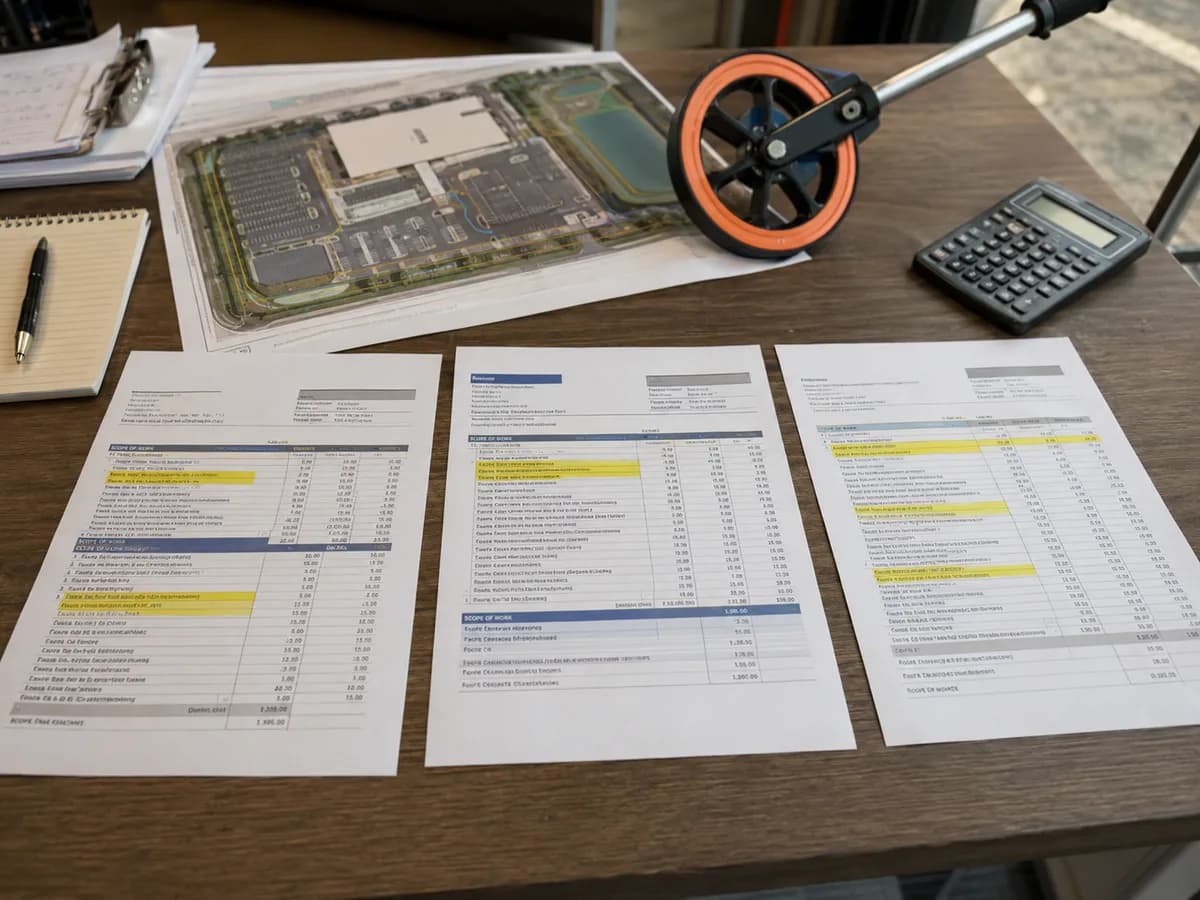
How to Compare Asphalt Paving Bids
How to compare asphalt paving bids by normalizing scope, square footage, thickness, base preparation, drainage, exclusions, and warranty terms.
Before you hire: The Pavement Directory does not guarantee contractor performance, pricing, licensing, insurance, or availability. Business information may be submitted by contractors or gathered from public sources and should be independently verified before hiring. Always confirm licensing, insurance, references, scope of work, and written contract terms.
For contractors
Ready to compare Oregon contractors?
Browse listings by city and service, then use what you have read here to check the scope, the credentials, and the timing before you sign.