
Ohio pavement guide
Pavement Conditions in Ohio: Regions, Soils, and Common Problems
Ohio pavement is undone by water that stays in the structure through a winter that freezes and thaws dozens of times.
- 4 regions
- 5 common problems
- 6 local terms
Jump to section
Regional differences
Pavement Conditions by Region in Ohio
Ohio does not have one climate or one soil profile, and pavement that performs well in one part of the state can fail early a few hours away. These are the divisions that matter most when scoping paving, repair, or maintenance work.
Northeast Ohio snowbelt
Cleveland · Akron · Youngstown · Mentor
Environmental stress
- Lake-effect snowfall well above the rest of the state
- Frequent freeze-thaw cycling with heavy salt use
- Legacy industrial truck traffic
Subgrade conditions
- Heavy lacustrine clays with poor drainage
- Older industrial fill of variable quality
- Frost-susceptible silts in some areas
Common distress
- Severe spring potholing
- Concrete scaling and joint spalling from chloride
- Plow gouging at curbs and transitions
What it means for the work
- Snow storage volume is genuinely large and needs designated space
- Clay drainage determines whether spring damage repeats
- Durable marking materials are worth the premium here
Central Ohio
Columbus · Dublin · Newark · Lancaster
Environmental stress
- Four-season climate with frequent freeze-thaw
- Rapid distribution and logistics growth
- Heavy convective rainfall in summer
Subgrade conditions
- Glacial tills with clay content and variable drainage
- Variable fill on rapidly developed parcels
- Shale bedrock at varying depth in parts of the region
Common distress
- Alligator cracking where drainage is inadequate
- Rutting at distribution dock and yard areas
- Freeze-thaw potholing in late winter
What it means for the work
- Distribution loading calls for a heavier section at truck areas
- Rapid development means subgrade quality varies widely between adjacent sites
- Drainage correction usually precedes surface work
Southwest Ohio
Cincinnati · Dayton · Hamilton · Springfield
Environmental stress
- Somewhat milder winters with still-frequent freeze-thaw
- Heavy rainfall on sites with real grade
- Manufacturing and interstate freight traffic
Subgrade conditions
- Clay soils over limestone and shale
- Hillside sites with slope stability considerations near the river
- Alluvial soils in the Miami and Ohio river valleys
Common distress
- Erosion and undermining at pavement edges on slopes
- Slope movement affecting pavement on hillside parcels
- Base saturation on flat sites with poor drainage
What it means for the work
- Hillside sites need drainage design, not just a grade away from the building
- Landslide-prone slopes around Cincinnati warrant geotechnical input
- Concentrated runoff on grade moves fast and carries sediment
Northwest and rural Ohio
Toledo · Findlay · Lima · Bowling Green
Environmental stress
- Cold winters with deep frost penetration
- Flat terrain with poor natural drainage
- Agricultural equipment and grain truck traffic
Subgrade conditions
- Heavy lake plain clays with very poor drainage
- Extensive agricultural drainage tile affecting adjacent sites
- Flat ground with minimal natural fall
Common distress
- Ponding and base saturation in flat areas
- Frost heave and spring break-up
- Edge break-up under heavy farm equipment
What it means for the work
- Flat sites need designed positive drainage, not minimal slope
- Existing drain tile can be damaged or used during site work
- Harvest-season loading concentrates into a few weeks
Field conditions
Common Pavement Problems in Ohio
Clay subgrade saturation
Alligator cracking and potholes concentrated in the low areas of a lot, pavement flexing underfoot after wet weather, and repairs that fail in the same places repeatedly.
Likely causes
- Heavy clay soils holding water rather than draining it
- Grading with no positive fall to an outlet
- Base material with too many fines to drain
When to get it looked at: Repeat failure in the same low areas is a drainage problem, not a surface one. Ask whether the base was dry when the last repair was placed.
Freeze-thaw potholing
Potholes forming quickly over a few weeks in late winter and early spring, frequently where there were only cracks the previous fall.
Likely causes
- Water entering unsealed cracks and freezing repeatedly through the winter
- Meltwater trapped in the base above still-frozen subgrade
- Clay soils keeping the structure saturated through the cycle
When to get it looked at: If potholes appear where there were only cracks last fall, the cracks stayed open all winter. Fall sealing is the fix, and it is a scheduling decision.
Salt damage to concrete
Sidewalks, curbs, and dock aprons scaling, flaking, and spalling at joints, deteriorating faster than the asphalt beside them.
Likely causes
- Chloride deicers driving repeated freeze-thaw within the concrete surface
- Chloride reaching reinforcement and causing corrosion and spalling
- Concrete without adequate air entrainment or cure for the climate
When to get it looked at: Scaling across large areas or spalling that exposes reinforcement is past the point where sealers help, and on walkways it becomes a trip-hazard question.
Distribution and dock area rutting
Deep wheel paths and shoving at dock approaches, truck courts, and turning areas around Columbus, Cincinnati, and northwest Ohio distribution facilities.
Likely causes
- Slow, heavy, channelized truck loading
- Yard areas built to the same section as the parking field
- Clay subgrade losing strength when saturated under that loading
When to get it looked at: Rutting concentrated at docks and turns is a structural question. Ask what the section actually is before agreeing to a mill-and-fill that is likely to repeat.
Slope movement on hillside sites
Pavement cracking, tilting, or dropping on sloped parcels, particularly in the hilly terrain around Cincinnati and the southeastern part of the state.
Likely causes
- Slope instability in clay and colluvial soils
- Water infiltrating and adding weight and lubrication to a slope
- Fill placed on a slope without adequate keying or drainage
When to get it looked at: Pavement distress that progresses downhill, or cracks that open and step, is a slope question rather than a paving one. That warrants a geotechnical look before repaving.
Property types
Common Pavement Projects in Ohio
Distribution and fulfillment centers
Central Ohio's logistics growth puts heavy truck courts on clay subgrade, and those areas fail years before the parking fields do.
Manufacturing plants and supplier facilities
Continuous heavy equipment and truck movement in a severe freeze-thaw climate, with yard pavement rarely built for the actual loads.
Healthcare and university campuses
Continuous access requirements and pedestrian safety make concrete deterioration and trip hazards a higher priority than surface appearance.
Retail centers and grocery-anchored properties
Large lots on poorly draining clay develop drainage-driven cracking, and phasing around continuous operation drives the schedule.
Agricultural and grain facilities
Northwest Ohio facilities take very heavy loading concentrated into a few harvest weeks on flat sites with limited drainage.
Plain English
Pavement Terms You May Encounter in Ohio
| Term | What it means on a Ohio project |
|---|---|
| Item 441 / asphalt concrete | Ohio specifications identify asphalt mixes by item number and type. Local suppliers use the same vocabulary, and it is reasonable to ask which mix a proposal includes for truck areas. |
| Aggregate base (Item 304) | The dense-graded crushed aggregate base commonly specified in Ohio. Its compaction and drainage quality usually determine pavement life more than the asphalt above it. |
| Stabilized subgrade | Treating clay subgrade with lime, cement, or a similar agent to reduce moisture sensitivity. Worth asking about on clay-heavy Ohio sites carrying truck traffic. |
| Air-entrained concrete | Concrete with microscopic air voids that give freezing water somewhere to expand. Standard for exterior concrete in Ohio and a real factor in whether a walk or apron scales under salt. |
| Underdrain | A perforated pipe in stone that gives water trapped in the pavement structure a path out. On Ohio clay this can matter more than adding thickness. |
| Full-depth reclamation (FDR) | Pulverizing existing asphalt and base together, treating the blend, and repaving over it. Useful where the base has failed and hauling everything off is impractical. |
State transportation specifications can provide useful regional terminology and material references, but they do not automatically govern private parking-lot or driveway projects unless incorporated into the contract or required by the applicable jurisdiction.
More definitions are in the pavement glossary.
Before you sign
Questions to Ask a Paving Contractor in Ohio
- How will drainage be corrected so the clay subgrade stops staying saturated?
- Is an underdrain, stabilized subgrade, or geotextile separation included in this section?
- Are the truck court and dock areas being built to a heavier section than the parking field?
- What is the crack sealing plan, and how late in the fall can it be done at this location?
- Is the concrete deterioration we have caused by salt, and does that change repair versus replacement?
- Does this municipality require contractor registration, and are you registered here?
- Will this project trigger local post-construction stormwater requirements based on impervious area?
- For our hillside site, has slope stability been considered as a cause of the cracking?
- Can you provide references from Ohio properties that have been through several winters since you worked on them?
Ohio pavement condition FAQs
Why does Ohio pavement break up so much in spring?
Ohio winters cycle across freezing repeatedly rather than staying cold. Water in unsealed cracks freezes, expands, and pries them wider through dozens of cycles, while meltwater sits in the base above still-frozen subgrade and takes away support. Heavy clay soils across much of the state keep that water in the structure instead of draining it. When traffic hits a weakened area with widened cracks, the surface breaks out quickly — which is why fall crack sealing does more here than any spring repair program.
Why does the truck court fail before the rest of my Ohio lot?
Because it usually carries a different load on the same pavement section. Distribution and manufacturing facilities often build the truck court to the same design as the parking field, but slow, heavy, channelized truck movement imposes far more stress — and on clay subgrade that has lost strength to moisture, it fails quickly. Building dock and yard areas to a heavier section than the parking field is generally more economical than resurfacing everything on a short cycle.
How is northeast Ohio different from the rest of the state?
The snowbelt east of Cleveland receives lake-effect snowfall well above what Columbus or Cincinnati see, which means more plowing, more salt, and more meltwater working into the pavement over a season. Practically, that raises the value of durable striping materials, makes snow storage location a design decision, and means concrete surfaces there need more attention than the same surfaces in southwest Ohio would.
Why does my hillside lot near Cincinnati keep cracking?
Southwest Ohio's hilly terrain includes slopes that are genuinely marginal in clay and colluvial soils, and water infiltrating a slope adds both weight and lubrication. Pavement distress that progresses downhill, or cracks that open and step vertically, points to slope movement rather than to a pavement defect. Repaving over active slope movement does not last — that condition warrants a geotechnical evaluation before any significant investment.
What is an underdrain and would it help my parking lot?
An underdrain is a perforated pipe in stone placed within or beside the pavement structure to give trapped water a path out. On Ohio's heavy clay soils, where water that enters the base has nowhere to go, an underdrain can do more for pavement life than adding asphalt thickness. Whether it makes sense depends on your grades, where water can be discharged, and how the site currently drains — which is a question worth asking directly.
Related reading for Ohio property owners
Property-owner guide
Updated July 11, 2026
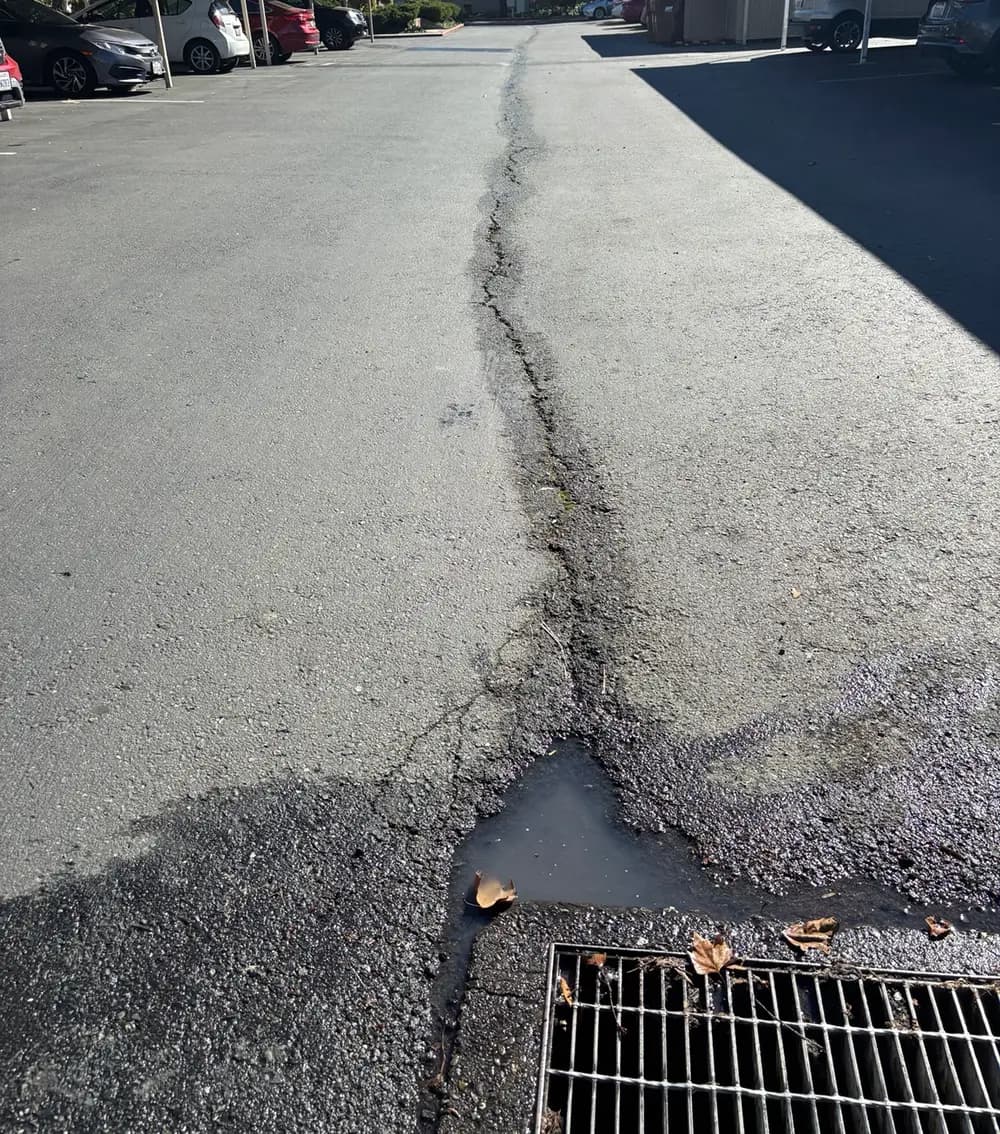
When Should You Seal Asphalt Cracks?
When to seal cracks in asphalt — which cracks to seal, the best time of year, why sealing early matters, and how crack sealing fits a maintenance schedule.
Property-owner guide
Updated July 12, 2026
How Drainage Affects Pavement Life
Why drainage is the biggest factor in how long pavement lasts, how water damages asphalt from the base up, and why fixing it protects every repair.
Property-owner guide
Updated July 6, 2026
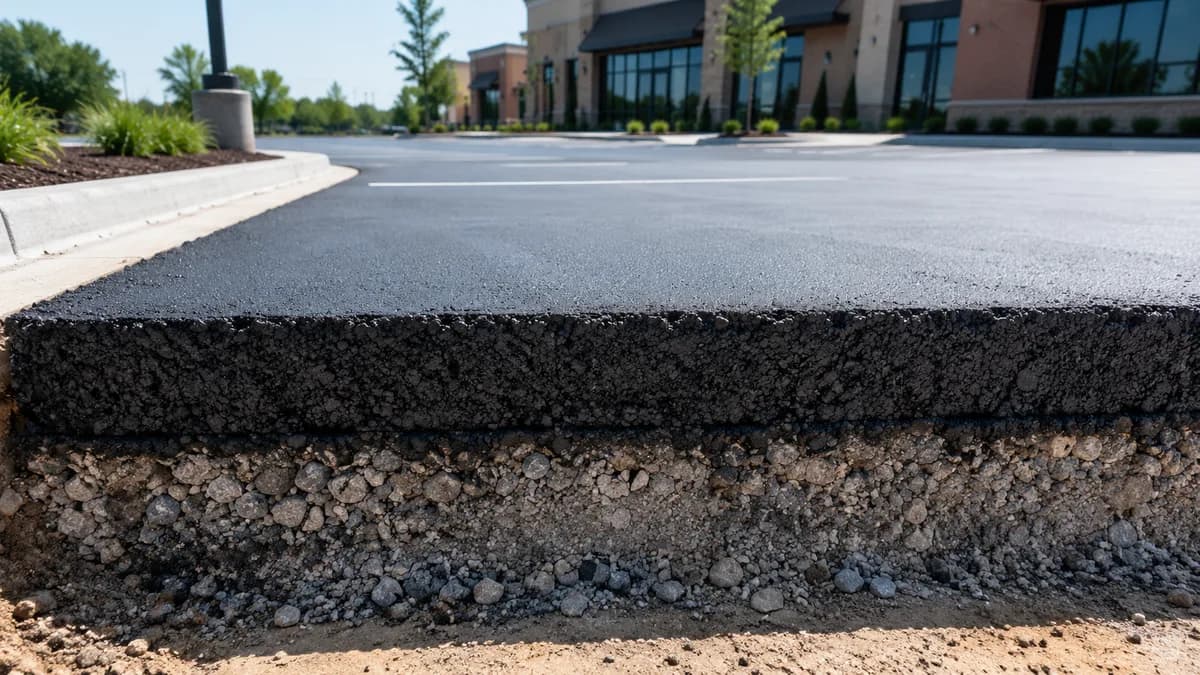
Asphalt Paving Thickness for Parking Lots
Typical asphalt paving thickness for parking lots: benchmarks for stalls, drive lanes, and truck areas, plus how base and soil change the answer.
Property-owner guide
Updated July 11, 2026
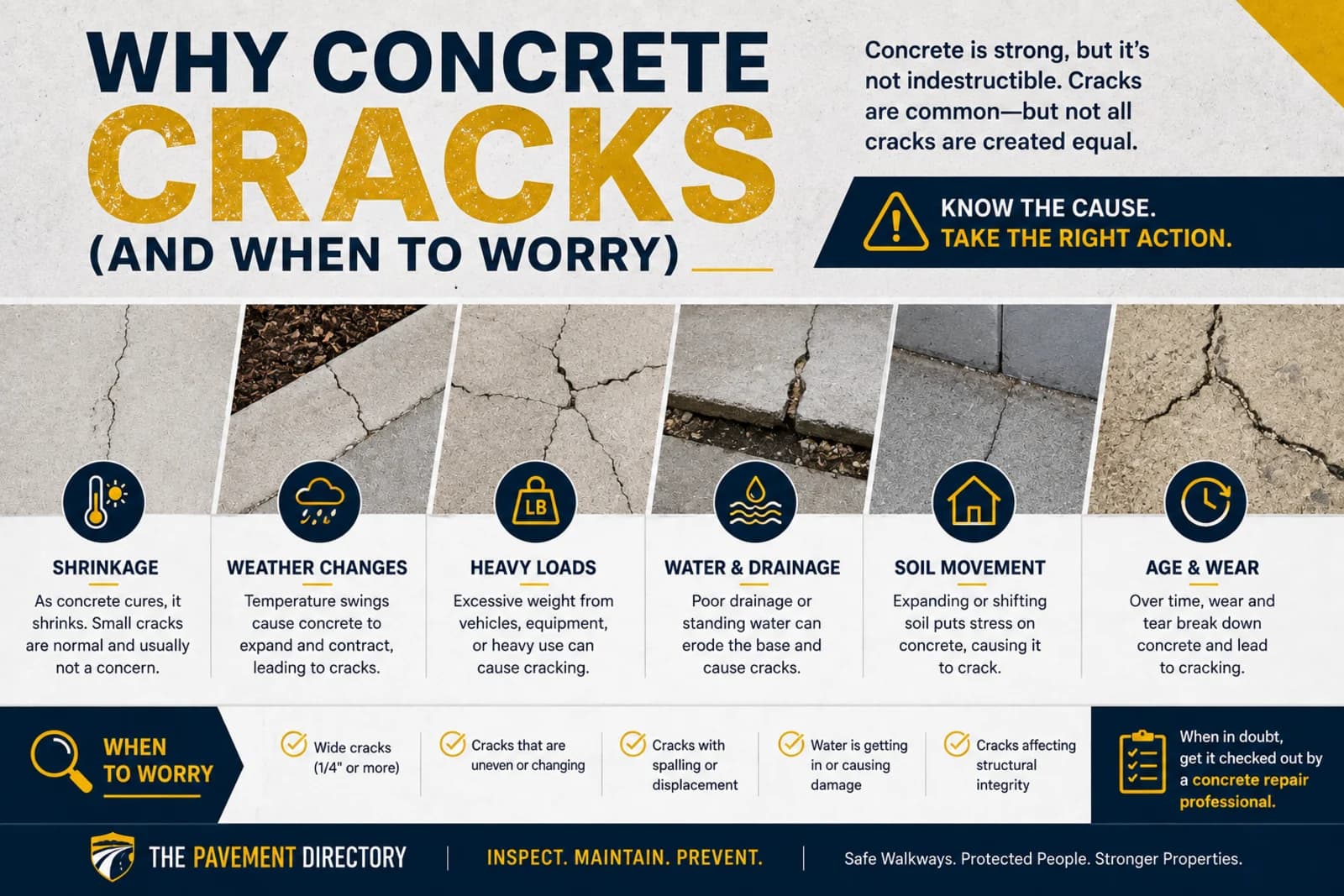
Why Concrete Cracks (and When to Worry)
Why concrete cracks — shrinkage, settlement, freeze-thaw, roots, and loads — the difference between cosmetic and structural, and when to repair.
Property-owner guide
Updated July 11, 2026
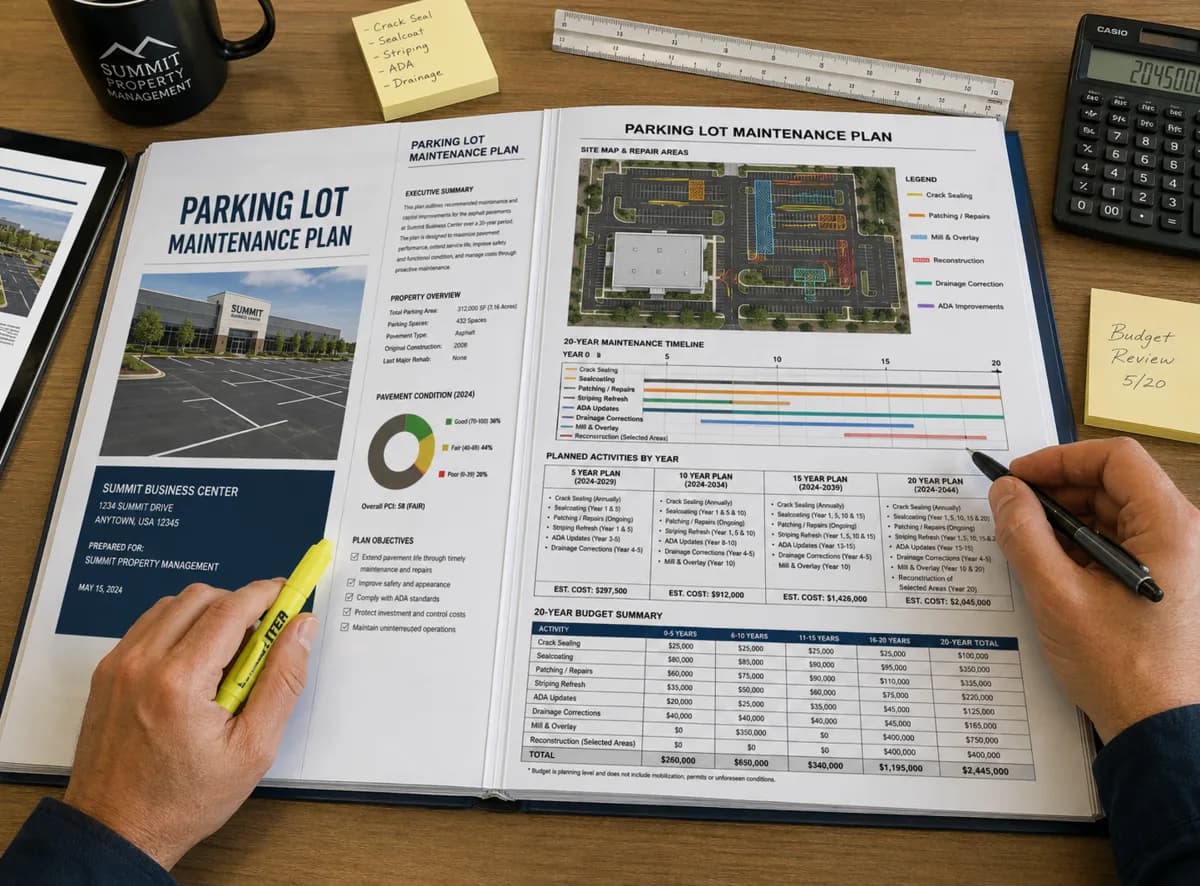
How to Create a Parking Lot Maintenance Plan
How to build a parking lot maintenance plan: inspecting condition, setting service cycles, prioritizing repairs, and budgeting over multiple years.
Before you hire: The Pavement Directory does not guarantee contractor performance, pricing, licensing, insurance, or availability. Business information may be submitted by contractors or gathered from public sources and should be independently verified before hiring. Always confirm licensing, insurance, references, scope of work, and written contract terms.
For contractors
Ready to compare Ohio contractors?
Browse listings by city and service, then use what you have read here to check the scope, the credentials, and the timing before you sign.