
New Jersey pavement guide
New Jersey Paving Contractor License Requirements, Permits, and Verification
New Jersey requires Home Improvement Contractors to register with the Division of Consumer Affairs, carry commercial general liability insurance at a statutory minimum, and display the registration number on contracts and advertising. That framework covers residential work — a driveway at a private home falls within it; a commercial parking lot generally does not.
- Licensing depends on scope
- Reviewed August 2026
Jump to section
Verification
Contractor Licensing and Verification in New Jersey
- Statewide licensing
- Depends on scope and project value
- Administering body
- New Jersey Division of Consumer Affairs (Home Improvement Contractor registration) and Department of Labor (public works contractor registration)
Separately, contractors performing public works in New Jersey must be registered with the Department of Labor and Workforce Development under the Public Works Contractor Registration Act, and prevailing wage applies. If your property is a school, municipality, county, or authority, that registration is a legal prerequisite and is verifiable through the department.
For private commercial paving there is no statewide licensing requirement, so verification leans on the entity and insurance. Confirm the entity through the Division of Revenue business search and match it to the contract and the certificate of insurance. New Jersey's Home Improvement Contractor insurance minimum is a useful reference point but does not apply to commercial work.
Many New Jersey municipalities require their own permits for site work, and in a state this densely governed, local approval timing is often what drives the schedule.
What a contractor license does not prove
Home Improvement Contractor registration is a residential consumer protection measure, and public works registration applies only to public projects. Neither establishes competence on a port-adjacent or heavily loaded commercial site.
- That the proposed scope is the right fix for what is actually failing
- That the price is fair for the local market
- That drainage has been designed or corrected
- That the pavement section and thickness suit the traffic the property carries
- That the specified materials are appropriate for the site
- That the crew will show up when promised
- That workmanship will hold up past the first winter or summer
- That the company is financially stable enough to honor a warranty
Ask for a certificate of insurance sent directly from the carrier or agent rather than a copy forwarded by the contractor, confirm the general liability and workers’ compensation coverage is active on the dates of your work, and ask to be named as certificate holder so you are notified if the policy lapses.
Licensing requirements can turn on project value, scope of work, property location, and whether the job is public or private. City and county rules may add registration, permitting, or bonding requirements beyond anything required at the state level. Verify current requirements with the agency directly before contracting.
Last reviewed:
Permitting
Stormwater and Environmental Considerations
New Jersey Department of Environmental Protection (NJDEP)
New Jersey administers stormwater management through the Department of Environmental Protection, and the state's stormwater rules are among the more demanding in the country. Major development — defined in part by how much impervious surface a project creates or disturbs — triggers requirements for groundwater recharge, runoff quantity control, and water quality treatment, and green infrastructure is the default approach under the current rules.
For a parking lot, the practical consequence is that a full reconstruction can land in a different regulatory category than a mill-and-overlay of the same lot. Because the thresholds turn on disturbed and created impervious area, it is worth establishing early which category your project falls into rather than discovering it during permitting.
Additional layers apply by location: coastal areas fall under the state's coastal permitting program, parts of the northwest fall under Highlands water protection, freshwater wetlands are regulated statewide, and flood hazard area rules apply along waterways. New Jersey also has a substantial number of contaminated sites, and disturbing soil on a site with environmental history has its own implications worth confirming before work begins.
What tends to drive requirements here
- Disturbed and newly created impervious area, which drive major development thresholds
- Groundwater recharge, runoff quantity, and water quality treatment requirements
- Coastal permitting for shore and back-bay properties
- Highlands water protection in parts of northwestern New Jersey
- Flood hazard area rules along waterways
- Environmental history of the site, which can constrain soil disturbance
New Jersey layers state stormwater, coastal, Highlands, wetlands, and flood hazard programs with municipal requirements. Confirm what applies to your parcel before design.
Last reviewed:
Official sources
New Jersey Agencies and Reference Links
Contractor licensing
NJ Division of Consumer Affairs Home Improvement Contractor registrationHome Improvement Contractor registration requirements and license verification for residential work.
Business registration
New Jersey business entity searchConfirm the contracting entity is registered and in good standing.
Environmental
NJDEP stormwater managementState stormwater rules, major development thresholds, and green infrastructure requirements.
Transportation
New Jersey Department of TransportationState specifications and materials terminology used by New Jersey suppliers.
Public works
NJ Department of Labor public works contractor registrationPublic works contractor registration and prevailing wage requirements.
This page summarizes publicly available information for general education. It is not legal, engineering, or code-compliance advice, and requirements change. Confirm anything that affects your project with the agency with jurisdiction over the property.
Regulatory content last reviewed:
New Jersey licensing and permit FAQs
Does New Jersey require a license for paving contractors?
It depends on the work. New Jersey requires Home Improvement Contractor registration through the Division of Consumer Affairs for residential work, with a statutory insurance minimum and the registration number displayed on contracts. Public works projects require separate contractor registration with the Department of Labor along with prevailing wage. For private commercial paving there is no statewide licensing requirement, so verification relies on the entity, insurance, and references.
What is 'major development' under New Jersey stormwater rules?
It is the regulatory threshold that determines whether a project must meet the state's stormwater requirements for groundwater recharge, runoff quantity control, and water quality treatment, and it turns in part on how much impervious surface the project creates or disturbs. For a parking lot, a full reconstruction can fall into a different category than a mill-and-overlay of the same lot. Establishing which category your project is in should happen during design, not during permitting.
Before you sign: hiring guides
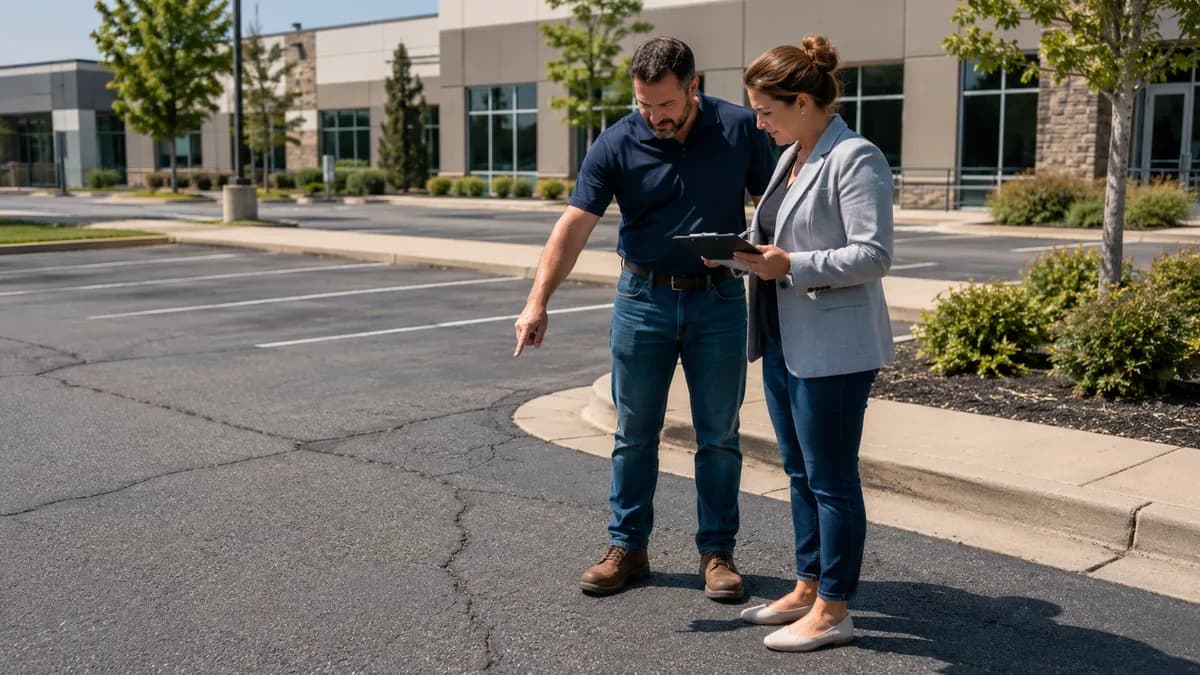
Property-owner guide
Updated July 6, 2026
How to Choose an Asphalt Paving Contractor
How to choose an asphalt paving contractor: project fit, relevant experience, written scope, references, insurance, and pavement qualifications.
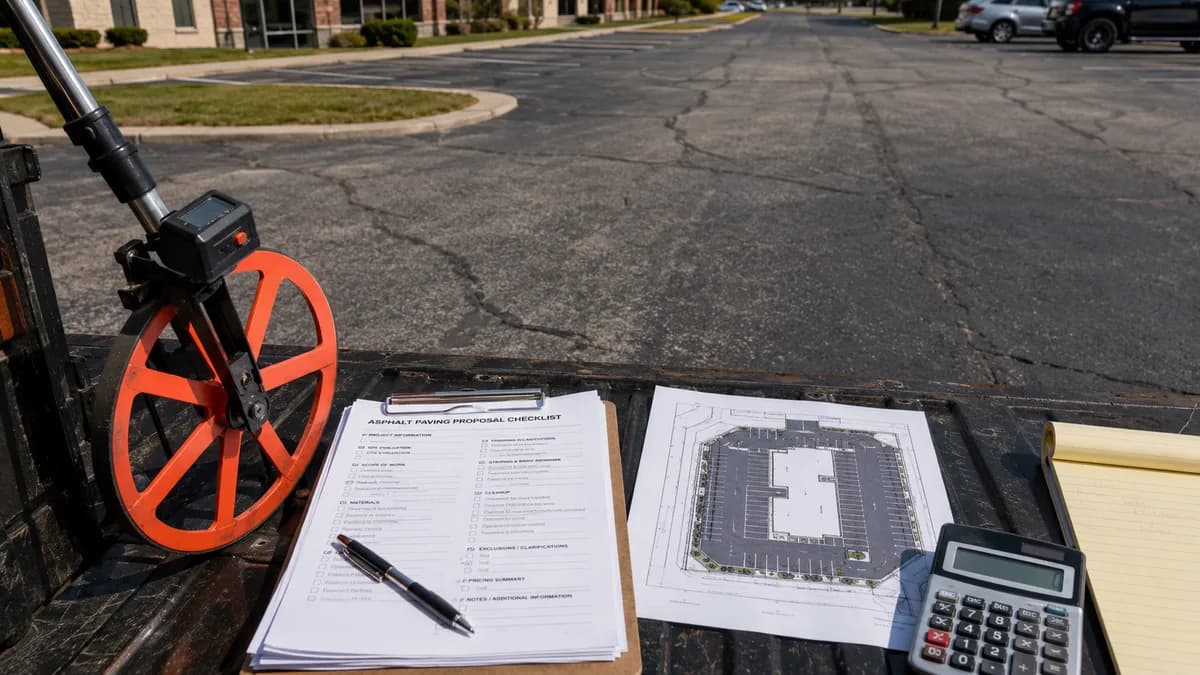
Property-owner guide
Updated July 6, 2026
Asphalt Paving Proposal Checklist
What belongs in an asphalt paving proposal: work limits, quantities, thickness, base preparation, drainage, striping, exclusions, and warranty terms.
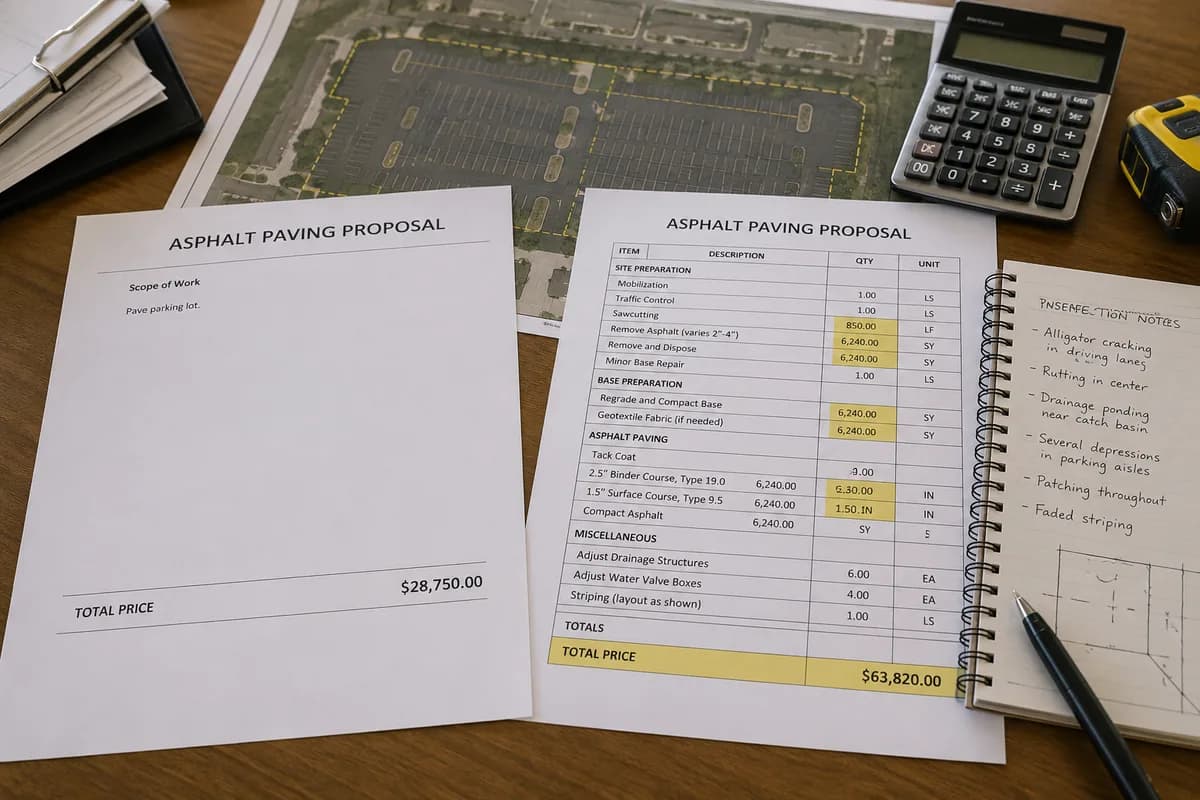
Property-owner guide
Updated July 6, 2026
Cheap Asphalt Paving Bids: Red Flags to Watch For
A cheap asphalt paving bid may omit thickness, base preparation, drainage, striping, or warranty terms. Learn the red flags to check before hiring.
Before you hire: The Pavement Directory does not guarantee contractor performance, pricing, licensing, insurance, or availability. Business information may be submitted by contractors or gathered from public sources and should be independently verified before hiring. Always confirm licensing, insurance, references, scope of work, and written contract terms.
For contractors
Ready to compare New Jersey contractors?
Browse listings by city and service, then use what you have read here to check the scope, the credentials, and the timing before you sign.