
Montana pavement guide
Pavement Conditions in Montana: Regions, Soils, and Common Problems
Chinook-driven freeze-thaw cycling and long hauls to few plants define Montana pavement, over subgrade that changes completely from the western valleys to the eastern plains.
- 5 regions
- 5 common problems
- 6 local terms
Jump to section
Regional differences
Pavement Conditions by Region in Montana
Montana does not have one climate or one soil profile, and pavement that performs well in one part of the state can fail early a few hours away. These are the divisions that matter most when scoping paving, repair, or maintenance work.
Western intermontane valleys
Missoula · Kalispell · Hamilton · Whitefish · Polson
Environmental stress
- Fewer chinook events than east of the Divide but more overall precipitation
- Winter inversions holding cold and damp in the valley floors
- Substantial snowfall with sustained plowing and sanding
Subgrade conditions
- Deep alluvial sand and gravel deposits with excellent bearing and drainage
- Lacustrine silts in parts of the Flathead and Mission valleys
- High water table on low parcels near rivers and lakes
Common distress
- Freeze-thaw potholing where water has reached the base
- Frost heave in the fine-grained lake sediments rather than in the gravels
- Rutting at loading areas and drive-through lanes
What it means for the work
- Valley gravels are genuinely good material and often mean the section can be thinner than eastern Montana requires
- Where lake sediment replaces gravel within a valley, the design assumption has to change with it
- This is the deepest contractor and supplier market in western Montana
The Continental Divide corridor
Helena · Butte · Bozeman · Dillon · Anaconda
Environmental stress
- High elevation with deep frost penetration and a short season
- Very large day-to-night temperature swings year-round
- Rapid growth in the Bozeman area putting new traffic on older pavement
Subgrade conditions
- Alluvial gravels in the valley floors with good bearing
- Historic mine tailings and disturbed ground on some Butte and Anaconda parcels
- Frost-susceptible fines in low areas and along drainages
Common distress
- Frost heave and spring break-up at elevation
- Thermal cracking from a very wide annual temperature range
- Plow damage at edges, joints, and raised structures
What it means for the work
- The season at these elevations is meaningfully shorter than in the Yellowstone valley
- Historic mining and smelting areas can bring soil handling requirements on redevelopment
- Binder selection for the actual temperature range matters more than in most states
The Yellowstone valley and south-central Montana
Billings · Laurel · Livingston · Red Lodge · Hardin
Environmental stress
- Frequent chinook events producing rapid, repeated temperature swings
- The state's heaviest commercial and refinery-related truck traffic
- High summer heat with strong ultraviolet exposure on unshaded lots
Subgrade conditions
- River terrace gravels along the Yellowstone with good bearing
- Shale-derived clays on the benches and rimrock margins
- Fill on long-developed industrial and refinery-adjacent parcels
Common distress
- Rapid crack propagation driven by frequent freeze-thaw crossings
- Rutting and shoving at refinery, rail, and freight loading areas
- Seasonal movement where shale-derived clay underlies a lot
What it means for the work
- This is Montana's largest market and the easiest place in the state to schedule work
- Terrace gravel and bench clay sit close together, so a single section across a site can be wrong on half of it
- Refinery and freight loading should drive the section at entrances, not the parking field beside them
The Golden Triangle and the Hi-Line
Great Falls · Havre · Shelby · Cut Bank · Conrad
Environmental stress
- The most pronounced chinook effect in the state, with dramatic same-day temperature swings
- Severe wind with blowing and drifting snow
- Grain harvest and rail-related truck traffic concentrated into short seasons
Subgrade conditions
- Glacial till over shale across much of the region
- Shale-derived clays with meaningful shrink-swell potential
- Frost-susceptible fines with deep seasonal frost penetration
Common distress
- High-frequency freeze-thaw damage propagating cracks quickly
- Seasonal movement and irregular cracking over swelling clay
- Break-up at grain elevator entrances and scale approaches during harvest
What it means for the work
- Crack sealing has unusually high value here because of how many cycles the pavement sees
- Where snow drifts and where it melts should be considered at layout on a windswept site
- Haul distances to a plant are long enough to affect what can be scheduled in a day
Eastern Montana plains and the Bakken edge
Miles City · Glendive · Sidney · Glasgow · Wolf Point
Environmental stress
- The state's largest annual temperature range, from severe cold to high summer heat
- Energy sector truck traffic on sites built for far lighter use
- Very long distances between commercial centers and material sources
Subgrade conditions
- Shale-derived clays with significant shrink-swell potential
- Sodium sulfate and alkali soils in some areas, which can affect concrete durability
- River bottom alluvium along the Yellowstone and Missouri corridors
Common distress
- Irregular cracking that opens in dry periods and partly closes when wet
- Severe rutting and edge break-up on energy-sector truck routes
- Thermal cracking from an extreme annual temperature range
What it means for the work
- Subgrade treatment on swelling clay is often the meaningful difference between two similar bids
- Sulfate exposure in some soils affects concrete mix selection and is worth testing rather than assuming
- Plant availability, not crew capacity, is usually what determines whether a project happens this year
Field conditions
Common Pavement Problems in Montana
High-frequency chinook freeze-thaw damage
Cracks widening and multiplying far faster than the winter's severity would suggest, with potholes appearing in midwinter rather than only during the spring thaw.
Likely causes
- Chinook winds driving multiple freeze-thaw crossings within a single day
- Water entering open cracks and expanding on each freeze
- Rapid thawing saturating the base before it can drain
- Cracks left unsealed through the season when cycle counts are highest
When to get it looked at: In chinook country the number of cycles matters more than the temperature. If a lot deteriorated noticeably over one winter, the cracks were probably open when the season started.
Swelling shale-derived clay movement
Cracks that follow no traffic pattern, open during dry stretches, and partly close after wet weather, with repairs in the same locations failing every few years.
Likely causes
- Shale-derived clays on the plains with meaningful shrink-swell potential
- Moisture change from irrigation, drainage, downspouts, or seasonal precipitation
- Subgrade placed without treatment or moisture conditioning
- Vegetation drawing moisture unevenly from beneath the pavement
When to get it looked at: If the same crack has been repaired twice and moved again, the soil is the issue. Surface work does not stop a clay from changing volume with moisture.
Thermal cracking from an extreme temperature range
Straight cracks running across the pavement at roughly even spacing, unrelated to traffic, most pronounced in eastern Montana and at elevation.
Likely causes
- Severe cold contracting the asphalt until it cracks in tension
- A binder grade chosen for a general regional default rather than the site's actual low
- Aged, oxidized binder that can no longer relax stress
- A very wide annual temperature swing cycling the pavement repeatedly
When to get it looked at: Evenly spaced transverse cracks are a sealing matter while they remain tight. Once water reaches the base through them, the chinook cycling turns them into a structural problem quickly.
Energy and agricultural truck loading damage
Entrances, scale approaches, and turning radii breaking up while the adjacent parking areas remain intact, often within the first year or two of a change in traffic.
Likely causes
- Loaded trucks imposing axle loads far beyond the design assumption
- Traffic type changing after the lot was built, with no corresponding section change
- Unpaved shoulders giving way under wide turns
- Loading concentrated into short seasons rather than spread through the year
When to get it looked at: Damage concentrated where trucks turn, queue, or stop is a section and loading question rather than a maintenance one, and it usually needs a heavier design in those areas specifically.
Blowing and drifting snow concentrating meltwater
The same areas of a windswept lot developing damage each year, corresponding to where drifts form and where their meltwater runs when they go.
Likely causes
- Buildings, fences, and landscaping creating predictable drift patterns
- Plowed snow stockpiled where its meltwater crosses the pavement rather than leaving the site
- Sustained wind loading snow onto specific parts of the property
- Meltwater refreezing in place during chinook cycling
Property types
Common Pavement Projects in Montana
Energy sector facilities and access areas
Eastern Montana yards and support sites take loads far beyond typical commercial traffic, and entrances and turning radii on swelling clay fail well before the parking areas do.
Grain elevators and agricultural facilities
Hi-Line and Golden Triangle facilities absorb enormous truck volume over a few harvest weeks, then sit largely idle through a winter of intense freeze-thaw cycling.
Refinery and rail-served industrial properties
Billings-area facilities combine very heavy slow-moving loads with a mix of terrace gravel and bench clay across single sites, so one section across the property is usually wrong somewhere.
Mountain resort and gateway community properties
Whitefish, Big Sky, and West Yellowstone properties take heavy seasonal loading and plow damage during the months when nothing can be repaired, with long material hauls limiting the summer window further.
Hospital, university, and county facilities
Institutional campuses combine constant occupancy with accessible routes that cannot be interrupted, and public work brings bidding and bonding requirements private projects do not carry.
Plain English
Pavement Terms You May Encounter in Montana
| Term | What it means on a Montana project |
|---|---|
| Chinook | A warm, dry downslope wind east of the Continental Divide that can raise temperatures dozens of degrees in hours. Its relevance to pavement is that it multiplies freeze-thaw cycles far beyond what the winter's average temperature suggests. |
| PG binder grade | The performance grade designation describing the temperature range a binder is designed for. In a state with Montana's annual swing, the low-temperature number is a genuine selection decision rather than a regional default. |
| Crushed base course | The compacted stone layer beneath the asphalt. Western Montana valley gravels often supply excellent material locally, while eastern plains sites may be hauling it a considerable distance. |
| Plasticity index | A laboratory measure of how much a soil's behavior changes with moisture. On shale-derived plains clays it is the number that tells you whether subgrade treatment belongs in the scope. |
| Seasonal load restrictions | Weight limits applied while the subgrade is thaw-weakened. They apply to public roads, but the underlying condition — a base at a fraction of its usual strength — applies to private lots as well. |
| Sulfate soils | Soils containing sulfate compounds, present in parts of eastern Montana. Where sulfate levels are elevated they can attack ordinary concrete over time, which makes testing rather than assuming worthwhile before pouring. |
State transportation specifications can provide useful regional terminology and material references, but they do not automatically govern private parking-lot or driveway projects unless incorporated into the contract or required by the applicable jurisdiction.
More definitions are in the pavement glossary.
Before you sign
Questions to Ask a Paving Contractor in Montana
- What is your Montana contractor registration number, and does the registered name match the entity on this contract?
- What binder grade are you specifying, and does its low-temperature rating reflect this location rather than a general Montana default?
- How many freeze-thaw cycles does this site actually see, and how does that affect the crack sealing schedule you are recommending?
- What is the plasticity of the subgrade here, and does this proposal include any subgrade treatment?
- How far is the nearest asphalt plant, and what does that haul do to mix temperature and to loads per day?
- Does this work require a conservation district permit for anything near a stream?
- Where will plowed snow be stockpiled after this work, and where does its meltwater go?
- Does the proposed section reflect the truck traffic this site actually receives?
- Has anyone tested for sulfate in the soil before specifying the concrete here?
- Can you show me comparable projects on this side of the Divide?
Montana pavement condition FAQs
What is a chinook and why does it matter for my Montana parking lot?
A chinook is a warm, dry downslope wind east of the Continental Divide that can raise temperatures dozens of degrees within hours and let them fall back the same night. For pavement, that means a single midwinter week can deliver several full freeze-thaw cycles, and water in open cracks freezes and expands each time. Cycle count, not how cold the winter gets, is the mechanism that damages pavement here — which is why a mild-sounding Montana winter can leave a lot noticeably worse than it started.
Why does the pavement on my eastern Montana property crack in wandering lines?
Because the ground beneath it is changing volume. Shale-derived clays across the eastern plains swell when they take on moisture and shrink when they dry, and the resulting movement cracks pavement from below in patterns that follow no traffic path. The cracks tend to open during dry stretches and partly close after wet weather. Because the mechanism is in the soil, resurfacing produces the same pattern again within a few years unless drainage and subgrade treatment are addressed.
Is western Montana pavement really different from eastern Montana?
Substantially. The western intermontane valleys sit on deep alluvial sand and gravel, which is excellent subgrade and often means a thinner section performs well, and chinooks are far less pronounced west of the Divide. Eastern Montana has shale-derived clay that swells, a larger annual temperature range, frequent chinook cycling, and much longer distances to material. A specification and maintenance schedule appropriate to Missoula can be genuinely wrong in Glendive, and vice versa.
How much does haul distance affect a Montana paving project?
On rural sites, a great deal. Asphalt has to reach the paver within a workable temperature range, and a long haul reduces the margin the crew has to place and compact it properly, particularly at the edges of the season. It also limits loads per day, which affects cost and how a project can be sequenced. On a site well away from Billings, Missoula, or Great Falls, asking directly how far the material is coming from is a fair and practically important question.
Is crack sealing worth it in Montana?
It is arguably the highest-value maintenance available here, and more so east of the Divide than in most of the country. Sealed cracks keep water out of the base, and in chinook country an open crack faces far more freeze-thaw crossings in a season than the same crack would in a state with one long freeze. The cost of sealing is small against what unsealed cracks produce. Timing is the practical question: cracks are widest when the pavement is cold, and the product has its own temperature and moisture requirements.
Should I be concerned about sulfate in the soil at my Montana site?
In parts of eastern Montana it is worth checking rather than assuming. Some soils in the region contain sulfate compounds that can attack ordinary concrete over time, causing deterioration that looks like a durability failure but originates in the ground chemistry. A soil test before specifying concrete for pads, aprons, or curb is inexpensive relative to replacing concrete that deteriorates early, and where sulfate is present the mix specification can be adjusted accordingly.
Related reading for Montana property owners
Property-owner guide
Updated July 11, 2026
When Should You Seal Asphalt Cracks?
When to seal cracks in asphalt — which cracks to seal, the best time of year, why sealing early matters, and how crack sealing fits a maintenance schedule.
Property-owner guide
Updated July 11, 2026
Hot-Pour vs. Cold-Pour Crack Sealing
Hot-pour vs. cold-pour crack sealing compared — durability, cost, application, and when each material makes sense for asphalt cracks.
Property-owner guide
Updated July 6, 2026
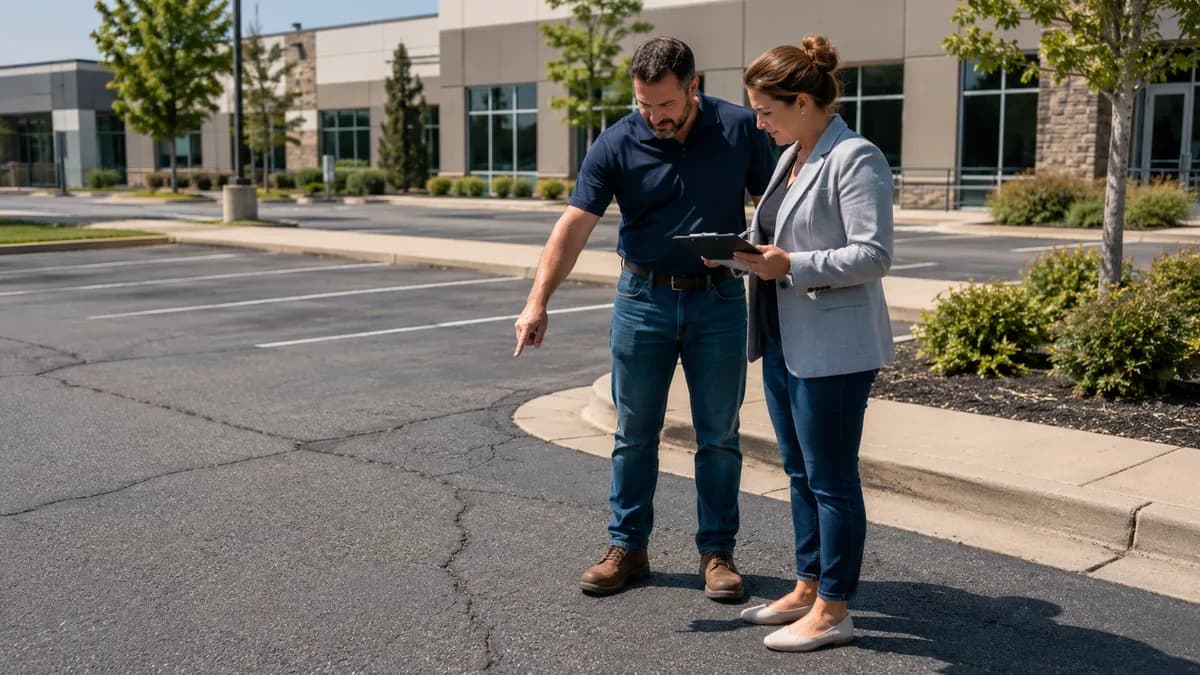
How to Choose an Asphalt Paving Contractor
How to choose an asphalt paving contractor: project fit, relevant experience, written scope, references, insurance, and pavement qualifications.
Property-owner guide
Updated July 6, 2026
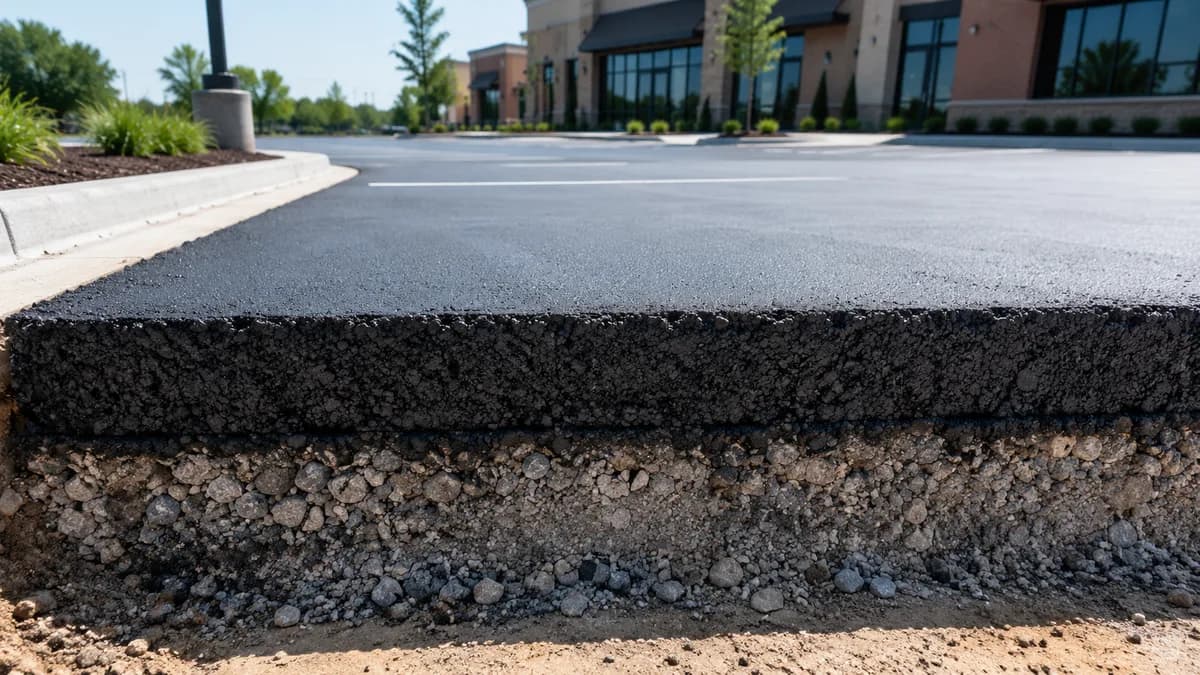
Asphalt Paving Thickness for Parking Lots
Typical asphalt paving thickness for parking lots: benchmarks for stalls, drive lanes, and truck areas, plus how base and soil change the answer.
Property-owner guide
Updated July 11, 2026
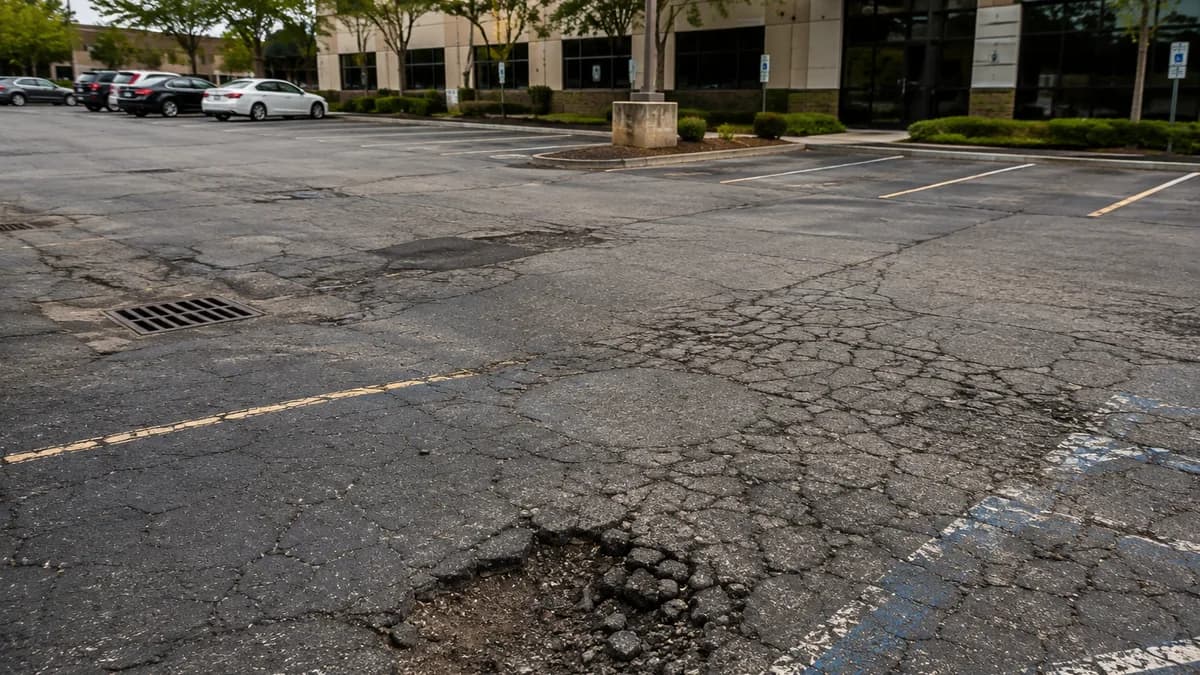
Signs Your Parking Lot Needs Maintenance
How to read the warning signs a parking lot needs attention — cracks, potholes, faded striping, ponding, raveling — and what each one means.

Property-owner guide
Updated July 11, 2026
How to Create a Parking Lot Maintenance Plan
How to build a parking lot maintenance plan: inspecting condition, setting service cycles, prioritizing repairs, and budgeting over multiple years.
Before you hire: The Pavement Directory does not guarantee contractor performance, pricing, licensing, insurance, or availability. Business information may be submitted by contractors or gathered from public sources and should be independently verified before hiring. Always confirm licensing, insurance, references, scope of work, and written contract terms.
For contractors
Ready to compare Montana contractors?
Browse listings by city and service, then use what you have read here to check the scope, the credentials, and the timing before you sign.