
Maine pavement guide
Pavement Conditions in Maine: Regions, Soils, and Common Problems
Maine pavement projects are governed by frost depth, ledge, and the haul distance between the site and the nearest working plant.
- 5 regions
- 6 common problems
- 7 local terms
Jump to section
Regional differences
Pavement Conditions by Region in Maine
Maine does not have one climate or one soil profile, and pavement that performs well in one part of the state can fail early a few hours away. These are the divisions that matter most when scoping paving, repair, or maintenance work.
Southern Maine and the York County corridor
Portland · South Portland · Biddeford · Saco · Kittery
Environmental stress
- The state's heaviest commercial traffic on the oldest commercial pavement
- Freeze-thaw cycling moderated somewhat by proximity to the ocean
- Sustained deicing on retail and institutional properties
Subgrade conditions
- Marine clay in low-lying areas near the coast and river mouths
- Sand and gravel outwash deposits along the major river corridors
- Fill on long-developed urban parcels in Portland and the mill cities
Common distress
- Alligator cracking in drive aisles carrying more traffic than the section was built for
- Settlement over utility trenches on older commercial streets and lots
- Concrete scaling on walks and aprons that take repeated salt applications
What it means for the work
- This is the deepest contractor and supplier market in the state and the easiest to schedule in
- Marine clay near the coast is soft and moisture-sensitive; a section designed for gravel subgrade will not perform on it
- Occupied retail and downtown sites usually drive phasing more than materials do
Midcoast, the peninsulas, and the islands
Rockland · Camden · Belfast · Boothbay Harbor · Bar Harbor
Environmental stress
- Salt air and wind-driven spray on exposed shoreline properties
- Traffic concentrated into a short visitor season on lots that are quiet the rest of the year
- Damp, shaded conditions that keep pavement wet for long stretches
Subgrade conditions
- Granite and metamorphic bedrock at or near the surface on many parcels
- Thin, stony till over rock with almost no depth to work with
- Poorly drained pockets between rock outcrops
Common distress
- Cracking where a section crosses from rock to soil subgrade over a short distance
- Moss and organic growth on shaded, persistently damp pavement
- Edge erosion where runoff leaves the pavement onto a steep shoulder
What it means for the work
- Ferry schedules and load limits govern what is possible on island properties, sometimes more than weather does
- Rock depth can change several feet across a single parcel, so test pits are worth the cost before pricing
- Compressing all the work into the off-season is normal here and books out early
The Kennebec and Androscoggin valleys
Augusta · Lewiston · Auburn · Waterville · Brunswick
Environmental stress
- Colder winters and more frost penetration than the immediate coast
- Meaningful snowfall with sustained plowing on large institutional lots
- River-valley flooding on low parcels
Subgrade conditions
- Marine clay deposited when the sea reached inland after glaciation
- Sand and gravel terraces above the river floodplains
- Frost-susceptible silts in old mill-district fill
Common distress
- Frost heave in fine-grained clay and silt subgrades
- Spring potholing along crack lines that opened over winter
- Settlement on filled parcels near the rivers
What it means for the work
- The clay here holds water and gives it up slowly; drainage design matters more than surface thickness
- State, hospital, and college properties concentrate here, and public work brings its own bidding rules
- Depth of clean granular material below the pavement is usually the number that decides performance
Western mountains and the lakes region
Rangeley · Bethel · Farmington · Bridgton · Greenville
Environmental stress
- The state's deepest frost penetration outside the far north
- Heavy snowfall and long plowing seasons at resort properties
- Steep grades that concentrate meltwater and runoff onto pavement
Subgrade conditions
- Rocky glacial till over bedrock at shallow depth
- Frost-susceptible fines at the toe of slopes and in low areas
- Seasonally saturated ground where snowmelt has nowhere to go
Common distress
- Severe frost heave and spring break-up
- Washout where uncontrolled runoff crosses pavement on a grade
- Plow damage at edges, catch basin rims, and raised features
What it means for the work
- The working window is materially shorter here than on the coast at both ends of the season
- Where plowed snow gets stockpiled determines where meltwater goes, and that belongs in the layout
- Steep-site drainage work frequently costs more than the paving it protects
Downeast, Aroostook, and the north woods
Presque Isle · Caribou · Houlton · Machias · Millinocket
Environmental stress
- Long, severely cold winters with deep frost and low-temperature cracking
- A construction season compressed into a few reliable months
- Heavy seasonal loading from agriculture and forest products
Subgrade conditions
- Frost-susceptible silts and fine tills across large areas
- Agricultural ground with variable compaction and moisture
- Limited local aggregate sources in parts of the region
Common distress
- Regularly spaced transverse cracking from extreme cold contraction
- Break-up at entrances and turning areas used by loaded trucks
- Recurring heaving in the same footprint each spring
What it means for the work
- Plant availability and haul distance are the binding constraints, not crew capacity
- Potato and forest-products loading arrives in concentrated bursts and should drive the section design
- Binder selection for the low-temperature extreme matters more here than anywhere else in the state
Field conditions
Common Pavement Problems in Maine
Frost heave in fine-grained subgrade
The same bump, ridge, or crack pattern reappears each late winter, partially flattens out by early summer, and leaves a wider crack behind than the year before.
Likely causes
- Silt and marine clay subgrades in which freezing water forms ice lenses
- Water available below the pavement with no path to drain away
- Too little clean granular material between the pavement and the frost-susceptible layer
- Frost penetrating unevenly at a change in material or at a buried structure
When to get it looked at: If the heave returns in the same footprint two winters running, the answer is in the subgrade. Milling and overlaying produces a smooth lot that heaves in exactly the same place the following March.
Spring break-up on a thaw-weakened base
Potholes and edge failures appearing over a few weeks in April in areas that carried the same traffic through the whole winter without complaint.
Likely causes
- The surface thawing before the ground below it, trapping meltwater in the base
- Frost-susceptible fines losing most of their strength when saturated
- Loaded delivery and service vehicles arriving during the weakest weeks of the year
- Drainage that cannot move meltwater off the site fast enough
When to get it looked at: Damage that shows up in the same locations every April is a drainage or base problem wearing a seasonal disguise. Patching it annually is the more expensive option over ten years.
Ledge encountered mid-project
Excavation stops on solid rock at a depth nobody planned for, and a straightforward reconstruction turns into a change order and a schedule problem.
Likely causes
- Shallow granite and metamorphic bedrock across much of coastal and western Maine
- Rock depth varying by several feet within one parcel
- Pricing based on a walk-through rather than on test pits or borings
- A design that assumed a uniform section depth across the site
When to get it looked at: Before signing, not after. A few test pits on a Maine site cost far less than discovering rock with a crew mobilized and a plant scheduled.
Low-temperature transverse cracking
Straight cracks running across the pavement at fairly even spacing, unrelated to where traffic goes, most pronounced in the north and the western mountains.
Likely causes
- Extreme cold contracting the asphalt until it cracks in tension
- A binder grade not selected for the site's actual low-temperature extreme
- Aged, oxidized binder that can no longer relax stress
- Cracks left unsealed so water reaches the base and widens them each cycle
When to get it looked at: Evenly spaced transverse cracks are usually a sealing question rather than a structural one — but only while they stay tight. Once water is reaching the base through them, the conversation changes.
Moss, algae, and organic growth on damp pavement
Green or black growth spreading across shaded areas of a coastal or wooded lot, making the surface slippery and holding moisture against the pavement.
Likely causes
- Heavy tree canopy and north-facing exposure keeping the surface from drying
- Poor surface drainage leaving thin films of standing water
- Accumulated needles, leaves, and organic debris trapping moisture
- Low traffic volumes that never wear the growth away
Seasonal loading damage at agricultural and forest-products sites
Entrances, scale approaches, and turning radii breaking up while the parking areas beside them stay intact, with the damage appearing during a few weeks of the year.
Likely causes
- Loaded trucks imposing axle loads far beyond the design assumption
- Loading concentrated into harvest or hauling seasons rather than spread through the year
- Unpaved shoulders giving way under wide turns
- Entrances built to the same section as the adjacent parking field
Property types
Common Pavement Projects in Maine
Coastal hospitality and seasonal tourism properties
Inns, marinas, and waterfront restaurants absorb most of their annual traffic in about twelve weeks and can rarely close during them, so the work has to fit into a shoulder season that is already short.
Island properties served by ferry
Equipment weight limits and boat schedules determine what can be mobilized and when, which makes the logistics plan a bigger variable than the pavement design.
Potato and agricultural facilities in Aroostook County
Storage houses and processing sites take heavy loaded truck traffic during a short harvest window on ground with deep seasonal frost, so entrances and scale approaches need a heavier section than the yard around them.
Forest products mills and log yards
Loaded log trucks concentrate damage at entrances and turning radii, and unpaved shoulders alongside those movements give way first.
Hospitals, colleges, and state facilities
Institutional campuses in the Kennebec and Androscoggin valleys combine constant occupancy with accessible routes that cannot be interrupted, and public work brings bidding and bonding requirements that private jobs do not carry.
Ski areas and mountain resort properties
Peak use falls in the season when the pavement is least workable, so lots take their heaviest loading and their plow damage during the months when nothing can be repaired.
Plain English
Pavement Terms You May Encounter in Maine
| Term | What it means on a Maine project |
|---|---|
| Ledge | The regional term for bedrock met during excavation. It is common enough across coastal and western Maine that a proposal should carry a unit price for removing it rather than an assumption that none will be found. |
| Aggregate subbase course | The layer of clean granular material placed below the base to carry drainage and keep frost-susceptible soil away from the pavement. In a deep-frost state its thickness is often the most consequential number in the section detail. |
| Marine clay | Fine-grained sediment left behind where the sea reached inland after glaciation, common in southern Maine and the river valleys. It is soft, holds water, and behaves nothing like the gravel found a few miles away. |
| Posted road limits | Seasonal weight restrictions applied while the subgrade is thaw-weakened. They apply to public roads, but the reason behind them — a base with a fraction of its usual strength — applies just as much to a private lot. |
| Full-depth reclamation | Pulverizing the existing asphalt together with the base, treating the blend, and repaving over it. It shows up on larger Maine lots and private roads where hauling the old section away would dominate the cost. |
| Underdrain | A perforated pipe in a stone trench installed to take water out of the pavement structure. On clay and silt subgrades it often does more for pavement life than adding surface thickness would. |
| Shoreland zone | The municipally administered band of land near water bodies and wetlands in which additional standards apply. Work inside it can require local review even when the pavement work itself is routine. |
State transportation specifications can provide useful regional terminology and material references, but they do not automatically govern private parking-lot or driveway projects unless incorporated into the contract or required by the applicable jurisdiction.
More definitions are in the pavement glossary.
Before you sign
Questions to Ask a Paving Contractor in Maine
- How far is the nearest asphalt plant from this site, and what does that haul do to the mix temperature and the schedule?
- Have you looked for ledge here, and what is your unit price if you hit rock during excavation?
- How deep is clean granular material going below the pavement, and how was that depth decided?
- Is there an underdrain in this scope, and if not, where is water in the base supposed to go?
- Does this project trigger Maine DEP stormwater review or Site Location of Development review, and who is responsible for finding out?
- Is any part of this lot within the town's shoreland zone?
- What binder grade are you specifying, and does it match this location's winter low rather than a statewide default?
- How will disturbed areas be stabilized if the work runs late into the fall?
- Can you show me comparable projects you have completed in this part of Maine, not just in southern Maine?
Maine pavement condition FAQs
What is ledge and why does it keep coming up on Maine paving quotes?
Ledge is bedrock encountered during excavation, and across coastal and western Maine it sits close enough to the surface that a project can meet it without warning. Rock depth can change by several feet inside a single parcel, so a price built on a walk-through can be badly wrong. The useful protection is a unit price for rock removal written into the proposal, and on a reconstruction, a few test pits before the number is finalized. Discovering it with a crew mobilized is the expensive version of the same conversation.
Why does my Maine lot break up every April in the same spots?
Because the pavement surface thaws before the ground beneath it does, and meltwater ends up trapped in the base by soil that is still frozen below. A saturated base loses most of its strength, and traffic the pavement carried all winter starts moving material around and forming potholes within a few weeks. When the damage repeats in the same footprint year after year, the base or the drainage in those areas is the problem, not the winter. Patching each spring treats the symptom indefinitely.
Does haul distance from the asphalt plant really affect my project?
In much of Maine, yes. Asphalt has to arrive within a workable temperature range, and a long haul reduces the margin the crew has to spread and compact it properly, particularly on cool days at the edges of the season. Long hauls also mean fewer loads per day, which affects both cost and how a contractor can sequence the work. On a rural, Downeast, or island site it is a fair and useful question to ask directly rather than assume the contractor has already solved.
Why does moss grow on my coastal Maine parking lot?
Because the surface never gets a chance to dry. Heavy tree canopy, north-facing exposure, damp maritime air, and accumulated needles and leaves keep a thin film of moisture on shaded pavement, and low traffic in those areas means nothing wears the growth off. It is a slip hazard and it holds water against the surface, but it is a symptom rather than a disease: improving drainage, cutting back canopy where practical, and keeping organic debris off the pavement do more than repeated cleaning.
Is crack sealing worth doing on a Maine property?
In a state with this much frost, it is one of the better-value treatments available. Sealed cracks keep meltwater out of the base, which is precisely what drives spring break-up, and the cost of sealing is small compared with repairing the potholes that unsealed cracks eventually produce. The timing question matters more than the decision: cracks are widest when the pavement is cold, and the product has its own temperature and moisture requirements, so a contractor should be selecting the window rather than working to a fixed date.
Related reading for Maine property owners
Property-owner guide
Updated July 11, 2026
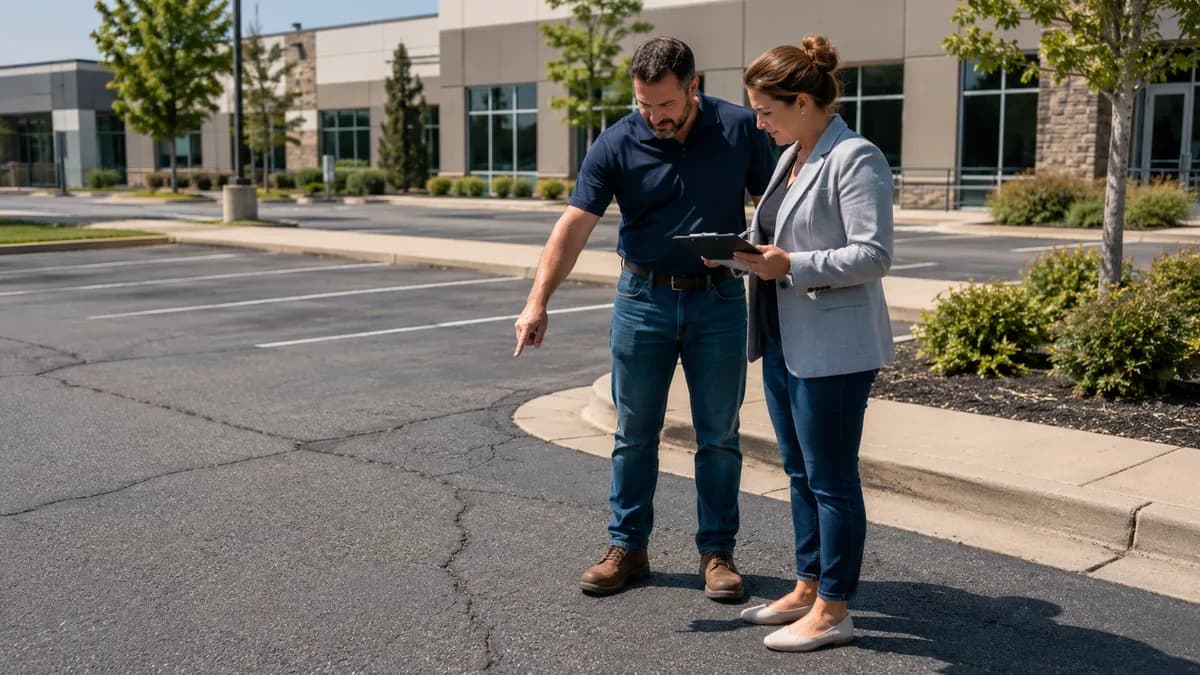
When Should You Seal Asphalt Cracks?
When to seal cracks in asphalt — which cracks to seal, the best time of year, why sealing early matters, and how crack sealing fits a maintenance schedule.
Property-owner guide
Updated July 6, 2026
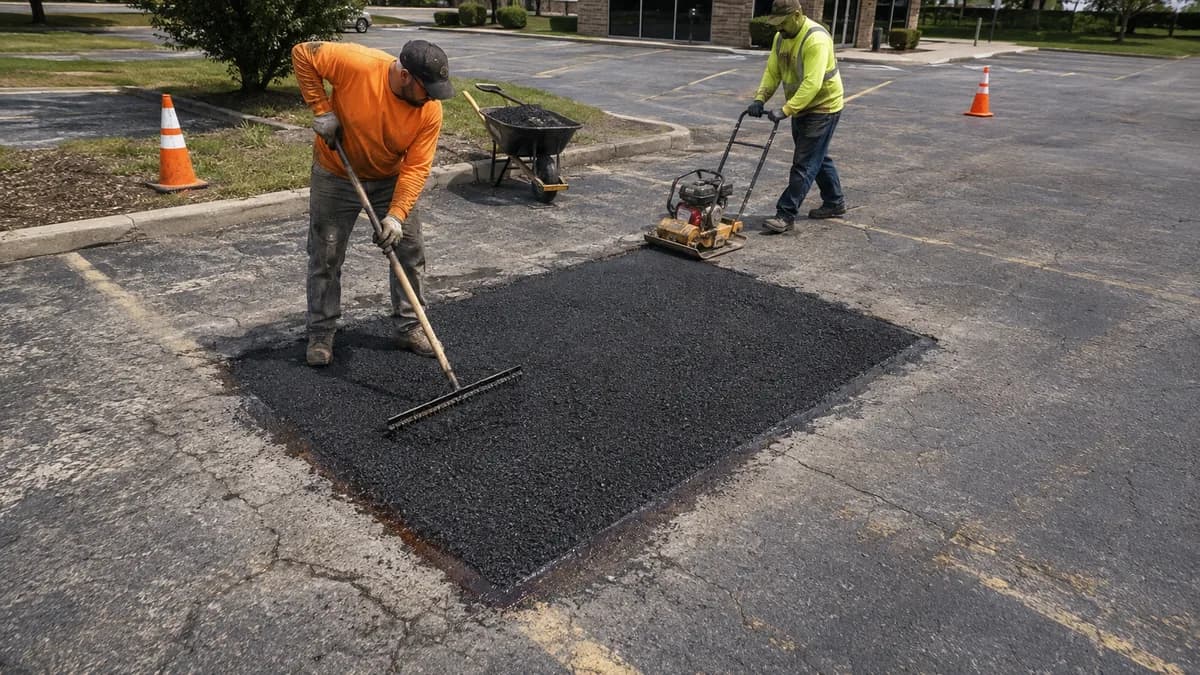
How to Choose an Asphalt Paving Contractor
How to choose an asphalt paving contractor: project fit, relevant experience, written scope, references, insurance, and pavement qualifications.
Property-owner guide
Updated July 6, 2026
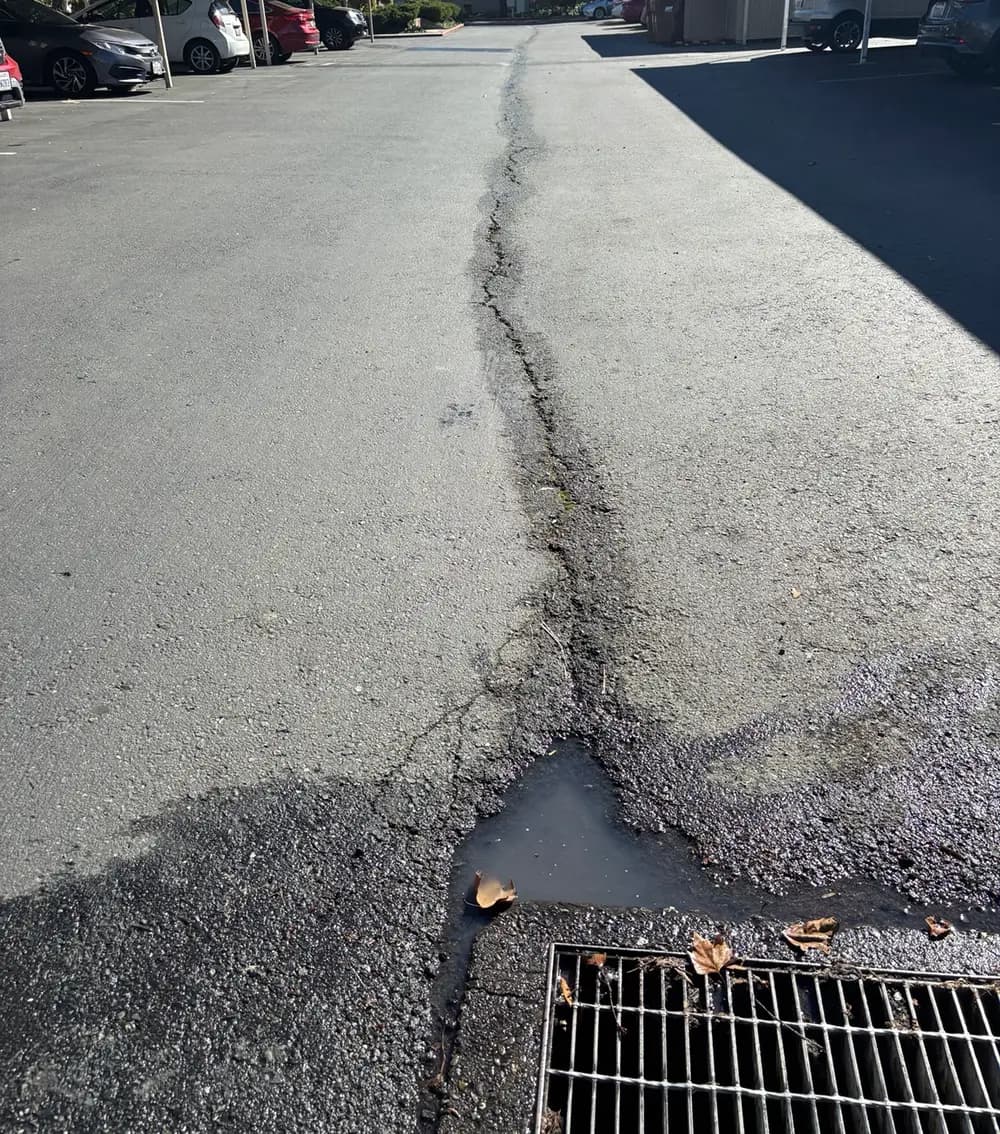
Asphalt Patching Guide for Parking Lots and Driveways
How asphalt patching works, when full-depth patching is needed versus a surface patch, and what to expect from a patch repair project.
Property-owner guide
Updated July 12, 2026
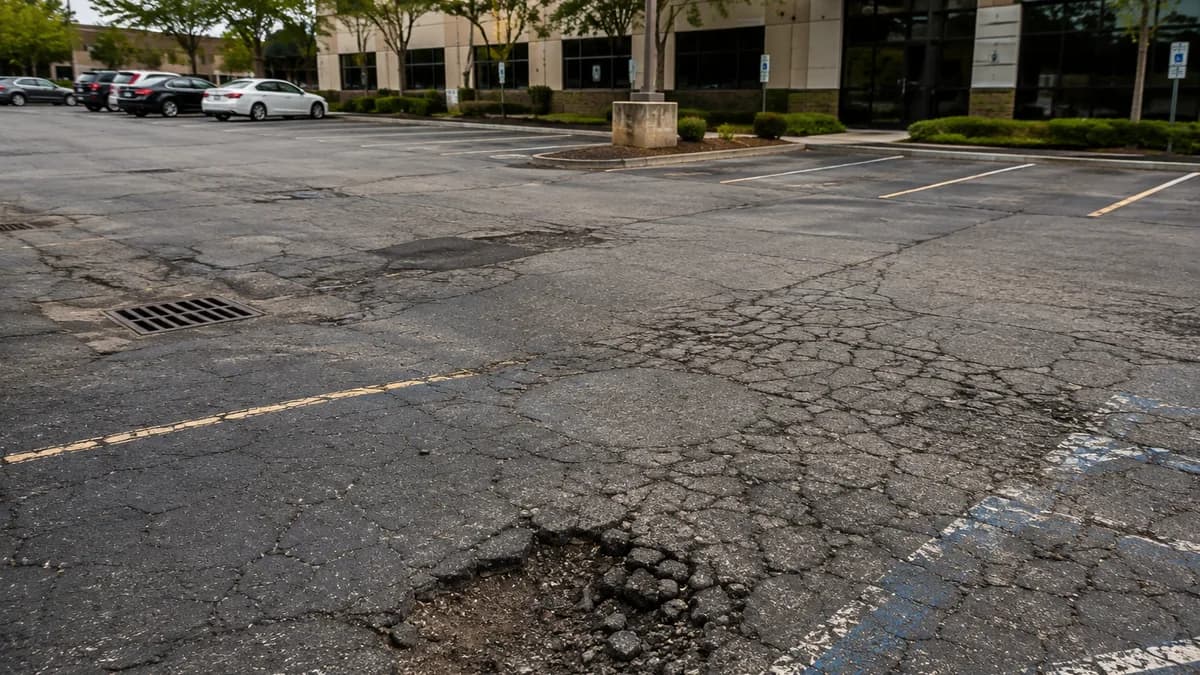
How Drainage Affects Pavement Life
Why drainage is the biggest factor in how long pavement lasts, how water damages asphalt from the base up, and why fixing it protects every repair.
Property-owner guide
Updated July 11, 2026
Signs Your Parking Lot Needs Maintenance
How to read the warning signs a parking lot needs attention — cracks, potholes, faded striping, ponding, raveling — and what each one means.
Property-owner guide
Updated July 6, 2026
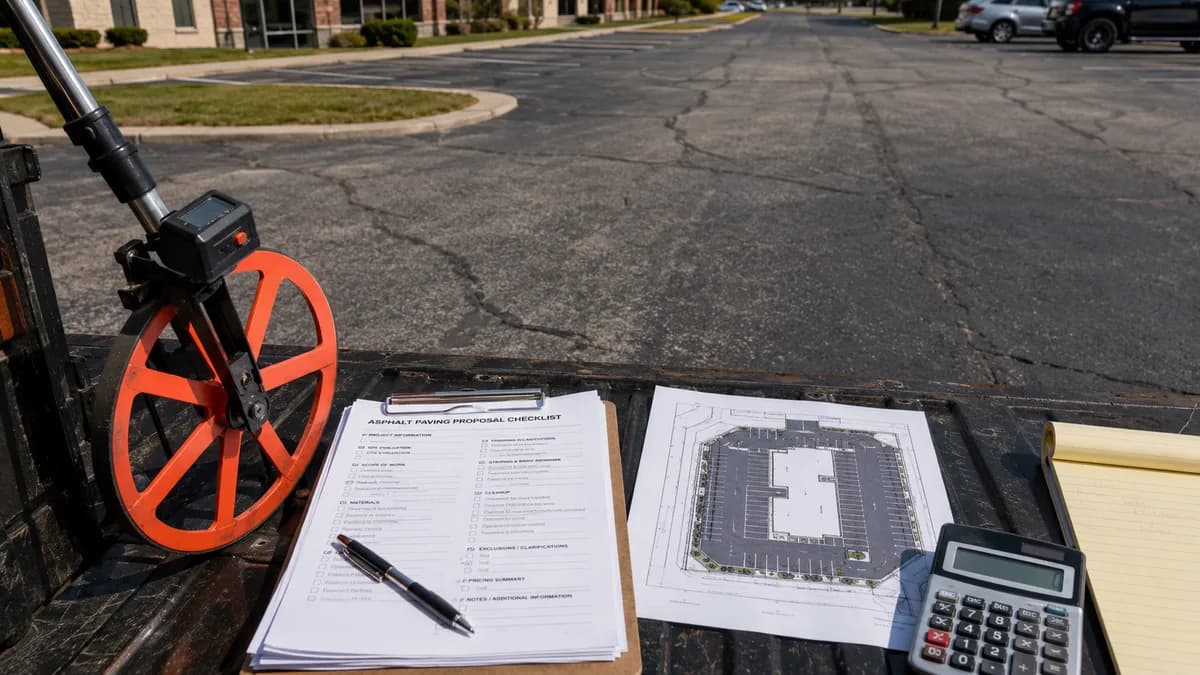
Asphalt Paving Proposal Checklist
What belongs in an asphalt paving proposal: work limits, quantities, thickness, base preparation, drainage, striping, exclusions, and warranty terms.
Before you hire: The Pavement Directory does not guarantee contractor performance, pricing, licensing, insurance, or availability. Business information may be submitted by contractors or gathered from public sources and should be independently verified before hiring. Always confirm licensing, insurance, references, scope of work, and written contract terms.
For contractors
Ready to compare Maine contractors?
Browse listings by city and service, then use what you have read here to check the scope, the credentials, and the timing before you sign.