
Kansas pavement guide
Pavement Conditions in Kansas: Regions, Soils, and Common Problems
Kansas asks pavement to handle a very wide temperature range, storms that arrive all at once, and soils that hold water at shallow depth.
- 5 regions
- 5 common problems
- 6 local terms
Jump to section
Regional differences
Pavement Conditions by Region in Kansas
Kansas does not have one climate or one soil profile, and pavement that performs well in one part of the state can fail early a few hours away. These are the divisions that matter most when scoping paving, repair, or maintenance work.
Glaciated northeast and the Kansas City metro edge
Kansas City · Overland Park · Olathe · Lawrence · Leavenworth
Environmental stress
- Freeze-thaw cycling with sustained winter deicing
- Humid summers with high pavement surface temperatures
- Heavy suburban and distribution traffic
Subgrade conditions
- Loess capping over glacial deposits
- Clay-rich subsoils that drain slowly
- Shallow limestone and shale in bluff areas
Common distress
- Long irregular cracks that reopen after repair
- Concrete surface scaling on salted walks and aprons
- Alligator cracking in slow-draining low areas
What it means for the work
- Municipal licensing and permitting requirements vary across the metro's jurisdictions
- Subgrade moisture control matters as much as compaction on clay
- Repairs made in a dry August can look wrong after a wet spring
Osage Cuestas and southeastern Kansas
Pittsburg · Chanute · Ottawa · Fort Scott · Independence
Environmental stress
- The state's highest rainfall totals
- Freeze-thaw crossings through late winter
- Heavy agricultural and industrial truck traffic
Subgrade conditions
- Claypan soils with a dense, slow-draining layer near the surface
- Alternating limestone and shale bedrock at shallow depth
- Old surface-mined ground in parts of the region
Common distress
- Interconnected cracking where water perches above the claypan
- Differential settlement across rock-to-soil transitions
- Seasonal heaving and sagging with soil moisture change
What it means for the work
- A claypan layer means water may not drain downward at all
- Subsurface drainage can matter more than surface slope alone
- Rock excavation should be priced as a unit item
Flint Hills
Manhattan · Emporia · Junction City · Council Grove
Environmental stress
- Wide annual temperature range with hard freezes and hot summers
- Intense storms with rapid runoff off shallow-soil uplands
- Heavy military and agricultural traffic in places
Subgrade conditions
- Very shallow limestone with thin soil cover
- Cherty residual clay between rock benches
- Highly variable rock depth across a single parcel
Common distress
- Cracking that follows a buried rock ledge rather than a wheel path
- Differential settlement where a section crosses rock to soil
- Erosion at pavement edges on sloped sites
What it means for the work
- Rock excavation quantity is a frequent source of change orders
- Proof-rolling finds the soft pockets between rock high points
- Assume subgrade variability across the site rather than one condition
Smoky Hills and central Kansas
Salina · Hays · McPherson · Great Bend · Hutchinson
Environmental stress
- Hot, dry summers with strong solar exposure
- Frequent hail and severe convective storms
- Deep winter frost with wide day-to-night swings
Subgrade conditions
- Silty and clayey plains soils with moderate plasticity
- Sandstone and chalk bedrock at variable depth
- Sandy soils along the Arkansas River lowlands
Common distress
- Binder oxidation, brittleness, and raveling
- Thermal and block cracking from wide temperature swings
- Rutting at grain, feedlot, and processing facilities
What it means for the work
- Surface protection and crack sealing carry high value in this exposure
- Seasonal agricultural loading should shape the section
- Wind affects placement, curing, and striping more than expected
High Plains and western Kansas
Garden City · Dodge City · Liberal · Colby · Goodland
Environmental stress
- The state's largest annual temperature range and deepest frost
- Very high wind and blowing dust
- Intense feedlot, packing plant, and grain truck traffic
Subgrade conditions
- Fine wind-deposited soils that soften quickly when wet
- Caliche and cemented layers in some western counties
- Irrigated agricultural ground with changing moisture regimes
Common distress
- Severe thermal cracking and surface brittleness
- Rutting and edge break-up on heavy agricultural truck routes
- Wind-driven surface abrasion and material loss
What it means for the work
- Plant access and haul distance materially affect cost out here
- Feedlot and packing traffic is a design load far beyond commercial use
- The working season is shorter than in the southeast corner
Field conditions
Common Pavement Problems in Kansas
Water perched above a claypan layer
Interconnected cracking and soft, flexing pavement in eastern Kansas lots that drain slowly, even where the surface appears to have adequate slope.
Likely causes
- A dense claypan layer near the surface preventing downward drainage
- Water perching above that layer and saturating the base from below
- Grading designed for surface runoff with no subsurface path
- Traffic applied while the base is saturated
When to get it looked at: If a lot with reasonable surface slope still fails in the same low areas, the problem may be below the surface. Subsurface drainage is a different conversation from regrading.
Seasonal clay movement
Wandering cracks that follow no traffic pattern, widen through a dry late summer, and narrow again after wet weather, with curb lines separating from the pavement edge.
Likely causes
- Clay soils with meaningful shrink-swell potential beneath the pavement
- Moisture change from downspouts, irrigation, or leaking lines
- Mature trees drawing moisture unevenly from beneath the lot
- Subgrade placed without moisture conditioning during construction
When to get it looked at: A crack patched twice that has reopened twice is describing the soil, not the patch. Flexible treatments and moisture control outperform another rigid repair.
Base failure after high-intensity rainfall
Potholes and interconnected cracking appearing in the weeks after a heavy storm, concentrated exactly where water stood longest.
Likely causes
- Rainfall intensity exceeding inlet and conveyance capacity
- Flat grading with no positive fall to an outlet
- Inlets silted in or sitting above the pavement after repeated overlays
- Saturated fine-grained subgrade losing strength under load
When to get it looked at: Photograph the lot during the storm rather than after it. Where water stands is where the base fails, and a dry-day inspection cannot show you that.
Thermal and block cracking in the west
Interconnected cracks forming rough rectangular blocks across central and western Kansas lots, unrelated to wheel paths, often on pavement carrying very little traffic.
Likely causes
- Very large annual and daily temperature swings contracting the asphalt
- Binder oxidation and hardening under strong solar exposure
- Low traffic volume allowing the binder to stiffen undisturbed
- A surface never protected through its service life
When to get it looked at: Block cracking is usually a surface and aging problem rather than a structural one — until the blocks begin to rock under traffic, at which point the pavement has moved into another category.
Agricultural and feedlot loading damage
Rutting, shoving, and edge break-up at entrances, scale approaches, and turning areas at grain, feedlot, and packing facilities, concentrated into a few weeks of the year.
Likely causes
- Axle loads far beyond ordinary commercial design assumptions
- Unpaved shoulders giving way under wide truck turns
- Very heavy loading concentrated into short seasons
- Entrances built to the same section as the surrounding lot
Property types
Common Pavement Projects in Kansas
Grain elevators and co-op facilities
Scale approaches and truck lanes take a year of loading in a few weeks of harvest, and the damage concentrates where trucks stop, turn, and queue rather than across the whole site.
Feedlots and meat processing plants
Western Kansas facilities combine extremely heavy truck traffic with wash-down water and organic loading, which keeps the pavement wetter and works it harder than an ordinary industrial site.
Aviation and aerospace manufacturing
Wichita-area facilities move large, heavy loads on ground where clay movement and storm intensity both act on the same pavement, so section design and drainage have to be settled together.
Distribution centers along the interstate corridors
I-70 and I-35 corridor properties put trailer loading on sections often built to match the car parking field, so aprons and drop lots fail long before the rest of the property.
Military installations and support facilities
Fort Riley area properties carry heavy equipment loading on shallow Flint Hills subgrade, where rock depth variability and specialized specifications both shape the project.
Plain English
Pavement Terms You May Encounter in Kansas
| Term | What it means on a Kansas project |
|---|---|
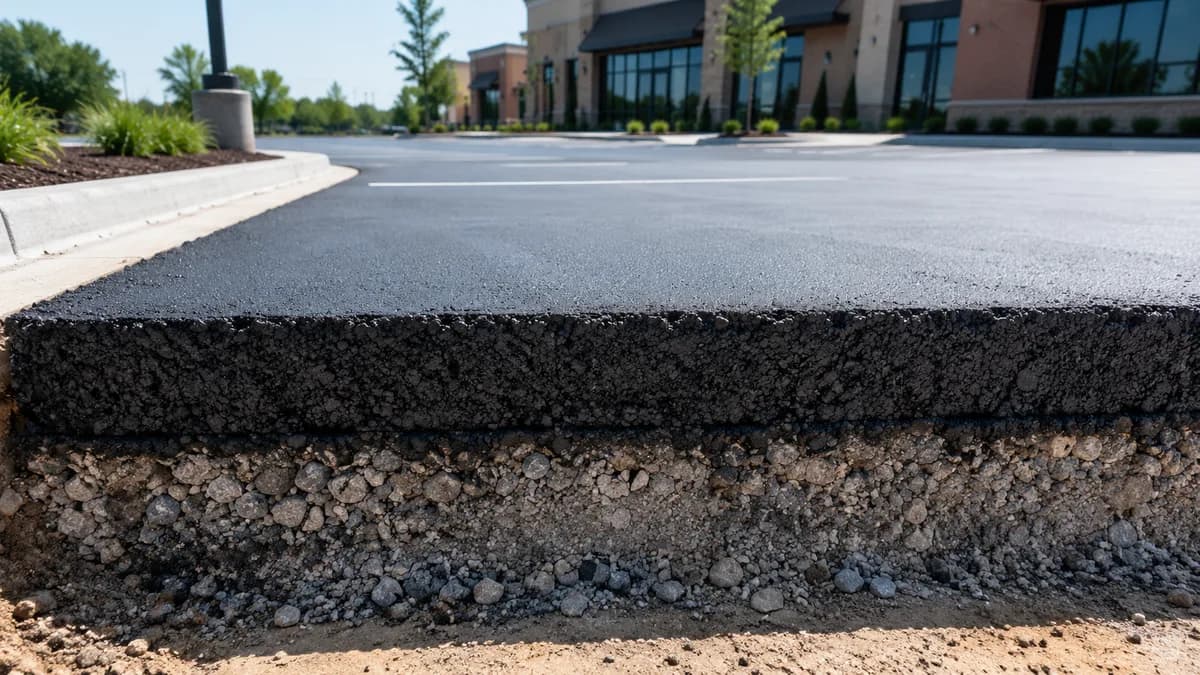
| Aggregate base course | The compacted crushed stone layer beneath asphalt. Kansas proposals typically name it by type and compacted thickness, and how well it drains usually governs pavement life more than the surface course does. |
| Lime or cement treated subgrade | Treating clay subgrade with lime or cement to reduce plasticity and moisture sensitivity. It is a legitimate line item on Kansas clay, and its absence on known expansive soil is worth a direct question. |
| Claypan | A dense subsoil layer with much higher clay content than the material above it, common in eastern Kansas. Water perches above it rather than draining through, which changes what a drainage design has to accomplish. |
| Plasticity index | A soil test result describing how much a clay's behavior changes with moisture content. On a Kansas site it is one of the more informative numbers a geotechnical report provides about future cracking. |
| Frost depth | How far freezing penetrates the ground in a typical winter. It is deeper in northwestern Kansas than in the southeast corner and should influence base thickness rather than being carried over from another project. |
| Full-depth reclamation | Pulverizing the existing asphalt with the base, treating or reshaping the blend, and repaving over it. It appears on larger Kansas lots and private roads where the base has failed and hauling off is impractical. |
State transportation specifications can provide useful regional terminology and material references, but they do not automatically govern private parking-lot or driveway projects unless incorporated into the contract or required by the applicable jurisdiction.
More definitions are in the pavement glossary.
Before you sign
Questions to Ask a Paving Contractor in Kansas
- Which Kansas city or county licenses contractors at this address, and do you hold what it requires?
- What is the soil under this pavement, and is there a claypan layer that will keep water from draining down?
- Is lime or cement treatment of the subgrade included, and if not, why is it not needed here?
- Where does water go during an intense storm, and are the areas that currently pond included in this scope?
- Does the city treat this scope as maintenance or as redevelopment, and does that trigger detention requirements?
- How is the scale approach or truck lane being detailed differently from the parking field?
- Will you mill before overlaying, and how will inlet rims be adjusted afterward?
- What is your insurance carrier, and do you carry workers' compensation for this crew?
- What surface and overnight temperatures does the product you have proposed require?
Kansas pavement condition FAQs
What is a claypan and why does it affect my Kansas parking lot?
A claypan is a dense subsoil layer with far more clay than the material above it, common across eastern Kansas. Water reaching it cannot move downward, so it perches above the layer and saturates the base from below. That means a lot can have perfectly reasonable surface slope and still fail in the same low areas, because the problem is not where the surface water goes but where the subsurface water cannot. It also means an infiltration-based stormwater approach may not perform as designed on that soil.
How much does hail damage matter for Kansas pavement?
Enough that a documented condition baseline is worth keeping. Hail tends to affect an already oxidized, brittle surface more than fresh pavement, and it frequently damages striping, signage, wheel stops, and light bases as much as the asphalt itself. Without dated photographs and a condition record from before the storm, separating storm damage from accumulated wear turns into an argument. It is also worth understanding how your property insurance treats pavement before you need to find out.
Why does asphalt in western Kansas crack in a block pattern?
That is thermal and block cracking, driven by the very large annual and daily temperature swings out there combined with strong solar exposure hardening the binder. The asphalt contracts until it cracks, and it happens on pavement that carries very little traffic — which is why it confuses owners who assume cracking means overloading. It is usually a surface and aging problem addressed with crack sealing and eventually resurfacing. Once the blocks begin to rock under traffic, though, the pavement has moved into a structural category.
Does the annual rainfall total tell me what drainage I need in Kansas?
Not really. Intensity is what matters. A Kansas convective storm can deliver a large share of a month's rain in an hour, and inlet and pipe capacity sized for gentler rain simply cannot pass it. That is why a lot that has handled ordinary rain for years can show base failure after one event. The productive design question is how fast the site can pass the intense event and where water goes when capacity is exceeded — not how many inches fall in an average year.
How should agricultural facilities plan pavement maintenance in Kansas?
Around the season rather than around the calendar. Grain elevators, co-ops, and feedlots take an enormous share of their annual loading in a few weeks, and that period often coincides with weather that limits what repairs are possible. The practical approach is to design scale approaches, truck lanes, and turning areas for the peak load rather than the average, complete maintenance well before the season opens, and accept that the window for corrective work closes once the trucks start arriving.
Related reading for Kansas property owners
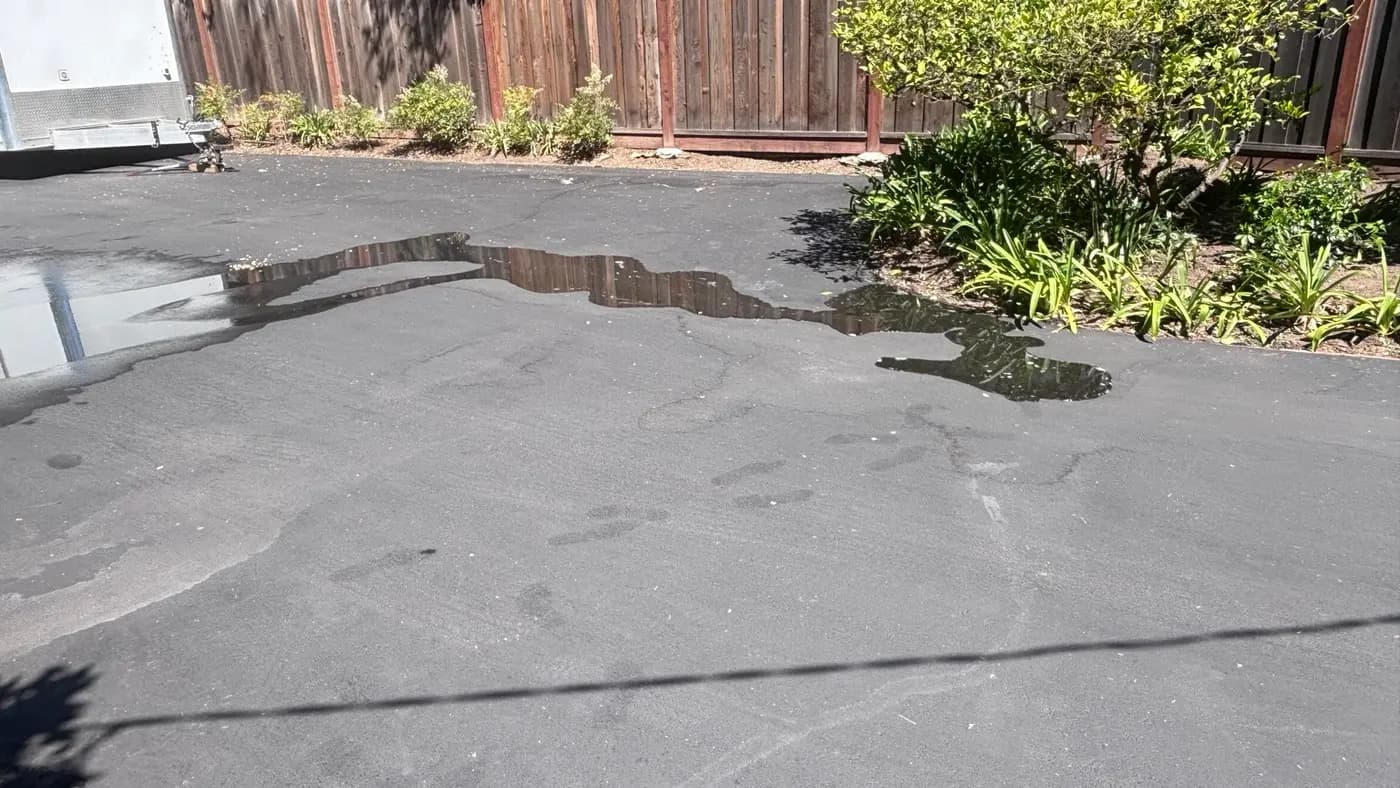
Property-owner guide
Updated July 6, 2026
Parking Lot Drainage Problems: What Property Owners Should Know
Common causes of parking lot drainage problems, why they accelerate pavement damage, and what property owners should ask contractors before a fix.
Property-owner guide
Updated July 11, 2026
When Should You Seal Asphalt Cracks?
When to seal cracks in asphalt — which cracks to seal, the best time of year, why sealing early matters, and how crack sealing fits a maintenance schedule.
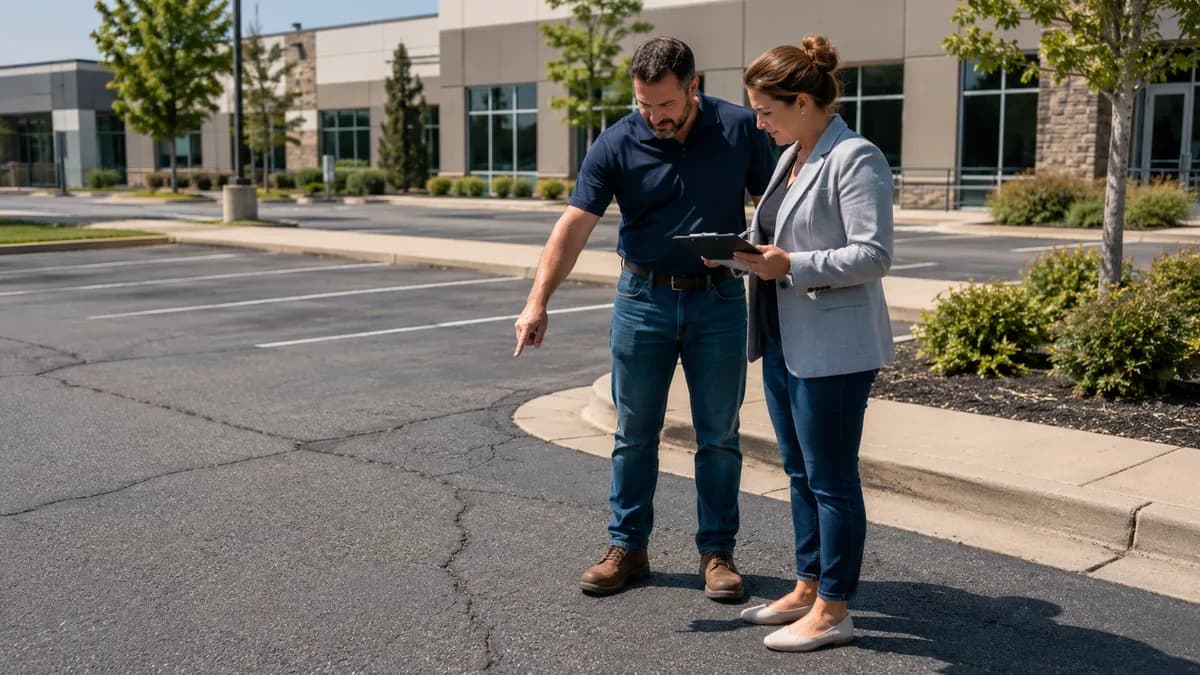
Property-owner guide
Updated July 6, 2026
How to Choose an Asphalt Paving Contractor
How to choose an asphalt paving contractor: project fit, relevant experience, written scope, references, insurance, and pavement qualifications.
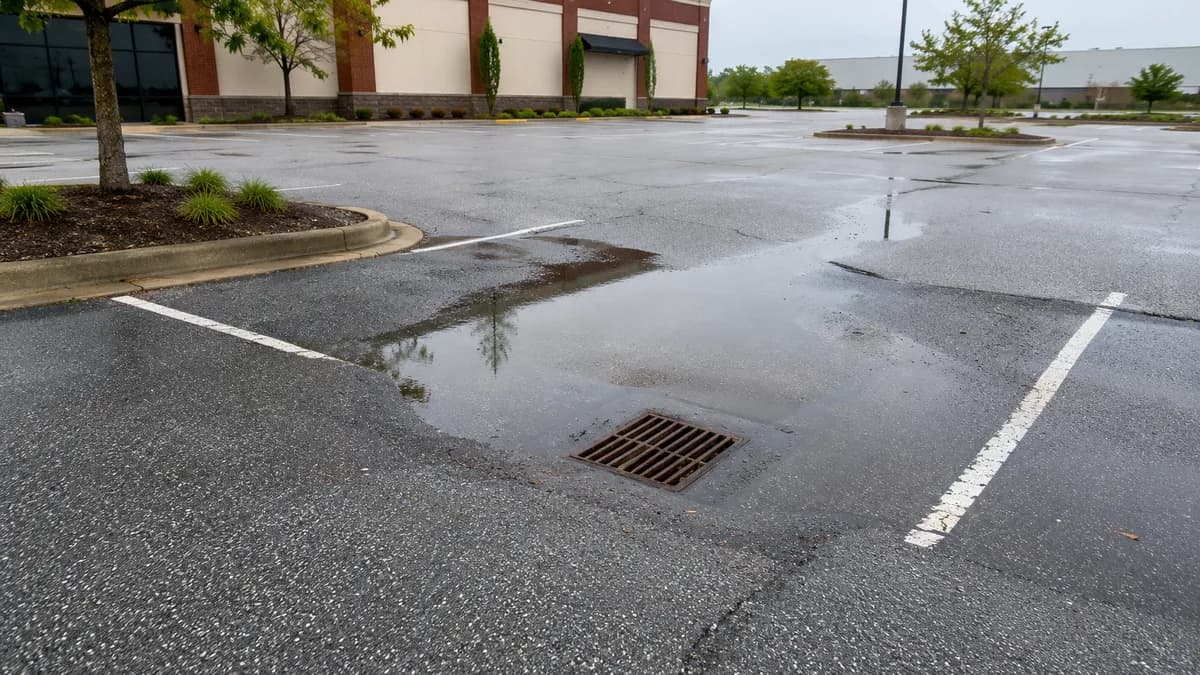
Property-owner guide
Updated August 30, 2026
Commercial Parking Lot Maintenance Guide
How to inspect, preserve, repair, and budget for a commercial parking lot: lifecycle stages, treatments, drainage, ADA, scoping, and multi-year plans.
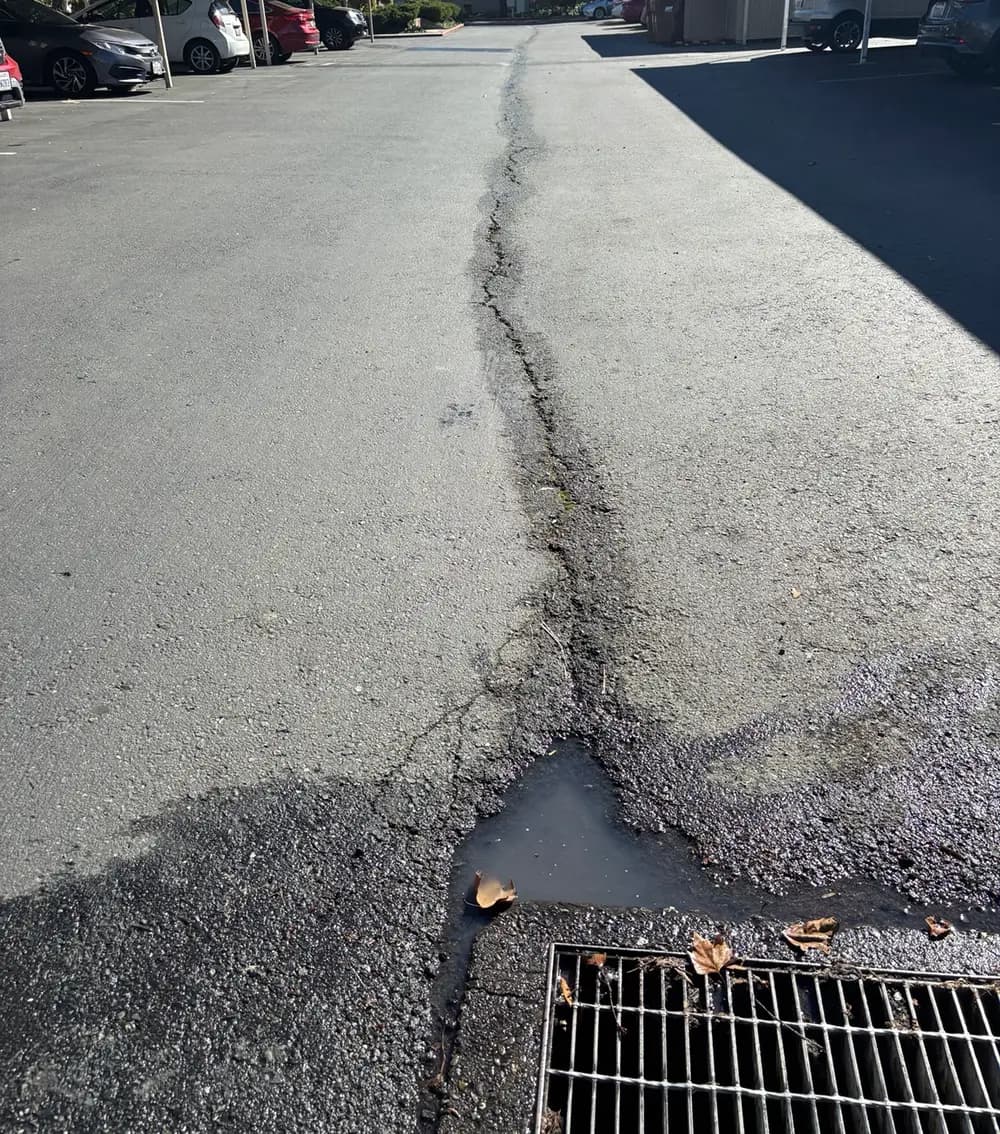
Property-owner guide
Updated July 12, 2026
How Drainage Affects Pavement Life
Why drainage is the biggest factor in how long pavement lasts, how water damages asphalt from the base up, and why fixing it protects every repair.
Property-owner guide
Updated July 6, 2026
Asphalt Paving Thickness for Parking Lots
Typical asphalt paving thickness for parking lots: benchmarks for stalls, drive lanes, and truck areas, plus how base and soil change the answer.
Before you hire: The Pavement Directory does not guarantee contractor performance, pricing, licensing, insurance, or availability. Business information may be submitted by contractors or gathered from public sources and should be independently verified before hiring. Always confirm licensing, insurance, references, scope of work, and written contract terms.
For contractors
Ready to compare Kansas contractors?
Browse listings by city and service, then use what you have read here to check the scope, the credentials, and the timing before you sign.