
Illinois pavement guide
Pavement Conditions in Illinois: Regions, Soils, and Common Problems
Illinois pavement fails where heavy freight meets wet clay — and the fix is usually below the surface, not on it.
- 4 regions
- 5 common problems
- 6 local terms
Jump to section
Regional differences
Pavement Conditions by Region in Illinois
Illinois does not have one climate or one soil profile, and pavement that performs well in one part of the state can fail early a few hours away. These are the divisions that matter most when scoping paving, repair, or maintenance work.
Chicago and the collar counties
Chicago · Naperville · Schaumburg · Joliet · Elgin
Environmental stress
- Frequent freeze-thaw cycling with heavy salt use
- Lake-effect snow in the near-lake areas
- Very heavy intermodal, distribution, and construction traffic
Subgrade conditions
- Heavy lacustrine and glacial clays with poor drainage
- Older urban and industrial fill of variable quality
- Dense utility congestion beneath existing pavement
Common distress
- Spring potholing and base failure in poorly drained areas
- Rutting and shoving at intermodal and dock approaches
- Concrete scaling and joint spalling from chloride
What it means for the work
- Municipal licensing and permitting varies between suburbs
- Freight loading calls for a heavier section at truck areas
- Utility coordination is a real project phase on older urban sites
Northern and north-central Illinois
Rockford · DeKalb · Kankakee · Freeport
Environmental stress
- Cold winters with deep frost penetration
- Wind exposure on open terrain
- Agricultural and manufacturing truck traffic
Subgrade conditions
- Glacial tills with variable drainage
- Silty soils that are frost-susceptible
- Agricultural ground with variable compaction
Common distress
- Frost heave and spring break-up damage
- Edge break-up under heavy equipment
- Ponding in flat areas with no outlet
What it means for the work
- Non-frost-susceptible base material matters here
- Harvest-season loading concentrates into a few weeks
- Crack sealing before winter is high-value maintenance
Central Illinois
Springfield · Peoria · Bloomington · Champaign
Environmental stress
- Four-season climate with real freeze-thaw
- Heavy convective rainfall and occasional severe storms
- Agricultural equipment and grain truck traffic
Subgrade conditions
- Deep, fertile silt loams over glacial till
- Poorly draining fine-grained soils in flat areas
- Agricultural drainage tile affecting adjacent sites
Common distress
- Alligator cracking where drainage is inadequate
- Edge break-up at farm equipment access points
- Freeze-thaw potholing
What it means for the work
- Flat sites need designed positive drainage
- Grain facility loading is seasonal but severe
- Existing drain tile can be damaged or exploited during site work
Southern Illinois
Carbondale · Marion · Belleville · Mount Vernon
Environmental stress
- Milder winters with fewer but still meaningful freeze-thaw cycles
- Heavy rainfall and occasional flooding near the rivers
- Coal, aggregate, and industrial truck traffic
Subgrade conditions
- Loess soils that erode readily and soften when wet
- Clay soils with moderate plasticity
- Areas of historic mine subsidence in parts of the region
Common distress
- Erosion of unprotected edges and slopes
- Localized settlement in mine subsidence areas
- Base saturation after prolonged wet periods
What it means for the work
- Mine subsidence history is worth checking before major reconstruction
- Loess needs erosion control during and after construction
- Milder winters shift emphasis from freeze-thaw toward drainage
Field conditions
Common Pavement Problems in Illinois
Clay subgrade saturation
Alligator cracking and potholes concentrated in the low areas of a lot, with pavement flexing underfoot after wet weather and repairs failing in the same places repeatedly.
Likely causes
- Lake-deposited and glacial clays that hold water rather than draining it
- Grading with no positive fall to an outlet
- Base material with too many fines to drain
When to get it looked at: Repeat failure in the same low areas is a drainage problem. Confirm the base is dry before agreeing to another overlay over it.
Intermodal and freight rutting
Deep wheel paths, shoving, and pavement breaking up at container yards, dock approaches, and truck staging areas across the Chicago logistics corridor.
Likely causes
- Very heavy, slow, channelized loading including loaded container chassis
- Sections built for lighter commercial traffic than the site now carries
- Clay subgrade losing strength when saturated under that loading
When to get it looked at: Rutting deeper than roughly a half inch in a drive aisle is a structural question. Ask what the existing section actually is before agreeing to a mill-and-fill that will likely repeat.
Freeze-thaw potholing
Potholes forming rapidly over a few weeks in late winter and early spring, often where there were only cracks the previous fall.
Likely causes
- Water entering unsealed cracks and freezing repeatedly
- Meltwater trapped in the base above still-frozen subgrade
- Clay soils holding the structure saturated through the cycle
Salt damage to concrete
Curbs, sidewalks, and aprons scaling, flaking, and spalling at joints, often faster than the adjacent asphalt shows wear.
Likely causes
- Chloride deicers driving repeated freeze-thaw within the concrete surface
- Chloride reaching reinforcement and causing corrosion and spalling
- Concrete without adequate air entrainment or cure for the climate
When to get it looked at: Scaling across large areas or spalling that exposes reinforcement has passed the point where sealers help, and on walkways it becomes a trip-hazard question.
Mine subsidence settlement
Broad or localized settlement in parts of central and southern Illinois with historic underground coal mining, sometimes with cracking that does not match traffic patterns.
Likely causes
- Collapse or compression of abandoned underground mine workings
- Long-delayed subsidence decades after mining ended
- Groundwater changes affecting mine void stability
When to get it looked at: In known mining areas, settlement that does not correspond to drainage or traffic is worth investigating before a major reconstruction — and it may have insurance implications.
Property types
Common Pavement Projects in Illinois
Intermodal and distribution facilities
Will County and the broader Chicago logistics corridor concentrate loaded container and trailer traffic on pavement sections that are rarely designed for the actual loads.
Manufacturing and industrial sites
Heavy equipment and truck movement on clay subgrade in a severe freeze-thaw climate, with yard areas failing well before the parking fields.
Retail centers and grocery-anchored properties
Large lots on poorly draining clay develop drainage-driven cracking, and phasing around continuous operation drives the schedule.
School districts and park districts
Bus loops carry heavier loads than the parking fields, and prevailing wage requirements change the cost structure of the entire project.
Agricultural and grain facilities
Central Illinois facilities take very heavy loading concentrated into a few harvest weeks, usually at pavement edges with no support.
Plain English
Pavement Terms You May Encounter in Illinois
| Term | What it means on a Illinois project |
|---|---|
| Hot-mix asphalt (HMA) mixture designations | Illinois specifications identify HMA by mixture composition and traffic level. Local suppliers use the same vocabulary, and asking which mixture is proposed for a truck area is a fair question. |
| Aggregate base course (CA-6) | The dense-graded crushed aggregate base commonly specified in Illinois. Its compaction and drainage quality usually determine pavement life more than the asphalt above it. |
| Full-depth asphalt pavement | A design where asphalt is placed directly on prepared subgrade rather than over a granular base. Used on some heavy-duty Illinois sites; its suitability depends on subgrade drainage. |
| Air-entrained concrete | Concrete with microscopic air voids that give freezing water room to expand. Standard for exterior concrete here and a real factor in whether a curb or walk scales under salt. |
| Volume control | A stormwater requirement to retain a specified depth of runoff on site rather than discharging it. It appears in Chicago-region ordinances and can drive design on larger lot projects. |
| Full-depth reclamation (FDR) | Pulverizing existing asphalt and base together, treating the blend, and repaving over it. Useful on larger Illinois lots and private roads where the base has failed. |
State transportation specifications can provide useful regional terminology and material references, but they do not automatically govern private parking-lot or driveway projects unless incorporated into the contract or required by the applicable jurisdiction.
More definitions are in the pavement glossary.
Before you sign
Questions to Ask a Paving Contractor in Illinois
- Which municipality issued your contractor license or registration for work at this address?
- How will drainage be corrected so the clay subgrade stops staying saturated?
- What is the existing pavement section here, and is it adequate for the truck traffic this site actually carries?
- Is a county stormwater or watershed management permit required, who obtains it, and how long does it take?
- Is this project subject to prevailing wage, and is that reflected in your price?
- What is the crack sealing plan, and how late in the fall can it be done here?
- Is the concrete deterioration we have from salt, and does that change repair versus replacement?
- Is non-frost-susceptible base material included, and does the section include drainage?
- In our area, has mine subsidence been considered as a possible cause of this settlement?
Illinois pavement condition FAQs
Why does pavement in the Chicago area fail so quickly at truck areas?
Two things compound. The region's intermodal and distribution traffic imposes very heavy, slow, channelized loading — loaded container chassis in particular — on sections that were often designed for ordinary commercial traffic. And the underlying lake-deposited and glacial clays hold water and lose strength when saturated. Heavy loading on a weakened base produces rutting and structural failure quickly. Resurfacing without addressing the section and the drainage usually repeats within a few years.
What is volume control and does it apply to my parking lot project?
Volume control is a stormwater requirement to retain a specified depth of runoff on site rather than discharging it, and it appears in Chicago-region county and district ordinances. Whether it applies depends on how much impervious area your project creates or disturbs and which jurisdiction you are in — a full reconstruction can trigger review that a mill-and-overlay of the same lot would not. Ask the county or district with jurisdiction during design.
Why do Illinois curbs and sidewalks deteriorate faster than the asphalt?
Chloride deicers increase the freeze-thaw cycling that the concrete surface experiences and draw water deeper into it, producing scaling and flaking. Where chloride reaches embedded reinforcement, corrosion expands and spalls the concrete from within. Asphalt has no reinforcement to corrode and responds differently to the same exposure. Air-entrained concrete, adequate cure, and moderating salt application all help — but once reinforcement is exposed, sealers do not.
Does prevailing wage affect my paving project in Illinois?
It applies to public works — school district, park district, municipal, and other public agency projects — and it substantially changes the labor cost structure along with adding certified payroll reporting obligations. It does not apply to a private commercial lot. If your property is public, it is not optional and should be reflected in every bid you receive; a bid that appears far below the others may simply not have included it.
Is mine subsidence a real risk for downstate Illinois properties?
In the parts of central and southern Illinois underlain by historic underground coal mining, it is. Abandoned workings can collapse or compress decades after mining ended, producing settlement that does not correspond to drainage or traffic patterns. Illinois also has a mine subsidence insurance framework that many property owners are unaware applies to them. If your property is in a known mining area and the settlement does not fit the usual causes, understand the insurance position before spending money on a major reconstruction.
Related reading for Illinois property owners
Property-owner guide
Updated July 11, 2026
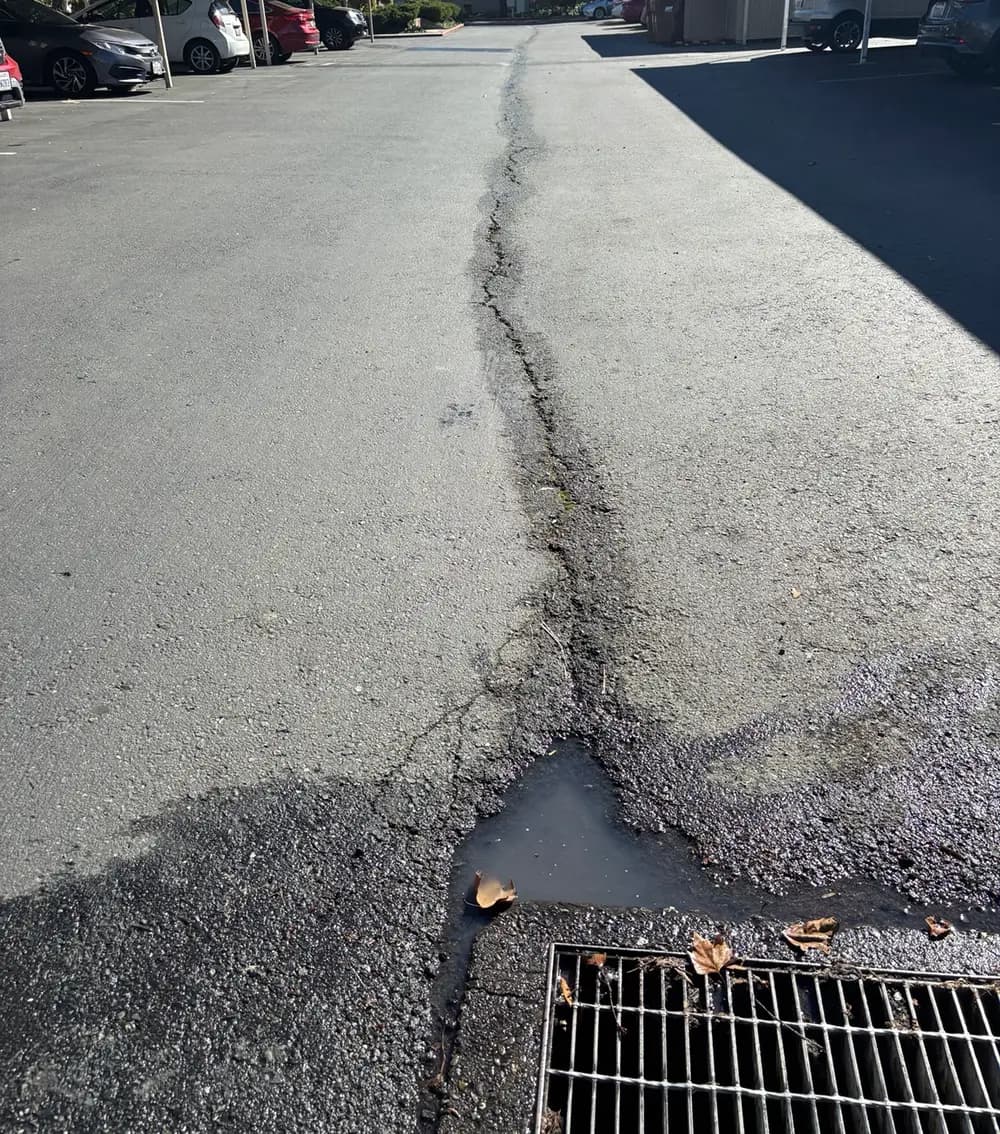
When Should You Seal Asphalt Cracks?
When to seal cracks in asphalt — which cracks to seal, the best time of year, why sealing early matters, and how crack sealing fits a maintenance schedule.
Property-owner guide
Updated July 12, 2026
How Drainage Affects Pavement Life
Why drainage is the biggest factor in how long pavement lasts, how water damages asphalt from the base up, and why fixing it protects every repair.
Property-owner guide
Updated July 6, 2026
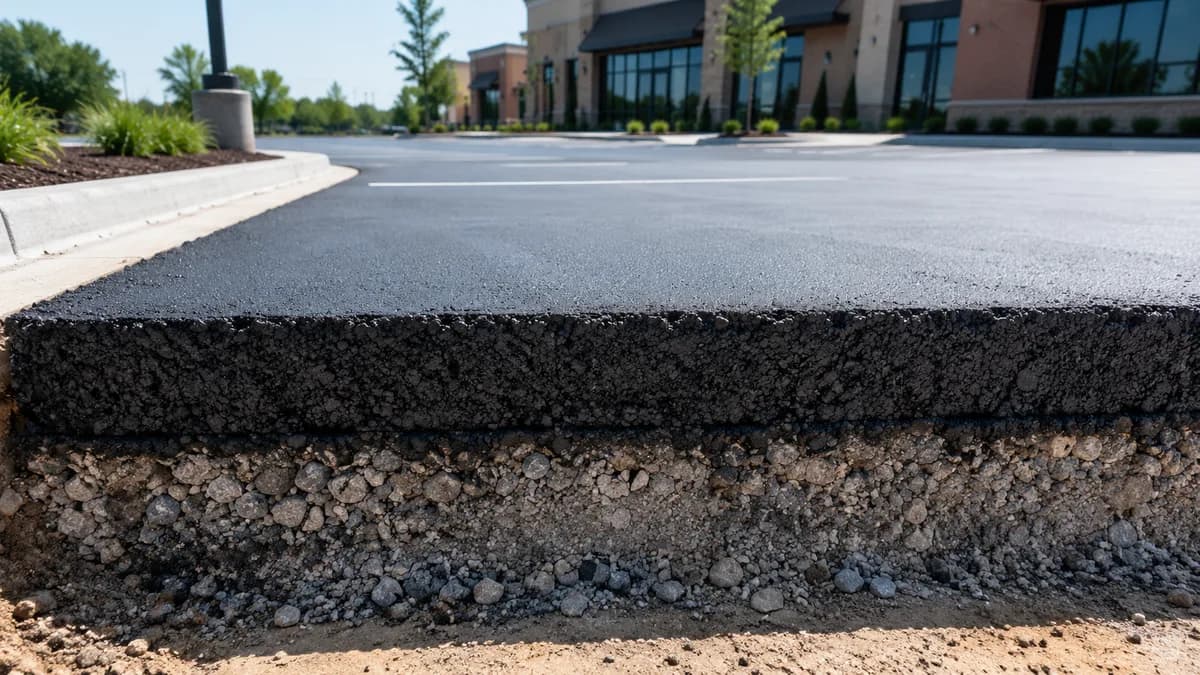
Asphalt Paving Thickness for Parking Lots
Typical asphalt paving thickness for parking lots: benchmarks for stalls, drive lanes, and truck areas, plus how base and soil change the answer.
Property-owner guide
Updated July 11, 2026
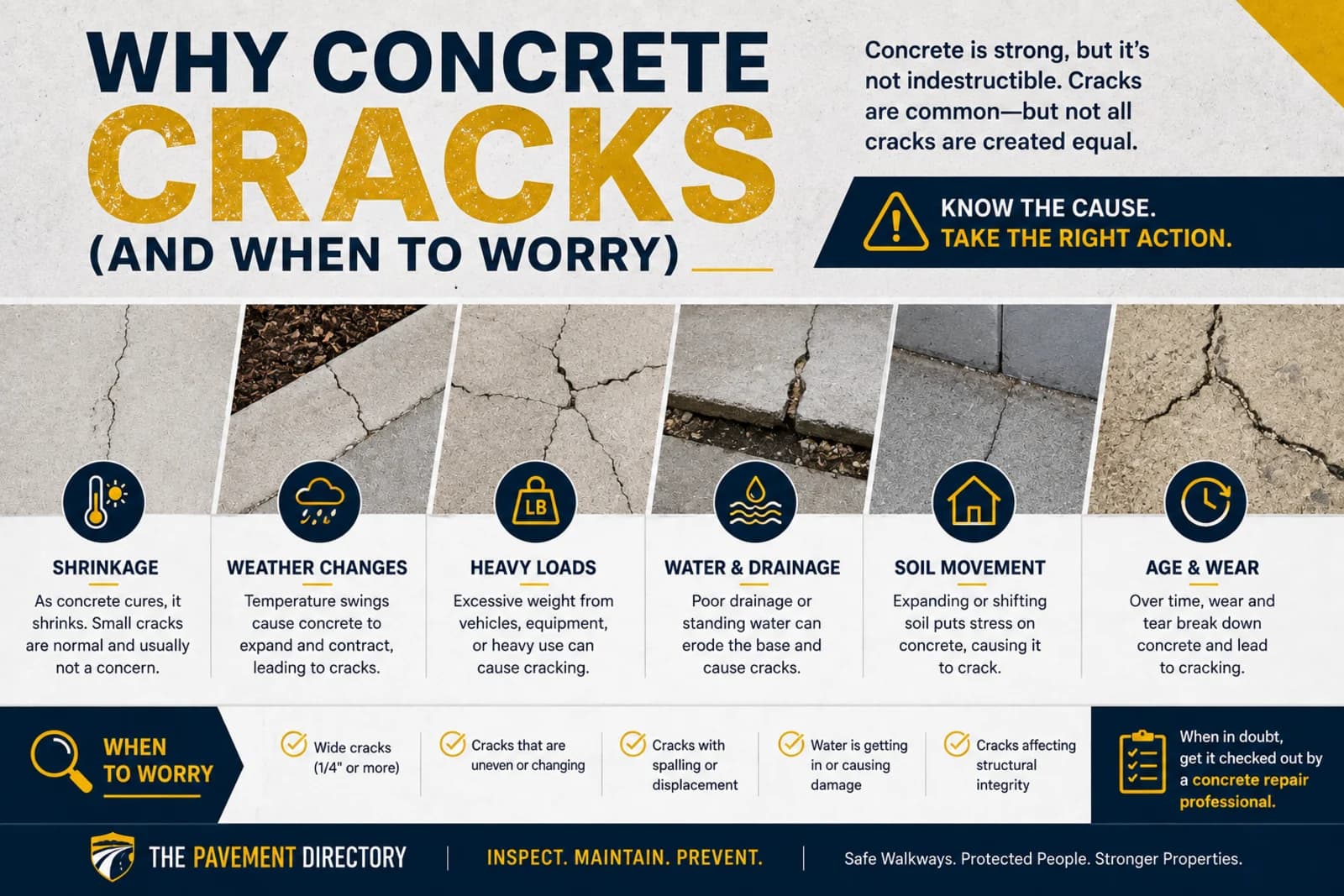
Why Concrete Cracks (and When to Worry)
Why concrete cracks — shrinkage, settlement, freeze-thaw, roots, and loads — the difference between cosmetic and structural, and when to repair.
Property-owner guide
Updated July 11, 2026
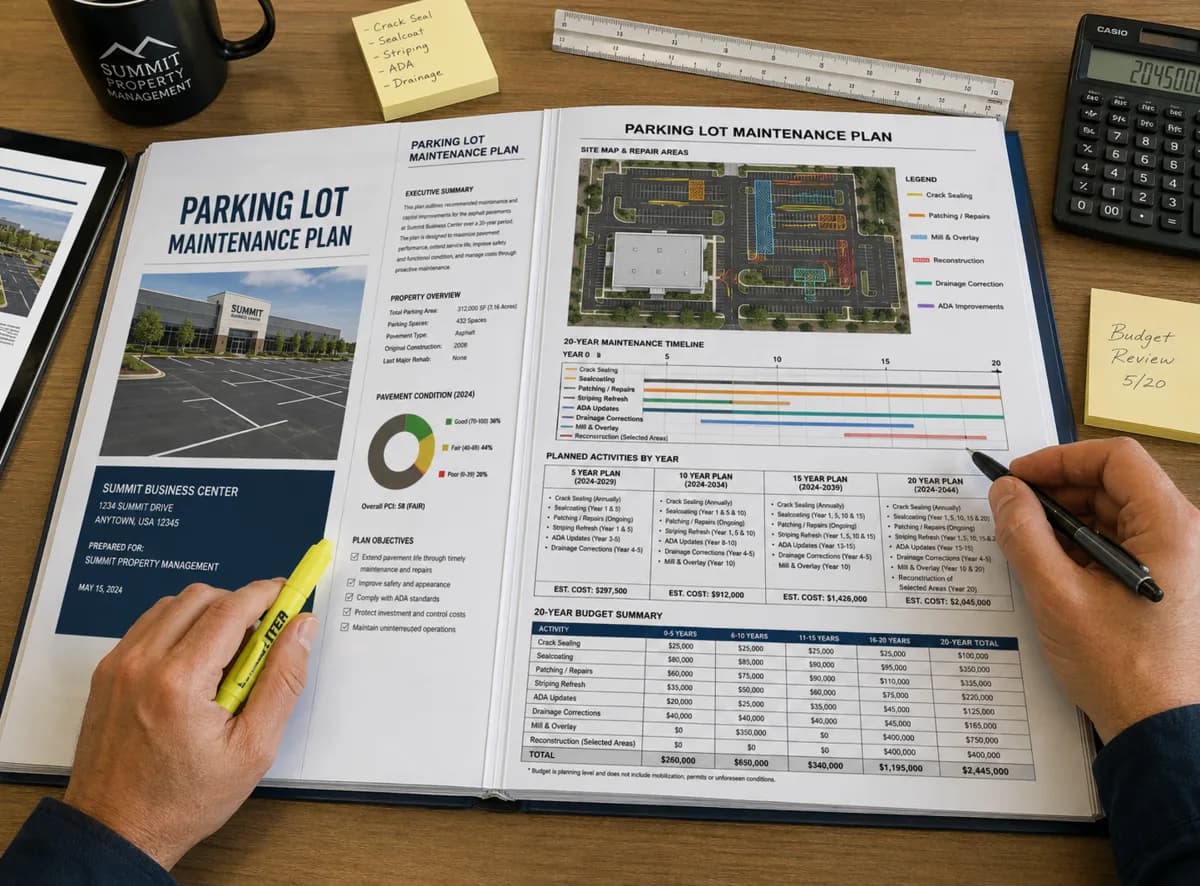
How to Create a Parking Lot Maintenance Plan
How to build a parking lot maintenance plan: inspecting condition, setting service cycles, prioritizing repairs, and budgeting over multiple years.
Before you hire: The Pavement Directory does not guarantee contractor performance, pricing, licensing, insurance, or availability. Business information may be submitted by contractors or gathered from public sources and should be independently verified before hiring. Always confirm licensing, insurance, references, scope of work, and written contract terms.
For contractors
Ready to compare Illinois contractors?
Browse listings by city and service, then use what you have read here to check the scope, the credentials, and the timing before you sign.