
Idaho pavement guide
Pavement Conditions in Idaho: Regions, Soils, and Common Problems
Idaho registration confirms a filing rather than a skill, and the state's subgrade changes character completely between the Snake River Plain, the Palouse, and the Panhandle.
- 5 regions
- 5 common problems
- 7 local terms
Jump to section
Regional differences
Pavement Conditions by Region in Idaho
Idaho does not have one climate or one soil profile, and pavement that performs well in one part of the state can fail early a few hours away. These are the divisions that matter most when scoping paving, repair, or maintenance work.
The Treasure Valley and western Snake River Plain
Boise · Meridian · Nampa · Caldwell · Eagle
Environmental stress
- The state's heaviest commercial traffic and fastest growth
- Hot, dry summers with strong ultraviolet exposure and high surface temperatures
- Winter freeze-thaw cycling with substantial deicing on commercial properties
Subgrade conditions
- Silt and clay over sand and gravel in the valley floor
- Basalt at variable depth beneath the alluvium
- Former irrigated farmland with a long history of applied water
Common distress
- Binder oxidation and surface raveling on unshaded lots
- Rutting and shoving at drive-through lanes and loading areas
- Base saturation where irrigation water reaches the pavement structure
What it means for the work
- This is the deepest contractor and supplier market in the state by a wide margin
- Rapid growth has put substantially more traffic on lots designed for earlier volumes
- Irrigation infrastructure crossing or bordering a site is a drainage question worth resolving early
The Magic Valley and eastern Snake River Plain
Twin Falls · Idaho Falls · Pocatello · Rexburg · Burley
Environmental stress
- Colder winters and deeper frost than the Treasure Valley
- Very large day-to-night temperature swings year-round
- Concentrated agricultural and food processing truck traffic
Subgrade conditions
- Thin windblown silt over basalt, sometimes only a few feet deep
- Basalt at or near the surface in many locations
- Irrigated agricultural ground with elevated and variable soil moisture
Common distress
- Cracking where a section crosses from shallow rock to deeper soil over a short distance
- Freeze-thaw potholing where water has reached the base
- Rutting at scale approaches, plant entrances, and turning areas
What it means for the work
- Shallow basalt makes excavation cost unpredictable and belongs in the bid as a unit price
- Food processing and dairy truck loading should drive the section at entrances, not the parking field
- The temperature range here is wide enough that binder selection is a genuine decision rather than a default
The central Idaho mountains and resort communities
Sun Valley · Ketchum · McCall · Salmon · Stanley
Environmental stress
- Deep frost penetration and heavy snowfall at elevation
- A construction season compressed at both ends
- Steep grades concentrating snowmelt and runoff across pavement
Subgrade conditions
- Decomposed granite from the Idaho Batholith, which is granular but breaks down when worked wet
- Rocky colluvium on slopes with saturated ground at the toe
- Frost-susceptible fines in valley bottoms and old wetland margins
Common distress
- Frost heave and spring break-up
- Washout and undermining where runoff crosses a pavement edge on a grade
- Plow damage at edges, joints, and raised structures
What it means for the work
- Haul distance from the nearest working plant frequently limits what is feasible in a season
- Decomposed granite performs well when placed and compacted properly and poorly when it is not
- Snow storage location and meltwater routing belong in the layout rather than in a later operations conversation
The Palouse and north-central Idaho
Moscow · Lewiston · Grangeville · Orofino
Environmental stress
- Intense runoff on steep loess hills during rain-on-snow events
- A significant elevation and climate difference between Lewiston and the Palouse above it
- Concentrated grain and agricultural truck traffic at harvest
Subgrade conditions
- Deep windblown loess, fine-grained, frost-susceptible, and highly erodible
- Basalt beneath the loess at variable depth
- Steep slopes with limited flat working area on many parcels
Common distress
- Rapid gullying at outfalls and unprotected pavement edges
- Frost heave in fine loess subgrade
- Break-up at entrances and scale approaches during harvest
What it means for the work
- Loess erodes fast enough that an unprotected outfall can cut a substantial gully in a single event
- Slope stability on steep loess sites is a design question rather than a grading detail
- The elevation difference between the Lewiston valley and the Palouse above changes both season length and design assumptions
The Idaho Panhandle
Coeur d'Alene · Post Falls · Sandpoint · Hayden · Kellogg
Environmental stress
- Considerably more precipitation than southern Idaho, much of it in the cool season
- Heavy snowfall with sustained plowing and sanding
- Freeze-thaw cycling in a wet rather than dry setting
Subgrade conditions
- Lacustrine silts and fine lake sediments in the valleys
- Glacial outwash sand and gravel in places, with good drainage
- Saturated ground on low parcels and near the lakes
Common distress
- Base saturation and alligator cracking where drainage is inadequate
- Frost heave in frost-susceptible lake sediments
- Moss and organic growth on shaded, persistently damp pavement
What it means for the work
- Working subgrade wet here does lasting damage, and the wet season is long
- Lacustrine silt is frost-susceptible and usually needs a thicker clean granular section
- This market operates on a different weather calendar than the Treasure Valley and should not be scheduled the same way
Field conditions
Common Pavement Problems in Idaho
Irrigation water reaching the pavement structure
Persistent soft areas and alligator cracking near canals, laterals, landscaped medians, or field edges, often worst during the irrigation season rather than after rain.
Likely causes
- Canal, lateral, or ditch seepage raising the water table beneath the pavement
- Landscape irrigation and pivot overspray applying water directly at the pavement edge
- A section built without a subdrain in a setting where applied water is continuous
- Historic field drainage patterns interrupted by the site's construction
When to get it looked at: If the damage tracks the irrigation calendar rather than the weather, the water source is applied rather than natural, and drainage or irrigation changes will do more than resurfacing will.
Shallow basalt and unpredictable excavation
Excavation stops on hard rock well above the planned depth, turning a straightforward reconstruction into a change order and a schedule problem.
Likely causes
- Basalt lying under a thin cover of windblown silt across much of the Snake River Plain
- Rock depth changing sharply within a single parcel
- Pricing built on a walk-through rather than on test pits
- A design that assumed a uniform section depth across the site
When to get it looked at: Before the number is final. On the Snake River Plain a few test pits are cheap insurance against a discovery that stops a mobilized crew.
Loess erosion at outfalls and pavement edges
A gully appearing at a discharge point or along a pavement edge after a single significant storm or a rain-on-snow event, sometimes deep enough to undermine the pavement.
Likely causes
- Deep, fine loess that erodes rapidly once concentrated flow reaches it
- No energy dissipation or armoring at the outfall
- Steep slopes shortening the distance runoff has to gather speed
- Snowmelt combined with rainfall producing far more flow than the design allowed for
When to get it looked at: If an outfall has cut a gully once, it will do it again. Repairing the gully without armoring or redesigning the discharge is buying the same repair on the same schedule.
Freeze-thaw break-up on a wet base
Potholes and edge failures appearing over a few weeks in late winter and early spring in areas that carried the same traffic through the cold months without a problem.
Likely causes
- Water reaching the base through unsealed cracks over the winter
- Frost-susceptible silt losing strength when saturated during thaw
- The surface thawing before the ground below, trapping meltwater in the base
- Loaded delivery traffic arriving during the weakest weeks of the year
When to get it looked at: Damage that repeats in the same locations every year is telling you about drainage or base material rather than about the winter, and annual patching treats it indefinitely.
Ultraviolet oxidation and raveling in southern Idaho
Pavement graying and then developing a rough, loose surface texture on unshaded lots in the Treasure Valley and Magic Valley, with aggregate working free under traffic.
Likely causes
- Strong high-desert ultraviolet exposure hardening the binder
- Very large day-to-night temperature swings cycling the surface
- Aged pavement that has never received a surface treatment
- Dry conditions offering no relief from surface heating
Property types
Common Pavement Projects in Idaho
Food processing and dairy facilities
Magic Valley and eastern Idaho plants run loaded truck traffic continuously over ground with shallow basalt and irrigation-influenced moisture, so entrances and scale approaches need a heavier section than the yard.
Treasure Valley retail and office growth corridors
Rapid growth has put substantially more traffic on lots designed for earlier volumes, and many of these sites were built on former irrigated farmland with applied water still moving nearby.
Mountain resort and second-home communities
Sun Valley and McCall properties take their heaviest loading and worst plow damage in the months when nothing can be repaired, compressing all remedial work into a short summer window with long material hauls.
Grain elevators and agricultural facilities on the Palouse
Harvest concentrates enormous truck volume into a few weeks on erodible loess, where an unprotected outfall or edge can be cut into a gully by a single storm.
Panhandle commercial and lakeside properties
A long wet season means subgrade is frequently too wet to work, and lacustrine silt underneath makes drainage and clean granular depth more consequential than surface thickness.
Plain English
Pavement Terms You May Encounter in Idaho
| Term | What it means on a Idaho project |
|---|---|
| Contractor registration | Idaho's state requirement that construction contractors file with the Division of Occupational and Professional Licenses and carry required insurance. It is an administrative filing rather than an examined trade license, and it should be read that way. |
| Crushed aggregate base | The compacted stone layer beneath the asphalt. On frost-susceptible silt and loess its thickness and cleanliness usually decide pavement life more than the surface course does. |
| Loess | Deep, fine windblown silt, most prominent in the Palouse. It supports pavement adequately when dry and drained, and it erodes faster than almost any other soil once concentrated water reaches it. |
| Decomposed granite | Granular material weathered from the Idaho Batholith, common in the central mountains. It compacts well when handled properly and breaks down into fines when worked wet, which changes how it performs under pavement. |
| Highway district | An independent local government body with jurisdiction over roads and approaches in much of Idaho. An access or entrance change can require its approval separately from city or county permitting. |
| Irrigation lateral | A smaller distribution channel carrying water from a main canal. Where one borders a site it is both a subgrade moisture source and a body whose district controls what may be discharged into it. |
| Seasonal load restrictions | Weight limits applied while the subgrade is thaw-weakened. They apply to public roads, but the underlying condition — a base at a fraction of its usual strength — applies to private lots as well. |
State transportation specifications can provide useful regional terminology and material references, but they do not automatically govern private parking-lot or driveway projects unless incorporated into the contract or required by the applicable jurisdiction.
More definitions are in the pavement glossary.
Before you sign
Questions to Ask a Paving Contractor in Idaho
- What is your Idaho contractor registration number, and does the registered name match the entity on this contract?
- Is there an irrigation canal, lateral, or drain bordering this site, and have you confirmed what the district allows?
- Does the damage here track the irrigation season or the weather, and how did you determine that?
- What is your unit price if you hit basalt, and at what depth are you assuming rock?
- Does a highway district have jurisdiction over this site's approach or entrance?
- How deep is clean granular material going below the pavement, and how was that depth chosen?
- What is being done to armor or dissipate energy at the outfall, particularly on loess ground?
- What binder grade are you specifying, and does it reflect this location's temperature range rather than a statewide default?
- Can you show me comparable projects in this part of Idaho rather than only in the Treasure Valley?
Idaho pavement condition FAQs
Why does my Idaho parking lot stay soft near the ditch?
Very likely because water is being applied rather than falling. Canal and lateral seepage raises the water table beneath adjacent pavement, and landscape irrigation and pivot overspray put water directly at the edge, all through a season when rainfall is minimal. The tell is timing: if the soft areas correspond to the irrigation calendar rather than to storms, the fix involves a subdrain, an irrigation change, or both. Resurfacing over a base that gets rewetted every week will not last.
How much does shallow basalt affect an Idaho project's cost?
Potentially a great deal, and unpredictably. Across much of the Snake River Plain, basalt sits under a thin layer of windblown silt, and its depth can change sharply within one parcel. That makes any excavation — a deeper section, a drainage line, a utility relocation — a pricing risk if nobody has looked. The useful protections are a written unit price for rock and, on a reconstruction, a few test pits before the number is finalized rather than a discovery once the crew has mobilized.
Why did a gully appear at my Palouse outfall after one storm?
Because loess erodes extraordinarily fast once concentrated flow reaches it. The soil is deep, fine, and windblown, which makes it good agricultural ground and terrible at resisting moving water. A discharge point without armoring or energy dissipation can cut a substantial gully in a single rain-on-snow event, and a gully near a pavement edge quickly becomes undermining. Rebuilding the gully without changing the discharge produces the same result the next time conditions repeat.
Do I need permission from anyone besides the city to change my Idaho entrance?
Quite possibly. In much of Idaho, independent highway districts have jurisdiction over roads and approaches, which means an access or entrance change can require approval from a body that is neither the city nor the county. Separately, if a canal or lateral borders the property, the irrigation district generally controls what may be built near it, what may be discharged into it, and what access it retains. Establishing who has a say before design saves considerably more time than discovering it during permitting.
Is northern Idaho really that different from Boise for pavement work?
Yes. The Panhandle receives substantially more precipitation, much of it in the cool season, and its subgrade includes lacustrine silt that is frost-susceptible and slow to dry. The practical result is a shorter reliable working window and a much higher penalty for working subgrade wet. Southern Idaho's dominant problems are ultraviolet aging, wide temperature swings, and applied irrigation water. A contractor's Treasure Valley experience does not automatically transfer to a Coeur d'Alene site.
Should an Idaho parking lot be sealcoated?
In southern Idaho, surface protection has real value on sound pavement, because intense high-desert ultraviolet exposure and wide daily temperature swings age the binder faster than traffic wears the surface. In the wetter Panhandle the surface is less often dry enough for a treatment to cure properly, and drainage work usually returns more. In either case, sealcoating on pavement already cracked through to the base accomplishes little and can obscure the condition an assessment needs to see.
Related reading for Idaho property owners
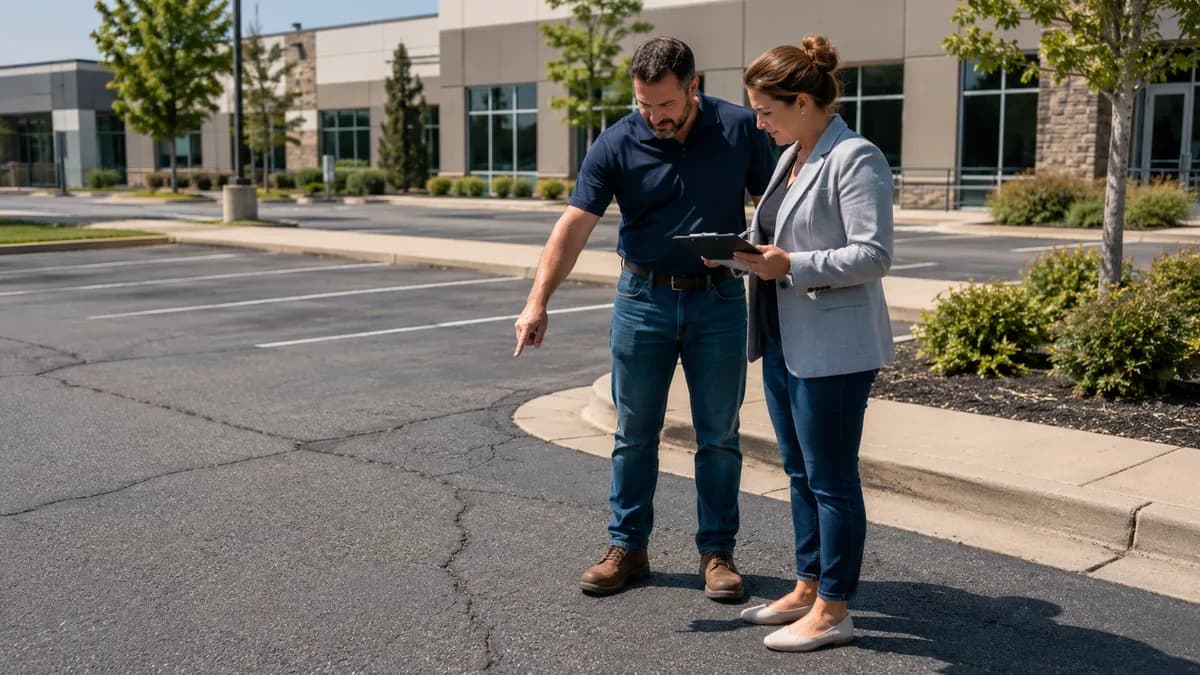
Property-owner guide
Updated July 6, 2026
How to Choose an Asphalt Paving Contractor
How to choose an asphalt paving contractor: project fit, relevant experience, written scope, references, insurance, and pavement qualifications.
Property-owner guide
Updated July 12, 2026
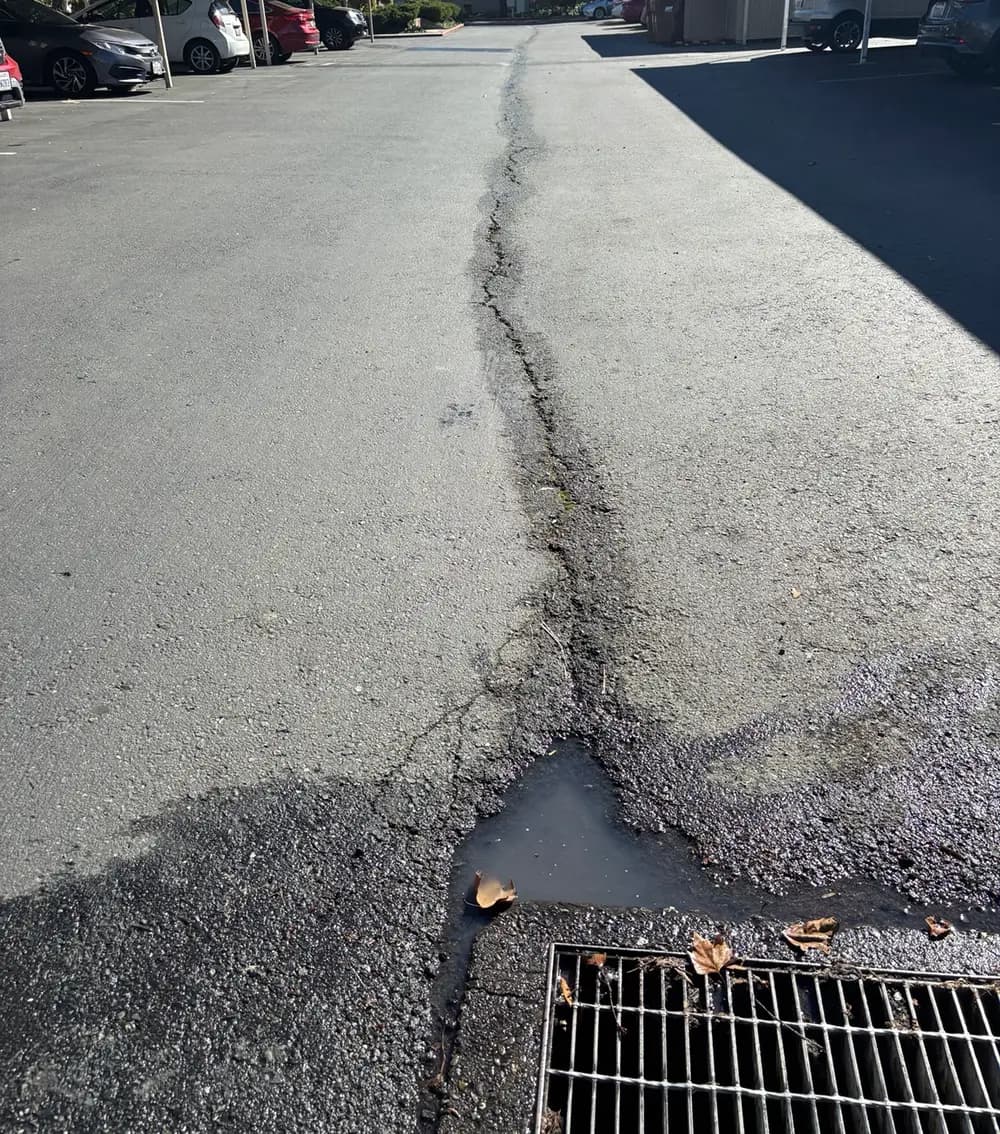
How Drainage Affects Pavement Life
Why drainage is the biggest factor in how long pavement lasts, how water damages asphalt from the base up, and why fixing it protects every repair.
Property-owner guide
Updated July 12, 2026
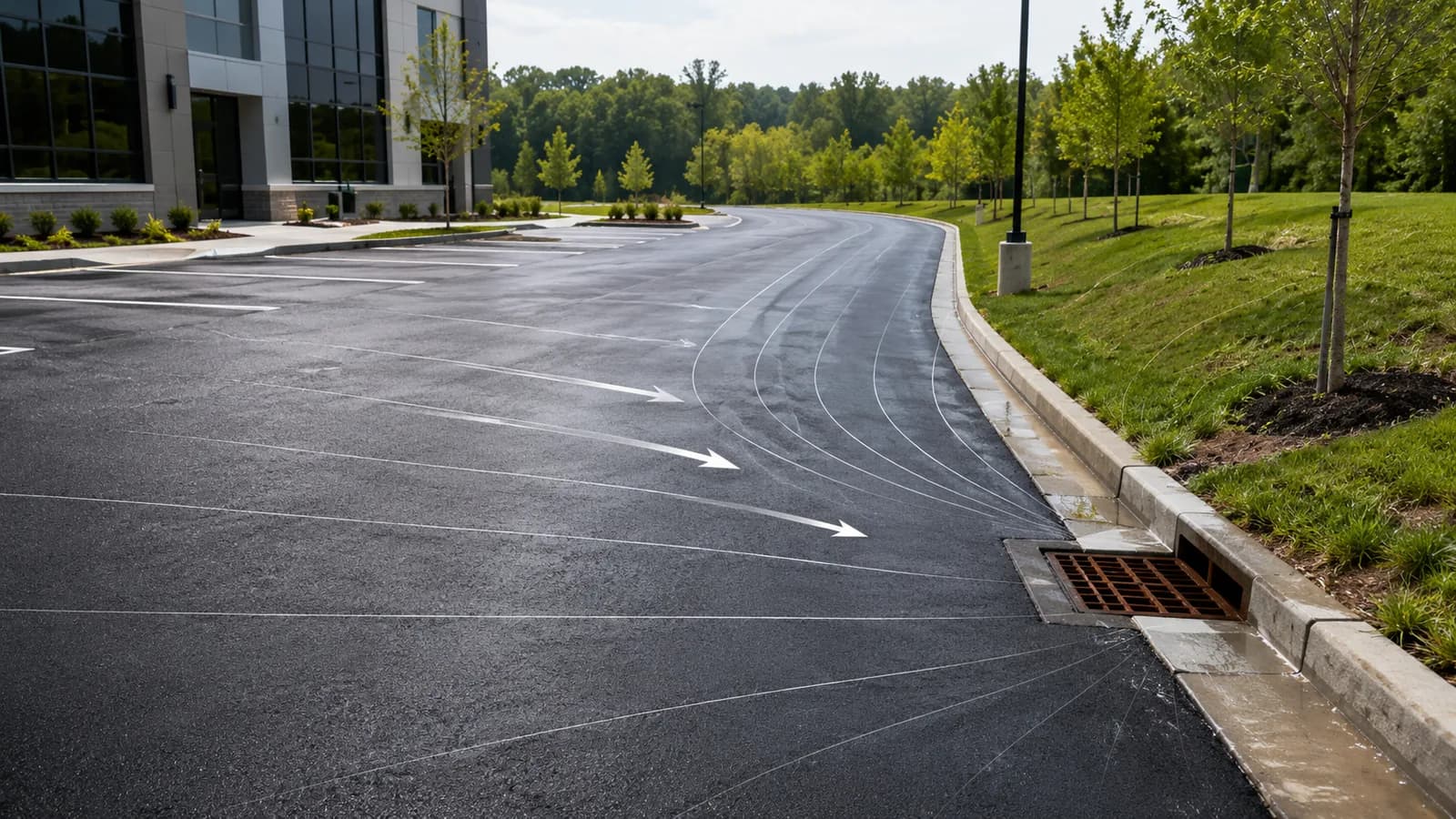
Grading and Slope Basics for Pavement
Grading and slope basics for pavement: what positive drainage means, why slope matters, common grading problems, and where engineering comes in.
Property-owner guide
Updated July 11, 2026
When Should You Seal Asphalt Cracks?
When to seal cracks in asphalt — which cracks to seal, the best time of year, why sealing early matters, and how crack sealing fits a maintenance schedule.
Property-owner guide
Updated July 6, 2026
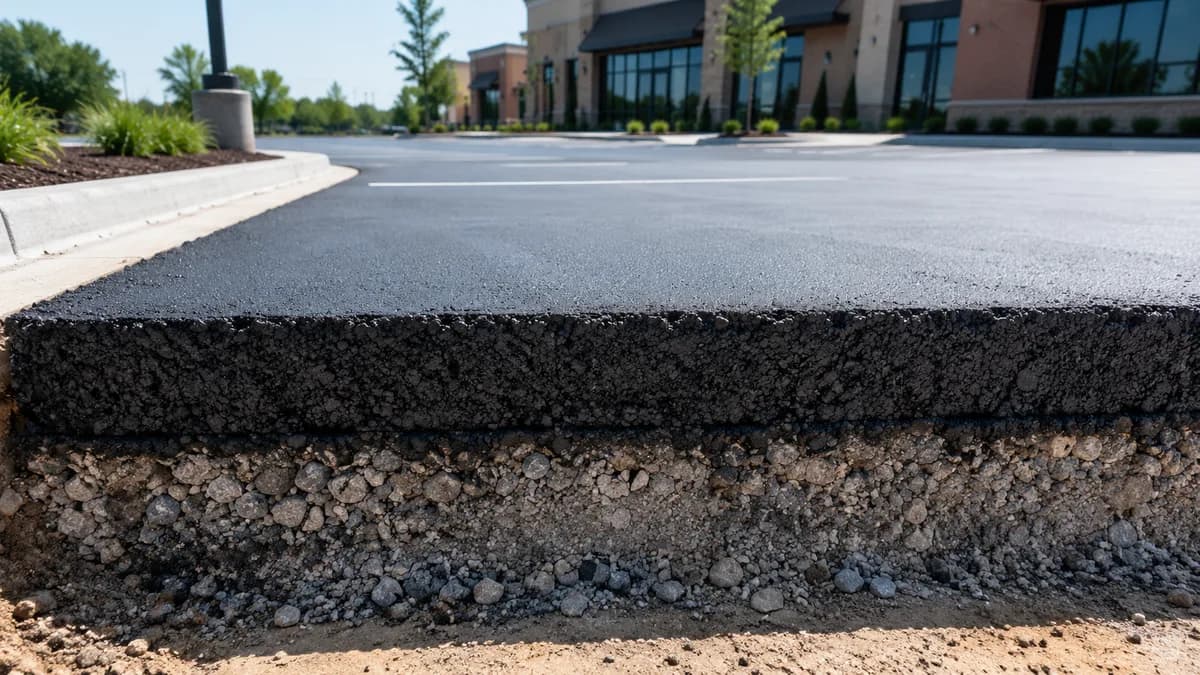
Asphalt Paving Thickness for Parking Lots
Typical asphalt paving thickness for parking lots: benchmarks for stalls, drive lanes, and truck areas, plus how base and soil change the answer.
Property-owner guide
Updated July 11, 2026
Signs Your Parking Lot Needs Maintenance
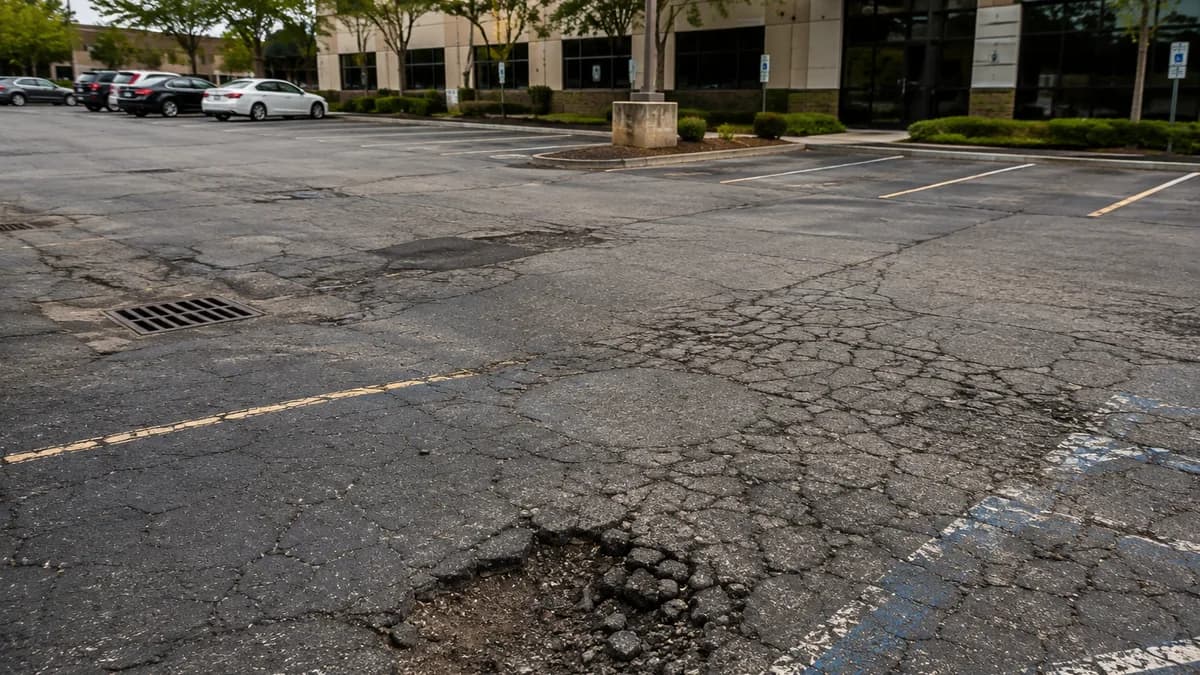
How to read the warning signs a parking lot needs attention — cracks, potholes, faded striping, ponding, raveling — and what each one means.
Before you hire: The Pavement Directory does not guarantee contractor performance, pricing, licensing, insurance, or availability. Business information may be submitted by contractors or gathered from public sources and should be independently verified before hiring. Always confirm licensing, insurance, references, scope of work, and written contract terms.
For contractors
Ready to compare Idaho contractors?
Browse listings by city and service, then use what you have read here to check the scope, the credentials, and the timing before you sign.