
Delaware pavement guide
Pavement Conditions in Delaware: Regions, Soils, and Common Problems
Delaware is a Coastal Plain state with a shallow water table, so drainage and base moisture decide pavement outcomes more than mix design does.
- 5 regions
- 5 common problems
- 6 local terms
Jump to section
Regional differences
Pavement Conditions by Region in Delaware
Delaware does not have one climate or one soil profile, and pavement that performs well in one part of the state can fail early a few hours away. These are the divisions that matter most when scoping paving, repair, or maintenance work.
Wilmington and the Piedmont above the Fall Line
Wilmington · Newark · Hockessin · Greenville
Environmental stress
- The state's heaviest commercial traffic and its most freeze-thaw cycling
- Sustained deicing on urban and institutional properties
- Runoff concentrated by the only genuinely rolling terrain in Delaware
Subgrade conditions
- Weathered crystalline rock and residual clay soils above the Fall Line
- Extensive fill on long-developed urban and industrial parcels
- Variable rock depth on the higher ground in the northwest corner of the state
Common distress
- Settlement over old utility trenches and buried structures
- Alligator cracking where residual clay holds water beneath the base
- Concrete scaling on walks and aprons that take repeated salt
What it means for the work
- This is the only part of Delaware where rock excavation is a realistic line item
- Staging space on urban Wilmington parcels frequently drives schedule and cost
- Residual clay behaves nothing like the sand a few miles south and needs its own section
Northern New Castle County Coastal Plain
New Castle · Bear · Middletown · Delaware City
Environmental stress
- Heavy industrial and port-related truck traffic
- Freeze-thaw cycling, though less severe than north of Wilmington
- Rapid suburban growth putting new traffic on older pavement
Subgrade conditions
- Sand, silt, and clay Coastal Plain deposits below the Fall Line
- High groundwater on low-lying parcels near the Delaware River and the canal
- Marsh and tidal fill on some riverfront industrial sites
Common distress
- Rutting and shoving at truck entrances, dock aprons, and turning radii
- Base saturation and alligator cracking in the lowest parts of a lot
- Settlement on filled ground near the river and the canal
What it means for the work
- Industrial loading should drive the section at entrances rather than the parking field beside them
- High groundwater limits how deep a section can practically be built
- Growth corridor sites often carry stormwater obligations from earlier approvals
Kent County and central Delaware
Dover · Smyrna · Camden · Milford
Environmental stress
- Hot, humid summers with intense convective rainfall
- Moderate freeze-thaw cycling through winter
- Agricultural and military-related truck traffic on rural commercial sites
Subgrade conditions
- Fine sands and sandy silts with moderate bearing capacity
- Shallow water table across broad flat areas
- Poorly drained flat terrain with very little natural fall
Common distress
- Ponding on flat sites where no positive fall was established
- Base saturation leading to alligator cracking under traffic
- Settlement around inlets and utility structures
What it means for the work
- Flat sites need designed positive drainage rather than a minimum slope on paper
- The shallow water table limits how much infiltration a design can rely on
- Agricultural and institutional loading patterns are seasonal and concentrated
Sussex County inland and the poultry corridor
Georgetown · Seaford · Laurel · Millsboro · Bridgeville
Environmental stress
- Continuous heavy truck traffic serving the poultry and agricultural industries
- Intense summer rainfall events on flat terrain
- Hot summers with strong surface heating on unshaded lots
Subgrade conditions
- Sandy soils with good drainage but weak lateral support
- High water table across large parts of the county
- Agricultural ground with variable compaction and historic drainage ditches
Common distress
- Rutting and shoving at scale approaches, entrances, and turning areas
- Edge break-up where pavement is unconfined against a sandy shoulder
- Base failure where water sits after a heavy storm
What it means for the work
- Poultry industry truck loading is a genuine design load, not incidental traffic
- Edge confinement matters more than base drainage on sandy subgrade
- Tax ditch and agricultural drainage networks affect where site water can be directed
The Atlantic beaches and Inland Bays
Rehoboth Beach · Lewes · Bethany Beach · Fenwick Island · Dewey Beach
Environmental stress
- Extremely concentrated summer traffic on lots that are quiet nine months a year
- Salt air, wind-driven sand, and coastal storm flooding
- Milder winters than the north but persistent damp and salt exposure
Subgrade conditions
- Clean beach and dune sand with excellent drainage and poor lateral support
- Very high water table on parcels near the ocean and the bays
- Fill placed on former marsh around the Inland Bays
Common distress
- Edge break-up and ravel where pavement is unconfined
- Sand infiltration and surface abrasion in exposed locations
- Flooding-related base saturation on low-lying resort properties
What it means for the work
- The window when a resort lot can close does not overlap with the best paving weather
- Coastal Zone and Inland Bays requirements can affect what is permissible on a site
- Edge confinement and drainage structure protection matter more than surface thickness here
Field conditions
Common Pavement Problems in Delaware
Base saturation from a shallow water table
Alligator-pattern cracking and soft, flexing pavement in the lower areas of a lot, sometimes appearing without any obvious surface water and worst after a wet stretch.
Likely causes
- Groundwater sitting close enough to the surface to keep the base damp
- A section built too shallow to keep the pavement above the wet zone
- Flat grading with no positive fall to a working outlet
- Fine-grained material in the base losing strength when saturated
When to get it looked at: If pavement flexes under a slow-moving vehicle in the same areas after every wet period, resurfacing will not hold. The question is how to raise the section above the water or drain it, and that is a design question.
Unconfined edge failure on sandy subgrade
The perimeter of a lot cracks parallel to the edge, drops, and ravels away while the interior of the pavement remains sound.
Likely causes
- Coastal Plain sand giving very little lateral support at an unconfined edge
- No curb, thickened edge, or compacted stabilized shoulder
- Vehicles routinely tracking the perimeter in tight aisles or at loading areas
- Runoff sheeting over the edge and eroding the soil supporting it
When to get it looked at: When the same strip of edge has been patched twice, the answer is confinement rather than more asphalt in the same place.
Ponding on flat sites
Water standing in broad shallow areas of a Kent or Sussex County lot for hours or days after rain, in places that have held water for as long as anyone remembers.
Likely causes
- Very little natural fall available on flat Coastal Plain terrain
- Repeated overlays gradually flattening the surface and burying inlets
- Inlets set too high or structures not adjusted after past resurfacing
- An outlet that is itself in flat, slow-draining ground
When to get it looked at: Photograph standing water during a storm rather than assessing on a dry day. Where the water sits is where the base is being damaged, and it is very hard to identify later.
Heavy agricultural and poultry truck loading
Entrances, scale approaches, and turning areas at Sussex County facilities breaking up while the adjacent parking areas stay intact.
Likely causes
- Loaded trucks imposing axle loads far beyond the design assumption
- Slow, channelized, repeated movements over the same wheel paths
- Unpaved shoulders giving way under wide turns
- Entrances built to the same section as the parking field beside them
When to get it looked at: Damage concentrated where trucks turn, stop, or queue points to a section and loading question rather than a maintenance one.
Coastal flooding damage beneath an intact surface
After a coastal storm the pavement looks fine, but within weeks cracking and depressions appear in areas that were underwater.
Likely causes
- Floodwater saturating the base and washing fines out from under the pavement
- Water lifting and moving material through cracks and joints during inundation
- Debris and sand blocking inlets so the site drained far slower than designed
- Salt water accelerating deterioration of structures and reinforcement
When to get it looked at: After any inundation event, document the extent of flooding and re-inspect the same areas several weeks later. Base damage from flooding typically shows up after the surface has dried and looked normal.
Property types
Common Pavement Projects in Delaware
Poultry processing and agricultural facilities
Sussex County plants and growing operations run loaded truck traffic year-round over sandy subgrade, so entrances, scale approaches, and turning radii need a heavier section than the yard around them.
Beach town retail and hospitality properties
Rehoboth, Bethany, and Lewes lots take a year of traffic in twelve weeks and cannot close during them, which pushes every project into a narrow autumn window that books out immediately.
Industrial and port-related properties along the Delaware River
Chemical, refining, and freight facilities put very heavy loads on ground that is frequently fill over soft or saturated material, and Coastal Zone requirements can affect what may be done there.
Retail and distribution along the Route 1 and I-95 corridors
Rapid growth has put substantial new traffic on lots built for earlier volumes, and many of these sites carry stormwater obligations from approvals granted a decade or more ago.
State, county, and school district properties
Public work in Delaware brings its own bidding and bonding rules, and bus loops carry loads well beyond the parking fields built alongside them on flat, poorly draining ground.
Plain English
Pavement Terms You May Encounter in Delaware
| Term | What it means on a Delaware project |
|---|---|
| Graded aggregate base | The compacted crushed stone layer beneath the asphalt. On Coastal Plain subgrade its thickness and how well it is kept dry usually decide pavement life more than the surface course does. |
| Superpave mix designation | The mix design system used in Delaware specifications, describing aggregate gradation and binder grade for a given traffic level. A proposal that names a mix by designation is easier to compare than one that says only 'hot mix'. |
| Thickened edge | Increasing pavement depth at an unconfined perimeter so the edge can carry load without curb. On Delaware's sandy subgrade it is frequently the difference between an edge that holds and one that ravels away. |
| Sediment and stormwater plan | The approved plan governing erosion control during construction and stormwater management afterward. Which agency reviews it depends on where the property sits, and its review time is often the longest item in a project schedule. |
| Tax ditch | A legally organized drainage channel serving multiple properties, common in Kent and Sussex counties. Where one is the receiving system for a site, what may be discharged into it and who maintains it are real questions rather than technicalities. |
| Seasonal high water table | The highest level groundwater reaches during a normal year, which in much of Delaware is close enough to the surface to affect pavement design. It determines how deep a section can practically be built and whether infiltration is realistic. |
State transportation specifications can provide useful regional terminology and material references, but they do not automatically govern private parking-lot or driveway projects unless incorporated into the contract or required by the applicable jurisdiction.
More definitions are in the pavement glossary.
Before you sign
Questions to Ask a Paving Contractor in Delaware
- What is your Delaware business license number, and is the licensed name the same as the entity on this contract?
- How deep is the seasonal high water table here, and how does the proposed section account for it?
- How will the pavement edge be confined on this sandy subgrade — curb, thickened edge, or stabilized shoulder?
- Does this project need a sediment and stormwater plan, and which agency will actually review it?
- Are there existing permitted stormwater practices on this property, and does this scope include restoring them?
- Where does this site's runoff discharge, and is a tax ditch or agricultural ditch involved?
- Will inlets and structures be reset to the finished grade after milling, and are any currently buried by past overlays?
- Does the proposed section account for the actual truck traffic at this facility rather than the parking traffic?
- What is the plan if a coastal storm floods this site mid-project?
Delaware pavement condition FAQs
Why does my Delaware lot stay soft even when there is no standing water?
Very likely because the water is below rather than on the surface. Across much of Kent and Sussex counties the seasonal high water table sits close enough to the pavement to keep the base damp, and a damp base has significantly less strength than a dry one. The result is pavement that flexes under a slow-moving vehicle and cracks in an alligator pattern without any obvious ponding. The fixes are raising the section, draining the base, or both — and resurfacing over a wet base repeats the failure.
Why do the edges of my Delaware parking lot break up before the middle?
Because Coastal Plain sand drains well and supports almost nothing laterally. At an unconfined edge there is very little holding the asphalt when a vehicle runs the perimeter, and runoff sheeting off the edge steadily removes the soil beneath it. The failure works inward while the interior stays serviceable. Curb, a thickened edge, or a properly compacted stabilized shoulder addresses the cause. Repatching the same strip produces the same outcome on the same schedule.
Is northern Delaware really different from Sussex County for pavement?
Yes, and more than ninety miles would suggest. The strip above the Fall Line in northern New Castle County sits on weathered crystalline rock and residual clay, gets meaningfully more freeze-thaw cycling and deicing, and is the only part of the state where rock excavation is a realistic line item. Everything south of that is Coastal Plain sand and silt with a shallow water table, milder winters, and edge support rather than frost as the dominant concern. A section designed for one is not right for the other.
What should I check at a Delaware beach property after coastal flooding?
Document how far the water reached and how long the site stayed inundated, then re-inspect those exact areas several weeks later rather than immediately. Floodwater saturates the base and can wash fines out from beneath the pavement while the surface still looks intact, so damage typically appears after everything has dried. Also check that inlets and outfalls are not blocked with sand and debris, since a site that drains slowly after a storm will hold water long enough to do further damage.
Why does the truck entrance at my Sussex County facility fail before the rest of the lot?
Because it carries a completely different load. Loaded poultry, feed, and freight trucks impose axle loads far beyond what a lot designed for employee and visitor parking can take, and the damage concentrates where those trucks turn, queue, and stop — the areas where the pavement is also least confined. On sandy subgrade with a nearby unpaved shoulder, the edge goes first. Those areas usually need a heavier section and better confinement than the parking field, not the same one.
Related reading for Delaware property owners
Property-owner guide
Updated July 12, 2026
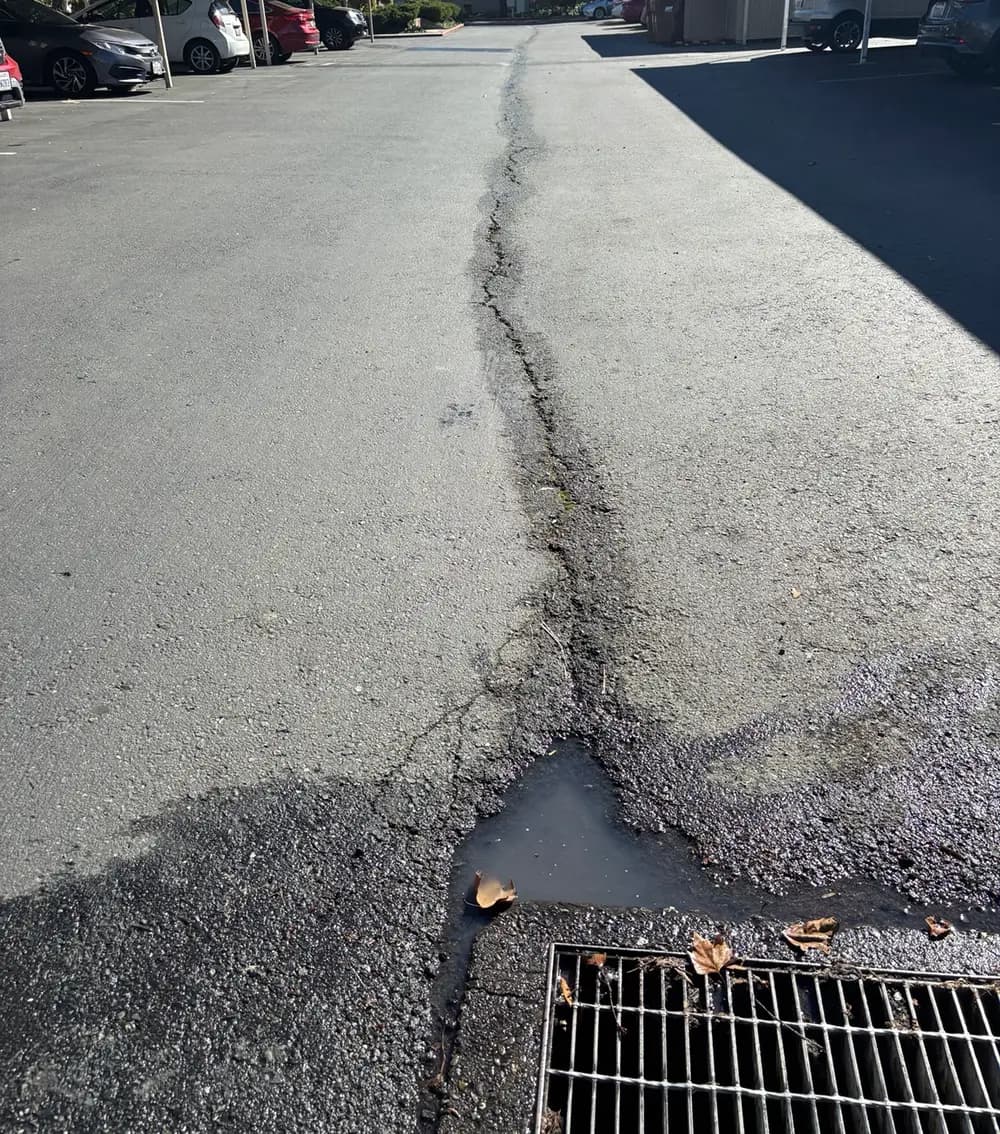
How Drainage Affects Pavement Life
Why drainage is the biggest factor in how long pavement lasts, how water damages asphalt from the base up, and why fixing it protects every repair.
Property-owner guide
Updated July 12, 2026
Parking Lot Drainage Solutions
Parking lot drainage solutions explained: regrading, catch basins, trench drains, French drains, and permeable options, and how to match fix to problem.
Property-owner guide
Updated July 6, 2026
How to Choose an Asphalt Paving Contractor
How to choose an asphalt paving contractor: project fit, relevant experience, written scope, references, insurance, and pavement qualifications.
Property-owner guide
Updated July 6, 2026
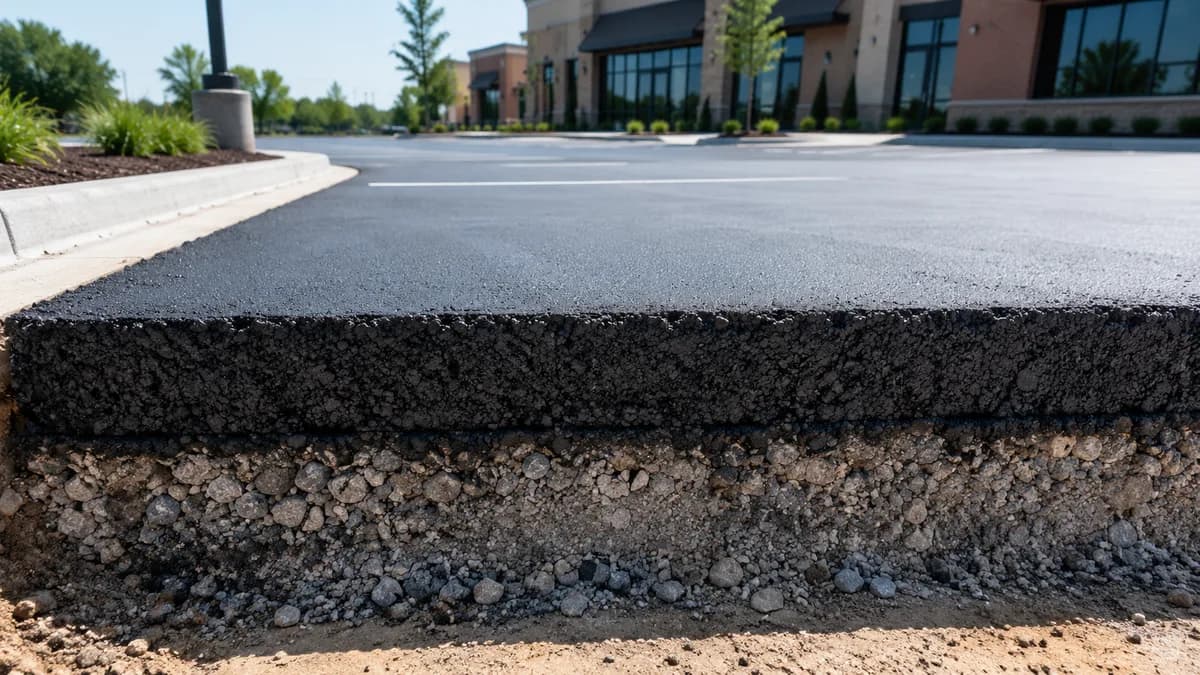
Asphalt Paving Thickness for Parking Lots
Typical asphalt paving thickness for parking lots: benchmarks for stalls, drive lanes, and truck areas, plus how base and soil change the answer.
Property-owner guide
Updated July 12, 2026
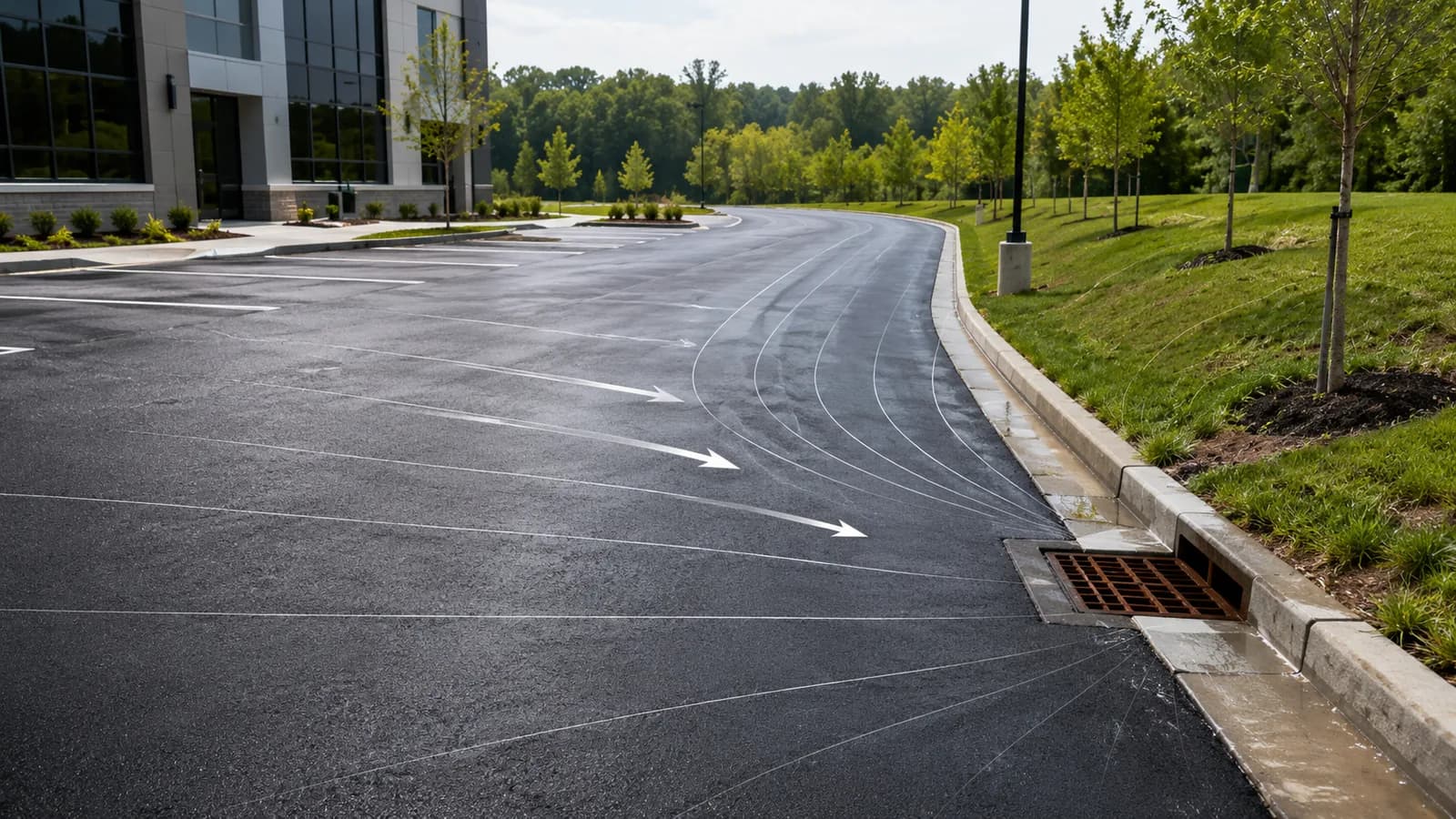
Grading and Slope Basics for Pavement
Grading and slope basics for pavement: what positive drainage means, why slope matters, common grading problems, and where engineering comes in.
Property-owner guide
Updated July 11, 2026
Signs Your Parking Lot Needs Maintenance
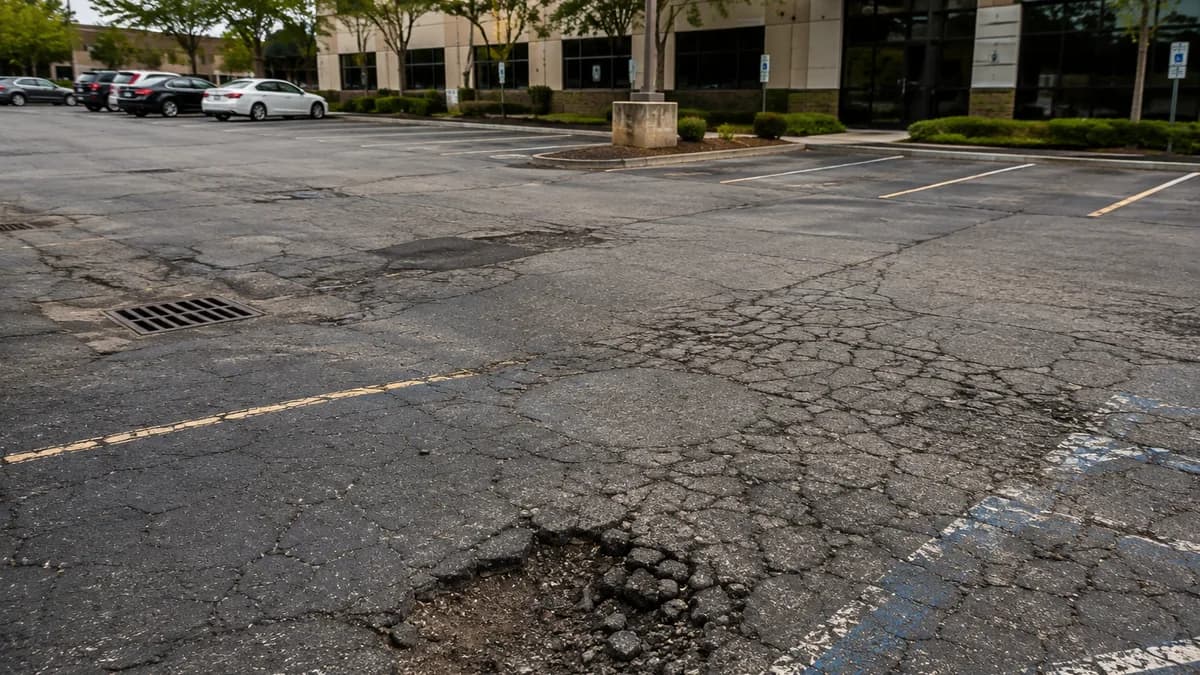
How to read the warning signs a parking lot needs attention — cracks, potholes, faded striping, ponding, raveling — and what each one means.
Before you hire: The Pavement Directory does not guarantee contractor performance, pricing, licensing, insurance, or availability. Business information may be submitted by contractors or gathered from public sources and should be independently verified before hiring. Always confirm licensing, insurance, references, scope of work, and written contract terms.
For contractors
Ready to compare Delaware contractors?
Browse listings by city and service, then use what you have read here to check the scope, the credentials, and the timing before you sign.