
Delaware pavement guide
Delaware Paving Contractor License Requirements, Permits, and Verification
Delaware does not issue a statewide trade license for asphalt paving, sealcoating, concrete, or parking lot contractors. What Delaware does require is a state business license: contractors doing business in Delaware are generally required to be licensed through the Division of Revenue, and out-of-state contractors have their own registration and bonding obligations. Asking a contractor for their Delaware business license number is a reasonable and useful question, and one that legitimate firms answer immediately.
- No statewide paving license
- Reviewed August 2026
Jump to section
Verification
Contractor Licensing and Verification in Delaware
- Statewide licensing
- No statewide paving contractor license
- Administering body
- No statewide paving contractor license; a Delaware business license from the Division of Revenue is generally required to do business in the state
- Verify the business
- State business and license lookup
Because there is no trade license establishing competence, the entity check does more work here. Confirm through the Division of Corporations that the exact name on the proposal is a registered entity in good standing, and that it matches the name on the insurance certificate and the contract. Contracting with one entity while a different one carries the insurance is a common and avoidable exposure.
Verify insurance directly with the carrier or agent rather than accepting a forwarded certificate — general liability and workers' compensation active across the dates of your work, with your property named as certificate holder. On Delaware pavement projects where striping, concrete, or drainage is subcontracted, ask whether those firms carry their own coverage.
County and municipal requirements sit on top of this. New Castle County, Kent County, Sussex County, and the incorporated towns each have their own permitting and, in some cases, contractor registration requirements, and the beach towns in particular apply seasonal work restrictions. Public projects carry separate bidding, bonding, and prevailing wage rules. Ask the jurisdiction where the property sits what applies before assuming nothing does.
What a contractor license does not prove
A Delaware business license establishes that a contractor is registered to do business and collect tax, not that they have built pavement over a shallow water table or designed an edge that survives on sand. References on comparable Delaware projects carry the weight a trade license would carry elsewhere.
- That the proposed scope is the right fix for what is actually failing
- That the price is fair for the local market
- That drainage has been designed or corrected
- That the pavement section and thickness suit the traffic the property carries
- That the specified materials are appropriate for the site
- That the crew will show up when promised
- That workmanship will hold up past the first winter or summer
- That the company is financially stable enough to honor a warranty
Ask for a certificate of insurance sent directly from the carrier or agent rather than a copy forwarded by the contractor, confirm the general liability and workers’ compensation coverage is active on the dates of your work, and ask to be named as certificate holder so you are notified if the policy lapses.
Licensing requirements can turn on project value, scope of work, property location, and whether the job is public or private. City and county rules may add registration, permitting, or bonding requirements beyond anything required at the state level. Verify current requirements with the agency directly before contracting.
Last reviewed:
Permitting
Stormwater and Environmental Considerations
Delaware Department of Natural Resources and Environmental Control (DNREC) Sediment and Stormwater Program
DNREC administers Delaware's statewide sediment and stormwater program, and the practical thing to understand about it is that plan review is often delegated. Conservation districts and other approving agencies handle review and inspection in much of the state, so the office you deal with may not be DNREC itself. The disturbance thresholds that bring a project into the program are set in state regulation — confirm the current figures with DNREC or the local approving agency rather than assuming a parking lot project is too small to be reached.
Delaware's regulations put substantial weight on post-construction stormwater management, not just erosion control during the work. That means a project adding or redeveloping impervious area may need to include treatment and management measures in the finished site, which can change a resurfacing conversation into a site design conversation. Where a property already has permitted stormwater practices from an earlier approval, those carry maintenance obligations that transferred with the property.
Location adds layers. The Delaware Coastal Zone Act restricts certain heavy industrial uses along the coast and can affect what is permissible on affected parcels, the Inland Bays watershed carries its own water quality attention, and tidal wetlands and floodplain status can change what a project may do. In Sussex County, tax ditches and agricultural drainage networks are the practical receiving system for a great deal of site runoff, and where a site can legally discharge is worth establishing early.
What tends to drive requirements here
- Disturbed area thresholds that bring a project into the sediment and stormwater program
- Which agency actually reviews the plan — DNREC, a conservation district, or another approving agency
- Post-construction stormwater management requirements on projects adding or redeveloping impervious area
- Maintenance obligations attached to existing permitted stormwater practices on the property
- Coastal Zone Act, tidal wetland, and floodplain status for coastal and riverfront parcels
- Tax ditch and agricultural drainage networks as the receiving system in Kent and Sussex counties
Delaware's sediment and stormwater review is administered through delegated approving agencies that vary by location, and county and town requirements apply on top of it. Confirm what applies to your parcel with DNREC and the local approving agency before design.
Last reviewed:
Official sources
Delaware Agencies and Reference Links
Contractor licensing
Delaware Division of Revenue business licensingDelaware business license requirements for contractors, including obligations that apply to out-of-state firms.
Business registration
Delaware Division of Corporations entity searchConfirm the exact entity named on your proposal is registered and in good standing in Delaware.
Environmental
DNREC Sediment and Stormwater ProgramStatewide sediment and stormwater requirements, thresholds, and the delegated approving agencies that review plans.
Transportation
Delaware Department of TransportationState specifications and materials terminology that shape how Delaware contractors describe pavement work.
Consumer protection
Delaware Attorney General Consumer Protection UnitWhere to file a complaint about a contractor or a deceptive business practice.
This page summarizes publicly available information for general education. It is not legal, engineering, or code-compliance advice, and requirements change. Confirm anything that affects your project with the agency with jurisdiction over the property.
Regulatory content last reviewed:
Delaware licensing and permit FAQs
Does Delaware require a license to pave a parking lot?
There is no Delaware trade license specific to paving, sealcoating, concrete, or parking lot work. What is required is a Delaware business license from the Division of Revenue for doing business in the state, and out-of-state contractors carry their own registration and bonding obligations. Ask for the business license number, confirm the entity through the Division of Corporations, verify insurance directly with the carrier, and check with the county or town where the property sits, since local requirements apply on top of the state ones.
Who reviews the stormwater plan for a Delaware project?
It depends on where the property is. DNREC administers the statewide sediment and stormwater program, but plan review and inspection are frequently delegated to conservation districts and other approving agencies, so the office you work with may not be the state. That matters practically: submittal requirements, review times, and inspection practices differ between approving agencies. Establish which one has your parcel before you build a schedule around an assumed review period.
Before you sign: hiring guides
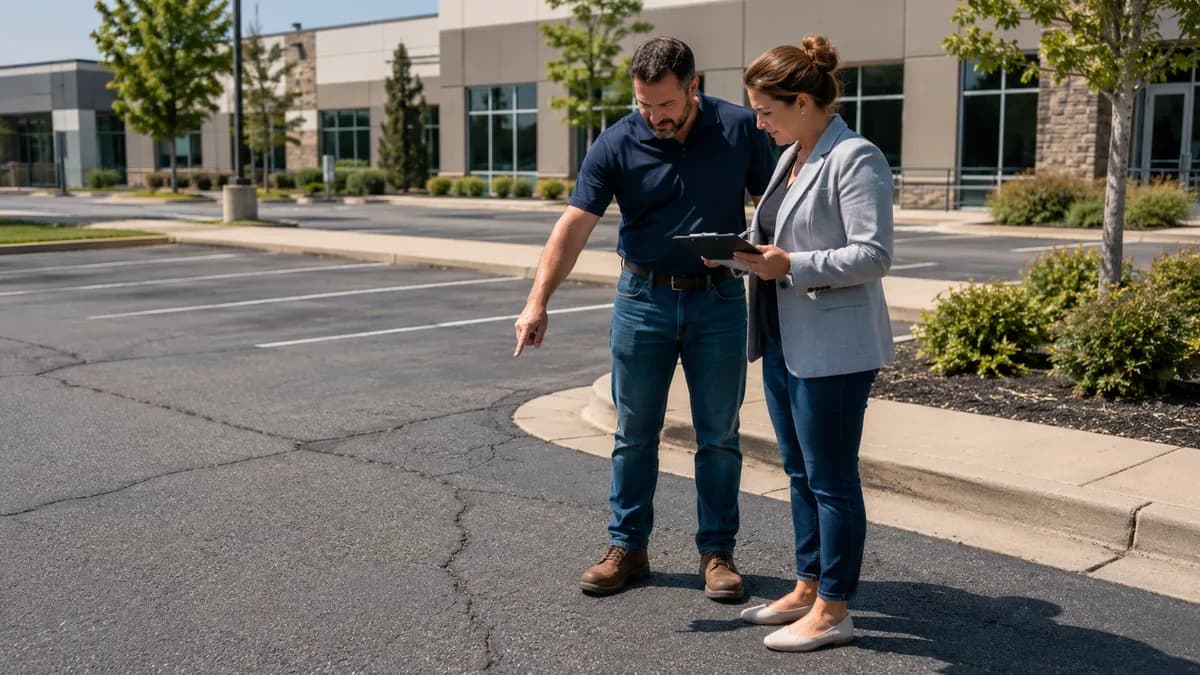
Property-owner guide
Updated July 6, 2026
How to Choose an Asphalt Paving Contractor
How to choose an asphalt paving contractor: project fit, relevant experience, written scope, references, insurance, and pavement qualifications.
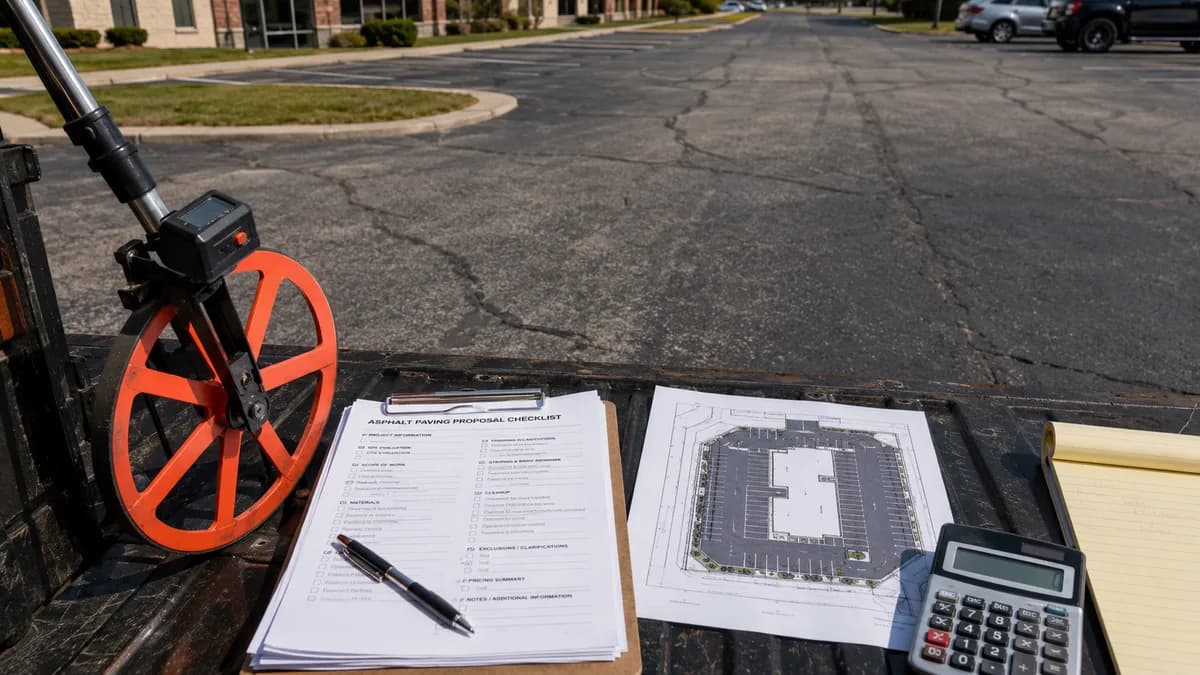
Property-owner guide
Updated July 6, 2026
Asphalt Paving Proposal Checklist
What belongs in an asphalt paving proposal: work limits, quantities, thickness, base preparation, drainage, striping, exclusions, and warranty terms.
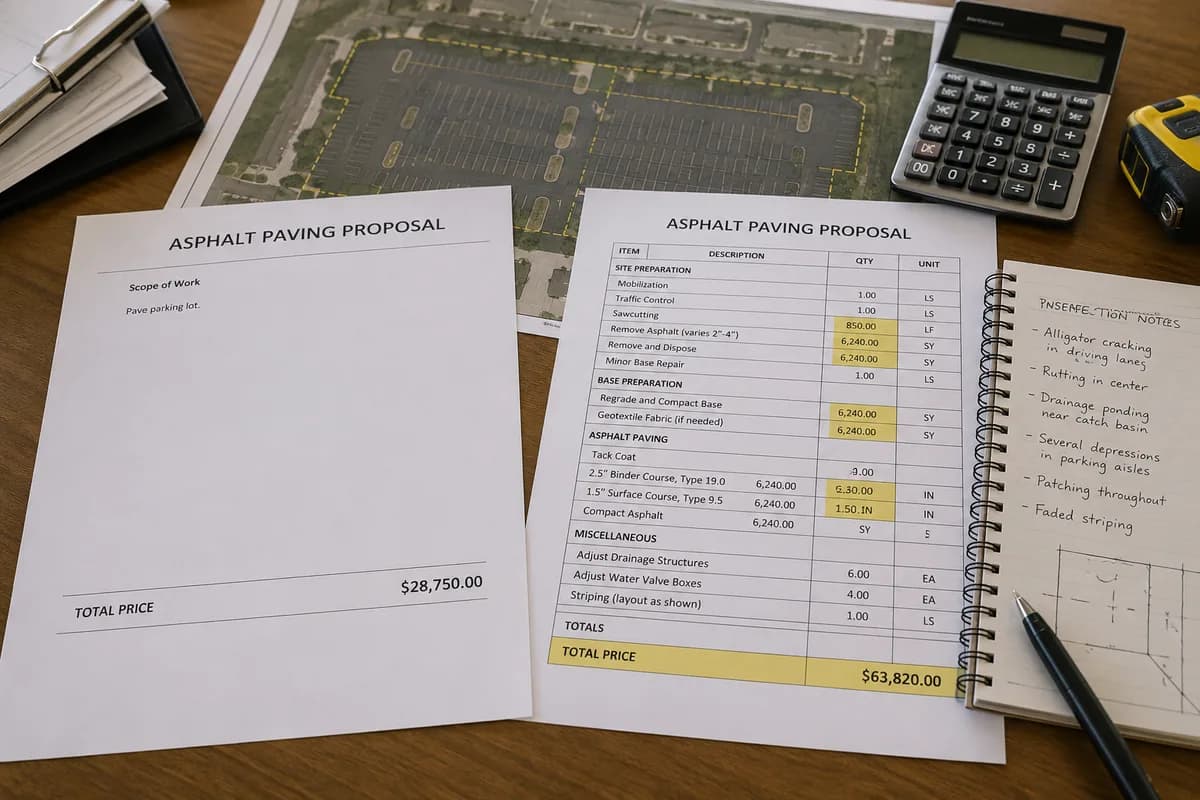
Property-owner guide
Updated July 6, 2026
Cheap Asphalt Paving Bids: Red Flags to Watch For
A cheap asphalt paving bid may omit thickness, base preparation, drainage, striping, or warranty terms. Learn the red flags to check before hiring.
Before you hire: The Pavement Directory does not guarantee contractor performance, pricing, licensing, insurance, or availability. Business information may be submitted by contractors or gathered from public sources and should be independently verified before hiring. Always confirm licensing, insurance, references, scope of work, and written contract terms.
For contractors
Ready to compare Delaware contractors?
Browse listings by city and service, then use what you have read here to check the scope, the credentials, and the timing before you sign.