
Wisconsin pavement guide
Pavement Conditions in Wisconsin: Regions, Soils, and Common Problems
Wisconsin pavement is defined by frost depth, spring thaw, and a salt problem the state has been actively working to reduce.
- 4 regions
- 5 common problems
- 6 local terms
Jump to section
Regional differences
Pavement Conditions by Region in Wisconsin
Wisconsin does not have one climate or one soil profile, and pavement that performs well in one part of the state can fail early a few hours away. These are the divisions that matter most when scoping paving, repair, or maintenance work.
Southeastern Wisconsin
Milwaukee · Waukesha · Racine · Kenosha
Environmental stress
- Frequent freeze-thaw cycling with heavy salt use
- Lake-moderated but still severe winters
- Dense commercial, industrial, and freight traffic
Subgrade conditions
- Heavy lacustrine and till clays with poor drainage
- Older urban and industrial fill of variable quality
- Frost-susceptible silts in some areas
Common distress
- Spring potholing and base failure
- Concrete scaling and joint spalling from chloride
- Utility cut settlement on older urban pavement
What it means for the work
- Clay drainage determines whether spring damage repeats
- Salt reduction has both a water quality and a concrete preservation payoff
- Freight and industrial loading calls for a heavier section at truck areas
Madison and south-central Wisconsin
Madison · Janesville · Beloit · Baraboo
Environmental stress
- Cold winters with deep frost penetration
- Frequent freeze-thaw in shoulder seasons
- Agricultural and distribution truck traffic
Subgrade conditions
- Glacial tills with variable drainage
- Silty soils that are frost-susceptible
- Areas of shallow bedrock and, in the Driftless region to the west, karst
Common distress
- Frost heave producing seasonal distortion
- Spring break-up potholing
- Localized settlement in karst areas of the Driftless region
What it means for the work
- Lakes and watershed protections shape stormwater requirements around Madison
- Non-frost-susceptible base material matters more than added asphalt
- Recurring depressions in the Driftless area deserve investigation
Fox Valley and eastern Wisconsin
Green Bay · Appleton · Oshkosh · Sheboygan
Environmental stress
- Heavy lake-effect snow near Lake Michigan
- Deep frost and long winters
- Paper, manufacturing, and freight truck traffic
Subgrade conditions
- Red clay soils in parts of the lakeshore area with very poor drainage
- Glacial tills with variable drainage
- Frost-susceptible soils with deep seasonal frost
Common distress
- Severe spring break-up in poorly drained clay areas
- Plow gouging at curbs and transitions
- Rutting at industrial truck routes
What it means for the work
- Lakeshore red clay is genuinely difficult subgrade — drainage is the whole problem
- Snow storage volume needs designated space
- Durable marking materials are worth the premium
Northern and western Wisconsin
Wausau · Eau Claire · Superior · La Crosse · Rhinelander
Environmental stress
- The state's most severe cold and deepest frost penetration
- Very heavy snowfall, especially in the north
- A construction season shorter than the south
Subgrade conditions
- Sandy glacial outwash in some areas, heavy clays in others
- Shallow bedrock in the north
- Driftless region karst and steep terrain in the west
Common distress
- Severe frost heave and spring break-up
- Low-temperature thermal cracking
- Erosion on steep Driftless region sites
What it means for the work
- The construction season is short and books out early
- Dairy and timber loading is a real design factor
- Sandy outwash subgrade is an advantage — avoid contaminating it with fines
Field conditions
Common Pavement Problems in Wisconsin
Frost heave and spring break-up
Pavement lifting and distorting through late winter, then potholing rapidly over a few weeks in spring as the frost comes out and the base stays saturated.
Likely causes
- Frost-susceptible fines in the base or subgrade forming ice lenses
- Meltwater trapped above still-frozen ground
- Deep seasonal frost penetration reaching well below the pavement
When to get it looked at: If the same areas heave and break up every year, the base material or the drainage is the cause. Repaving without changing either buys one or two winters.
Dairy and agricultural traffic damage
Edge break-up, rutting, and structural failure at farm entrances, milk house approaches, and equipment turning areas — often worst in spring.
Likely causes
- Loaded milk trucks and equipment arriving on a daily schedule regardless of season
- Heavy loads applied during the thaw-weakened weeks
- Unconfined pavement edges with no shoulder support
When to get it looked at: On a dairy site, the truck route is the design problem. Building that route to a heavier section than the rest of the yard is usually more economical than repeated repair.
Chloride damage to concrete
Sidewalks, curbs, aprons, and steps scaling, flaking, and spalling at joints, deteriorating faster than the asphalt beside them.
Likely causes
- Chloride deicers driving repeated freeze-thaw within the concrete surface
- Chloride reaching reinforcement and causing corrosion and spalling
- Concrete without adequate air entrainment or cure for this climate
When to get it looked at: Scaling across large areas or spalling that exposes reinforcement is past the point where sealers help, and on walkways it becomes a trip-hazard question.
Low-temperature thermal cracking
Straight transverse cracks at fairly regular spacing across the pavement, unrelated to traffic, most pronounced in northern Wisconsin.
Likely causes
- Asphalt contracting in extreme cold until it cracks in tension
- Binder grade not selected for the site's low-temperature extreme
- Aged, oxidized binder with reduced ability to relax stress
Snowplow damage and marking wear
Gouges and chipped edges at curbs, transitions, and drainage structures, plus striping worn away by the end of a single winter.
Likely causes
- Plow blades catching raised features and uneven transitions
- Repeated passes along the same lines through a long season
- Paint and thin treatments with limited abrasion resistance
Property types
Common Pavement Projects in Wisconsin
Dairy and agricultural operations
Milk trucks and equipment run on a daily schedule through spring thaw, so the truck route needs a heavier section and better drainage than the rest of the yard.
Manufacturing and paper facilities
Fox Valley and southeastern industrial sites carry sustained truck loading on clay subgrade in the state's harsher freeze-thaw conditions.
Distribution and cold-storage facilities
Truck courts concentrate slow, heavy loading and take the worst of the winter plowing and chloride at the same time.
School districts and municipal properties
Bus loops carry heavier loads than the parking fields, the construction window is a short summer break, and prevailing wage can apply.
Resort and seasonal properties up north
Deep frost, a short construction season, and seasonal occupancy mean the work window and the damage window barely overlap.
Plain English
Pavement Terms You May Encounter in Wisconsin
| Term | What it means on a Wisconsin project |
|---|---|
| PG binder grade (e.g. PG 58-34) | The performance grade of the asphalt binder. The low-temperature number governs thermal cracking resistance, and the right grade differs between Kenosha and Superior. |
| Base aggregate dense (breaker run, 3/4-inch) | The crushed aggregate base layers commonly specified in Wisconsin. Their thickness, gradation, and drainage quality usually determine pavement life more than the asphalt above them. |
| Non-frost-susceptible material | Granular material with few fines, chosen so freezing water cannot build ice lenses that heave the pavement. In a deep-frost state this is often the single most consequential specification. |
| Spring weight restrictions | Seasonal limits on axle loads while subgrade is thaw-weakened. They apply to public roads, but the same weakness affects private lots and farm approaches taking heavy loads in April. |
| Air-entrained concrete | Concrete with microscopic air voids that give freezing water somewhere to expand. Standard for exterior concrete in Wisconsin and a real factor in whether a walk scales under salt. |
| Full-depth reclamation (FDR) | Pulverizing existing asphalt and base together, treating the blend, and repaving over it. Common on Wisconsin lots and rural roads where the base has failed. |
State transportation specifications can provide useful regional terminology and material references, but they do not automatically govern private parking-lot or driveway projects unless incorporated into the contract or required by the applicable jurisdiction.
More definitions are in the pavement glossary.
Before you sign
Questions to Ask a Paving Contractor in Wisconsin
- Is non-frost-susceptible base material included, and to what depth?
- What binder grade are you proposing, and what is its low-temperature rating for this part of Wisconsin?
- Is the spring break-up we see every year a base material problem or a drainage problem?
- For our farm approach, is that route being built to a heavier section than the rest of the yard?
- Where should snow be stored so meltwater and chloride do not concentrate on the pavement?
- Is the concrete deterioration we have from salt, and does that change repair versus replacement?
- How will curb and pavement transitions be detailed so plow blades do not catch them?
- Will this project trigger post-construction stormwater requirements based on impervious area?
- How late in the fall can crack sealing realistically be done here?
Wisconsin pavement condition FAQs
Why does Wisconsin pavement heave and then break up every year?
Deep seasonal frost drives two related problems. During winter, water in frost-susceptible fines below the pavement forms ice lenses that lift and distort the surface. Then in spring the surface thaws first, trapping meltwater in the base above still-frozen ground, and the subgrade loses much of its strength for several weeks. Traffic during that window breaks the weakened pavement quickly. If the same areas fail every year, the base material or the drainage is the cause rather than the winter.
Why do dairy farm approaches fail faster than the rest of the yard?
Because milk pickup does not pause for spring thaw. Loaded trucks arrive on a daily schedule through the weeks when the subgrade has the least strength it will have all year, and the same route takes that loading every day of the season. Damage concentrates at entrances, the milk house approach, and turning areas. Building that specific route to a heavier section with better drainage is generally more economical than repairing it repeatedly.
How does road salt affect concrete in Wisconsin?
Chloride deicers increase the freeze-thaw cycling a concrete surface experiences and draw water deeper into it, producing scaling and flaking. Where chloride reaches embedded reinforcement, corrosion expands and spalls the concrete from within. That is why sidewalks, curbs, and aprons often need attention before the adjacent asphalt does. Wisconsin has invested heavily in salt applicator training, and reducing over-application protects your own concrete as well as the state's water.
What is non-frost-susceptible base and why does it matter here?
It is granular base material with few fine particles, chosen so freezing water cannot form ice lenses that lift the pavement. In a state with Wisconsin's frost depth, this specification often does more for pavement life than the thickness of asphalt above it. If a proposal is vague about base material and gradation, that is worth pinning down before comparing prices — two bids with different base specifications are not pricing the same pavement.
Does reducing salt use actually save money on a Wisconsin property?
It can, in two ways that compound. Applying less material directly reduces what you buy, and it slows the chloride-driven scaling and spalling that shortens the life of your concrete walks, curbs, and aprons — the surfaces that usually need replacement first. Wisconsin's salt applicator training exists because it is possible to maintain the same level of safety with meaningfully less material through calibration, timing, and pre-treatment. The pavement benefit is a side effect of doing it properly.
Related reading for Wisconsin property owners
Property-owner guide
Updated July 11, 2026
When Should You Seal Asphalt Cracks?
When to seal cracks in asphalt — which cracks to seal, the best time of year, why sealing early matters, and how crack sealing fits a maintenance schedule.
Property-owner guide
Updated July 6, 2026
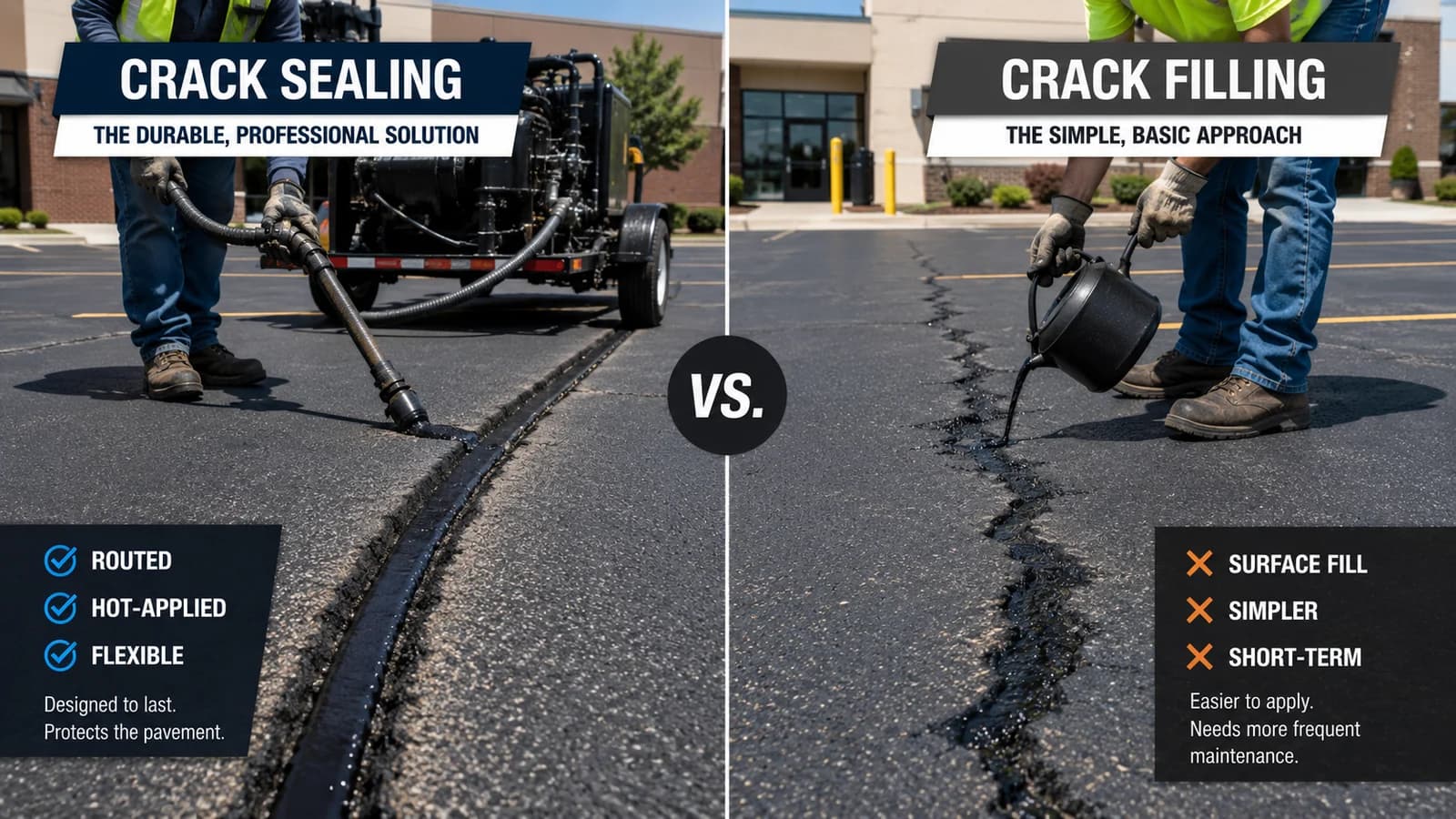
Crack Sealing vs. Crack Filling: What Is the Difference?
The difference between crack sealing and crack filling, which method fits which type of crack, and how each fits into pavement maintenance.
Property-owner guide
Updated July 11, 2026
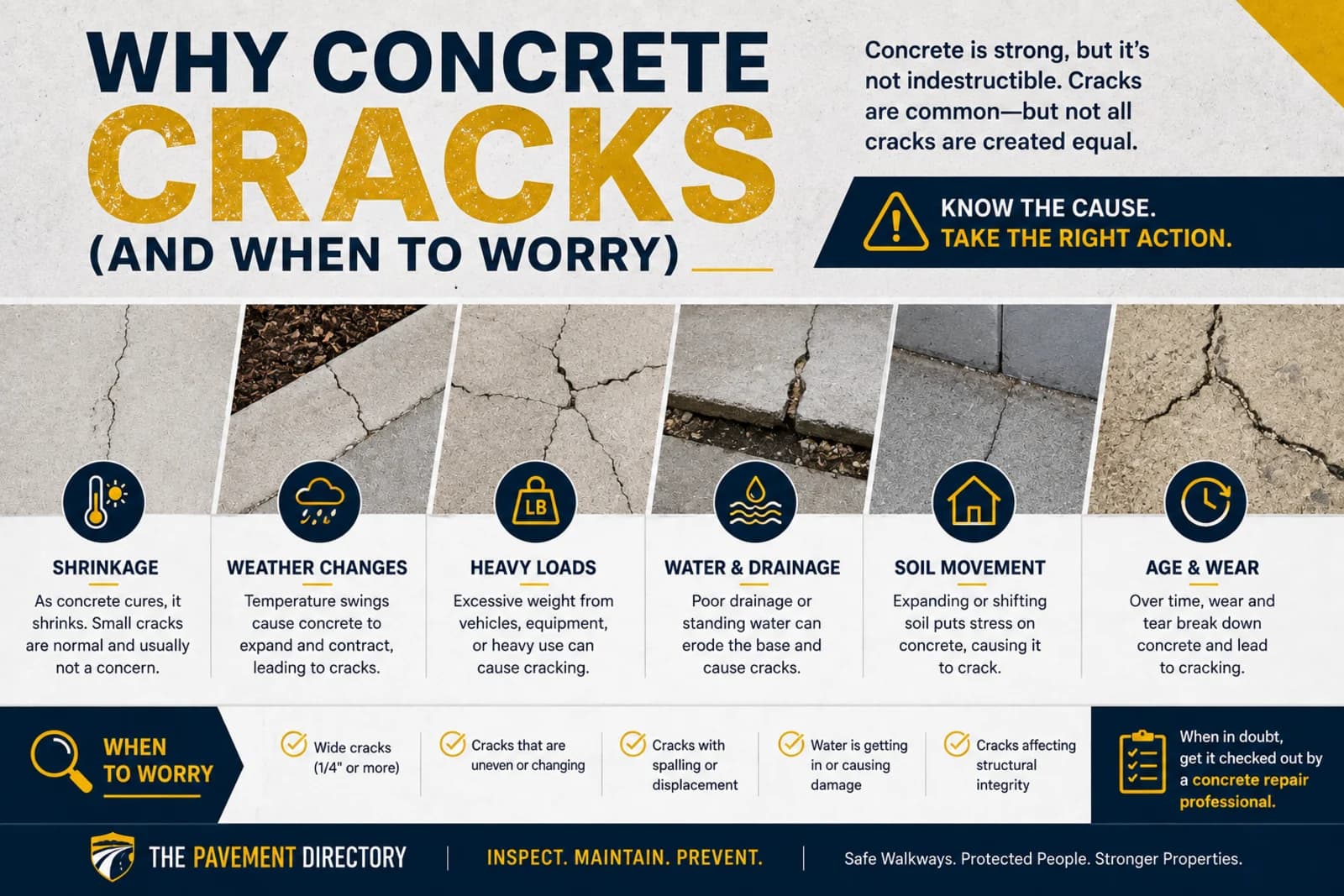
Why Concrete Cracks (and When to Worry)
Why concrete cracks — shrinkage, settlement, freeze-thaw, roots, and loads — the difference between cosmetic and structural, and when to repair.
Property-owner guide
Updated July 12, 2026
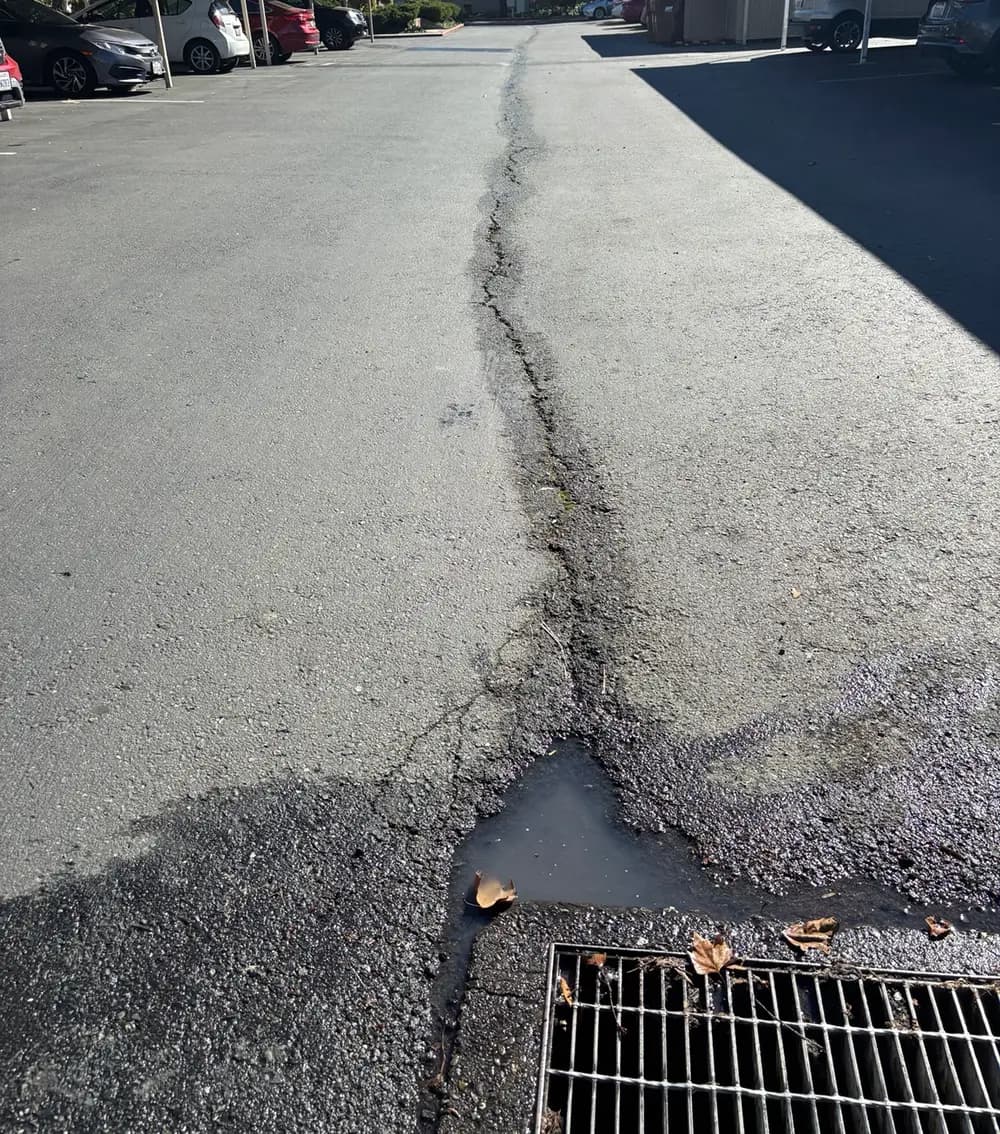
How Drainage Affects Pavement Life
Why drainage is the biggest factor in how long pavement lasts, how water damages asphalt from the base up, and why fixing it protects every repair.
Property-owner guide
Updated July 11, 2026
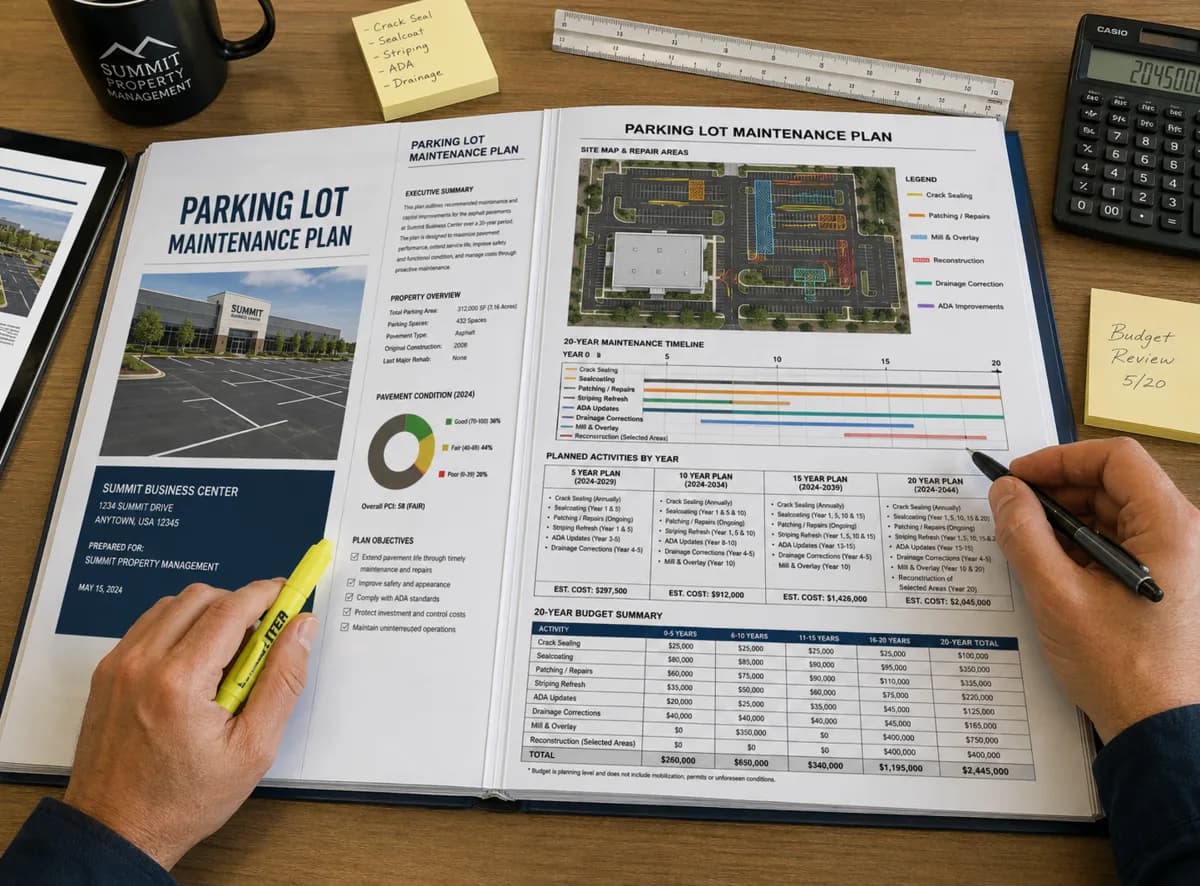
How to Create a Parking Lot Maintenance Plan
How to build a parking lot maintenance plan: inspecting condition, setting service cycles, prioritizing repairs, and budgeting over multiple years.
Before you hire: The Pavement Directory does not guarantee contractor performance, pricing, licensing, insurance, or availability. Business information may be submitted by contractors or gathered from public sources and should be independently verified before hiring. Always confirm licensing, insurance, references, scope of work, and written contract terms.
For contractors
Ready to compare Wisconsin contractors?
Browse listings by city and service, then use what you have read here to check the scope, the credentials, and the timing before you sign.