
West Virginia pavement guide
Pavement Conditions in West Virginia: Regions, Soils, and Common Problems
Most West Virginia commercial pavement sits on a bench cut into a hillside, and how that bench was built matters more than what was paved on top of it.
- 5 regions
- 6 common problems
- 6 local terms
Jump to section
Regional differences
Pavement Conditions by Region in West Virginia
West Virginia does not have one climate or one soil profile, and pavement that performs well in one part of the state can fail early a few hours away. These are the divisions that matter most when scoping paving, repair, or maintenance work.
The Kanawha Valley and the southern coalfields
Charleston · Beckley · Logan · Williamson · Oak Hill
Environmental stress
- Very steep terrain concentrating runoff onto narrow valley sites
- Heavy coal and industrial truck traffic on sites built for lighter use
- Freeze-thaw cycling with frequent winter rain-then-freeze events
Subgrade conditions
- Colluvium and loose slope material on hillside benches
- Uncompacted or variably compacted fill on the outboard half of sites
- Shale and sandstone bedrock on the cut side, sometimes within inches of the surface
Common distress
- Cracking along the cut-to-fill transition line across a lot
- Progressive settlement and edge dropping on the fill side
- Seepage emerging at the toe of a cut face and running under the pavement
What it means for the work
- Ask how the bench was built before deciding what the pavement needs
- Subdrainage behind and below cut faces is frequently more valuable than surface thickness
- Coal and industrial truck loading should drive the section at entrances rather than the parking field
The Eastern Panhandle and the Potomac Highlands
Martinsburg · Charles Town · Keyser · Moorefield · Petersburg
Environmental stress
- The state's fastest commercial growth putting new traffic on older pavement
- Colder winters and more freeze-thaw cycles at elevation in the Highlands
- Intense summer storms on limestone valley floors
Subgrade conditions
- Limestone bedrock with karst features in the valley floors
- Residual clay over limestone with irregular rock depth
- Rocky colluvium on the ridge slopes
Common distress
- Circular or oval depressions that grow over time in karst areas
- Cracking where a section crosses from pinnacled rock to soft residual clay
- Frost heave in fine-grained soils at Highlands elevations
What it means for the work
- Directing concentrated stormwater into the ground over karst is a decision with real consequences and deserves engineering input
- Rock depth over limestone can vary sharply within one parcel, so test pits matter before pricing
- Distribution growth along the I-81 corridor is putting freight loads on lots designed for retail
The Ohio Valley and the Northern Panhandle
Wheeling · Weirton · Parkersburg · Moundsville · New Martinsville
Environmental stress
- Industrial and chemical facility truck traffic
- Riverine flooding on valley-floor parcels
- Freeze-thaw cycling with sustained winter deicing
Subgrade conditions
- River terrace deposits and alluvium on the valley floor
- Historic industrial fill including slag and mixed material on older parcels
- Steep valley walls with colluvium above the terraces
Common distress
- Settlement on filled industrial ground
- Rutting and shoving at plant entrances and dock areas
- Flood damage to the pavement base beneath an intact surface
What it means for the work
- Historic industrial fill can contain material that changes both bearing and handling requirements
- Floodplain status affects what is permissible and how a site should be detailed
- Test pits on older industrial parcels are worth doing before a reconstruction is priced
North-central West Virginia and the Monongahela valley
Morgantown · Fairmont · Clarksburg · Bridgeport · Buckhannon
Environmental stress
- University and hospital traffic concentrated on constrained hillside campuses
- Energy sector truck traffic on rural commercial sites
- Substantial freeze-thaw cycling and winter deicing
Subgrade conditions
- Colluvium and slope material across most hillside development
- Historic and abandoned mine workings beneath parts of the region
- Shale bedrock that weathers to weak, moisture-sensitive material
Common distress
- Slope creep producing cracks that open progressively downhill
- Localized settlement over old workings or poorly consolidated fill
- Base failure where shale has weathered and softened under the pavement
What it means for the work
- Weathered shale used as fill can soften dramatically when it gets wet, so how the fill was placed matters
- Where mine workings are suspected, settlement risk is a geotechnical question rather than a paving one
- Campus and hospital properties combine constant occupancy with almost no staging room
The Allegheny Highlands and the mountain counties
Elkins · Davis · Snowshoe · Marlinton · Lewisburg
Environmental stress
- The state's coldest winters, deepest frost, and heaviest snowfall
- A shorter working season than the river valleys at both ends
- Steep grades concentrating snowmelt across pavement
Subgrade conditions
- Rocky colluvium over bedrock at shallow depth
- Saturated ground at the toe of slopes and below cut faces
- Frost-susceptible fines in valley bottoms and old wetland margins
Common distress
- Severe frost heave and spring break-up
- Washout and undermining where runoff crosses a pavement edge on a grade
- Plow damage at edges, joints, and raised structures
What it means for the work
- Resort properties take their worst damage in the season when nothing can be repaired
- Binder selection for the actual winter low matters more here than in Charleston or Huntington
- Snow storage location and meltwater routing belong in the layout rather than in an operations conversation later
Field conditions
Common Pavement Problems in West Virginia
Cracking along the cut-to-fill transition
A long crack running across a lot in a fairly straight line, often roughly parallel to the hillside behind it, that reopens after each repair and gets wider each year.
Likely causes
- One half of the site sitting on rock and the other on placed fill that continues to consolidate
- Fill placed without engineered compaction or moisture control
- Water entering the fill at the transition and accelerating settlement
- The section detailed uniformly across a subgrade that is anything but uniform
When to get it looked at: If a crack in a straight line across the lot has been sealed or patched twice and keeps returning, it is telling you about the ground rather than the asphalt. That is a geotechnical question.
Slope movement and creep on hillside sites
Cracks opening progressively toward the downhill side of a lot, the outboard edge dropping, retaining features tilting, and the pattern advancing rather than stabilizing.
Likely causes
- Colluvium — material that has already crept downslope — being loaded or cut into
- Water infiltrating and raising pore pressure within the slope
- Fill placed on a slope without benching or subdrainage
- Toe support removed by an adjacent cut, road widening, or erosion
When to get it looked at: Progressive movement is not a pavement problem and cannot be resolved by paving. Anything that is still moving needs geotechnical assessment before money goes into the surface.
Seepage emerging from cut faces
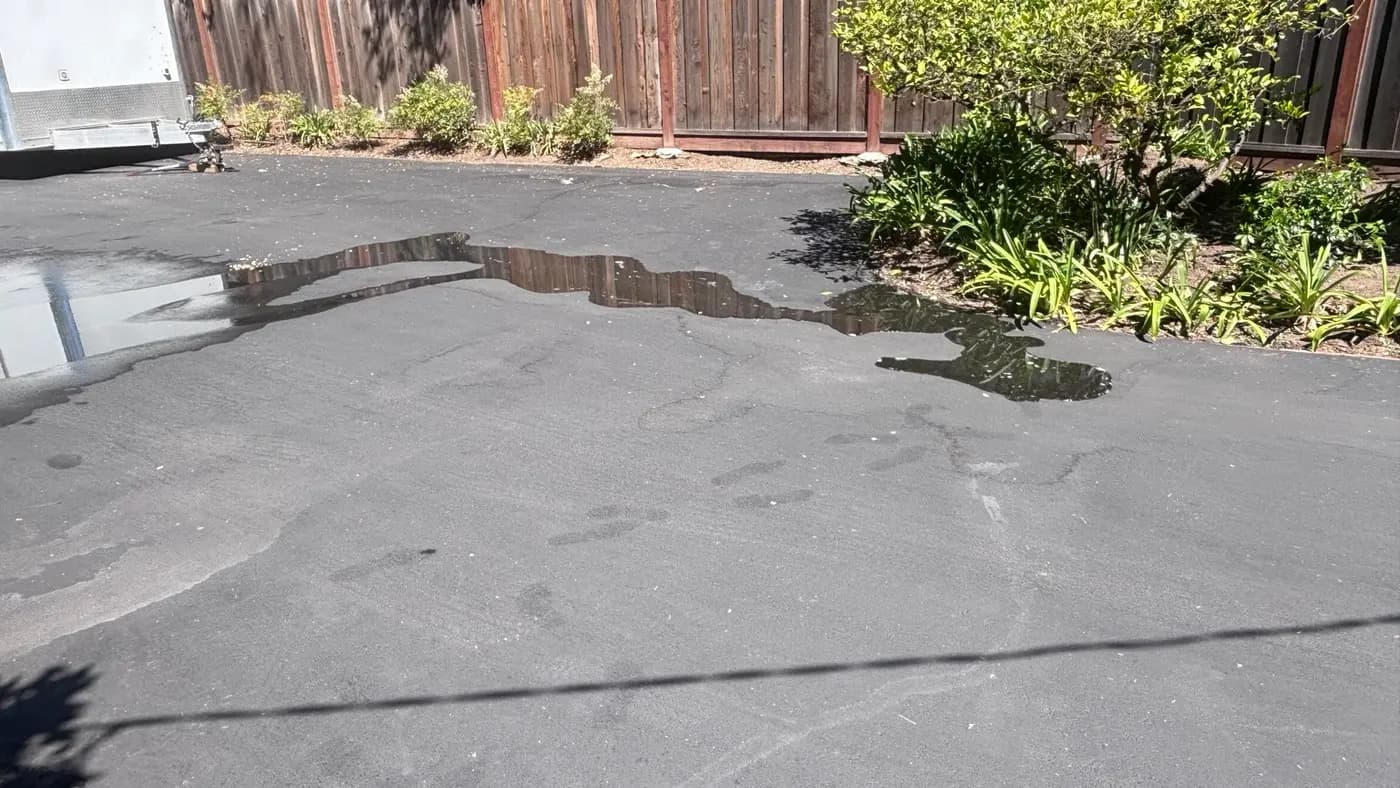
Persistent wet areas at the uphill edge of a lot, water tracking under the pavement from a cut bank, and pavement that stays soft where it never fully dries.
Likely causes
- Groundwater intercepted by the cut face and discharging at the toe
- Perched water above a shale or clay layer daylighting where the hillside was excavated
- No interceptor drain or subdrain behind the cut
- Surface runoff from above the site funneled onto the pavement rather than around it
When to get it looked at: If an area stays damp through dry weather, the water is coming from the ground rather than from rain, and surface repairs will fail on the same schedule regardless of how well they are done.
Karst settlement in the Eastern Panhandle
A rounded depression that gets deeper and wider over years despite being filled, sometimes with cracking radiating outward from it, in a limestone valley.
Likely causes
- Soil migrating downward into voids and solution channels in the limestone below
- Concentrated stormwater discharge accelerating soil loss into the subsurface
- A leaking line or an unlined basin providing a steady source of water
- Rapid change in rock depth beneath the site, with soft material in the pinnacle gaps
When to get it looked at: A depression that returns after being filled should not be filled a third time. Recurrence is the signal that soil is still moving into the ground, and that requires investigation before any surface work.
Softening of weathered shale fill
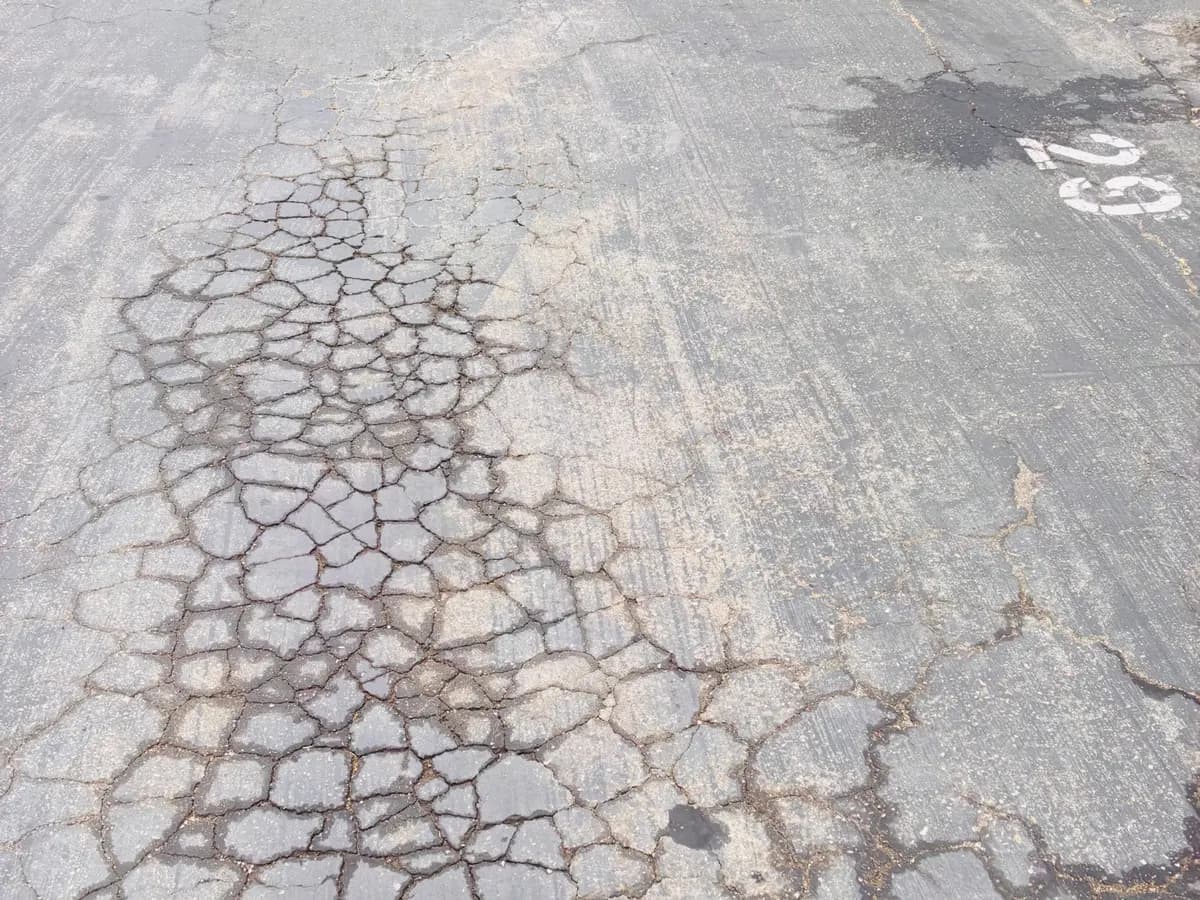
Pavement flexing under slow-moving vehicles and cracking in an alligator pattern in areas of a site that were built on fill, worst during and after wet periods.
Likely causes
- Shale fill breaking down into fine, moisture-sensitive material over time
- Water reaching the fill through open cracks or from an untreated cut face
- Fill placed without adequate compaction or drainage
- A base too thin to bridge a subgrade that has lost strength
Steep-site runoff erosion and edge undermining
Gullies at the downhill edge of a lot, material washing out from beneath the pavement, and the edge dropping over a season or two.
Likely causes
- Runoff leaving the pavement at a single concentrated point rather than spread along the edge
- No designed outfall or energy dissipation at the discharge
- Upslope drainage directed onto the lot rather than around it
- Steep terrain giving water a short distance to gather speed
Property types
Common Pavement Projects in West Virginia
Hospital and university campuses on hillside sites
Morgantown and Charleston institutional properties combine constant occupancy, accessible routes that cannot be interrupted, benched terrain, and almost no staging room, so phasing and slope drainage dominate the planning.
Coal, energy, and industrial facilities
Loaded haul trucks impose axle loads far beyond what a benched commercial site was built for, and entrances and turning radii on the fill side of the bench fail first.
Distribution facilities along the I-81 corridor
Eastern Panhandle growth has put trailer loading onto lots in limestone valleys where karst settlement and stormwater infiltration decisions both need engineering input.
River valley industrial and chemical properties
Ohio and Kanawha valley plants sit on historic industrial fill in floodplains, so both what is buried and how the site behaves in a flood affect what a reconstruction should include.
Mountain resort and tourism properties
Allegheny Highlands lots take their heaviest loading and worst plow damage in the season when nothing can be repaired, compressing all remedial work into a short summer window.
Plain English
Pavement Terms You May Encounter in West Virginia
| Term | What it means on a West Virginia project |
|---|---|
| Benched fill | Fill placed in steps cut into a hillside so it keys into the existing slope rather than sitting on it. Whether a site's fill was benched is one of the better predictors of how its pavement will perform. |
| Colluvium | Loose material that has already moved downslope under gravity over long periods. It is common across West Virginia hillsides and is prone to renewed movement when it is loaded, cut into, or wetted. |
| Interceptor drain | A subsurface drain installed behind or above a cut face to catch groundwater before it reaches the pavement. On a hillside site it frequently does more for pavement life than additional asphalt would. |
| Cut-to-fill transition | The line across a site where undisturbed ground meets placed fill. It is the most predictable location for cracking and differential settlement on a benched lot and deserves a detail rather than a uniform section. |
| Underdrain | Perforated pipe in a stone trench that removes water from within the pavement structure. On weathered shale and clay subgrades it is often the difference between a section that holds and one that softens. |
| Aggregate base course | The compacted crushed stone layer beneath the asphalt. On hillside sites its thickness and how well it is kept drained usually matter more to pavement life than the surface course does. |
State transportation specifications can provide useful regional terminology and material references, but they do not automatically govern private parking-lot or driveway projects unless incorporated into the contract or required by the applicable jurisdiction.
More definitions are in the pavement glossary.
Before you sign
Questions to Ask a Paving Contractor in West Virginia
- What is your West Virginia contractor license number, and does the classification cover this scope of work?
- Was this site built as a cut-and-fill bench, and do you know where the transition line runs?
- Is any part of this lot showing progressive movement rather than static cracking, and how did you determine that?
- Where is water entering this site from above, and does this scope route it around the pavement?
- Is an interceptor drain or subdrain behind the cut face part of this proposal?
- Are there known or suspected mine workings beneath this property?
- Is this parcel in karst terrain, and if so, where is stormwater being directed?
- How will disturbed slope faces be stabilized, and on what timeline within the sequence?
- Does the proposed section reflect the actual truck traffic here rather than the parking traffic?
- Can you show me comparable work on similar terrain, not just on flat valley sites?
West Virginia pavement condition FAQs
Why does a crack keep coming back in a straight line across my West Virginia lot?
Because it is very likely marking the line where cut ground meets placed fill. Most commercial sites in this state were built by cutting into a hillside and pushing material outward to create a level bench. The cut half sits on rock and does not move; the fill half continues to consolidate for years. The pavement bridging that boundary cracks along it, and sealing or patching the crack does nothing about the differential movement underneath. Recurrence is the signal to have the ground assessed rather than the surface repaired again.
What is colluvium and why does it matter for my parking lot?
Colluvium is soil and rock debris that has already crept downslope under gravity, sometimes over thousands of years, and it blankets a great many West Virginia hillsides. It matters because material that has moved before will move again when conditions change — when it is loaded with fill and pavement, cut into for a bench, or wetted by water that was not there before. Cracks that advance progressively downhill rather than staying put are the classic sign, and that pattern is a slope stability question, not a paving one.
Why does my lot stay wet at the uphill edge even in dry weather?
Almost certainly because the water is groundwater rather than rainfall. Cutting into a hillside intercepts water moving through the ground, and it discharges at the toe of the cut face — often continuously, and often exactly where the pavement meets the bank. Patching pavement in that area fails on a predictable schedule because the water keeps arriving. An interceptor drain behind or above the cut, plus a proper subdrain, addresses the source. Surface repair without it is buying the same failure again.
Could mine workings be causing settlement on my West Virginia property?
In parts of the state, yes, it is a real possibility worth establishing rather than assuming. Historic and abandoned underground workings underlie sections of the coalfields and north-central West Virginia, and subsidence over them produces settlement that is unrelated to traffic or drainage. Mine drainage is a separate concern — acidic or metal-laden water can affect drainage structures and concrete. If a property is in a coalfield area and showing unexplained settlement, that is a geotechnical investigation rather than a paving decision.
Are sinkholes a concern for parking lots in the Eastern Panhandle?
In the limestone valleys, yes. Groundwater has been dissolving that rock for a very long time, leaving voids and irregular pinnacled rock surfaces with soft material in between. Soil migrates downward into those openings and the surface follows, producing rounded depressions that reappear after being filled. Concentrated stormwater accelerates the process considerably, which is why directing runoff into the ground over karst is a decision that warrants engineering input rather than being treated as a routine infiltration choice.
Why do steep West Virginia sites cost more to pave than the square footage suggests?
Because the pavement is the smallest part of the problem. Steep sites need drainage that intercepts water above the lot, subdrainage behind cut faces, careful attention to the cut-to-fill transition, designed outfalls with energy dissipation, and erosion control that can survive concentrated flow during construction. Access and staging are also harder and slower. A quote that treats a benched hillside site as a flat lot with a slope on it is usually a quote that has not accounted for what actually makes the pavement last.
Related reading for West Virginia property owners
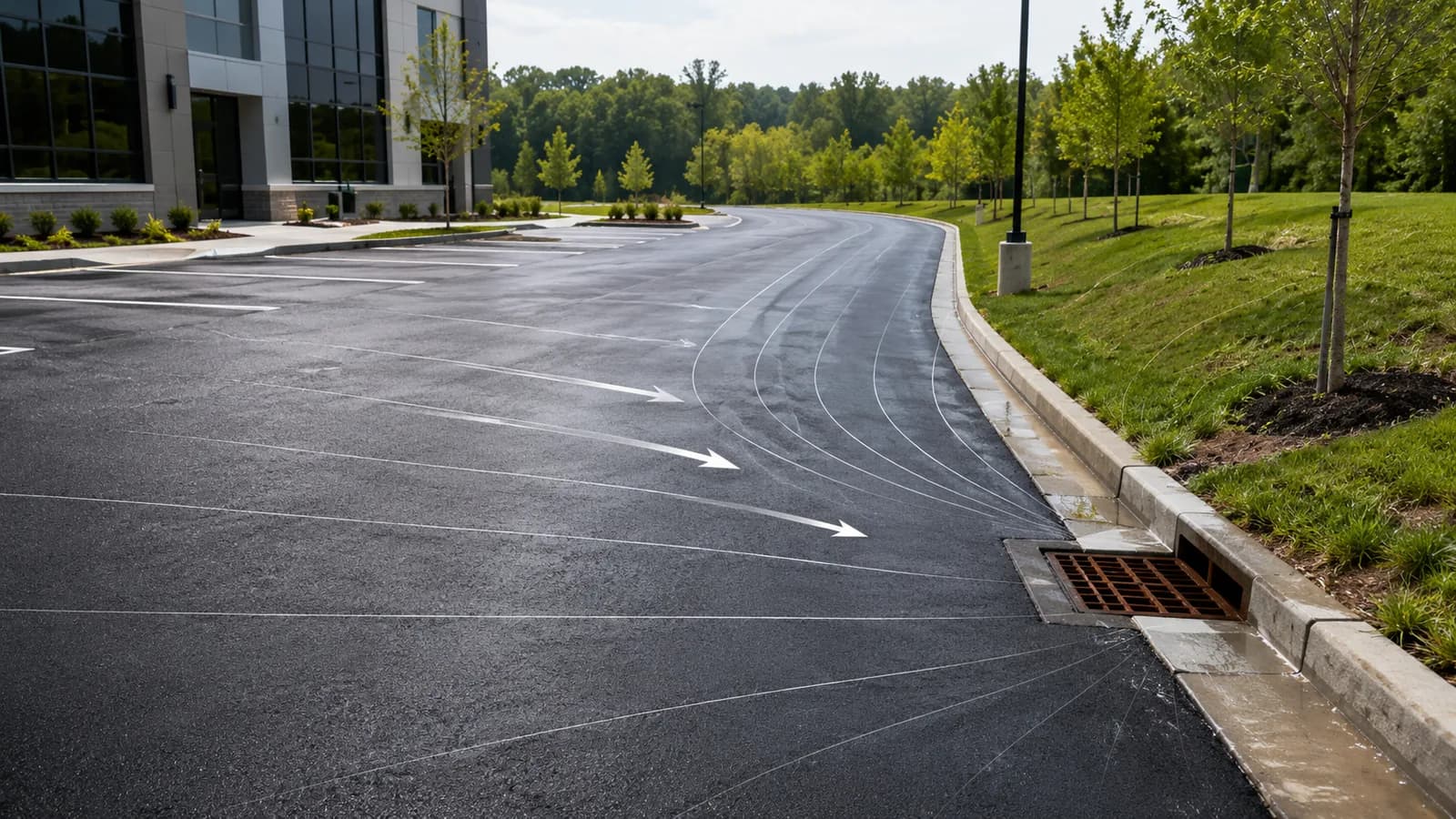
Property-owner guide
Updated July 12, 2026
Grading and Slope Basics for Pavement
Grading and slope basics for pavement: what positive drainage means, why slope matters, common grading problems, and where engineering comes in.
Property-owner guide
Updated July 12, 2026
How to Choose a Drainage and Sitework Contractor
How to choose a drainage and sitework contractor: one who diagnoses the cause of water problems and knows when an engineer is needed.
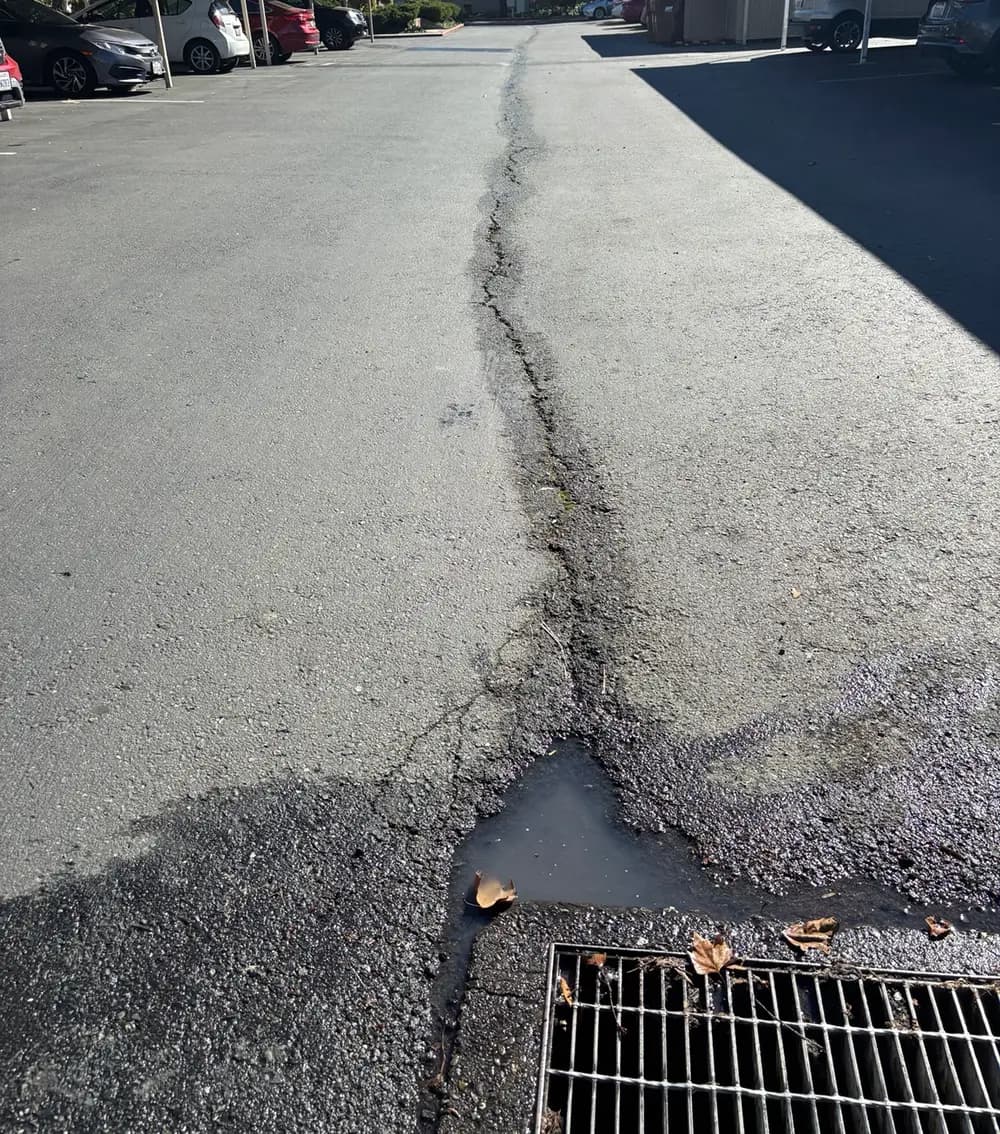
Property-owner guide
Updated July 12, 2026
How Drainage Affects Pavement Life
Why drainage is the biggest factor in how long pavement lasts, how water damages asphalt from the base up, and why fixing it protects every repair.
Property-owner guide
Updated July 6, 2026
How to Choose an Asphalt Paving Contractor
How to choose an asphalt paving contractor: project fit, relevant experience, written scope, references, insurance, and pavement qualifications.
Property-owner guide
Updated July 6, 2026
What Causes Alligator Cracking in Asphalt?
What alligator cracking is, what causes it, whether it can be patched or needs full-depth repair, and why it usually points to a failing base.
Property-owner guide
Updated July 6, 2026
Parking Lot Drainage Problems: What Property Owners Should Know
Common causes of parking lot drainage problems, why they accelerate pavement damage, and what property owners should ask contractors before a fix.
Before you hire: The Pavement Directory does not guarantee contractor performance, pricing, licensing, insurance, or availability. Business information may be submitted by contractors or gathered from public sources and should be independently verified before hiring. Always confirm licensing, insurance, references, scope of work, and written contract terms.
For contractors
Ready to compare West Virginia contractors?
Browse listings by city and service, then use what you have read here to check the scope, the credentials, and the timing before you sign.