
Utah pavement guide
Pavement Conditions in Utah: Regions, Soils, and Common Problems
Utah's valley pavement is built on lake-bed fines that heave and soften — and maintained through winters that keep salt on the surface for months.
- 5 regions
- 5 common problems
- 6 local terms
Jump to section
Regional differences
Pavement Conditions by Region in Utah
Utah does not have one climate or one soil profile, and pavement that performs well in one part of the state can fail early a few hours away. These are the divisions that matter most when scoping paving, repair, or maintenance work.
Wasatch Front valleys
Salt Lake City · West Valley City · Provo · Ogden · Sandy · Lehi
Environmental stress
- Repeated winter freeze-thaw cycling with sustained deicing
- Hot, dry summers with strong solar exposure
- Rapid growth loading older commercial lots and private streets
Subgrade conditions
- Fine-grained Lake Bonneville silts and clays across the valley floors
- Coarser alluvial fan and bench deposits along the mountain front
- Shallow groundwater in low-lying areas near the lake and river corridors
Common distress
- Frost heave producing seasonal bumps in fine-grained ground
- Concrete surface scaling on heavily salted walks and aprons
- Alligator cracking where valley-floor lots drain slowly
What it means for the work
- Subgrade worked wet in spring is a recurring cause of early failure
- Snow storage and meltwater routing belong in the layout, not as an afterthought
- Bench and valley-floor sites on the same corridor can need different sections
Wasatch Back and mountain resort communities
Park City · Heber City · Midway · Kamas
Environmental stress
- Heavy snowfall, deep frost, and months of plowing and abrasive use
- A short construction season at elevation
- Steep grades with concentrated snowmelt runoff
Subgrade conditions
- Rocky colluvium and shallow bedrock on slopes
- Frost-susceptible fines in valley bottoms and meadows
- Saturated ground during spring snowmelt
Common distress
- Severe frost heave and spring break-up
- Plow and abrasive damage to surfaces, edges, and raised features
- Washout where snowmelt concentrates on a grade
What it means for the work
- The construction window is short and books out well in advance
- Raised islands, structures, and curbs should be detailed with plows in mind
- Steep-site drainage frequently costs more than the paving itself
Southern Utah and the St. George area
St. George · Cedar City · Hurricane · Washington · Kanab
Environmental stress
- Very hot summers with high pavement surface temperatures
- Intense monsoon storms delivering flash runoff
- Strong solar exposure accelerating binder aging
Subgrade conditions
- Sandy and gravelly desert soils in much of the region
- Gypsiferous and locally problematic soils in some areas
- Shallow sandstone and rock at variable depth
Common distress
- Rutting and shoving at slow-traffic and turning areas
- Raveling and brittleness from binder oxidation
- Washout and edge undermining after intense storms
What it means for the work
- Mix and binder selection genuinely matter at these surface temperatures
- Flash runoff paths should drive the drainage design, not annual rainfall
- Soil conditions vary enough that testing before design is worth its cost
Uinta Basin and eastern Utah
Vernal · Roosevelt · Price · Duchesne
Environmental stress
- Cold winters with deep frost and large annual temperature range
- Heavy energy-sector truck traffic
- Dry conditions with strong solar exposure
Subgrade conditions
- Silty and clayey basin soils with frost susceptibility
- Locally saline and gypsum-bearing ground
- Shale and mudstone bedrock at shallow depth in places
Common distress
- Thermal cracking from large temperature swings
- Severe rutting and edge break-up on energy-related truck routes
- Spring thaw weakening and potholing
What it means for the work
- Energy traffic is a design load far beyond ordinary commercial use
- Plant access is limited outside the larger towns
- Water for compaction is a real logistical item on remote sites
West desert and Great Salt Lake margins
Tooele · Grantsville · Wendover · Delta
Environmental stress
- Hot, dry summers and cold winters with wide swings
- High wind and blowing dust
- Heavy industrial and distribution traffic along the I-80 corridor
Subgrade conditions
- Saline and alkaline lake-margin soils
- Playa deposits with poor drainage and high fines
- Shallow groundwater in low-lying areas near the lake
Common distress
- Salt-related deterioration at and just below the surface
- Rutting on industrial routes and truck staging areas
- Ponding on flat ground with no viable outlet
What it means for the work
- Saline ground can affect both concrete durability and subgrade behavior
- Flat sites need designed positive drainage rather than minimal slope
- Wind affects placement, curing, and striping more than owners expect
Field conditions
Common Pavement Problems in Utah
Frost heave in lake-bed valley soils
Pavement lifting into bumps and ridges through late winter, mostly settling back by summer, and leaving a crack pattern behind that reappears in the same footprint each year.
Likely causes
- Fine-grained Bonneville sediments forming ice lenses as freezing penetrates
- Water available in the subgrade with no path to drain
- Insufficient depth of clean granular material below the pavement
- Differential frost penetration at transitions between materials
When to get it looked at: A bump that returns in the identical spot every February is a subgrade and drainage problem. Resurfacing gives you a smooth lot that heaves in exactly the same place next winter.
Deicing damage to concrete along the Wasatch Front
Sidewalks, entry aprons, and dumpster pads losing their surface in thin flakes, joints opening, and edges spalling — worst where salted slush collects and refreezes overnight.
Likely causes
- Repeated freezing while the concrete surface is saturated
- Deicing chemicals applied to concrete during its first winter
- Finishing practices that left a weak or overworked surface layer
- Drainage that keeps the surface wet through freeze cycles
When to get it looked at: Scaling with sound concrete beneath is often repairable. Deterioration reaching reinforcement, or creating a change in level on an accessible route, needs attention sooner than a normal maintenance cycle allows.
Sulfate attack on concrete
Concrete that softens, expands, or deteriorates from below rather than from surface wear, on sites where soil or groundwater carries elevated sulfate.
Likely causes
- Sulfate-bearing soils or groundwater in contact with concrete
- A mix not designed for the sulfate exposure present at the site
- Moisture consistently reaching the underside of slabs and footings
- Site conditions assumed rather than tested before design
When to get it looked at: If concrete on your Utah site is deteriorating from below rather than scaling at the surface, ask whether soil sulfate was tested before the mix was specified. It is a known regional consideration, not an exotic one.
Snowmelt and plow damage at elevation
Broken edges, damaged curbs and islands, gouged surfaces, and washed-out areas at mountain properties, appearing as a group each spring rather than gradually through the year.
Likely causes
- Plow blades catching raised features and pavement edges
- Abrasives mechanically wearing the surface through the season
- Concentrated snowmelt running across pavement with no defined path
- Snow stockpiles saturating the ground beneath them for weeks
When to get it looked at: If the same features are damaged every spring, the layout and the snow plan need to change together — marking, detailing, and stockpile locations, not just repairs.
Heat-driven rutting in southern Utah
Wheel-path depressions and pushed-up ridges at stop bars, drive-through lanes, and delivery zones in the St. George area, most visible during the hottest weeks of summer.
Likely causes
- High pavement surface temperatures reducing mix stiffness
- Slow, stopped, or channelized traffic concentrating load
- A mix or binder grade not matched to the site's temperature and loading
Property types
Common Pavement Projects in Utah
Ski resort and mountain hospitality properties
A season of plowing, abrasives, and snowmelt on steep ground, compressed into a construction window of a few weeks between the ski season and the summer season.
Distribution and technology campuses
The I-15 corridor from Ogden through Utah County concentrates trailer traffic on sections often specified before actual loading patterns were known, which shows first at entrances and aprons.
Energy sector facilities
Uinta Basin yards and access areas take loads far beyond ordinary commercial traffic, on remote sites where plant access and water for compaction shape what is feasible.
University and healthcare campuses
Salt Lake and Utah County campuses combine constant occupancy, accessible routes that cannot be interrupted, and heavy winter salt exposure on the walks and aprons that matter most.
Retail and HOA properties in southern Utah
St. George area lots age under solar exposure rather than under traffic, which makes surface protection and crack sealing the main levers in a reserve plan.
Plain English
Pavement Terms You May Encounter in Utah
| Term | What it means on a Utah project |
|---|---|
| Untreated base course (UTBC) | The compacted crushed aggregate layer beneath asphalt, referenced routinely on Utah projects. In frost-susceptible valley soils, its thickness and cleanliness matter more to pavement life than the surface course does. |
| Granular borrow | Imported granular material placed below the base to provide drainage and frost protection. On lake-bed silts, the depth of clean granular material is often the most consequential number on the section detail. |
| Sulfate-resistant cement | Cement types formulated to resist deterioration where soil or groundwater carries elevated sulfate. Whether it is warranted on a Utah site is a soil testing question worth answering before the concrete is specified. |
| Frost depth | How far freezing penetrates the ground in a typical winter. It differs sharply between the St. George area, the Wasatch Front valleys, and the mountain communities, and it should influence base thickness rather than being carried over from another project. |
| Proof rolling | Driving a loaded truck over the prepared subgrade and watching for deflection before base is placed. On fine-grained Utah valley soils it is the most direct way to identify ground that is too wet or too soft to build on. |
| Collapsible soil | Soil that holds an open structure while dry and settles when first wetted. It occurs in parts of Utah and is a reason to keep water away from beneath pavement and to test rather than assume. |
State transportation specifications can provide useful regional terminology and material references, but they do not automatically govern private parking-lot or driveway projects unless incorporated into the contract or required by the applicable jurisdiction.
More definitions are in the pavement glossary.
Before you sign
Questions to Ask a Paving Contractor in Utah
- What DOPL license classification do you hold, and does it cover the work in this proposal?
- Has soil been tested at this site, and did anything in the results affect what you specified?
- How deep is clean granular material going beneath the pavement, and how was that depth chosen?
- Will the subgrade be proof-rolled before base is placed, and can I be there?
- Where will snow be stockpiled next winter, and where does the meltwater from that pile go?
- Is sulfate exposure a consideration for the concrete on this site, and how was the mix selected?
- Which city permits are required at this address, and are they in your scope?
- For our drive-through or delivery lane in southern Utah, would concrete outperform asphalt here?
- What surface and overnight temperatures does your proposed product require, and what is the plan if the window closes?
Utah pavement condition FAQs
Why does the same bump come back in my Salt Lake area lot every winter?
That is frost heave, and it recurs because the cause is below the pavement. Most Wasatch Front valley floors sit on fine-grained sediments left by ancient Lake Bonneville. Those soils hold water, and when freezing penetrates, ice lenses form and lift the pavement above them. In spring they thaw and the surface mostly settles back, leaving cracks behind. Because the mechanism is in the subgrade, resurfacing produces a smooth lot that heaves in the same footprint the following winter. Replacing frost-susceptible material with clean granular material and draining it is the durable answer.
Is road salt damaging my Utah concrete?
Deicing salt does not chemically attack sound, properly air-entrained concrete, but it dramatically increases how often the surface freezes and thaws while saturated, and that is what produces scaling. The most vulnerable concrete is young concrete salted during its first winter, concrete finished in a way that left a weak surface layer, and any area where salted slush pools and refreezes. Keeping drainage moving and avoiding deicers on new concrete through its first season helps more than most owners expect.
Should I be worried about sulfate in the soil at my Utah site?
It is a known regional consideration rather than an exotic one. Where soil or groundwater carries elevated sulfate, concrete that was not designed for that exposure can deteriorate from below rather than simply wearing at the surface. The practical response is testing before the concrete is specified, and using a cement type and mix suited to the exposure that is actually present. If concrete on your site is failing from underneath, asking whether soil sulfate was ever tested is a reasonable first question.
Why does snow removal keep damaging the same features in my lot?
Usually because the layout and the snow plan were never designed together. Plow blades catch raised islands, curb ends, drainage structures, and pavement edges that are invisible under snow, and the same features get hit every season. Abrasives wear the surface through the winter, and stockpiled snow saturates the ground beneath it for weeks. The fix is a combination of marking, detailing those features to survive contact, and agreeing where snow will be pushed and stored before the first storm — not repairing the same curb every May.
Does southern Utah need different pavement than the Wasatch Front?
Yes, because the dominant stress is different. In St. George and the southern corner, the controlling factors are high summer surface temperatures and solar exposure, which push mix and binder selection and make surface protection valuable. Along the Wasatch Front, the controlling factors are freeze-thaw cycling, frost-susceptible lake-bed subgrade, and months of deicing. A section and maintenance plan that works well in one is not the right plan for the other, even though both are in Utah.
Related reading for Utah property owners
Property-owner guide
Updated July 11, 2026
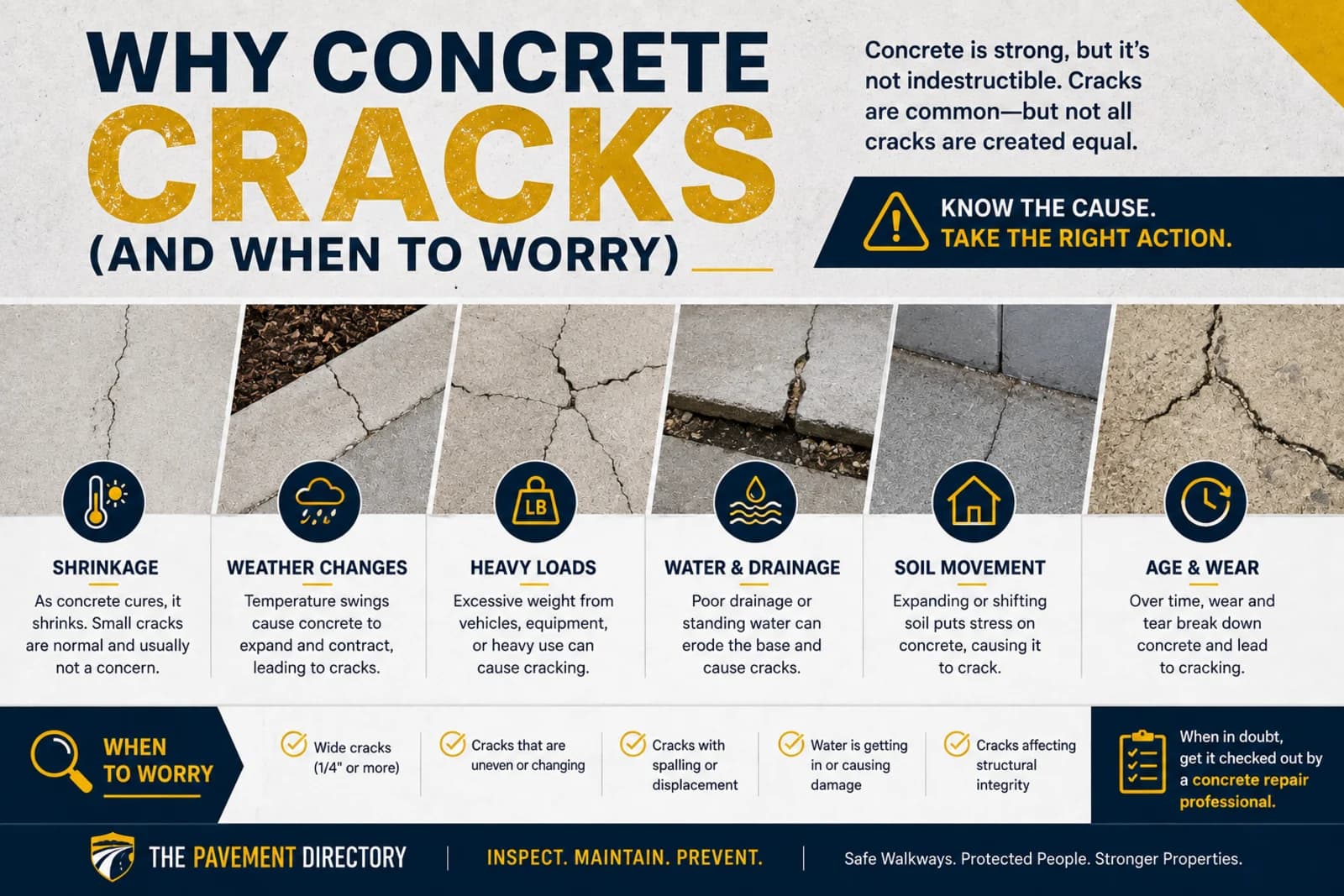
Why Concrete Cracks (and When to Worry)
Why concrete cracks — shrinkage, settlement, freeze-thaw, roots, and loads — the difference between cosmetic and structural, and when to repair.
Property-owner guide
Updated July 11, 2026
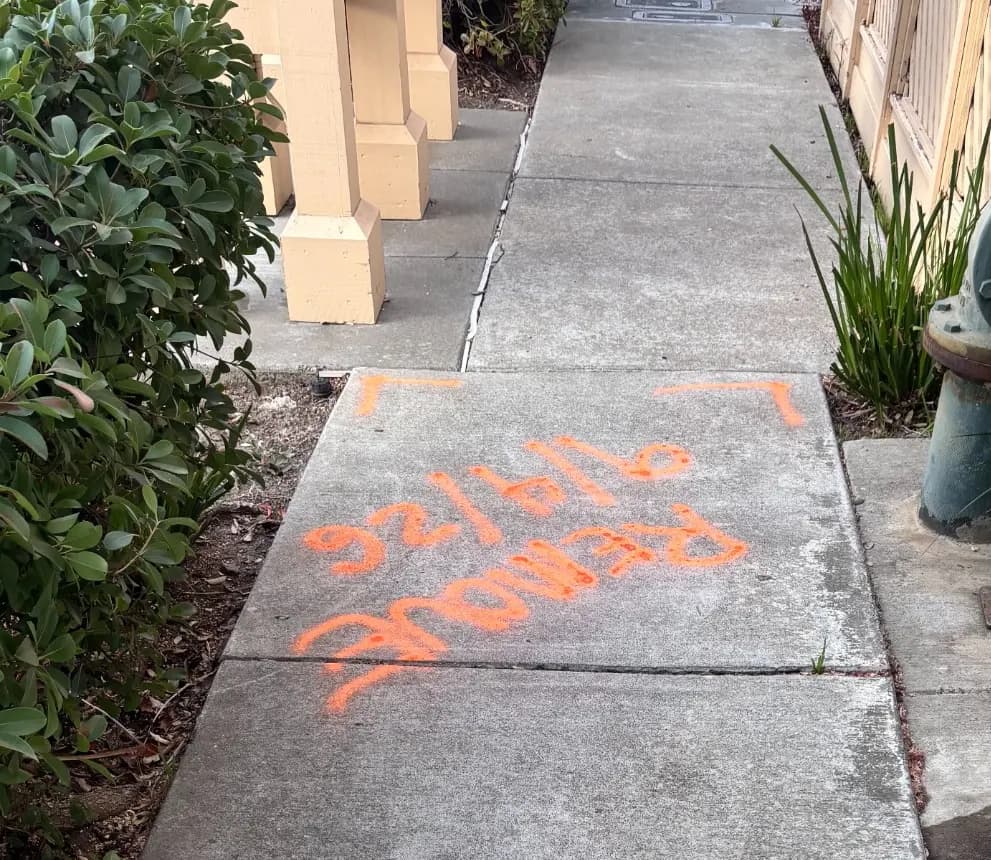
Concrete Repair vs. Replacement: Which Do You Need?
When to repair concrete versus replace it: how grinding, slab lifting, and patching compare to full replacement, and how to decide from the cause.
Property-owner guide
Updated July 11, 2026
When Should You Seal Asphalt Cracks?
When to seal cracks in asphalt — which cracks to seal, the best time of year, why sealing early matters, and how crack sealing fits a maintenance schedule.
Property-owner guide
Updated July 6, 2026
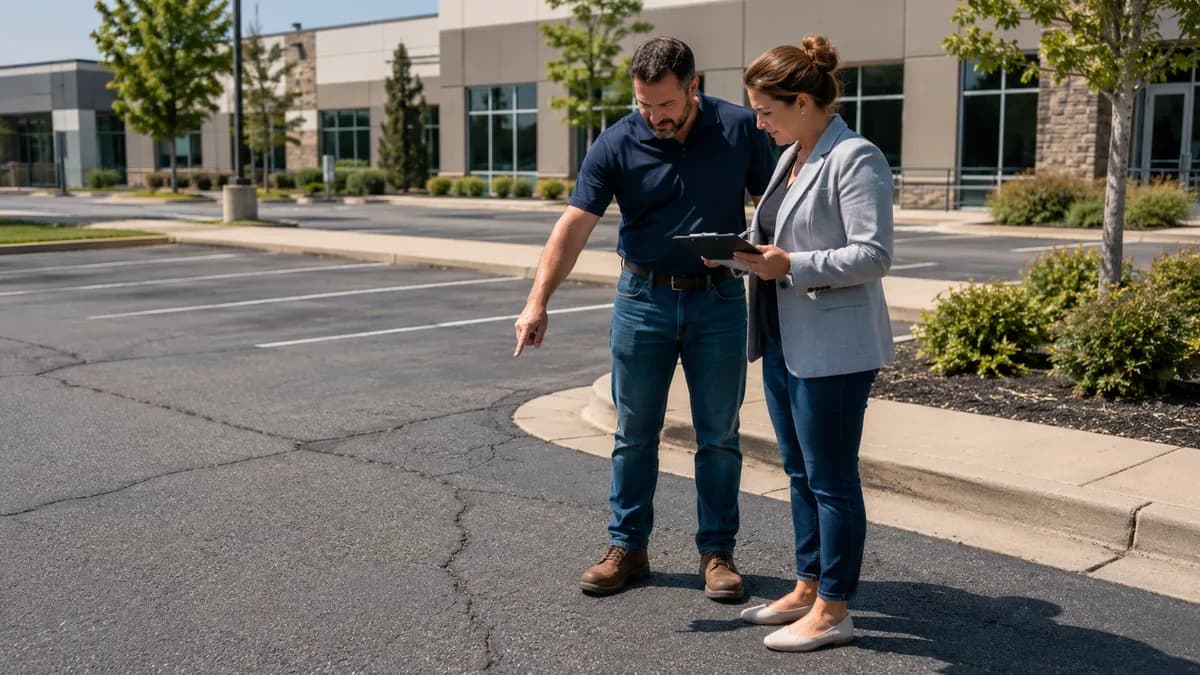
How to Choose an Asphalt Paving Contractor
How to choose an asphalt paving contractor: project fit, relevant experience, written scope, references, insurance, and pavement qualifications.
Property-owner guide
Updated July 6, 2026
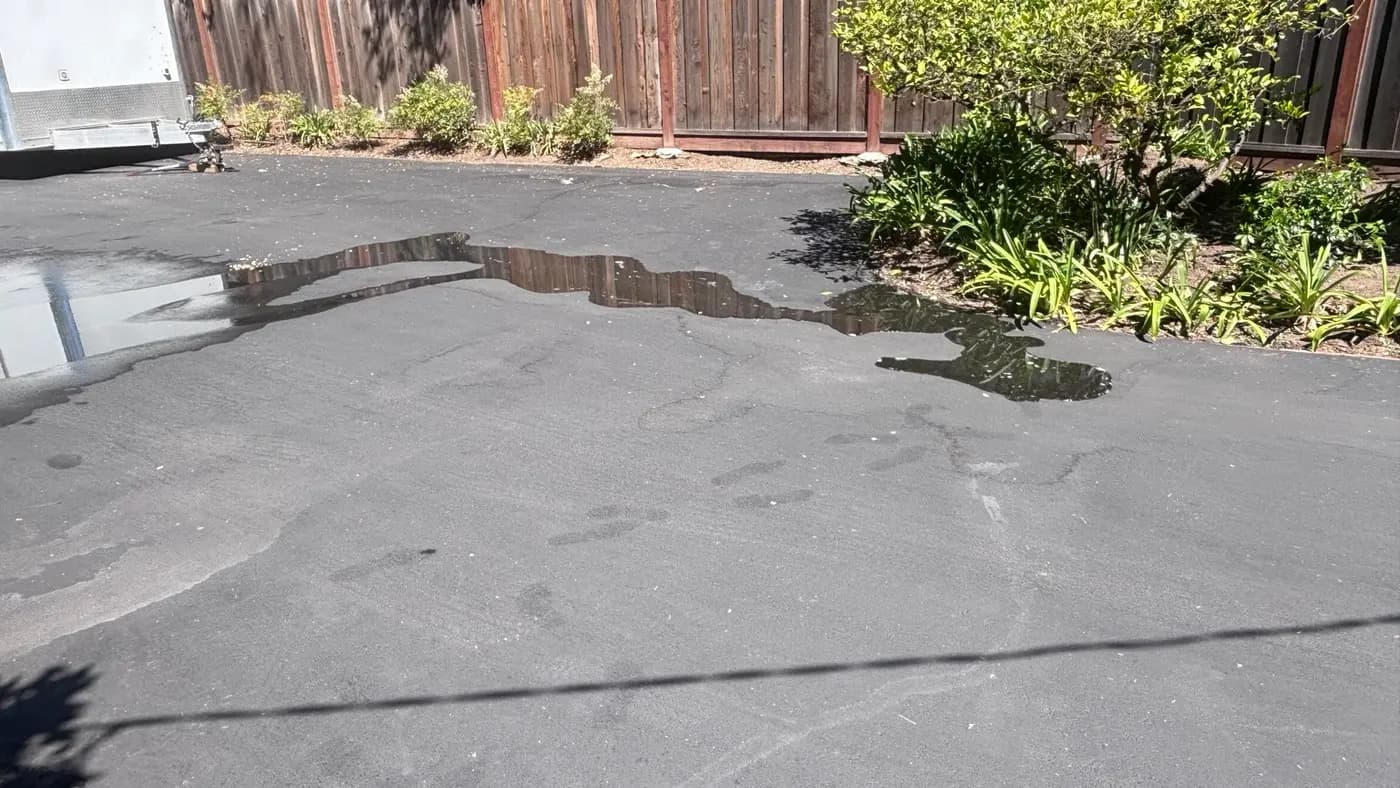
Parking Lot Drainage Problems: What Property Owners Should Know
Common causes of parking lot drainage problems, why they accelerate pavement damage, and what property owners should ask contractors before a fix.

Property-owner guide
Updated July 11, 2026
How to Create a Parking Lot Maintenance Plan
How to build a parking lot maintenance plan: inspecting condition, setting service cycles, prioritizing repairs, and budgeting over multiple years.
Before you hire: The Pavement Directory does not guarantee contractor performance, pricing, licensing, insurance, or availability. Business information may be submitted by contractors or gathered from public sources and should be independently verified before hiring. Always confirm licensing, insurance, references, scope of work, and written contract terms.
For contractors
Ready to compare Utah contractors?
Browse listings by city and service, then use what you have read here to check the scope, the credentials, and the timing before you sign.