
Missouri pavement guide
Pavement Conditions in Missouri: Regions, Soils, and Common Problems
Missouri combines northern freeze-thaw with southern karst, and it hands contractor licensing to cities and counties rather than a state board.
- 5 regions
- 5 common problems
- 6 local terms
Jump to section
Regional differences
Pavement Conditions by Region in Missouri
Missouri does not have one climate or one soil profile, and pavement that performs well in one part of the state can fail early a few hours away. These are the divisions that matter most when scoping paving, repair, or maintenance work.
Central Dissected Till Plains (north Missouri)
Kirksville · Macon · Chillicothe · Hannibal · Moberly
Environmental stress
- The state's coldest winters and deepest frost penetration
- Repeated freeze-thaw cycling through late winter
- Heavy seasonal agricultural truck traffic
Subgrade conditions
- Glacial till with a high clay fraction
- Loess capping over till in western and northern counties
- Poorly drained claypan soils that hold water near the surface
Common distress
- Frost heave producing seasonal bumps that partly recover by summer
- Spring potholing after the subgrade thaws and stays wet
- Edge break-up on rural lots with no curb or shoulder
What it means for the work
- Subsurface drainage matters more than it looks like it should on flat clay ground
- Harvest traffic concentrates load into a few weeks and should inform the section
- The workable season is shorter here than in Springfield or Cape Girardeau
St. Louis metropolitan area
St. Louis · St. Charles · Chesterfield · Florissant · Wentzville
Environmental stress
- Humid summers with high pavement surface temperatures
- Freeze-thaw cycling and sustained winter deicing
- Dense traffic on aging commercial lots
Subgrade conditions
- Loess over limestone bedrock at variable depth
- River-bottom alluvium along the Mississippi and Missouri floodplains
- Sinkhole-prone karst in parts of the surrounding counties
Common distress
- Joint and surface scaling on salted concrete
- Settlement over old utility trenches in long-developed corridors
- Alligator cracking in low-lying lots that drain slowly
What it means for the work
- Municipal licensing and permitting differ between adjacent municipalities here
- Phasing around continuous business operation usually drives the schedule
- Old fill and buried structures are common on redevelopment sites
Kansas City metropolitan area
Kansas City · Independence · Lee's Summit · Liberty · Blue Springs
Environmental stress
- Wide annual temperature range with hard winter freezes
- Intense summer thunderstorms and occasional hail
- Heavy rail-served warehouse and distribution traffic
Subgrade conditions
- Expansive clay soils with meaningful shrink-swell potential
- Shallow limestone and shale in bluff areas
- Deep fill on graded suburban development pads
Common distress
- Long irregular cracks that reopen after repair as the clay moves
- Rutting at distribution centers and truck staging areas
- Concrete panel curling and joint deterioration
What it means for the work
- Subgrade moisture control matters as much as compaction on expansive clay
- Local licensing requirements vary across the metro's many jurisdictions
- Repairs made in a dry August can look wrong after a wet spring
Ozark Plateau
Springfield · Branson · Joplin · Rolla · West Plains
Environmental stress
- Frequent freeze-thaw crossings without long deep freezes
- Heavy rainfall on thin soils over rock
- Concentrated tourism traffic in the Branson corridor
Subgrade conditions
- Shallow limestone and dolomite with irregular rock surface
- Cherty residual clay between rock pinnacles
- Karst features including sinkholes, losing streams, and solution channels
Common distress
- Circular depressions with little cracking around them
- Differential settlement across a rock-to-soil transition
- Erosion at edges on sloped, rocky sites
What it means for the work
- Rock excavation quantity is a frequent source of change orders
- Routing concentrated runoff into a karst area deserves engineering input
- Assume subgrade varies across the site rather than matching one boring
Mississippi Alluvial Plain (the Bootheel)
Sikeston · Kennett · Caruthersville · Poplar Bluff
Environmental stress
- Milder winters than the rest of Missouri but frequent saturation
- Long, hot, humid summers
- Very heavy agricultural and grain truck traffic in season
Subgrade conditions
- Deep, soft alluvial silts and clays with limited bearing capacity
- High water table and slow subsurface drainage
- Almost no natural fall on many parcels
Common distress
- Widespread settlement rather than isolated failures
- Base saturation producing interconnected cracking
- Ponding over broad flat areas with no outlet
What it means for the work
- Positive drainage has to be designed rather than assumed on flat ground
- Subgrade improvement is often the deciding cost item, not the asphalt
- Grain season loading should be part of the design conversation
Field conditions
Common Pavement Problems in Missouri
Freeze-thaw pothole formation
Potholes opening rapidly in late winter and early spring, clustered along crack lines and joints that seemed minor the previous autumn.
Likely causes
- Water entering unsealed cracks and freezing repeatedly
- Frost-susceptible silt and clay subgrade holding moisture
- Traffic loading applied while the base is thaw-weakened
- Snow and ice operations working the surface mechanically
When to get it looked at: If potholes reappear in the same locations each spring, the problem is drainage or base condition rather than the winter itself.
Expansive clay movement in western Missouri
Long, wandering cracks that follow no traffic pattern, open wider through a dry late summer, and partly close again after a wet spring. Curb lines separate from pavement edges.
Likely causes
- Clay soils with meaningful shrink-swell potential under the pavement
- Moisture changes from downspouts, irrigation, or leaking lines
- Mature trees drawing moisture unevenly from beneath the lot
- Fill placed without moisture conditioning during original construction
When to get it looked at: A crack that has been patched twice and reopened twice is telling you about the soil, not the patch. Flexible crack treatment plus moisture control usually outperforms another rigid repair.
Ozark sinkhole settlement
A rounded depression that keeps deepening in an otherwise sound lot, sometimes with a visible throat opening after a heavy rain.
Likely causes
- Soil migrating into solution channels in the limestone or dolomite below
- Concentrated runoff discharged onto a single point over karst ground
- A leaking utility or storm line eroding fines into an existing void
When to get it looked at: Investigate below the pavement before filling a returning depression a second time. Added asphalt is added weight over a void that has not stopped growing.
Deicing damage to concrete surfaces
Concrete aprons, sidewalks, and dumpster pads losing their surface in flakes and small patches, with joints widening and edges crumbling — usually worst where salt-laden slush collects.
Likely causes
- Repeated saturation and freezing at the concrete surface
- Deicing chemicals applied on concrete before it had fully cured
- Finishing practices that left a weak or overworked surface
- Poor drainage keeping the surface wet through freeze cycles
When to get it looked at: Surface scaling with sound concrete underneath may be repairable; if the deterioration reaches reinforcement or the panel rocks under load, replacement is usually the honest answer.
Soft subgrade on river-bottom and Bootheel sites
Broad, gradual settlement across large portions of a lot rather than localized failures, often with pavement that feels soft or flexes under a slow truck.
Likely causes
- Deep soft alluvial soils with limited bearing capacity
- High groundwater keeping the subgrade near saturation
- Flat grading with no viable outlet for surface water
- Heavy seasonal loading applied to a light-duty section
Property types
Common Pavement Projects in Missouri
Warehouse and rail-served distribution facilities
Kansas City's intermodal corridor and the I-70 warehouse belt concentrate trailer and container traffic where aprons and drop lots fail years before the parking field shows any wear.
Agricultural and grain handling facilities
North Missouri and Bootheel elevators absorb a year's worth of heavy truck traffic in a few weeks of harvest, which is a very different design case from steady year-round loading.
Hospital and senior living campuses
Accessible routes, ambulance access, and resident drop-off cannot be closed, so phasing, temporary accessible parking, and surface transitions govern the schedule as much as pavement condition does.
Tourism and entertainment properties
Branson-area lots see extremely concentrated seasonal loading and narrow shoulder-season windows, which pushes major reconstruction into a few weeks a year.
Municipal and school district properties
Public work in Missouri brings bonding, prequalification, and potentially prevailing wage requirements, and bus loops carry far heavier loads than the adjacent parking fields.
Plain English
Pavement Terms You May Encounter in Missouri
| Term | What it means on a Missouri project |
|---|---|
| Type 5 aggregate base | A crushed stone base gradation referenced widely by Missouri suppliers and contractors. Proposals often name the base by type and compacted thickness; that layer usually does more for pavement life than the surface course above it. |
| Bituminous pavement | The term Missouri specifications and many local contractors use for what most owners call asphalt. Seeing it on a proposal is normal and does not imply anything unusual about the material. |
| Subgrade compaction and moisture conditioning | Bringing the soil beneath the pavement to a specified density at a controlled moisture content before anything is placed on it. On Missouri's clay soils this step, done properly, prevents more cracking than any surface decision. |
| Frost depth | How far freezing penetrates into the ground in a typical winter. It varies significantly between north Missouri and the Bootheel, and it influences base thickness, footing depth for site structures, and where frost heave shows up. |
| Cold milling | Grinding off a controlled thickness of existing asphalt before resurfacing, so the new surface matches curb, door, and drainage elevations. Skipping it on a lot that has already been overlaid once is a common source of new ponding. |
| Sinkhole throat | The opening through which soil is draining into a karst void below. Filling the surface depression without addressing the throat and the water reaching it generally means the depression comes back. |
State transportation specifications can provide useful regional terminology and material references, but they do not automatically govern private parking-lot or driveway projects unless incorporated into the contract or required by the applicable jurisdiction.
More definitions are in the pavement glossary.
Before you sign
Questions to Ask a Paving Contractor in Missouri
- Which Missouri city or county licenses contractors for work at this address, and do you hold that license?
- What is the exact legal entity name on this proposal, and does it match your insurance certificate?
- How will the subgrade be prepared and moisture-conditioned before base goes down?
- Will you mill before overlaying, and how will you keep the new surface from raising grade at doors and curbs?
- Is this scope going to be treated as maintenance or as redevelopment by the reviewing agency, and does that trigger detention requirements?
- For the depression that keeps returning, is there any chance this site sits over karst?
- How is the heavy-truck area being detailed differently from the car parking field?
- What are your surface and night temperature requirements for the product you have proposed?
- Can you provide references for three comparable projects in this metro that are at least three years old?
Missouri pavement condition FAQs
Why do Missouri potholes appear so suddenly in late winter?
Because the damage has been accumulating invisibly. Water gets into a crack, freezes and expands, widens the crack slightly, and then the cycle repeats through dozens of freezing crossings. Meanwhile the subgrade thaws from the top down and traps moisture in the base. Once the base is saturated and the pavement above it is already fractured, a few days of traffic turns a crack into a hole. The failure looks sudden; the process took months.
What causes sinkhole-shaped depressions in Ozark parking lots?
Much of the Ozark Plateau is karst — limestone and dolomite that groundwater has dissolved into channels and voids. Soil above those channels can wash downward, and the pavement settles into the space. The distinguishing sign is a rounded depression with relatively little cracking around its edges, unlike base failure, which cracks in an interconnected pattern. Because the void below can continue enlarging, filling the dip with asphalt adds weight without addressing the cause.
Why is my Kansas City lot cracking in wandering lines that keep reopening?
That pattern usually points to soil movement rather than traffic. Clay soils across western Missouri shrink as they dry and swell as they take on water, and the seasonal difference can be enough to crack pavement from below. Cracks that follow no wheel path, widen through a dry late summer, and narrow again in spring are the signature. The productive responses are controlling where water enters the soil and using flexible crack treatments, not repeatedly placing rigid patches over ground that keeps moving.
Is road salt damaging the concrete at my Missouri property?
Deicing salt does not chemically attack sound, properly air-entrained concrete, but it makes the surface freeze and thaw far more often while saturated, and that is what causes scaling. The concrete most at risk is young concrete that was salted its first winter, concrete finished in a way that left a weak surface layer, and anywhere slush sits and refreezes. Keeping drainage moving and holding off on deicers over the first winter of new concrete both help more than most owners expect.
Why does my Bootheel property settle across whole areas instead of in spots?
Sites in the Mississippi Alluvial Plain sit on deep, soft, saturated silts and clays with limited bearing capacity, and there is often no natural fall to drain the surface. That combination produces broad, gradual settlement rather than the localized failures common on firmer ground. The controlling decisions there are subgrade improvement and designed positive drainage. Adding asphalt thickness over ground that cannot support it is an expensive way to reach the same place again.
Do I need an engineer to rebuild a parking lot in Missouri?
It depends on what the reviewing jurisdiction considers the work to be. Repairing and resurfacing in place is often treated as maintenance. Changing the footprint, the grading, or the amount of impervious surface can be treated as redevelopment, which can pull in detention, water quality, and stormwater plan requirements that need a design professional. That determination is worth getting early from the city or county, because it changes both the budget and the schedule substantially.
Related reading for Missouri property owners
Property-owner guide
Updated July 6, 2026
How to Choose an Asphalt Paving Contractor
How to choose an asphalt paving contractor: project fit, relevant experience, written scope, references, insurance, and pavement qualifications.
Property-owner guide
Updated July 11, 2026
When Should You Seal Asphalt Cracks?
When to seal cracks in asphalt — which cracks to seal, the best time of year, why sealing early matters, and how crack sealing fits a maintenance schedule.
Property-owner guide
Updated July 11, 2026
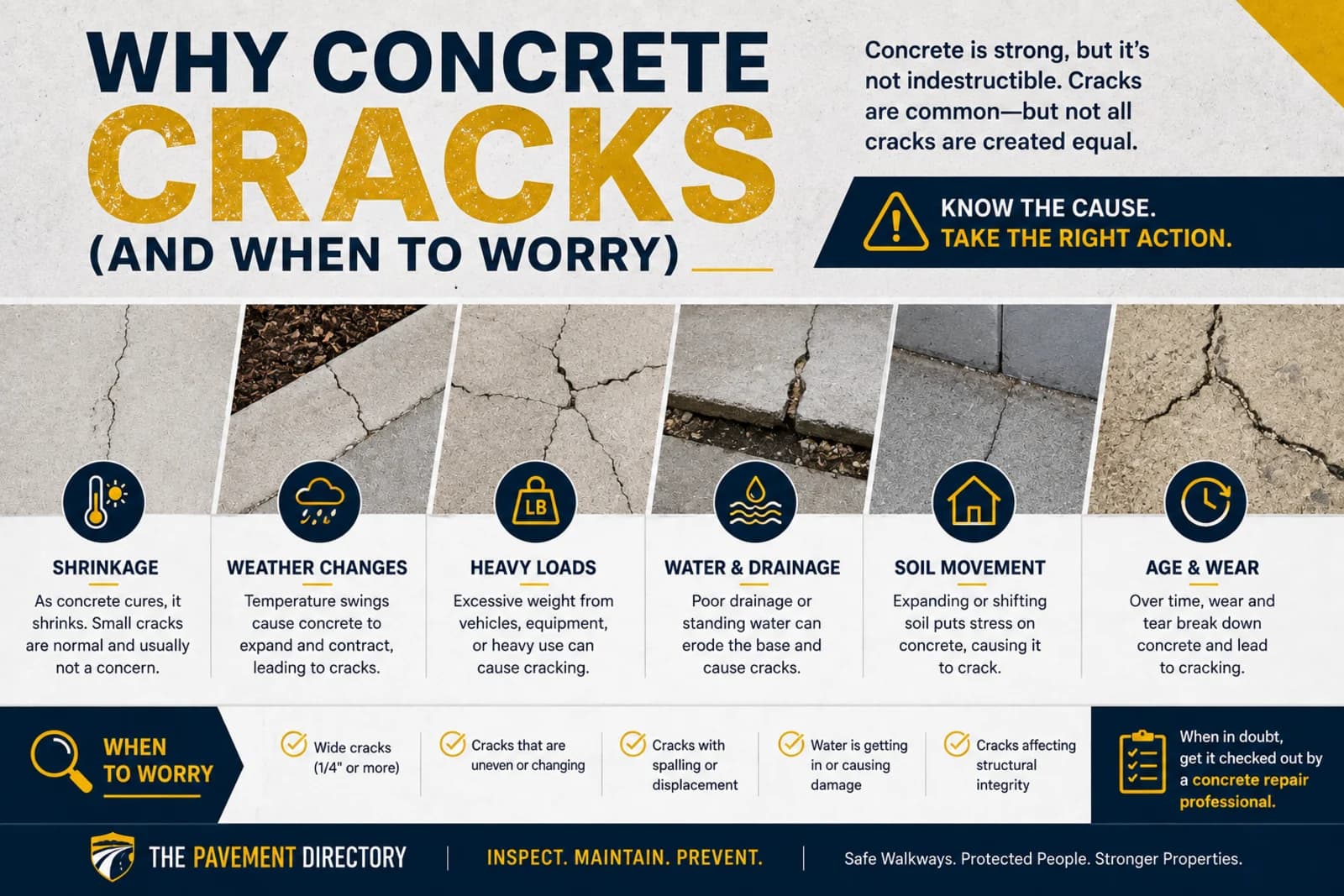
Why Concrete Cracks (and When to Worry)
Why concrete cracks — shrinkage, settlement, freeze-thaw, roots, and loads — the difference between cosmetic and structural, and when to repair.
Property-owner guide
Updated July 6, 2026
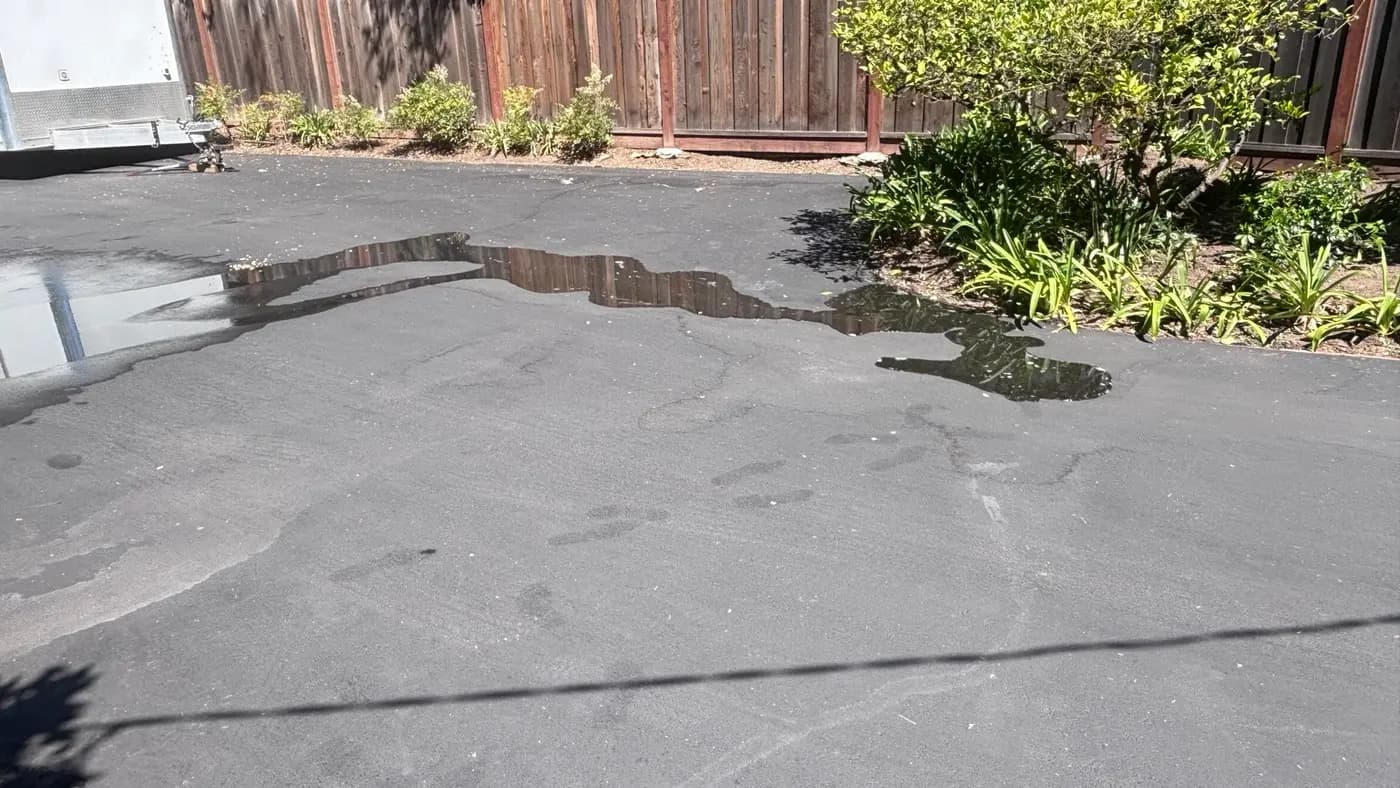
Parking Lot Drainage Problems: What Property Owners Should Know
Common causes of parking lot drainage problems, why they accelerate pavement damage, and what property owners should ask contractors before a fix.
Property-owner guide
Updated August 30, 2026
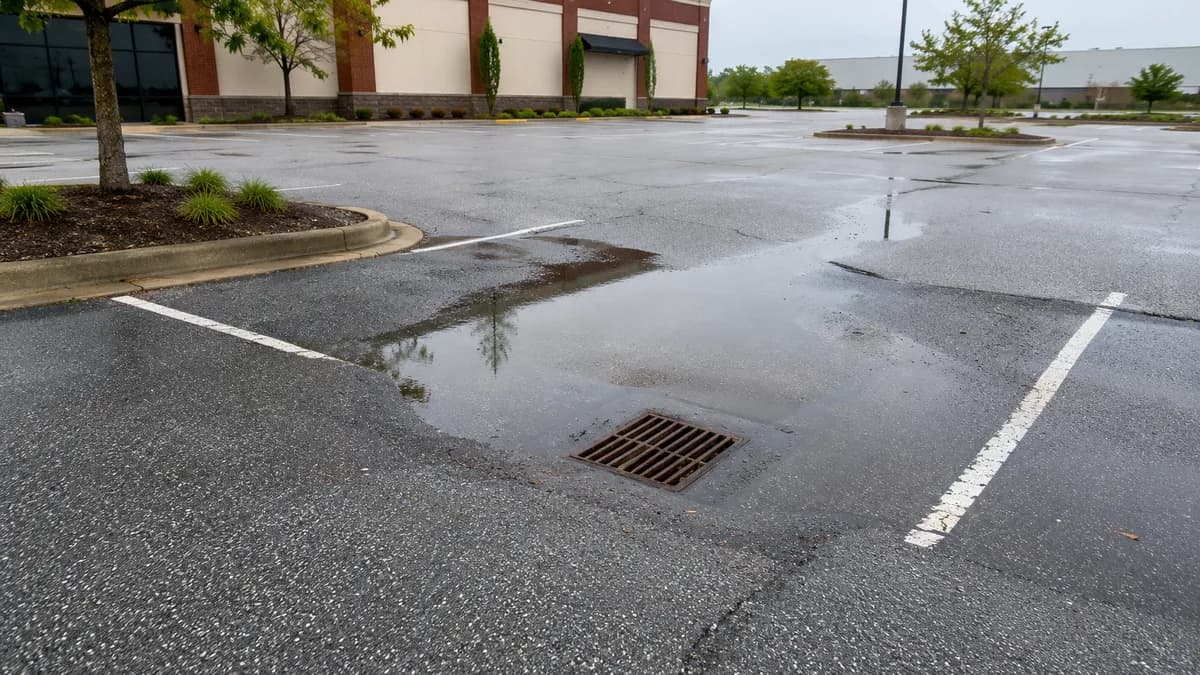
Commercial Parking Lot Maintenance Guide
How to inspect, preserve, repair, and budget for a commercial parking lot: lifecycle stages, treatments, drainage, ADA, scoping, and multi-year plans.
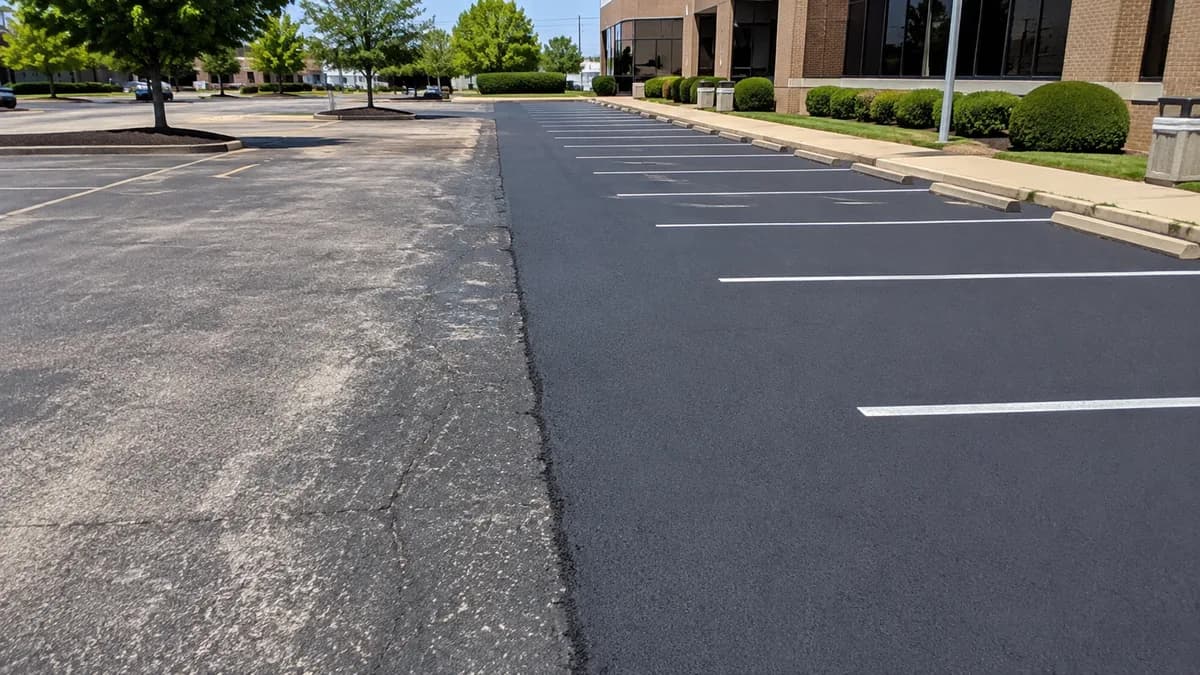
Property-owner guide
Updated July 6, 2026
Asphalt Paving vs Asphalt Overlay
Compare asphalt paving vs asphalt overlay. Learn when overlay works, when it fails, and what property owners should check before approving pavement resurfacing.
Before you hire: The Pavement Directory does not guarantee contractor performance, pricing, licensing, insurance, or availability. Business information may be submitted by contractors or gathered from public sources and should be independently verified before hiring. Always confirm licensing, insurance, references, scope of work, and written contract terms.
For contractors
Ready to compare Missouri contractors?
Browse listings by city and service, then use what you have read here to check the scope, the credentials, and the timing before you sign.