
Indiana pavement guide
Pavement Conditions in Indiana: Regions, Soils, and Common Problems
Indiana pavement usually fails for one of two reasons: truck loading it was not designed for, or water that clay till will not let drain.
- 4 regions
- 5 common problems
- 6 local terms
Jump to section
Regional differences
Pavement Conditions by Region in Indiana
Indiana does not have one climate or one soil profile, and pavement that performs well in one part of the state can fail early a few hours away. These are the divisions that matter most when scoping paving, repair, or maintenance work.
Northern Moraine and Lake region
Gary · South Bend · Elkhart · Michigan City · Valparaiso
Environmental stress
- Lake-effect snow and the state's heaviest winter accumulations
- Frequent freeze-thaw cycles and sustained deicing
- Very heavy steel, rail, and freight traffic in the Calumet region
Subgrade conditions
- Sandy and gravelly glacial outwash with good drainage in places
- Dune sand along the lakeshore with poor lateral support
- Poorly drained till and old wetland margins in interdunal areas
Common distress
- Severe spring potholing after repeated freeze cycles
- Rutting and shoving at industrial entrances and truck routes
- Edge break-up where sandy subgrade offers no confinement
What it means for the work
- Snow storage location and meltwater routing belong in the site layout
- Industrial loading here justifies a different section at entrances than in the parking field
- The working season closes earlier here than in southern Indiana
Tipton Till Plain (central Indiana)
Indianapolis · Carmel · Fishers · Lafayette · Muncie · Kokomo
Environmental stress
- Substantial freeze-thaw cycling through winter
- Intense summer thunderstorms on flat ground with limited fall
- Heavy distribution and logistics traffic on the interstate ring
Subgrade conditions
- Clay-rich glacial till with poor internal drainage
- Very flat terrain with little natural slope to an outlet
- Historic agricultural drainage tile beneath many developed sites
Common distress
- Alligator cracking concentrated where water stands longest
- Rutting at dock aprons, trailer parking, and drive-through lanes
- Settlement where old drainage tile has collapsed beneath pavement
What it means for the work
- On flat clay, positive drainage has to be designed rather than assumed
- Ask whether existing field tile was located before grading is changed
- Subgrade worked wet in spring is a recurring source of early failure
Southern Hills and Lowlands
Bloomington · Bedford · Columbus · Terre Haute · Vincennes
Environmental stress
- Freeze-thaw crossings without prolonged deep freeze
- Heavy rainfall on thin soils over limestone
- Rolling terrain concentrating runoff onto lower sites
Subgrade conditions
- Shallow limestone with an irregular rock surface
- Karst features including sinkholes and solution channels
- Residual clay filling voids between rock pinnacles
Common distress
- Circular depressions with little cracking radiating from them
- Differential settlement across rock-to-soil transitions
- Erosion at pavement edges on sloped sites
What it means for the work
- Rock excavation quantity is a common source of change orders here
- Directing concentrated runoff into karst ground warrants engineering input
- Proof-rolling catches soft pockets between rock pinnacles before paving
Ohio River Valley and southeastern Indiana
Evansville · New Albany · Jeffersonville · Madison · Lawrenceburg
Environmental stress
- The state's mildest winters but frequent wet freeze-thaw
- Hot, humid summers with high pavement surface temperatures
- River flooding and backwater on low-lying parcels
Subgrade conditions
- Alluvial silts and clays on river terraces and bottoms
- Loess capping on the bluffs above the valley
- High water table on floodplain sites
Common distress
- Broad settlement on soft alluvial ground
- Base saturation and interconnected cracking in low areas
- Slope-related cracking on bluff-edge parcels
What it means for the work
- Floodplain status can change what is permissible and how it must be built
- Silt and loess subgrade is easy to damage if worked wet
- The working season runs longer here than in the northern counties
Field conditions
Common Pavement Problems in Indiana
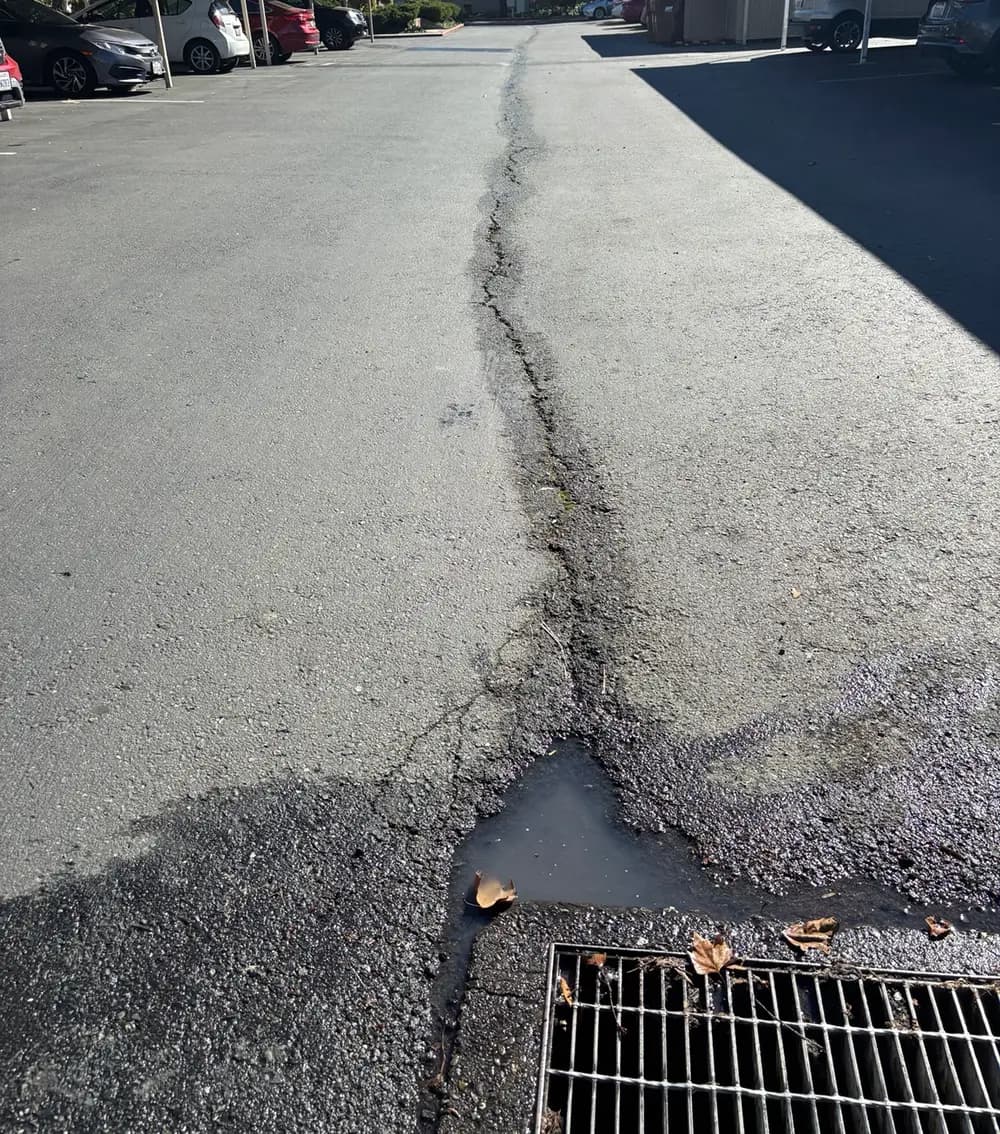
Standing water on flat till-plain lots
Broad, shallow puddles that persist for a day or more after rain, usually in the same locations, followed within a season or two by interconnected cracking in exactly those places.
Likely causes
- Very flat original grading with no clear fall to an outlet
- Clay till that will not let water move down through the subgrade
- Inlets set too high, silted in, or too few for the drainage area
- Accumulated overlays that erased the original slope
When to get it looked at: Photograph the lot during a storm and again an hour after it stops. Where water lingers is where the base is being softened, and that map should drive the repair scope more than the crack map does.
Freight loading damage at entrances and aprons
Rutting, shoving, and cracking concentrated in the first stretch inside a driveway, at dock aprons, and in trailer parking, while the adjacent car lot stays in good condition.
Likely causes
- Axle loads well beyond what the section was designed to carry
- Trailer landing gear point-loading asphalt in drop lots
- Slow and stationary loading during the hottest summer weeks
- Entrance aprons built to the same section as the parking field
When to get it looked at: Damage that stops where truck movement stops is a section question. Ask whether concrete is warranted at aprons and landing areas rather than a thicker asphalt patch.
Karst depressions in southern Indiana
A rounded low spot that keeps deepening after each repair, often with little or no cracking around its perimeter, on limestone terrain around Bloomington, Bedford, and the surrounding counties.
Likely causes
- Soil migrating downward into solution channels in the limestone
- Concentrated runoff discharged onto one point over karst ground
- A leaking storm or utility line washing fines into an existing void
When to get it looked at: Investigate below the pavement before filling a returning depression a second time. More asphalt is more weight over a void that has not stopped enlarging.
Winter freeze-thaw and deicing damage
Potholes opening along crack lines in late winter, together with concrete walks and aprons losing their surface in thin flakes where salted slush collects.
Likely causes
- Water entering unsealed cracks and freezing repeatedly
- Frost-susceptible fines in the subgrade holding moisture
- Deicing chemicals keeping the surface wet through freeze cycles
- Traffic applied while the base is thaw-weakened
When to get it looked at: If potholes reappear in the same locations every March, drainage or base condition is the cause rather than the winter.
Settlement over collapsed agricultural tile
A narrow linear depression running across a lot in a straight line, sometimes with cracking along both sides, on land that was farmed before it was developed.
Likely causes
- Old clay or concrete field tile collapsing beneath the pavement
- Tile lines never located or abandoned properly during site development
- Water moving along an abandoned line and carrying fines with it
When to get it looked at: A dead-straight depression across a lot on former farmland is almost always something buried. Locating it before repaving is cheaper than repaving twice.
Property types
Common Pavement Projects in Indiana
Distribution and logistics facilities
Indianapolis-area and I-65/I-70 corridor warehouses concentrate trailer traffic where aprons and drop lots fail years before the parking field does, which argues for different sections in different zones.
Steel, heavy industry, and rail-served sites
Calumet region facilities apply loads and thermal exposure that ordinary commercial sections cannot take, and repairs there have to work around continuous operations.
University and college campuses
Bloomington, West Lafayette, and Notre Dame area campuses combine event-day surges, accessible routes that must stay open, and a construction window squeezed into the summer break.
Grain elevators and agricultural facilities
Rural Indiana facilities take a year of heavy loading in a few harvest weeks, and the surrounding ground is often the same clay till that drains poorly under the lot.
Automotive and RV manufacturing plants
Northern Indiana plant yards move components and finished units on schedules where an unplanned pavement failure costs far more than the repair, which raises the value of planned maintenance.
Plain English
Pavement Terms You May Encounter in Indiana
| Term | What it means on a Indiana project |
|---|---|
| Compacted aggregate No. 53 | A dense-graded crushed stone base gradation referenced routinely on Indiana projects. Proposals typically name the aggregate and its compacted thickness; that layer, and whether it can drain, does more for pavement life than the surface course. |
| Hot mix asphalt (HMA) surface and intermediate courses | Indiana specifications distinguish the wearing surface from the intermediate layer below it. A proposal that names only a total thickness is worth clarifying, because how the thickness is split between courses matters. |
| Proof rolling | Driving a loaded truck over the prepared subgrade and watching for deflection before base and asphalt go down. On Indiana's clay till it is the cheapest way to find soft areas while they are still fixable. |
| Undercut and stone backfill | Removing subgrade found to be unsuitable during construction and replacing it with compacted stone. It is common on wet clay sites and should be priced as a unit item, with a clear rule for who decides it is needed. |
| Regulated drain | A drain — often a tile line or ditch — under the jurisdiction of a county drainage board. Work that alters or discharges to one can require county approval separate from any stormwater permit. |
| Full-depth reclamation | Pulverizing the existing asphalt together with the base, reshaping or treating the blend, and paving over it. It appears on larger Indiana lots and private drives where the base has failed and hauling everything off is impractical. |
State transportation specifications can provide useful regional terminology and material references, but they do not automatically govern private parking-lot or driveway projects unless incorporated into the contract or required by the applicable jurisdiction.
More definitions are in the pavement glossary.
Before you sign
Questions to Ask a Paving Contractor in Indiana
- Does the city or county at this address require contractor registration or a permit for this work?
- Where does water leave this lot today, and does anything in your scope change that?
- Was this site farmland before it was developed, and has anyone checked for old field tile beneath the pavement?
- Will the subgrade be proof-rolled before base is placed, and can I be there when it is?
- If you find soft subgrade, how is undercut measured and priced, and who decides it is necessary?
- Is the truck apron or trailer area getting a different section than the car parking, and why?
- Will you mill before overlaying, and how will inlet rims be adjusted to the new surface?
- For a lot in southern Indiana, could this depression be a karst feature rather than a base failure?
- What surface and overnight temperatures does the product you have proposed require?
Indiana pavement condition FAQs
Why does water stand on my central Indiana parking lot for a full day after rain?
Two things usually combine. The till plain is extremely flat, so the original design had very little slope to work with, and the clay-rich till underneath will not let water move downward. When you add accumulated overlays that have eaten into the original grade, or inlets that have silted in, water has nowhere to go. Standing water is not just a nuisance — it saturates the base and is generally the reason those same areas crack first. Correcting grade and outlet capacity is the durable fix.
What is causing the straight-line dip across my Indiana lot?
On land that was farmed before it was developed, a dead-straight depression usually means a collapsed agricultural drain tile beneath the pavement. Old clay or concrete tile lines were often left in place during development, and when one fails, the soil above migrates into it and the pavement follows. Water moving along an abandoned line carries fines with it and makes the problem worse. Locating the line and dealing with it properly costs less than repaving over it and doing the whole thing again.
Why do the truck areas at my Indiana warehouse fail before the parking lot does?
Because they are carrying a completely different load. Loaded trailers impose axle weights far beyond what a car parking section is built for, and trailer landing gear concentrates a very large load onto a couple of small pads. That happens while the trailer sits stationary, often through the hottest weeks of an Indiana summer, when asphalt is least able to resist it. Damage that stops abruptly where truck movement stops is a section problem, and the answer usually involves a heavier section or concrete in those specific areas.
Is crack sealing worth the cost in Indiana?
In this climate it is one of the higher-return things an owner can do. Indiana crosses freezing repeatedly through the winter, and every crossing pushes water into an open crack, expands it, and widens the crack a little further. Left alone, that produces the late-winter pothole crop along crack lines that looked minor in October. Sealing before freeze-up interrupts the mechanism. It does not repair a base that has already failed, so it is worth having someone distinguish between the two before the work is scoped.
Are sinkholes really a concern for parking lots in southern Indiana?
In the limestone country around Bloomington, Bedford, and neighboring counties, yes. Groundwater has dissolved channels and voids into the rock, soil above them can migrate downward, and pavement settles into the space left behind. The distinguishing sign is a rounded depression with little cracking radiating from it, unlike base failure, which cracks in an interconnected pattern first. A depression that returns after one repair should be investigated below the surface rather than filled again.
Should I overlay my Indiana lot or rebuild it?
It depends on what is failing. An overlay adds surface and can restore ride and appearance, but it does nothing for a base that has lost support, and cracks that are still moving will work their way up through it within a winter or two. If large areas flex under a slow-moving vehicle, if water stands in the same places every rain, or if the crack pattern is interconnected rather than isolated, an overlay is likely to be a short-lived purchase. Ask for the reasoning behind whichever one is proposed.
Related reading for Indiana property owners
Property-owner guide
Updated July 6, 2026
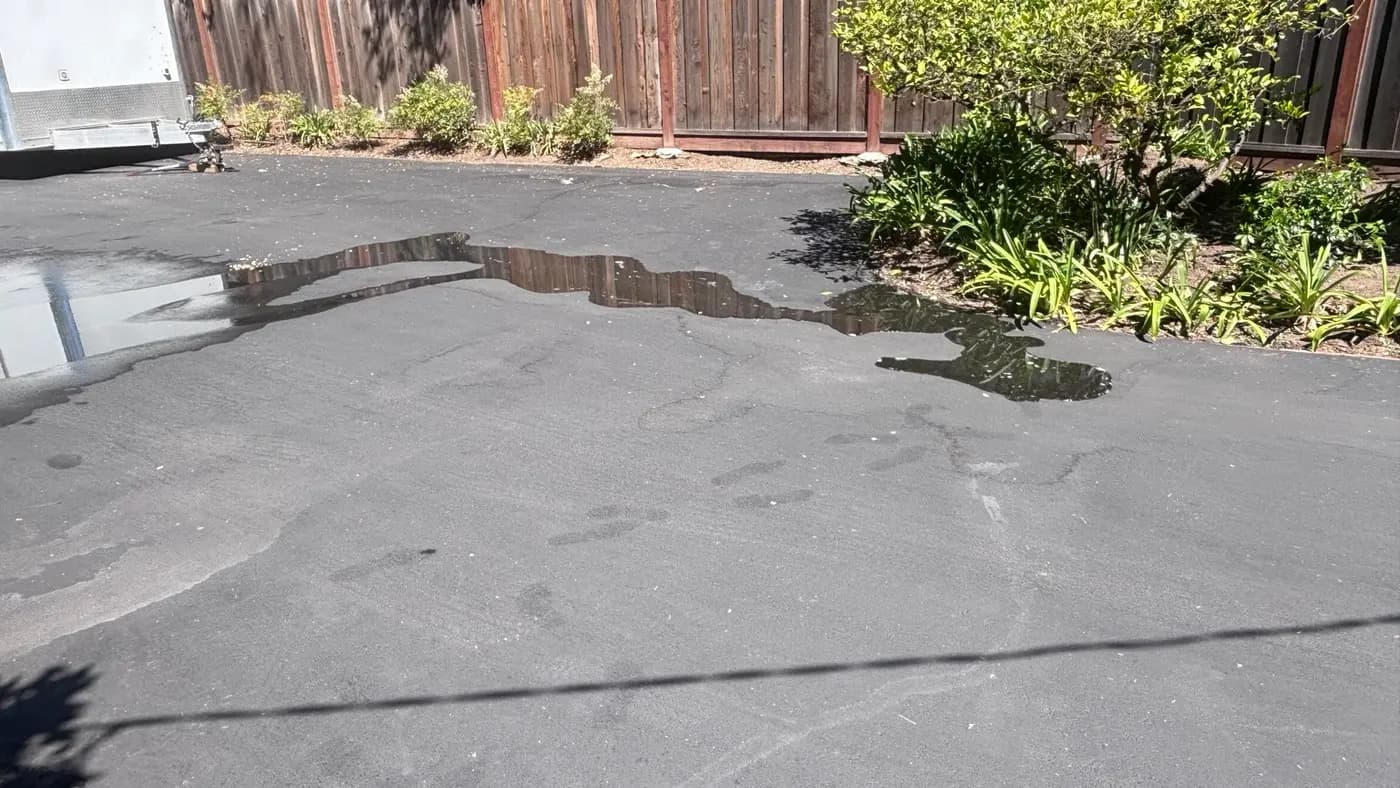
Parking Lot Drainage Problems: What Property Owners Should Know
Common causes of parking lot drainage problems, why they accelerate pavement damage, and what property owners should ask contractors before a fix.
Property-owner guide
Updated July 6, 2026
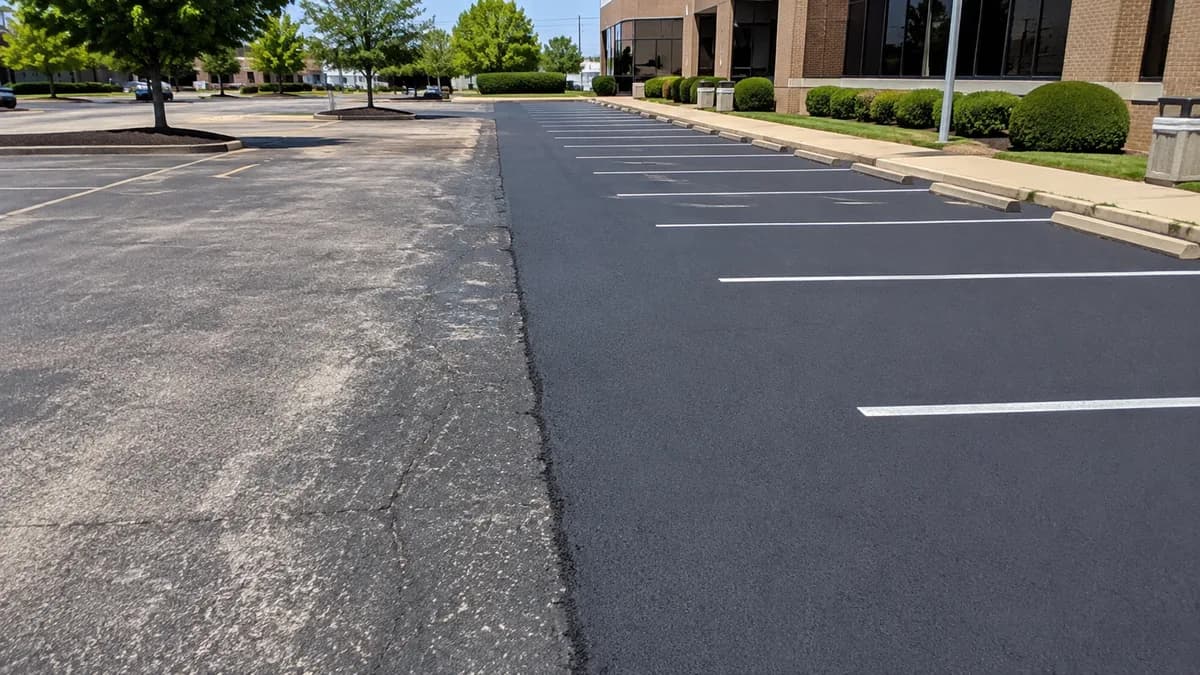
Asphalt Paving vs Asphalt Overlay
Compare asphalt paving vs asphalt overlay. Learn when overlay works, when it fails, and what property owners should check before approving pavement resurfacing.
Property-owner guide
Updated July 11, 2026
When Should You Seal Asphalt Cracks?
When to seal cracks in asphalt — which cracks to seal, the best time of year, why sealing early matters, and how crack sealing fits a maintenance schedule.
Property-owner guide
Updated July 6, 2026
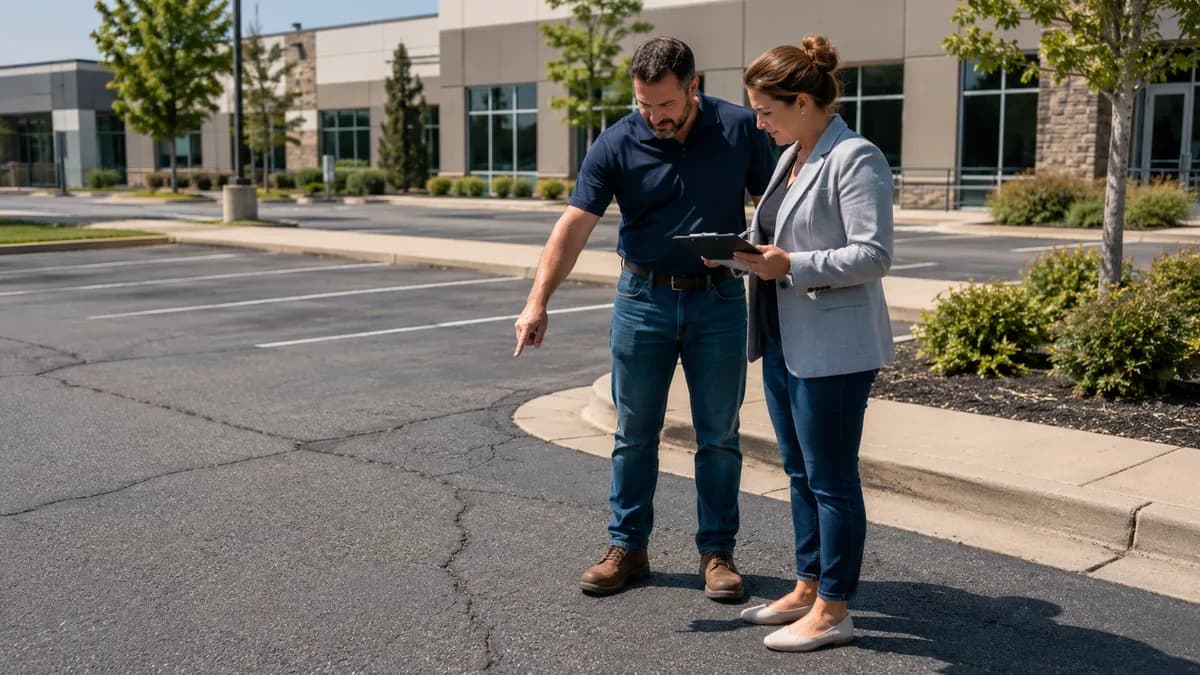
How to Choose an Asphalt Paving Contractor
How to choose an asphalt paving contractor: project fit, relevant experience, written scope, references, insurance, and pavement qualifications.
Property-owner guide
Updated July 6, 2026
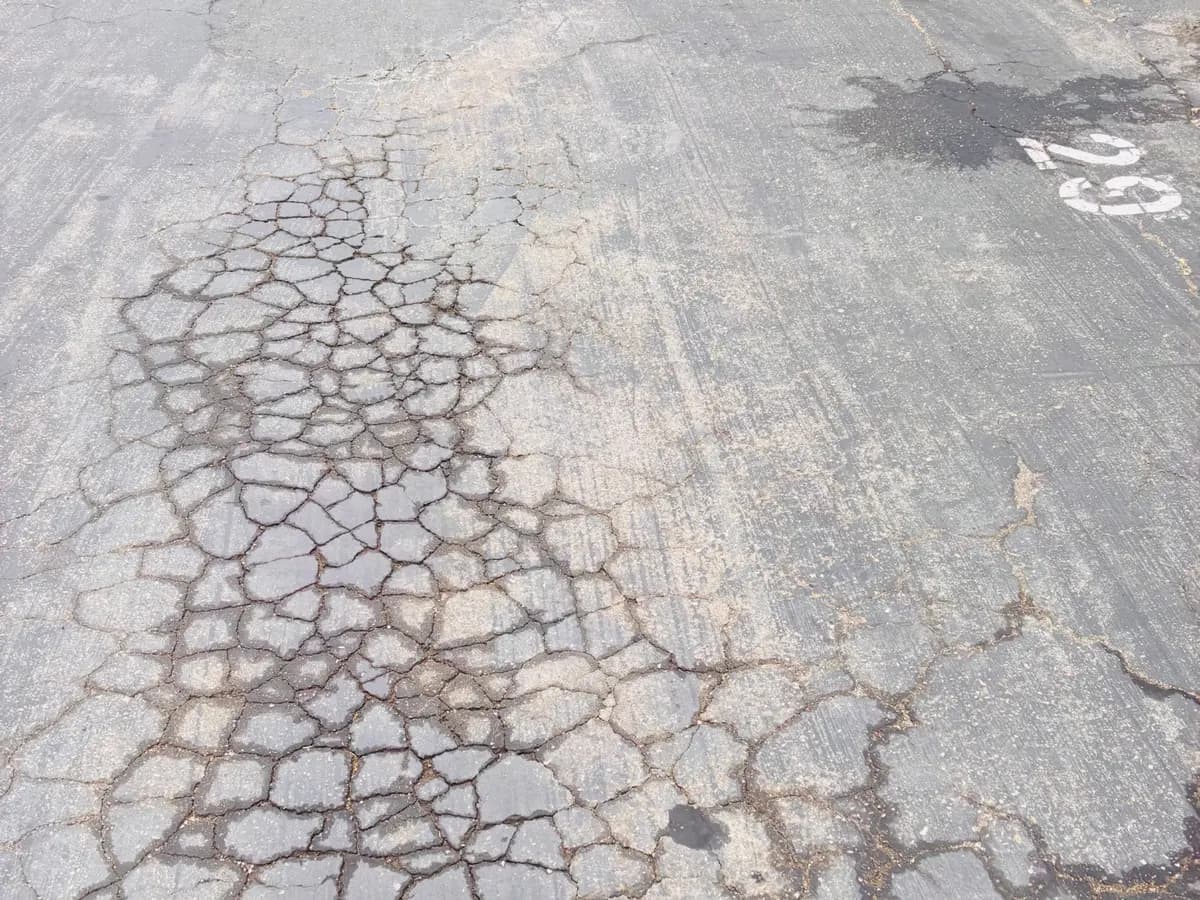
What Causes Alligator Cracking in Asphalt?
What alligator cracking is, what causes it, whether it can be patched or needs full-depth repair, and why it usually points to a failing base.
Property-owner guide
Updated July 12, 2026
How Drainage Affects Pavement Life
Why drainage is the biggest factor in how long pavement lasts, how water damages asphalt from the base up, and why fixing it protects every repair.
Before you hire: The Pavement Directory does not guarantee contractor performance, pricing, licensing, insurance, or availability. Business information may be submitted by contractors or gathered from public sources and should be independently verified before hiring. Always confirm licensing, insurance, references, scope of work, and written contract terms.
For contractors
Ready to compare Indiana contractors?
Browse listings by city and service, then use what you have read here to check the scope, the credentials, and the timing before you sign.