
Indiana pavement guide
Indiana Paving Contractor License Requirements, Permits, and Verification
Indiana does not issue a statewide license for asphalt paving, sealcoating, concrete, or parking lot contractors. The Indiana Professional Licensing Agency administers licensing for a range of other occupations, but general construction and paving are not among them. Practically, that means there is usually no state credential to look up on an Indiana paving proposal.
- No statewide paving license
- Reviewed August 2026
Jump to section
Verification
Contractor Licensing and Verification in Indiana
- Statewide licensing
- No statewide paving contractor license
- Administering body
- No statewide paving contractor license (licensing is handled by cities and counties; the Indiana Professional Licensing Agency licenses other occupations)
- Verify the business
- State business and license lookup
Local requirements fill part of that gap, unevenly. Cities and counties across Indiana may require contractor registration, licensing, bonding, or permits for work performed within their jurisdiction, and requirements differ between neighboring communities — particularly across the Indianapolis metro and in northwest Indiana. Ask the jurisdiction where the property sits what applies before assuming nothing does.
With no state license as a filter, the checks that matter are the ones you control. Confirm the exact legal entity named on the proposal is registered with the Secretary of State and matches the name on both the insurance certificate and the contract. Verify general liability and workers' compensation coverage directly with the carrier or agent for the dates of your work. Then ask for references on comparable projects in the same area that are several years old, and call them — a lot that still looks right after four Indiana winters tells you more than a photograph of fresh asphalt.
Public projects carry separate requirements. Work for a municipality, county, school corporation, or the state involves bonding, prequalification, and potentially prevailing wage rules that private jobs do not. Confirm those with the awarding agency rather than with the contractor.
What a contractor license does not prove
Because Indiana licenses paving locally or not at all, the word 'licensed' on an advertisement can mean a full municipal contractor license or simply a business registration. Ask which jurisdiction issued it and what it covers.
- That the proposed scope is the right fix for what is actually failing
- That the price is fair for the local market
- That drainage has been designed or corrected
- That the pavement section and thickness suit the traffic the property carries
- That the specified materials are appropriate for the site
- That the crew will show up when promised
- That workmanship will hold up past the first winter or summer
- That the company is financially stable enough to honor a warranty
Ask for a certificate of insurance sent directly from the carrier or agent rather than a copy forwarded by the contractor, confirm the general liability and workers’ compensation coverage is active on the dates of your work, and ask to be named as certificate holder so you are notified if the policy lapses.
Licensing requirements can turn on project value, scope of work, property location, and whether the job is public or private. City and county rules may add registration, permitting, or bonding requirements beyond anything required at the state level. Verify current requirements with the agency directly before contracting.
Last reviewed:
Permitting
Stormwater and Environmental Considerations
Indiana Department of Environmental Management (IDEM)
Indiana administers construction stormwater permitting through the Department of Environmental Management rather than through EPA directly. Land disturbance above a threshold acreage generally requires permit coverage together with a stormwater pollution prevention plan and erosion and sediment controls suited to the site. In many parts of the state the review is actually carried out by a local soil and water conservation district or a municipal MS4 program, which is who you will be dealing with day to day.
On flat central Indiana ground, drainage review has a dimension that surprises owners: legal drains and old agricultural tile. A great deal of developed land in the till plain was farmed first, and the tile network that drained it may still be functioning, partly collapsed, or connected to a regulated drain under county drainage board jurisdiction. Altering grading or discharge on such a site can involve the county surveyor's office as well as the stormwater authority. It is worth asking about before design rather than after a trench opens.
In southern Indiana's karst counties, concentrating stormwater into an infiltration practice above soluble limestone can accelerate the downward movement of soil that produces sinkhole settlement. Infiltration is not automatically the preferable environmental choice there, and where it is used it deserves geotechnical input rather than a default detail.
What tends to drive requirements here
- Disturbed area, which drives state construction stormwater permit coverage
- Local soil and water conservation district or MS4 review, which usually handles the actual approval
- County regulated drains and legacy agricultural tile on former farmland
- Karst terrain in southern Indiana, where concentrated infiltration carries risk
- Floodplain status along the Ohio, Wabash, White, and their tributaries
- Inlet protection, sediment tracking, and material staging during the work
Indiana stormwater review is frequently delegated to local soil and water conservation districts, MS4 communities, and county drainage boards, whose requirements vary. Confirm with the local reviewing authority before design.
Last reviewed:
Official sources
Indiana Agencies and Reference Links
Contractor licensing
Indiana Professional Licensing AgencyThe state's licensing agency — useful for confirming which occupations Indiana licenses and that general paving is not among them.
Business registration
Indiana business entity searchConfirm the exact entity named on your proposal is registered and in good standing in Indiana.
Environmental
IDEM stormwater programConstruction stormwater permit coverage, land disturbance thresholds, and erosion control requirements.
Transportation
Indiana Department of TransportationState specifications and materials terminology that shape how Indiana contractors describe work.
Consumer protection
Indiana Attorney General Consumer Protection DivisionWhere to file a complaint about a contractor or a deceptive business practice.
This page summarizes publicly available information for general education. It is not legal, engineering, or code-compliance advice, and requirements change. Confirm anything that affects your project with the agency with jurisdiction over the property.
Regulatory content last reviewed:
Indiana licensing and permit FAQs
Does Indiana require a state license for paving contractors?
No. Indiana has no statewide license for asphalt paving, sealcoating, concrete, or parking lot work. Licensing here is handled by individual cities and counties, and requirements differ between neighboring jurisdictions — especially around Indianapolis and in the northwest corner. Ask which jurisdiction covers your address and what it requires, then do the verification that matters regardless: confirm the entity is registered, verify insurance directly with the carrier, and call references on comparable local projects that are several years old.
Before you sign: hiring guides
Property-owner guide
Updated July 6, 2026
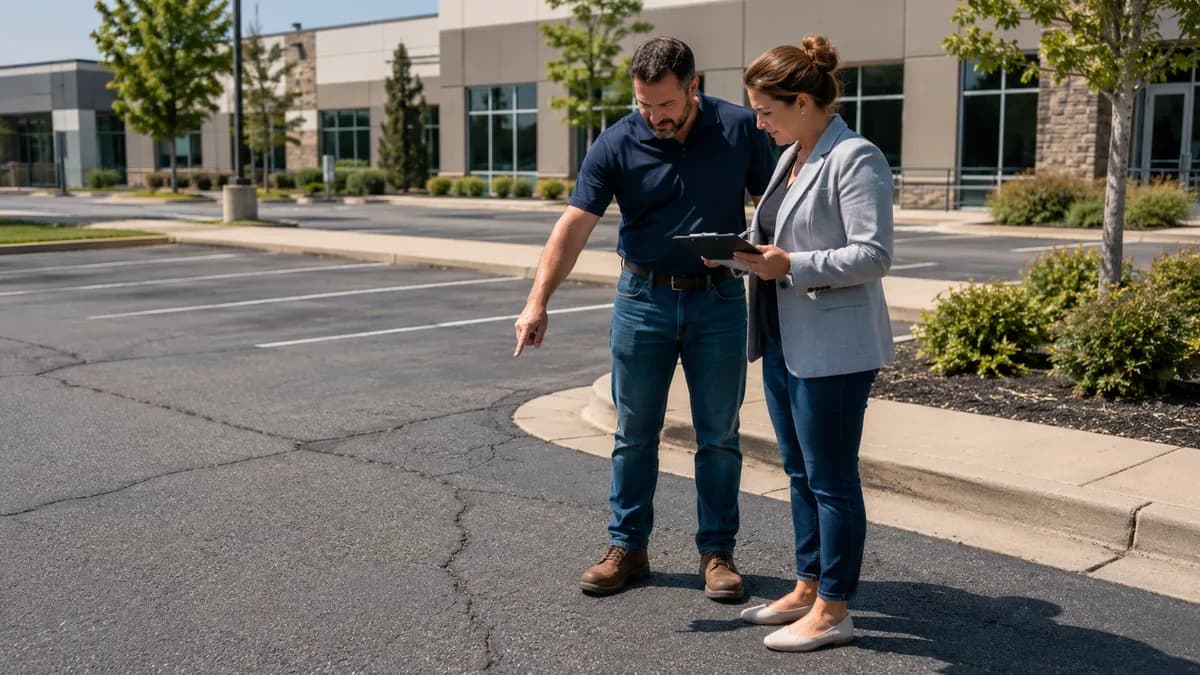
How to Choose an Asphalt Paving Contractor
How to choose an asphalt paving contractor: project fit, relevant experience, written scope, references, insurance, and pavement qualifications.
Property-owner guide
Updated July 6, 2026
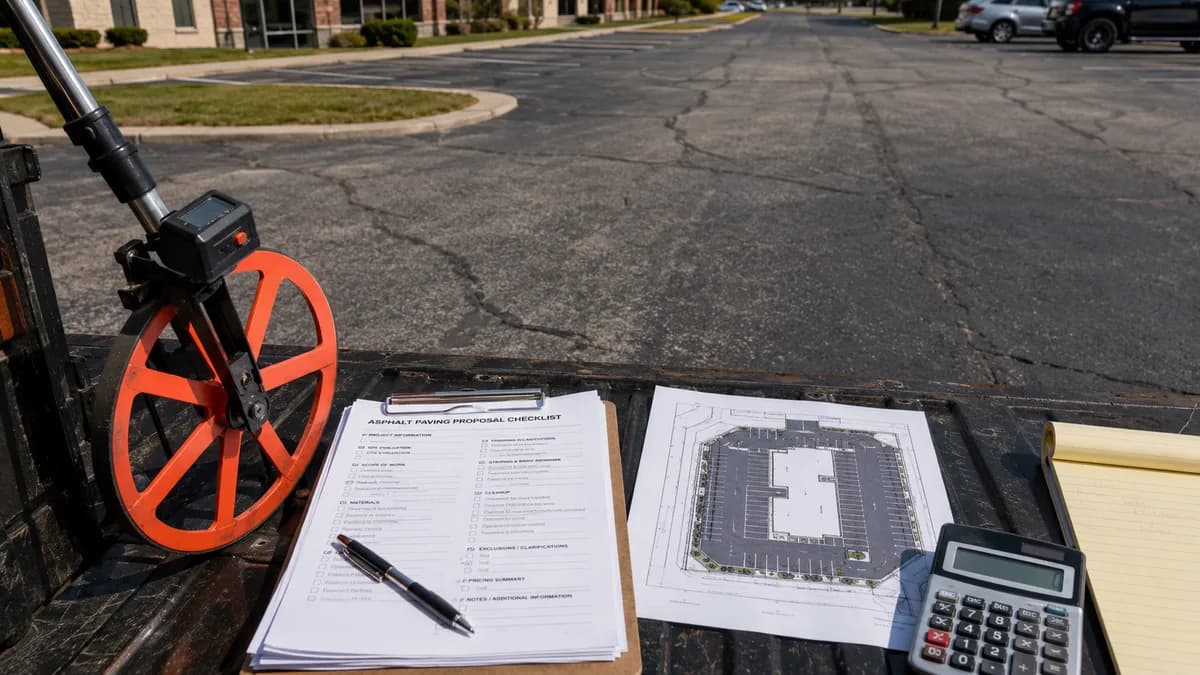
Asphalt Paving Proposal Checklist
What belongs in an asphalt paving proposal: work limits, quantities, thickness, base preparation, drainage, striping, exclusions, and warranty terms.
Property-owner guide
Updated July 6, 2026
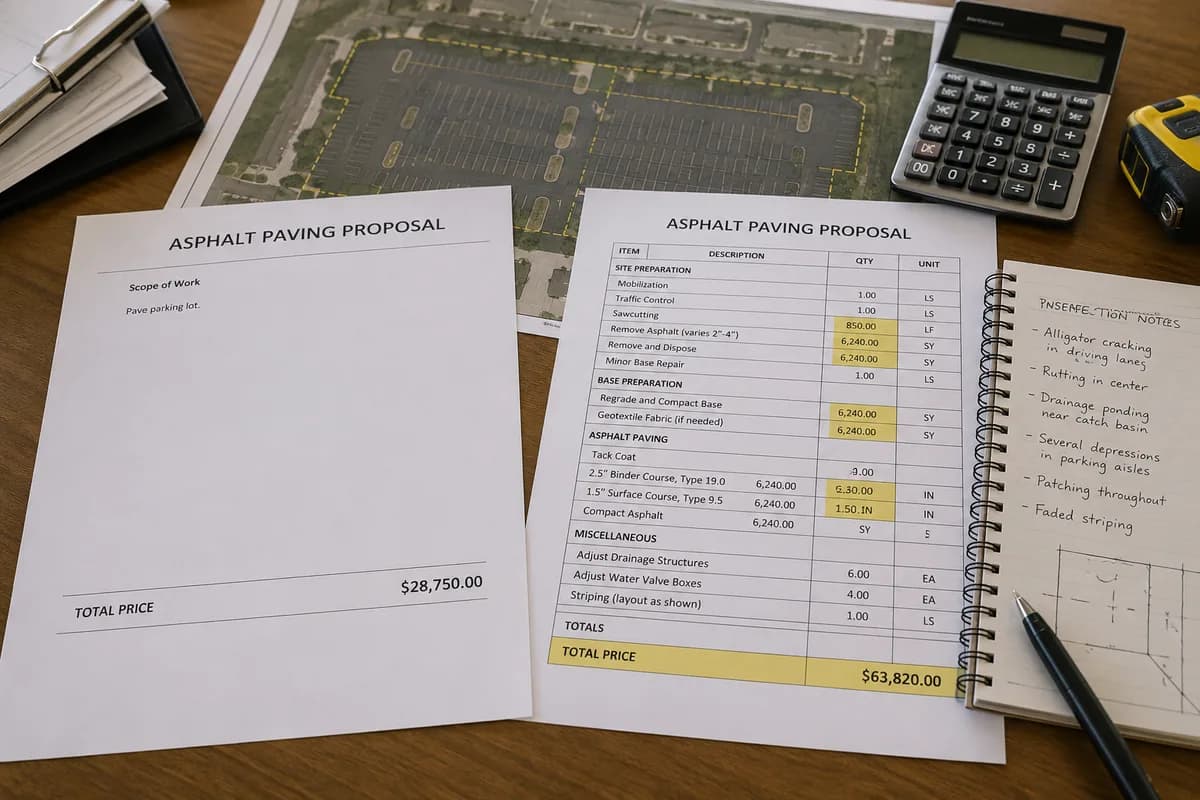
Cheap Asphalt Paving Bids: Red Flags to Watch For
A cheap asphalt paving bid may omit thickness, base preparation, drainage, striping, or warranty terms. Learn the red flags to check before hiring.
Before you hire: The Pavement Directory does not guarantee contractor performance, pricing, licensing, insurance, or availability. Business information may be submitted by contractors or gathered from public sources and should be independently verified before hiring. Always confirm licensing, insurance, references, scope of work, and written contract terms.
For contractors
Ready to compare Indiana contractors?
Browse listings by city and service, then use what you have read here to check the scope, the credentials, and the timing before you sign.