
Connecticut pavement guide
Pavement Conditions in Connecticut: Regions, Soils, and Common Problems
Connecticut pavement work is shaped by freeze-thaw, road salt, and the constraints of building on parcels that were developed long ago.
- 4 regions
- 5 common problems
- 6 local terms
Jump to section
Regional differences
Pavement Conditions by Region in Connecticut
Connecticut does not have one climate or one soil profile, and pavement that performs well in one part of the state can fail early a few hours away. These are the divisions that matter most when scoping paving, repair, or maintenance work.
Coastal Connecticut and Long Island Sound
Bridgeport · New Haven · Norwalk · Stamford · New London
Environmental stress
- Milder winters than inland but frequent wet freeze-thaw cycling
- Coastal storm surge, tidal flooding, and salt air
- Very dense development with almost no staging room
Subgrade conditions
- Glacial till interbedded with marine and estuarine sediments
- Extensive historic fill on made land near the harbors
- High water table and tidally influenced drainage on low parcels
Common distress
- Settlement over old utility trenches and buried structures
- Base saturation where outfall elevation is limited by tide
- Concrete surface scaling on salted walks and aprons
What it means for the work
- Staging space and truck access are frequently the binding constraint
- Made ground makes test pits worthwhile before pricing a reconstruction
- Flood elevation and tidal drainage can limit what regrading can achieve
Central Valley
Hartford · New Britain · Meriden · Middletown · Windsor
Environmental stress
- Substantial freeze-thaw cycling and sustained winter deicing
- Hot, humid summers with high pavement surface temperatures
- Riverine flooding along the Connecticut River corridor
Subgrade conditions
- Fine-grained glacial lake sediments including varved clays
- Sand and gravel terraces above the river floodplain
- Traprock ridges with shallow, very hard rock nearby
Common distress
- Frost heave in frost-susceptible lake sediments
- Settlement on filled or low-lying valley parcels
- Alligator cracking where lots drain slowly
What it means for the work
- Fine lake sediments are frost-susceptible and often need deeper granular material
- Traprock is hard rock — excavation there is a different cost category
- Floodplain status can change what is permissible on a site
Western Highlands and Litchfield County
Torrington · Danbury · Waterbury · Litchfield · New Milford
Environmental stress
- Colder winters, deeper frost, and heavier snowfall than the shoreline
- Steep terrain concentrating runoff onto lower sites
- Sustained plowing and abrasive use on commercial pavement
Subgrade conditions
- Dense, rocky glacial till over shallow bedrock
- Marble and limestone belts in parts of the northwest
- Frost-susceptible silty soils in low areas and old wetland margins
Common distress
- Severe frost heave and spring break-up
- Plow damage to edges, curbs, and raised features
- Washout where uncontrolled runoff crosses pavement on a grade
What it means for the work
- Ledge removal is a real cost item and belongs in the bid as a unit price
- The practical working window is shorter here than on the shoreline
- Snow storage and meltwater routing belong in the site layout
Eastern Highlands and the Quiet Corner
Willimantic · Storrs · Putnam · Norwich · Danielson
Environmental stress
- Colder winters than the shore with meaningful snowfall
- Heavy rainfall on rolling, rocky terrain
- Freeze-thaw cycling with persistent damp in shaded areas
Subgrade conditions
- Rocky glacial till with mixed fines, sand, and cobbles
- Shallow, irregular bedrock across many parcels
- Poorly drained soils in low areas and along wetland margins
Common distress
- Frost heave at transitions between different materials
- Spring potholing along crack lines opened over winter
- Surface raveling and organic growth on shaded, damp pavement
What it means for the work
- Wetland proximity is common here and can affect the permitting path
- Assume subgrade variability across a site rather than one condition
- Crack sealing before winter earns its cost reliably in this climate
Field conditions
Common Pavement Problems in Connecticut
Frost heave and spring break-up
Pavement lifting into bumps and ridges through late winter, partly settling back by summer, and leaving cracks and potholes behind in the same places each year.
Likely causes
- Frost-susceptible silty soils forming ice lenses as freezing penetrates
- Water available in the subgrade with no path to drain away
- Insufficient depth of clean granular material below the pavement
- Differential frost penetration where materials change
When to get it looked at: Heaving that recurs in the same footprint each winter is a subgrade and drainage problem. Resurfacing gives you a smooth lot that heaves in the identical place next February.
Deicing damage to concrete and accessible routes
Sidewalks, entry aprons, curb ramps, and dumpster pads shedding their surface in thin flakes, with joints opening and edges spalling — worst where salted slush collects and refreezes.
Likely causes
- Repeated freezing while the concrete surface is saturated
- Deicing chemicals applied to concrete during its first winter
- Finishing practices that left a weak surface layer
- Drainage keeping the surface wet through freeze cycles
When to get it looked at: Scaling over sound concrete is often repairable. Deterioration that reaches reinforcement, or that creates a change in level along an accessible route, needs attention on a shorter timeline than routine maintenance allows.
Settlement over made ground and old utilities
Localized dips and straight-line cracking on long-developed parcels, particularly in the older shoreline cities where the ground beneath has been disturbed repeatedly over a century or more.
Likely causes
- Historic fill placed without engineered compaction
- Poorly backfilled utility trenches consolidating over time
- Buried structures, foundations, or abandoned lines beneath the pavement
- Groundwater movement carrying fines out of loose fill
When to get it looked at: Cracking in a straight line usually means something buried is driving it. Test pits before pricing a reconstruction cost far less than discovering the problem mid-project.
Tidal and coastal drainage limits
Shoreline lots that drain slowly or not at all during high water, with base saturation and interconnected cracking in the lowest areas, sometimes after a single storm event.
Likely causes
- Outfall elevation controlled by tide rather than by site grading
- Storm surge or flooding saturating the pavement section
- High groundwater keeping the base near saturation
- Fill placed over soft estuarine soils during original construction
When to get it looked at: Where the outfall elevation is tidally controlled, surface grading alone may not solve it. That is a design question worth answering before pricing a resurfacing.
Ledge encountered during excavation
Excavation stalling on bedrock at a shallower depth than anticipated, changing the cost and schedule of a project that was priced as ordinary earthwork.
Likely causes
- Shallow, irregular bedrock common across the Connecticut uplands
- Rock depth varying significantly within a single parcel
- Very hard traprock in and near the Central Valley ridges
- No test pits or borings before the section was designed
Property types
Common Pavement Projects in Connecticut
Corporate campuses and office parks
Fairfield County properties combine large lots, high expectations for appearance, and phasing constraints that make staging and access planning as important as the pavement design.
Healthcare and hospital campuses
Ambulance routes, accessible parking, and patient drop-off cannot be interrupted, so temporary accessible parking and surface transitions govern the schedule as much as pavement condition does.
Coastal marina and waterfront properties
Tidal drainage limits, storm surge exposure, and coastal site plan review combine to make drainage design the first question rather than the last.
Distribution facilities along I-84 and I-91
Trailer loading on sections built for lighter traffic, over frost-susceptible till, makes aprons and drop lots the first areas to fail on otherwise sound properties.
Municipal, school, and university properties
Public work brings bidding, bonding, and prequalification requirements, and bus loops carry loads far beyond the adjacent parking fields they were built alongside.
Plain English
Pavement Terms You May Encounter in Connecticut
| Term | What it means on a Connecticut project |
|---|---|
| Processed aggregate base | The compacted crushed stone layer beneath asphalt in Connecticut work. In a freeze-thaw climate its depth and cleanliness do more for pavement life than the surface course above it. |
| Subbase / bank run gravel | Granular material placed below the base to provide drainage and frost protection. On frost-susceptible till and lake sediments, the depth of clean granular material is often the most consequential number on the section detail. |
| Ledge | The regional term for bedrock encountered during excavation. It is common enough across Connecticut that it should appear in a bid as a unit price rather than being assumed away. |
| Catch basin adjustment | Resetting drainage structures so their rims match the finished pavement after milling or overlay. Skipping it is a leading cause of new ponding after a resurfacing. |
| Frost-susceptible soil | Fine-grained material in which freezing water forms ice lenses that lift the pavement above. Identifying and replacing it at transitions is what stops the same bump reappearing every winter. |
| Coastal boundary | The regulated coastal area within which additional site plan review can apply in Connecticut. Whether a parcel falls inside it is a location question worth answering early. |
State transportation specifications can provide useful regional terminology and material references, but they do not automatically govern private parking-lot or driveway projects unless incorporated into the contract or required by the applicable jurisdiction.
More definitions are in the pavement glossary.
Before you sign
Questions to Ask a Paving Contractor in Connecticut
- Does this work require registration under the state construction stormwater permit, and who handles that?
- Is any part of this site near a watercourse or wetland that brings the town's inland wetlands agency into the review?
- Is this parcel inside the coastal boundary, and does that add a review step?
- How deep is clean granular material going below the pavement, and how was that depth chosen?
- How will ledge be handled if you hit it, and what is the unit price?
- Do you know whether this site is made ground, and would test pits be worth doing before we finalize scope?
- Will catch basins and structures be adjusted to finished grade after milling?
- For a residential driveway, are you registered as a Home Improvement Contractor, and what is the registration number?
- What surface and overnight temperatures does the product you have proposed require?
Connecticut pavement condition FAQs
Why does the same bump come back in my Connecticut lot every winter?
That is frost heave, and it recurs because the cause is beneath the pavement. Frost-susceptible fine-grained soil holds water, freezing draws more water toward the freezing front, ice lenses form, and the pavement above is lifted. In spring it thaws and mostly settles back, leaving cracks behind. Because the mechanism sits in the subgrade, resurfacing produces a lot that heaves in the identical footprint the following February. Replacing frost-susceptible material with clean granular material and giving the water a path out is the durable answer.
What is ledge and why does it change my project cost in Connecticut?
Ledge is the regional term for bedrock encountered during excavation, and Connecticut has a lot of it at shallow and irregular depth. It matters because rock removal is a different cost category from ordinary earthwork, and because rock depth can vary considerably within a single parcel — a test hole in one corner does not predict what a trench will find in another. It is a known regional condition, so ask how it will be priced as a unit item before work starts rather than negotiating it as a change order later.
Why is my shoreline Connecticut lot not draining even after regrading?
On low-lying coastal parcels, the outfall elevation can be controlled by the tide rather than by your site grading. If the pipe discharges into water that is periodically at or above the outlet, the system backs up regardless of how well the lot slopes. Add a high groundwater table and periodic storm surge saturating the section, and surface grading alone cannot solve it. That is a drainage design question — and one worth answering before paying for a resurfacing that will fail in the same low areas.
Do I need town approval to repave a parking lot in Connecticut?
It depends on what the work involves. Resurfacing in place is often treated as maintenance. Changing grading, drainage, the footprint, or the amount of impervious surface commonly brings town planning, engineering, or inland wetlands review into the picture, and on coastal parcels it can add coastal site plan review. Many Connecticut properties sit close enough to a watercourse or wetland that the inland wetlands agency has jurisdiction over work owners assume is routine. Ask the town early — the review timeline is frequently the longest item in the schedule.
Is road salt damaging the concrete at my Connecticut property?
Deicing salt does not chemically attack sound, properly air-entrained concrete, but it dramatically increases how often the surface freezes and thaws while saturated, and that is what produces scaling. The concrete most at risk is young concrete salted during its first winter, concrete finished in a way that left a weak surface layer, and anywhere salted slush pools and refreezes. On curb ramps and accessible routes, that deterioration eventually becomes a compliance issue as well as a maintenance one.
Why does reconstruction on older Connecticut sites cost more than expected?
Because of what is under the pavement. Much of Connecticut's commercial property sits on parcels developed decades or more than a century ago, often over historic fill, with utility trenches that were backfilled to whatever standard applied at the time and buried structures nobody documented. Add tight parcels with no staging room and limited truck access, and the work takes longer and finds more surprises. Test pits before pricing a reconstruction on an older site are one of the better investments an owner can make.
Related reading for Connecticut property owners
Property-owner guide
Updated July 11, 2026
When Should You Seal Asphalt Cracks?
When to seal cracks in asphalt — which cracks to seal, the best time of year, why sealing early matters, and how crack sealing fits a maintenance schedule.
Property-owner guide
Updated July 11, 2026
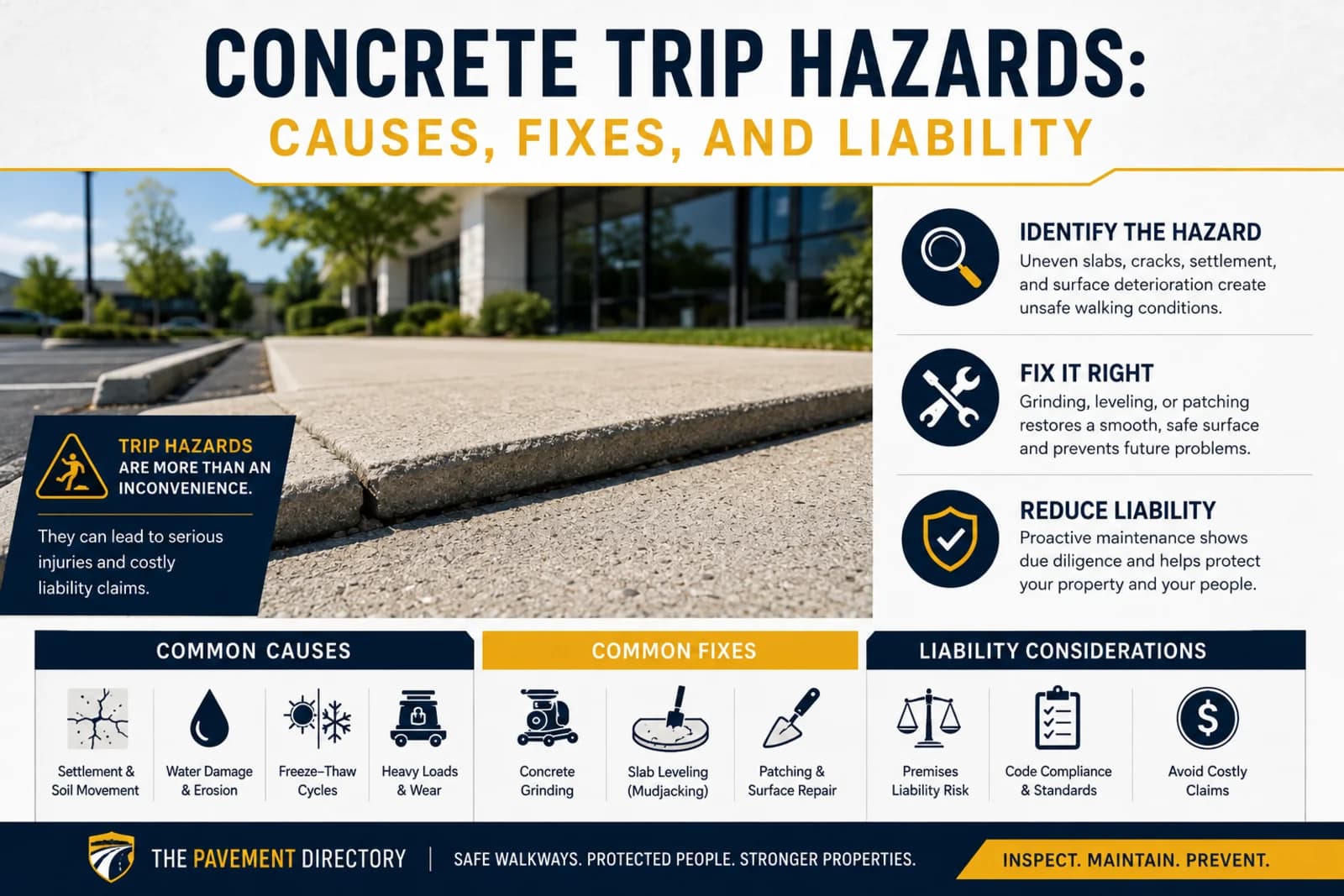
Concrete Trip Hazards: Causes, Fixes, and Liability
What causes concrete trip hazards on sidewalks, how they are fixed by grinding, cutting, slab lifting, or replacement, and the ADA and liability stakes.
Property-owner guide
Updated July 6, 2026
How to Choose an Asphalt Paving Contractor
How to choose an asphalt paving contractor: project fit, relevant experience, written scope, references, insurance, and pavement qualifications.
Property-owner guide
Updated July 6, 2026
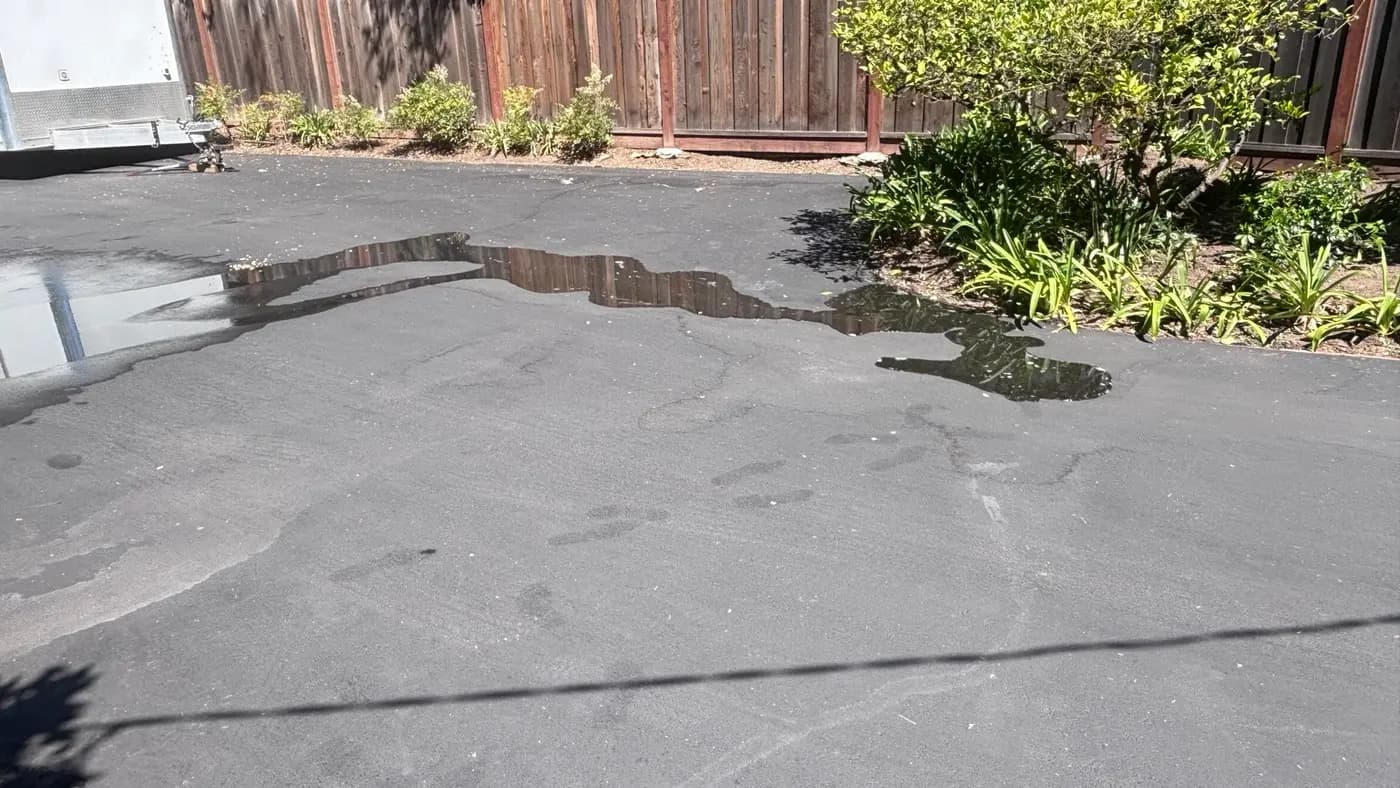
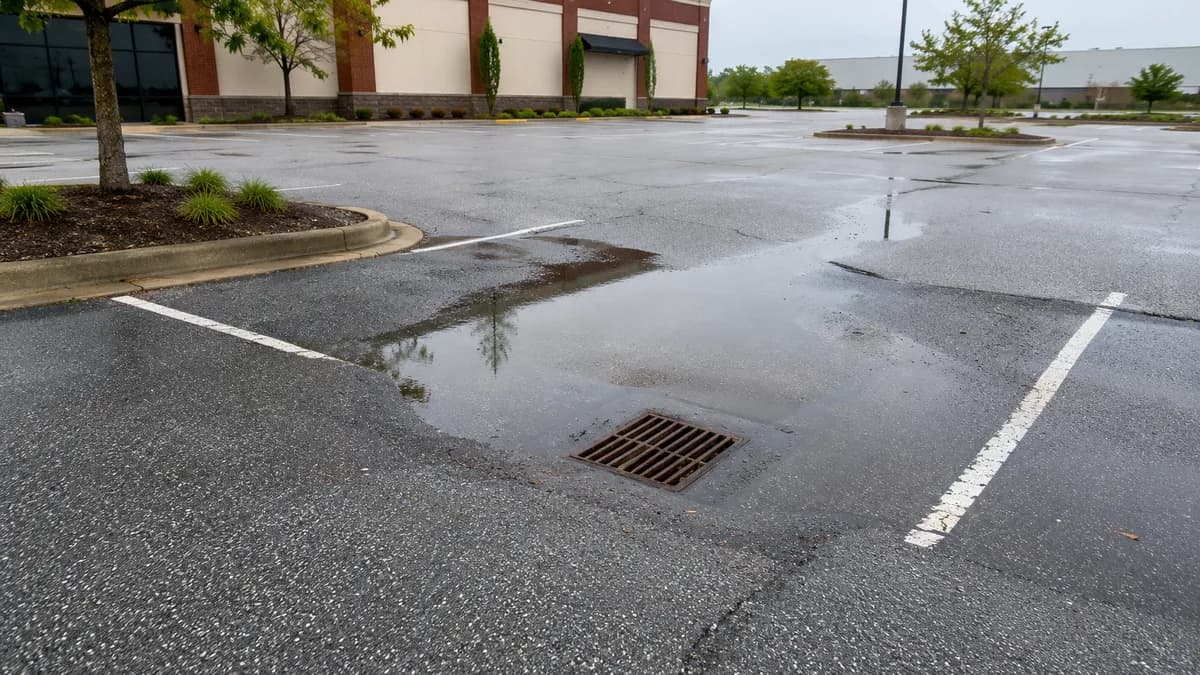
Parking Lot Drainage Problems: What Property Owners Should Know
Common causes of parking lot drainage problems, why they accelerate pavement damage, and what property owners should ask contractors before a fix.
Property-owner guide
Updated July 6, 2026
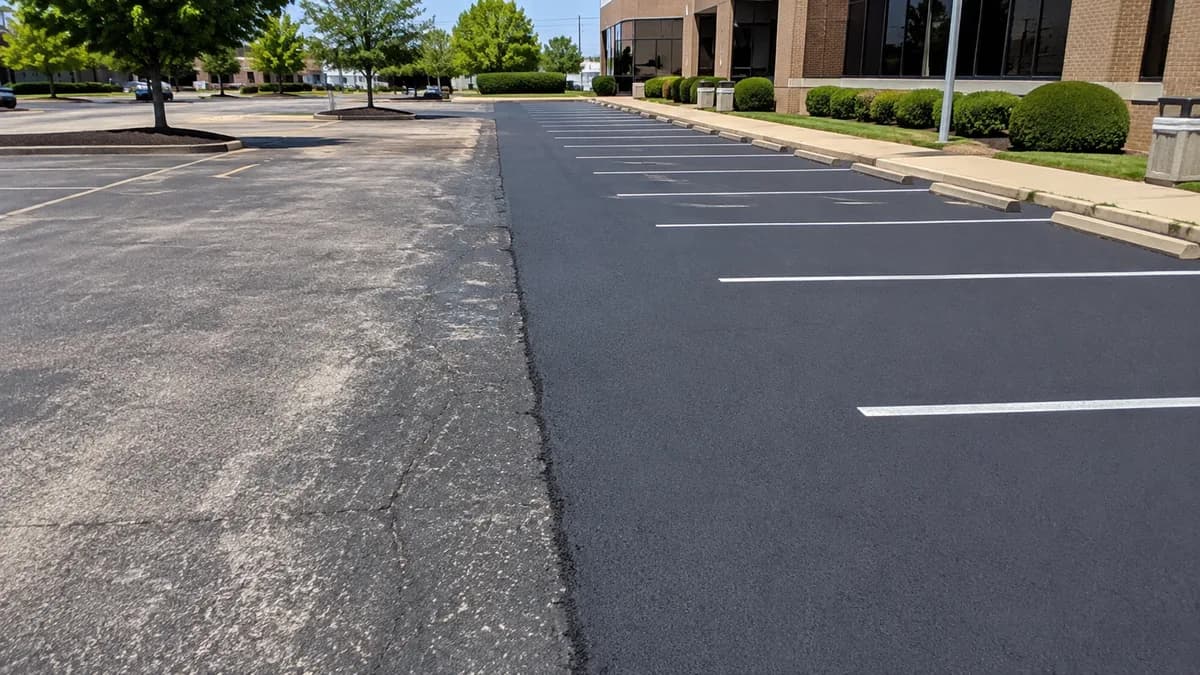
Asphalt Paving vs Asphalt Overlay
Compare asphalt paving vs asphalt overlay. Learn when overlay works, when it fails, and what property owners should check before approving pavement resurfacing.
Property-owner guide
Updated August 30, 2026
Commercial Parking Lot Maintenance Guide
How to inspect, preserve, repair, and budget for a commercial parking lot: lifecycle stages, treatments, drainage, ADA, scoping, and multi-year plans.
Before you hire: The Pavement Directory does not guarantee contractor performance, pricing, licensing, insurance, or availability. Business information may be submitted by contractors or gathered from public sources and should be independently verified before hiring. Always confirm licensing, insurance, references, scope of work, and written contract terms.
For contractors
Ready to compare Connecticut contractors?
Browse listings by city and service, then use what you have read here to check the scope, the credentials, and the timing before you sign.