

What this guide covers
A trip hazard is usually a lifted or settled slab edge, and the good news is that many are fixed cheaply by grinding or lifting rather than full replacement.
This guide covers what causes them, how they're fixed, and why they matter for safety, liability, and accessibility. To get them addressed, find concrete repair and sidewalk contractors in your area.
Deciding between a grind and a tear-out? See concrete repair vs. replacement and the concrete repair cost guide.
What causes trip hazards
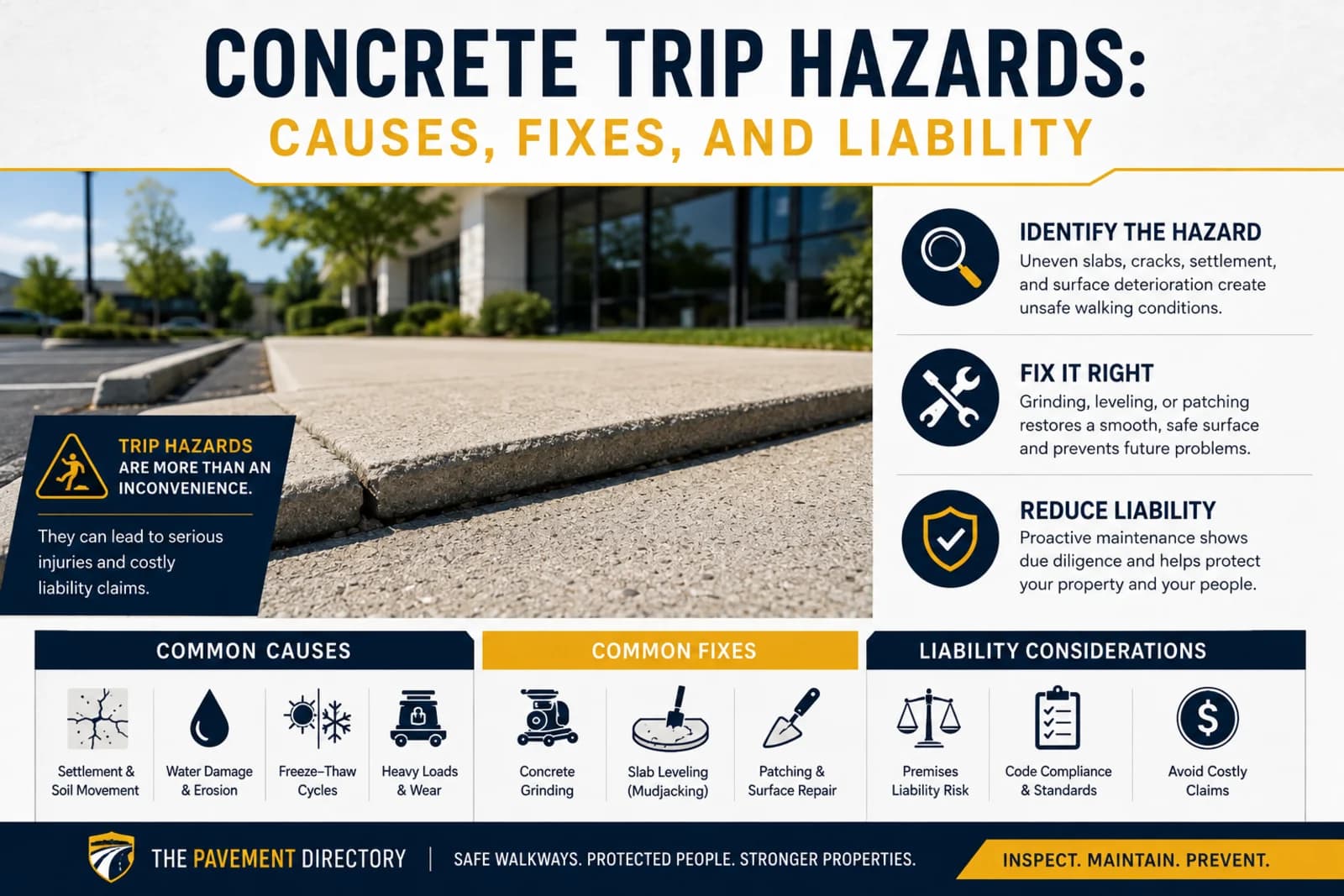
Most sidewalk and walkway trip hazards come from a few causes:
- Tree roots lifting or cracking slabs from below
- Soil settlement dropping one slab below its neighbor
- Freeze-thaw cycles heaving and shifting concrete
- Erosion or poor drainage undermining the base
- Original construction over unstable or poorly compacted soil
How trip hazards are fixed
The fix depends on the cause and the condition of the slab. Where the concrete is otherwise sound, the cheapest options usually work:
| Method | When it fits | Relative cost |
|---|---|---|
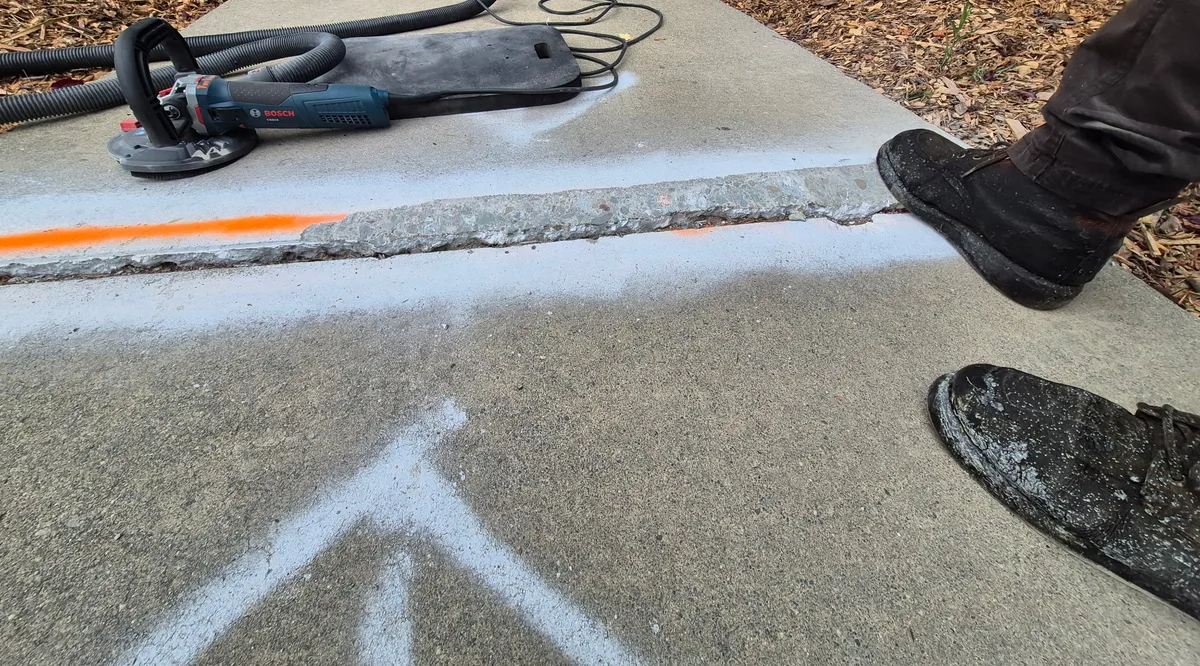
| Grinding / saw-cutting | Raised edge on a sound slab | Lowest |
| Slab lifting | Settled but intact slab | Low–moderate |
| Section replacement | Cracked, broken, or root-destroyed slab | Highest |
Safety, liability, and accessibility
Trip hazards are a liability issue on any walkway — a fall can lead to injury and a claim, which is why many property managers inspect and address them on a schedule. On an accessible route, a change in level can also be an ADA/accessibility concern, and the allowable amount is limited and varies by jurisdiction. Grinding removes the immediate hazard, but it does not automatically resolve an accessible-route compliance question — treat safety and compliance as related but separate.
Address the cause, not just the lip
If a tree root or a drainage problem caused the hazard, grinding the lip is only a temporary fix — the slab will keep moving. Where an active root or ongoing erosion is the cause, the durable solution may involve root management, a drainage fix, or replacing the section with the cause addressed. A good contractor will point this out rather than grinding the same spot every year.
Frequently asked questions
How are concrete trip hazards fixed?
Often by grinding or saw-cutting the raised edge, or by lifting a settled slab — both far cheaper than replacement. Cracked, broken, or root-destroyed slabs usually need section replacement.
Is grinding a trip hazard a permanent fix?
It's permanent if the slab is stable. If an active tree root or ongoing erosion caused it, the slab will keep moving and the cause needs to be addressed too.
Are trip hazards an ADA problem?
On an accessible route, a change in level can be an accessibility concern, with limits that vary by jurisdiction. Removing the physical hazard doesn't automatically resolve the compliance question — treat them as separate.
Who is liable for a sidewalk trip hazard?
It depends on ownership and local rules, but property owners often carry responsibility for walkways on their property. Many manage the risk by inspecting and repairing hazards on a schedule. This isn't legal advice.
Before you hire: The Pavement Directory does not provide legal or compliance advice. ADA and accessibility requirements vary by site, jurisdiction, and project scope. Contractors may perform striping, grading, concrete, or asphalt corrections, while CASp inspectors or accessibility consultants may be needed for compliance review. Consult qualified professionals when compliance is material.
For property owners
Looking for a pavement contractor?
Use The Pavement Directory to search asphalt, concrete, sealcoating, striping, ADA access, and pavement maintenance contractors by service and location. Always verify license, insurance, references, and written scope before hiring.
Search contractorsFor contractors
Are you a pavement contractor?
Contractors can add or claim a company profile to help property owners find pavement professionals by service, location, and specialty.