
Colorado pavement guide
Pavement Conditions in Colorado: Regions, Soils, and Common Problems
Colorado's damage comes from how often pavement freezes and thaws, not how cold it gets — and from claystone that swells beneath it.
- 4 regions
- 5 common problems
- 6 local terms
Jump to section
Regional differences
Pavement Conditions by Region in Colorado
Colorado does not have one climate or one soil profile, and pavement that performs well in one part of the state can fail early a few hours away. These are the divisions that matter most when scoping paving, repair, or maintenance work.
Front Range urban corridor
Denver · Colorado Springs · Fort Collins · Aurora · Boulder
Environmental stress
- Very frequent freeze-thaw cycling driven by intense daytime sun and cold nights
- High-altitude UV exposure
- Heavy plowing and deicing on commercial properties
- Sudden intense summer thunderstorms
Subgrade conditions
- Expansive claystone and bentonite-bearing soils with high swell potential
- Variable fill on rapidly developed parcels
- Shallow bedrock in parts of the corridor
Common distress
- Heaving and cracking from swelling soils
- Spring potholing after repeated freeze-thaw
- Surface oxidation from UV at elevation
What it means for the work
- Moisture control around pavement matters as much as the pavement itself
- Subgrade evaluation is worth doing on any significant Front Range project
- Crack sealing before winter is high-value maintenance here
Mountain resort communities
Vail · Breckenridge · Aspen · Steamboat Springs · Durango
Environmental stress
- Very heavy snowfall and sustained plowing all winter
- Deicing chemical and traction sand application
- A construction season measured in a few months
- Extreme UV at high elevation
Subgrade conditions
- Coarse granular alluvial and glacial soils
- Shallow rock and steep grades on many parcels
- Frost-susceptible fines where drainage is inadequate
Common distress
- Plow gouging on curbs, transitions, and raised features
- Concrete scaling and spalling from deicing chemicals
- Markings and thin surface treatments worn off in one season
What it means for the work
- Book work very early — the window is short and demand is concentrated
- Snow storage location determines where meltwater damage concentrates
- Durable marking materials and heated-surface details are worth discussing
Western Slope
Grand Junction · Montrose · Delta · Rifle
Environmental stress
- Hot, dry summers with strong UV
- Cold winters with freeze-thaw cycling
- Intense but infrequent storm runoff
Subgrade conditions
- Mancos shale and other expansive, sulfate-bearing soils in parts of the region
- Alluvial soils along river valleys
- Irrigated agricultural ground with changing subgrade moisture
Common distress
- Heaving and cracking over expansive shale-derived soils
- Sulfate-related deterioration of concrete in some areas
- Erosion and washouts after intense storms
What it means for the work
- Sulfate content is worth checking before specifying concrete or cement stabilization
- Irrigation is a major driver of subgrade moisture change here
- Runoff on sparsely vegetated ground moves fast and carries sediment
Eastern Plains
Greeley · Sterling · Lamar · Limon
Environmental stress
- High wind and blowing dust
- Wide temperature swings between seasons and between day and night
- Severe hail and convective storms
Subgrade conditions
- Silty and sandy soils with variable moisture
- Agricultural ground with irrigation-driven moisture change
- Some expansive clays in transition areas
Common distress
- Thermal and block cracking from temperature range
- Edge break-up under heavy agricultural equipment
- Ponding in low areas with no natural outlet
What it means for the work
- Harvest and feedlot traffic concentrates heavy loading seasonally
- Long haul distances to plants affect cost and scheduling
- Edge support prevents the most common failure mode here
Field conditions
Common Pavement Problems in Colorado
Expansive claystone heave
Pavement lifting into ridges or humps, cracking in patterns unrelated to traffic, and moving seasonally with moisture. Common across much of the Denver metro and parts of the Western Slope.
Likely causes
- Claystone and bentonite-bearing soils swelling when they take on water
- Irrigation, downspouts, and landscape watering delivering moisture to the subgrade
- Utility leaks or poor surface drainage concentrating water in one area
When to get it looked at: Heaving that recurs in the same place after repair is a moisture and soils problem. That is worth a geotechnical look rather than another round of patching.
High-frequency freeze-thaw damage
Potholes and crack deterioration developing quickly through late winter, driven by pavement that thaws in the afternoon sun and refreezes overnight, over and over.
Likely causes
- Intense high-altitude sun producing daily thaw even in cold weather
- Water sitting in unsealed cracks through the cycle
- North-facing and shaded areas that thaw more slowly and stay wet
When to get it looked at: If potholes are appearing in an area that was only cracked last fall, the cracks were open through the winter — sealing before freeze-up is the fix, and it is a fall task.
Deicing chemical damage to concrete
Concrete sidewalks, aprons, and pans developing surface scaling, flaking, and joint spalling, often faster than the asphalt beside them shows any wear.
Likely causes
- Chloride deicers driving repeated freeze-thaw within the concrete surface
- Chloride reaching reinforcement and causing corrosion and spalling
- Concrete without adequate air entrainment or cure for this environment
When to get it looked at: Scaling that exposes coarse aggregate over large areas, or spalling that reveals reinforcement, has passed the point where a surface treatment helps.
UV oxidation at elevation
Pavement graying and the surface becoming rough and porous noticeably faster than an owner would expect from the same latitude at sea level.
Likely causes
- Higher UV intensity at Colorado elevations
- Long intervals between surface treatments
- Thin surface courses on lots built to a low first cost
Steep-site drainage erosion
Water cutting channels along pavement edges, undermining the perimeter, and depositing sediment at the low end of a sloped lot after intense storms.
Likely causes
- Real grade on the site concentrating flow rather than spreading it
- Summer thunderstorms delivering high intensity in a short period
- Unprotected edges with no shoulder or confinement
When to get it looked at: Erosion that reaches under the pavement edge is undermining the structure, not just moving dirt. That warrants attention before the next storm season.
Property types
Common Pavement Projects in Colorado
Ski resort and mountain hospitality properties
Heavy snow operations, deicing, and a compressed construction season put the emphasis on durable markings, plow-friendly detailing, and meltwater routing.
Front Range retail and commercial centers
Large lots over expansive claystone crack and heave from below, and irrigation around the perimeter is often the moisture source driving it.
Distribution and logistics facilities
Growth along I-25 and I-70 concentrates truck loading on sites where subgrade quality varies significantly across a single parcel.
HOA and townhome communities
Private drives take the full force of freeze-thaw cycling and plowing, and landscape irrigation near pavement edges frequently drives the heaving that follows.
Agricultural and feedlot facilities
Eastern Plains operations impose heavy seasonal equipment loading on pavement with limited edge support and long distances to the nearest plant.
Plain English
Pavement Terms You May Encounter in Colorado
| Term | What it means on a Colorado project |
|---|---|
| PG binder grade | The performance grade of the asphalt binder. In Colorado the low-temperature number matters for cracking resistance, and the choice differs meaningfully between a Denver lot and a mountain resort property. |
| Aggregate base course (Class 6) | The compacted crushed rock layer under the asphalt, referenced by class on Colorado plans. Its thickness and compaction usually determine pavement life more than the asphalt above it. |
| Swelling soils / expansive claystone | Soils that increase in volume when they take on water. Widely recognized in Front Range construction, and the reason moisture control around pavement is such a persistent theme here. |
| Air-entrained concrete | Concrete with microscopic air voids that give freezing water somewhere to expand. Standard for exterior concrete in Colorado and a real factor in whether a sidewalk or apron scales under deicers. |
| Chip seal | An asphalt binder application covered with aggregate, common on Colorado county roads and large private roads. It is a surface treatment, not a structural repair. |
| Full-depth reclamation (FDR) | Pulverizing existing asphalt and base together, treating the blend, and repaving over it. Useful on larger Colorado lots and private roads where the base has failed. |
State transportation specifications can provide useful regional terminology and material references, but they do not automatically govern private parking-lot or driveway projects unless incorporated into the contract or required by the applicable jurisdiction.
More definitions are in the pavement glossary.
Before you sign
Questions to Ask a Paving Contractor in Colorado
- Which city or county issued your contractor license for work at this address?
- Have expansive soils been identified on this property, and does the design account for them?
- Where is irrigation running near this pavement, and should it be adjusted as part of the fix?
- What binder grade are you proposing, and is it appropriate for this elevation and exposure?
- What is the crack sealing plan before winter, and when in the fall does it need to happen?
- Is the concrete deterioration we have caused by deicers, and does that change repair versus replacement?
- How will disturbed slopes be stabilized between work days during thunderstorm season?
- Will this project affect the site's detention pond or water quality facility?
- For our mountain property, how early do we need to commit to hold a slot in your season?
Colorado pavement condition FAQs
Why does Colorado pavement crack so fast despite mild winters?
Because the number of freeze-thaw cycles matters more than how cold it gets. Colorado's intense high-altitude sun can thaw pavement on a sunny afternoon even when air temperatures stay low, and it refreezes overnight — repeatedly, all winter. Each cycle expands the water in a crack and pries it wider. A climate with a steady deep freeze can actually be gentler on pavement than one that cycles across freezing dozens of times, which is why crack sealing before winter is such high-value maintenance here.
What is expansive claystone and why does it damage Denver-area pavement?
Much of the Denver metro is underlain by claystone and bentonite-bearing soils that swell when they take on water and shrink when they dry. That volume change lifts and cracks pavement from below, in patterns that have nothing to do with traffic. The water source is often nearby irrigation, downspouts, or a leak rather than rainfall. Managing moisture around the pavement usually does more than any change to the asphalt itself.
How does deicing affect concrete in Colorado?
Chloride deicers increase the number of freeze-thaw cycles the concrete surface experiences and drive water deeper into it, producing scaling and flaking. Where chloride reaches embedded reinforcement, it causes corrosion that spalls the concrete from within. That is why sidewalks, aprons, and drainage pans often deteriorate faster than the adjacent asphalt. Air-entrained concrete, proper cure, and moderating application rates all matter.
Does elevation affect how fast asphalt ages in Colorado?
UV intensity increases with elevation, and Colorado pavement gets more of it than the same latitude at sea level would. That accelerates oxidation of the asphalt binder, so the surface grays out, becomes brittle, and starts raveling sooner. It is one reason surface protection intervals here can be shorter than an owner used to a lower-elevation climate would expect, though the pavement's actual condition should drive the decision rather than a calendar.
Why does my sloped lot keep eroding at the edges?
Colorado sites often have real grade, and summer thunderstorms deliver high rainfall intensity over a short period. Concentrated flow along a pavement edge cuts a channel and can work its way underneath, undermining the structure while the surface still looks fine. Once erosion reaches under the edge, it is a structural issue rather than a landscaping one, and it usually needs a designed flow path rather than more fill.
Related reading for Colorado property owners
Property-owner guide
Updated July 11, 2026
When Should You Seal Asphalt Cracks?
When to seal cracks in asphalt — which cracks to seal, the best time of year, why sealing early matters, and how crack sealing fits a maintenance schedule.
Property-owner guide
Updated July 6, 2026
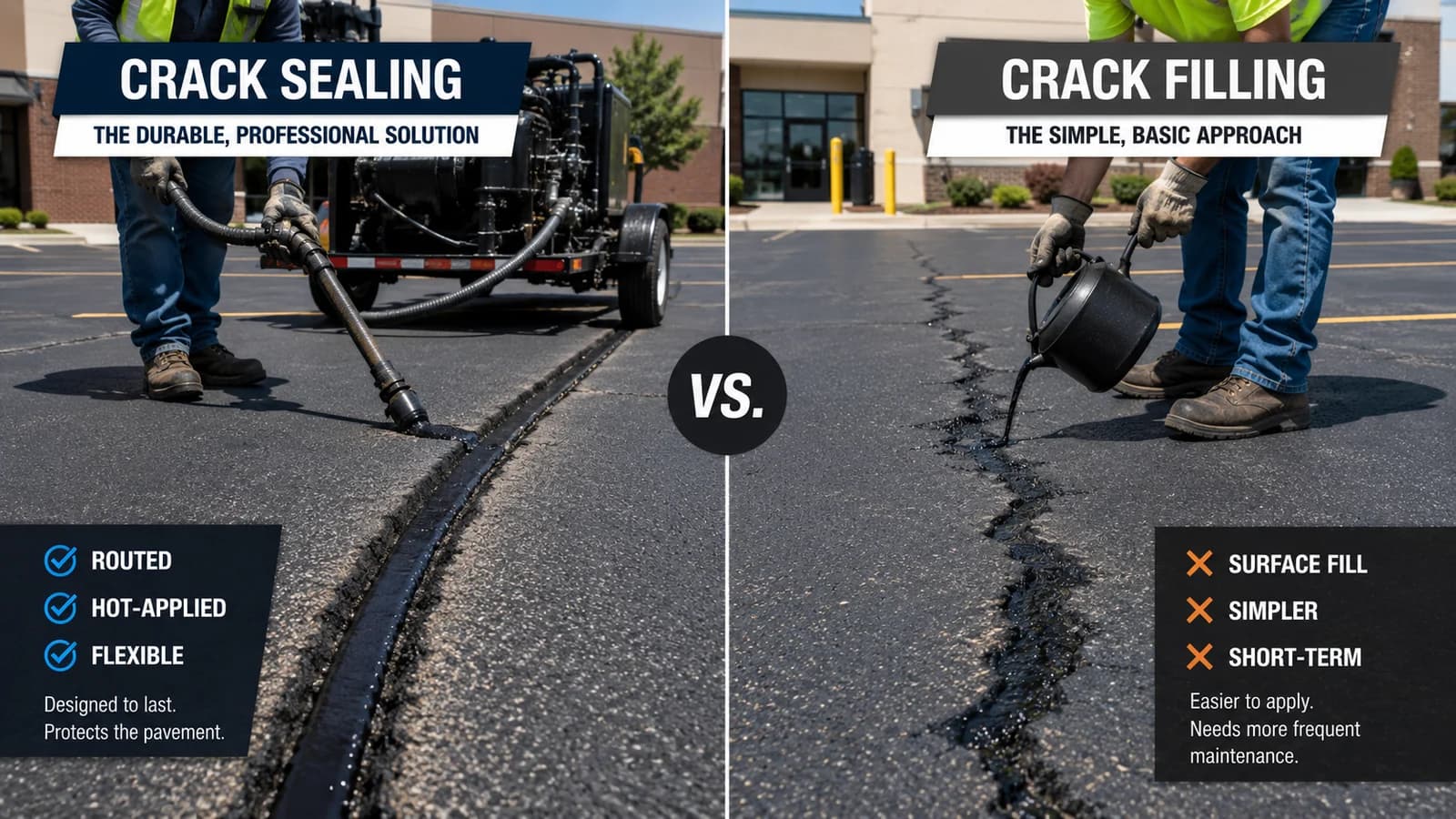
Crack Sealing vs. Crack Filling: What Is the Difference?
The difference between crack sealing and crack filling, which method fits which type of crack, and how each fits into pavement maintenance.
Property-owner guide
Updated July 11, 2026
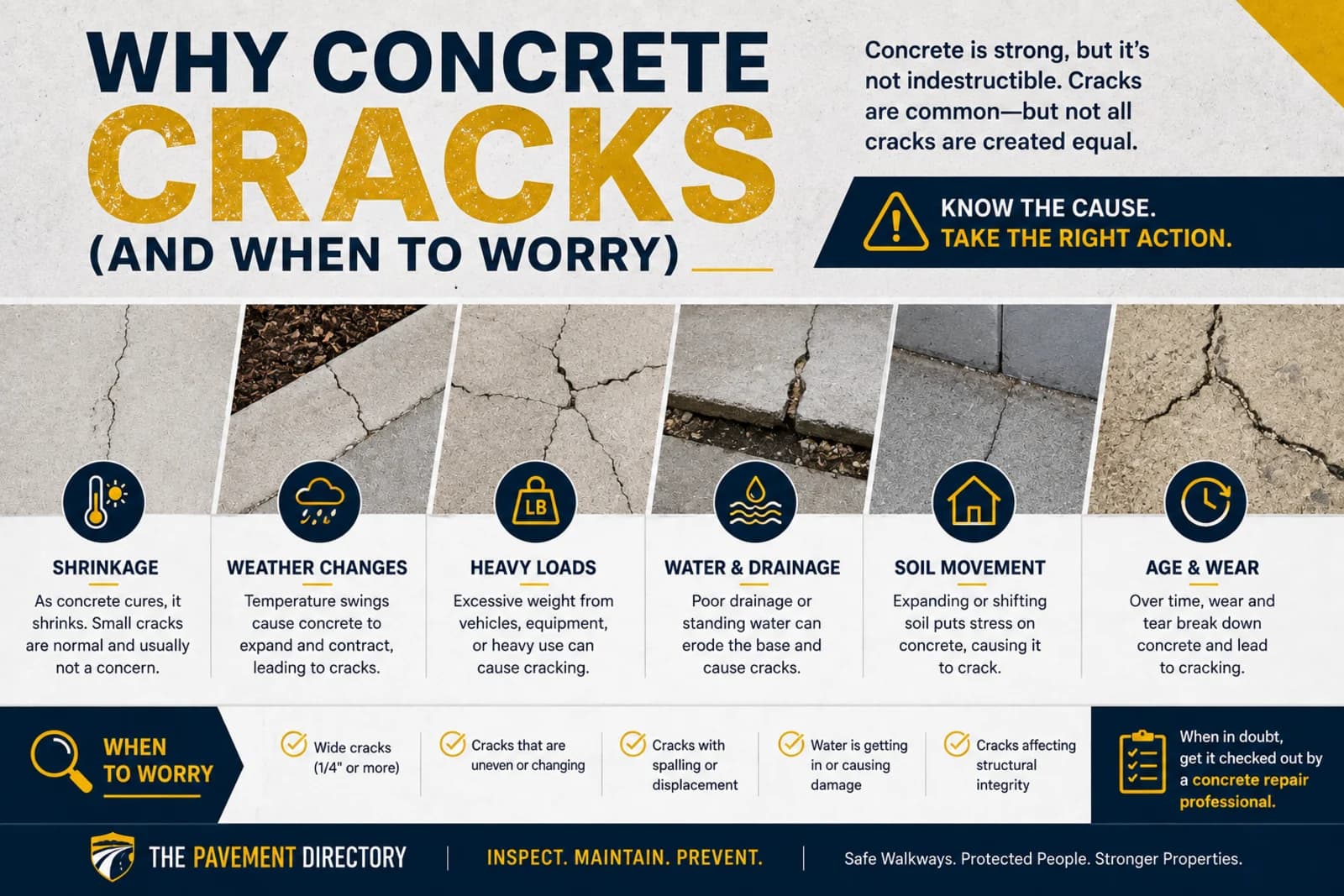
Why Concrete Cracks (and When to Worry)
Why concrete cracks — shrinkage, settlement, freeze-thaw, roots, and loads — the difference between cosmetic and structural, and when to repair.
Property-owner guide
Updated July 12, 2026
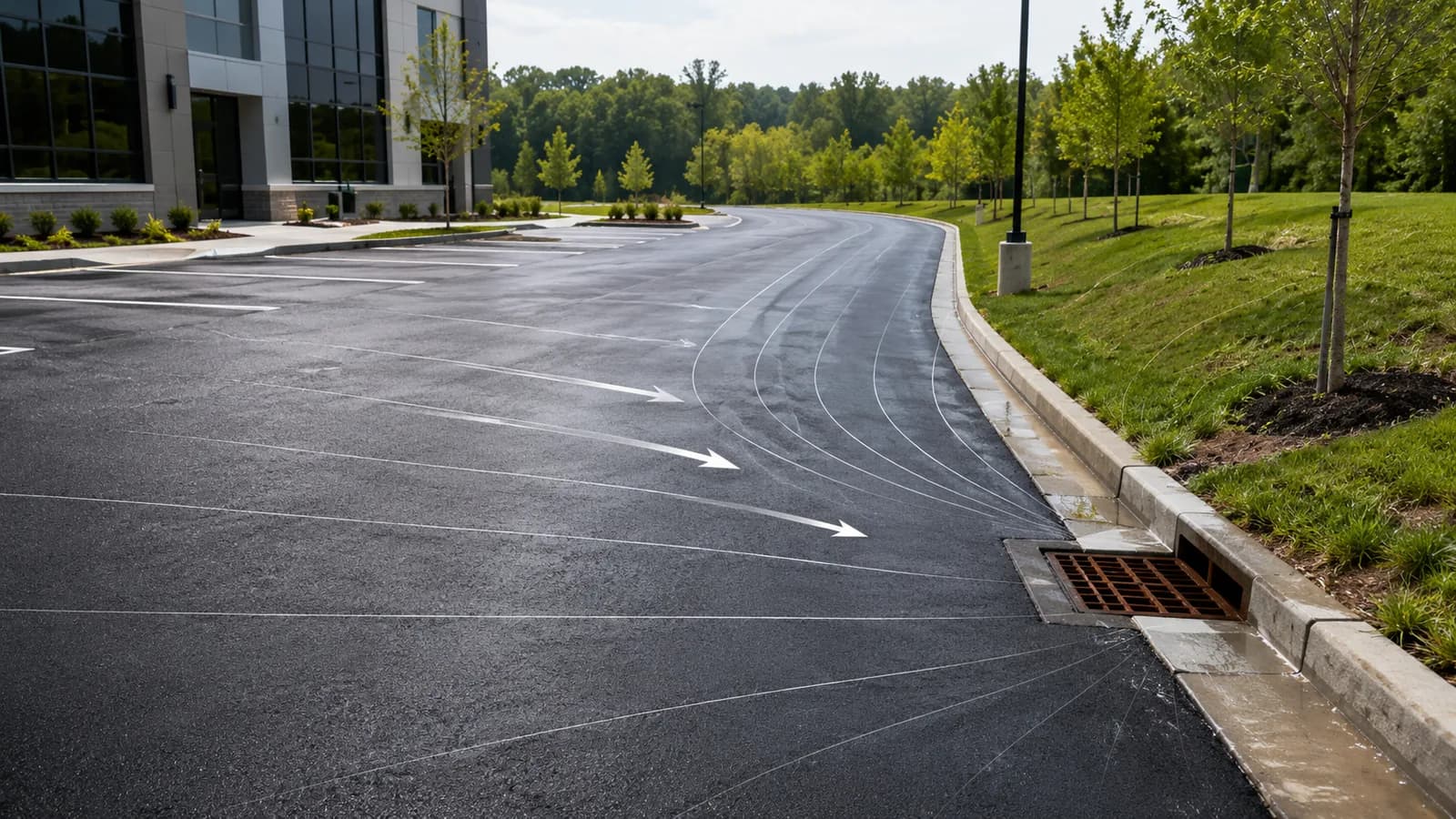
Grading and Slope Basics for Pavement
Grading and slope basics for pavement: what positive drainage means, why slope matters, common grading problems, and where engineering comes in.
Property-owner guide
Updated July 11, 2026
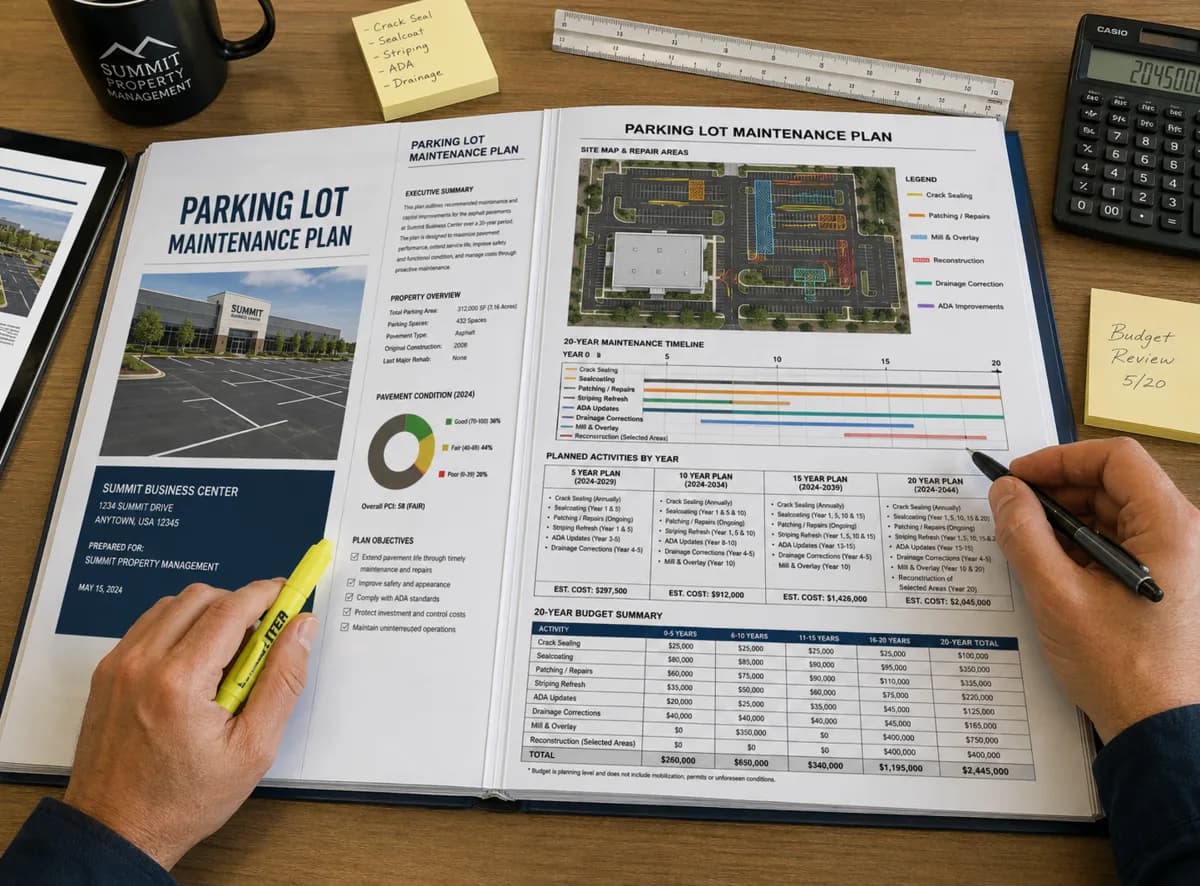
How to Create a Parking Lot Maintenance Plan
How to build a parking lot maintenance plan: inspecting condition, setting service cycles, prioritizing repairs, and budgeting over multiple years.
Before you hire: The Pavement Directory does not guarantee contractor performance, pricing, licensing, insurance, or availability. Business information may be submitted by contractors or gathered from public sources and should be independently verified before hiring. Always confirm licensing, insurance, references, scope of work, and written contract terms.
For contractors
Ready to compare Colorado contractors?
Browse listings by city and service, then use what you have read here to check the scope, the credentials, and the timing before you sign.