Chantilly, Virginia
Collegiate Sealers & Paving operates in Virginia, Maryland, Florida, and New Jersey. The company offers online scheduling, quote requests, and online payment options. Business hours are Monday through Friday, 7 am to 5 pm.
State pavement directory
Virginia's licensing framework is unusually clear about one thing: what a contractor is allowed to bid depends on a class assigned by the state. Class A, B, and C licenses correspond to project value limits, and checking which one a contractor holds takes a minute and tells you whether they can legally do the job in front of you. That is more than most states offer — and it matters here, because the work itself varies enormously from Hampton Roads tidewater to Shenandoah Valley karst.
This page lists pavement contractors serving Virginia cities and covers what drives scope: subgrade behavior across three physiographic regions, Chesapeake Bay stormwater requirements, flooding in the coastal counties, and the loading that data centers, military facilities, and distribution sites impose.
Before you hire: The Pavement Directory does not guarantee contractor performance, pricing, licensing, insurance, or availability. Business information may be submitted by contractors or gathered from public sources and should be independently verified before hiring. Always confirm licensing, insurance, references, scope of work, and written contract terms.
Directory listings

Chantilly, Virginia
Collegiate Sealers & Paving operates in Virginia, Maryland, Florida, and New Jersey. The company offers online scheduling, quote requests, and online payment options. Business hours are Monday through Friday, 7 am to 5 pm.

White Post, Virginia
Paving contractor in White Post, VA offering Asphalt Paving.
Mechanicsville, Virginia
A1 Asphalt Paving & Sealing is an owner-operated paving company based near Mechanicsville, Virginia, offering asphalt installation, sealcoating, crack sealing, milling, and line striping. The company primarily serves commercial clients such as property managers, HOAs, retail centers, schools, and apartment communities, but also performs residential work like driveway resurfacing. It has operated since 1996 and lists membership in VAMA and CAI trade associations, serving areas including Richmond, Glen Allen, Hampton Roads, and Williamsburg, VA.
Sterling, Virginia
Based in Sterling, Virginia, Academy Sealers is a locally operated company serving the Washington DC Metro area. The company applies hand-applied asphalt sealer for residential driveways, offers asphalt repair and replacement services, provides parking lot maintenance including crack filling and line striping, and performs seasonal gutter cleaning in Northern Virginia. The company is fully licensed in Virginia and Maryland.
Warrenton, Virginia
The company provides asphalt driveway paving, asphalt parking lot paving, parking lot striping, asphalt milling, asphalt crack filling, trucking services, and repair services. They offer free estimates and state they use state-of-the-art equipment and high-quality materials. Office hours are Monday through Friday, 9am to 5pm.
Fredericksburg, Virginia
The company has 40 years of experience in asphalt paving. Services include new paving, resurfacing, major repairs, and maintenance for driveways, parking lots, shopping centers, airports, schools, hospitals, and municipal projects. The company is licensed as a Virginia DPOR Class A Contractor and states it is insured and bonded.
Chester, Virginia
Founded in 1965 by Benjamin Harrison, Sr., Harrison Paving operates as a full-service asphalt paving company with two locations in Richmond and South Hill, Virginia. The company provides services including asphalt paving, seal coating, tar and gravel, parking lot paving and striping, driveways, roadways, repairs, resealing, and resurfacing. Harrison Paving is fully licensed and insured and holds an A+ rating with the Better Business Bureau.
Waynesboro, Virginia
Josh's Paving Inc. is a locally-owned-and-operated business that offers asphalt paving, sealcoating, and asphalt and driveway repairs. The company is fully licensed and insured. The business guarantees all work completed.
Newport News, Virginia
Parking Lot Maintenance, Inc. is a Class A contracting company based in Newport News, Virginia, offering more than 20 years of experience in parking lot construction and maintenance. Services include asphalt sealcoating, crack sealing, asphalt and concrete repair, storm drainage repair, and striping and painting, including thermoplastic markings. The company serves commercial real estate owners and operators throughout Central and Eastern Virginia.

Suffolk, Virginia
RC Paving & Son, LLC is a family-owned paving contractor based in Suffolk, Virginia, offering asphalt paving, sealcoating, ADA-compliant line striping, and crack filling services. The company serves both residential and commercial customers, including driveways and parking lots, and states it has over 40 years of industry experience. It also offers recycled asphalt and gravel material delivery and describes itself as licensed and insured.
Manassas, Virginia
Standard Paving Inc. is a family-owned and operated, Class A state-licensed paving company based in Manassas, Virginia. The company provides asphalt paving and tar & chip paving services for residential driveways, private roads, and pipe stems throughout Northern Virginia and surrounding regions. The company describes itself as a third-generation paving company with decades of experience.
Chester, Virginia
Worden Paving is a family-owned business serving the Greater Richmond area for over 30 years. The company offers asphalt installation, asphalt repair, asphalt seal coating, hardscapes, chip and tar services, and grading, excavating, and gravel services. All work is guaranteed and comes with a 1-year maintenance warranty. The business is licensed, insured, and a BBB member.
Virginia gives you a genuinely useful license class to check, then hands you three different pavement environments to build in.
Regional differences
Virginia does not have one climate or one soil profile, and pavement that performs well in one part of the state can fail early a few hours away. These are the divisions that matter most when scoping paving, repair, or maintenance work.
Environmental stress
Subgrade conditions
Common distress
What it means for the work
Environmental stress
Subgrade conditions
Common distress
What it means for the work
Environmental stress
Subgrade conditions
Common distress
What it means for the work
Environmental stress
Subgrade conditions
Common distress
What it means for the work
Field conditions
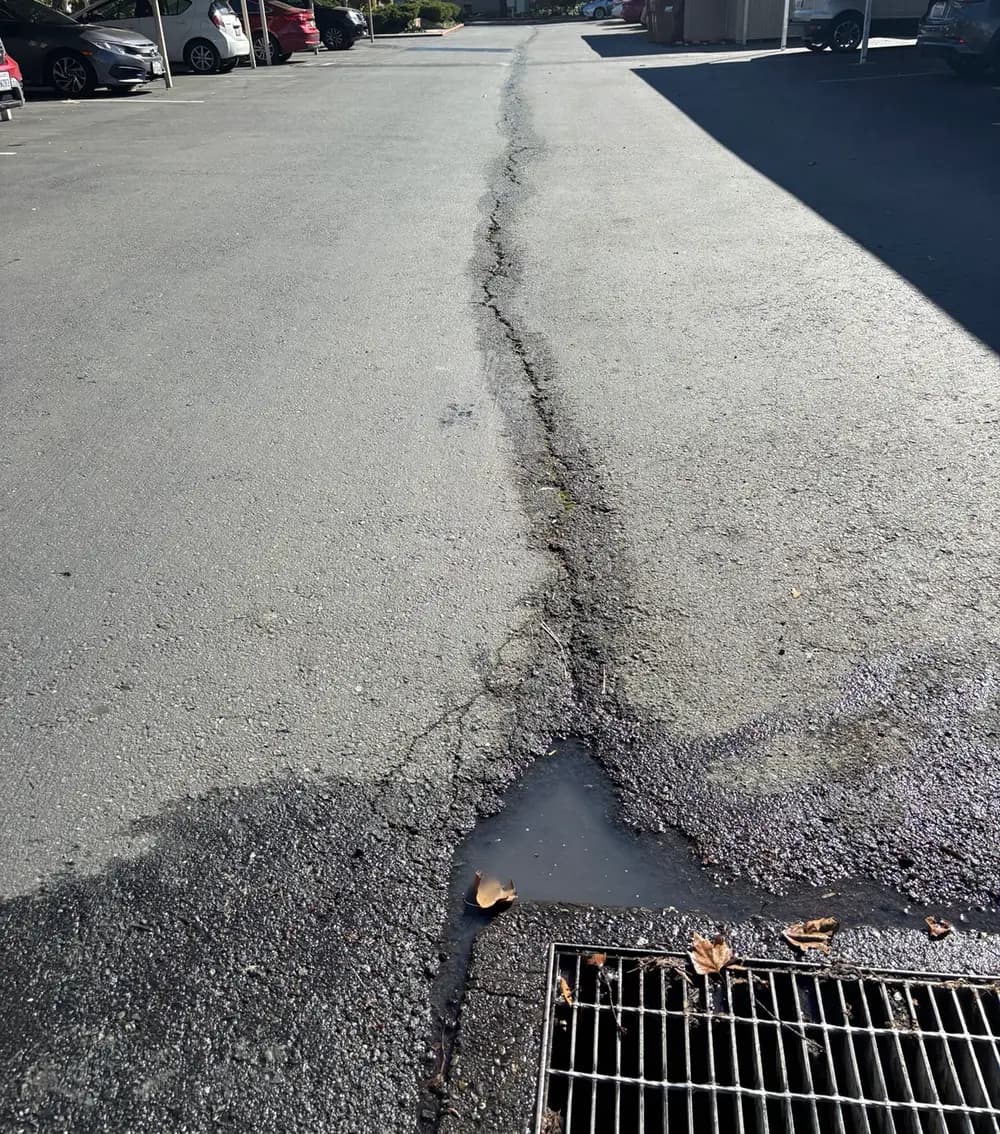
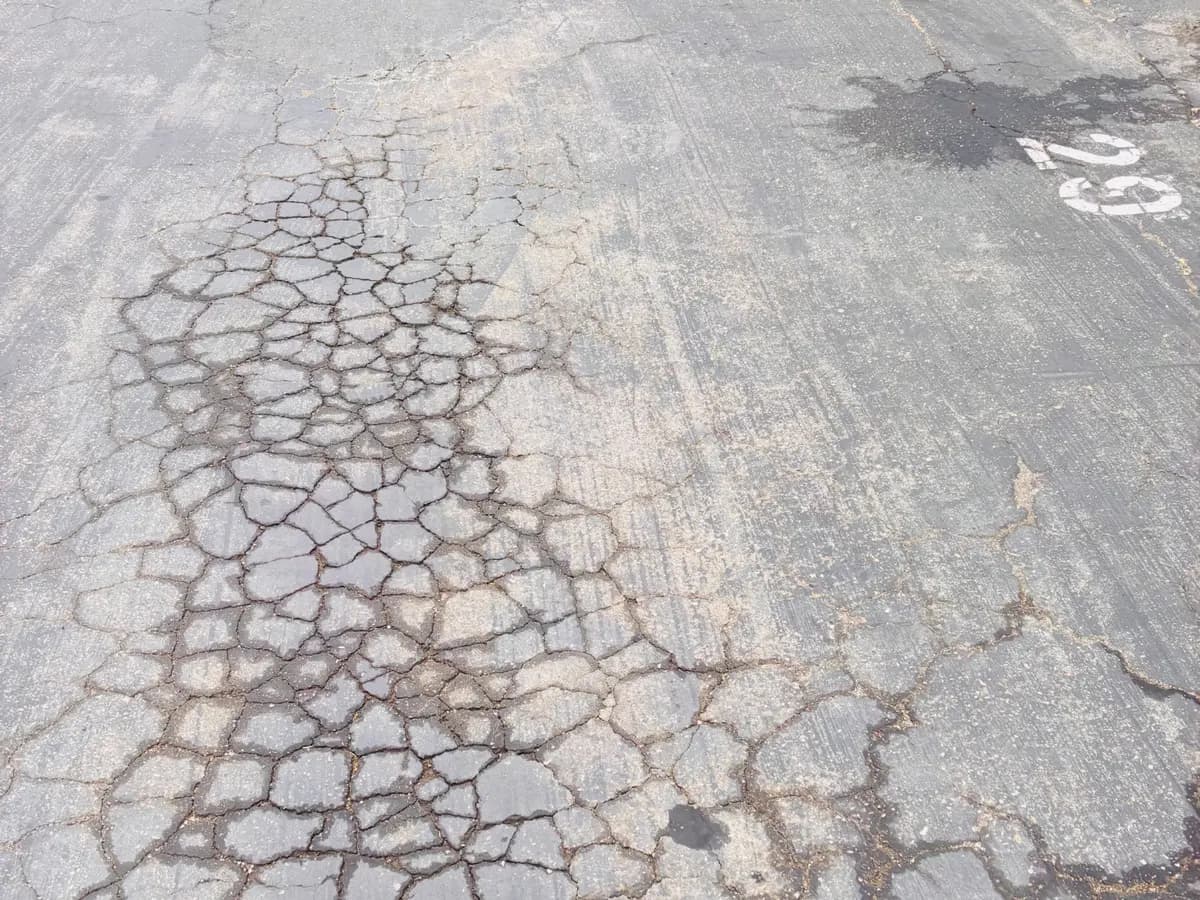
Alligator cracking concentrated in the low areas of a lot, pavement that flexes underfoot after wet weather, and repairs that fail in the same locations year after year.
Likely causes
When to get it looked at: Repeat failure in the same low areas is a drainage problem. Confirm the base is dry before agreeing to another overlay over it.
A localized depression that deepens over months, sometimes with circular cracking around it, in an otherwise sound Shenandoah Valley or southwestern Virginia lot.
Likely causes
When to get it looked at: A depression that keeps growing after being filled is a geotechnical question. Directing stormwater into a karst area can make it worse rather than better.
In Hampton Roads and low-lying coastal areas, pavement edges undermine and sections drop after flood events, sometimes with the surface looking largely intact.
Likely causes
When to get it looked at: In areas with recurrent flooding, the frequency of exposure is increasing. A repair designed for the flooding you had may not suit the flooding you will get.
Pavement breaking away along the perimeter of Coastal Plain lots, particularly where vehicles run partly off the edge.
Likely causes
Rutting, shoving, and edge break-up along access routes at data center campuses, military facilities, and industrial sites in northern Virginia and Hampton Roads.
Likely causes
Timing
Treat this as a planning aid, not a rule. Whether a given treatment can actually be placed on a given day depends on product requirements, surface and nighttime temperatures, the rain forecast, humidity, plant availability, the project specification, and the contractor’s means and methods.
Work often suited to this window
Scheduling risks
Inspect for: Note where water stands after winter rain and where meltwater refreezes into hazards.
Regional exception: The Shenandoah Valley and southwest see substantially colder winters than Virginia Beach.
Work often suited to this window
Scheduling risks
Inspect for: Separate winter surface damage from base failure, and check for erosion that developed over the wet season.
Work often suited to this window
Scheduling risks
Inspect for: Check drainage after significant rainfall and walk truck and equipment routes during the hottest weeks.
Work often suited to this window
Scheduling risks
Inspect for: Confirm cracks are sealed and inlets are clear before winter rain and western Virginia freeze-up.
Verification
Virginia licenses contractors through the Department of Professional and Occupational Regulation in three classes tied to project and annual value. Class C covers the smallest projects, Class B a middle range, and Class A the largest, with no monetary limit. Contractors also hold specialty designations describing the type of work they are qualified for, and Highway / Heavy is the specialty most relevant to paving and site work.
This is genuinely useful to a property owner because it takes one lookup to establish whether a contractor can legally bid your project. Check the class against your project value and check the specialty against your scope. A contractor holding a Class C license cannot lawfully undertake a project above the Class C limit, regardless of what the proposal says.
Use DPOR's license lookup rather than trusting the number on a proposal, and confirm the license is active and the specialty appropriate. Then confirm the entity through the State Corporation Commission and match it to the contract and the insurance certificate.
Local jurisdictions add their own permitting, and in northern Virginia and the Tidewater localities that local review is frequently what governs the schedule. Public projects carry separate bonding and, where applicable, prequalification requirements.
A DPOR class establishes what a contractor may legally bid and a specialty describes the work type. Neither says anything about whether the proposed scope is correct for your pavement's condition.
Ask for a certificate of insurance sent directly from the carrier or agent rather than a copy forwarded by the contractor, confirm the general liability and workers’ compensation coverage is active on the dates of your work, and ask to be named as certificate holder so you are notified if the policy lapses.
Licensing requirements can turn on project value, scope of work, property location, and whether the job is public or private. City and county rules may add registration, permitting, or bonding requirements beyond anything required at the state level. Verify current requirements with the agency directly before contracting.
Last reviewed:
Permitting
Virginia Department of Environmental Quality (DEQ)
Virginia administers construction stormwater and erosion and sediment control through the Department of Environmental Quality, with many localities operating their own programs under state oversight. Construction that disturbs enough ground generally requires a stormwater management plan, an erosion and sediment control plan, and permit coverage, and localities frequently administer that review directly.
The Chesapeake Bay Preservation Act adds a layer that applies in the Tidewater localities. It establishes protected areas along water bodies and imposes performance criteria on development within them, which means a paving project in Virginia Beach, Norfolk, Richmond, or another covered locality can face requirements that an identical project in the Shenandoah Valley would not. Whether it applies is a function of the property's location and its proximity to protected features.
Karst areas across the Shenandoah Valley and southwest carry a distinct consideration: concentrated stormwater infiltration can accelerate sinkhole formation. Directing runoff into an infiltration practice in karst terrain is not automatically the environmentally preferable choice, and it warrants geotechnical input.
Virginia localities administer much of this review themselves, and Chesapeake Bay Preservation Act coverage depends on the property's location. Confirm with the locality before design.
Last reviewed:
Plain English
| Term | What it means on a Virginia project |
|---|---|
| Superpave (SM, IM, BM designations) | Virginia specifications identify surface, intermediate, and base asphalt mixes by designation. Local suppliers use the same vocabulary, and it is fair to ask which mix a proposal includes. |
| Aggregate base material (21A / 21B) | The dense-graded crushed stone base commonly specified in Virginia. Its compaction and drainage quality usually determine pavement life more than the asphalt above it. |
| Resource Protection Area (RPA) | A protected buffer along water bodies under the Chesapeake Bay Preservation Act in Tidewater localities. Work within an RPA carries additional requirements. |
| Karst | Limestone terrain where dissolution creates subsurface voids. Common across the Shenandoah Valley, and directly relevant to both settlement and where stormwater should not be infiltrated. |
| Geotextile separation fabric | Fabric between subgrade and base keeping clay from pumping into the stone. On wet Piedmont clay it can make a real difference to pavement life. |
| Full-depth reclamation (FDR) | Pulverizing existing asphalt and base together, treating the blend, and repaving over it. Useful on larger lots and private roads where the base has failed. |
State transportation specifications can provide useful regional terminology and material references, but they do not automatically govern private parking-lot or driveway projects unless incorporated into the contract or required by the applicable jurisdiction.
More definitions are in the pavement glossary.
Property types
Loudoun County and the broader northern Virginia corridor generate sustained heavy equipment, generator, and construction traffic on access routes rarely designed for it.
Hampton Roads and northern Virginia facilities carry heavy equipment loading, often on saturated or sandy subgrade, with their own standards and access requirements.
Norfolk and Richmond-area freight sites concentrate container and trailer loading on ground with limited bearing capacity.
Continuous access, pedestrian safety on concrete surfaces, and construction windows compressed into academic breaks.
Shenandoah Valley operations concentrate heavy truck traffic on karst terrain where drainage decisions have subsurface consequences.
Before you sign
Virginia's DPOR issues contractor licenses in three classes tied to project and annual value: Class C for the smallest projects, Class B for a middle range, and Class A with no monetary limit. Contractors also hold specialty designations describing the type of work — Highway / Heavy is the one most relevant to paving and site work. Checking the class against your project value and the specialty against your scope takes one lookup and tells you whether a contractor can legally bid the job.
It can, in the Tidewater localities where it applies. The Act establishes protected areas along water bodies and imposes performance criteria on development within them, so a paving project in Virginia Beach, Norfolk, or another covered locality may face requirements an identical project in the Shenandoah Valley would not. Whether it applies depends on the property's location and its proximity to protected features, which the locality can confirm during design.
Much of the valley is karst terrain, where dissolution of underlying limestone creates subsurface voids and soil gradually ravels down into them. That produces a localized depression that deepens again after each repair. A depression that keeps returning is a geotechnical question rather than a paving one. It is also a reason to be careful about directing concentrated stormwater into infiltration practices in karst areas, since that can accelerate the process.
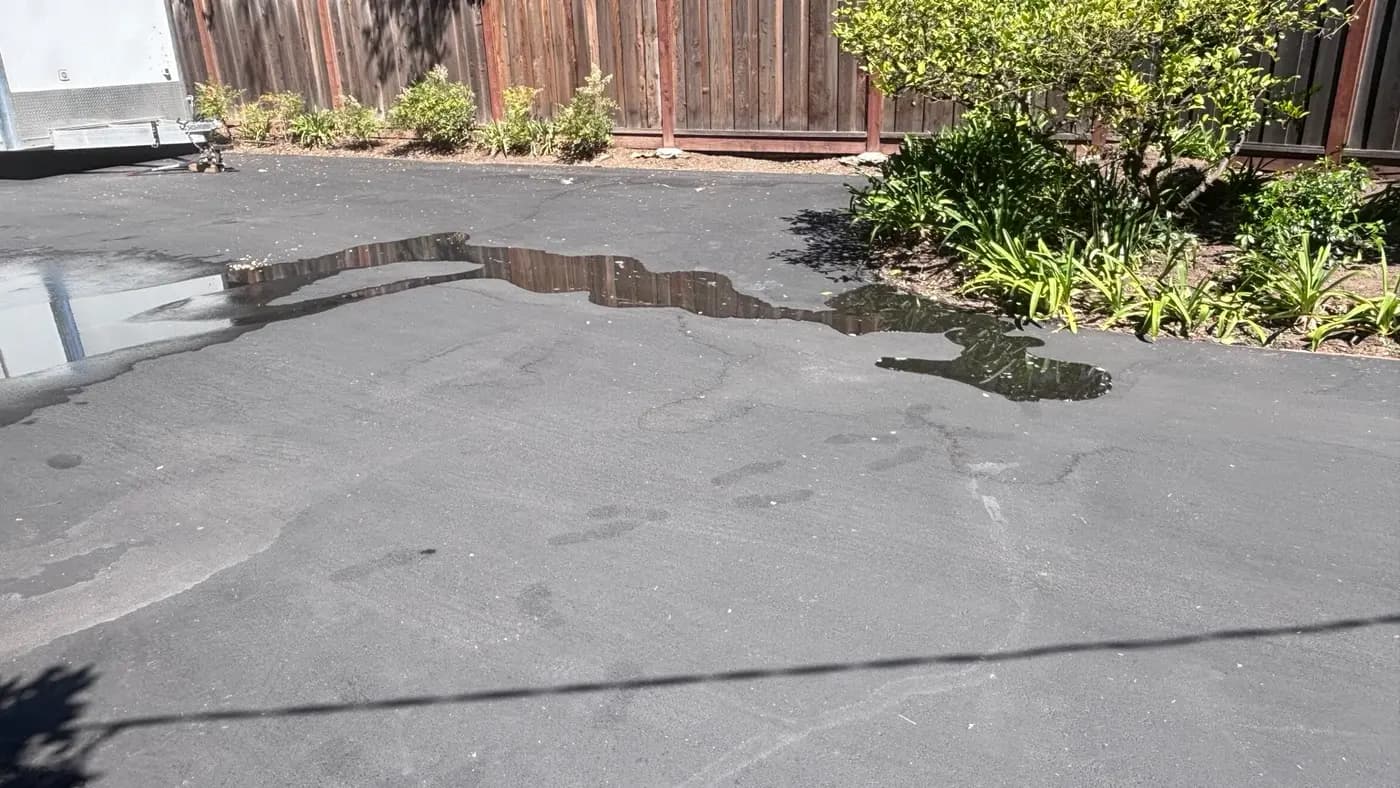
Repeated tidal and storm flooding keeps the pavement base saturated and washes material out from beneath edges, and drainage systems in low-lying areas cannot discharge when tides are high. The practical implication is that the exposure is increasing rather than static — a repair designed around the flooding a property experienced historically may not suit what it will experience. For coastal properties, base drainage and edge protection deserve more weight than surface condition.
Sandy subgrade provides very little cohesion, so a pavement edge without a curb, shoulder, or other confinement has nothing holding it. Vehicles running partly off the edge break it down, and water washes material out from beneath. Repeatedly patching the edge does not change the condition that caused it — the edge usually needs confinement, a proper shoulder, or a widened section for the traffic that actually uses it.
It can, substantially. Sustained heavy equipment deliveries, generator transport, and construction traffic impose loads well beyond what a standard commercial section carries, and the damage concentrates along access routes and turning areas rather than across the whole property. On campuses where construction is ongoing, building the access routes to a heavier section than the parking areas is generally more economical than repeatedly repairing them.
Yes. The Shenandoah Valley and southwestern Virginia see colder winters, deeper frost, and real freeze-thaw cycling, which makes fall crack sealing meaningful maintenance there. Hampton Roads rarely freezes and is instead dealing with a high water table, tidal drainage constraints, and flooding. Central Virginia sits between the two with clay drainage as the dominant concern. One maintenance plan does not fit all three.
Local coverage
Explore by location
For contractors entering this market
State and local licensing rules vary, and Virginia appears in the national comparison of commercial and residential paving-contractor requirements. Review the national paving-contractor licensing comparison, then verify current requirements with the applicable licensing authority.

Property-owner guide
Updated July 12, 2026
Why drainage is the biggest factor in how long pavement lasts, how water damages asphalt from the base up, and why fixing it protects every repair.

Property-owner guide
Updated July 6, 2026
Common causes of parking lot drainage problems, why they accelerate pavement damage, and what property owners should ask contractors before a fix.

Property-owner guide
Updated July 6, 2026
What alligator cracking is, what causes it, whether it can be patched or needs full-depth repair, and why it usually points to a failing base.

Property-owner guide
Updated July 6, 2026
How to choose an asphalt paving contractor: project fit, relevant experience, written scope, references, insurance, and pavement qualifications.
Property-owner guide
Updated July 12, 2026
Grading and slope basics for pavement: what positive drainage means, why slope matters, common grading problems, and where engineering comes in.
Official sources
Contractor licensing
Virginia DPOR license lookupVerify a Virginia contractor's license class, specialty designations, and status.
Business registration
Virginia State Corporation Commission business searchConfirm the contracting entity is registered and in good standing.
Environmental
Virginia DEQ stormwater managementConstruction stormwater, erosion and sediment control, and Chesapeake Bay Preservation Act information.
Transportation
Virginia Department of TransportationState specifications and materials terminology used by Virginia suppliers.
Consumer protection
Virginia Attorney General consumer protectionWhere to file a complaint about a contractor or business practice.
This page summarizes publicly available information for general education. It is not legal, engineering, or code-compliance advice, and requirements change. Confirm anything that affects your project with the agency with jurisdiction over the property.
Regulatory content last reviewed:
For contractors
Get listed where property managers, owners, and facility teams search by state, city, and service.