
Tennessee pavement guide
Tennessee Paving Contractor License Requirements, Permits, and Verification
Tennessee requires a contractor's license from the Board for Licensing Contractors for construction projects at or above a dollar threshold set in state law. Whether a specific paving or site project crosses that threshold depends on the total contract value, so confirm the current threshold with the board rather than relying on a rule of thumb.
- State-level licensing
- Reviewed August 2026
Jump to section
Verification
Contractor Licensing and Verification in Tennessee
- Statewide licensing
- State-level licensing applies
- Administering body
- Tennessee Board for Licensing Contractors (Department of Commerce and Insurance)
Two things on a Tennessee license matter beyond the fact that it exists. The first is the classification, which describes the type of work the licensee is approved to perform. The second is the monetary limit, which is set from the contractor's financial statement and caps the size of project they may undertake. A valid license with the wrong classification or a limit below your project value is a real problem, and both are visible on the state's verification lookup.
Separately, Tennessee administers a home improvement license that applies to certain residential work in specified counties. If your project is a residential driveway rather than a commercial lot, ask which credential applies to your county and confirm it directly.
Local requirements sit on top of all of this. Municipalities across Tennessee may require their own business registration, permits, or bonds for work performed inside city limits, and public projects carry separate bonding and prequalification rules. Ask the jurisdiction where the property sits before assuming the state license is the whole picture.
What a contractor license does not prove
A Tennessee license confirms classification, monetary limit, and financial standing at the time of issue. It says nothing about whether the contractor has built over karst, worked wet silt subgrade successfully, or designed a section for the truck traffic your site actually carries.
- That the proposed scope is the right fix for what is actually failing
- That the price is fair for the local market
- That drainage has been designed or corrected
- That the pavement section and thickness suit the traffic the property carries
- That the specified materials are appropriate for the site
- That the crew will show up when promised
- That workmanship will hold up past the first winter or summer
- That the company is financially stable enough to honor a warranty
Ask for a certificate of insurance sent directly from the carrier or agent rather than a copy forwarded by the contractor, confirm the general liability and workers’ compensation coverage is active on the dates of your work, and ask to be named as certificate holder so you are notified if the policy lapses.
Licensing requirements can turn on project value, scope of work, property location, and whether the job is public or private. City and county rules may add registration, permitting, or bonding requirements beyond anything required at the state level. Verify current requirements with the agency directly before contracting.
Last reviewed:
Permitting
Stormwater and Environmental Considerations
Tennessee Department of Environment and Conservation (TDEC)
Tennessee administers construction stormwater permitting through the Department of Environment and Conservation rather than through the EPA directly. Construction disturbing enough ground generally requires coverage under the state's construction general permit, along with a stormwater pollution prevention plan and erosion and sediment controls sized to the site. Many Tennessee municipalities also run their own permitting programs and review projects locally.
Karst adds a Tennessee-specific consideration that catches people out. Across the Nashville Basin and Highland Rim, directing concentrated stormwater into an infiltration practice can accelerate the movement of soil into solution channels below, which is exactly the mechanism behind many sinkhole-shaped depressions. Infiltration is not automatically the preferable option here, and where it is used it deserves geotechnical input rather than a default detail.
On the erosion side, West Tennessee loess moves easily once it is exposed and concentrated water reaches it. Stabilizing disturbed ground promptly, protecting inlets, and keeping tracked sediment off adjacent streets are practical items worth confirming are in the contractor's scope rather than assumed.
What tends to drive requirements here
- Disturbed area, which drives construction general permit coverage
- Local municipal stormwater programs, which frequently administer the actual review
- Karst terrain, where concentrated infiltration can accelerate subsurface soil loss
- Erodible loess soils in West Tennessee once ground cover is removed
- Floodplain and floodway status along the Mississippi, Tennessee, and Cumberland rivers
- Inlet protection and sediment tracking control during the work itself
Tennessee cities and counties often administer stormwater review directly and may impose requirements beyond the state minimum. Confirm what applies to your parcel with the local program before design.
Last reviewed:
Official sources
Tennessee Agencies and Reference Links
Contractor licensing
Tennessee Board for Licensing ContractorsLicensing requirements, classifications, and monetary limits for Tennessee contractors.
Contractor licensing
Tennessee license verificationLook up a Tennessee licensee's status, classification, and monetary limit before signing.
Business registration
Tennessee business entity searchConfirm the exact entity on your proposal is registered and in good standing in Tennessee.
Environmental
TDEC NPDES stormwater permitting programConstruction stormwater permit coverage, SWPPP expectations, and erosion control requirements.
Transportation
Tennessee Department of TransportationState specifications and materials terminology that shape how Tennessee contractors describe work.
Consumer protection
Tennessee Attorney General consumer protectionWhere to file a complaint about a contractor or a deceptive business practice.
This page summarizes publicly available information for general education. It is not legal, engineering, or code-compliance advice, and requirements change. Confirm anything that affects your project with the agency with jurisdiction over the property.
Regulatory content last reviewed:
Tennessee licensing and permit FAQs
Does Tennessee require a license to pave a parking lot?
Tennessee requires a contractor's license from the Board for Licensing Contractors for projects at or above a dollar threshold set in state law, and the license carries both a work classification and a monetary limit drawn from the contractor's financial statement. Both are worth checking on the state's verification lookup, because a current license with the wrong classification or a limit below your contract value does not actually authorize the job. Some residential work in certain counties falls under a separate home improvement license instead.
Can stormwater infiltration be a bad idea on a Tennessee site?
Over karst it can be. Directing concentrated runoff into an infiltration practice above limestone with solution channels can accelerate the downward movement of soil that produces sinkhole-shaped settlement. That does not mean infiltration is off the table across Middle Tennessee, but it does mean the decision deserves geotechnical input rather than a standard detail copied from another site. Local stormwater programs in karst counties often have specific guidance on this.
Before you sign: hiring guides
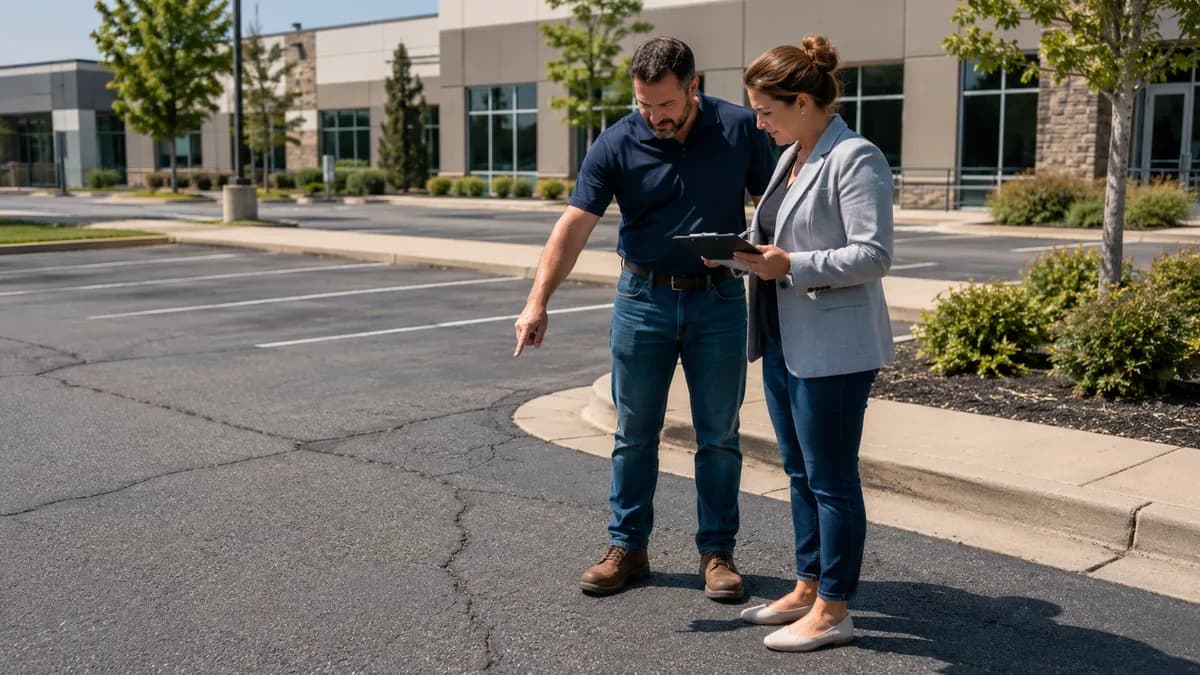
Property-owner guide
Updated July 6, 2026
How to Choose an Asphalt Paving Contractor
How to choose an asphalt paving contractor: project fit, relevant experience, written scope, references, insurance, and pavement qualifications.
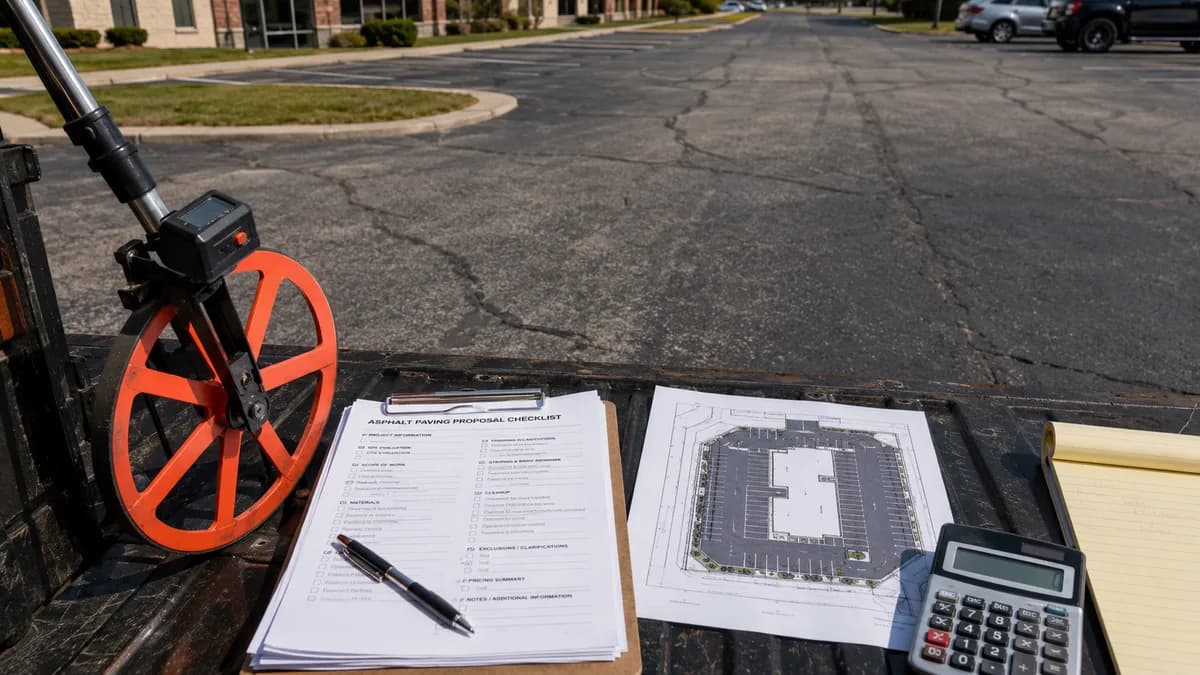
Property-owner guide
Updated July 6, 2026
Asphalt Paving Proposal Checklist
What belongs in an asphalt paving proposal: work limits, quantities, thickness, base preparation, drainage, striping, exclusions, and warranty terms.
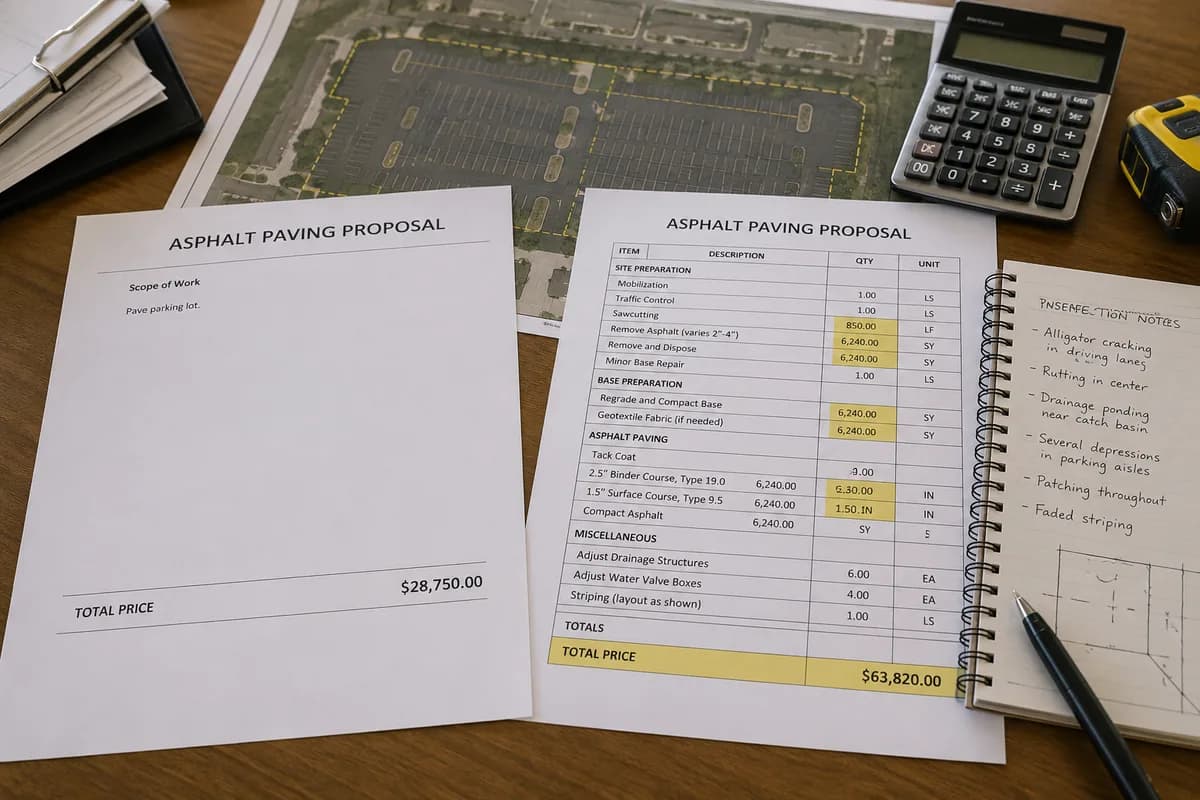
Property-owner guide
Updated July 6, 2026
Cheap Asphalt Paving Bids: Red Flags to Watch For
A cheap asphalt paving bid may omit thickness, base preparation, drainage, striping, or warranty terms. Learn the red flags to check before hiring.
Before you hire: The Pavement Directory does not guarantee contractor performance, pricing, licensing, insurance, or availability. Business information may be submitted by contractors or gathered from public sources and should be independently verified before hiring. Always confirm licensing, insurance, references, scope of work, and written contract terms.
For contractors
Ready to compare Tennessee contractors?
Browse listings by city and service, then use what you have read here to check the scope, the credentials, and the timing before you sign.