
South Carolina pavement guide
South Carolina Paving Contractor License Requirements, Permits, and Verification
South Carolina requires a license from the state's Contractor's Licensing Board for commercial construction work above a dollar threshold set in state law. Whether a specific paving or site project crosses that threshold depends on the total contract value, so confirm the current figure with the board rather than relying on a remembered number.
- State-level licensing
- Reviewed August 2026
Jump to section
Verification
Contractor Licensing and Verification in South Carolina
- Statewide licensing
- State-level licensing applies
- Administering body
- South Carolina Department of Labor, Licensing and Regulation — Contractor's Licensing Board
Two features of a South Carolina license matter beyond its existence. The first is the classification, which describes the type of work the licensee is approved to perform — a license held in an unrelated classification does not authorize paving. The second is the monetary limit, derived from the contractor's financial statement, which caps the size of project they may undertake. Both are visible through the state's license verification lookup, and checking them against your project takes very little time.
Residential work is handled separately in South Carolina, under a different licensing and registration framework for residential builders and specialty contractors. If your project is a driveway at a home rather than a commercial lot, ask which credential applies and verify that one instead.
Local requirements and public work add further layers. Municipalities may require their own business licenses and permits for work within their jurisdiction, and public projects carry bonding and prequalification rules that private jobs do not. Confirm with the jurisdiction or the awarding agency before assuming the state license covers everything.
What a contractor license does not prove
A South Carolina license confirms classification, monetary limit, and financial standing at the time of issue. It does not establish that a contractor has built a section that works over tidally limited drainage, on loose Sandhills sand, or on saturated Piedmont clay.
- That the proposed scope is the right fix for what is actually failing
- That the price is fair for the local market
- That drainage has been designed or corrected
- That the pavement section and thickness suit the traffic the property carries
- That the specified materials are appropriate for the site
- That the crew will show up when promised
- That workmanship will hold up past the first winter or summer
- That the company is financially stable enough to honor a warranty
Ask for a certificate of insurance sent directly from the carrier or agent rather than a copy forwarded by the contractor, confirm the general liability and workers’ compensation coverage is active on the dates of your work, and ask to be named as certificate holder so you are notified if the policy lapses.
Licensing requirements can turn on project value, scope of work, property location, and whether the job is public or private. City and county rules may add registration, permitting, or bonding requirements beyond anything required at the state level. Verify current requirements with the agency directly before contracting.
Last reviewed:
Permitting
Stormwater and Environmental Considerations
South Carolina Department of Environmental Services (SCDES)
South Carolina administers construction stormwater and erosion and sediment control through the Department of Environmental Services, which took over the state's environmental programs from the former combined health and environmental agency. Construction disturbing above a threshold area generally requires permit coverage together with a stormwater pollution prevention plan and erosion and sediment controls suited to the site. Many local governments implement the program locally through delegated or coordinated review.
The coastal zone carries an additional layer. Work in South Carolina's designated coastal counties can involve coastal zone consistency review addressing critical areas, flooding, and coastal resources, and that review is separate from ordinary stormwater permitting. For a Charleston, Beaufort, or Horry County property, establishing whether coastal review applies is worth doing before design rather than after a plan is drawn.
Storm intensity and duration are what the drainage design actually has to answer for. Tropical systems deliver rainfall volumes far beyond routine design assumptions, and regional flooding can back up a site's outfall no matter how well the lot itself is graded. On the Lowcountry's flat, low-elevation parcels, where the water goes when the system is overwhelmed is a more useful design question than what the annual rainfall total is.
What tends to drive requirements here
- Disturbed area, which drives construction stormwater permit coverage
- Coastal zone consistency review in the designated coastal counties
- Outfall elevation and tidal influence on low-lying Lowcountry sites
- Local government implementation of stormwater and land disturbance review
- Tropical system rainfall volumes rather than routine design storms
- Erosion control on Piedmont clay slopes between work days
South Carolina's local governments implement much of this review, and coastal counties carry additional requirements. Confirm with SCDES and the local program before design.
Last reviewed:
For contractors entering this market
State and local licensing rules vary, and South Carolina appears in the national comparison of commercial and residential paving-contractor requirements. Review the national paving-contractor licensing comparison, then verify current requirements with the applicable licensing authority.
Official sources
South Carolina Agencies and Reference Links
Contractor licensing
South Carolina Contractor's Licensing BoardCommercial contractor licensing requirements, classifications, and monetary limits in South Carolina.
Contractor licensing
South Carolina LLR license verificationLook up a South Carolina licensee's status, classification, and monetary limit before contracting.
Business registration
South Carolina business entity searchConfirm the exact entity named on your proposal is registered and in good standing in South Carolina.
Environmental
South Carolina Department of Environmental ServicesConstruction stormwater permitting, land disturbance requirements, and coastal zone programs.
Transportation
South Carolina Department of TransportationState specifications and materials terminology that shape how South Carolina contractors describe work.
Consumer protection
South Carolina Department of Consumer AffairsWhere to file a complaint about a contractor or a deceptive business practice.
This page summarizes publicly available information for general education. It is not legal, engineering, or code-compliance advice, and requirements change. Confirm anything that affects your project with the agency with jurisdiction over the property.
Regulatory content last reviewed:
South Carolina licensing and permit FAQs
Does South Carolina require a license to pave a commercial parking lot?
For commercial work above a dollar threshold set in state law, yes — through the state's Contractor's Licensing Board. The more useful checks are the classification and the monetary limit on that license, both of which appear on the state's verification lookup. A current license held in an unrelated classification does not authorize paving, and a monetary limit below your contract value is a genuine problem. Residential work falls under a separate licensing framework, so confirm which one applies to your project.
Before you sign: hiring guides
Property-owner guide
Updated July 6, 2026
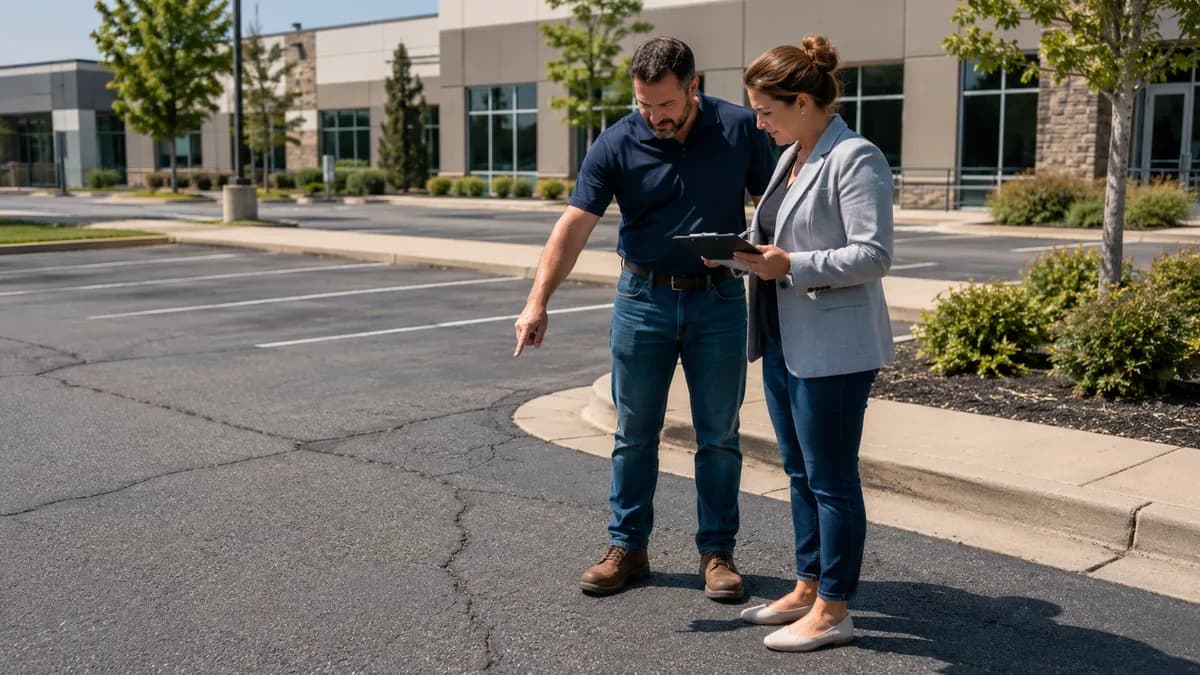
How to Choose an Asphalt Paving Contractor
How to choose an asphalt paving contractor: project fit, relevant experience, written scope, references, insurance, and pavement qualifications.
Property-owner guide
Updated July 6, 2026
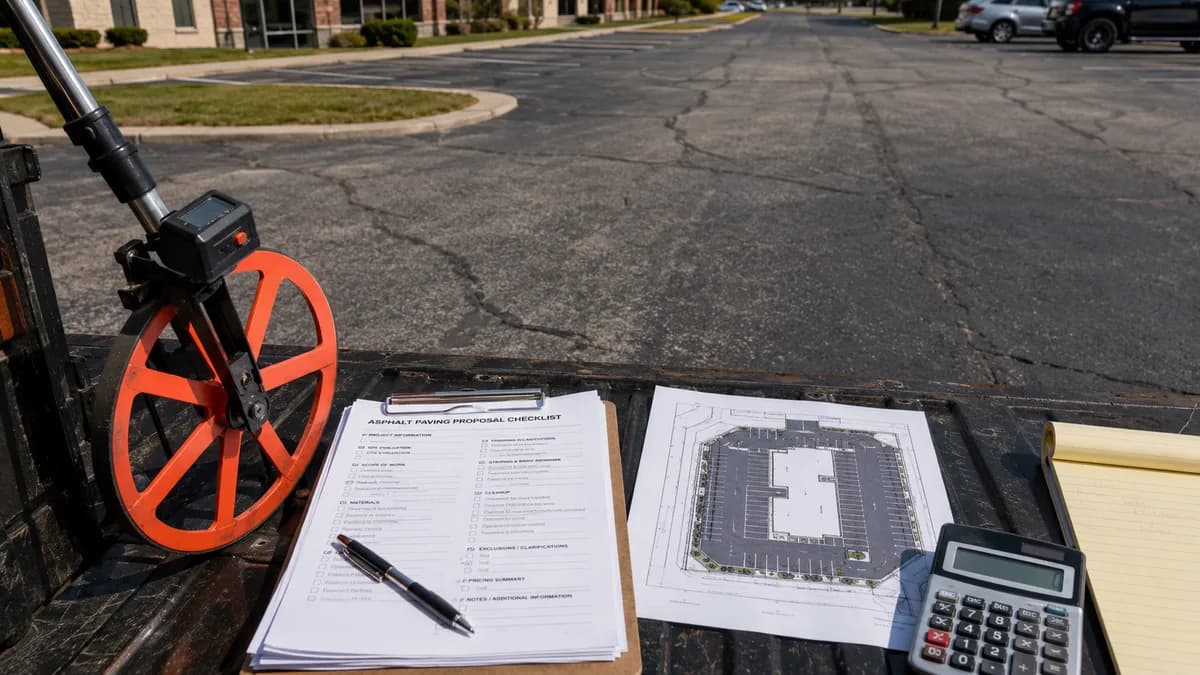
Asphalt Paving Proposal Checklist
What belongs in an asphalt paving proposal: work limits, quantities, thickness, base preparation, drainage, striping, exclusions, and warranty terms.
Property-owner guide
Updated July 6, 2026
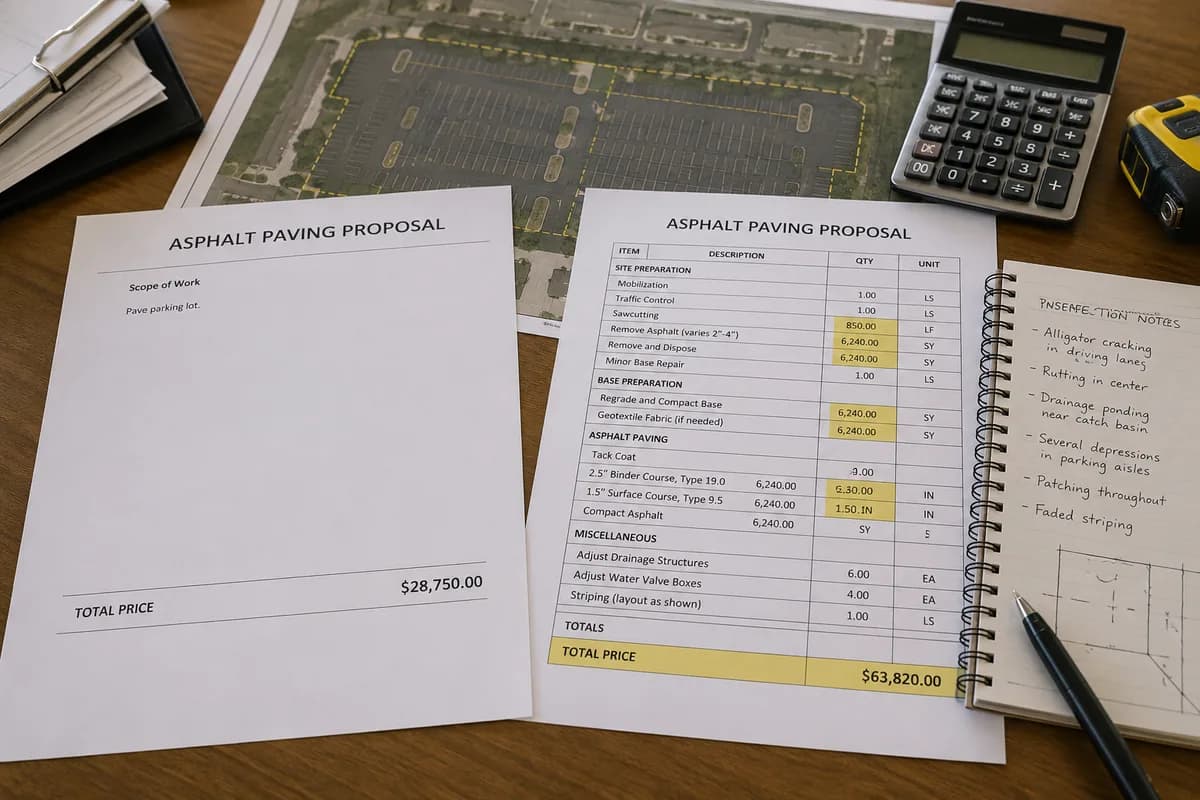
Cheap Asphalt Paving Bids: Red Flags to Watch For
A cheap asphalt paving bid may omit thickness, base preparation, drainage, striping, or warranty terms. Learn the red flags to check before hiring.
Before you hire: The Pavement Directory does not guarantee contractor performance, pricing, licensing, insurance, or availability. Business information may be submitted by contractors or gathered from public sources and should be independently verified before hiring. Always confirm licensing, insurance, references, scope of work, and written contract terms.
For contractors
Ready to compare South Carolina contractors?
Browse listings by city and service, then use what you have read here to check the scope, the credentials, and the timing before you sign.