The Pavement Directory

State pavement directory

Pavement Contractors in Oklahoma

Ask an Oklahoma property manager what damages their pavement and the answer is usually the weather. It is more specific than that. The state swings through a very wide annual temperature range, gets its rain in intense convective bursts, sits in the most active severe-storm corridor in the country, and rests across large areas on red-bed clays that swell and shrink with every wet and dry cycle. Pavement here is worked from above and below at the same time.

There is also no state paving license to fall back on, which changes how an owner should vet a bid. This page lists pavement contractors serving Oklahoma cities and covers the conditions that drive scope: expansive clay movement, extreme summer surface temperatures, hail and storm exposure, freight loading along the interstate corridors, and the local permitting that stands in for statewide licensing.

Listings
24
Cities
3
Services
13
Search Oklahoma

Before you hire: The Pavement Directory does not guarantee contractor performance, pricing, licensing, insurance, or availability. Business information may be submitted by contractors or gathered from public sources and should be independently verified before hiring. Always confirm licensing, insurance, references, scope of work, and written contract terms.

24 contractors in Oklahoma

Filter by service
Affordable Asphalt logo

Sand Springs, Oklahoma

Asphalt PavingSealcoatingCrack SealingCommercial & Residential

Affordable Asphalt & Maintenance provides asphalt and concrete paving, repair, and maintenance services for residential and commercial properties in the greater Tulsa, Oklahoma area. Services include driveway and parking lot installation, crack sealing, sealcoating, striping, milling, and concrete flatwork such as driveways and sidewalks. The company states it has over 30 years of local experience and offers free estimates for its services.

(918) 245-0927Website on file
Asphalt PavingSealcoatingConcrete SiteworkCommercial & Residential

All Asphalt Paving and Concrete is a family-owned paving company based in Edmond, Oklahoma, operating since 1974. The company provides asphalt and concrete installation, resurfacing, and replacement services for residential driveways and commercial parking lots. Additional offerings include drainage planning, striping, and sealcoating for properties such as retail centers, churches, apartment complexes, and medical offices throughout the Oklahoma City area.

(405) 514-1969Website on file
All Roads Paving, Inc. logo

Oklahoma City, Oklahoma

Asphalt PavingConcrete SiteworkCommercial & Residential

All Roads Paving is a Class A paving contractor based in Oklahoma City, Oklahoma, offering asphalt and concrete paving, grading, storm drainage, curb and gutter placement, and sidewalk construction. Founded in 1990, the family-owned company has completed over 500 projects for commercial developers, engineers, and residential clients across Central Oklahoma. The company also utilizes laser GPS paving technology for grading and alignment accuracy.

(405) 577-2944Website on file
Asphalt PavingSealcoatingConcrete SiteworkCommercial & Residential

American Asphalt & Site Development is a paving and site work contractor based in Oklahoma City, Oklahoma, offering asphalt driveways, parking lots, repair, resurfacing, sealcoating, concrete flatwork, excavation, and general site preparation. The company serves both residential and commercial clients across Oklahoma City and more than 30 surrounding communities. It states over 20 years of experience in the paving and site development trade.

(405) 397-1972Website on file
Asphalt PavingSealcoatingConcrete SiteworkCommercial & Residential

American Asphalt Co Inc is a second-generation, family-owned contractor providing asphalt paving, driveway installation and repair, seal coating, and related pavement services in the Tulsa, Oklahoma area. The company works with both residential and commercial properties and also offers fencing, gate, and access control installations. It states it has operated since 1978 and offers free estimates and a one-year workmanship warranty.

(918) 288-0509Website on file
Armor Asphalt LLC logo

Oklahoma City, Oklahoma

Asphalt PavingCommercial & Residential

Based in Oklahoma City, Oklahoma, Armor Asphalt LLC is a commercial and residential pavement contractor. The listing covers asphalt paving.

(405) 655-4494Website on file
Arrow Asphalt LLC logo

Oklahoma City, Oklahoma

Asphalt PavingSealcoatingCrack SealingCommercial & Residential

Arrow Asphalt LLC provides asphalt and concrete paving, repair, sealcoating, crack sealing, and parking lot striping services for residential and commercial clients in the Oklahoma City metropolitan area. The company has operated for over 13 years, serving properties such as driveways, HOAs, apartment complexes, retail centers, and distribution facilities. It also performs pavement maintenance and parking lot repair work across nearby cities including Edmond, Moore, and Norman, Oklahoma.

(405) 493-8580Website on file
Connelly Paving Co logo

Oklahoma City, Oklahoma

Concrete SiteworkCommercial

Connelly Paving Company is a family-owned paving and ready-mix concrete contractor based in Oklahoma City, operating in the central Oklahoma region for over a century. The company performs asphalt and concrete paving work using in-house surveyors, layout crews, grading operators, concrete masons and finishers, and asphalt professionals. It primarily serves commercial and industrial clients across office/retail, institutional, industrial, and public works sectors, with featured projects including hospitals, corporate campuses, and public facilities.

(405) 943-8388Website on file
Cowboy Asphalt logo

Tulsa, Oklahoma

Asphalt PavingSealcoatingStriping & Pavement MarkingsCommercial

Cowboy Asphalt operates an asphalt manufacturing plant in Tulsa, Oklahoma and provides paving, sealcoating, and line striping services for commercial sites such as parking lots. The company states over 40 years of industry experience and highlights past work including sealcoating and striping for a Quality Inn parking lot. Its team includes a plant manager, plant foreman, and accounting staff.

(918) 261-0893Website on file
Cutting Edge Asphalt logo

Oklahoma City, Oklahoma

Asphalt PavingSealcoatingCrack SealingCommercial & Residential

Cutting Edge Asphalt is a full-service asphalt paving company based in Oklahoma City, Oklahoma, offering services such as commercial and residential paving, seal coating, crack sealing, milling, parking lot striping, dirt work/grading, and concrete work. The company has served the Oklahoma City area for over 15 years, working with properties ranging from residential driveways to commercial parking lots, HOAs, and government facilities.

(405) 205-0348Website on file
Dickson Professional Services logo

Oklahoma City, Oklahoma

Asphalt PavingAsphalt MaintenanceCommercial

Paving contractor in Oklahoma City, OK offering Asphalt Paving, Parking Lot Maintenance, Commercial Paving.

(405) 802-5619Website on file
Asphalt PavingSealcoatingCrack SealingCommercial & Residential

Ellsworth Pavement Maintenance provides sealcoating, crack sealing, striping, and asphalt repair for commercial, residential, and aviation clients across Oklahoma and Northwest Arkansas. The company lists projects at banks, airports, schools, and shopping centers, indicating experience with a range of property types. It operates from multiple locations, with contact numbers for Tulsa, OKC, and NWA offices.

(918) 322-1303Website on file
HCI Paving Solutions logo

Edmond, Oklahoma

Asphalt PavingSealcoatingCrack SealingCommercial & Residential

HCI Paving Solutions provides asphalt paving, crack sealing, sealcoating, striping, and pavement maintenance for commercial parking lots and residential driveways. The company also offers soil grading and site preparation as well as commercial concrete work such as curbs, gutters, and aprons. It is based in Edmond, Oklahoma, and serves the greater Oklahoma City area and numerous surrounding Oklahoma cities.

(405) 920-8667Website on file
Oklahoma City Paving logo

Oklahoma City, Oklahoma

Asphalt PavingSealcoatingCrack SealingCommercial & Residential

Oklahoma City Paving is a family-owned contractor with over 20 years of experience providing asphalt paving, sealcoating, crack repair, and concrete flatwork services. The company handles residential driveways and patios as well as commercial parking lots, roadways, and specialty sites like schools, churches, and mobile home parks. It serves Oklahoma City, Edmond, and numerous surrounding Oklahoma communities.

(405) 877-5946Website on file
Asphalt PavingSealcoatingCrack SealingCommercial & Residential

Oklahoma Striping Company provides parking lot striping, sealcoating, crack filling, sports court striping, and concrete sealing services for both commercial and residential properties. The company serves the Tulsa and Oklahoma City metro areas, including Broken Arrow, Bixby, Arcadia, and Luther, OK. Services include ADA and fire lane marking, protective asphalt coatings, and crack sealing to extend pavement life.

(918) 504-4737Website on file
Asphalt PavingSealcoatingCrack SealingCommercial & Residential

PavementPro provides commercial and residential asphalt services including paving, sealcoating, crack sealing, striping, and asphalt repair. The company serves property managers, HOAs, churches, retail centers, and schools across the Oklahoma City metro, including Edmond, Norman, Moore, and Tulsa. It also offers residential driveway paving, sealcoating, gravel driveways, and concrete work.

(405) 544-7129Website on file
Precision Asphalt logo

Tulsa, Oklahoma

Asphalt PavingSealcoatingCrack SealingCommercial & Residential

Precision Asphalt Tulsa provides asphalt driveway and parking lot installation, repair, resurfacing, sealcoating, crack filling, and striping services for homes, businesses, and municipalities. The company has served the Tulsa area since 2016 and also works in nearby communities including Broken Arrow, Owasso, Jenks, Bixby, and Claremore. It states it is licensed and insured and offers free on-site estimates for both residential and commercial paving projects.

(918) 703-4204Website on file
Precision Asphalt Oklahoma City logo

Oklahoma City, Oklahoma

Asphalt PavingSealcoatingCrack SealingCommercial & Residential

Precision Asphalt Oklahoma City provides asphalt paving, resurfacing, sealcoating, crack filling, and striping services for both residential and commercial properties. The company handles driveways, parking lots, private roads, walkways, and municipal paving projects, and states it has been serving the Oklahoma City area since 2016. It is licensed and insured and lists service areas including Oklahoma City, Norman, Edmond, and several other nearby Oklahoma communities.

(405) 696-4325Website on file
Asphalt PavingCommercial & Residential

Based in Tulsa, Oklahoma, Reverence Concrete and Asphalt is a commercial and residential pavement contractor. The listing covers asphalt paving.

(918) 277-6541Website on file
Schwarz Paving Company, Inc. logo

Oklahoma City, Oklahoma

Asphalt PavingConcrete SiteworkCommercial

Schwarz Paving Company provides asphalt and concrete paving services for industrial and commercial developments in the Oklahoma City area, operating since 1978. The company runs an affiliated asphalt plant, an aggregate quarry near Lawton, and a heavy-haul trucking division, supporting large-scale paving and construction projects.

(405) 789-7203Website on file
The Asphalt Guys logo

Tulsa, Oklahoma

Asphalt PavingCommercial & Residential

Based in Tulsa, Oklahoma, The Asphalt Guys is a commercial and residential pavement contractor. The listing covers asphalt paving.

(918) 477-0192Website on file
Tulsa Asphalt logo

Tulsa, Oklahoma

Asphalt PavingConcrete SiteworkCommercial & Residential

Tulsa Asphalt operates two asphalt manufacturing plants in the Tulsa metro area, producing a range of mixes for the road construction industry. The company also supplies EZ STREET polymer-modified cold asphalt for repairing potholes, utility cuts, overlays, and edge damage in asphalt or concrete. Products are available in bulk or 50-pound bags for use in any weather, serving contractors and municipalities in the region.

(918) 234-7004Website on file
Asphalt PavingSealcoatingCrack SealingCommercial

Welch Asphalt Sealcoating and Striping provides parking lot paving, sealcoating, crack sealing, pothole repair, and line/fire lane striping services in the Oklahoma City area, including Edmond and Moore. The company reports five years in business and lists commercial clients such as national retail and restaurant chains. Work is described as available nights and weekends to accommodate operating businesses, with services covering ADA compliance and property maintenance for parking lots.

(405) 418-6350Website on file

What makes pavement work different in Oklahoma?

In Oklahoma the subgrade moves seasonally and the weather arrives in extremes — and there is no state license to check, so verification falls to the owner.

  • Oklahoma issues no statewide license for paving contractors; the Construction Industries Board licenses other trades, so verification depends on entity registration, insurance, references, and local requirements.
  • Red-bed clays across central Oklahoma shrink and swell with moisture, cracking pavement from below regardless of surface quality.
  • Rain arrives in intense convective events, so drainage capacity matters far more than the annual rainfall total suggests.
  • The annual temperature range is wide enough that both summer rutting and winter crack propagation are real, which is unusual in a single state.
  • Hail and severe storms are frequent enough that the property's insurance treatment of pavement is worth understanding before damage occurs.

Pavement Conditions by Region in Oklahoma

Oklahoma does not have one climate or one soil profile, and pavement that performs well in one part of the state can fail early a few hours away. These are the divisions that matter most when scoping paving, repair, or maintenance work.

Central Oklahoma and the Cross Timbers

Oklahoma City · Norman · Edmond · Shawnee · Stillwater

Environmental stress

  • Very wide annual temperature range with both hard freezes and extreme heat
  • Frequent severe thunderstorms, hail, and high wind
  • Rapid suburban growth loading older commercial lots

Subgrade conditions

  • Red-bed clays with meaningful shrink-swell potential
  • Shallow sandstone and shale bedrock in places
  • Sandy soils along the Cross Timbers belt with different behavior

Common distress

  • Long, wandering cracks that reopen after every repair
  • Seasonal heaving and sagging that shifts with soil moisture
  • Curb and gutter separation from the pavement edge

What it means for the work

  • Subgrade moisture control usually matters more than added asphalt thickness
  • Repairs made during a dry summer can look wrong after a wet spring
  • Flexible crack treatments outperform rigid patches over moving clay

Northeastern Oklahoma and the Ozark foothills

Tulsa · Broken Arrow · Muskogee · Bartlesville · Tahlequah

Environmental stress

  • Higher rainfall than the western half of the state
  • Freeze-thaw crossings without prolonged deep freeze
  • Heavy freight and industrial traffic through the Tulsa corridor

Subgrade conditions

  • Clay and cherty clay soils over limestone and shale
  • Shallow rock at variable depth across a single site
  • Alluvial soils along the Arkansas and Verdigris river corridors

Common distress

  • Alligator cracking where lots drain slowly after heavy rain
  • Differential settlement across rock-to-soil transitions
  • Rutting at industrial entrances and truck routes

What it means for the work

  • Rock excavation quantity is a recurring source of change orders
  • Proof-rolling catches soft pockets between rock high points
  • Flooding along the river corridors can affect what is permissible on a site

Ouachita Mountains and southeastern Oklahoma

McAlester · Poteau · Idabel · Broken Bow · Hugo

Environmental stress

  • The state's highest rainfall totals
  • Steep terrain with concentrated slope runoff
  • Heavy timber and log truck traffic

Subgrade conditions

  • Rocky, thin soils over sandstone and shale on slopes
  • Saturated fine-grained soils in valley bottoms
  • Steep sites with limited flat working area

Common distress

  • Edge erosion and undermining on sloped sites
  • Rutting and edge break-up on timber haul routes
  • Base saturation where water has no outlet

What it means for the work

  • Log truck loading is a design load far beyond ordinary commercial use
  • Concentrated runoff on a grade needs a designed, armored path
  • Wet periods can close working windows for weeks at a time

Western Oklahoma and the High Plains

Woodward · Elk City · Altus · Guymon · Weatherford

Environmental stress

  • Hot, dry summers with strong solar exposure
  • High wind and blowing dust
  • Colder winters with deeper frost than the southeast

Subgrade conditions

  • Fine wind-deposited soils that soften when wet
  • Gypsum-bearing ground in parts of the western counties
  • Agricultural land with variable historic compaction

Common distress

  • Binder oxidation, brittleness, and raveling under strong sun
  • Thermal and block cracking from wide temperature swings
  • Rutting at grain, feedlot, and energy facilities

What it means for the work

  • Surface protection and crack sealing carry high value in this exposure
  • Seasonal agricultural loading should shape the section
  • Wind affects placement, curing, and striping more than owners expect

Red River valley and southern Oklahoma

Lawton · Ardmore · Duncan · Durant · Ada

Environmental stress

  • Long, hot summers with limited winter relief
  • Intense rainfall events and localized flooding
  • Heavy cross-state freight and energy-related traffic

Subgrade conditions

  • Clay and clayey sand with moderate to high plasticity
  • Alluvial soils along the Red River and its tributaries
  • Flat terrain with poor natural drainage in places

Common distress

  • Heat-driven rutting on slow-traffic and turning areas
  • Ponding-related base failure on flat sites
  • Seasonal cracking driven by soil moisture change

What it means for the work

  • Flat sites need designed positive drainage rather than minimal slope
  • Nearly year-round working weather, but summer heat still shapes placement
  • Energy and freight traffic justify a heavier section at entrances

Common Pavement Problems in Oklahoma

Expansive red-bed clay movement

Cracks that follow no traffic pattern, widen through a dry late summer, and partially close after wet weather. Pavement panels tilt, curb lines separate, and the same repair fails in the same place every few years.

Likely causes

  • Red-bed clays with high shrink-swell potential beneath the pavement
  • Moisture change from irrigation, downspouts, leaks, or drought
  • Large trees drawing moisture unevenly from beneath the lot
  • Subgrade placed without moisture conditioning or stabilization

When to get it looked at: If the same crack has been patched twice and reopened twice, the soil is telling you something the patch cannot fix. Moisture control and flexible treatments beat another rigid repair.

Base failure after intense rainfall

Interconnected cracking and potholes appearing in the weeks after a heavy storm, concentrated in the exact areas that held water longest.

Likely causes

  • Rainfall intensity exceeding inlet and conveyance capacity
  • Flat grading with no positive fall to an outlet
  • Saturated fine-grained subgrade losing strength under load
  • Inlets silted in or set above the pavement after repeated overlays

When to get it looked at: Photograph the lot during the storm. Where water stands is where the base is failing, and that is nearly impossible to identify on a dry inspection day.

Summer rutting on slow-traffic areas

Wheel-path depressions and pushed-up ridges at stop bars, drive-through lanes, dock aprons, and turning areas, most visible during the hottest weeks of the year.

Likely causes

  • High pavement surface temperatures reducing mix stiffness
  • Slow, stopped, or channelized traffic concentrating load
  • A mix not matched to the site's actual traffic and temperature
  • Delivery vehicles standing in the same place daily

When to get it looked at: Rutting concentrated where vehicles slow or stop rather than spread across the lot is a section and mix question. Concrete is often the better answer in those specific zones.

Hail and storm damage

Surface pitting, aggregate loss, and damage to striping, signage, wheel stops, and light bases after a severe storm — sometimes with the pavement itself less affected than the site features around it.

Likely causes

  • Large hail impacting an already oxidized or brittle surface
  • High wind displacing loose material and site furniture
  • Flash runoff from the same storm undermining edges
  • Aging surface with reduced ability to absorb impact

When to get it looked at: Document the condition of pavement, striping, and site features before storm season, not after. A dated condition record is what makes an insurance conversation about storm damage productive.

Freight and energy loading damage

Rutting, shoving, and cracking concentrated at entrances, aprons, and turning radii on distribution and energy-sector properties, while the adjacent car parking stays sound.

Likely causes

  • Axle loads far beyond the original design assumption
  • Unpaved shoulders giving way under wide truck turns
  • Entrances built to the same section as the parking field
  • Slow, heavy movement during the hottest part of the year

Paving and Maintenance Calendar for Oklahoma

Treat this as a planning aid, not a rule. Whether a given treatment can actually be placed on a given day depends on product requirements, surface and nighttime temperatures, the rain forecast, humidity, plant availability, the project specification, and the contractor’s means and methods.

Winter

Work often suited to this window

  • Crack sealing during cool, dry stretches when cracks are widest
  • Condition surveys, budgeting, and spring bid preparation
  • Emergency repairs after ice events

Scheduling risks

  • Ice storms and cold fronts can stop work with little notice
  • Wet ground limits anything that disturbs the subgrade
  • Panhandle and western sites see more genuinely out-of-season days

Inspect for: Measure crack widths while soils are at their wettest and cracks are narrowest; the difference from late summer tells you how much the subgrade is actually moving.

Regional exception: Southern Oklahoma along the Red River generally has more workable winter days than the Panhandle or the northwestern counties.

Spring

Work often suited to this window

  • Paving, overlays, and reconstruction before peak summer heat
  • Drainage corrections ahead of the storm season
  • Striping, signage, and accessible route upgrades

Scheduling risks

  • Severe convective storms and hail can stop work with very little warning
  • This is the busiest booking period, so lead times stretch
  • Wet clay subgrade can be unworkable for days after heavy rain

Inspect for: Confirm inlets, swales, and outfalls are clear before the peak storm period, and separate surface cracking from base failure before pricing work.

Summer

Work often suited to this window

  • Sealcoating and surface treatments in reliably hot, dry conditions
  • Paving with attention to placement temperature and traffic release
  • Reconstruction phased around occupancy

Scheduling risks

  • Extreme surface heat can push placement to early morning or night
  • Afternoon storms interrupt applications, particularly in the east
  • School and campus work compresses into the same weeks statewide

Inspect for: Walk drive aisles, dock areas, and drive-through lanes during the hottest hours, looking for rutting and shoving that cooler weather hides.

Fall

Work often suited to this window

  • Crack sealing ahead of winter
  • Final paving and overlays in favorable temperatures
  • Clearing drainage structures after the storm season

Scheduling risks

  • Northwestern nights cool quickly and narrow the window earlier
  • Whether a day works depends on the product's requirements, surface and night temperatures, humidity, and the rain forecast rather than the date
  • Harvest traffic limits access at agricultural and grain properties

Inspect for: Confirm every crack is sealed and every inlet is clear before winter, particularly on sites with a history of ponding.

Contractor Licensing and Verification in Oklahoma

Statewide licensing
No statewide paving contractor license
Administering body
No statewide paving contractor license (the Oklahoma Construction Industries Board licenses other trades)

Oklahoma does not issue a statewide license specifically for asphalt paving, sealcoating, concrete, or parking lot contractors. The Construction Industries Board administers licensing for several other construction trades, but general paving and site work are not among them. That means there is usually no state credential to look up on an Oklahoma paving proposal at all.

Municipal requirements partially fill the gap and are uneven. Cities across Oklahoma may require contractor registration, bonding, or permits for work performed inside their limits, and requirements differ between neighboring jurisdictions in both the Oklahoma City and Tulsa metros. Ask the city or county where the property sits what applies before assuming nothing does.

With no state license as a filter, the verification you control carries the weight. Confirm the exact legal entity named on the proposal is registered with the Secretary of State and matches the name on both the insurance certificate and the contract. Verify general liability and workers' compensation directly with the carrier or agent for the dates of your work. Then get references on comparable projects in the same area that are several years old and call them — pavement that still looks right after four Oklahoma summers and two ice storms tells you more than a photograph of fresh asphalt.

Public work carries separate requirements. Projects for a municipality, county, school district, or the state involve bonding and prequalification rules that private jobs do not, and those should be confirmed with the awarding agency rather than with the contractor.

What a contractor license does not prove

Because Oklahoma has no state paving license to check, the word 'licensed' in an advertisement may refer to a municipal registration, a license in an unrelated trade, or nothing in particular. Ask which jurisdiction issued it and what it actually covers.

  • That the proposed scope is the right fix for what is actually failing
  • That the price is fair for the local market
  • That drainage has been designed or corrected
  • That the pavement section and thickness suit the traffic the property carries
  • That the specified materials are appropriate for the site
  • That the crew will show up when promised
  • That workmanship will hold up past the first winter or summer
  • That the company is financially stable enough to honor a warranty

Ask for a certificate of insurance sent directly from the carrier or agent rather than a copy forwarded by the contractor, confirm the general liability and workers’ compensation coverage is active on the dates of your work, and ask to be named as certificate holder so you are notified if the policy lapses.

Licensing requirements can turn on project value, scope of work, property location, and whether the job is public or private. City and county rules may add registration, permitting, or bonding requirements beyond anything required at the state level. Verify current requirements with the agency directly before contracting.

Last reviewed:

Stormwater and Environmental Considerations

Oklahoma administers construction stormwater permitting through the Department of Environmental Quality rather than through EPA directly. Construction disturbing above a threshold area generally requires coverage under the state's construction general permit along with a stormwater pollution prevention plan and erosion and sediment controls sized to the site. Larger Oklahoma municipalities operate their own stormwater programs and typically handle local review and inspection.

Local detention and drainage requirements are usually what shapes a large Oklahoma paving project. Cities across the Oklahoma City and Tulsa areas apply their own detention volume, release rate, and floodplain standards, and reconstructing a lot at a different footprint or grade can pull those into play. The single most useful early question is whether the reviewing city considers the work maintenance or redevelopment, because that determination decides whether a designer and a plan review are part of the project.

Rainfall intensity is the design reality that Oklahoma drainage has to answer. Convective storms here deliver very high rates over short periods, and a system sized for an average year does not describe what the property experiences during the event that damages it. Where a site sits relative to a floodplain or a drainage way, and how quickly it can pass flow rather than store it, tends to matter more here than annual rainfall totals do.

What tends to drive requirements here

  • Disturbed area, which drives construction general permit coverage
  • Municipal detention, release rate, and floodplain requirements, which vary by city
  • Whether the work is treated as maintenance or as redevelopment by the reviewer
  • Rainfall intensity rather than annual totals as the design basis for conveyance
  • Floodplain status along the Arkansas, Canadian, Red, and their tributaries
  • Inlet protection, sediment tracking, and material staging during construction

Oklahoma cities frequently impose detention, drainage, and floodplain requirements beyond the state minimum, and they differ between jurisdictions. Confirm with the reviewing city or county before design.

Last reviewed:

Pavement Terms You May Encounter in Oklahoma

TermWhat it means on a Oklahoma project
Aggregate base courseThe compacted crushed stone layer beneath the asphalt. Oklahoma proposals typically name it by type and compacted thickness, and how well it drains generally governs pavement life more than the surface course does.
Lime or cement stabilized subgradeTreating expansive clay subgrade with lime or cement to reduce plasticity and moisture sensitivity. It is a legitimate and meaningful line item over red-bed clay, and its absence on known expansive soil is worth a direct question.
Superpave mix designationThe mix classification used in Oklahoma specifications, encoding nominal aggregate size and the traffic level the mix is designed for. Asking which designation is priced is a fair check that the mix suits the loading.
Plasticity indexA soil test result describing how much a clay's behavior changes with moisture. On an Oklahoma site it is one of the most informative numbers a geotechnical report can give you about future cracking.
Cold millingGrinding a controlled depth off the existing asphalt before resurfacing so the finished surface keeps its relationship to curbs, doors, and inlets. Skipping it on an already-overlaid lot is a common cause of new ponding.
Full-depth reclamationPulverizing the existing asphalt with the base, treating or reshaping the blend, and paving over it. It appears on larger Oklahoma lots and private roads where the base has failed and hauling everything off is impractical.

State transportation specifications can provide useful regional terminology and material references, but they do not automatically govern private parking-lot or driveway projects unless incorporated into the contract or required by the applicable jurisdiction.

More definitions are in the pavement glossary.

Common Pavement Projects in Oklahoma

Distribution and freight facilities

Oklahoma City and Tulsa area warehouses and the I-40 and I-44 corridors concentrate trailer traffic where aprons and drop lots fail years before the parking field shows any wear.

Energy sector yards and facilities

Equipment yards and service facilities carry loads far beyond ordinary commercial traffic, and entrances and turning radii break down before the main pavement does.

Agricultural, grain, and feedlot facilities

Western Oklahoma facilities absorb a year of heavy truck traffic in a few weeks, on ground where wind-deposited soils soften quickly once they take on water.

Tribal government and casino properties

High-volume visitor traffic with very limited windows for closure, plus their own procurement and approval processes that shape how a project is scoped and awarded.

University and school district campuses

Bus loops carry loads far beyond the surrounding parking, and the practical construction window is compressed into a summer break that coincides with peak Oklahoma heat.

Questions to Ask a Paving Contractor in Oklahoma

Oklahoma pavement FAQs

Does Oklahoma license paving contractors?

Not at the state level. Oklahoma's Construction Industries Board licenses several construction trades, but general paving, sealcoating, concrete, and parking lot work are not among them, so there is usually no state credential to check. Some cities require their own contractor registration, bonding, or permits, and requirements vary across the Oklahoma City and Tulsa metros. With no state license as a filter, verifying the business entity, confirming insurance directly with the carrier, and calling references on older comparable local work is the substance of your vetting.

Why do cracks in my Oklahoma parking lot keep coming back in the same places?

Because the pavement is riding a subgrade that moves. Red-bed clays across much of the state swell as they take on moisture and shrink as they dry, and Oklahoma's cycle between drought and heavy rain produces enough seasonal change to crack pavement from below. Cracks that follow no wheel path, widen through a dry late summer, and narrow again after wet weather are the signature. Repeated rigid patches over moving ground fail repeatedly; controlling where water enters the soil and using flexible crack treatments is the productive response.

What is lime stabilization and does my Oklahoma lot need it?

Lime stabilization mixes lime into an expansive clay subgrade to reduce its plasticity and make it less sensitive to moisture change. It is common practice on Oklahoma projects over red-bed clay and is often one of the more meaningful differences between two otherwise similar bids. Whether your site needs it depends on the soil, the traffic, and the design — but on known expansive clay, a proposal that includes no subgrade treatment at all deserves a direct question about why.

How should I handle hail damage to my parking lot?

The most useful thing you can do is before the storm rather than after it: keep a dated record of the pavement's condition, the striping, the signage, and the site features. Hail tends to affect an aging, oxidized surface more than fresh pavement, and it often damages striping, wheel stops, signs, and light bases as much as the asphalt itself. Without a condition baseline, distinguishing storm damage from accumulated wear becomes an argument. Your insurance treatment of pavement is also worth understanding before you need it.

Why does the drive-through lane rut when the rest of the lot is fine?

Because that lane sees the worst possible combination for asphalt: slow or stopped traffic, in the same wheel path all day, while the surface is at its hottest. Oklahoma summer surface temperatures reduce the mix's stiffness substantially, and the vehicles deform it rather than wearing it. Repaving the same section usually reproduces the rut within a couple of summers. Many owners here move drive-through lanes, dock aprons, and dumpster pads to concrete and keep asphalt for the parking field.

Does the annual rainfall total tell me anything about my drainage needs?

Very little, in Oklahoma. What matters is intensity. A convective storm here can deliver a large share of a month's rain in an hour, and inlet and pipe capacity sized for gentler rain simply cannot pass it. That is why a lot that has handled ordinary rain for a decade can suddenly show base failure after one event. The right design question is how fast the site can pass the intense event and where the water goes when capacity is exceeded, not how many inches fall in a year.

Is Oklahoma's freeze-thaw damage significant, or is heat the real problem?

Both, which is unusual. The state has a wide enough annual temperature range that summer surface heat drives rutting and softening at slow-traffic areas, while winter freeze cycles push water into open cracks and produce late-winter potholing. Crack sealing before winter and mix selection for summer are both worth doing here, and neither substitutes for the other. That combination is part of why an Oklahoma maintenance plan borrowed from a milder state tends to underperform.

When is the best time to pave in Oklahoma?

Spring and fall usually offer the most comfortable placement conditions, but summer work is common and workable, sometimes shifted to early morning or night because of surface heat. There is no calendar cutoff. What decides a given day is the specific product's requirements, the surface and overnight temperatures, humidity, the rain forecast, plant availability, and the specification. Southern Oklahoma generally has a longer practical window than the Panhandle and the northwest.

Browse cities in Oklahoma

Browse services in Oklahoma

Related reading for Oklahoma property owners

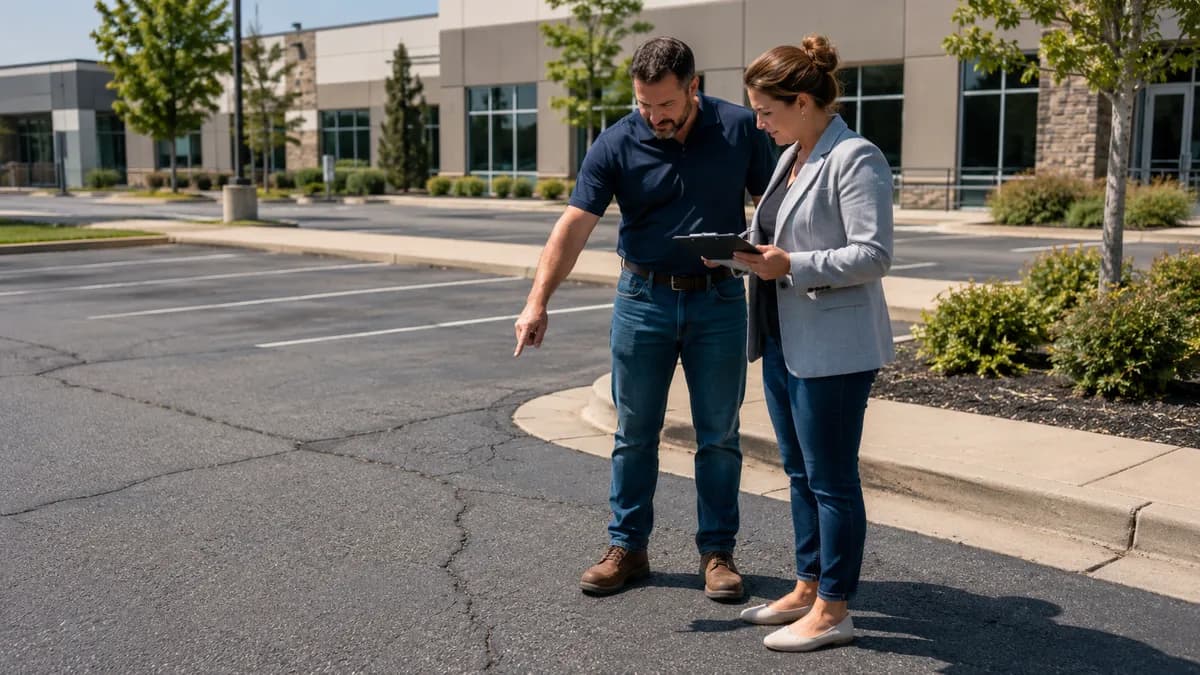
Property manager and asphalt paving contractor reviewing a cracked commercial parking lot together.
Contractor Hiring Guides

Property-owner guide

Updated July 6, 2026

How to Choose an Asphalt Paving Contractor

How to choose an asphalt paving contractor: project fit, relevant experience, written scope, references, insurance, and pavement qualifications.

Read guide
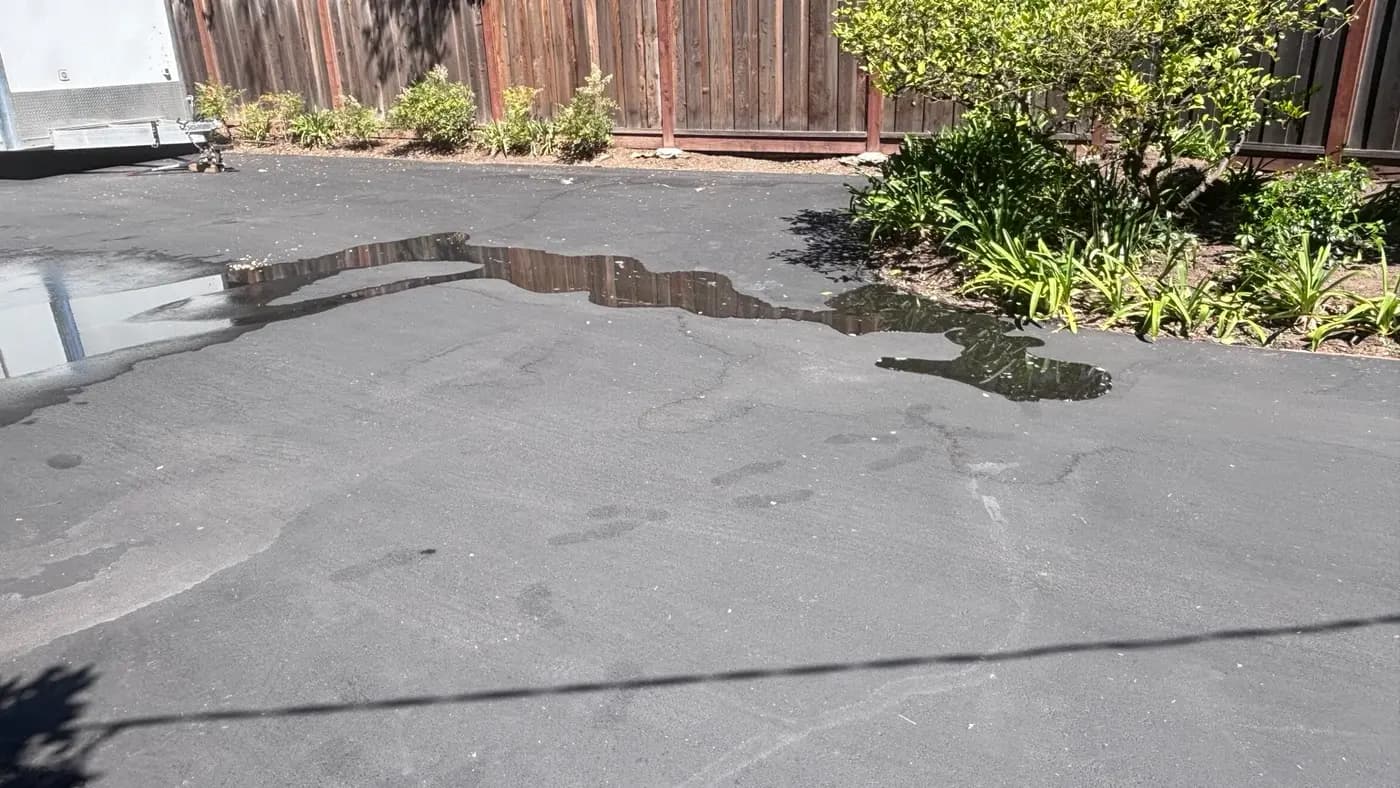
Standing water pooled near a parking lot drain inlet after rainfall.
Drainage & Sitework

Property-owner guide

Updated July 6, 2026

Parking Lot Drainage Problems: What Property Owners Should Know

Common causes of parking lot drainage problems, why they accelerate pavement damage, and what property owners should ask contractors before a fix.

Read guide
Crack Sealing

Property-owner guide

Updated July 11, 2026

When Should You Seal Asphalt Cracks?

When to seal cracks in asphalt — which cracks to seal, the best time of year, why sealing early matters, and how crack sealing fits a maintenance schedule.

Read guide
Cross-section edge of freshly paved asphalt showing compacted thickness over an aggregate base.
Asphalt Paving

Property-owner guide

Updated July 6, 2026

Asphalt Paving Thickness for Parking Lots

Typical asphalt paving thickness for parking lots: benchmarks for stalls, drive lanes, and truck areas, plus how base and soil change the answer.

Read guide
Close-up of alligator cracking pattern in deteriorated asphalt pavement.
Asphalt Repair

Property-owner guide

Updated July 6, 2026

What Causes Alligator Cracking in Asphalt?

What alligator cracking is, what causes it, whether it can be patched or needs full-depth repair, and why it usually points to a failing base.

Read guide
Water pooling in a low spot of a parking lot due to poor drainage.
Parking Lot Maintenance

Property-owner guide

Updated July 6, 2026

Commercial Parking Lot Maintenance Guide

A guide to building a recurring parking lot maintenance plan for commercial properties, including inspection cycles and escalation triggers.

Read guide

Oklahoma Agencies and Reference Links

This page summarizes publicly available information for general education. It is not legal, engineering, or code-compliance advice, and requirements change. Confirm anything that affects your project with the agency with jurisdiction over the property.

Regulatory content last reviewed:

For contractors

Are you a pavement contractor in Oklahoma?

Get listed where property managers, owners, and facility teams search by state, city, and service.