The Pavement Directory

State pavement directory

Pavement Contractors in Michigan

Michigan pavement has to survive one of the harder combinations in the country: heavy lake-effect snowfall, a winter that cycles across freezing repeatedly rather than staying cold, and among the heaviest road salt use anywhere. The result is a state where concrete surfaces often deteriorate before the asphalt does, and where the difference between a lot that lasts fifteen years and one that lasts six usually comes down to whether water was kept out of the structure before winter.

This page lists pavement contractors serving Michigan cities and covers the specifics: freeze-thaw and frost depth, chloride damage to concrete, spring load restrictions, plow damage, and the loading that automotive and distribution facilities put on pavement across the southern half of the state.

Listings
22
City
1
Services
13
Search Michigan

Before you hire: The Pavement Directory does not guarantee contractor performance, pricing, licensing, insurance, or availability. Business information may be submitted by contractors or gathered from public sources and should be independently verified before hiring. Always confirm licensing, insurance, references, scope of work, and written contract terms.

22 contractors in Michigan

Filter by service
A-1 Asphalt Inc logo

Wayland, Michigan

Asphalt PavingCommercial & Residential

Founded in 1988, A-1 Asphalt Inc. offers asphalt paving, parking lot paving and repair, driveway paving, sealcoating, new construction paving, resurfacing, overlays, milling and recycling, patching and repairs, striping and stenciling, and crack filling. The company is fully insured and a Better Business Bureau Accredited Member. It serves customers throughout Grand Rapids, Kalamazoo, and West Michigan.

(616) 877-4400Website on file
Al's Asphalt Paving Inc logo

Taylor, Michigan

Asphalt PavingCommercial & Residential

The company offers commercial asphalt paving services including new construction paving, parking lot paving, highway paving, asphalt milling and pulverization, and asphalt resurfacing. They also provide concrete services, site evaluation, and commercial asphalt maintenance services such as asphalt repair, sealcoating, and line striping. The company states its contractors are state licensed, fully bonded, and insured, and use M-DOT asphalt materials.

(734) 946-1880Website on file
Allied Construction logo

Village Of Clarkston, Michigan

Asphalt PavingCommercial & Residential

Allied Construction began operations in 1972 and provides asphalt paving services to cities throughout Southeastern Michigan. The company offers residential and commercial asphalt paving, driveway installation, parking lot paving, sealcoating, parking lot striping and marking, and asphalt milling and recycling. The company states it paves millions of square feet per year using state-of-the-art paving equipment.

(248) 625-9581Website on file
Asphalt Specialists, LLC logo

Pontiac, Michigan

Asphalt PavingSealcoatingCrack SealingCommercial

Asphalt Specialists, LLC (ASI Paving) performs commercial asphalt paving, milling, patching, sealcoating, striping, and full-depth reclamation (FDR) and stabilization for parking lots, roadways, and industrial facilities. The company also offers related sitework such as aggregate base installation, excavation, utility installation, concrete, demolition, and cold milling. Based in Pontiac, Michigan, ASI serves property managers, municipalities, and contractors throughout Southeast Michigan with in-house crews handling each phase of a project.

(248) 907-1860Website on file
Detroit Caulking logo

Allen Park, Michigan

Asphalt PavingConcrete SiteworkCommercial & Residential

Detroit Caulking specializes in filling saw cuts, expansion joints, and weatherproofing the perimeter of homes and buildings. The company focuses on sealing driveways, patios, sidewalks, approaches, porches, and pools. Services include residential caulking, construction caulking, and commercial caulking. The company states all work is guaranteed and jobs are completed when the owner is satisfied.

(313) 922-2855Website on file

Shepherd, Michigan

Asphalt PavingSealcoatingCommercial & Residential

Paving contractor in Shepherd, MI offering Asphalt Paving, Sealcoating.

(989) 954-2227
Grand Rapids Parking Lot Painters logo

Grand Rapids, Michigan

SealcoatingCrack SealingConcrete SiteworkCommercial & Residential

Grand Rapids Parking Lot Painters is a Michigan-based contractor offering parking lot restriping, crack sealing, and asphalt sealcoating for commercial properties, as well as residential driveway sealcoating. The company performs consultations and provides itemized quotes before completing work, often scheduling jobs outside normal business hours to minimize disruption. It serves businesses and homeowners in the Grand Rapids, Michigan area.

(616) 758-1077Website on file
Asphalt PavingSealcoatingAsphalt MaintenanceCommercial

The company provides parking lot maintenance, parking lot cleaning, and property management for commercial lots on a contractual basis. Services include asphalt sealcoating, asphalt repair, asphalt patching and pothole repair, line painting, line removal, hot rubber crackfill, overband crack sealing, concrete repair, concrete sawcutting, signage and installation, factory lines, and drain repair.

(231) 798-8111Website on file

Belmont, Michigan

Asphalt PavingCommercial & Residential

Paving contractor in Belmont, MI offering Asphalt Paving.

(616) 647-9140
Asphalt PavingCommercial & Residential

The company has operated since 1969 and states it serves the Greater Lansing community. It uses materials from CertainTeed, Andersen, and Kohler, and is the exclusive Mid-Michigan dealer and installer for Four Seasons Sunrooms. The company employs insured and skilled professionals and states it follows manufacturer installation guidelines.

(517) 374-6000Website on file

Muskegon, Michigan

Asphalt PavingSealcoatingCommercial & Residential

Paving contractor in Muskegon, MI offering Asphalt Paving, Sealcoating.

(231) 766-0571
Superior Asphalt, Inc. logo

Grand Rapids, Michigan

Asphalt PavingSealcoatingCrack SealingCommercial & Residential

Superior Asphalt, Inc. is a West Michigan paving company operating since 1983, providing asphalt paving, milling, resurfacing, sealcoating, crack filling, line striping, and drain and pothole repair services. The company serves commercial, municipal, and residential properties, including parking lots, driveways, and roads, and offers year-round maintenance including winter hot mix and cold patch materials.

(616) 451-3200Website on file
Superior Paving Inc. logo

Marquette, Michigan

Asphalt PavingConcrete SiteworkCommercial & Residential

Superior Paving Inc. is a family-owned and operated company based in Marquette, Michigan. The company specializes in grading and asphalt installation and replacement for commercial, municipal, and residential customers. According to the website, the company has been in business for over a decade and serves the entire Upper Peninsula.

(906) 226-1052Website on file
Taylor Asphalt Paving logo

Lakeview, Michigan

Asphalt PavingStriping & Pavement MarkingsCommercial & Residential

Taylor Asphalt Paving has been in operation since 2000. The company specializes in laying new driveways, roads, and parking lots for commercial, residential, and industrial properties. Services include asphalt repair and maintenance such as overlaying damaged surfaces, repairing potholes, sealcoating, parking lot striping, and preventative maintenance to extend pavement life.

(989) 352-8580Website on file

White Pigeon, Michigan

Asphalt PavingCommercial & Residential

Paving contractor in White Pigeon, MI offering Asphalt Paving.

(269) 483-2633
Tustin's Asphalt Sealing Inc logo

Plainwell, Michigan

Asphalt PavingSealcoatingCommercial & Residential

Paving contractor in Plainwell, MI offering Asphalt Paving, Sealcoating.

(269) 343-1900Website on file

Gulliver, Michigan

Asphalt PavingSealcoatingCommercial & Residential

Paving contractor in Gulliver, MI offering Asphalt Paving, Sealcoating.

(906) 283-0027
Asphalt PavingSealcoatingSnow RemovalCommercial & Residential

Wolverine Sealcoating, LLC has operated since 2004 and serves Ann Arbor, Jackson, and Lansing. The company offers sealcoating, crack sealing, airport runway maintenance, and snow plowing services. They use premium Gem Seal products and state-of-the-art equipment and are fully bonded and insured.

(517) 962-4261Website on file

What makes pavement work different in Michigan?

Michigan's pavement damage is a water-and-salt story: what gets into the structure before winter determines what breaks in spring.

  • Michigan licenses residential builders through LARA; commercial paving generally falls outside that requirement, which shifts verification onto insurance, entity checks, and references.
  • Lake-effect snow off Michigan and Superior produces very high snowfall in the western and northern parts of the state, driving heavy plowing and salt use.
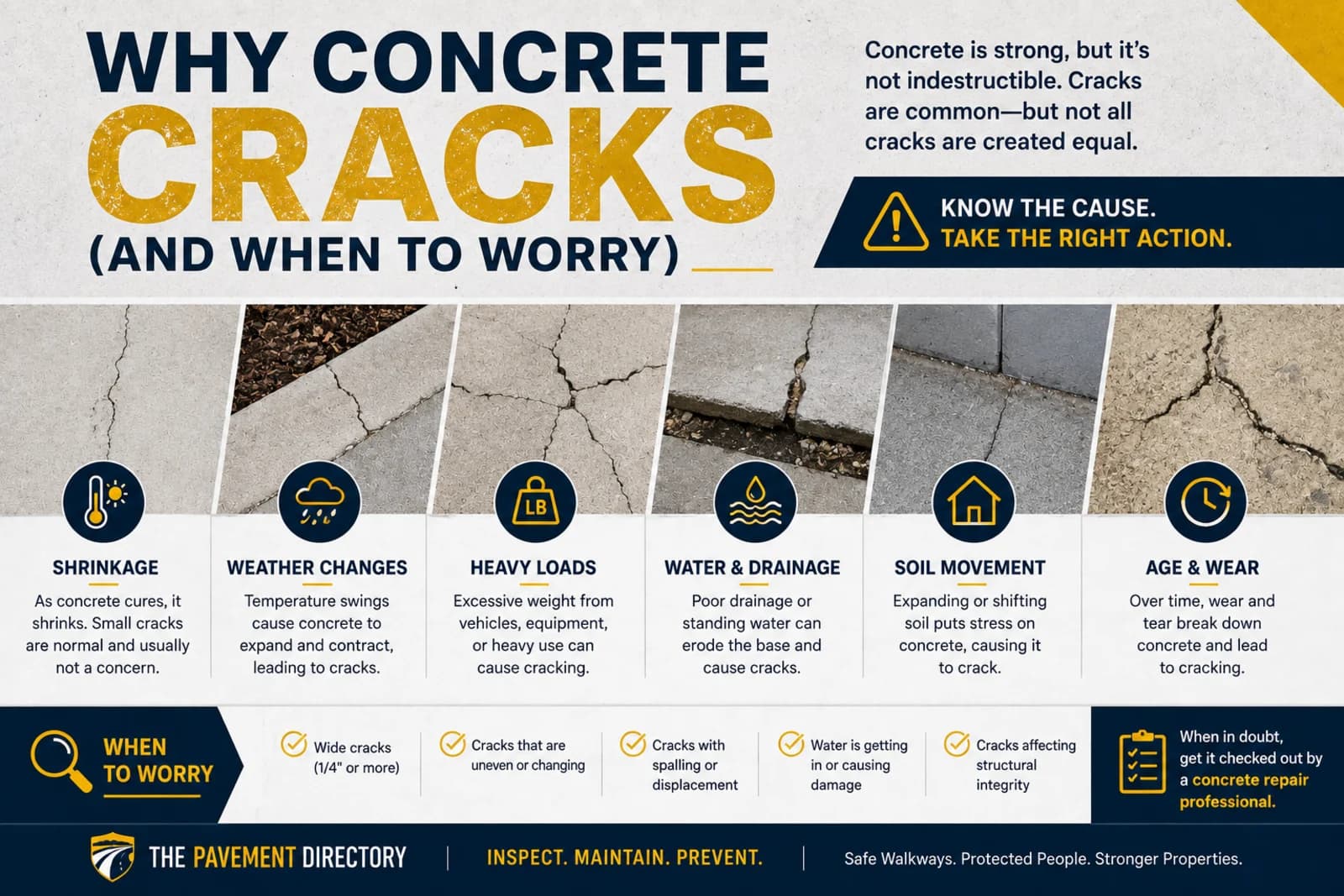
  • Chloride deicers damage concrete sidewalks, curbs, and aprons faster than they damage adjacent asphalt, and they reach reinforcement where they cause spalling.
  • Seasonal weight restrictions in spring reflect a real loss of subgrade strength that applies to private sites receiving heavy deliveries too.
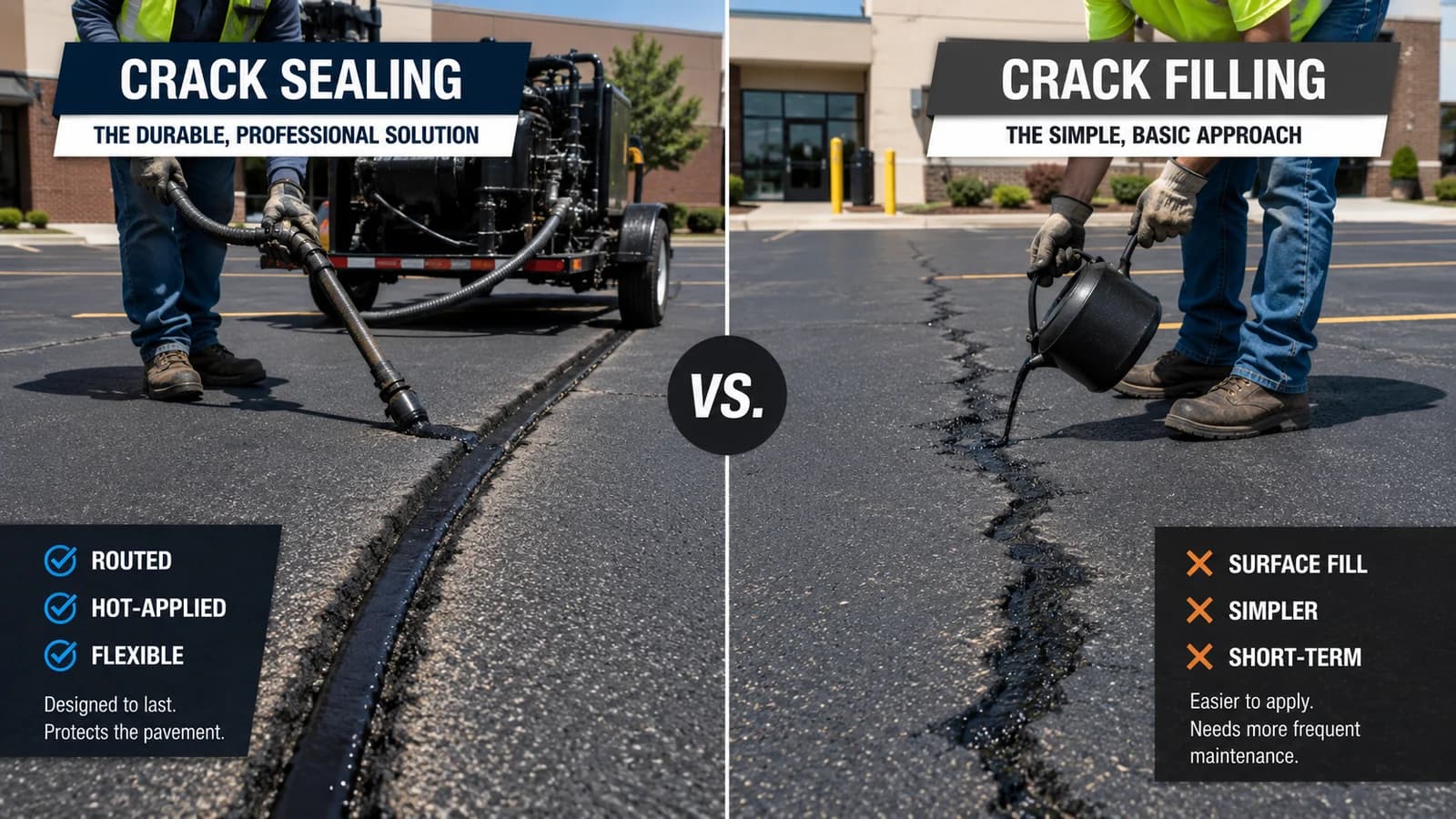
  • Fall crack sealing is the single highest-value routine maintenance in this climate, because open cracks are what let the winter do structural damage.

Pavement Conditions by Region in Michigan

Michigan does not have one climate or one soil profile, and pavement that performs well in one part of the state can fail early a few hours away. These are the divisions that matter most when scoping paving, repair, or maintenance work.

Southeast Michigan

Detroit · Warren · Ann Arbor · Livonia · Troy

Environmental stress

  • Frequent freeze-thaw cycling through winter
  • Very heavy road salt application
  • Dense industrial and commercial truck traffic

Subgrade conditions

  • Heavy lacustrine clays with poor drainage
  • Older urban and industrial fill of variable quality
  • Dense utility congestion beneath existing pavement

Common distress

  • Severe spring potholing
  • Concrete scaling and joint spalling from chloride
  • Utility cut settlement and patch failure

What it means for the work

  • Clay drainage is what determines whether spring damage repeats
  • Automotive and industrial loading is a design load, not a variable
  • Utility coordination is a real project phase on older urban sites

West Michigan and the lakeshore

Grand Rapids · Muskegon · Holland · Kalamazoo

Environmental stress

  • Very heavy lake-effect snowfall off Lake Michigan
  • Sustained plowing and salting through long winters
  • Frequent freeze-thaw cycling

Subgrade conditions

  • Sandy glacial soils that drain well in many areas
  • Clay lenses and poorly draining pockets
  • Frost-susceptible silts where drainage is inadequate

Common distress

  • Spring break-up in poorly drained areas
  • Plow gouging at curbs and transitions
  • Concrete deterioration from heavy salt use

What it means for the work

  • Snow storage volume is genuinely large and needs designated space
  • Sandy subgrade is an advantage — take care not to contaminate it with fines
  • Durable marking materials are worth the premium here

Northern Lower Peninsula

Traverse City · Petoskey · Gaylord · Alpena

Environmental stress

  • Deep frost penetration and long winters
  • Heavy snowfall with sustained plowing
  • A construction season shorter than downstate

Subgrade conditions

  • Sandy glacial deposits in much of the region
  • Frost-susceptible soils with deep seasonal frost
  • Shallow groundwater in some low-lying areas

Common distress

  • Frost heave producing seasonal distortion
  • Spring break-up potholing
  • Markings worn off within a single winter

What it means for the work

  • Non-frost-susceptible base material matters more than asphalt thickness
  • Seasonal resort occupancy limits acceptable work windows
  • Book paving early — the season is short and contractors are fewer

Upper Peninsula

Marquette · Escanaba · Sault Ste. Marie · Houghton

Environmental stress

  • Extreme snowfall, among the highest totals in the eastern United States
  • Severe cold and very deep frost penetration
  • The state's shortest construction season

Subgrade conditions

  • Shallow bedrock in the western Upper Peninsula
  • Frost-susceptible soils with deep frost
  • Peat and organic soils in low-lying areas

Common distress

  • Severe frost heave and spring break-up
  • Plow damage on anything standing proud of the surface
  • Low-temperature thermal cracking

What it means for the work

  • The workable season is measured in a few months
  • Plant and material availability is thinner — plan well ahead
  • Mining and timber loading is a real design factor on industrial sites

Common Pavement Problems in Michigan

Freeze-thaw potholing

Potholes forming rapidly over a few weeks in late winter and early spring, often in areas that were only cracked the previous fall.

Likely causes

  • Water entering unsealed cracks, freezing, and prying them wider through repeated cycles
  • Meltwater trapped in the base above still-frozen subgrade
  • Poorly draining clay soils holding the structure saturated

When to get it looked at: If potholes appear where there were only cracks last fall, the cracks were open all winter. That makes fall sealing the fix, and it is a scheduling decision rather than a repair one.

Road salt damage to concrete

Sidewalks, curbs, aprons, and steps scaling, flaking, and spalling at joints, often deteriorating visibly faster than the asphalt beside them.

Likely causes

  • Chloride deicers driving repeated freeze-thaw within the concrete surface
  • Chloride reaching reinforcement and causing corrosion and spalling
  • Concrete placed without adequate air entrainment or cure for this climate

When to get it looked at: Spalling that exposes reinforcement, or scaling across large areas, is past the point where sealers help. On pedestrian surfaces it also becomes a trip-hazard question.

Spring load-restriction weakening

Rutting, edge failure, and sudden deterioration during a few weeks in spring, in areas that carried the same deliveries all winter without incident.

Likely causes

  • Subgrade losing strength as frost comes out and meltwater is trapped
  • Heavy deliveries continuing through the weakest weeks of the year
  • Frost-susceptible soils under the pavement

When to get it looked at: If damage appears every spring in the same delivery route, consider whether heavy deliveries can be shifted out of the thaw window — that is often cheaper than the pavement.

Snowplow damage

Gouges and chipped edges at curbs, transitions, drainage structures, and anything raised above the surface, plus striping worn away by season's end.

Likely causes

  • Plow blades catching raised features and uneven transitions
  • Repeated passes along the same lines over a long winter
  • Paint and thin treatments with limited abrasion resistance

Utility cut settlement

Depressions and cracking rings around utility trenches and structures, particularly on older urban pavement in southeast Michigan.

Likely causes

  • Trench backfill not compacted to match the surrounding subgrade
  • Water migrating along the trench line and freezing
  • Repeated cuts in the same area over decades

Paving and Maintenance Calendar for Michigan

Treat this as a planning aid, not a rule. Whether a given treatment can actually be placed on a given day depends on product requirements, surface and nighttime temperatures, the rain forecast, humidity, plant availability, the project specification, and the contractor’s means and methods.

Winter

Work often suited to this window

  • Snow and ice management
  • Emergency pothole and safety repairs
  • Assessments, budgeting, and booking the coming season

Scheduling risks

  • Paving and coatings are out of season statewide
  • Cold-patch repairs are temporary by design
  • Lake-effect events can close a property for a day or more

Inspect for: Note where plows are catching edges, where snow is stored, and where meltwater refreezes into hazards.

Spring thaw

Work often suited to this window

  • Damage assessment once the surface is clear
  • Pothole repair and safety work
  • Sweeping accumulated sand and salt residue

Scheduling risks

  • Subgrade is at its weakest, so structural work is less reliable
  • Seasonal weight restrictions affect hauling and deliveries
  • The Upper Peninsula and north thaw weeks later than downstate

Inspect for: Map the winter's damage and identify which failures repeat annually — those are drainage or base problems, not weather.

Regional exception: A schedule built on Detroit timing will be weeks early for Marquette or Traverse City.

Construction season

Work often suited to this window

  • Paving, overlays, and reconstruction
  • Sealcoating and surface treatments
  • Concrete repairs, striping, and accessibility work

Scheduling risks

  • This is peak demand statewide and the window is short
  • Summer storms interrupt placement and coating cure
  • School and campus work competes for the same weeks

Inspect for: Evaluate concrete surfaces before another salt season, and check truck areas for rutting while pavement is warm.

Fall (pre-freeze)

Work often suited to this window

  • Crack sealing — the highest-value routine work in this climate
  • Final paving as temperatures allow
  • Drainage clearing and snow-operation planning

Scheduling risks

  • Night temperatures fall quickly and close the window earlier than expected
  • An early hard freeze or lake-effect event can end the season
  • Crack sealing crews book out through the fall

Inspect for: Confirm cracks are sealed and drainage is clear before freeze-up — every open crack is next spring's pothole.

Contractor Licensing and Verification in Michigan

Statewide licensing
Depends on scope and project value
Administering body
Michigan Department of Licensing and Regulatory Affairs (LARA)

Michigan licenses residential builders and maintenance and alteration contractors through the Department of Licensing and Regulatory Affairs, and that licensing is verifiable through the state's license lookup. Commercial paving and parking lot work generally sits outside that residential framework, so on a commercial property there may be no state license number to check.

That puts more weight on the checks a property owner controls. Confirm the exact entity name through the Department of Licensing and Regulatory Affairs corporate search and match it to the contract and the insurance certificate. Ask for a certificate of insurance sent directly by the carrier or agent, covering general liability and workers' compensation for your project dates.

Many Michigan municipalities require their own contractor registration or permits for work within their jurisdiction, and requirements differ between them. Ask the city or township with jurisdiction over your property rather than assuming a statewide answer.

Public projects carry separate bonding, prevailing wage where applicable, and prequalification requirements. Those apply to school district, municipal, and county properties rather than to a private commercial lot.

What a contractor license does not prove

For a commercial parking lot in Michigan there is often no state paving license to verify, so references from properties that have been through several Michigan winters carry more weight than a license check would elsewhere.

  • That the proposed scope is the right fix for what is actually failing
  • That the price is fair for the local market
  • That drainage has been designed or corrected
  • That the pavement section and thickness suit the traffic the property carries
  • That the specified materials are appropriate for the site
  • That the crew will show up when promised
  • That workmanship will hold up past the first winter or summer
  • That the company is financially stable enough to honor a warranty

Ask for a certificate of insurance sent directly from the carrier or agent rather than a copy forwarded by the contractor, confirm the general liability and workers’ compensation coverage is active on the dates of your work, and ask to be named as certificate holder so you are notified if the policy lapses.

Licensing requirements can turn on project value, scope of work, property location, and whether the job is public or private. City and county rules may add registration, permitting, or bonding requirements beyond anything required at the state level. Verify current requirements with the agency directly before contracting.

Last reviewed:

Stormwater and Environmental Considerations

Michigan administers construction stormwater permitting through the Department of Environment, Great Lakes, and Energy. Construction that disturbs enough ground, or that occurs within a certain distance of a lake or stream, generally requires a soil erosion and sedimentation control permit — and in Michigan that permit is frequently issued by the county enforcing agency rather than by the state directly.

That county-level administration is the practical detail that matters. For most paving projects, the soil erosion permit comes from a county drain commissioner or designated enforcing agency, and the process, timeline, and thresholds vary from county to county. Ask early who issues it for your property and whether the contractor is obtaining it.

Proximity to Great Lakes shoreline, inland lakes, streams, and wetlands adds requirements, and Michigan's wetland regulation is more extensive than in many states. Chloride reaching surface water is also a recognized concern, which makes snow storage location and salt application practices a water quality issue as well as a pavement one.

What tends to drive requirements here

  • Disturbed area and proximity to water, which drive soil erosion and sedimentation control permitting
  • County enforcing agency requirements, which vary across Michigan
  • Wetland proximity, where Michigan regulation is more extensive than in many states
  • Municipal detention and drainage requirements
  • Snow storage and chloride management as a water quality consideration
  • Stabilization of disturbed ground before freeze-up ahead of spring melt

Soil erosion permitting in Michigan is largely administered at the county level and requirements differ between counties. Confirm with the county enforcing agency and the municipality before design.

Last reviewed:

Pavement Terms You May Encounter in Michigan

TermWhat it means on a Michigan project
PG binder grade (e.g. PG 58-28)The performance grade of the asphalt binder. The low-temperature number governs resistance to thermal cracking, and the appropriate grade differs between Detroit and the Upper Peninsula.
Seasonal weight restrictionsSpring limits on axle loads while subgrade is thaw-weakened. They apply to public roads, but the same weakness affects private lots taking heavy deliveries in April.
Open-graded drainage courseA free-draining layer within the pavement structure that gives trapped water a path out. In a freeze-thaw climate this can matter more than adding thickness.
Air-entrained concreteConcrete with microscopic air voids that give freezing water somewhere to expand. Standard for exterior concrete in Michigan and a real factor in whether a walk scales under salt.
Aggregate base (21AA)The dense-graded crushed aggregate base commonly specified in Michigan. Its compaction and drainage quality usually determine pavement life more than the asphalt above it.
Crushed concrete baseRecycled concrete used as base material, common in Michigan. It performs well when properly graded and compacted; the question worth asking is what gradation and how it drains.

State transportation specifications can provide useful regional terminology and material references, but they do not automatically govern private parking-lot or driveway projects unless incorporated into the contract or required by the applicable jurisdiction.

More definitions are in the pavement glossary.

Common Pavement Projects in Michigan

Automotive plants and supplier facilities

Heavy, continuous truck traffic on clay subgrade in the state's harshest freeze-thaw region, with dock and yard areas failing long before the parking fields.

Distribution and warehouse facilities

Truck courts concentrate slow, heavy loading and take the worst of the winter plowing and salt at the same time.

Apartment and condominium communities

Private drives get plowed hard all winter, and snow storage location determines where the pavement and concrete fail first.

Resort and seasonal properties up north

Deep frost, a short construction season, and seasonal occupancy peaks mean the work window and the damage window barely overlap.

School districts and university campuses

Bus loops carry heavier loads than the parking fields, and the construction window is compressed into a short summer break.

Questions to Ask a Paving Contractor in Michigan

Michigan pavement FAQs

How does road salt affect concrete parking lots in Michigan?

Chloride deicers increase the number of freeze-thaw cycles the concrete surface experiences and draw water deeper into it, producing surface scaling and flaking. Where chloride reaches embedded reinforcement, it causes corrosion that expands and spalls the concrete from within. That is why sidewalks, curbs, aprons, and steps across Michigan often need attention before the adjacent asphalt shows serious wear. Air-entrained concrete, proper cure, and moderating application rates all help; once reinforcement is exposed, sealers do not.

Why do potholes appear so suddenly in Michigan each spring?

Because the damage was done all winter and only becomes visible at thaw. Water enters unsealed cracks, freezes, expands, and pries the crack wider — repeatedly, through dozens of cycles. Meanwhile meltwater is trapped in the base above still-frozen subgrade, so the pavement loses support underneath. When traffic hits a weakened area with a widened crack, the surface breaks out quickly. That is why fall crack sealing does more for a Michigan lot than any spring repair program.

Does Michigan require a license for commercial paving contractors?

Michigan licenses residential builders and maintenance and alteration contractors through LARA, but commercial paving and parking lot work generally falls outside that framework, so there may be no state license to check on a commercial project. Verification relies more on confirming the business entity, verifying insurance directly with the carrier, checking whether the municipality requires its own registration, and getting references from Michigan properties that have been through several winters.

Why do spring weight restrictions matter for a private parking lot?

The restrictions themselves apply to public roads, but the reason behind them applies everywhere: as frost comes out of the ground, meltwater is trapped in the base and the subgrade temporarily loses much of its strength. Heavy deliveries during those weeks can rut and break pavement that carried the same trucks all winter without trouble. If your property sees recurring spring damage on a delivery route, shifting heavy deliveries out of that window is often cheaper than the pavement repairs.

How does lake-effect snow change pavement maintenance in west Michigan?

Lake-effect snowfall off Lake Michigan produces very high seasonal totals, which means far more plowing, far more salt, and a much larger volume of meltwater working into the pavement over a season. Practically, it raises the value of fall crack sealing and durable striping materials, makes snow storage location a real design decision, and means concrete surfaces need more attention than they would in a lower-snowfall part of the state.

Who issues the soil erosion permit for a Michigan paving project?

Usually the county rather than the state. Michigan's soil erosion and sedimentation control permitting is largely administered by county enforcing agencies, often through the drain commissioner's office, and the thresholds, process, and timeline differ from county to county. Proximity to a lake or stream can trigger it even on a smaller project. Ask early who issues it for your property and whether the contractor is obtaining it and has allowed time for it.

Where should plowed snow be stored on a Michigan property?

Somewhere the meltwater — carrying a season's accumulated sand and chloride — can drain away without sitting on pavement or overwhelming an inlet. Snow piles concentrate a large volume of water and salt in one place, and the pavement and concrete under and downhill of a habitual pile often fail first. Agreeing on storage locations with your snow contractor before the season costs nothing and prevents a recurring repair.

Browse cities in Michigan

Browse services in Michigan

Related reading for Michigan property owners

Michigan Agencies and Reference Links

This page summarizes publicly available information for general education. It is not legal, engineering, or code-compliance advice, and requirements change. Confirm anything that affects your project with the agency with jurisdiction over the property.

Regulatory content last reviewed:

For contractors

Are you a pavement contractor in Michigan?

Get listed where property managers, owners, and facility teams search by state, city, and service.