
Kentucky pavement guide
Pavement Conditions in Kentucky: Regions, Soils, and Common Problems
Kentucky's signature pavement problem starts below the pavement — in limestone that groundwater has been dissolving for a very long time.
- 5 regions
- 5 common problems
- 6 local terms
Jump to section
Regional differences
Pavement Conditions by Region in Kentucky
Kentucky does not have one climate or one soil profile, and pavement that performs well in one part of the state can fail early a few hours away. These are the divisions that matter most when scoping paving, repair, or maintenance work.
Bluegrass region
Lexington · Frankfort · Georgetown · Nicholasville · Winchester
Environmental stress
- Frequent freeze-thaw crossings through winter
- Heavy rainfall on ground with limited surface drainage
- Growing distribution and manufacturing traffic
Subgrade conditions
- Shallow limestone with irregular rock surface and solution features
- Residual clay filling voids between rock pinnacles
- Sinkholes, swallets, and solution channels across the region
Common distress
- Circular depressions with little cracking around their perimeter
- Differential settlement across rock-to-soil transitions
- Cracking following a buried rock ledge rather than a wheel path
What it means for the work
- Rock excavation quantity is a recurring source of change orders
- Concentrated infiltration over karst warrants geotechnical input
- A depression that returns should be investigated below the surface
Pennyroyal and the Mammoth Cave karst plateau
Bowling Green · Glasgow · Elizabethtown · Hopkinsville · Cave City
Environmental stress
- Heavy rainfall entering the ground rapidly through karst features
- Freeze-thaw cycling with wet winter conditions
- Heavy manufacturing and interstate freight traffic
Subgrade conditions
- Extensively developed karst with mature cave and conduit systems
- Thin residual soil over limestone
- Internal drainage where surface water disappears rather than running off
Common distress
- Sinkhole settlement, sometimes developing rapidly after heavy rain
- Localized collapse where a soil void has enlarged unseen
- Cracking radiating from an active karst feature
What it means for the work
- This is among the most karst-developed terrain in the country
- Stormwater handling decisions here have groundwater consequences
- Geotechnical involvement on significant projects is proportionate, not excessive
Ohio River corridor and northern Kentucky
Louisville · Covington · Newport · Florence · Owensboro
Environmental stress
- Humid summers with high pavement surface temperatures
- Freeze-thaw cycling and winter deicing on dense urban pavement
- Very heavy air cargo, distribution, and interstate freight loading
Subgrade conditions
- Alluvial silts and sands on river terraces and bottoms
- Loess capping on the bluffs above the valley
- Deep fill and buried utilities on long-developed urban parcels
Common distress
- Rutting and shoving at cargo aprons, dock areas, and truck routes
- Settlement over old utility trenches in established corridors
- Base saturation and cracking in low-lying river-adjacent lots
What it means for the work
- Air freight and distribution loading justifies a different section than the parking field
- Phasing around continuous operations usually drives the schedule
- Floodplain status affects what is permissible on bottom-ground sites
Eastern Kentucky coalfield
Pikeville · Hazard · Prestonsburg · Middlesboro · Corbin
Environmental stress
- High rainfall on steep terrain with concentrated runoff
- Freeze-thaw cycling with persistent damp in shaded valleys
- Heavy coal, timber, and haul truck traffic
Subgrade conditions
- Thin soils over sandstone and shale on steep slopes
- Colluvium and fill on benched hillside sites
- Historic mining ground with settlement potential in places
Common distress
- Slope movement pulling pavement apart at the downhill edge
- Settlement over old mining works or poorly compacted fill
- Washout and undermining where runoff crosses on a grade
What it means for the work
- Slope stability and retaining work frequently exceed the paving cost
- Fill on benched sites deserves scrutiny before a section is designed
- Haul traffic is a design load far beyond ordinary commercial use
Western coalfield and the Jackson Purchase
Paducah · Madisonville · Henderson · Mayfield · Murray
Environmental stress
- Hot, humid summers and milder winters than the east
- Heavy rainfall with river and backwater flooding
- Agricultural and river-terminal truck traffic
Subgrade conditions
- Deep loess capping over older sediments
- Alluvial soils along the Ohio, Mississippi, and Tennessee corridors
- High water table on low-lying parcels
Common distress
- Erosion and undercutting where runoff reaches bare loess
- Broad settlement on soft alluvial ground
- Base saturation in areas that drain slowly
What it means for the work
- Loess erodes rapidly once concentrated water reaches it
- Floodplain and levee considerations apply on river-adjacent sites
- The working season runs slightly longer here than in the mountains
Field conditions
Common Pavement Problems in Kentucky
Karst sinkhole settlement
A rounded depression that deepens over months in an otherwise sound lot, typically with little or no cracking radiating from its edge, and that returns after being filled.
Likely causes
- Soil migrating downward into solution channels in the limestone below
- Concentrated runoff discharged onto a single point over karst ground
- A leaking storm or utility line washing fines into an existing void
- Previously filled features reactivating as water finds them again
When to get it looked at: Investigate below the pavement before filling a returning depression a second time. Repeated asphalt fill adds weight over a void that is still enlarging, and in Kentucky that is a genuine safety consideration rather than a theoretical one.
Slope movement on eastern Kentucky sites
Cracking parallel to the downhill edge of a hillside lot, with the outer portion dropping relative to the rest and the crack reopening after each repair.
Likely causes
- Fill placed on a slope without adequate compaction or benching
- Saturated colluvium moving slowly downslope
- Water introduced into the slope by the site's own drainage
- Loss of toe support from erosion or excavation below
When to get it looked at: Cracking that runs parallel to a slope edge and keeps reopening is a slope stability question, not a paving one. Repaving the surface does not slow the movement beneath it.
Late-winter potholing along crack lines
Potholes appearing over a few weeks in February and March along cracks that seemed unremarkable the previous autumn.
Likely causes
- Water entering unsealed cracks and freezing through repeated crossings
- Moisture held in the base with nowhere to drain
- Traffic pumping saturated fines up through the crack
- Snow and ice operations working the surface mechanically
When to get it looked at: Potholes clustered along one crack line usually mean that crack has been open and taking water for more than a single season.
Cargo and distribution loading damage
Rutting, shoving, and cracking concentrated at cargo aprons, dock approaches, trailer parking, and entrance drives, while the adjacent car parking stays in good condition.
Likely causes
- Axle and equipment loads far beyond the original design assumption
- Trailer landing gear point-loading asphalt in drop lots
- Slow and stationary loading during the hottest summer weeks
- Entrances built to the same section as the parking field
When to get it looked at: Damage that stops abruptly where heavy vehicle movement stops is a section question. Ask whether concrete is warranted at aprons and landing areas rather than a thicker asphalt patch.
Loess erosion in western Kentucky
Rapid gullying, undercutting, and edge loss where runoff leaves a lot onto bare wind-deposited soil, sometimes progressing dramatically after a single storm.
Likely causes
- Concentrated discharge onto erodible loess with no energy dissipation
- No armored outfall, curb, or stabilized shoulder at the discharge point
- Steep bluff slopes below the pavement edge
- Disturbed ground left unstabilized after construction
Property types
Common Pavement Projects in Kentucky
Air cargo and logistics facilities
Louisville's air freight operations and the northern Kentucky logistics corridor concentrate heavy, repetitive equipment and trailer loading on aprons and drives that need a different section from the parking field.
Automotive and appliance manufacturing plants
Plant yards across central and western Kentucky move components and finished goods on schedules where an unplanned pavement failure costs far more than the repair itself.
Bourbon distilleries and warehousing
Barrel logistics put concentrated heavy loading on properties that frequently sit on karst ground, which combines a demanding section requirement with a subsurface risk.
Horse farms and equestrian facilities
Bluegrass properties combine trailer traffic, extensive private drives, and shallow limestone subgrade where rock depth varies dramatically over short distances.
Healthcare and university campuses
Lexington and Louisville campuses require continuous accessible access and ambulance routes, so phasing and temporary accessible parking shape the schedule as much as pavement condition does.
Plain English
Pavement Terms You May Encounter in Kentucky
| Term | What it means on a Kentucky project |
|---|---|
| Dense graded aggregate (DGA) | The crushed limestone base used almost universally beneath Kentucky pavement. Proposals name it by compacted thickness, and how well that layer drains generally matters more to pavement life than the surface course. |
| Sinkhole throat | The opening through which soil is draining into a karst void below. Filling the surface depression without addressing the throat and the water reaching it generally means the depression returns. |
| Swallet | A point where surface water disappears into the karst system. Its presence near a site changes both the drainage design and the water quality consequences of what leaves the property. |
| Proof rolling | Driving a loaded truck over the prepared subgrade and watching for deflection before base and asphalt go down. On Kentucky's irregular limestone subgrade it is the cheapest way to find soft pockets while they are still fixable. |
| Undercut and stone backfill | Removing subgrade found unsuitable during construction and replacing it with compacted stone. It is common on Kentucky sites and should be priced as a unit item with a clear rule for who determines it is needed. |
| Benched fill | Fill placed on a slope in stepped, keyed layers rather than simply dumped against the hillside. On eastern Kentucky hillside sites, whether fill was properly benched often determines whether the pavement above it moves. |
State transportation specifications can provide useful regional terminology and material references, but they do not automatically govern private parking-lot or driveway projects unless incorporated into the contract or required by the applicable jurisdiction.
More definitions are in the pavement glossary.
Before you sign
Questions to Ask a Paving Contractor in Kentucky
- Has anyone evaluated whether this site sits on karst, and does that change what you are proposing?
- For the depression that keeps coming back, what do you think is happening below the pavement?
- Where does runoff from this lot ultimately go, and does any of it enter a sinkhole or swallet?
- Will the subgrade be proof-rolled before base is placed, and can I be present?
- How is undercut measured and priced if you find unsuitable subgrade, and who decides it is needed?
- On this hillside site, was the fill benched, and how do you know?
- Is the cargo apron or dock area getting a different section from the parking field, and why?
- Does the city or county require an occupational license, registration, or permit for this work at this address?
- What surface and overnight temperatures does the product you have proposed require?
Kentucky pavement condition FAQs
Why does the same depression keep coming back in my Kentucky parking lot?
It is very likely a karst feature. More of Kentucky is underlain by soluble limestone than almost anywhere else in the country, and where groundwater has dissolved channels into the rock, soil above them migrates downward and the pavement settles into the space. The distinguishing sign is a rounded depression with little cracking radiating from its edge, unlike base failure, which cracks in an interconnected pattern first. Because the void below can keep enlarging, adding asphalt adds weight without addressing the cause — and here that is a safety consideration, not just an economic one.
Why does pavement on my eastern Kentucky hillside keep cracking at the edge?
Cracking that runs parallel to a downhill edge and keeps reopening after repair is usually slope movement rather than a pavement defect. Fill placed on a slope without proper benching and compaction, saturated colluvium moving slowly downhill, and water introduced into the slope by the site's own drainage all produce that pattern. Repaving the surface does nothing to slow what is happening beneath it. That is a slope stability evaluation, and it often costs more to address than the paving does — but it is the only thing that stops the cycle.
Is crack sealing worth the money in Kentucky?
It is one of the better-value maintenance items here. Kentucky winters cross freezing repeatedly rather than staying frozen, and every crossing pushes water into an open crack, freezes it, and widens the crack a little more. That mechanism is what produces the late-winter pothole crop along crack lines that looked minor in October. Sealing before winter interrupts it. What it will not do is repair a base that has already lost support, so it is worth having someone distinguish between the two before scoping the work.
What is DGA and why is it on every Kentucky paving proposal?
Dense graded aggregate is the crushed limestone base used almost universally beneath pavement in Kentucky, and the state has plenty of it. Proposals name it by compacted thickness. The layer matters more than most owners realize: how thick it is, how well it is compacted, and whether it can shed water generally determine pavement life more than the asphalt surface above it does. If a proposal is vague about base thickness, that is worth pinning down before comparing prices.
Why do the cargo and dock areas at my Kentucky property fail first?
Because they carry a completely different load. Cargo equipment and loaded trailers impose axle weights far beyond what a car parking section is built for, and trailer landing gear concentrates a very large load onto two small pads while the trailer sits stationary — often through the hottest weeks of a humid Kentucky summer, when asphalt resists deformation least. Damage that stops abruptly where heavy vehicle movement stops is a section question, and concrete is frequently the right answer in those specific zones.
Related reading for Kentucky property owners
Property-owner guide
Updated July 11, 2026
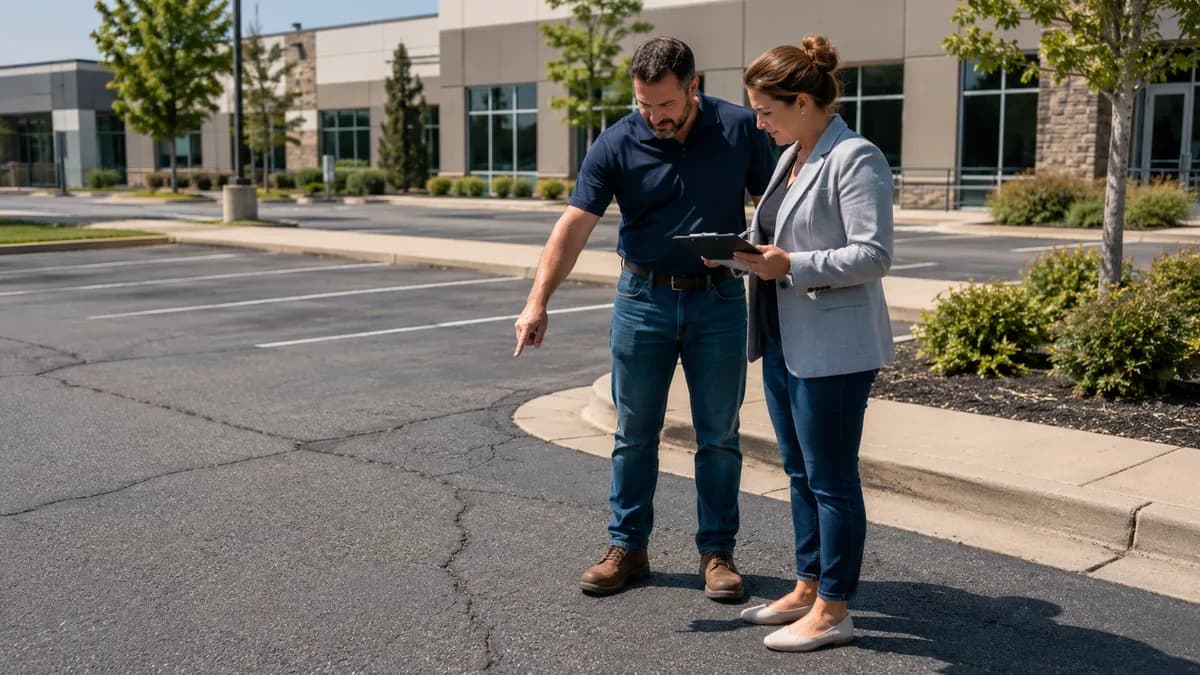
When Should You Seal Asphalt Cracks?
When to seal cracks in asphalt — which cracks to seal, the best time of year, why sealing early matters, and how crack sealing fits a maintenance schedule.
Property-owner guide
Updated July 6, 2026
How to Choose an Asphalt Paving Contractor
How to choose an asphalt paving contractor: project fit, relevant experience, written scope, references, insurance, and pavement qualifications.
Property-owner guide
Updated July 6, 2026
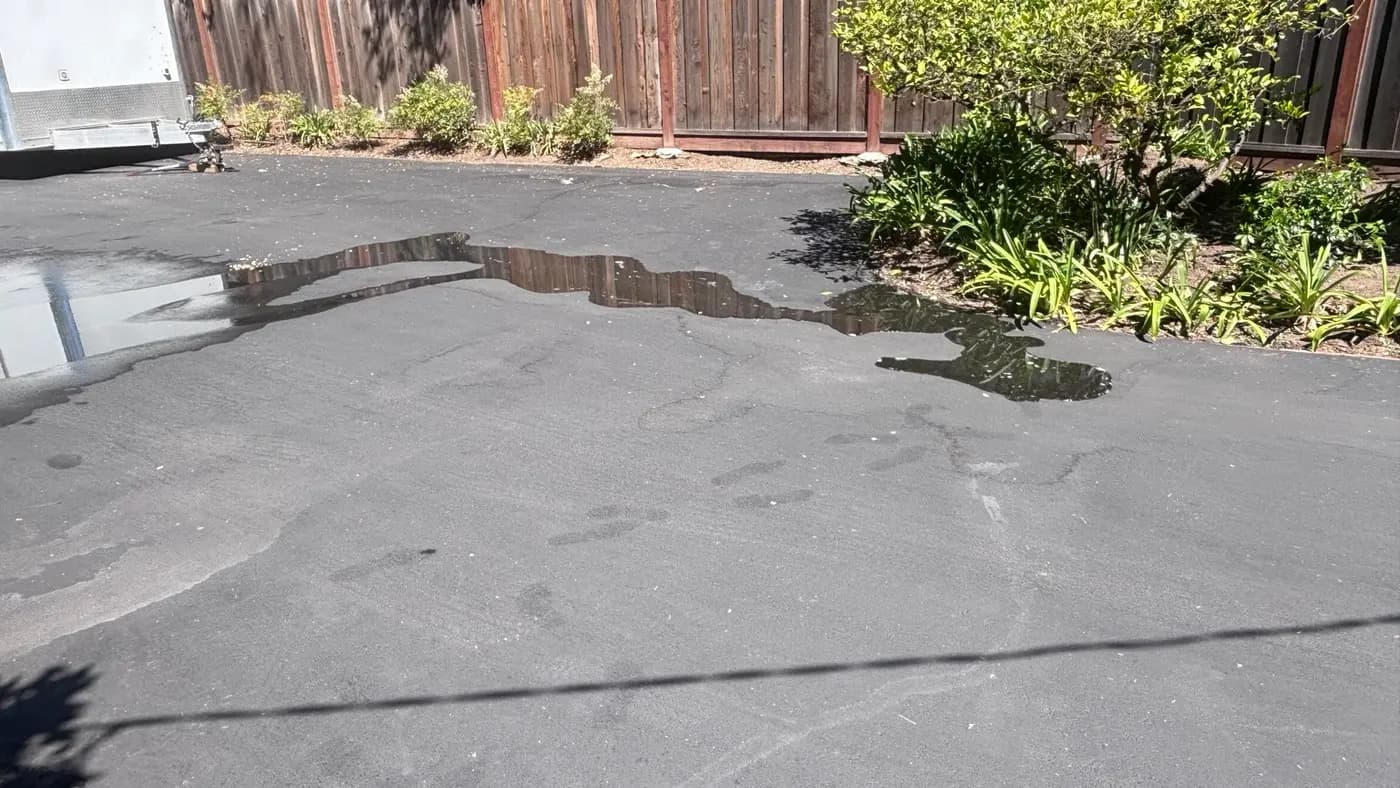
Parking Lot Drainage Problems: What Property Owners Should Know
Common causes of parking lot drainage problems, why they accelerate pavement damage, and what property owners should ask contractors before a fix.
Property-owner guide
Updated July 6, 2026
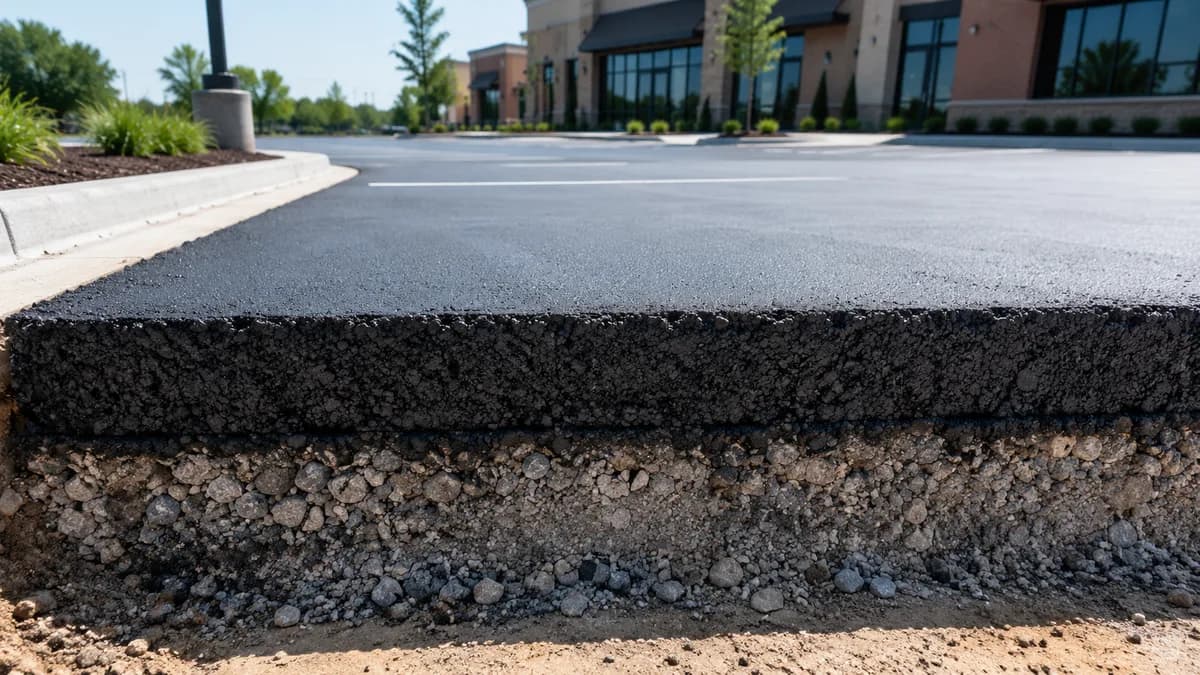
Asphalt Paving Thickness for Parking Lots
Typical asphalt paving thickness for parking lots: benchmarks for stalls, drive lanes, and truck areas, plus how base and soil change the answer.
Property-owner guide
Updated July 11, 2026
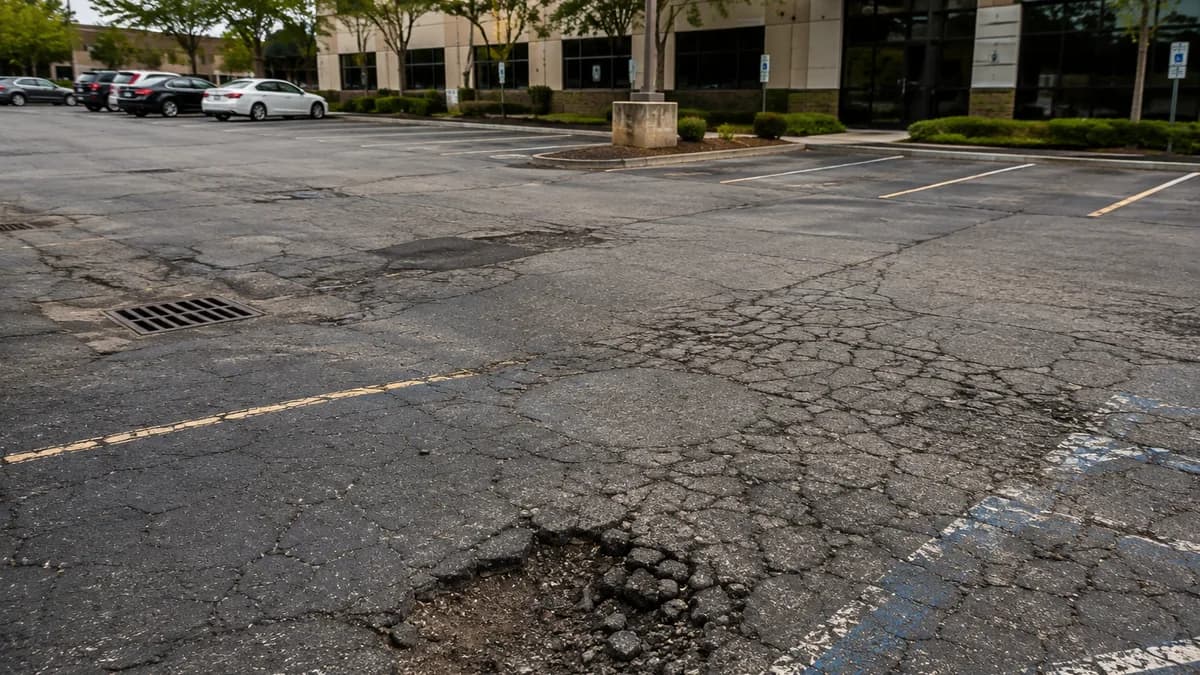
Signs Your Parking Lot Needs Maintenance
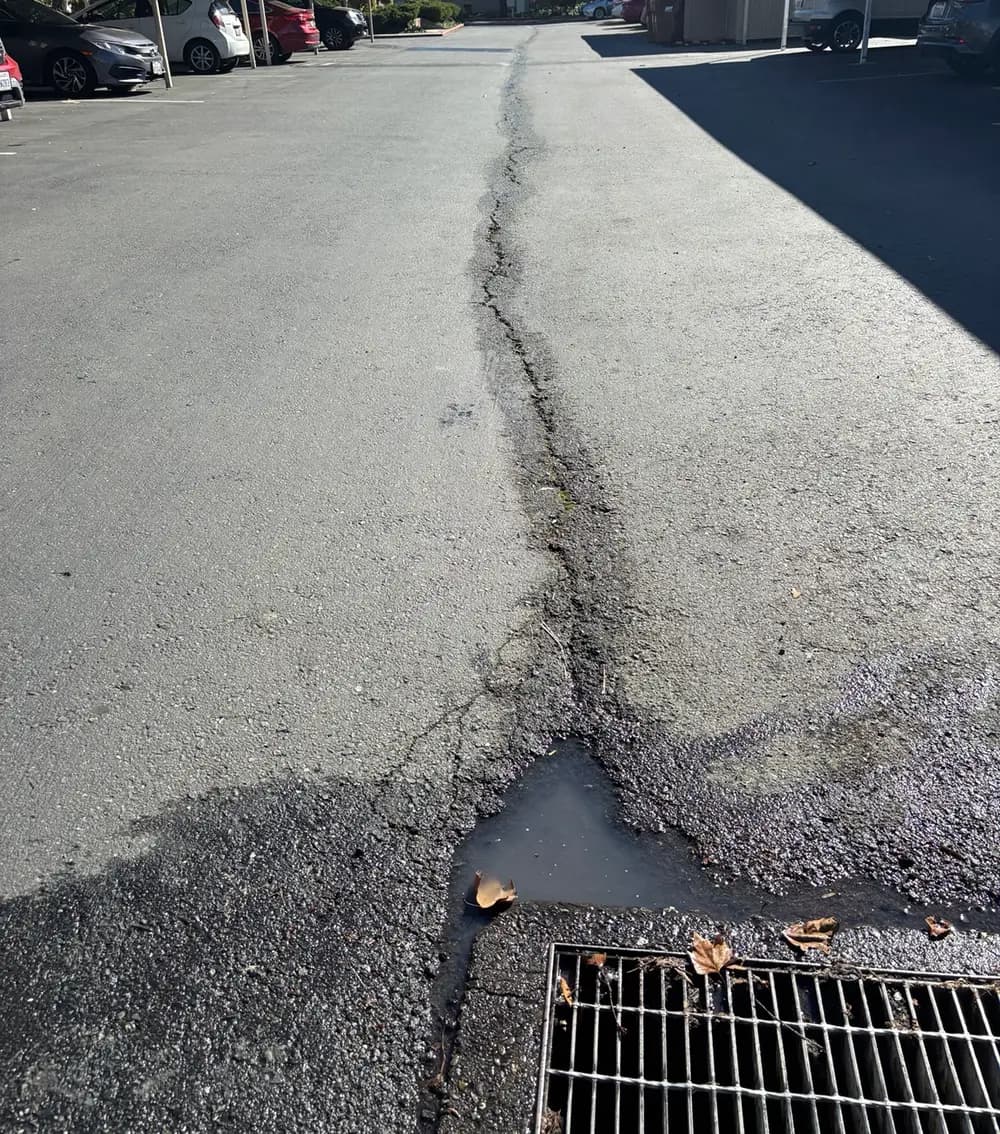
How to read the warning signs a parking lot needs attention — cracks, potholes, faded striping, ponding, raveling — and what each one means.
Property-owner guide
Updated July 12, 2026
How Drainage Affects Pavement Life
Why drainage is the biggest factor in how long pavement lasts, how water damages asphalt from the base up, and why fixing it protects every repair.
Before you hire: The Pavement Directory does not guarantee contractor performance, pricing, licensing, insurance, or availability. Business information may be submitted by contractors or gathered from public sources and should be independently verified before hiring. Always confirm licensing, insurance, references, scope of work, and written contract terms.
For contractors
Ready to compare Kentucky contractors?
Browse listings by city and service, then use what you have read here to check the scope, the credentials, and the timing before you sign.