The Pavement Directory

State pavement directory

Pavement Contractors in Iowa

Iowa's pavement year has a shape to it. Frost drives deep through the winter, the ground thaws from the top down in March and traps water in the base, structural work waits for the subgrade to firm up, and then the whole construction season competes for the same few months — which end with harvest putting a year's worth of heavy truck traffic through grain and processing facilities in a matter of weeks.

The ground varies more than the flat reputation suggests. The Des Moines Lobe in north-central Iowa is young glacial landscape that drains poorly and was tiled to make it farmable. Northeast Iowa has karst and shallow limestone. The western Loess Hills carry some of the deepest wind-deposited soil in the country, which stands up well until concentrated water reaches it. This page lists pavement contractors serving Iowa cities and explains what those conditions mean for scope and timing.

Listings
24
Cities
3
Services
13
Search Iowa

Before you hire: The Pavement Directory does not guarantee contractor performance, pricing, licensing, insurance, or availability. Business information may be submitted by contractors or gathered from public sources and should be independently verified before hiring. Always confirm licensing, insurance, references, scope of work, and written contract terms.

24 contractors in Iowa

Filter by service
Asphalt Repair Service logo

Cedar Rapids, Iowa

ADA & AccessibilityAsphalt PavingConcrete SiteworkCommercial & Residential

Asphalt Repair Service is a pavement contractor based in Cedar Rapids, Iowa, working with commercial and residential properties. Listed services include ADA parking compliance, asphalt paving, asphalt repair, and concrete repair. This profile summarizes the company's location and service categories to help property owners in the Cedar Rapids, Iowa area shortlist contractors; confirm licensing, insurance, and scope directly before hiring.

(319) 337-4951Website on file
Asphalt PavingCrack SealingStriping & Pavement MarkingsCommercial & Residential

Asphalt Restoration Solutions is a pavement contractor based in Cedar Rapids, Iowa, working with commercial and residential properties. Listed services include asphalt paving, asphalt repair, crack sealing, and parking lot striping. This profile summarizes the company's location and service categories to help property owners in the Cedar Rapids, Iowa area shortlist contractors; confirm licensing, insurance, and scope directly before hiring.

(319) 294-4310Website on file
Concrete SiteworkCrack SealingDrainage & GradingCommercial & Residential

Behncke Construction Inc. is a pavement contractor based in Davenport, Iowa, working with commercial and residential properties. Listed services include concrete repair, crack sealing, drainage and sitework, and parking lot striping. This profile summarizes the company's location and service categories to help property owners in the Davenport, Iowa area shortlist contractors; confirm licensing, insurance, and scope directly before hiring.

(563) 332-6045Website on file
Black Gold Sealers, LLC logo

Spirit Lake, Iowa

Asphalt PavingCommercial

Black Gold Sealers, LLC is a pavement contractor based in Spirit Lake, Iowa, working with commercial and industrial properties. Listed services include asphalt paving. This profile summarizes the company's location and service categories to help property owners in the Spirit Lake, Iowa area shortlist contractors; confirm licensing, insurance, and scope directly before hiring.

(712) 320-0295Website on file
Asphalt PavingCrack SealingStriping & Pavement MarkingsCommercial & Residential

Bryr Parking Lot Services is a pavement contractor based in Davenport, Iowa, working with commercial and residential properties. Listed services include asphalt paving, crack sealing, parking lot striping, and sealcoating. This profile summarizes the company's location and service categories to help property owners in the Davenport, Iowa area shortlist contractors; confirm licensing, insurance, and scope directly before hiring.

(563) 320-1425Website on file
Asphalt PavingSealcoatingCommercial & Residential

C&C Asphalt Maintenance is a commercial and residential pavement contractor listed in Marion, Iowa. Listed services include asphalt paving and sealcoating.

ADA & AccessibilityAsphalt PavingConcrete SiteworkCommercial & Residential

Central Asphalt Paving, Inc. is a pavement contractor based in Des Moines, Iowa, working with commercial and residential properties. Listed services include ADA parking compliance, asphalt paving, asphalt repair, and concrete repair. This profile summarizes the company's location and service categories to help property owners in the Des Moines, Iowa area shortlist contractors; confirm licensing, insurance, and scope directly before hiring.

(515) 262-5106Website on file
Asphalt PavingCommercial & Residential

Classic Asphalt Solutions is a commercial and residential pavement contractor listed in Manson, Iowa. The listing covers asphalt paving.

(515) 269-7479
G & H Asphalt Corp logo

Des Moines, Iowa

Asphalt PavingCommercial & Residential

G & H Asphalt is a family-owned asphalt paving company based in Des Moines, Iowa, founded in 1978 and still run by the founding family. The company paves driveways, roadways, parking lots, and sport courts such as basketball and tennis courts for residential, commercial, and municipal clients. It reports being licensed and insured and offers senior discounts, serving Des Moines and numerous nearby central Iowa communities.

(515) 265-2347Website on file
Asphalt PavingConcrete SiteworkCommercial & Residential

Grimes Asphalt & Paving Corporation is a pavement contractor based in Des Moines, Iowa, working with commercial and residential properties. Listed services include asphalt paving, asphalt repair, and concrete repair. This profile summarizes the company's location and service categories to help property owners in the Des Moines, Iowa area shortlist contractors; confirm licensing, insurance, and scope directly before hiring.

(515) 262-8096Website on file
Hansen Asphalt logo

Cedar Rapids, Iowa

Asphalt PavingDrainage & GradingCommercial & Residential

Hansen Asphalt is a commercial and residential pavement contractor based in Cedar Rapids, Iowa. The listing covers asphalt paving and drainage & grading. The listing reports 11 years in business.

(319) 321-5998Website on file
Asphalt PavingAsphalt MaintenanceStriping & Pavement MarkingsCommercial & Residential

Heartland Outdoor Services, L.L.C. is a commercial and residential pavement contractor listed in Grimes, Iowa. The listing covers asphalt paving, asphalt maintenance, striping & pavement markings, and snow removal.

(515) 986-4243Website on file
InRoads Paving logo

Des Moines, Iowa

Asphalt PavingConcrete SiteworkCommercial & Residential

InRoads Paving is a vertically integrated asphalt paving, milling, and materials company based in Des Moines, Iowa. It handles projects ranging from large highway and interstate paving to residential driveways, serving both government agencies and private customers. The company operates a centrally located asphalt plant in the Des Moines Metro area and also runs a portable division that relocates equipment for highway and municipal work throughout Iowa. It offers design-build services and acts as both a prime contractor and subcontractor.

(515) 348-8148Website on file
Asphalt PavingCommercial & Residential

Iowa's Front Porch Asphalt Solutions is a commercial and residential pavement contractor listed in Davenport, Iowa. The listing covers asphalt paving.

(563) 748-1001Website on file
Lawson Enterprises logo

Des Moines, Iowa

Asphalt PavingConcrete SiteworkCommercial

Based in Des Moines, Iowa, Lawson Enterprises is a commercial pavement contractor. Listed services include asphalt paving and concrete sitework.

(515) 274-7444Website on file
ADA & AccessibilityAsphalt PavingConcrete SiteworkCommercial & Residential

LL Pelling Co. - Cedar Rapids Asphalt Plant is a pavement contractor based in Cedar Rapids, Iowa, working with commercial and residential properties. Listed services include ADA parking compliance, asphalt paving, asphalt repair, and concrete repair. This profile summarizes the company's location and service categories to help property owners in the Cedar Rapids, Iowa area shortlist contractors; confirm licensing, insurance, and scope directly before hiring.

(319) 632-3150Website on file
Medic Striping logo

Davenport, Iowa

Striping & Pavement MarkingsADA & AccessibilityCommercial

Medic Striping is a company that performs parking lot striping and pavement marking, including new layout striping, restriping of existing lots, and thermoplastic markings. It also installs signage and wheel stops and marks specialized parking zones such as ADA spaces. The company serves commercial clients in and around Davenport, Iowa, including nearby cities in Iowa and Illinois.

(563) 449-2553Website on file
Asphalt PavingCommercial & Residential

Pacific Asphalt Company is a commercial and residential pavement contractor listed in Ames, Iowa. The listing covers asphalt paving.

(515) 357-7000
Paco's Construction LLC logo

Des Moines, Iowa

Asphalt PavingConcrete SiteworkCommercial & Residential

Paco's Construction LLC is a pavement contractor based in Des Moines, Iowa, working with commercial and residential properties. Listed services include asphalt paving and concrete repair. This profile summarizes the company's location and service categories to help property owners in the Des Moines, Iowa area shortlist contractors; confirm licensing, insurance, and scope directly before hiring.

(515) 240-0625Website on file
Pave Grade logo

De Soto, Iowa

Asphalt PavingCommercial & Residential

The company brings three decades of combined experience to asphalt projects throughout Central Iowa. Services include asphalt installation and repair, blacktop services, grading with GPS technology, and commercial parking lot solutions including striping and ADA updates. The company uses advanced GPS and sonic technology and conducts soil testing before installation. Free estimates are provided within 48 business hours.

(515) 219-1211Website on file
ProLine Striping logo

Muscatine, Iowa

Asphalt PavingStriping & Pavement MarkingsSealcoatingCommercial & Residential

ProLine Striping is a pavement contractor based in Muscatine, Iowa, working with commercial and residential properties. Listed services include asphalt repair, parking lot striping, and sealcoating. This profile summarizes the company's location and service categories to help property owners in the Muscatine, Iowa area shortlist contractors; confirm licensing, insurance, and scope directly before hiring.

(563) 260-7711Website on file
ProLine Striping logo

Burlington, Iowa

ADA & AccessibilityAsphalt PavingConcrete SiteworkCommercial & Residential

ProLine Striping is a pavement contractor based in Burlington, Iowa, working with commercial and residential properties. Listed services include ADA parking compliance, asphalt repair, concrete repair, and crack sealing. This profile summarizes the company's location and service categories to help property owners in the Burlington, Iowa area shortlist contractors; confirm licensing, insurance, and scope directly before hiring.

(563) 260-7711Website on file
Quality Striping Inc logo

Des Moines, Iowa

Concrete SiteworkStriping & Pavement MarkingsCommercial

Quality Striping, Inc. is a pavement marking company based in Des Moines, Iowa, offering waterborne, epoxy, and thermoplastic striping along with grooving, rumbling, water blasting, and permanent signing services. The company serves parking lots, airports, and DOT highway projects throughout Iowa and the surrounding region. It maintains dedicated commercial and highway divisions and belongs to industry groups such as the AGC of Iowa, ATSSA, APAI, and ICPA, and partners with Quality Traffic Control for combined traffic control and striping solutions.

(515) 289-1370Website on file
Asphalt PavingCommercial & Residential

Western Engineering Company - Council Bluffs Office is a commercial and residential pavement contractor listed in Council Bluffs, Iowa. The listing covers asphalt paving. The listing reports 79 years in business.

(712) 366-1039Website on file

What makes pavement work different in Iowa?

Iowa pavement is defined by deep frost, a subgrade that traps meltwater in spring, and loading that arrives all at once at harvest.

  • Iowa requires construction contractors to register with the state Division of Labor, which is a registration rather than a competency license — worth checking, but not a substitute for references.
  • Deep seasonal frost and spring thaw weakening mean structural repairs made too early in the year often do not hold.
  • The Des Moines Lobe drains poorly and much of it is underlain by agricultural tile that may run beneath developed sites.
  • Loess soils across western and southern Iowa erode rapidly once concentrated runoff reaches them.
  • Concrete is used far more widely for commercial pavement here than in many states, which changes both the maintenance conversation and the failure modes.

Pavement Conditions by Region in Iowa

Iowa does not have one climate or one soil profile, and pavement that performs well in one part of the state can fail early a few hours away. These are the divisions that matter most when scoping paving, repair, or maintenance work.

Des Moines Lobe

Des Moines · Ames · Fort Dodge · Mason City · Webster City

Environmental stress

  • Deep winter frost penetration and strong spring thaw weakening
  • Numerous freeze-thaw cycles through late winter
  • Heavy agricultural and distribution truck traffic

Subgrade conditions

  • Young glacial till with poor internal drainage
  • Flat terrain with closed depressions and little natural fall
  • Extensive legacy agricultural drainage tile beneath developed land

Common distress

  • Frost heave producing seasonal bumps that partly recover by summer
  • Spring potholing where meltwater is trapped in the base
  • Linear settlement over collapsed field tile

What it means for the work

  • Subsurface drainage matters far more than the flat ground suggests
  • Locating legacy tile before regrading is worth doing
  • Structural repair placed during thaw weakening tends not to hold

Iowan Surface and northeast Iowa

Cedar Rapids · Waterloo · Cedar Falls · Decorah · Dubuque

Environmental stress

  • The state's coldest winters and deepest frost in the northern counties
  • Heavy rainfall events on rolling terrain
  • Freeze-thaw cycling with sustained deicing

Subgrade conditions

  • Shallow limestone and dolomite, with karst features in the northeast
  • Loamy glacial materials over rock at variable depth
  • Steep bluff soils along the Mississippi corridor

Common distress

  • Isolated depressions with little surrounding cracking in karst areas
  • Cracking where a section crosses from rock to soil subgrade
  • Erosion and undermining at pavement edges on grades

What it means for the work

  • Rock excavation quantity should be a unit price rather than an assumption
  • Concentrated infiltration over karst warrants geotechnical input
  • Proof-rolling catches soft pockets between rock high points

Southern Iowa Drift Plain

Ottumwa · Creston · Osceola · Chariton · Centerville

Environmental stress

  • Freeze-thaw cycling with wet late-winter conditions
  • Intense summer thunderstorms on rolling ground
  • Heavy agricultural traffic on rural commercial sites

Subgrade conditions

  • Deep loess over older, weathered glacial till
  • Clay-rich subsoils that drain slowly
  • Rolling terrain with concentrated runoff paths

Common distress

  • Alligator cracking in slow-draining low areas
  • Erosion at outfalls and unprotected pavement edges
  • Frost heave in frost-susceptible silt and clay

What it means for the work

  • Runoff on rolling ground needs a designed and armored path
  • Loess and clay subgrade is easy to damage if worked wet
  • Plant access and haul distance affect cost on rural sites

Loess Hills and western Iowa

Council Bluffs · Sioux City · Denison · Onawa

Environmental stress

  • Wide annual temperature range with deep winter frost
  • Intense rainfall events on very erodible soil
  • Heavy freight traffic along the I-29 and I-80 corridors

Subgrade conditions

  • Exceptionally deep wind-deposited loess
  • Steep bluff faces with vertical stability when dry
  • Missouri River bottom alluvium on low-lying parcels

Common distress

  • Rapid gullying and undercutting where runoff reaches bare loess
  • Settlement on river-bottom fill and alluvial ground
  • Slope-related cracking on bluff-edge sites

What it means for the work

  • Loess is stable dry and erodes very quickly once concentrated water reaches it
  • Energy dissipation at outfalls is not optional here
  • Floodplain status can change what is permissible on bottom-ground sites

Mississippi and Missouri river corridors

Davenport · Bettendorf · Burlington · Keokuk · Muscatine

Environmental stress

  • Humid summers with high pavement surface temperatures
  • River flooding and backwater on low-lying parcels
  • Heavy barge, rail, and industrial truck traffic

Subgrade conditions

  • Alluvial silts and sands on river terraces and bottoms
  • High water table on floodplain sites
  • Loess capping on the bluffs above the valley

Common distress

  • Broad settlement on soft alluvial ground
  • Base saturation and interconnected cracking in low areas
  • Industrial loading damage at terminals and processing plants

What it means for the work

  • Floodplain status affects both permitting and construction detail
  • Industrial loading here justifies a different section from the parking field
  • The working season runs slightly longer here than in the northern counties

Common Pavement Problems in Iowa

Spring thaw weakening and potholing

Rapid pothole formation over a few weeks in March and April, in areas that carried the same traffic all winter without visible trouble.

Likely causes

  • Still-frozen ground below trapping meltwater in the base as the surface thaws first
  • Frost-susceptible silt and clay losing strength when saturated
  • Heavy loads applied during the weakest weeks of the year
  • Cracks left unsealed through winter taking on water repeatedly

When to get it looked at: If break-up recurs in the same locations every spring, the cause is drainage or base material rather than the winter. Structural repair placed during the thaw window often does not hold.

Frost heave in frost-susceptible subgrade

Pavement lifting into bumps and ridges through late winter and mostly settling back by summer, leaving a crack pattern that reappears in the same footprint each year.

Likely causes

  • Fine-grained soils forming ice lenses as freezing penetrates deeply
  • Water available in the subgrade with no path to drain away
  • Insufficient depth of clean granular material below the pavement
  • Differential frost penetration at transitions between materials

When to get it looked at: A bump in the identical location every February is a subgrade problem. Resurfacing produces a smooth lot that heaves in exactly the same place the next winter.

Settlement over collapsed drainage tile

A narrow, dead-straight depression running across a lot, sometimes with cracking along both sides, on property that was farmland before it was developed.

Likely causes

  • Old clay or concrete field tile collapsing beneath the pavement
  • Tile lines never located or properly abandoned during site development
  • Water moving along an abandoned line and carrying fines with it
  • Regrading that changed where water reaches the tile network

When to get it looked at: A straight-line depression on former farmland is almost always something buried. Locating it before repaving costs far less than repaving twice.

Loess erosion at outfalls and pavement edges

Rapid gullying, undercutting, and edge loss where runoff leaves a lot onto bare western Iowa soil, sometimes progressing dramatically after a single storm.

Likely causes

  • Concentrated discharge onto erodible loess with no energy dissipation
  • No armored outfall, curb, or stabilized shoulder at the discharge point
  • Steep slopes below the pavement edge
  • Disturbed ground left unstabilized after construction

When to get it looked at: If a gully has formed at an outfall, the pipe is not the problem — the discharge condition is. Repairing the gully without dissipating the energy repeats it in the next storm.

Concrete joint deterioration and deicing damage

Joints in concrete pavement widening, spalling at the edges, and losing sealant, with surface scaling on walks and aprons where salted slush collects.

Likely causes

  • Repeated freezing while joints and surfaces are saturated
  • Joint sealant failing and admitting water and incompressibles
  • Deicing chemicals applied to concrete during its first winter
  • Drainage keeping surfaces wet through freeze cycles

Paving and Maintenance Calendar for Iowa

Treat this as a planning aid, not a rule. Whether a given treatment can actually be placed on a given day depends on product requirements, surface and nighttime temperatures, the rain forecast, humidity, plant availability, the project specification, and the contractor’s means and methods.

Winter

Work often suited to this window

  • Snow and ice operations and monitoring for developing damage
  • Emergency pothole repair and trip hazard mitigation
  • Condition surveys, capital planning, and spring bid preparation

Scheduling risks

  • Paving and surface treatments are generally out of season statewide
  • Deep frost and frozen ground rule out structural work
  • Snow cover and salt conceal damage until the melt exposes it

Inspect for: Note where snow is stockpiled and where meltwater will run when it goes; those paths concentrate spring damage and predict where it appears.

Spring thaw

Work often suited to this window

  • Damage assessment as the surface becomes visible
  • Pothole and safety repairs
  • Scheduling, material ordering, and permitting for the construction season

Scheduling risks

  • Subgrade is at its weakest, so structural work placed now is unreliable
  • Seasonal load restrictions affect hauling on public roads
  • Soft ground can limit site access for equipment

Inspect for: Map where the pavement broke up and check whether the same areas failed last year; repeat locations point to drainage or base problems rather than weather.

Construction season

Work often suited to this window

  • Paving, reconstruction, and full-depth repair
  • Drainage corrections and structure adjustments
  • Sealcoating, striping, and accessible route work

Scheduling risks

  • The window is compressed and books out early
  • Afternoon thunderstorms interrupt surface applications
  • School and campus work concentrates into the same few weeks statewide

Inspect for: Confirm that any area that settled or broke up has been evaluated for a drainage or subgrade cause before it is simply repaved.

Regional exception: River-corridor properties in southeastern Iowa often have slightly more workable days at both ends of the season than the northern counties.

Fall

Work often suited to this window

  • Crack and joint sealing ahead of freeze-up
  • Completing construction-season work while temperatures allow
  • Clearing inlets, tile outlets, and detention structures before winter

Scheduling risks

  • Harvest traffic limits access at grain, elevator, and processing properties
  • Nights cool quickly and close the window earlier in the northern counties
  • Whether a day works depends on the product's requirements, surface and night temperatures, humidity, and the forecast rather than the date

Inspect for: Get every crack and joint sealed before freeze-up; anything left open takes on water through the entire thaw cycle.

Contractor Licensing and Verification in Iowa

Statewide licensing
State-level licensing applies
Administering body
Iowa Division of Labor — contractor registration

Iowa requires construction contractors performing work in the state above a dollar threshold set in statute to register with the Iowa Division of Labor. It applies to out-of-state contractors as well as in-state ones, and out-of-state contractors face additional bonding requirements. Registration is verifiable through the state, and a contractor working in Iowa without it is a straightforward red flag.

It is important to understand what registration is and is not. Contractor registration in Iowa is an administrative requirement tied to doing business and to labor law compliance — it is not a trade license, and it involves no examination of competence in paving or site work. A registration number tells you the contractor is on file with the state. It tells you nothing about whether they have built a section that survives an Iowa frost cycle.

That makes the rest of the verification more important rather than less. Confirm the exact legal entity on the proposal is registered with the Secretary of State and matches the insurance certificate and the contract. Verify general liability and workers' compensation directly with the carrier for your work dates. Then ask for references on comparable projects in the region that are several years old — pavement that still looks right after four Iowa winters is the evidence that matters.

Local and public requirements add layers. Iowa cities may require their own permits or registration for work at your address, and public projects carry bonding, prequalification, and potentially prevailing wage requirements separate from anything described here.

What a contractor license does not prove

Iowa contractor registration is a business and labor-law filing, not a trade competency license. It should be checked, but it does not replace verified insurance, references, or a careful reading of the proposed section.

  • That the proposed scope is the right fix for what is actually failing
  • That the price is fair for the local market
  • That drainage has been designed or corrected
  • That the pavement section and thickness suit the traffic the property carries
  • That the specified materials are appropriate for the site
  • That the crew will show up when promised
  • That workmanship will hold up past the first winter or summer
  • That the company is financially stable enough to honor a warranty

Ask for a certificate of insurance sent directly from the carrier or agent rather than a copy forwarded by the contractor, confirm the general liability and workers’ compensation coverage is active on the dates of your work, and ask to be named as certificate holder so you are notified if the policy lapses.

Licensing requirements can turn on project value, scope of work, property location, and whether the job is public or private. City and county rules may add registration, permitting, or bonding requirements beyond anything required at the state level. Verify current requirements with the agency directly before contracting.

Last reviewed:

Stormwater and Environmental Considerations

Iowa administers construction stormwater permitting through the Department of Natural Resources rather than through EPA directly. Land disturbance above a threshold acreage generally requires permit coverage together with a stormwater pollution prevention plan and erosion and sediment controls appropriate to the site. Larger Iowa municipalities operate their own MS4 programs and typically handle local plan review and inspection.

Two Iowa conditions shape erosion control expectations more than the paperwork suggests. Loess across the western and southern parts of the state erodes extremely quickly once concentrated runoff reaches bare soil, so energy dissipation at outfalls and prompt stabilization of disturbed ground are practical necessities rather than formalities. And in the north-central Des Moines Lobe, a great deal of developed land is underlain by agricultural drainage tile that may still be functioning; altering grading or discharge on such a site can involve county drainage authorities in addition to the stormwater reviewer.

Karst in northeast Iowa adds a further consideration. Concentrating stormwater into an infiltration practice above soluble limestone can accelerate the downward movement of soil that produces sinkhole settlement, and it can move contaminants toward groundwater faster than in other terrain. Infiltration is not automatically the preferable environmental choice there, and where it is used it deserves geotechnical review.

What tends to drive requirements here

  • Disturbed area, which drives state construction stormwater permit coverage
  • Municipal MS4 review, which usually handles the actual local approval
  • Legacy agricultural tile and county drainage district jurisdiction
  • Loess erodibility and the need for energy dissipation at discharge points
  • Karst terrain in northeast Iowa where concentrated infiltration carries risk
  • Floodplain status along the Mississippi, Missouri, and interior rivers

Iowa cities, counties, and drainage districts apply requirements beyond the state minimum and differ between jurisdictions. Confirm with the local reviewing authority before design.

Last reviewed:

Pavement Terms You May Encounter in Iowa

TermWhat it means on a Iowa project
Modified subbaseA granular layer placed beneath pavement to provide drainage and a stable working platform over Iowa's frost-susceptible soils. Its depth is often the most consequential number on the section detail.
Portland cement concrete (PCC) pavementConcrete is used widely for commercial and municipal pavement in Iowa. Its failure modes — joint deterioration, faulting, and surface scaling — differ from asphalt, and so does the maintenance program it needs.
Joint sealingMaintaining the sealant in concrete pavement joints so water and incompressible material stay out. On Iowa concrete lots it is the equivalent of crack sealing on asphalt, and it is skipped just as often.
Frost depthHow far freezing penetrates the ground in a typical winter. Iowa's frost depth is substantial enough to influence base thickness, structure design, and where heaving appears at material transitions.
Seasonal load restrictionsLimits on axle loads while the subgrade is thaw-weakened. They apply to public roads, but the underlying reason — weak spring subgrade — applies equally to private lots and their access drives.
Field tileBuried agricultural drainage lines, often clay or concrete, installed to farm land that later became developed. When one collapses under pavement, the result is a straight-line depression that surface repair does not resolve.

State transportation specifications can provide useful regional terminology and material references, but they do not automatically govern private parking-lot or driveway projects unless incorporated into the contract or required by the applicable jurisdiction.

More definitions are in the pavement glossary.

Common Pavement Projects in Iowa

Grain elevators and ethanol facilities

A year of heavy truck traffic arrives in a few harvest weeks, on ground that is often the same poorly drained till that underlies the surrounding lot.

Food processing plants

Continuous heavy truck movement combined with wash-down water keeps the pavement and its base wetter than an ordinary commercial site, which accelerates every freeze-thaw mechanism.

University and community college campuses

Ames, Iowa City, and Cedar Falls campuses combine event surges, accessible routes that must stay open, and a construction window compressed into the summer break.

Distribution and freight facilities

The I-80 and I-35 corridors put trailer loading on sections often built to match the car parking field, so aprons and drop lots fail well before the rest of the property.

Municipal and school district properties

Public work here brings bidding, bonding, and prequalification requirements, and Iowa's widespread use of concrete pavement means joint maintenance rather than sealcoating drives the long-term plan.

Questions to Ask a Paving Contractor in Iowa

Iowa pavement FAQs

Is a registered Iowa contractor the same as a licensed one?

No, and the distinction matters. Iowa requires construction contractors above a statutory dollar threshold to register with the Division of Labor, and out-of-state contractors face additional bonding requirements. But registration is an administrative and labor-law filing, not a trade license — no one is examined on their ability to build pavement. Working in Iowa without registration is a red flag worth acting on. Holding registration is not, by itself, evidence of competence, which is why references on older comparable projects carry so much weight here.

Why does my Iowa parking lot break up in March every year?

Because the surface thaws before the ground beneath it does. Meltwater is trapped in the base by still-frozen soil underneath, and a saturated base has far less strength. Traffic the pavement carried all winter without trouble starts pushing material around and forming potholes within a few weeks. It is the same mechanism behind seasonal load restrictions on public roads. If break-up recurs in the same locations each year, though, drainage or base material is the cause rather than the weather.

What is causing the straight-line dip across my Iowa lot?

Almost certainly a collapsed agricultural drain tile. Enormous areas of Iowa were tiled to make farmland workable, and when that land was developed the tile was often left in place rather than located and properly abandoned. When a clay or concrete line fails, the soil above migrates into it and the pavement follows, producing a dead-straight depression. Water moving along an abandoned line makes it worse. Locating and dealing with the line costs less than repaving twice.

Should my Iowa commercial lot be concrete or asphalt?

Concrete is used more widely for commercial pavement in Iowa than in many states, and there are good reasons for that in a deep-frost climate with heavy seasonal truck loading. It also changes the maintenance conversation completely: concrete needs joint sealing and joint repair rather than crack sealing and sealcoating, and its failure modes are faulting, joint deterioration, and surface scaling. Neither material is automatically right. The useful question is what loading the area actually sees and what maintenance the owner will realistically perform.

Why does the ground at my western Iowa site erode so fast?

Loess. Western and southern Iowa carry deep wind-deposited silt that stands nearly vertical when it is dry and undisturbed, and erodes remarkably quickly once concentrated runoff reaches it. A pipe discharging without energy dissipation can cut a gully in a single storm. That is why armored outfalls, stabilized discharge points, and prompt stabilization of disturbed ground matter more here than the mild-looking terrain suggests. Repairing the gully without changing the discharge condition simply repeats it.

When is it safe to make structural pavement repairs in Iowa?

Generally once the subgrade has recovered from thaw weakening, which is later in spring than owners often hope. Full-depth repairs, base work, and reconstruction placed while the ground below is still saturated and weak tend not to hold, because the material they are built on cannot support them. Safety patching during the thaw is a different matter and is often necessary. Ask the contractor how they will confirm the subgrade is ready rather than accepting a calendar date.

Do I need to worry about sinkholes in northeast Iowa?

In the karst counties of the northeast, it is a genuine consideration. Groundwater has dissolved channels into the limestone, soil above them can migrate downward, and pavement settles into the space left behind. The distinguishing sign is a rounded depression with little cracking radiating from it. It also means routing concentrated stormwater into an infiltration practice there deserves geotechnical review — infiltration is not automatically the preferable environmental choice above soluble rock.

How does harvest affect pavement at Iowa agricultural facilities?

It concentrates a very large share of the year's loading into a few weeks. Grain elevators, ethanol plants, and co-ops see truck traffic during harvest that dwarfs their normal use, and it arrives just as autumn weather is limiting what repairs can be made. That combination argues for designing those areas to the harvest load rather than the annual average, scheduling maintenance well before the season, and accepting that the window for corrective work closes when the trucks start rolling.

Browse cities in Iowa

Browse services in Iowa

Related reading for Iowa property owners

Crack Sealing

Property-owner guide

Updated July 11, 2026

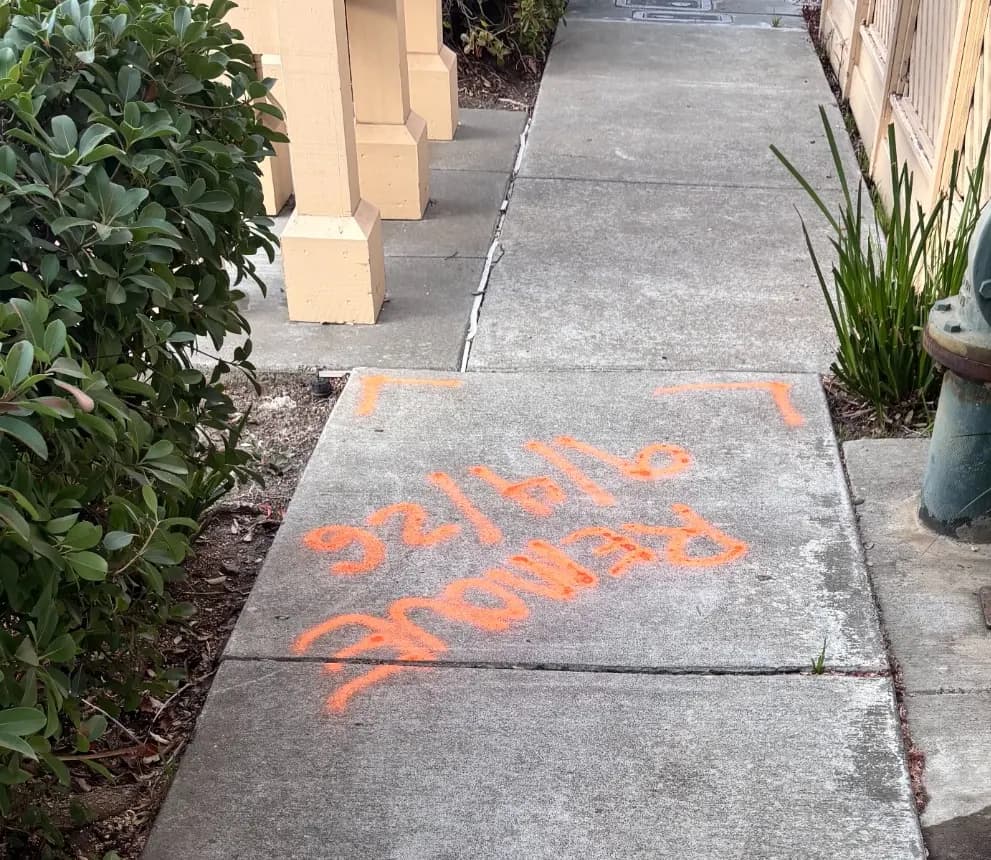
When Should You Seal Asphalt Cracks?

When to seal cracks in asphalt — which cracks to seal, the best time of year, why sealing early matters, and how crack sealing fits a maintenance schedule.
Read guide
Repaired concrete sidewalk and curb section next to a commercial building.
Concrete Repair

Property-owner guide

Updated July 11, 2026

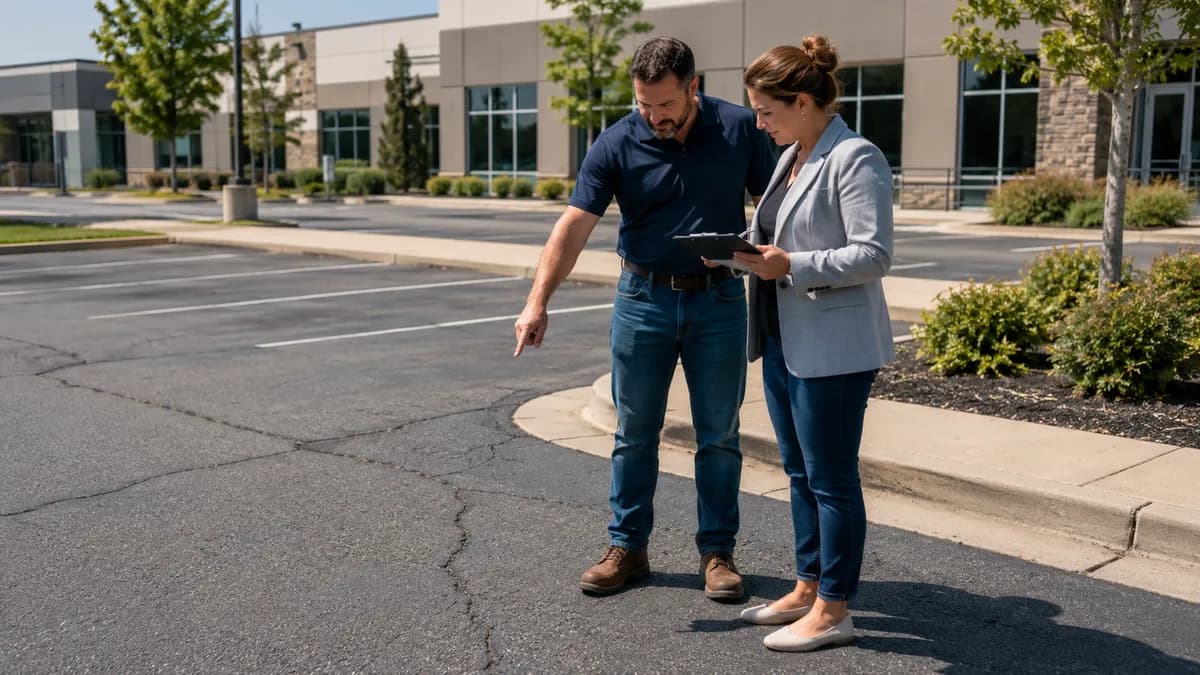
Concrete Repair vs. Replacement: Which Do You Need?

When to repair concrete versus replace it: how grinding, slab lifting, and patching compare to full replacement, and how to decide from the cause.
Read guide
Property manager and asphalt paving contractor reviewing a cracked commercial parking lot together.
Contractor Hiring Guides

Property-owner guide

Updated July 6, 2026

How to Choose an Asphalt Paving Contractor

How to choose an asphalt paving contractor: project fit, relevant experience, written scope, references, insurance, and pavement qualifications.

Read guide
Standing water pooled near a parking lot drain inlet after rainfall.
Drainage & Sitework

Property-owner guide

Updated July 6, 2026

Parking Lot Drainage Problems: What Property Owners Should Know

Common causes of parking lot drainage problems, why they accelerate pavement damage, and what property owners should ask contractors before a fix.

Read guide
Parking Lot Maintenance

Property-owner guide

Updated July 11, 2026

How to Create a Parking Lot Maintenance Plan

How to build a parking lot maintenance plan: inspecting condition, setting service cycles, prioritizing repairs, and budgeting over multiple years.

Read guide
Drainage & Sitework

Property-owner guide

Updated July 12, 2026

Grading and Slope Basics for Pavement

Grading and slope basics for pavement: what positive drainage means, why slope matters, common grading problems, and where engineering comes in.

Read guide

Iowa Agencies and Reference Links

This page summarizes publicly available information for general education. It is not legal, engineering, or code-compliance advice, and requirements change. Confirm anything that affects your project with the agency with jurisdiction over the property.

Regulatory content last reviewed:

For contractors

Are you a pavement contractor in Iowa?

Get listed where property managers, owners, and facility teams search by state, city, and service.