
Florida pavement guide
Florida Paving Contractor License Requirements, Permits, and Verification
Florida does not license asphalt paving, sealcoating, or parking lot striping. None of the state's contractor license categories covers that work, and the Department of Business and Professional Regulation lists driveway installation among the jobs that need no state license. State law also bars counties and cities from requiring a local license for work that matches no state category, and it names driveway installation as an example. The grace period for older local licenses ended on July 1, 2025.
- No statewide paving license
- Reviewed September 2026
Jump to section
Verification
Contractor Licensing and Verification in Florida
- Statewide licensing
- No statewide paving contractor license
- Administering body
- No statewide paving contractor license (the Florida Department of Business and Professional Regulation licenses other construction trades)
- Classifications that can apply to pavement work
- Underground utility and excavation contractor (CUC certified, RU registered), for storm drainage · General contractor (CGC certified, RG registered)
- Verify the business
- State business and license lookup
A license matters when the job includes work Florida does license, most often storm drainage or structural work. Drainage that collects water on the property and carries it to a storm sewer, such as new inlets and pipe, falls within the scope of underground utility and excavation contractors and general contractors. Load-bearing parts of a building or structure belong to general, building, and residential contractors. Ask who is doing that part of the job and check their license.
Those licenses come in two forms. A certified contractor passed the state exam and can work anywhere in Florida; for these trades the number starts with C, such as CGC or CUC. A registered contractor qualified with a particular county or city and can work only where that registration is valid; the number starts with R, such as RG or RU. A registration from another county may not cover your property.
Insurance is the check that applies to every paving company. Paving counts as construction under Florida's workers' compensation law, which requires construction employers with even one employee to carry coverage. Confirm it on the state's Proof of Coverage search; an exemption certificate covers named company officers, not the crew. A local business tax receipt is a tax registration, not a license. Match the entity on Sunbiz to the contract and the insurance certificate, and ask the county or city what permits apply, especially for work in a public right of way.
What a contractor license does not prove
A Florida license number shows its holder met a competency requirement for a licensed trade, such as general contracting or underground utility work. It says nothing about paving or sealcoating skill, and because the state does not license that work, a paving proposal without a license number is not by itself a warning sign. References from comparable projects, verified insurance, and a written scope carry the weight here.
- That the proposed scope is the right fix for what is actually failing
- That the price is fair for the local market
- That drainage has been designed or corrected
- That the pavement section and thickness suit the traffic the property carries
- That the specified materials are appropriate for the site
- That the crew will show up when promised
- That workmanship will hold up past the first winter or summer
- That the company is financially stable enough to honor a warranty
Ask for a certificate of insurance sent directly from the carrier or agent rather than a copy forwarded by the contractor, confirm the general liability and workers’ compensation coverage is active on the dates of your work, and ask to be named as certificate holder so you are notified if the policy lapses.
Licensing requirements can turn on project value, scope of work, property location, and whether the job is public or private. City and county rules may add registration, permitting, or bonding requirements beyond anything required at the state level. Verify current requirements with the agency directly before contracting.
Last reviewed:
Permitting
Stormwater and Environmental Considerations
Florida Department of Environmental Protection and the state's regional water management districts
Florida administers construction stormwater through the Department of Environmental Protection, and construction activity disturbing enough ground generally requires permit coverage with erosion and sediment controls in place during the work. What makes Florida distinctive is the second layer: the regional water management districts administer environmental resource permitting, and projects that change stormwater management on a site frequently fall under that program in addition to any local approval.
For parking lots, the practical triggers are usually changes to impervious area, changes to how and where water leaves the site, and work in or near wetlands, floodplains, or a designated coastal zone. Because much of Florida's development sits on fill over former wetland and drains through engineered retention and exfiltration systems, altering a lot can affect a permitted stormwater system that was approved decades ago.
Local governments add their own drainage, retention, and flood-elevation requirements, and several counties apply additional protections in sinkhole-prone or springs-protection areas. Confirm with the county and the applicable water management district before committing to a design.
What tends to drive requirements here
- Disturbed area during construction, which drives construction stormwater coverage
- Changes to impervious area or to the site's permitted stormwater system
- Environmental resource permitting through the regional water management district
- Wetland, floodplain, and coastal zone status of the parcel
- Retention, exfiltration, and underdrain systems that a repaving project may disturb
- Springs protection and sinkhole-area rules in some counties
Requirements differ between Florida's water management districts and between counties, and a lot that predates current rules may still be governed by its original permit. Verify with both the local government and the district before design.
Last reviewed:
Official sources
Florida Agencies and Reference Links
Contractor licensing
Florida DBPR license searchSearch state contractor licenses by name or number. Certified licenses are valid statewide; registered licenses only where they were issued.
Contractor licensing
DBPR: work that needs a state licenseThe department's own list of jobs that do and do not need a state license, including driveway installation.
Contractor licensing
Florida Statutes, section 489.117Contractor registration, and the limit on local licenses for work that matches no state category.
Reference
Workers' compensation Proof of Coverage searchConfirm a company's workers' compensation policy with the Division of Workers' Compensation.
Business registration
Sunbiz business entity searchConfirm the contracting entity is registered and active in Florida.
Environmental
Florida DEP stormwater programConstruction stormwater permitting and the state's stormwater management framework.
Transportation
Florida Department of TransportationState specifications and materials terminology used by Florida suppliers and contractors.
Accessibility
Florida Building CommissionFlorida Building Code, including the accessibility provisions applied to site and parking work.
Consumer protection
Florida Department of Agriculture and Consumer ServicesConsumer complaint filing and guidance, including post-storm repair scams.
This page summarizes publicly available information for general education. It is not legal, engineering, or code-compliance advice, and requirements change. Confirm anything that affects your project with the agency with jurisdiction over the property.
Regulatory content last reviewed:
Florida licensing and permit FAQs
Do Florida paving contractors need a state license?
Not for paving, sealcoating, or striping on its own. None of Florida's contractor license categories covers that work, the state licensing department lists driveway installation among the jobs that need no state license, and under Florida law a contractor doing work that needs no state license is not considered unlicensed. A license does matter for work the job may include: drainage tied into a storm sewer falls within the scope of underground utility and excavation contractors and general contractors, and structural work belongs to general, building, or residential contractors. Check those license numbers on the state's license search.
Can a Florida county or city require a paving contractor license?
Generally, no. Florida law bars counties and cities from requiring a local license for work that does not substantially match a state license category, names driveway installation as an example of such work, and does not let a local government require a license to issue a permit for it. The grace period that let older local licenses continue ended on July 1, 2025. A few local codes still contain older paving license language, so the building department for your address remains the place to confirm what its permits require.
What is the difference between a certified and a registered contractor in Florida?
A certified contractor holds a state certificate of competency and can contract anywhere in Florida without meeting each local jurisdiction's competency requirements. A registered contractor met the competency requirements of a specific county or city, registered with the state, and can contract only where that registration is valid. On the state license search, certified numbers for the trades that matter on a paving job start with C, such as CGC or CUC, and registered numbers start with R, such as RG or RU. A registration from a neighboring county does not automatically cover your property; Manatee County, for example, does not accept registered contractors from other jurisdictions.
Does a Florida paving contractor need workers' compensation insurance?
If the company has even one employee, yes. Florida's workers' compensation law treats paving as construction, and construction employers with one or more employees must carry coverage. You can confirm a policy on the Division of Workers' Compensation Proof of Coverage search. Up to three officers of a corporation, or members of an LLC, who each own at least 10 percent of the company can hold construction exemptions, but an exemption covers only the named person, not the crew, and it is not a license. Ask how any subcontractors on the job are covered as well.
Before you sign: hiring guides
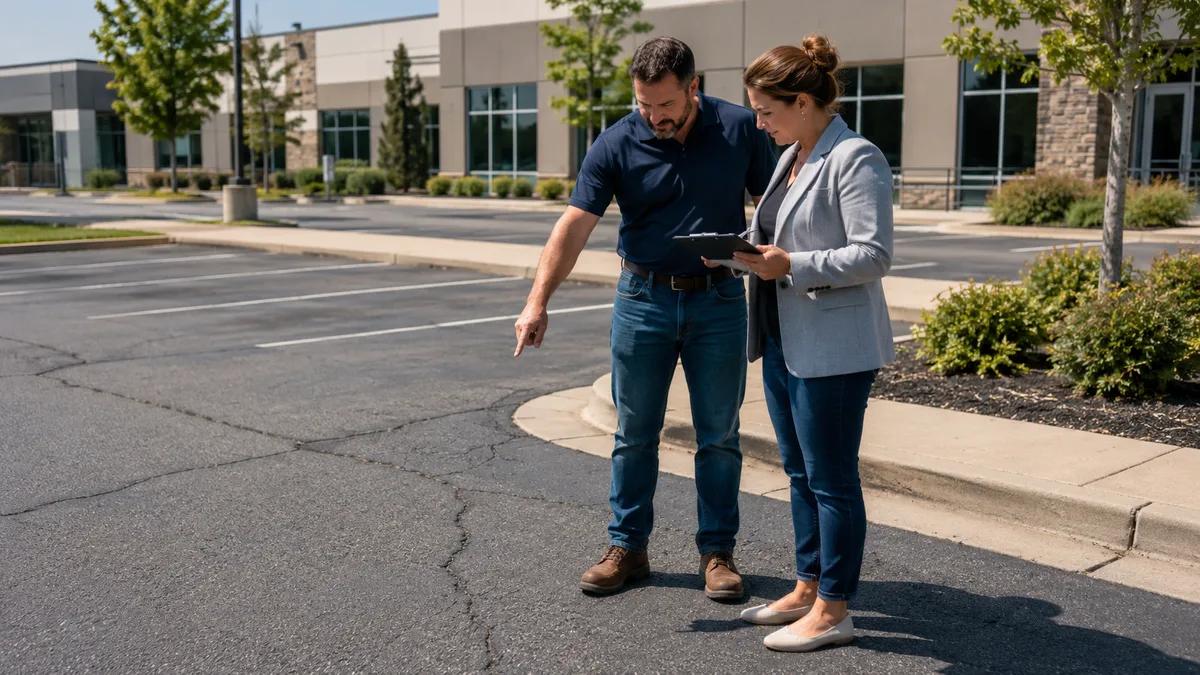
Property-owner guide
Updated September 23, 2026
How to Choose a Paving Contractor
How to choose a paving contractor or asphalt company: check fit, license and insurance, compare written scopes, and skip doorstep deals.
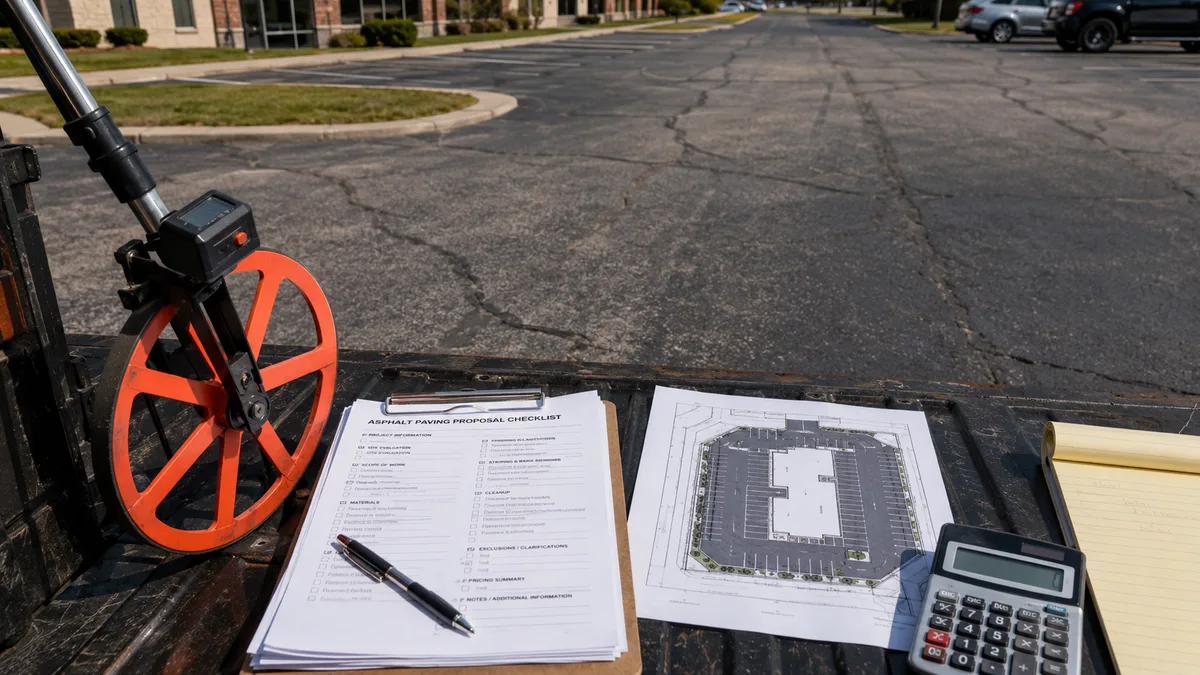
Property-owner guide
Updated July 6, 2026
Asphalt Paving Proposal Checklist
What belongs in an asphalt paving proposal: work limits, quantities, thickness, base preparation, drainage, striping, exclusions, and warranty terms.
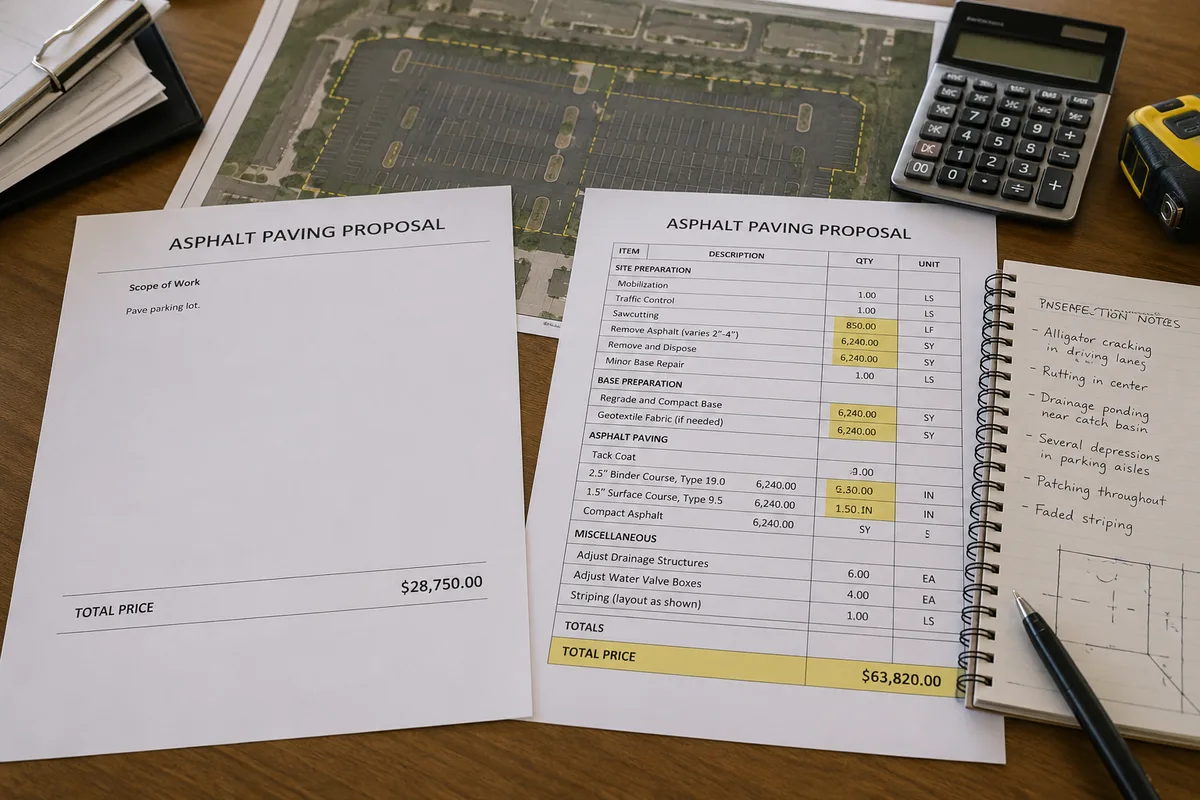
Property-owner guide
Updated July 6, 2026
Cheap Asphalt Paving Bids: Red Flags to Watch For
A cheap asphalt paving bid may omit thickness, base preparation, drainage, striping, or warranty terms. Learn the red flags to check before hiring.
Before you hire: The Pavement Directory does not guarantee contractor performance, pricing, licensing, insurance, or availability. Business information may be submitted by contractors or gathered from public sources and should be independently verified before hiring. Always confirm licensing, insurance, references, scope of work, and written contract terms.
For contractors
Ready to compare Florida contractors?
Browse listings by city and service, then use what you have read here to check the scope, the credentials, and the timing before you sign.