
Alaska pavement guide
Pavement Conditions in Alaska: Regions, Soils, and Common Problems
In Alaska the controlling constraints are ground thermal behavior, season length, and logistics — usually in that order.
- 4 regions
- 5 common problems
- 6 local terms
Jump to section
Regional differences
Pavement Conditions by Region in Alaska
Alaska does not have one climate or one soil profile, and pavement that performs well in one part of the state can fail early a few hours away. These are the divisions that matter most when scoping paving, repair, or maintenance work.
Southcentral
Anchorage · Wasilla · Palmer · Kenai · Soldotna
Environmental stress
- Repeated freeze-thaw cycling through shoulder seasons
- Heavy snow and sustained plowing and sanding operations
- Studded tire wear on commercial surfaces
Subgrade conditions
- Glacial gravels that drain well in much of the Anchorage bowl
- Silts and frost-susceptible fines in low-lying and valley areas
- Isolated permafrost in some locations, especially outside the urban core
Common distress
- Frost heave producing seasonal bumps and cracking
- Rutting from studded tires distinct from load-related rutting
- Spring potholing after thaw
What it means for the work
- This is the state's deepest contractor market with the most plant access
- Studded tire wear should be distinguished from structural rutting before pricing a fix
- Snow storage and meltwater routing belong in the site plan
Interior
Fairbanks · North Pole · Delta Junction
Environmental stress
- Extreme winter cold and very large annual temperature range
- Deep seasonal frost penetration
- A short, intense summer construction window
Subgrade conditions
- Discontinuous permafrost, including ice-rich silt in the Fairbanks area
- Frost-susceptible loess soils
- Highly variable thaw depth across a single parcel
Common distress
- Thaw settlement producing dips and irregular subsidence
- Low-temperature thermal cracking
- Severe frost heave and spring break-up damage
What it means for the work
- Subgrade thermal condition matters more than surface specification
- Recurring settlement is a geotechnical investigation, not a patching cycle
- The season is short — mobilization slots fill early
Southeast
Juneau · Ketchikan · Sitka
Environmental stress
- Very high annual rainfall in a maritime climate
- Milder winters than the Interior but persistent saturation
- Steep terrain with concentrated runoff
Subgrade conditions
- Saturated organic and fine-grained soils
- Shallow bedrock on many parcels
- Steep sites with limited flat working area
Common distress
- Base failure where water has no outlet
- Moss and organic growth on shaded, wet pavement
- Erosion and undermining at pavement edges on slopes
What it means for the work
- Materials generally arrive by barge, which sets the schedule
- Drainage correction typically precedes any surface work
- Dry working windows are genuinely limited
Rural and off-road-system communities
Bethel · Nome · Kotzebue · Utqiagvik
Environmental stress
- Continuous permafrost in the far north
- Extreme cold and long winters
- No road connection to the state highway system
Subgrade conditions
- Ice-rich permafrost that is highly sensitive to any surface thermal change
- Thin active layers that thaw and refreeze annually
- Limited local aggregate sources
Common distress
- Progressive thaw subsidence
- Surface distortion and differential settlement
- Gravel surfacing where asphalt is not practical
What it means for the work
- Barge and air freight windows govern what is possible in a season
- Gravel surfacing is often the appropriate engineered choice, not a compromise
- Any project here needs cold-regions engineering input, not a standard lot design
Field conditions
Common Pavement Problems in Alaska
Thaw settlement over permafrost
Pavement sinks into broad dips or irregular hollows over years. The surface may be otherwise sound, and the settlement does not follow wheel paths or traffic patterns.
Likely causes
- Heat conducted through a dark pavement surface thawing ice-rich ground below
- Drainage changes routing warmer water toward frozen ground
- Removal of insulating vegetation and organic mat during construction
When to get it looked at: Settlement that continues after being filled once is a thermal and geotechnical question. Repeated leveling courses add weight and heat retention without addressing the cause.
Spring break-up and thaw-weakened base
Rapid pothole formation and edge break-up over a few weeks in spring, in areas that carried the same traffic all winter without a problem.
Likely causes
- Frozen ground below trapping meltwater in the base as the surface thaws first
- Frost-susceptible silts losing strength when saturated
- Heavy loads applied during the weakest weeks of the year
When to get it looked at: If break-up damage recurs in the same areas annually, the drainage or the base material is the problem, not the winter.
Low-temperature thermal cracking
Straight transverse cracks appearing at fairly regular spacing across the pavement, unrelated to traffic, most common in the Interior.
Likely causes
- Extreme cold causing the asphalt to contract until it cracks in tension
- Binder grade not selected for the site's low-temperature extreme
- Aged, oxidized binder with reduced ability to relax stress
When to get it looked at: Regularly spaced transverse cracks are usually a sealing and maintenance matter, not a structural one — but keeping them sealed is what prevents them from becoming a break-up problem.
Studded tire rutting
Wheel-path grooves worn into the surface of well-traveled commercial pavement, with the surrounding pavement structurally sound and no shoving or pushing at the rut edges.
Likely causes
- Mechanical abrasion from studded tires during winter months
- Channelized traffic in defined lanes
- Surface mixes without high abrasion resistance
When to get it looked at: Wear-related rutting and load-related rutting call for different fixes. If the rut has no raised shoulders, abrasion is the likelier cause — and that changes what a resurfacing needs to be.
Frost heave at transitions
Bumps and cracking where pavement meets a culvert, utility crossing, building edge, or a change in subgrade material — worst at the end of winter and partly recovering by summer.
Likely causes
- Differential frost penetration between adjacent materials
- Frost-susceptible fines concentrated at a transition
- Water collecting at the transition and freezing
Property types
Common Pavement Projects in Alaska
Military installations and support facilities
Heavy equipment loading combined with deep frost and thaw-sensitive subgrade makes the pavement section a cold-regions engineering problem rather than a standard commercial one.
Ports, harbors, and freight terminals
Container and freight loading concentrates on ground that is often fill over soft or saturated material, and the working season is tied to barge traffic.
Resource and energy facilities
Remote sites carry very heavy loads with no nearby plant, so material logistics and surfacing choice are decided before the pavement design is.
Commercial and retail properties in Anchorage and Fairbanks
Studded tire wear, plowing, and sanding damage the surface in a way that has to be separated from structural failure before choosing a repair.
Rural community and school facilities
Off-road-system sites may be better served by well-built gravel surfacing than by asphalt that cannot be maintained locally.
Plain English
Pavement Terms You May Encounter in Alaska
| Term | What it means on a Alaska project |
|---|---|
| Non-frost-susceptible (NFS) material | Granular material with few fines, used beneath pavement so that freezing water does not build ice lenses and heave the surface. In Alaska this is often the single most important material specification on the project. |
| Active layer | The near-surface ground that thaws each summer and refreezes each winter above permafrost. How deep it goes, and whether a project makes it deeper, is central to whether pavement stays flat. |
| Thaw settlement | Subsidence that occurs when ice-rich ground thaws and the volume of the melted ice is lost. It is a ground behavior, not a pavement defect, and it does not respond to surface repairs. |
| Spring load restrictions | Seasonal limits on axle loads while the subgrade is thaw-weakened. They apply to public roads, but the underlying reason — weak spring subgrade — applies to private sites too. |
| Insulation board (extruded polystyrene) | Rigid insulation placed within the pavement structure in some cold-regions designs to limit frost penetration or protect underlying frozen ground. It appears on Alaska projects far more often than elsewhere. |
| Embankment / gravel surfacing | A built-up gravel section is a legitimate engineered surface in much of rural Alaska, not a lesser option — it tolerates ground movement in a way that asphalt does not. |
State transportation specifications can provide useful regional terminology and material references, but they do not automatically govern private parking-lot or driveway projects unless incorporated into the contract or required by the applicable jurisdiction.
More definitions are in the pavement glossary.
Before you sign
Questions to Ask a Paving Contractor in Alaska
- How will thaw-sensitive subgrade be evaluated on this site, and has anyone looked at what is below the active layer?
- How will materials and equipment reach the site, and what does that do to the schedule?
- What is the contingency if the asphalt plant is unavailable or the barge window is missed?
- How does the shortened construction season affect the sequence, and what happens to disturbed ground if the work does not finish?
- Is non-frost-susceptible material specified for the base, and to what depth?
- Is the rutting we are seeing from studded tires or from loading, and how did you determine that?
- How will disturbed areas be stabilized before freeze-up?
- Is a gravel surface a better long-term answer for this site than asphalt, and why or why not?
- Can you provide references for comparable work in similar cold-region conditions?
Alaska pavement condition FAQs
What causes pavement settlement in Alaska's permafrost regions?
A dark pavement surface absorbs heat and conducts it downward, and where the ground below is ice-rich, that heat can deepen the annual thaw. When ice in the soil melts, the volume it occupied is lost and the ground subsides, taking the pavement with it. The result is broad dips and irregular settlement that follow no traffic pattern. Because the cause is thermal rather than structural, filling the low spots does not stop it — and each leveling course adds weight and retains more heat.
Why does pavement break up during spring break-up in Alaska?
The surface thaws before the ground beneath it does, so meltwater is trapped in the base by still-frozen soil below. A saturated base has far less strength, and traffic that the pavement carried all winter starts pushing material around and forming potholes within a few weeks. It is the same mechanism behind seasonal load restrictions on public roads, and it is why structural repairs placed during break-up tend not to hold.
Are studded tires damaging my parking lot?
Studded tires abrade the pavement surface, producing wheel-path grooves in well-traveled lanes. Wear-related rutting typically has no raised shoulders alongside it, while load-related rutting pushes material up at the edges of the depression. Telling them apart matters, because abrasion calls for a durable surface course and load-related rutting calls for a structural fix. Ask the contractor which one they are diagnosing and what they saw.
Is gravel a reasonable surface for an Alaska property?
In much of rural Alaska, a well-built and well-drained gravel surface is the appropriate engineered choice rather than a compromise. It tolerates ground movement that would crack asphalt, it can be maintained with locally available equipment, and it avoids depending on an asphalt plant that may be hundreds of miles away. The right answer depends on traffic, dust control needs, and what maintenance capability exists locally.
What is non-frost-susceptible material and why does it matter here?
It is granular base material with few fine particles, chosen so freezing water cannot form ice lenses that lift and distort the pavement. In a climate with deep seasonal frost, this specification often does more for pavement life than the asphalt thickness above it. If a proposal is vague about base material, that is worth pinning down.
Related reading for Alaska property owners
Property-owner guide
Updated July 12, 2026
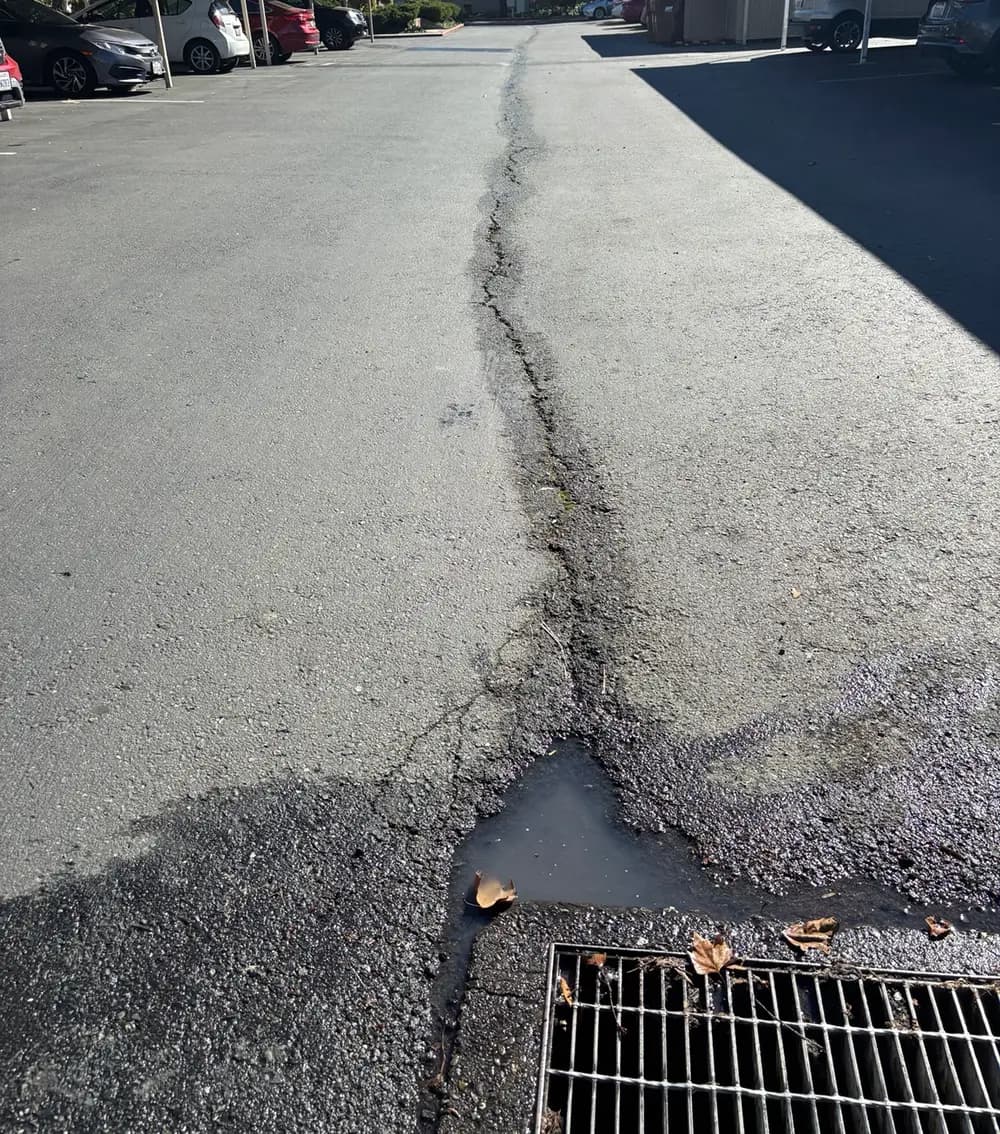
How Drainage Affects Pavement Life
Why drainage is the biggest factor in how long pavement lasts, how water damages asphalt from the base up, and why fixing it protects every repair.
Property-owner guide
Updated July 6, 2026
How to Choose an Asphalt Paving Contractor
How to choose an asphalt paving contractor: project fit, relevant experience, written scope, references, insurance, and pavement qualifications.
Property-owner guide
Updated July 11, 2026
When Should You Seal Asphalt Cracks?
When to seal cracks in asphalt — which cracks to seal, the best time of year, why sealing early matters, and how crack sealing fits a maintenance schedule.
Property-owner guide
Updated July 6, 2026
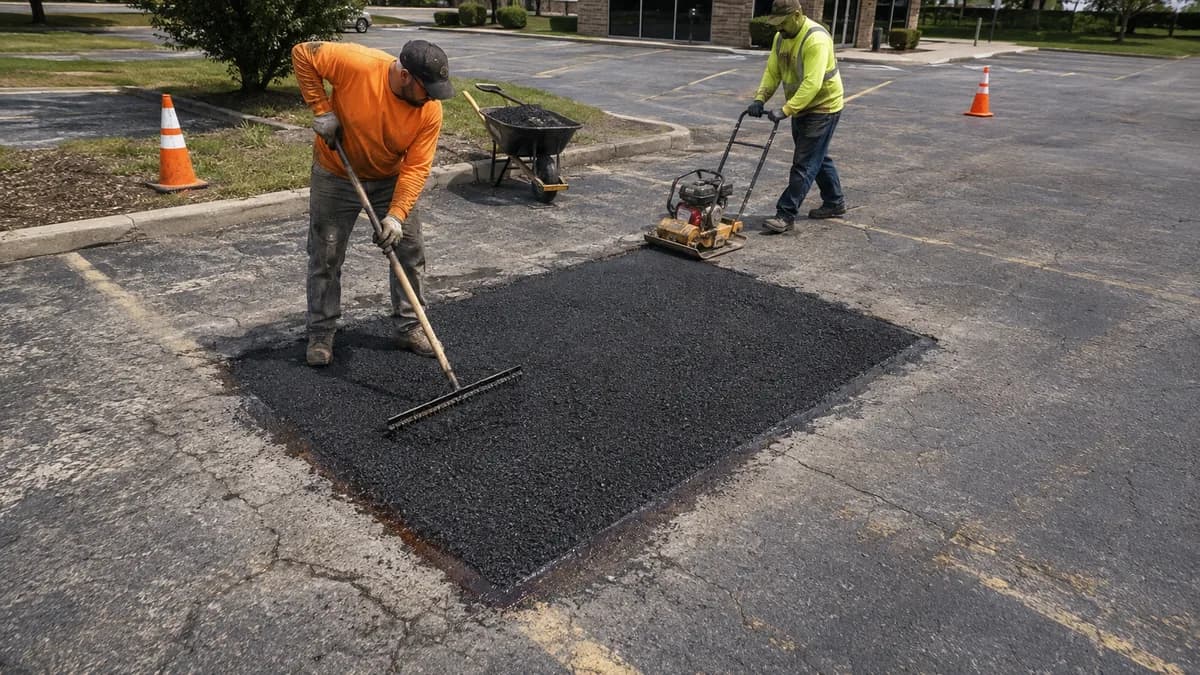
Asphalt Patching Guide for Parking Lots and Driveways
How asphalt patching works, when full-depth patching is needed versus a surface patch, and what to expect from a patch repair project.
Property-owner guide
Updated July 11, 2026
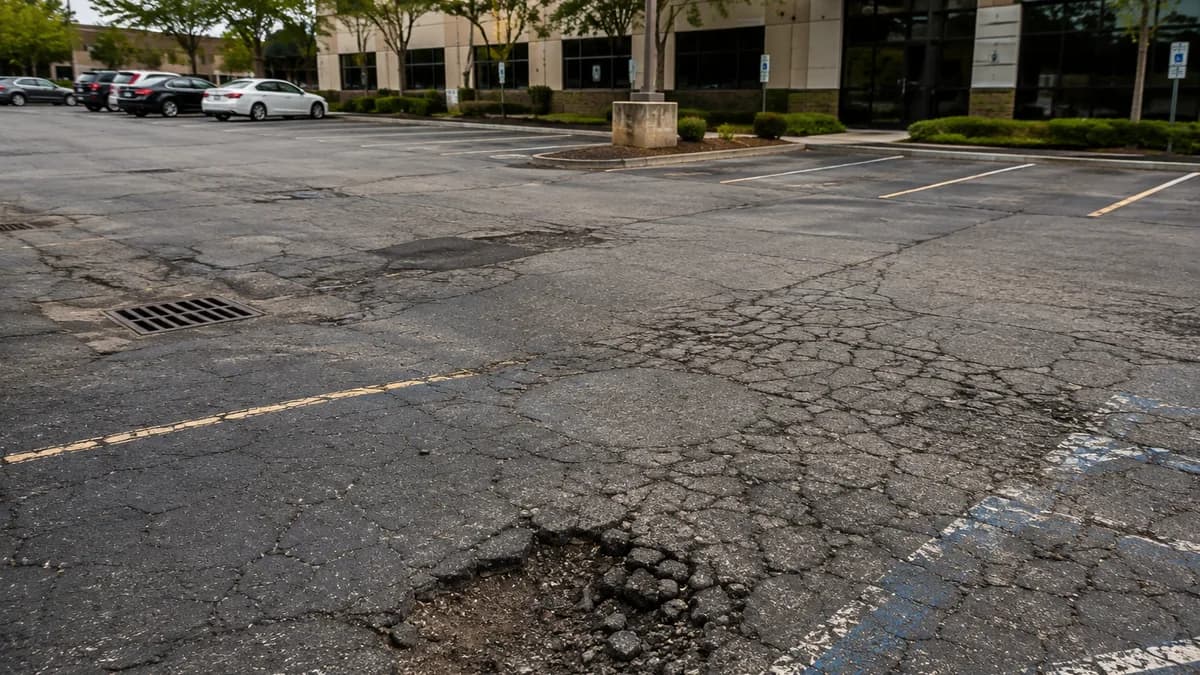
Signs Your Parking Lot Needs Maintenance
How to read the warning signs a parking lot needs attention — cracks, potholes, faded striping, ponding, raveling — and what each one means.
Before you hire: The Pavement Directory does not guarantee contractor performance, pricing, licensing, insurance, or availability. Business information may be submitted by contractors or gathered from public sources and should be independently verified before hiring. Always confirm licensing, insurance, references, scope of work, and written contract terms.
For contractors
Ready to compare Alaska contractors?
Browse listings by city and service, then use what you have read here to check the scope, the credentials, and the timing before you sign.