
Washington pavement guide
Pavement Conditions in Washington: Regions, Soils, and Common Problems
Washington runs two separate pavement climates, and the state's stormwater requirements are among the more consequential in the country for parking lot work.
- 4 regions
- 5 common problems
- 6 local terms
Jump to section
Regional differences
Pavement Conditions by Region in Washington
Washington does not have one climate or one soil profile, and pavement that performs well in one part of the state can fail early a few hours away. These are the divisions that matter most when scoping paving, repair, or maintenance work.
Puget Sound lowlands
Seattle · Tacoma · Everett · Bellevue · Olympia
Environmental stress
- Extended wet season with persistent saturation
- Mild temperatures with limited freeze-thaw
- Heavy shading from evergreens keeping pavement damp
- Dense commercial, port, and distribution traffic
Subgrade conditions
- Glacial till that can be dense but drains poorly
- Silty soils that soften when saturated
- Fill over former tideflats in industrial areas
Common distress
- Base saturation producing alligator cracking
- Moss and organic growth on shaded pavement
- Rutting at port and distribution truck routes
What it means for the work
- Drainage correction usually precedes any surface work
- Dry working windows are the scheduling constraint, not temperature
- Local stormwater review is more developed here than in most of the country
Southwest Washington and the coast
Vancouver · Longview · Aberdeen · Port Angeles
Environmental stress
- Very high annual rainfall, especially on the coast and Olympic Peninsula
- Persistent damp and limited drying
- Wind and salt exposure at the coast
Subgrade conditions
- Saturated fine-grained and organic soils
- Steep hillside sites with concentrated runoff
- Timber-country subgrades on rural properties
Common distress
- Base failure where water has no outlet
- Moss and algae on shaded, damp pavement
- Erosion and undermining at unprotected edges
What it means for the work
- Genuinely dry working windows are scarce — schedule with slack
- Log truck and timber traffic loads rural pavement heavily
- Vegetation management is a pavement maintenance task here
Cascade mountains and passes
Leavenworth · Snoqualmie Pass area · Cle Elum
Environmental stress
- Heavy snowfall and sustained plowing
- Repeated freeze-thaw cycling
- Deicing chemical and abrasive use
Subgrade conditions
- Coarse granular glacial and alluvial soils
- Shallow rock on many parcels
- Steep grades with concentrated meltwater
Common distress
- Spring potholing after thaw
- Plow gouging at curbs and transitions
- Markings worn off within a single winter
What it means for the work
- The construction season is compressed into the snow-free months
- Snow storage and meltwater routing belong in the site plan
- Durable marking materials are worth the premium here
Eastern Washington and the Columbia Basin
Spokane · Yakima · Kennewick · Wenatchee · Moses Lake
Environmental stress
- Hot, dry summers with strong UV
- Cold winters with genuine freeze-thaw cycling
- Wide day-to-night temperature swings
- Wind and blowing dust
Subgrade conditions
- Loess soils that are stable when dry and weak when saturated
- Basalt bedrock at varying depth
- Irrigated agricultural ground with changing subgrade moisture
Common distress
- Freeze-thaw potholing and spring break-up
- Surface oxidation from summer UV
- Rutting and edge break-up under agricultural equipment
What it means for the work
- Crack sealing before winter has real value here, unlike the west side
- Irrigation-driven subgrade moisture change is a design factor
- Harvest-season loading concentrates in a few weeks a year
Field conditions
Common Pavement Problems in Washington
Saturated base in western Washington
Spongy areas, rapid pothole formation, and alligator cracking that appears through the wet season in a lot whose traffic has not changed.
Likely causes
- Months of rainfall with little drying between events
- Base material with too many fines to drain
- Blocked inlets, clogged drainage courses, or no outlet at all
When to get it looked at: If failures return to the same areas each winter, the base is holding water. Confirm the base is actually dry before agreeing to another overlay over it.
Moss and organic growth
Green growth spreading across shaded pavement, especially along north-facing edges and under tree canopy, holding moisture against the surface and making it slick.
Likely causes
- Persistent shade combined with a long wet season
- Overhanging vegetation limiting drying
- Surface texture and cracks providing a foothold
When to get it looked at: Moss is mostly a maintenance and slip-safety issue, but where it is growing out of cracks it is a sign water is sitting in the pavement structure — that part is worth a closer look.
Eastern Washington freeze-thaw damage
Potholes and edge break-up forming over a few weeks in late winter and early spring around Spokane, Yakima, and the Columbia Basin.
Likely causes
- Water entering unsealed cracks and freezing repeatedly
- Meltwater trapped above still-frozen subgrade
- Loess soils losing strength when saturated
When to get it looked at: Damage that repeats in the same areas every spring points to drainage or base material rather than to the winter itself.
Failing or neglected permeable pavement
Permeable pavement that no longer drains — water ponding on a surface designed to let it through — usually because the void structure has filled with fines.
Likely causes
- Sediment, landscape debris, and fines clogging the surface over time
- Missed vacuum sweeping and maintenance obligations
- Adjacent unstabilized areas washing sediment onto the surface
When to get it looked at: If permeable pavement was installed to satisfy a stormwater requirement, its failure may be a compliance problem as well as a maintenance one. Find out what the original approval obligated you to do.
Port and distribution corridor rutting
Deep wheel paths and shoving at container terminals, distribution centers, and their approach routes around Puget Sound and along I-5.
Likely causes
- Very heavy, slow, channelized truck loading
- Subgrade over fill with limited bearing capacity
- A section built for lighter traffic than the site now carries
Property types
Common Pavement Projects in Washington
Port and distribution facilities
Seattle, Tacoma, and I-5 corridor freight sites carry very heavy channelized loads, often on fill with limited bearing capacity, making base design the controlling decision.
Technology and office campuses
Eastside campuses combine appearance expectations with extensive low impact development features that constrain how and when pavement work can be done.
Agricultural and food processing facilities
Yakima and Columbia Basin operations concentrate heavy seasonal truck and equipment loads, with irrigation changing subgrade moisture around the pavement.
Multifamily and HOA communities
Shaded private drives stay damp for months, so moss, drainage, and base moisture drive the maintenance program more than traffic does.
Mountain and pass-area commercial properties
Snow operations, plow damage, and a short construction season shift priorities toward durable markings and meltwater routing.
Plain English
Pavement Terms You May Encounter in Washington
| Term | What it means on a Washington project |
|---|---|
| Hot mix asphalt (HMA) | The standard plant-produced asphalt mixture. Washington specifications reference HMA by class and binder grade, and local suppliers use the same vocabulary. |
| Crushed surfacing base course (CSBC) | The crushed rock base layer beneath the asphalt, referenced by that name on Washington plans and proposals. On saturated west-side sites, how well it drains matters as much as how thick it is. |
| Permeable pavement | Pavement designed to let water pass through into a storage layer below. In Washington it is often installed to satisfy a stormwater requirement, which means it carries recorded maintenance obligations, not just a maintenance recommendation. |
| Bioretention / rain garden | Engineered landscaped areas that treat and infiltrate runoff. Common alongside Washington parking lots, and easily damaged by construction traffic or by sediment during repaving. |
| Flow control | Managing the rate and duration of runoff leaving a site, not just its volume. It is a distinctly Washington emphasis, driven by stream protection, and it affects what a large lot project has to include. |
| Chip seal / bituminous surface treatment (BST) | An asphalt binder application covered with aggregate, common on eastern Washington county roads and large private roads. It is a surface treatment, not a structural repair. |
State transportation specifications can provide useful regional terminology and material references, but they do not automatically govern private parking-lot or driveway projects unless incorporated into the contract or required by the applicable jurisdiction.
More definitions are in the pavement glossary.
Before you sign
Questions to Ask a Paving Contractor in Washington
- Will this project trigger stormwater treatment or flow control requirements based on new and replaced impervious surface, and who confirms that?
- Is the base currently saturated, and how will you verify it is dry enough before placing new pavement?
- Does this site have permeable pavement, bioretention, or other stormwater facilities, and how will your work protect them?
- How will you keep sediment out of the bioretention areas and inlets during construction?
- What is your realistic weather contingency, and what happens to the schedule if we lose the dry window?
- For our eastern Washington property, what is the crack sealing plan before winter?
- Is the moss growth here purely cosmetic, or is it telling us water is sitting in the pavement?
- What is your L&I registration number, and is the bond and insurance current?
- Does the city require its own permit or review for a project of this size?
Washington pavement condition FAQs
Why does pavement fail so quickly in western Washington?
Not because of cold — western Washington sees relatively little freeze-thaw. The problem is sustained moisture. Months of rain with little drying keep the base layer saturated, and a saturated base has far less strength, so ordinary traffic starts producing alligator cracking and potholes. That is why drainage correction and base moisture usually matter more here than surface specification, and why resurfacing over a wet base tends to fail within a season or two.
How is pavement maintenance different in eastern Washington?
Eastern Washington has hot dry summers and genuinely cold winters with real freeze-thaw cycling, which western Washington largely lacks. That flips the priorities: crack sealing before winter has substantial value around Spokane, Yakima, and the Columbia Basin because it keeps water out of a structure that will freeze, while on the west side the same effort is aimed at keeping a persistently wet structure from staying wet. Summer UV also ages east-side pavement faster.
Why is moss growing on my parking lot, and does it matter?
Persistent shade plus a long wet season gives moss what it needs, and evergreen canopy over Washington parking lots supplies both. Mostly it is a maintenance and slip-safety issue rather than a structural one. But moss growing out of cracks indicates water is sitting in the pavement structure, and that part is worth looking into. Trimming back overhanging vegetation to let pavement dry does more good than repeated removal alone.
Do I have to maintain permeable pavement, and what happens if I don't?
Yes, and it is more consequential in Washington than most places. Permeable pavement works by letting water through its void structure, and those voids gradually fill with fines and organic debris unless the surface is vacuum swept on a schedule. Once it stops infiltrating, it is a normal impervious surface that happens to be more expensive. If it was installed to satisfy a stormwater requirement, the maintenance may have been a recorded condition of the approval — worth checking what your site's original permit obligated.
Related reading for Washington property owners
Property-owner guide
Updated July 12, 2026
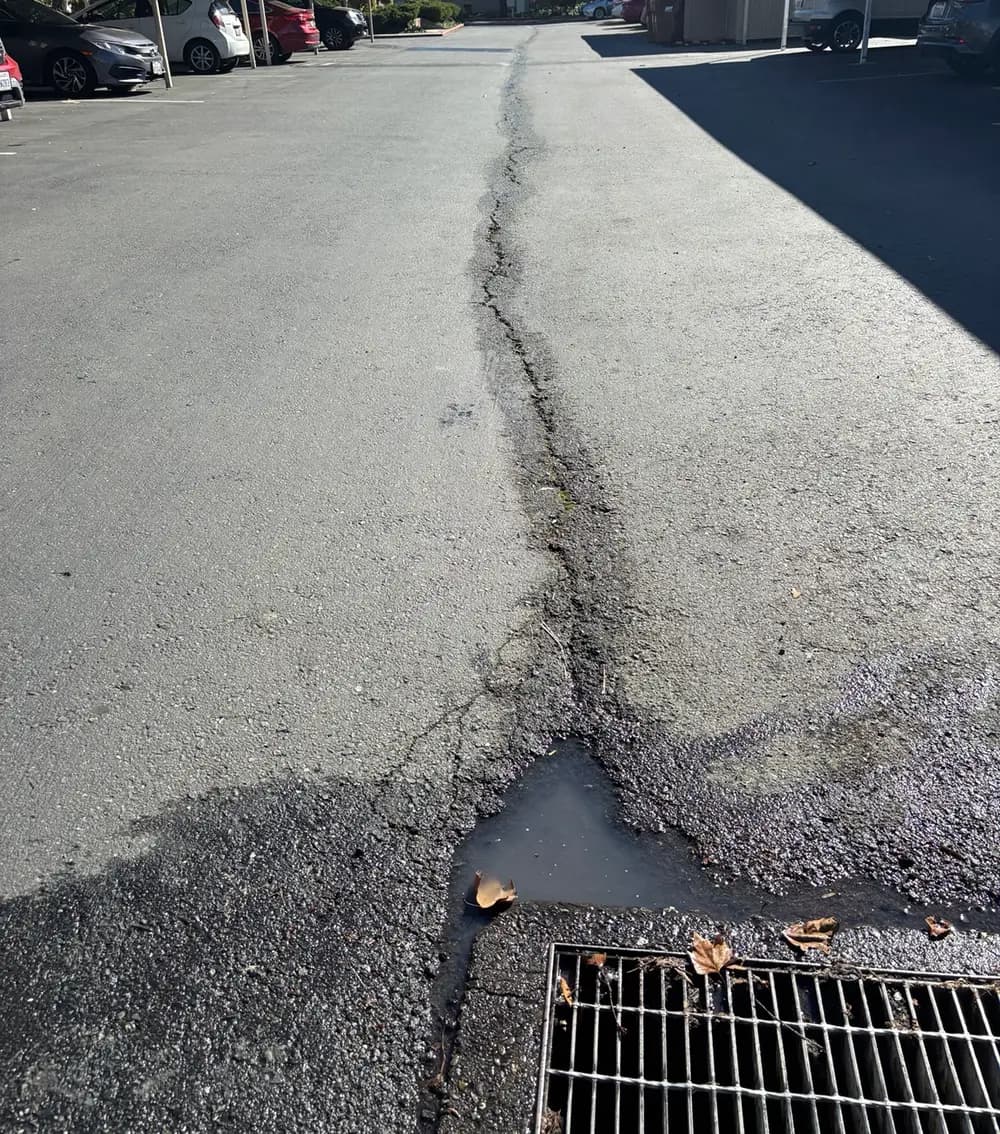
How Drainage Affects Pavement Life
Why drainage is the biggest factor in how long pavement lasts, how water damages asphalt from the base up, and why fixing it protects every repair.
Property-owner guide
Updated July 6, 2026
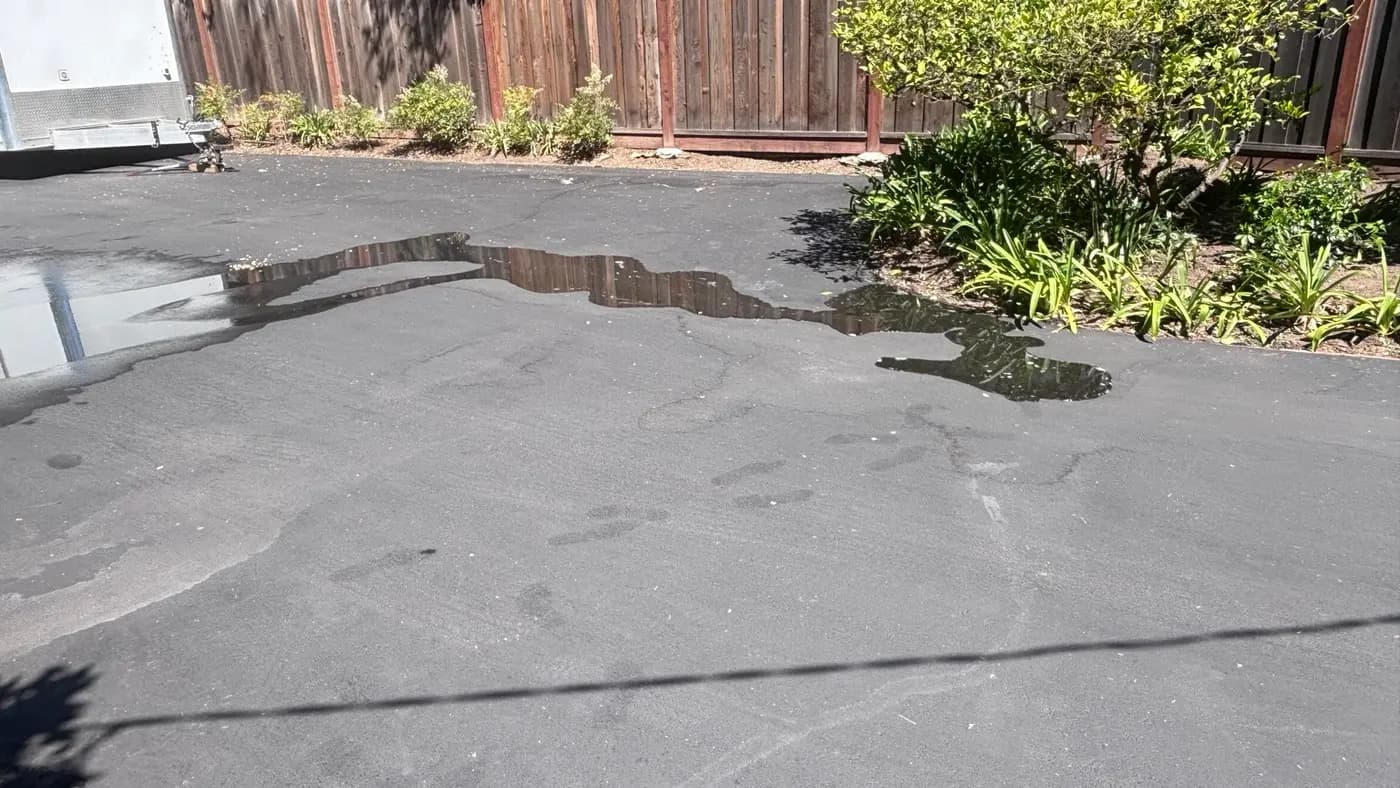
Parking Lot Drainage Problems: What Property Owners Should Know
Common causes of parking lot drainage problems, why they accelerate pavement damage, and what property owners should ask contractors before a fix.
Property-owner guide
Updated July 6, 2026
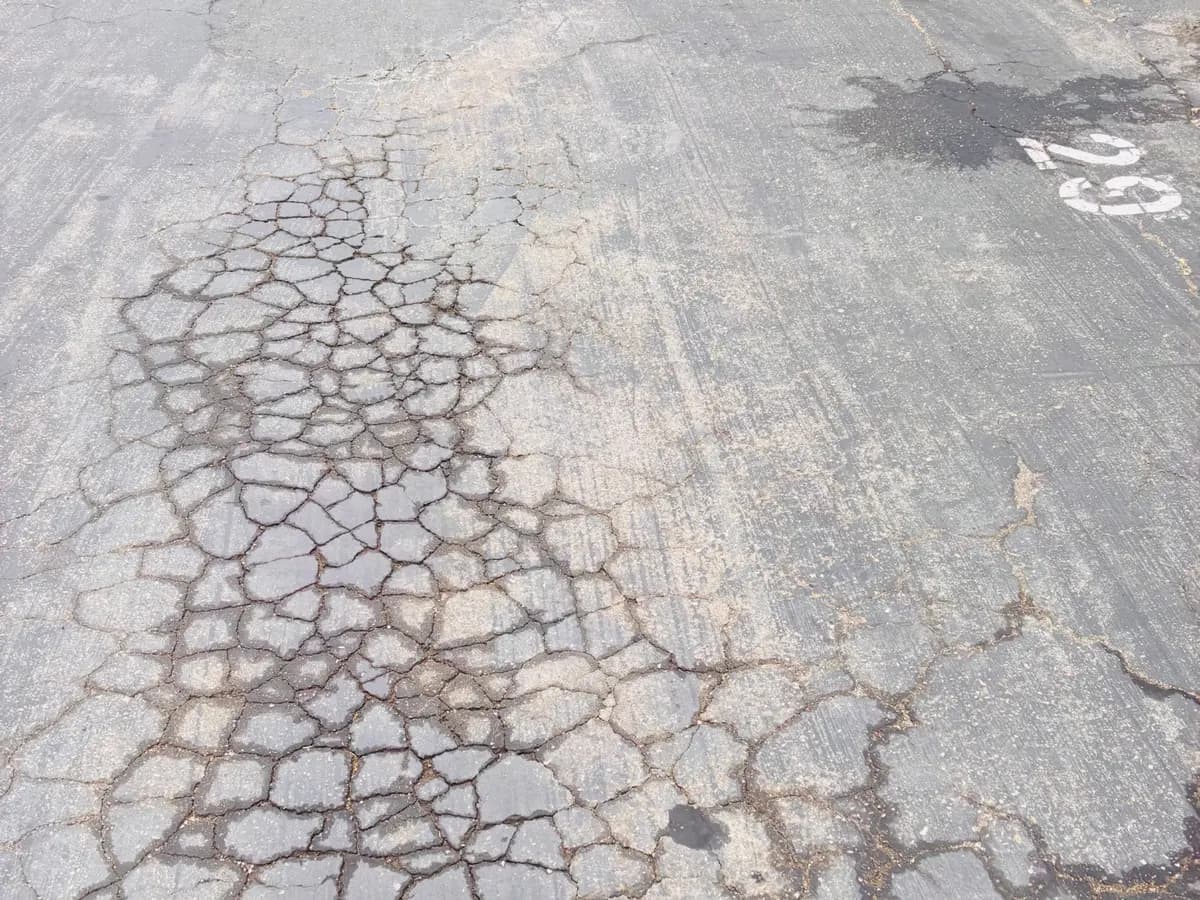
What Causes Alligator Cracking in Asphalt?
What alligator cracking is, what causes it, whether it can be patched or needs full-depth repair, and why it usually points to a failing base.
Property-owner guide
Updated July 12, 2026
How to Choose a Drainage and Sitework Contractor
How to choose a drainage and sitework contractor: one who diagnoses the cause of water problems and knows when an engineer is needed.
Property-owner guide
Updated July 11, 2026
How to Create a Parking Lot Maintenance Plan
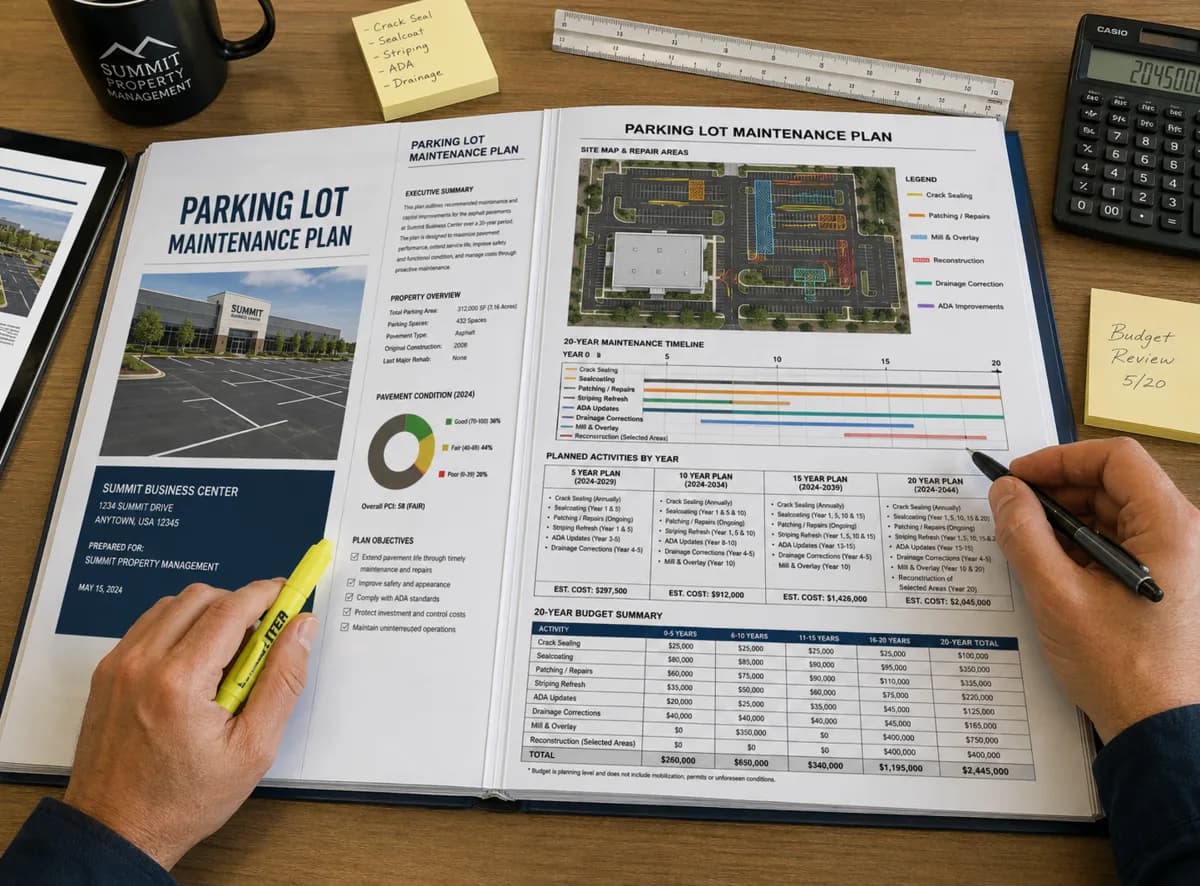
How to build a parking lot maintenance plan: inspecting condition, setting service cycles, prioritizing repairs, and budgeting over multiple years.
Before you hire: The Pavement Directory does not guarantee contractor performance, pricing, licensing, insurance, or availability. Business information may be submitted by contractors or gathered from public sources and should be independently verified before hiring. Always confirm licensing, insurance, references, scope of work, and written contract terms.
For contractors
Ready to compare Washington contractors?
Browse listings by city and service, then use what you have read here to check the scope, the credentials, and the timing before you sign.