
Alabama pavement guide
Pavement Conditions in Alabama: Regions, Soils, and Common Problems
Alabama pavement usually fails because clay subgrade got wet and stayed wet — and because heavy trucks arrived on pavement built for cars.
- 4 regions
- 5 common problems
- 6 local terms
Jump to section
Regional differences
Pavement Conditions by Region in Alabama
Alabama does not have one climate or one soil profile, and pavement that performs well in one part of the state can fail early a few hours away. These are the divisions that matter most when scoping paving, repair, or maintenance work.
Gulf Coast
Mobile · Daphne · Foley · Gulf Shores
Environmental stress
- Very high annual rainfall and persistent humidity
- Direct hurricane and tropical storm exposure
- Salt air along the immediate coast
Subgrade conditions
- Sandy coastal soils with a relatively high water table
- Organic and mucky soils in low-lying and bayou-adjacent areas
- Fill over former wetland on many developed parcels
Common distress
- Base saturation producing alligator cracking
- Storm-related washout and edge undermining
- Settlement around inlets and utility structures
What it means for the work
- Hurricane season shapes scheduling more than temperature does
- Post-storm assessment should look beneath the surface, not just at it
- Port and industrial loading around Mobile calls for a heavier section
Black Belt and coastal plain
Montgomery · Selma · Demopolis · Dothan
Environmental stress
- Hot, humid summers with heavy convective rainfall
- Wet-dry cycling that drives soil volume change
- Agricultural and timber equipment traffic
Subgrade conditions
- Expansive clays in the Black Belt with meaningful shrink-swell potential
- Poorly draining fine-grained soils
- Chalky and marl-derived soils in parts of the belt
Common distress
- Cracking and heaving that shifts with seasonal moisture
- Repairs that fail repeatedly in the same location
- Edge break-up under heavy equipment turning off pavement
What it means for the work
- Subgrade treatment matters more than added asphalt thickness
- Repairs made during a dry spell can look wrong after a wet one
- Flexible crack treatments outperform rigid patches over moving clay
Birmingham and the Appalachian foothills
Birmingham · Hoover · Tuscaloosa · Gadsden
Environmental stress
- Heavy rainfall on sites with real grade
- Hot summers with strong UV
- Occasional winter freezes and ice events
Subgrade conditions
- Red clay residual soils over weathered bedrock
- Shallow rock on ridge and hillside parcels
- Karst limestone in parts of the valley areas
Common distress
- Erosion and undermining at pavement edges on slopes
- Localized settlement over karst features
- Alligator cracking where clay subgrade stays wet
What it means for the work
- Concentrated runoff needs a designed path, not just a slope
- Rock excavation can dominate site work cost on hillside parcels
- Recurring depressions deserve investigation before repaving
Tennessee Valley and north Alabama
Huntsville · Decatur · Florence · Athens
Environmental stress
- Real winter freeze-thaw cycling that the coast does not see
- Heavy rainfall with occasional severe storms
- Rapid industrial and aerospace-related development
Subgrade conditions
- Clay soils over limestone bedrock
- Karst features with sinkhole potential in some areas
- Variable fill on rapidly developed parcels
Common distress
- Freeze-thaw potholing in late winter
- Localized settlement over karst
- Rutting at manufacturing and distribution truck routes
What it means for the work
- Crack sealing before winter has genuine value here, unlike Mobile
- Industrial loading on new development sites is a design load
- Recurring settlement is a geotechnical question, not a patching cycle
Field conditions
Common Pavement Problems in Alabama
Saturated red clay subgrade
Alligator cracking and potholes forming in the lower areas of a lot, with the pavement feeling soft underfoot after wet periods and the damage worsening through the year.
Likely causes
- Clay soils holding water rather than draining it
- Grading that gives water nowhere to go
- Base material with too many fines to drain
When to get it looked at: If failures return to the same low areas after each repair, the base is holding water. Ask whether the base was dry when the last repair went in.
Black Belt clay movement
Cracks that follow no traffic pattern, open during dry stretches and partly close after rain, and reappear in the same place after every patch.
Likely causes
- Expansive clay changing volume with moisture
- Trees, irrigation, or downspouts altering subgrade moisture unevenly
- Subgrade placed without stabilization or moisture conditioning
When to get it looked at: Patching the same crack twice is the signal to stop and have the subgrade evaluated. Surface repairs do not stop soil movement.
Log truck and industrial edge failure
Pavement breaking up at entrances, turning radii, and along unpaved shoulder transitions at timber, quarry, and manufacturing facilities.
Likely causes
- Axle loads far beyond the site's original design assumption
- Unconfined pavement edges with no shoulder support
- Wide turning movements loading the outer edge of the pavement
When to get it looked at: Damage concentrated at entrances rather than spread across the lot points to a section problem at those specific areas — usually a heavier design there, not a full-lot resurfacing.
Storm and heavy-rainfall damage
After a tropical system or a severe convective storm, sediment fills inlets, pavement edges undermine, and low areas hold water far longer than they used to.
Likely causes
- Rainfall intensity exceeding the drainage system's capacity
- Debris and sediment blocking inlets at the worst moment
- Floodwater moving through and beneath the pavement structure
Karst settlement in the limestone valleys
A localized depression that deepens over time in an otherwise sound lot, most often in north Alabama and parts of the Birmingham area.
Likely causes
- Dissolution of underlying limestone creating voids
- Soil raveling downward into those voids
- Concentrated stormwater infiltration accelerating the process
When to get it looked at: A depression that keeps growing after being filled is not a pavement problem. Get a geotechnical evaluation rather than repeating the repair.
Property types
Common Pavement Projects in Alabama
Timber and forest products facilities
Loaded log trucks impose axle loads far beyond commercial design assumptions, and the damage concentrates at entrances and turning radii rather than across the lot.
Automotive and aerospace manufacturing sites
North Alabama industrial development brings sustained truck traffic to sites where subgrade quality varies significantly across a single parcel.
Port and distribution facilities
Mobile-area freight sites concentrate heavy loading on coastal soils with limited bearing capacity, making base preparation the controlling cost.
Retail centers and grocery-anchored properties
Large lots over red clay develop drainage-driven cracking that surface treatments do not resolve, and phasing around continuous operation drives the schedule.
Coastal resort and rental properties
Storm exposure and seasonal occupancy peaks combine so that both the damage and the acceptable work window are concentrated in narrow parts of the year.
Plain English
Pavement Terms You May Encounter in Alabama
| Term | What it means on a Alabama project |
|---|---|
| Superpave | The mix design system used to match binder grade and aggregate structure to expected traffic and temperature. It is the vocabulary Alabama suppliers use when discussing heavy-duty mixes. |
| Crushed aggregate base course | The compacted crushed stone layer beneath the asphalt. On clay subgrade its thickness and drainage quality usually matter more to pavement life than the asphalt above it. |
| Lime or cement stabilized subgrade | Treating clay subgrade with lime or cement to reduce its plasticity and moisture sensitivity. Worth asking about on any Black Belt project. |
| Geotextile separation fabric | Fabric placed between subgrade and base to keep clay from pumping up into the stone. On wet clay sites it can make a substantial difference to how long the pavement lasts. |
| Chip seal / surface treatment | An asphalt binder application covered with aggregate, common on rural Alabama roads and large private roads. It is a surface treatment, not a structural repair. |
| Full-depth reclamation (FDR) | Pulverizing existing asphalt and base together, treating the blend, and repaving over it. Useful where the base has failed and hauling everything off is impractical. |
State transportation specifications can provide useful regional terminology and material references, but they do not automatically govern private parking-lot or driveway projects unless incorporated into the contract or required by the applicable jurisdiction.
More definitions are in the pavement glossary.
Before you sign
Questions to Ask a Paving Contractor in Alabama
- What is the subgrade here, and how will you keep water out of it?
- Is subgrade stabilization or geotextile separation included, and why or why not?
- How will you confirm the base is dry before placing new pavement?
- Are the entrances and turning areas being built to a heavier section than the parking field?
- How will you handle erosion and sediment control on this red clay between work days?
- Does the value of this project require an Alabama general contractor license, and what is your license number and classification?
- For our north Alabama site, what is the crack sealing plan before winter?
- If we have a depression that keeps returning, has a karst or subsurface cause been ruled out?
- Is your certificate of insurance coming directly from your carrier, and does it include workers' compensation?
Alabama pavement condition FAQs
Why does red clay cause so many pavement problems in Alabama?
Red clay holds water rather than letting it drain, and a saturated clay subgrade loses much of its bearing strength. Pavement that performed fine in a dry stretch starts flexing and cracking under the same traffic once the ground underneath is wet. In the Black Belt, the clay also changes volume with moisture, which cracks pavement from below regardless of traffic. That is why drainage and subgrade treatment usually matter more in Alabama than adding asphalt thickness.
Why does my lot fail at the entrance but not in the parking areas?
Because that is where the heavy trucks are. Log trucks, delivery vehicles, and industrial traffic impose loads far beyond what a parking field is designed for, and the damage concentrates where they turn, stop, and transition on and off the pavement. Resurfacing the whole lot does not fix it. The entrance and turning areas usually need a heavier section than the rest of the property, and treating them as a separate design is the more economical answer.
Do north and south Alabama need different pavement maintenance?
Yes. North Alabama sees real winter freeze-thaw cycling, which makes crack sealing before winter meaningful maintenance around Huntsville, Decatur, and Florence. Mobile and the Gulf Coast rarely freeze, and their dominant concerns are hurricane exposure, prolonged saturation, and drainage capacity during extreme rainfall. A maintenance plan built for one end of the state does not transfer to the other.
What should I check after a hurricane or major storm?
Look beyond the surface. Water moving through and beneath pavement can wash out base material and undermine edges while leaving the surface looking intact. Check pavement edges, areas around inlets and structures, and any section that moves or sounds hollow under load. Have undermined areas evaluated before returning heavy traffic, and verify Alabama licensing before hiring anyone soliciting repair work door-to-door after a storm.
What causes a depression that keeps coming back in north Alabama?
Parts of north Alabama and the Birmingham area sit over limestone where dissolution can create subsurface voids, and soil gradually ravels down into them. That produces a localized depression that deepens again after each repair. A depression that keeps returning is a geotechnical question rather than a paving one, and repeatedly filling it can obscure a condition worth understanding — particularly if it is near a structure.
Is stabilizing the subgrade worth the extra cost?
On clay subgrade, often yes — it is one of the more meaningful differences between two otherwise similar bids. Lime or cement treatment reduces the clay's plasticity and moisture sensitivity, and geotextile separation keeps clay from pumping up into the stone base. Whether your site needs it depends on the soil, the traffic, and the design, but on known Black Belt clay a proposal that includes no subgrade treatment at all deserves a direct question about why.
Related reading for Alabama property owners
Property-owner guide
Updated July 12, 2026
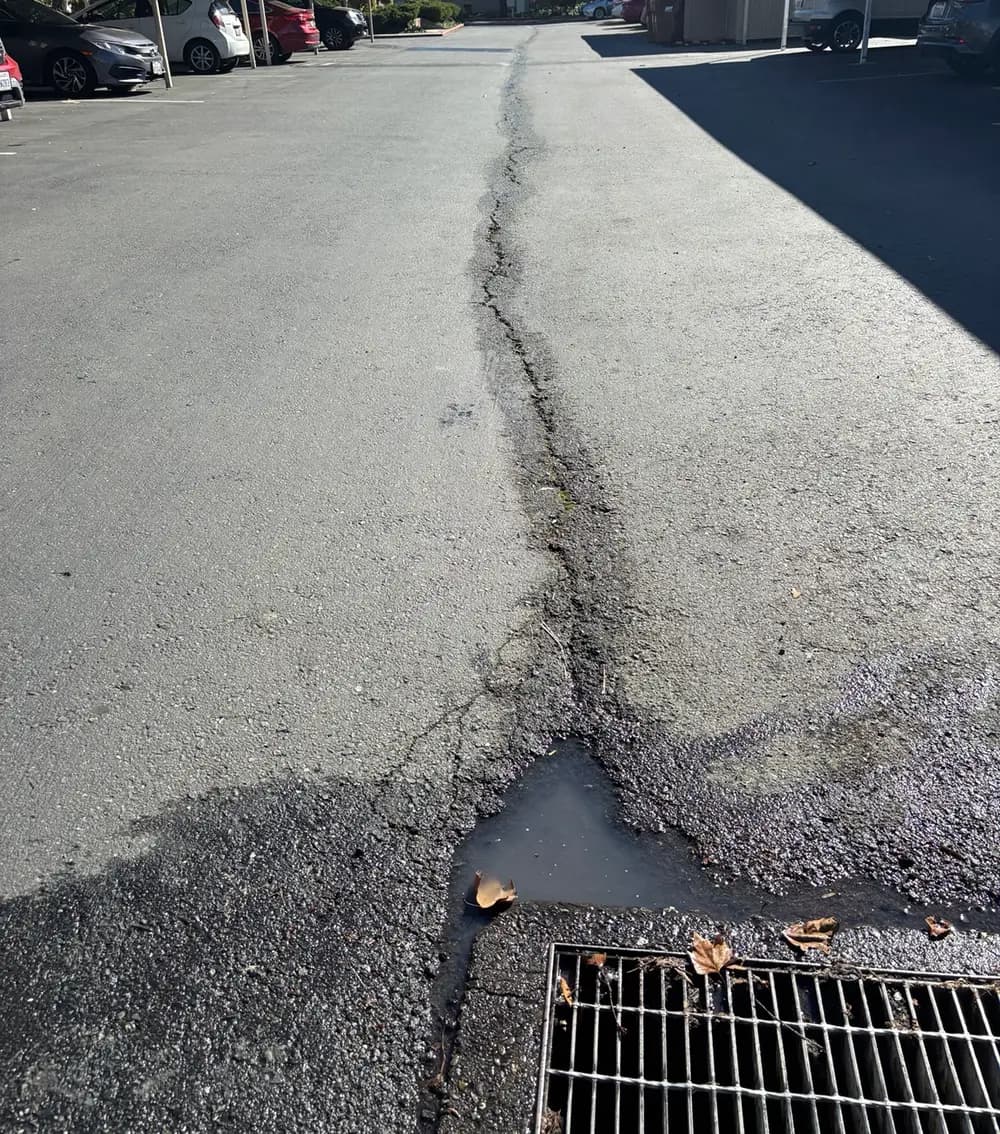
How Drainage Affects Pavement Life
Why drainage is the biggest factor in how long pavement lasts, how water damages asphalt from the base up, and why fixing it protects every repair.
Property-owner guide
Updated July 6, 2026
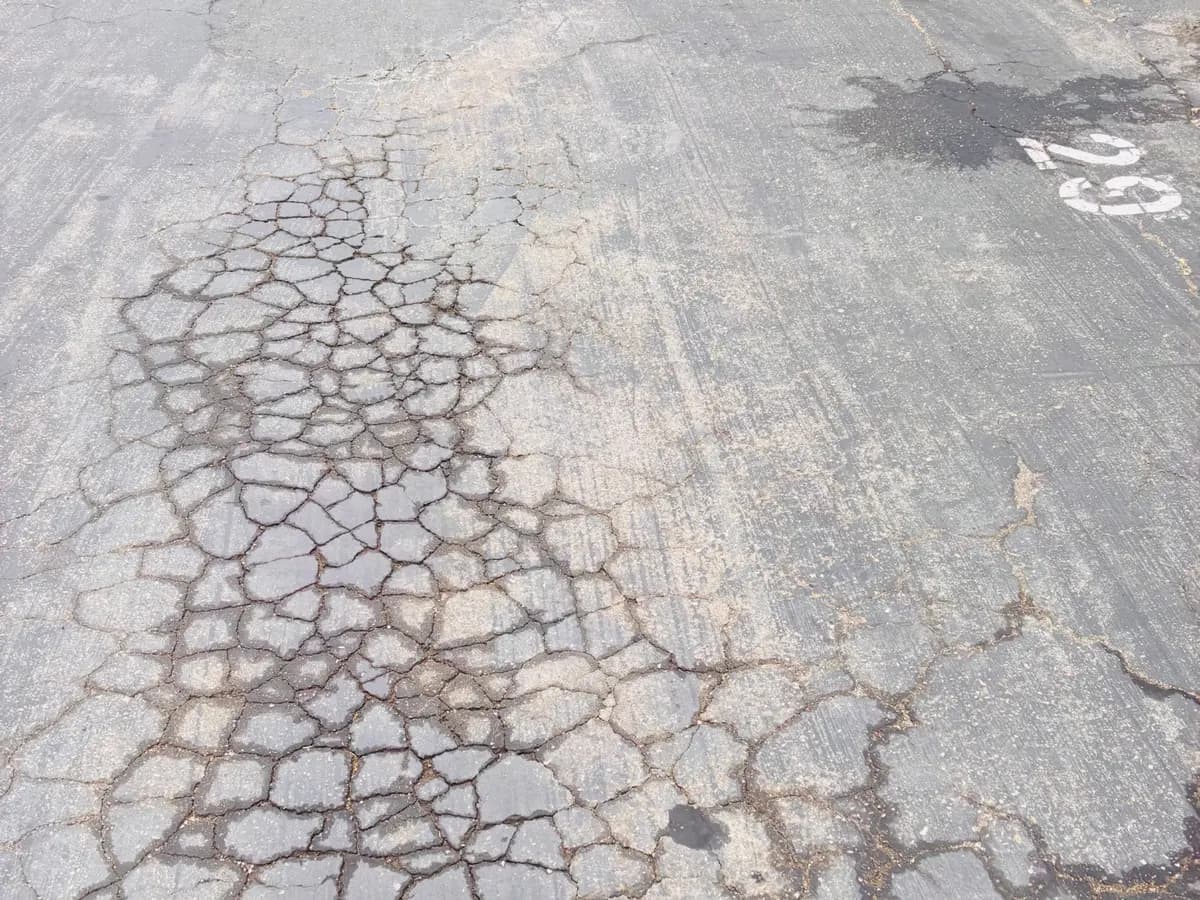
What Causes Alligator Cracking in Asphalt?
What alligator cracking is, what causes it, whether it can be patched or needs full-depth repair, and why it usually points to a failing base.
Property-owner guide
Updated July 6, 2026
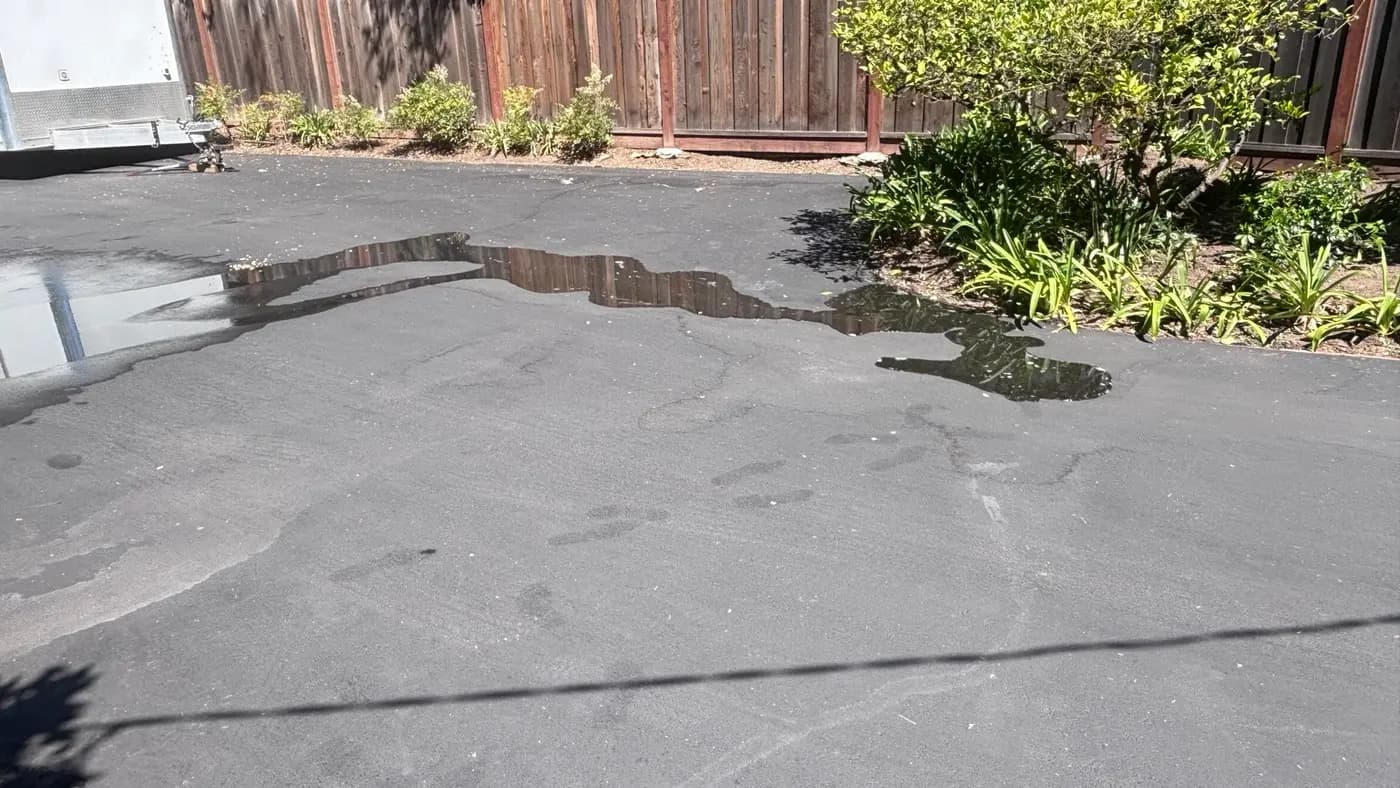
Parking Lot Drainage Problems: What Property Owners Should Know
Common causes of parking lot drainage problems, why they accelerate pavement damage, and what property owners should ask contractors before a fix.
Property-owner guide
Updated July 6, 2026
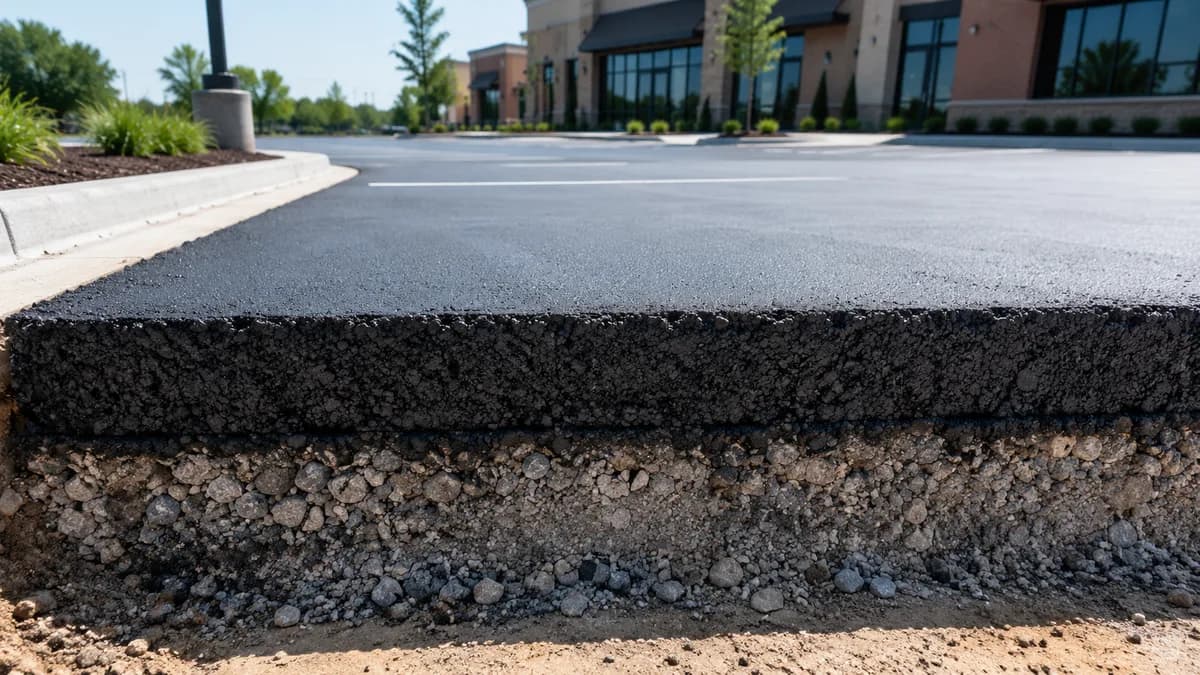
Asphalt Paving Thickness for Parking Lots
Typical asphalt paving thickness for parking lots: benchmarks for stalls, drive lanes, and truck areas, plus how base and soil change the answer.
Property-owner guide
Updated July 6, 2026
How to Choose an Asphalt Paving Contractor
How to choose an asphalt paving contractor: project fit, relevant experience, written scope, references, insurance, and pavement qualifications.
Before you hire: The Pavement Directory does not guarantee contractor performance, pricing, licensing, insurance, or availability. Business information may be submitted by contractors or gathered from public sources and should be independently verified before hiring. Always confirm licensing, insurance, references, scope of work, and written contract terms.
For contractors
Ready to compare Alabama contractors?
Browse listings by city and service, then use what you have read here to check the scope, the credentials, and the timing before you sign.