

What this guide covers
Driveway paving decisions often come down to the garage transition, curb tie-in, drainage away from the house, edge support, base condition, overlay vs. replacement, vehicle use, and curing time before parking.
This guide is part of the asphalt paving hiring hub — start with How to Choose an Asphalt Paving Contractor for the full picture. This article covers the details unique to houses; for the full overlay-vs-replacement decision, see Asphalt Paving vs Asphalt Overlay, and for bid warning signs, see Cheap Asphalt Paving Bid Red Flags.
Related contractor categories
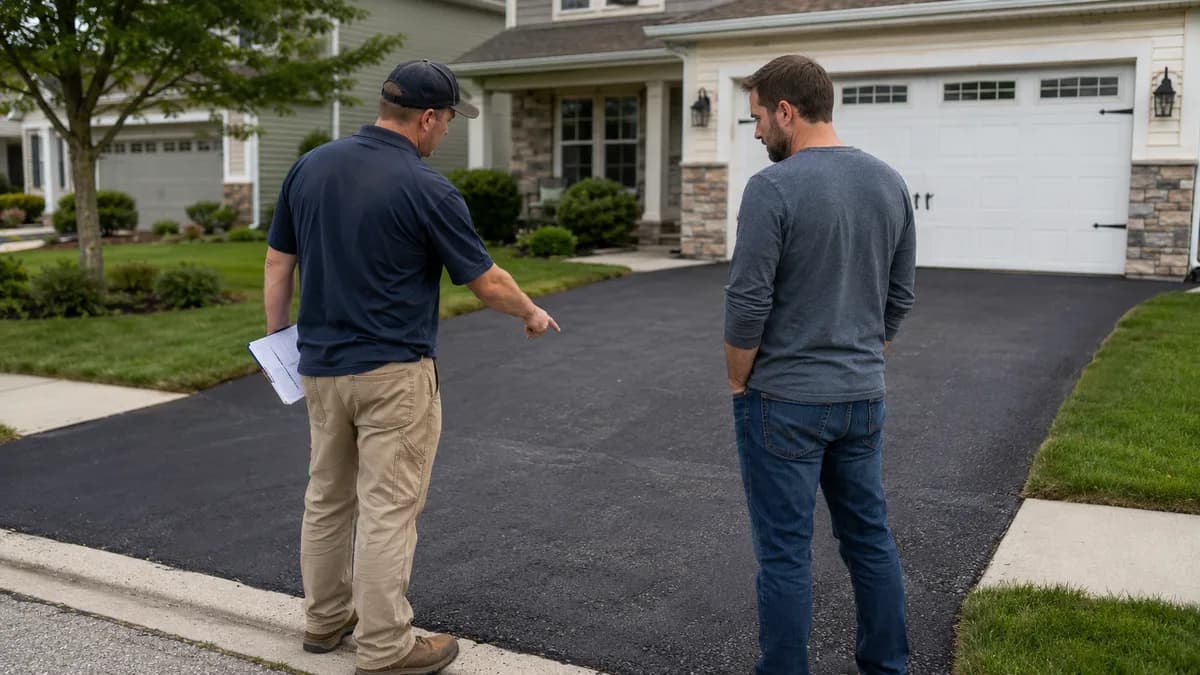
Common residential asphalt projects
Residential asphalt paving contractors may handle new asphalt driveways, driveway replacement, driveway overlay, driveway widening, private lanes, rural access roads, driveway patching, edge repair, pothole repair, and driveway drainage correction. Some contractors focus on driveways only; others handle both residential and commercial paving.
Driveway thickness
Most passenger vehicle driveways are built with 2 to 3 inches of compacted asphalt over 4 to 6 inches of compacted aggregate base. Driveways carrying RVs, trailers, or work trucks often warrant 3 inches or more of asphalt and a thicker base section.
Always confirm the proposal states compacted thickness, not loose-laid thickness. Loose asphalt compacts by roughly 20 to 25 percent, so "3 inches of asphalt" that means loose material ends up closer to 2.25 inches on the ground.
Overlay or replacement: the driveway-specific question
The general overlay decision (pavement condition, base stability, reflective cracking) is covered in Asphalt Paving vs Asphalt Overlay. For driveways, one factor matters more than any other: garage slab elevation. An overlay raises the driveway 1.5 to 2 inches. If the existing pavement already sits close to the garage slab, the overlay creates a lip at the door, a garage door that will not clear, or a surface that drains into the garage. When the height budget at the garage is gone, replacement is usually the answer regardless of pavement condition.
Garage transition and curb tie-in
The garage transition is one of the most important driveway details. Check whether water will flow into the garage, whether the driveway will become too high, whether the new asphalt will create a lip, whether the garage door will clear the surface, and whether the transition will be smooth enough for vehicles.
Also review the connection to the street or curb: a smooth vehicle transition, no abrupt bump, no low area that traps water, no edge that breaks under turning vehicles, and no conflict with the sidewalk or apron. These are small details that affect daily use.
Drainage away from the house
For a house, the drainage checklist is specific: water running toward the garage or foundation, roof downspouts discharging onto the asphalt, side yard water crossing the driveway, erosion along driveway edges, and a low spot at the curb that traps street water.
A driveway should slope away from the house at roughly 1 to 2 percent minimum, about 1/8 to 1/4 inch of fall per foot. If water is the main problem, paving alone may not solve it. Related category: Drainage and Sitework Contractors.
Edge support
Driveway edges often fail when they are unsupported — from vehicles driving off the edge, no shoulder support, poor compaction near the edge, water erosion, thin asphalt at the edge, or turning movements. Ask whether edge support or shoulder grading is included. Backfilling the edges with soil or base rock flush to the new surface is cheap during the project and expensive after.
Vehicle use
Tell the contractor what will use the driveway: passenger cars, pickup trucks, RVs, trailers, delivery trucks, work trucks, boats, or heavy equipment. A driveway used by heavier vehicles may need more review than a basic passenger vehicle driveway.
Curing and parking timelines
Typical timelines in warm weather, subject to the contractor's direction: walking after 24 to 48 hours, driving across after 3 to 5 days, and parking after 5 to 7 days (longer in hot weather). Avoid sharp turning while stationary for the first 2 weeks, since power steering scuffs are the most common new-driveway complaint. Wait 2 weeks or more before RVs, trailers, and jack stands, and put plywood under jacks and tongue stands. Wait 6 to 12 months before sealcoating so the asphalt can fully cure.
Hot weather extends every one of these numbers — new asphalt stays soft when surface temperatures are high.
Leftover asphalt offers
Be cautious with contractors who knock on the door offering a same-day deal because they claim to have leftover asphalt from a nearby job. This is the most common driveway paving scam, and the warning signs are covered in full in Cheap Asphalt Paving Bid Red Flags. The short version: no written scope, no stated thickness, and cash-only pressure mean walk away.
Frequently asked questions
What does a residential asphalt paving contractor do?
A residential asphalt paving contractor installs, replaces, overlays, or repairs asphalt driveways and private residential pavement areas.
How thick should an asphalt driveway be?
Most passenger vehicle driveways use 2 to 3 inches of compacted asphalt over 4 to 6 inches of compacted base. Heavier vehicles warrant more. Confirm the number is compacted thickness.
How long before I can park on a new asphalt driveway?
Typically 5 to 7 days in warm weather, with sharp turning avoided for 2 weeks. Confirm timing with the contractor, since temperature and thickness change the answer.
What is the biggest driveway paving red flag?
A same-day leftover asphalt offer with no written scope, no thickness, and no insurance information is a major warning sign.
Should driveway drainage be checked before paving?
Yes. A new surface will not automatically fix water flowing toward a garage or house.
Before you hire: The Pavement Directory does not guarantee contractor performance, pricing, licensing, insurance, or availability. Business information may be submitted by contractors or gathered from public sources and should be independently verified before hiring. Always confirm licensing, insurance, references, scope of work, and written contract terms.
For property owners
Looking for a pavement contractor?
Use The Pavement Directory to search asphalt, concrete, sealcoating, striping, ADA access, and pavement maintenance contractors by service and location. Always verify license, insurance, references, and written scope before hiring.
Search contractorsFor contractors
Are you a pavement contractor?
Contractors can add or claim a company profile to help property owners find pavement professionals by service, location, and specialty.