

What this guide covers
Repair fixes targeted damaged areas; paving covers larger resurfacing or replacement work. Repeated patch failure may signal a larger problem, and sealcoating is not a substitute for repair.
This guide is part of the asphalt paving hiring hub — start with How to Choose an Asphalt Paving Contractor for the full picture. This article focuses on choosing between localized repair and larger paving work; for overlay-specific guidance, see Asphalt Paving vs Asphalt Overlay.
Related contractor categories
What asphalt repair usually includes
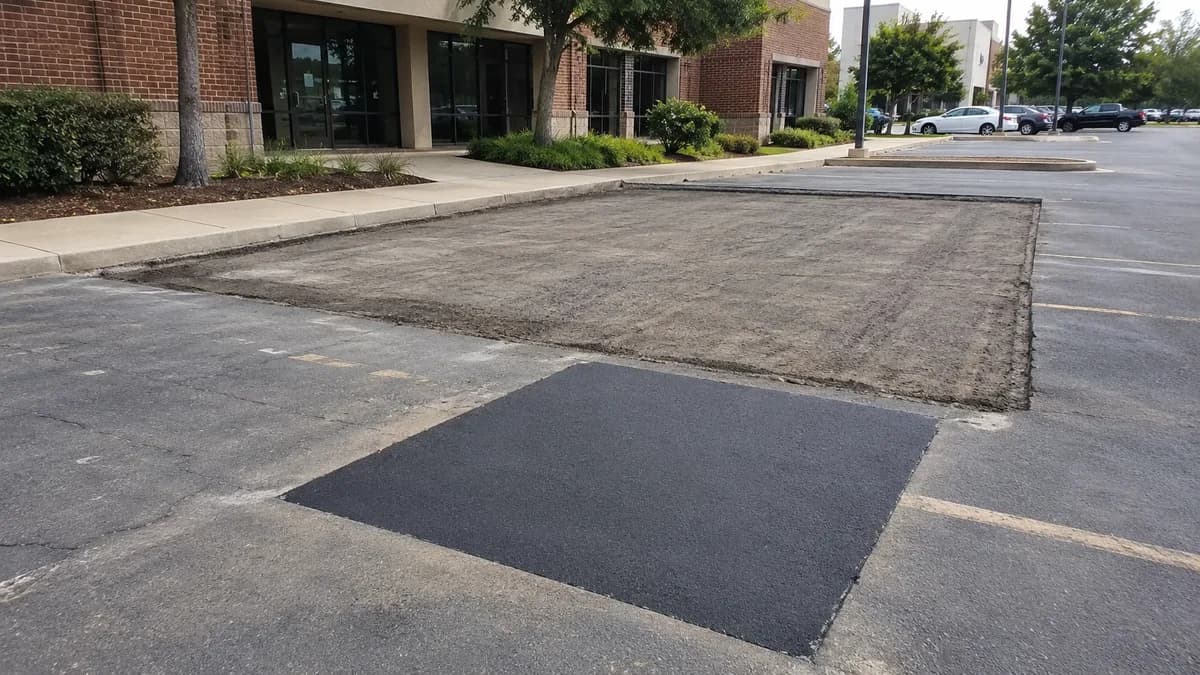
Asphalt repair may include pothole repair, sawcut patching, full-depth patching, skin patching, edge repair, utility trench repair, rut repair, drainage-related patching, localized dig-outs, and crack repair preparation. Use Asphalt Paving Contractors when the problem is limited to specific areas.
What asphalt paving usually includes
Asphalt paving may include new asphalt pavement, parking lot paving, driveway paving, full replacement, mill and overlay, asphalt overlay, private road paving, or large resurfacing projects. Use Asphalt Paving Contractors when the project involves larger areas or full surface renewal.
When repair is enough
Repair may be enough when damage is isolated, surrounding asphalt is stable, base failure is limited, potholes are localized, cracking is not widespread, drainage is manageable, the owner needs a short-term improvement, or budget does not allow full paving yet. This is common for commercial lots that need targeted repairs before sealcoating or restriping.
When paving is better
Paving or replacement may be better when failure is widespread, patches keep failing, alligator cracking covers large areas, pavement is sinking in multiple locations, drainage is poor throughout the site, the surface is beyond maintenance, heavy vehicles are damaging weak areas, or previous repairs no longer hold.
A useful field threshold: when failed areas approach 25 to 30 percent of the total surface, the per-square-foot cost of patching (often 2 to 4 times the unit cost of larger paving) starts to erase the savings. At that point, isolated repair may only delay the larger project.
Repair-first strategy
Sometimes repair is still useful even when the property will eventually need paving — to keep the property usable, when budget is limited this year, when a phased replacement is planned, when hazards need immediate attention, to stabilize failed areas before sealcoat, or while a reserve plan is being developed. This should be presented honestly — repairs should not be sold as a permanent solution when the pavement is broadly failing.
Patching types compared
Service life estimates below assume the underlying cause was addressed. A full-depth patch over uncorrected drainage will not reach these numbers.
| Repair type | Use case | Typical service life | Limitation |
|---|---|---|---|
| Skin patch | Surface-level temporary improvement | 1 to 3 years | Does not fix deep failure |
| Sawcut patch | Cleaner repair of defined failed area | 5 to 10 years | Still depends on base |
| Full-depth patch | Removes failed asphalt section | 10 to 15 years | Higher cost but stronger repair |
| Utility trench repair | Fixes settlement over trench areas | Varies with base correction | May need base correction |
| Edge repair | Repairs broken pavement edges | Varies with edge support | Edge support may still be needed |
Signs repair may not be enough
Watch for alligator cracking across large areas, multiple sunken areas, potholes returning within a season, standing water that persists more than 24 to 48 hours after rain, soft base you can feel flex under a loaded truck, cracking spreading around old patches, pavement breaking under normal traffic, and edge failure throughout the site. These signs point toward larger review.
Frequently asked questions
Is asphalt repair cheaper than paving?
Usually, because repair covers a smaller area. But patching often costs 2 to 4 times more per square foot than larger paving, so repeated repairs can become expensive if the pavement needs replacement.
Can asphalt repair fix alligator cracking?
Small areas may be repaired with full-depth patches, but widespread alligator cracking often points to structural failure.
Should potholes be repaired before sealcoating?
Yes. Sealcoating should not be used to hide potholes or failed asphalt.
When should I stop patching and consider paving?
When failed areas approach 25 to 30 percent of the surface, or when patches keep failing, larger paving or replacement should be reviewed.
Can repair be used as a temporary plan?
Yes, if the limitations are clear and the owner understands it is not a full pavement reset.
Before you hire: The Pavement Directory does not guarantee contractor performance, pricing, licensing, insurance, or availability. Business information may be submitted by contractors or gathered from public sources and should be independently verified before hiring. Always confirm licensing, insurance, references, scope of work, and written contract terms.
For property owners
Looking for a pavement contractor?
Use The Pavement Directory to search asphalt, concrete, sealcoating, striping, ADA access, and pavement maintenance contractors by service and location. Always verify license, insurance, references, and written scope before hiring.
Search contractorsFor contractors
Are you a pavement contractor?
Contractors can add or claim a company profile to help property owners find pavement professionals by service, location, and specialty.