
District of Columbia pavement guide
District of Columbia Paving Contractor License Requirements, Permits, and Verification
Businesses operating in the District are generally required to hold a Basic Business License through the Department of Licensing and Consumer Protection, and construction-related work involves DLCP licensing and permitting requirements that depend on the type of work. Confirm with DLCP what specifically applies to the scope you are contracting for, rather than assuming that a contractor licensed in Maryland or Virginia is thereby authorized to work in the District.
- Licensing depends on scope
- Reviewed August 2026
Jump to section
Verification
Contractor Licensing and Verification in District of Columbia
- Statewide licensing
- Depends on scope and project value
- Administering body
- District of Columbia Department of Licensing and Consumer Protection (DLCP); DDOT for public space permits
The permit that catches District pavement projects most often is not a licensing question at all. Work in public space — sidewalks, alleys, curb cuts, tree boxes, and the strip between the property line and the street — requires a public space permit from DDOT, and the public space boundary frequently sits inside what an owner thinks of as their own frontage. Establishing where that line runs before finalizing scope is one of the highest-value early steps on any District project.
Verify the entity and the coverage independently. Confirm the exact name on the proposal is registered to do business in the District and matches the insurance certificate and the contract, and verify general liability and workers' compensation directly with the carrier for the dates of your work. Ask whether striping, concrete, and drainage subcontractors carry their own coverage, since much of that work is subcontracted to firms based in Maryland or Virginia.
Accessibility deserves specific attention here. Dense urban sites, constrained geometry, and a high proportion of institutional and public-facing properties mean that pavement work in the District frequently touches accessible routes and accessible parking, and those elements have requirements that are separate from anything a paving license would cover.
What a contractor license does not prove
A District business license establishes that a contractor is authorized to operate here. It says nothing about whether they know where public space begins, what DOEE will require of the finished site, or how to work over historic fill.
- That the proposed scope is the right fix for what is actually failing
- That the price is fair for the local market
- That drainage has been designed or corrected
- That the pavement section and thickness suit the traffic the property carries
- That the specified materials are appropriate for the site
- That the crew will show up when promised
- That workmanship will hold up past the first winter or summer
- That the company is financially stable enough to honor a warranty
Ask for a certificate of insurance sent directly from the carrier or agent rather than a copy forwarded by the contractor, confirm the general liability and workers’ compensation coverage is active on the dates of your work, and ask to be named as certificate holder so you are notified if the policy lapses.
Licensing requirements can turn on project value, scope of work, property location, and whether the job is public or private. City and county rules may add registration, permitting, or bonding requirements beyond anything required at the state level. Verify current requirements with the agency directly before contracting.
Last reviewed:
Permitting
Stormwater and Environmental Considerations
District Department of Energy and Environment (DOEE) for District stormwater regulations; U.S. EPA Region 3 for federal construction stormwater permit coverage; DDOT for public space
The District is not authorized to administer the federal NPDES program, so federal construction stormwater permit coverage for a qualifying project comes from EPA rather than from a District agency. That surprises owners who assume a local regulator issues everything, and it means a single project can involve a federal permit alongside District and DDOT approvals with different triggers for each.
DOEE administers the District's own stormwater regulations, and they are among the more demanding in the country for parking lot work. Qualifying projects are generally required to retain a defined volume of stormwater on site, which for a paved property usually means green infrastructure — bioretention, permeable pavement, or storage — rather than simply conveying water to the street. Where full on-site retention is impractical, the District operates a stormwater retention credit trading program that allows a portion of the obligation to be met by purchasing credits generated elsewhere. That mechanism is genuinely unusual and it can change the economics of a redevelopment, so it is worth understanding before a design is finalized.
Practices installed under earlier approvals carry maintenance obligations that transfer with the property, and DOEE has an inspection role. Before scoping pavement work, find out what a property is required to have and what condition it is in — a repaving project is often the natural moment to restore a practice that has silted in or clogged, and repaving around a failed one does not resolve the obligation.
What tends to drive requirements here
- That EPA, not DOEE, issues federal construction stormwater permit coverage in the District
- DOEE retention volume requirements for qualifying projects and what triggers them
- The stormwater retention credit trading program as an option where on-site retention is constrained
- Maintenance obligations on existing permitted stormwater practices, which transfer with the property
- DDOT public space permitting for any work beyond the property line
- Anacostia watershed water quality attention on redevelopment east and south of the core
A District pavement project can involve EPA, DOEE, DDOT, and DLCP simultaneously, each with different triggers and timelines. Confirm what applies to your property with each before design rather than after a bid is accepted.
Last reviewed:
Official sources
District of Columbia Agencies and Reference Links
Contractor licensing
D.C. Department of Licensing and Consumer ProtectionBasic Business License and construction-related licensing and permitting requirements for work in the District.
Public works
DDOT public space regulationPublic space permitting for work on sidewalks, alleys, curb cuts, and other areas beyond the property line.
Environmental
DOEE stormwater managementDistrict stormwater regulations, retention volume requirements, and the stormwater retention credit trading program.
Environmental
EPA construction general permitThe federal construction stormwater permit that applies in the District, which is not NPDES-authorized.
Business registration
D.C. business registrationConfirm a business is registered and licensed to operate in the District of Columbia.
Consumer protection
D.C. Office of the Attorney General consumer protectionWhere to file a complaint about a contractor or a deceptive business practice.
This page summarizes publicly available information for general education. It is not legal, engineering, or code-compliance advice, and requirements change. Confirm anything that affects your project with the agency with jurisdiction over the property.
Regulatory content last reviewed:
District of Columbia licensing and permit FAQs
Who issues the construction stormwater permit in the District of Columbia?
EPA does. The District is not authorized to administer the federal NPDES program, so a project disturbing enough ground obtains coverage under EPA's federal construction general permit rather than from a District agency. DOEE separately administers the District's own stormwater regulations, and DDOT handles public space. A single parking lot project can therefore involve three regulators with three different triggers, which is a genuinely different situation from a comparable project in Maryland or Virginia.
What are the District's stormwater retention requirements?
DOEE requires qualifying projects to retain a defined volume of stormwater on site rather than simply conveying it to the street, which on a paved property usually means green infrastructure — bioretention, permeable pavement, or storage. Whether a project triggers the requirement depends on its scope and the area affected, so it is a question for DOEE rather than an assumption. The practical consequence is that a substantial repaving or reconfiguration can turn into a site design exercise rather than a resurfacing.
What is a stormwater retention credit and does it apply to my property?
It is a tradable credit generated by retaining stormwater beyond what a property is required to retain, and the District operates a trading program allowing part of a project's obligation to be met by purchasing credits rather than building all the retention on site. That mechanism is unusual and can meaningfully change the economics of a constrained redevelopment. Whether it applies, and in what proportion, depends on the project — DOEE is the right place to confirm before a design is set.
Before you sign: hiring guides
Property-owner guide
Updated July 6, 2026
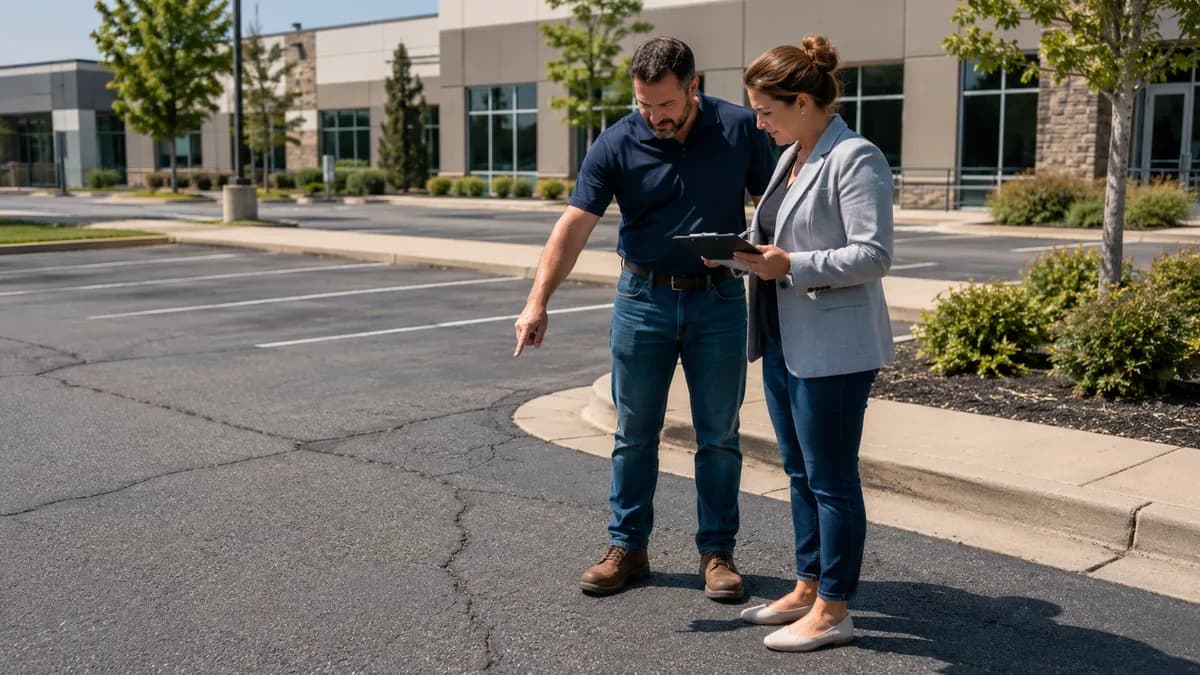
How to Choose an Asphalt Paving Contractor
How to choose an asphalt paving contractor: project fit, relevant experience, written scope, references, insurance, and pavement qualifications.
Property-owner guide
Updated July 6, 2026
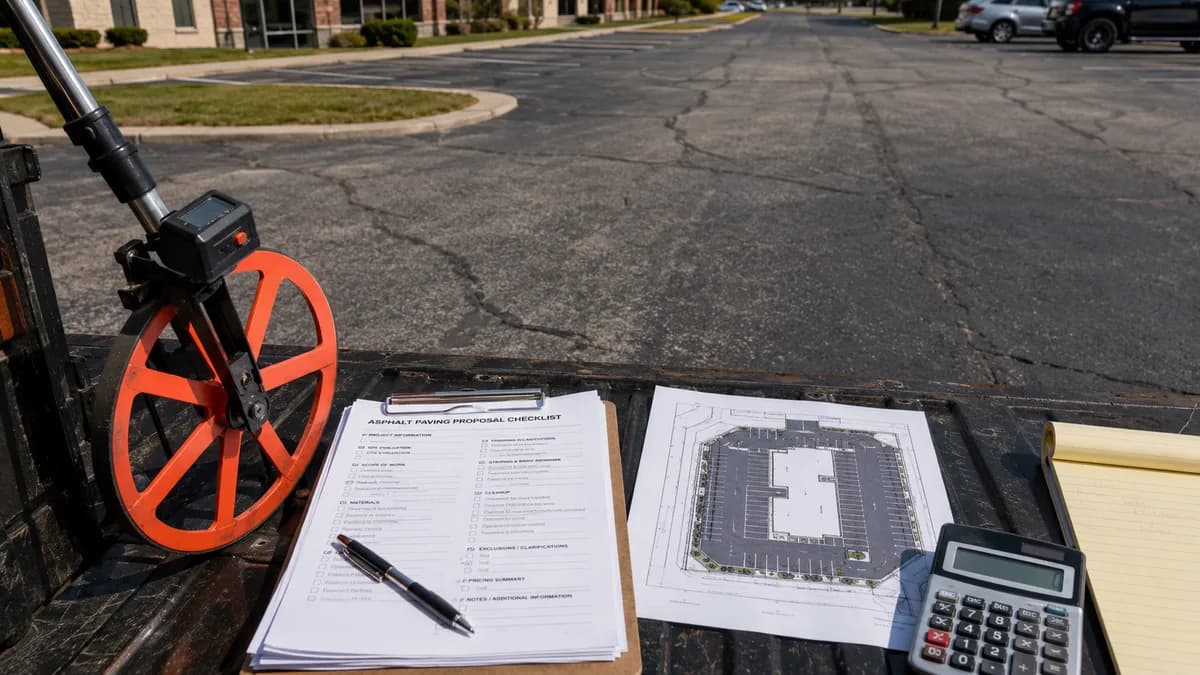
Asphalt Paving Proposal Checklist
What belongs in an asphalt paving proposal: work limits, quantities, thickness, base preparation, drainage, striping, exclusions, and warranty terms.
Property-owner guide
Updated July 6, 2026
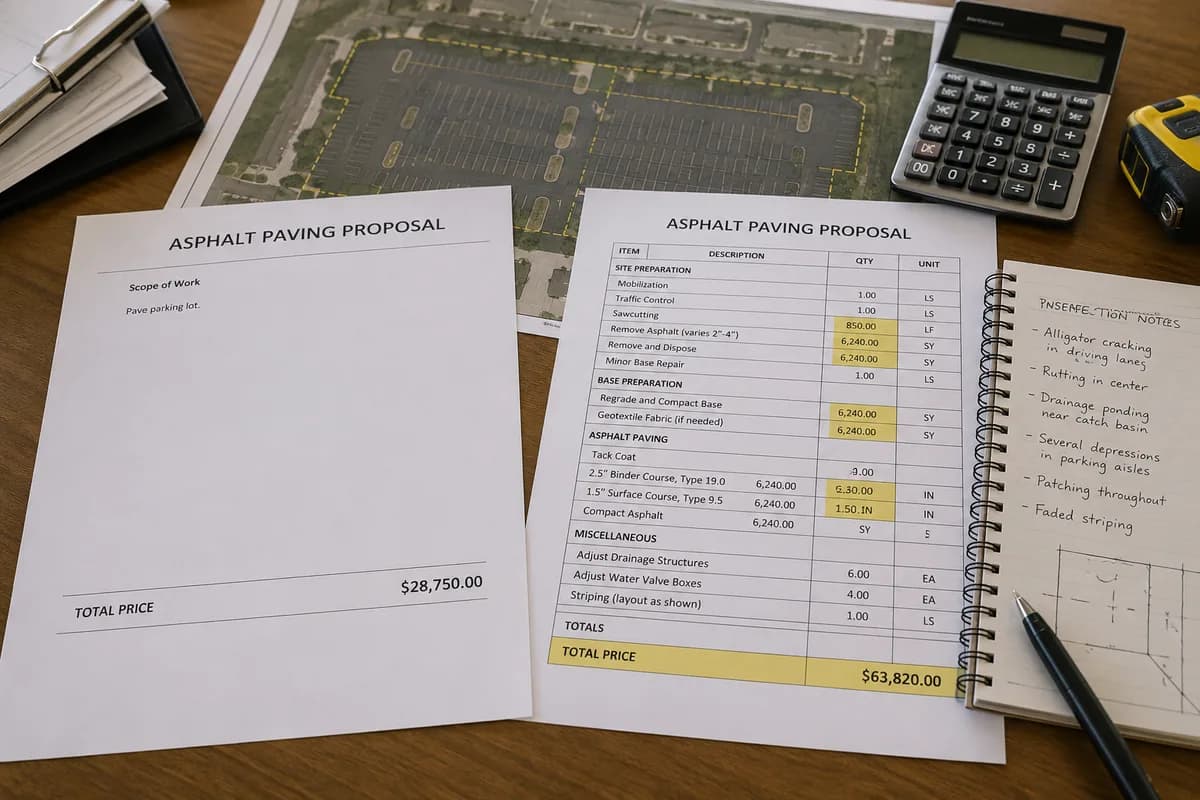
Cheap Asphalt Paving Bids: Red Flags to Watch For
A cheap asphalt paving bid may omit thickness, base preparation, drainage, striping, or warranty terms. Learn the red flags to check before hiring.
Before you hire: The Pavement Directory does not guarantee contractor performance, pricing, licensing, insurance, or availability. Business information may be submitted by contractors or gathered from public sources and should be independently verified before hiring. Always confirm licensing, insurance, references, scope of work, and written contract terms.
For contractors
Ready to compare District of Columbia contractors?
Browse listings by city and service, then use what you have read here to check the scope, the credentials, and the timing before you sign.